Search this blog

Friday, 10 February 2012

George IV by Christopher Hibbert – a review

Front cover of George IV by C Hibbert

This is a classic biography of George IV and deserves a place on the bookshelf of any Regency historian; it is frequently quoted as a source in later books covering George’s life, Regency and reign. Hibbert draws on many contemporary journals and letters to produce a comprehensive account of the life and reign of George IV.

Published as a single volume in 1976, it was originally produced in two, the first about George IV as Prince of Wales (1972) and the second about his Regency and reign (1973). The paperback seems to be out of print, but there are plenty of second-hand copies around and it was recently released as an ebook. It is generally easy to read and covers all the major events and people of George’s life.

George IV is a king with a reputation. He is remembered for his reckless living, his numerous mistresses and his exotic pavilion at Brighton. George’s early biographer, Robert Huish, was harsh in his criticism of the profligate monarch; Hibbert seeks to present a more balanced view of this king who failed to gain the widespread popularity that he craved.

George IV as Prince of Wales, by John Hoppner (1792)  in the Wallace Collection
George IV as Prince of Wales, by John Hoppner (1792)
in the Wallace Collection
Hibbert’s biography presents a chronological view of George’s life, from the rebellious young prince who struggled against the restrictions of his harsh royal upbringing to the overweight recluse who slowly expired, away from the public eye, in the depths of Windsor Great Park.

Whilst not ignoring the fickleness of his character which made him a faithless lover and an unreliable friend, Hibbert reminds us of the factors that contributed to George’s behaviour: his lack of companionship as a boy, his lack of occupation as a young man and the lack of his father’s approval in virtually everything that he did.

Hibbert does not seek to excuse his harsh behaviour towards his wife, but he does suggest that Princess Caroline was a most unfortunate choice of bride for so fastidious a man. He condemns George’s reckless extravagance, but at the same time reminds us of his patronage of both science and the arts.

Undoubtedly the greatest strength of this well-written biography is the source material that it uses. In the author’s note, Hibbert states that “this biography of George IV is based largely upon his papers in the Royal Archives at Windsor”, as well as numerous other contemporary manuscripts. These papers provide an invaluable view of George IV.

I did find one fact that did not match my other sources: Hibbert states that the wedding of Prince William, Duke of Gloucester, and Princess Mary took place on 23 July 1816, whilst others, including La Belle Assemblée, record it has having occurred on the 22nd. But even George’s own correspondence cannot be relied upon as fact; it is known that he fantasized about his involvement in various events, such as the Napoleonic Wars, to the extent that he really believed that he had been there.

Friday, 3 February 2012

The wreck of the Abergavenny

On 5 February 1805, the Earl of Abergavenny sank off the coast of Portland with the tragic loss of 260 lives. The wreck is remembered not only for the horrific death toll, but also for the loss of its captain, John Wordsworth, the brother of the poet, William Wordsworth.

Memorial to the Earl of Abergavenny  on the stone pier, Weymouth
Memorial to the Earl of Abergavenny
on the stone pier, Weymouth (2012)
The last voyage of the Abergavenny

The Earl of Abergavenny by T Lury
The Earl of Abergavenny was part of a convoy of East Indiamen ships heading for China, on the lucrative route via Bengal. The convoy had already suffered two collisions when it became separated from its escort vessel, HMS Weymouth. Abandoning its attempts to sail westwards against the wind, the convoy decided to return to Portland Roads to wait for fairer weather.

As was the custom, as she neared Portland, the Abergavenny took on board a pilot to help navigate around Portland Bill and the shoal of coarse sand and shingle beyond it, known as the Shambles. The pilot proved to be disastrously inept. In the failing light and strong waves, he failed to sail far enough out to sea and the ship was grounded on the Shambles.


Portland Bill
Portland Bill (2012)
The Shambles

The shock of the impact threw the Abergavenny on her side and water poured in down the hatchways and companionways. She righted herself but she could not break free of the Shambles. Men immediately manned the pumps to eject the water whilst the waves continued to pound at her until the hull planking gave way immediately below the pumps.

Thomas Gilpin, fourth mate, later recorded what happened:
During the time she was on the Shambles, had from three to four feet water; kept the water at this height about 15 minutes, during the whole time the pumps constantly going. Finding she gained on us, it was determined to run her on the nearest shore.1
Recent research has suggested that the iron knees that held the deck to the hull and kept the ship secure were attached to the deck and hull by copper nails. This dangerous combination, which may have arisen from a cheap refit, would have caused severe rusting which may have led to the hull disintegrating more readily.

A water-logged ship

At last, after about two and a half hours, the ship floated off the Shambles, but by this time it was so full of water that the sails were unable to carry the ship onto Weymouth Sands.

Gilpin recorded:
The ship would not bear up – kept the helm hard a starboard, she being water-logged; but still had a hope she could be kept up till we got her on Weymouth Sands.2
Portland Roads - now known as Portland Harbour
 Portland Roads - now known as Portland Harbour
The cutter goes for help

Desperate to rally some assistance, the ship’s cutter was launched with the purser, CH Stewart, Joseph Wordsworth and six seamen on board. The other boats were cut free so that they would float freely when the ship went down, but why no attempt was made to launch them is not clear.

Perhaps they thought that the dangers of trying to navigate the ferocious waves in an open boat far outweighed those of staying on board and trying to sail the ship onto land. Perhaps the manpower required to launch the boats would have prevented the pumps from working and the whole ship would have sunk much sooner.

According to Gilpin:
Cut the lashings of the boats – could not get the long boat out, without laying the main-top-sail aback, by which our progress would have been so delayed, that no hope would have been left us of running her aground.3
“She will sink in a moment”
“We have done all we can, Sir – she will sink in a moment,” declared the first mate, Samuel Baggot, to his captain.
“It cannot be helped. God’s will be done,” John Wordsworth replied.4
When the passengers realised that the ship was sinking, some seized planks and bits of hen coop and threw themselves into the sea. Others were swept overboard by giant waves. Some piled into a boat that had been cut loose before the ship sank but there were so many that the boat overturned. Those that were able climbed up the rigging, trying to stay above water.

Around 11pm on the 5 February, the ship went down. When she first settled, part of the main and mizzen masts remained above water and about 200 people desperately clung onto their only hope of staying out of the icy water.

Frontispiece of one of several pamphlets issued about the sinking  of the Earl of Abergavenny
Frontispiece of one of several pamphlets issued about the sinking
of the Earl of Abergavenny 
Help at last

According to Gilpin, the ship fired her guns “from the time she struck till she went down” but very little assistance was rendered by nearby ships. Five passengers were rescued by a boat from a sloop, but the waves were too dangerous for them to attempt to rescue anyone else.
 
Why no one else responded to the cries of distress or the gun fire is not known. Ships later claimed that they did not hear the cries in the noise of the storm. Maybe this was true, or maybe they were motivated by self-preservation in the hazardous conditions or even a desire to plunder the wreck.

It was not until the early hours of the following morning that rescue came. A sloop called the Three Brothers came alongside and rescued the survivors, who climbed down the rigging in an orderly fashion. Many had lost their grip in the dark hours of the night and were drowned; others died afterwards due to hypothermia and exhaustion.

An appalling loss of life

Part of the return of the ship's company from the Earl of Abergavenny
Part of the return of the ship's company
from An Authentic Narrative of the Loss of the Earl of Abergavenny East Indiaman (1805)
The total number of dead was around 260 including the captain, John Wordsworth, Samuel Baggot, who drowned trying to rescue a woman passenger, and Ensign Whitlow, who had made such efforts along with Baggot and Joseph Wordsworth to re-join the ship. The fourth mate, Thomas Gilpin, was applauded for his bravery in trying to save as many as possible.

The death of John Wordsworth

William Wordsworth and his sister, Dorothy, were devastated at the loss of their brother John. Their grief, in turn, affected their literary circle, especially Samuel Taylor Coleridge.

Initially it was rumoured that John had been negligent and had not tried to save either the ship or himself after realising his own financial ruin, but the Court of Enquiry at East India House fully acquitted him of any negligence or misconduct.

John Wordsworth was buried in All Saints Churchyard in the Parish of Wyke Regis on 21 March 1805. No gravestone now exists to indicate where the remains of the last captain of the Earl of Abergavenny are buried.

All Saints Churchyard  Wyke Regis, Weymouth
All Saints Churchyard
Wyke Regis, Weymouth(2012)

A memorial to John Wordsworth was erected inside the church in 2005 to mark the 200th anniversary of the tragedy.
 
Memorial to John Wordsworth in All Saints Church, Wyke Regis, Dorset
Memorial to John Wordsworth in All Saints Church,
Wyke Regis, Dorset (2014)
You can find more detail about the events leading up to the wreck in The last voyage of the Earl of Abergavenny 
 
Post updated 19/7/22

Headshot of Rachel Knowles author with sea in background(2021)
Rachel Knowles writes clean/Christian Regency era romance and historical non-fiction. She has been sharing her research on this blog since 2011. Rachel lives in the beautiful Georgian seaside town of Weymouth, Dorset, on the south coast of England, with her husband, Andrew.

Find out more about Rachel's books and sign up for her newsletter here.

If you have enjoyed this blog and want to encourage me and help me to keep making my research freely available, please buy me a virtual cup of coffee by clicking the button below.

 
Notes
  1. A gentleman in the East-India House, An Authentic Narrative of the Loss of the Earl of Abergavenny East Indiaman (1805).
  2. Ibid.
  3. Ibid.
  4. Hayter, Alicia, The Wreck of the Abergavenny (2002).
Sources used include:
A gentleman in the East-India House, An Authentic Narrative of the Loss of the Earl of Abergavenny East Indiaman (1805)
Boddy, Maureen and West, Jack, Weymouth – an illustrated history (1983)
Chedzoy, Alan, Seaside Sovereign (2003)
Hayter, Alicia, The Wreck of the Abergavenny (2002)

Photographs © RegencyHistory

Thursday, 2 February 2012

The last voyage of the Earl of Abergavenny

Loss of the Abergavenny, East Indiaman, off the Isle of Portland  by R Cobbold and J Tomlinson (Dorset County Council)
Loss of the Abergavenny, East Indiaman, off the Isle of Portland
by R Cobbold and J Tomlinson (Dorset County Council)


The Earl of Abergavenny was an East Indiaman ship, under the captaincy of John Wordsworth, brother of the poet, William. On 2 February 1805, she sailed in a convoy of ships heading first for India and then on to China. John Wordsworth hoped that it would be the voyage to make his fortune and that of his brother, who would then be able to devote himself to his poetry. The Abergavenny never made it out of British waters.

The Earl of Abergavenny

The Earl of Abergavenny was an East Indiaman ship, a 1200 ton vessel, 176 feet long and 43 feet wide and carrying 30 guns, and manned by a crew of 160 to 200 men. In January 1801, John Wordsworth succeeded his cousin, another John Wordsworth, as captain of the ship.

Captains could make their fortunes by carrying passengers and private cargo whilst publicly acting for the East India Company. Larger vessels, like the Abergavenny, were normally given the direct route to China, but for this voyage, influential friends, in particular William Wilberforce, secured Wordsworth the more profitable route via Bengal.

A valuable opportunity

This route offered threefold trading – selling goods to the British community living in India, buying opium in Bengal to sell in China and purchasing tea in China for the English market. There was little knowledge of the ill effects of opium addiction in Britain at the time and although the very profitable opium trade was banned, smuggling was very common and Wordsworth, like many others, took a lax view on it.

By investing family money in this profitable trade, Wordsworth hoped to make his fortune. According to the ship’s manifest, the cargo of the Abergavenny on its final voyage was estimated to be worth around £90,000, including chests of silver dollars worth £70,000 to buy goods in both Bengal and China.
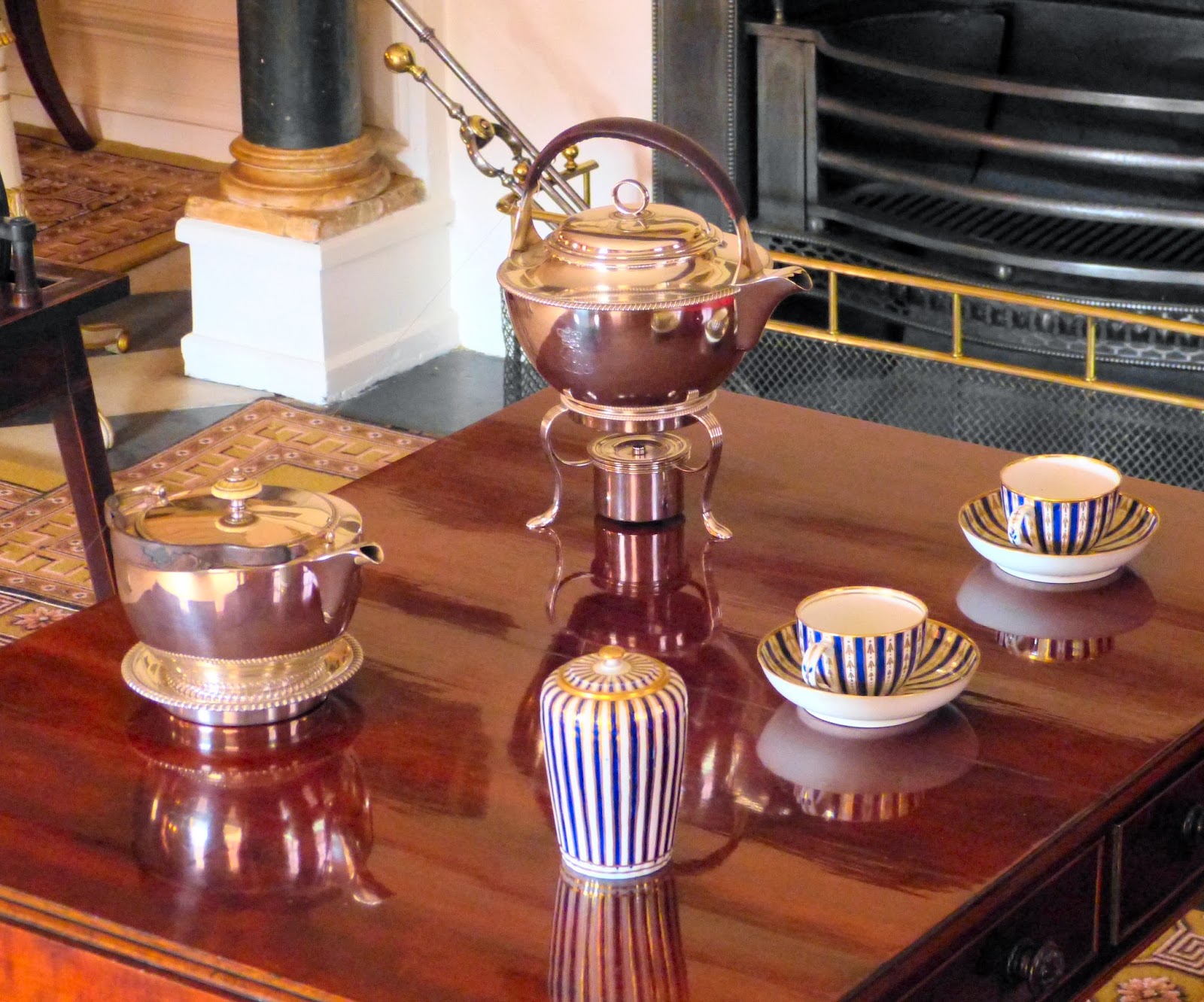
Tea set, Kew Palace
Tea set, Kew Palace
Gravesend to Portsmouth

The Abergavenny travelled in a convoy of East Indiamen from Gravesend to Portsmouth, arriving on 23 January 1805. When the convoy was in the Downs, a heavy gale caused it to collide with another East Indiaman, the Warren Hastings, which had dragged her anchor in the gale. The Abergavenny got off lightly, but the Warren Hastings suffered £2000 damage and the repairs caused her to miss the convoy.

The convoy

In Portsmouth, the Abergavenny took on board 108 of the Company’s troops and a number of the King’s troops, and, after uncertain weather, the convoy moved out to Spithead on the 30 January. The convoy included four other East Indiamen, the Royal George, the Henry Addington, the Wexford and the Bombay Castle, and two whalers, and was escorted by HMS Weymouth, a 44 gun frigate commanded by Captain Draper, commodore of the convoy.

They set sail on 1 February, but a further collision between the Henry Addington and HMS Weymouth caused yet more delay, and it was not until the 2 February that the convoy finally sailed through the Needles Channel. Despite the collisions already endured, the ships were under strict instructions to keep together in convoy.

What happened to HMS Weymouth?

HMS Weymouth led the convoy on a south-westerly course from the Needles Rocks, but at some point lost sight of the convoy. She burnt a blue light all night but failed to find them. Mistakenly believing the convoy to be ahead of her, the Weymouth sailed on west, eventually deciding to sail out into the Atlantic, presumably in the belief that the convoy was still ahead of her.

In reality, the convoy had spent 24 hours tacking off the Needles whilst the Weymouth sailed past them. Eventually the convoy gave up waiting for her and headed westwards, rounding Portland Bill and heading for Lyme Bay against the wind.

Latecomers

Here, Samuel Baggot, the first mate, Joseph Wordsworth, the third mate and a son of the older John Wordsworth, a Company cadet and Ensign Whitlow of the 22nd Foot, who had missed the boat in Portsmouth, succeeded in catching up with them, by means of an open boat that they had hired at an extortionate rate.

Back to Portland Roads
The coast off Portland
The coast off Portland (2012)
When the convoy was about 12 leagues to the west of Portland, Captain Clarke of the Wexford, who had taken charge of the convoy after losing contact with HMS Weymouth, decided that it was best to return to Portland Roads and wait for better weather. Accordingly, the convoy set off eastward, and about two leagues west of Portland, the ships picked up pilots to navigate them round Portland Bill.

The Abergavenny was the sternmost ship of the convoy and did not pick up its pilot until about 3pm in the afternoon. Despite, supposedly, being a local man, the pilot “did not seem well acquainted with the coast.” In fading light, the ship sailed south past Chesil Beach and the barren cliffs of Portland Island and carried on southwards out to sea.

The Shambles

Two miles out to sea to the south east of Portland Bill lies a shoal of coarse sand, shingle and crushed shells called the Shambles. It measures nearly 3 miles long and in the centre, is only 11 feet below the surface at low water. The pilot sought to avoid the Shambles, but failed to give the shoal a wide enough berth. When the fierce wind suddenly died away, the strong tide set the ship against the breakers and she was driven head on onto the Shambles about 5pm on 5 February.
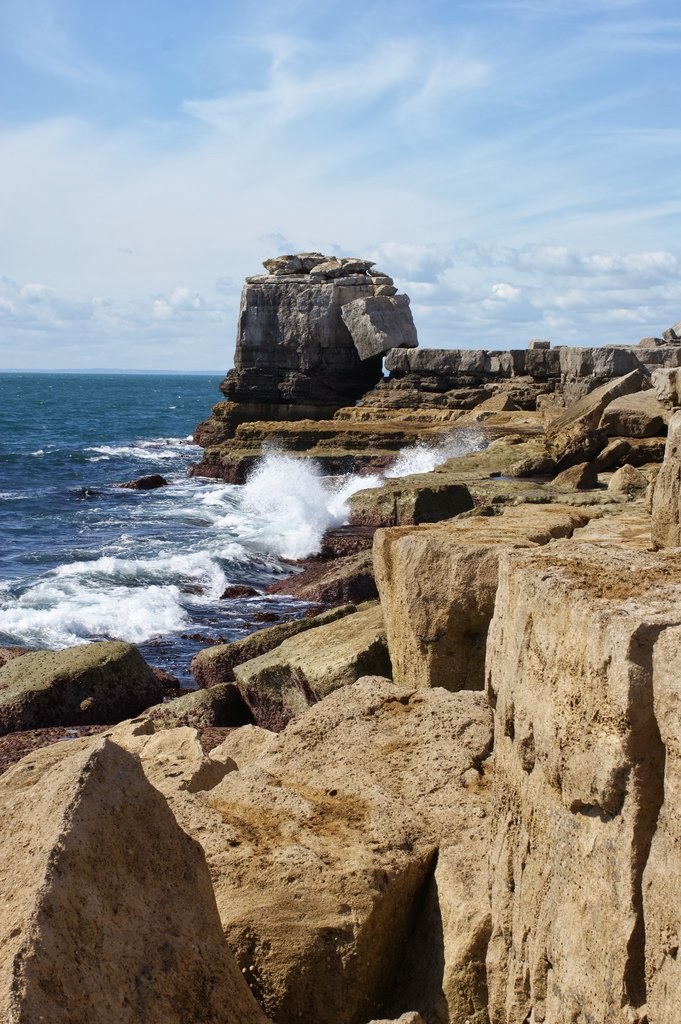
Rocks on the coast of Portland
Rocks on the coast of Portland (2012)
Grounded

When the ship became grounded, Captain Wordsworth was appalled. He realised that the damage to his ship would prevent her from joining the convoy and therefore he would lose out on the profitable trading he had depended upon to make his fortune. He cried out in despair: “Oh pilot! Pilot! You have ruined me!”

But it was more than financial ruin that Wordsworth was to face; it was the loss of his ship and the lives of 260 of its passengers, including his own.

Read more about the ship's fate in The wreck of the Earl of Abergavenny

Headshot of Rachel Knowles author with sea in background(2021)
Rachel Knowles writes clean/Christian Regency era romance and historical non-fiction. She has been sharing her research on this blog since 2011. Rachel lives in the beautiful Georgian seaside town of Weymouth, Dorset, on the south coast of England, with her husband, Andrew.

Find out more about Rachel's books and sign up for her newsletter here.

If you have enjoyed this blog and want to encourage me and help me to keep making my research freely available, please buy me a virtual cup of coffee by clicking the button below.

 
Sources used include:
A gentleman in the East-India House, An Authentic Narrative of the Loss of the Earl of Abergavenny East Indiaman (1805)
Boddy, Maureen and West, Jack, Weymouth – an illustrated history (1983)
Chedzoy, Alan, Seaside Sovereign (2003)
Hayter, Alicia, The Wreck of the Abergavenny (2002)

Photographs © RegencyHistory