Search this blog

Showing posts with label Portland. Show all posts

Monday, 3 October 2016

Almost a sailing tragedy off Weymouth in 1800: a first-hand account

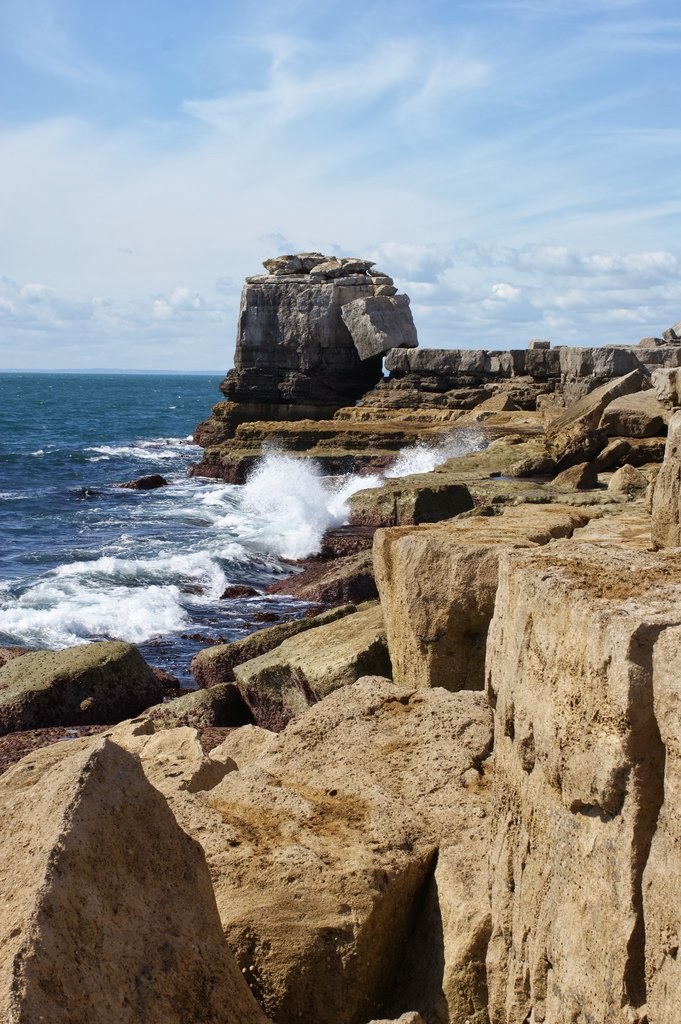
Portland Bill, Dorset
Portland Bill, Dorset (2016)
Overcoming adversity always makes for a good story, particularly when it involves a life-threatening situation. Charles Sturt, Member of Parliament for Bridport, Dorset, had such a tale to tell after sailing off Weymouth in 1800. Within a few days of his adventure, he wrote an account that was later published.

The story begins with King George III, a frequent visitor to the seaside town, who often went aboard Royal Navy ships moored in the bay. On 20 September, the King, with Queen Charlotte and other members of the royal family, went aboard the frigate Cambrian.

While the royals were being entertained by the Navy, Sturt sailed out into Weymouth Bay, where he encountered the cutter of Mr Weld, of Lulworth Castle. 

Weymouth, Dorsetshire by JMW Turner
Weymouth, Dorsetshire by JMW Turner 1
Racing towards disaster

He decided to race Weld’s cutter, but was held back because his own vessel was towing a smaller boat. Sturt asked one of his crew to board this small boat and sail it back to Weymouth, but 
...at this he hesitated and refused. I observed, ‘You my lads, have known me long enough to be satisfied I should not order you to do a thing I would not readily do myself, therefore, reef the sail, slip the mast, I will go myself.’2
Ordering his crew to continue the race with Weld, Sturt began the task of returning his boat to Weymouth. This required him to avoid the Shambles Bank, an area of submerged rocks to the south east of Portland Bill.
A very strong ebb tide carried me to the westward, and on for the Shambles, which I wished to avoid; put before the wind, but, being under a very low sail, could not stem the tide; dared not quit the helm to let the reefs out of the sail, for fear of broaching-to; the tide hauling me dead on the Shambles, where the sea was running tremendously high, and breaking horridly, no time to be lost.
The danger from the shallows of the Shambles is amplified by the nearby Portland Race, where land forces the tides to flow fast and dangerously, just off Portland Bill. Many ships have been wrecked and lives lost because of the Race and the Shambles.

Portland Bill, Dorset
Portland Bill, Dorset (2016)
Time to take emergency action

Realising that he was in trouble, Sturt attempted to lighten his boat by throwing all his ballast overboard. 
And convinced my boat could not exist many minutes, and nothing but the interposition of Providence save me, to divert my thoughts from the horrid idea of death, I began singing the sea song, ‘Cease rude Boreas’.
Written by playwright and poet George Alexander Stevens, ‘Cease rude Boreas’ was also known as ‘the storm song’ and seems to have been a popular choice among sailors facing serious wind and waves.
As I was singing the second verse, a dreadful sea, all foaming, took my boat on her larboard quarter, sheered a-weather my helm she lost her shorage-way broached-to, upset and overwhelmed, the sea rolling over and over; recovering from my alarm without the smallest hope of escaping, I swam to my boat, which was lying on her broadside: with difficulty I got into her and held her fast.
Having been thrown from his boat, and regaining it, Sturt decided he was overdressed for the occasion. He recorded that he “immediately pulled off my coat, waistcoat, shirt, and cravat; this I accomplished with much difficulty being wet”. Now he took in the gravity of his situation.
No sail near me; above fifteen miles from the nearest land; a dreadful hollow, broken sea running in every direction, and frequently overwhelming me, gave me no hopes of saving my life.
Waves crashing against the rocks on Portland
Facing near certain death

Living near the Dorset coast, Sturt was an accomplished sailor, familiar with the hazards of sailing.
To surrender without a struggle, I considered weak; the thoughts of my wife and children, which at that period struck my mind very forcibly (I thought I saw them,) recollecting the difficulties I surmounted two years before, in saving some men from a wreck off my house, and knowing that they were saved from a situation as dreadful as my own by the assistance of Divine Providence this gave me resolution and fortitude to exert myself.
Sturt busied himself trying to organise his vessel as best he could, despite “being repeatedly washed off the boat”. While there were no other ships in sight, Sturt was not alone with the waves.
At this period, several gurnets (a large species of sea-gull,) hovered close to me, and were so bold as to come within two feet of my head. I suppose they anticipated a good meal on me; however, by hollowing pretty loud, I convinced them I was not yet dead; they took flight and I saw no more of them.
Having now spent three hours being soaked by the raging seas, Sturt was roused by the sight of two sails, but the ships were too distant for him to attract attention, so he didn’t bother. When a third, a brig, passed closer, he did all he could to get noticed.

The Pelican sailing off Weymouth Bay
A chance of rescue
I succeeded; I saw her men go up the main shrouds, and the crew stand close together, but passed me without offering to lend me the smallest assistance; this indeed was enough for me to surrender up a life which was no longer supportable; such inhumanity excited in me the strongest emotions of anger; but alas! I had no means of redress; I gave up all hopes of being saved.
Now the wind began pushing Sturt’s boat towards the dangers of the Portland Race. Prospects of rescue failing, he began preparing his body for identification once he was dead.
I took a valuable diamond watch of my wife's out of my fob, tied it securely round the waistband of my trowsers, pulled them off, and tied them round the short of the boat; when I had done this, I made a running knot with the painter, intending to put it round me in my last moments, that my boat, as the wind was, would be driven near my house, or Bridport, and that my watch and seal would lead to a discovery of who I was: having done this, I became quite indifferent, death was no longer terrible; and as I saw no chance of being saved, I sat quietly in the boat, patiently waiting for the next wave to put an end to my suffering.
By his own account, Sturt’s patient waiting seems to have involved regularly being tipped out of and swimming back to his boat, for around an hour. By now, his boat seems to have capsized.

Running out of time

Then, at about half past four in the afternoon, he spotted a further eight sails. The first few to pass by were too far away to spot him.
I reserved my strength for the only two of the eight that had not passed me; a brig came by, I hailed her, lifted up my hands and fortunately I observed they saw me, for her men went up aloft to see what I was; they then tacked and stood toward me, but did not hoist a boat out; this alarmed me.
For whatever reason, the captains of two ships had decided to ignore the shouts and waving from a man in trouble on the seas. 
There was only one more vessel to pass; it was nearly dark, a dismal sea and within two miles of Portland Race: if this passed me, all was over. I roused myself on this occasion, and hailed, her stood on the boat's bottom, was washed off, got on her again and was again washed off; however life was still desirable as long as I saw a chance of being saved.
On this occasion he was rewarded by the sight of a boat being lowered, and he realised rescue was imminent. 
At that instant I was agitated, my firmness seemed to forsake me, for I burst into a flood of tears, and was seized with a violent retching from the quantity of salt water I had swallowed.
Rescue and rewards

It seems that with the assistance of his rescuers, Sturt was able to bring his boat alongside the ship Middleton, under Captain Rankin. Once aboard, Sturt was welcomed by Colonel Jackson of the 85th. At 8pm the Middleton sailed into Portland Roads, the sheltered waters that are now Portland Harbour.

Portland Harbour, Dorset
Here he was reunited with his friends
Mr and Mrs Smith, from whom I received the kindest attention; they thought I was irrecoverably gone, so did their majesties, particularly as captain Ingram declared he saw my boat go down; however it was extremely reasonable to suppose I was lost, the sea running high and breaking in a most tremendous manner: he well knew on those shoals a boat could not long exist, and, on the whole, a most dreadful evening, it was reasonable to suppose I was no more.
Their majesties, with the dukes of Kent and Cumberland, lord and lady Cathcart, Parlet Cathcart: colonels Desborough and Wynyard, generals Goldsworthy Garth, &c, every soul, in short, in Weymouth, heartily congratulated me on my providential escape; the king and queen with their family, on the esplanade, expressed, in the kindest manner their very sincere happiness at my being saved.
Three days later, Sturt returned to the Middleton to thank his rescuers. He gave 10 guineas and a silver cup to Captain Rankin, 5 guineas each to four named crew members, and 20 to be distributed among the other sailors.

The captain and crew of the Earl of Abergavenny were less fortunate.  
 

Headshot of Rachel Knowles author with sea in background(2021)
Rachel Knowles writes clean/Christian Regency era romance and historical non-fiction. She has been sharing her research on this blog since 2011. Rachel lives in the beautiful Georgian seaside town of Weymouth, Dorset, on the south coast of England, with her husband, Andrew, who wrote this post.

Find out more about Rachel's books and sign up for her newsletter here.

If you have enjoyed this blog and want to encourage me and help me to keep making my research freely available, please buy me a virtual cup of coffee by clicking the button below.

 
Notes
(1) From Picturesque Views on the Southern Coast of England (details below).
(2) All quotes from The Cabinet of Curiosities Vol 2 (1822) by Samuel Griswold Goodrich.

Sources used include:
Crotch, W, MacFarren, GA, and Wade, J Augustine, A Collection of National English Airs (1838)
Goodrich, Samuel Griswold, The Cabinet of Curiosities: Natural, Artificial and Historical Volume 2 (Hartford, 1822)
Turner, JMW, Picturesque Views on the southern coast of England, from drawings made principally by JMW Turner and engraved by WB Cooke and others (1826)

Thursday, 9 January 2014

The Great Gale in Weymouth and Portland

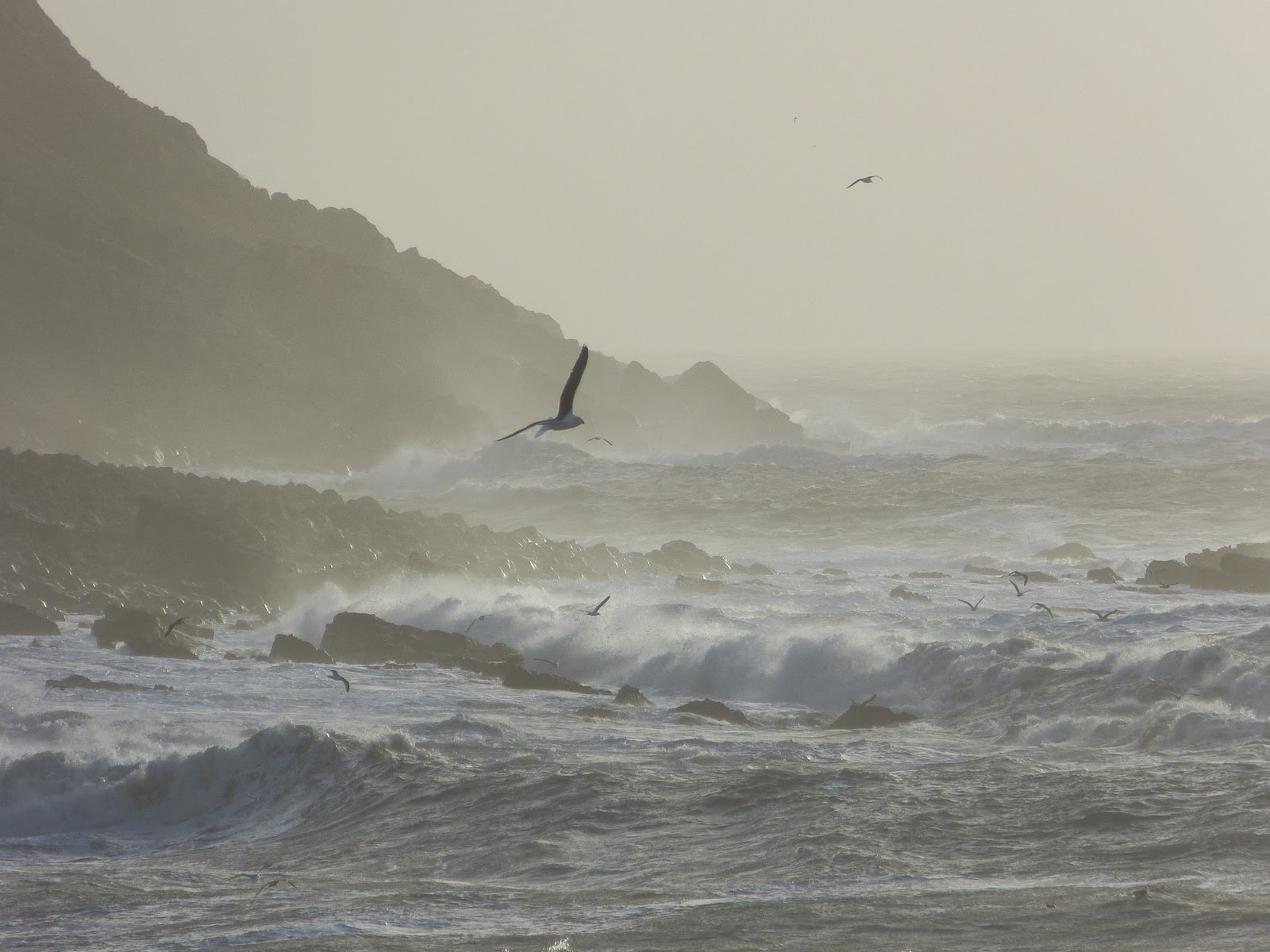
A wild sea off Portland, January 2014
The sea off Portland 7 January 2014
UK storms - January 2014

The UK has been battered by storms this week. Strong winds and heavy rain have caused severe flooding in some parts, with ferocious seas and swollen rivers bursting their banks. Down the road from where I live in Weymouth, the road over to the Isle of Portland was closed and the siren was sounded to indicate that the sea defences had been breached. Chesil Beach has been re-sculpted. Instead of steps of shingle down to the sea, there is now a steep wall of pebbles.

Aerial view of Chesil Beach, January 2014
Chesil Beach 7 January 2014
The storm of 23 November 1824

But this is nothing to the damage caused by the storm of 22-23 November 1824, known as the Great Gale. The storm that hit the south coast of England on the night of the 22 November 1824 is the worst that Weymouth and Portland has ever seen. Hurricane-force winds combined with spring tides to produce tsunami-like waves that topped Chesil Beach.

Chiswell village destroyed

The sea water crashed over the top of Chesil Beach, crushing the village of Chiswell with the force of the sea. More than 30 houses were destroyed and many more made uninhabitable. At least 25 people lost their lives, swept away by the water or crushed beneath the ruins of their homes.

The Gentleman’s Magazine reported:
The destruction of lives and property at Chiswell, Portland Island, Dorset, has been most dreadful; about twenty men, women, and children, were found dead and missing, and more than two hundred persons were without a habitation, and not a particle of property left them. There was scarcely a boat left out of the great number that belonged to the fishermen of the island. Whole streets were swept away in less than half an hour from the time the sea first made in, which was about six o’clock in the morning, and the cries of despair and suffering of the poor unfortunates upon whom the houses were falling, was dreadful. Numbers were dangerously wounded and bruised in their courageous and humane endeavours to rescue others from death.1
Disaster at Ferry Bridge

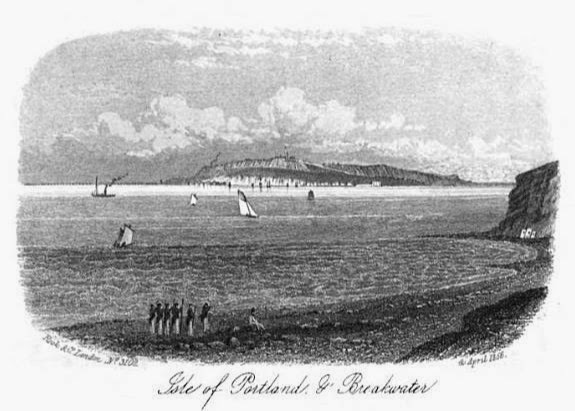
A view of Portland from a Weymouth guidebook from 1857
The Isle of Portland from Weymouth as a Watering Place (1857)
The wild waters eroded Chesil’s pebbled bank and 'the Chisel Bank throughout its whole extent was lowered some twenty to thirty feet.'2

The rope-drawn ferry that operated between the mainland of Weymouth at Wyke and the Isle of Portland, was destroyed by the storm. The ferryman’s cottage was swept away and the ferryman was drowned trying to save a horse.

The sandbank which had previously enabled horses and wagons to drive across to the Island at low water was completely washed away and the gap between Wyke and Portland was four times as big. For some days, Portland was completely cut off from the mainland.

Weymouth seafront smashed to pieces

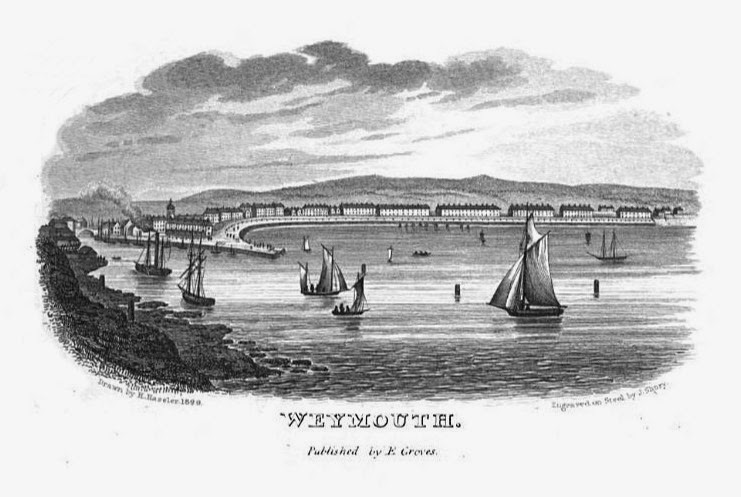
A view of Weymouth seafront from a Weymouth guidebook from 1835
Weymouth seafront
from Weymouth and Melcombe Regis New Guide
by E Groves (1835)
The rector of Wyke recorded:
The pier of Weymouth Harbour was materially damaged, and three fourths of the esplanade at Melcombe Regis entirely thrown down and demolished.2
The stone posts and chains were pulled from their places and destroyed. Waves poured over the road and flooded the houses on the seafront in Gloucester Row and the Crescent with sand, water and gravel. Boats were torn from their moorings and destroyed or carried down the main streets as if they were at sea.

At a place called the Narrows where the Weymouth backwater joined the sea over the road, two people were swept away and drowned.

The Gentleman’s Magazine reported:
The breakwater, and nearly the whole of the esplanade are washed away. The houses near the sea had four feet of water on their basements.1
At the Preston end of Weymouth, the sea again swept over the road and flooded Lodmor flat – where Lodmoor Country Park is today.

A stone on Weymouth seafront commemorating  the destruction of Weymouth esplanade in 1824
A stone on Weymouth seafront commemorating
the destruction of Weymouth esplanade in 1824
More local destruction

Further west along the coast at Abbotsbury, seven metres of floodwater were recorded. At East Fleet, a tidal wave picked up a haystack and other debris and crashed into the village. The church and several cottages were wrecked. In Dorchester, a falling chimney stack killed the Reverend Richman and his wife in their bed.

A post marking the high water mark  from the 1824 storm, the Swannery, Abbotsbury
A post marking the high water mark
from the 1824 storm, the Swannery, Abbotsbury
Shipwrecks

The storm wrought havoc on the seas causing shipwrecks all along the Dorset coast. The West Indiamen Carvalho and Colville were wrecked on Chesil Beach.

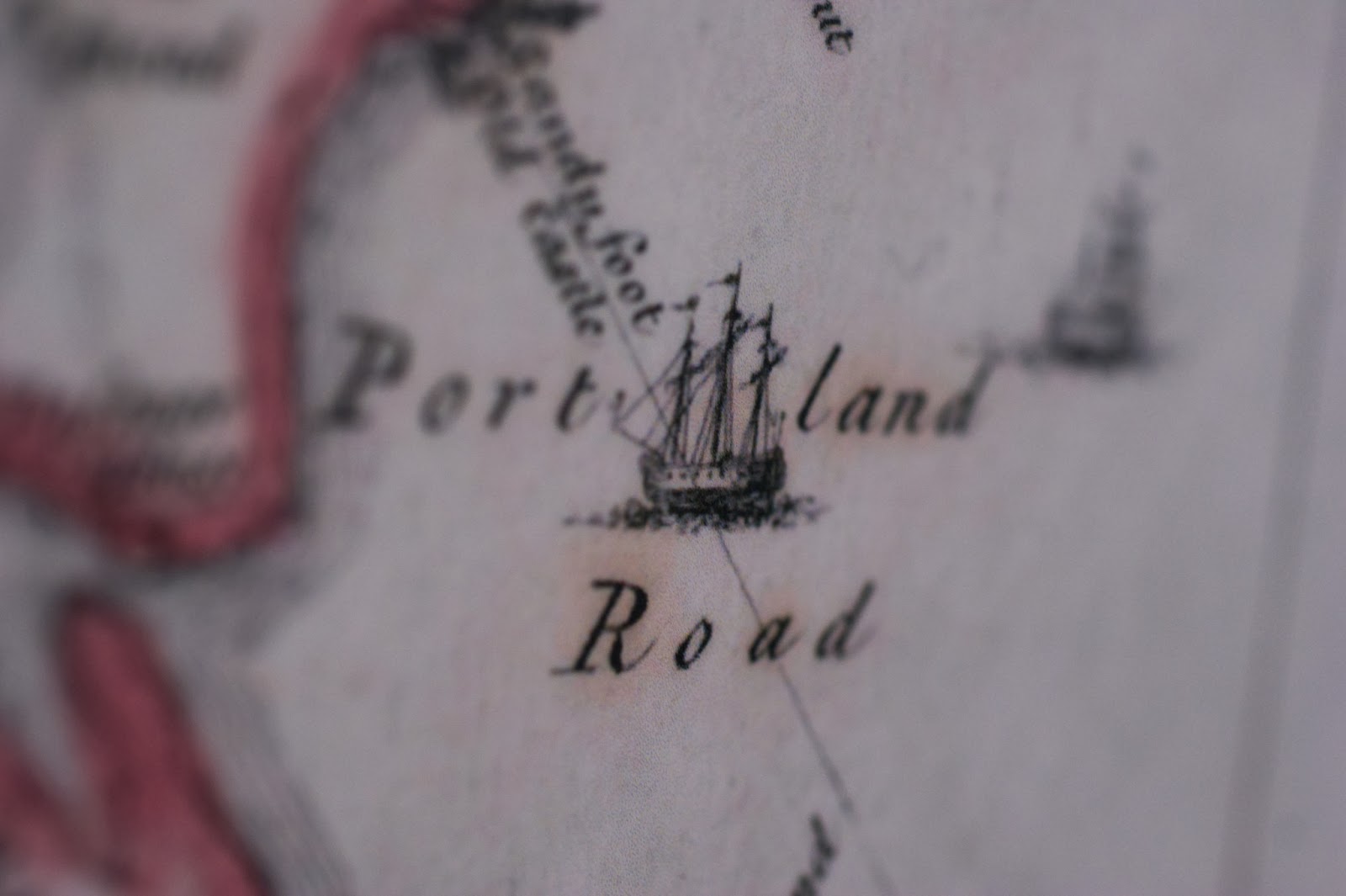
A close-up shot of an old map of Weymouth and Portland showing the words Portland Road

The Gentleman’s Magazine reported:
Off Weymouth, a large ship, entitled the Colville, was wrecked, and every soul on board perished. Seventeen of the dead bodies were thrown up by the sea.1
One of those who drowned – Henry Gosling – was determined not to be buried in an unmarked grave and wrote his name and address on a piece of his shirt and tied it around his neck before he died.

The Ebenezer was more fortunate. The huge waves tossed the ship high onto Chesil Beach; its captain and one crew member were drowned, but the rest were saved. After being repaired, it was relaunched on the Weymouth side of Chesil Beach rather than attempting to lift it back over the top.

Headshot of Rachel Knowles author with sea in background(2021)
Rachel Knowles writes clean/Christian Regency era romance and historical non-fiction. She has been sharing her research on this blog since 2011. Rachel lives in the beautiful Georgian seaside town of Weymouth, Dorset, on the south coast of England, with her husband, Andrew.

Find out more about Rachel's books and sign up for her newsletter here.

If you have enjoyed this blog and want to encourage me and help me to keep making my research freely available, please buy me a virtual cup of coffee by clicking the button below.

 
Notes
(1) From The Gentleman’s Magazine (1824).
(2) From a record of the storm by George Chamberlaine, Rector of Wyke church, written in the back of the baptismal register on 16 December 1824 as quoted in All about Ferry Bridge by Doug Hollings (1993).

Sources used include:
Attwooll, Maureen, Shipwrecks (Discover Dorset series) (1998)
Ellis, George, The History and Antiquities of the Borough and Town of Weymouth and Melcombe Regis (1829)
Hollings, Doug, All about Ferry Bridge (or Smallmouth) (1993)
Simpkin & Marshall, Weymouth as a Watering Place (1857)
The Gentleman's Magazine and Historical Chronicle (1824)
Tucker (pub), Tucker's Improved Weymouth Guide (1851)

All photographs © RegencyHistory.net

Friday, 27 July 2012

George III in Weymouth

Weymouth bay from Weymouth and Melcombe Regis New Guide by E Groves (1835)
Weymouth bay
from Weymouth and Melcombe Regis New Guide
by E Groves (1835)
A superior seaside resort

In November 1788, George III became mentally unstable, precipitating the Regency crisis. But just as George, Prince of Wales, was about to take power as Regent, the King recovered. However, the King was not completely better. 
 
Dr Crane, author of “Cursory Observations on Sea-Bathing”, advocated the benefits of sea air, sea bathing and even seawater drinking as a cure for a wide variety of ailments and was quick to recommend his home town of Weymouth as the best place for the King to convalesce.
Weymouth of late years has been much frequented for its commodious Sea-Bathing, which it furnishes, in a manner superior to any other in the Kingdom…I do not wonder at its being the Resort of many people of the first Distinction.1

Weymouth seafront (2012)
Gloucester Lodge2

The Duke of Gloucester owned a house in Weymouth and offered to lend this to his brother for his seaside holiday. Gloucester House or Lodge was a modest red brick house built sideways onto the Esplanade with a sizeable garden called the Shrubbery. However, it was not big enough to accommodate the Royal party comfortably, and the gentlemen were forced to stay in neighbouring buildings.

Gloucester Lodge on Weymouth seafront (2012)
Gloucester Lodge
on Weymouth seafront (2012)

The Royal visit of 1789

The King, together with the Queen and his four oldest daughters, arrived in Weymouth at the end of June 1789 to a tremendous welcome. The words “God Save the King” could be seen everywhere – on caps, on windows and even on bathing assistants’ waistbands. The anthem was played often, sometimes in the most unlikely places. On one occasion, a band hid in a neighbouring bathing machine and struck up the anthem when the King went to bathe in the sea.

The people were delighted that the King had recovered and had come to be amongst them and they were determined to let him know.

George III’s favourite holiday destination

The visit was a big success. The Queen declared that the King was “much better and stronger for the sea bathing”. Life in Weymouth exactly suited the King and he came back in 1791 and then every year until 1805 except 1793 and 1803.

When the King was in Weymouth, the government came to him. William Pitt visited him here whilst serving as First Lord of the Treasury and it was in Weymouth in 1798 that the King signed papers elevating Admiral Nelson to the peerage.

The daily routine

The King’s routine varied little from day to day. He usually rose early and bathed in the sea and then spent time riding, walking and sailing. The King was able to forgo many of the restrictions imposed on his freedom in London. In Weymouth, he was able to walk about freely and talk to his subjects, reportedly ending his sentences with the refrain: “What? What?” He particularly liked to talk to local landowners about agriculture, gaining him the nickname “Farmer George”.

A replica of George III's bathing machine on Weymouth seafront (2012)
A replica of George III's bathing machine
on Weymouth seafront (2012)
Public amusements

The King enjoyed going to the theatre where he was perfectly happy with the mediocre entertainments provided. Fanny Burney, one of the King’s party in 1789, was not impressed with these shows, describing them as “in the barn style” – a mere medley of songs, dances and imitations. Sometimes the theatre managed to secure famous actors, such as Mrs Siddons and John Quick to perform for the King.

The Royal family visited the Assembly Rooms, where balls were held twice a week. Here they could attend in a private room, cordoned off from the public, but not hidden from them.


Excursions from Weymouth

The King liked to visit the local landowners. In 1789 he visited Mr Damer at Came House, the Welds at Lulworth Castle and Sherborne Castle, the home of Stephen Digby, one of the King’s equerries.


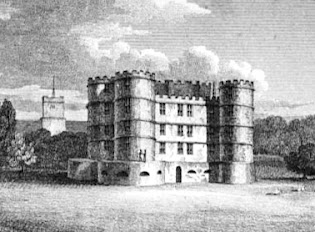
Lulworth Castle from The Beauties of England and Wales by J Britton & EW Brayley (1803)
Lulworth Castle
from The Beauties of England and Wales
by J Britton & EW Brayley (1803)
Warships and military reviews

George loved to sail and frequently went on cruises aboard the warship Southampton often visiting the Isle of Portland.

Bow and Arrow Castle, Portland from The Beauties of England and Wales by J Britton & EW Brayley (1803)
Bow and Arrow Castle, Portland
from The Beauties of England and Wales
by J Britton & EW Brayley (1803)
As the war with France progressed, an increasing number of army camps sprang up around Weymouth to guard against the threat of invasion. From 1804, these troops were augmented by men from the German Legion. The King regularly attended military reviews of these troops.

Weymouth remembers 

On 4 October 1805, George III left Weymouth for the last time. But the King was not forgotten. Two lasting monuments to Weymouth’s Royal visitor remain.

The first is the Osmington white horse - a carving of George III on horseback in the hillside at Osmington, overlooking Weymouth bay. It is thought that this was carved in 1808.

The white horse at Osmington (2012)
The second is the King’s Statue - a statue of George III in his coronation robes on Weymouth seafront. The foundation stone was laid at the end of the Esplanade in 1809 and unveiled the following year. It has been painted in heraldic colours since 1949 and remains a popular landmark today, with a replica of George’s bathing machine in the gardens below it.

Statue of George III on Weymouth seafront (2012)
Statue of George III
on Weymouth seafront (2012)

Headshot of Rachel Knowles author with sea in background(2021)
Rachel Knowles writes clean/Christian Regency era romance and historical non-fiction. She has been sharing her research on this blog since 2011. Rachel lives in the beautiful Georgian seaside town of Weymouth, Dorset, on the south coast of England, with her husband, Andrew.

Find out more about Rachel's books and sign up for her newsletter here.

If you have enjoyed this blog and want to encourage me and help me to keep making my research freely available, please buy me a virtual cup of coffee by clicking the button below.

 
Notes
  1. Delamotte, Peter, The Weymouth Guide (1789)

  2. Fanny Burney refers to the Duke of Gloucester's house as Gloucester House in her diaries; others refer to it as Gloucester Lodge.

For an audio visual presentation about George III in Weymouth see George's seaside adventure.

Sources used include:
Britton, John & Brayley, Edward Wedlake, The Beauties of England and Wales (1803, Vernor & Hood et al, London)
Burney, Fanny, Diary and letters of Madame D'Arblay, edited by her niece, Charlotte Barrett (Henry Colburn, 1846, London)
Chedzoy, Alan, Seaside Sovereign - King George III at Weymouth (2003, The Dovecote Press, Wimborne)
Delamotte, Peter, The Weymouth Guide (1789)
Feltham, John, A Guide to all the Watering and Sea-bathing Places (1815) 
Groves, E, The Weymouth and Melcombe Regis New Guide (E Groves, 1835, Weymouth)
Hibbert, Christopher, George III (1998, Viking, Great Britain)

All photographs © RegencyHistory.net

Friday, 3 February 2012

The wreck of the Abergavenny

On 5 February 1805, the Earl of Abergavenny sank off the coast of Portland with the tragic loss of 260 lives. The wreck is remembered not only for the horrific death toll, but also for the loss of its captain, John Wordsworth, the brother of the poet, William Wordsworth.

Memorial to the Earl of Abergavenny  on the stone pier, Weymouth
Memorial to the Earl of Abergavenny
on the stone pier, Weymouth (2012)
The last voyage of the Abergavenny

The Earl of Abergavenny by T Lury
The Earl of Abergavenny was part of a convoy of East Indiamen ships heading for China, on the lucrative route via Bengal. The convoy had already suffered two collisions when it became separated from its escort vessel, HMS Weymouth. Abandoning its attempts to sail westwards against the wind, the convoy decided to return to Portland Roads to wait for fairer weather.

As was the custom, as she neared Portland, the Abergavenny took on board a pilot to help navigate around Portland Bill and the shoal of coarse sand and shingle beyond it, known as the Shambles. The pilot proved to be disastrously inept. In the failing light and strong waves, he failed to sail far enough out to sea and the ship was grounded on the Shambles.


Portland Bill
Portland Bill (2012)
The Shambles

The shock of the impact threw the Abergavenny on her side and water poured in down the hatchways and companionways. She righted herself but she could not break free of the Shambles. Men immediately manned the pumps to eject the water whilst the waves continued to pound at her until the hull planking gave way immediately below the pumps.

Thomas Gilpin, fourth mate, later recorded what happened:
During the time she was on the Shambles, had from three to four feet water; kept the water at this height about 15 minutes, during the whole time the pumps constantly going. Finding she gained on us, it was determined to run her on the nearest shore.1
Recent research has suggested that the iron knees that held the deck to the hull and kept the ship secure were attached to the deck and hull by copper nails. This dangerous combination, which may have arisen from a cheap refit, would have caused severe rusting which may have led to the hull disintegrating more readily.

A water-logged ship

At last, after about two and a half hours, the ship floated off the Shambles, but by this time it was so full of water that the sails were unable to carry the ship onto Weymouth Sands.

Gilpin recorded:
The ship would not bear up – kept the helm hard a starboard, she being water-logged; but still had a hope she could be kept up till we got her on Weymouth Sands.2
Portland Roads - now known as Portland Harbour
 Portland Roads - now known as Portland Harbour
The cutter goes for help

Desperate to rally some assistance, the ship’s cutter was launched with the purser, CH Stewart, Joseph Wordsworth and six seamen on board. The other boats were cut free so that they would float freely when the ship went down, but why no attempt was made to launch them is not clear.

Perhaps they thought that the dangers of trying to navigate the ferocious waves in an open boat far outweighed those of staying on board and trying to sail the ship onto land. Perhaps the manpower required to launch the boats would have prevented the pumps from working and the whole ship would have sunk much sooner.

According to Gilpin:
Cut the lashings of the boats – could not get the long boat out, without laying the main-top-sail aback, by which our progress would have been so delayed, that no hope would have been left us of running her aground.3
“She will sink in a moment”
“We have done all we can, Sir – she will sink in a moment,” declared the first mate, Samuel Baggot, to his captain.
“It cannot be helped. God’s will be done,” John Wordsworth replied.4
When the passengers realised that the ship was sinking, some seized planks and bits of hen coop and threw themselves into the sea. Others were swept overboard by giant waves. Some piled into a boat that had been cut loose before the ship sank but there were so many that the boat overturned. Those that were able climbed up the rigging, trying to stay above water.

Around 11pm on the 5 February, the ship went down. When she first settled, part of the main and mizzen masts remained above water and about 200 people desperately clung onto their only hope of staying out of the icy water.

Frontispiece of one of several pamphlets issued about the sinking  of the Earl of Abergavenny
Frontispiece of one of several pamphlets issued about the sinking
of the Earl of Abergavenny 
Help at last

According to Gilpin, the ship fired her guns “from the time she struck till she went down” but very little assistance was rendered by nearby ships. Five passengers were rescued by a boat from a sloop, but the waves were too dangerous for them to attempt to rescue anyone else.
 
Why no one else responded to the cries of distress or the gun fire is not known. Ships later claimed that they did not hear the cries in the noise of the storm. Maybe this was true, or maybe they were motivated by self-preservation in the hazardous conditions or even a desire to plunder the wreck.

It was not until the early hours of the following morning that rescue came. A sloop called the Three Brothers came alongside and rescued the survivors, who climbed down the rigging in an orderly fashion. Many had lost their grip in the dark hours of the night and were drowned; others died afterwards due to hypothermia and exhaustion.

An appalling loss of life

Part of the return of the ship's company from the Earl of Abergavenny
Part of the return of the ship's company
from An Authentic Narrative of the Loss of the Earl of Abergavenny East Indiaman (1805)
The total number of dead was around 260 including the captain, John Wordsworth, Samuel Baggot, who drowned trying to rescue a woman passenger, and Ensign Whitlow, who had made such efforts along with Baggot and Joseph Wordsworth to re-join the ship. The fourth mate, Thomas Gilpin, was applauded for his bravery in trying to save as many as possible.

The death of John Wordsworth

William Wordsworth and his sister, Dorothy, were devastated at the loss of their brother John. Their grief, in turn, affected their literary circle, especially Samuel Taylor Coleridge.

Initially it was rumoured that John had been negligent and had not tried to save either the ship or himself after realising his own financial ruin, but the Court of Enquiry at East India House fully acquitted him of any negligence or misconduct.

John Wordsworth was buried in All Saints Churchyard in the Parish of Wyke Regis on 21 March 1805. No gravestone now exists to indicate where the remains of the last captain of the Earl of Abergavenny are buried.

All Saints Churchyard  Wyke Regis, Weymouth
All Saints Churchyard
Wyke Regis, Weymouth(2012)

A memorial to John Wordsworth was erected inside the church in 2005 to mark the 200th anniversary of the tragedy.
 
Memorial to John Wordsworth in All Saints Church, Wyke Regis, Dorset
Memorial to John Wordsworth in All Saints Church,
Wyke Regis, Dorset (2014)
You can find more detail about the events leading up to the wreck in The last voyage of the Earl of Abergavenny 
 
Post updated 19/7/22

Headshot of Rachel Knowles author with sea in background(2021)
Rachel Knowles writes clean/Christian Regency era romance and historical non-fiction. She has been sharing her research on this blog since 2011. Rachel lives in the beautiful Georgian seaside town of Weymouth, Dorset, on the south coast of England, with her husband, Andrew.

Find out more about Rachel's books and sign up for her newsletter here.

If you have enjoyed this blog and want to encourage me and help me to keep making my research freely available, please buy me a virtual cup of coffee by clicking the button below.

 
Notes
  1. A gentleman in the East-India House, An Authentic Narrative of the Loss of the Earl of Abergavenny East Indiaman (1805).
  2. Ibid.
  3. Ibid.
  4. Hayter, Alicia, The Wreck of the Abergavenny (2002).
Sources used include:
A gentleman in the East-India House, An Authentic Narrative of the Loss of the Earl of Abergavenny East Indiaman (1805)
Boddy, Maureen and West, Jack, Weymouth – an illustrated history (1983)
Chedzoy, Alan, Seaside Sovereign (2003)
Hayter, Alicia, The Wreck of the Abergavenny (2002)

Photographs © RegencyHistory

Thursday, 2 February 2012

The last voyage of the Earl of Abergavenny

Loss of the Abergavenny, East Indiaman, off the Isle of Portland  by R Cobbold and J Tomlinson (Dorset County Council)
Loss of the Abergavenny, East Indiaman, off the Isle of Portland
by R Cobbold and J Tomlinson (Dorset County Council)


The Earl of Abergavenny was an East Indiaman ship, under the captaincy of John Wordsworth, brother of the poet, William. On 2 February 1805, she sailed in a convoy of ships heading first for India and then on to China. John Wordsworth hoped that it would be the voyage to make his fortune and that of his brother, who would then be able to devote himself to his poetry. The Abergavenny never made it out of British waters.

The Earl of Abergavenny

The Earl of Abergavenny was an East Indiaman ship, a 1200 ton vessel, 176 feet long and 43 feet wide and carrying 30 guns, and manned by a crew of 160 to 200 men. In January 1801, John Wordsworth succeeded his cousin, another John Wordsworth, as captain of the ship.

Captains could make their fortunes by carrying passengers and private cargo whilst publicly acting for the East India Company. Larger vessels, like the Abergavenny, were normally given the direct route to China, but for this voyage, influential friends, in particular William Wilberforce, secured Wordsworth the more profitable route via Bengal.

A valuable opportunity

This route offered threefold trading – selling goods to the British community living in India, buying opium in Bengal to sell in China and purchasing tea in China for the English market. There was little knowledge of the ill effects of opium addiction in Britain at the time and although the very profitable opium trade was banned, smuggling was very common and Wordsworth, like many others, took a lax view on it.

By investing family money in this profitable trade, Wordsworth hoped to make his fortune. According to the ship’s manifest, the cargo of the Abergavenny on its final voyage was estimated to be worth around £90,000, including chests of silver dollars worth £70,000 to buy goods in both Bengal and China.

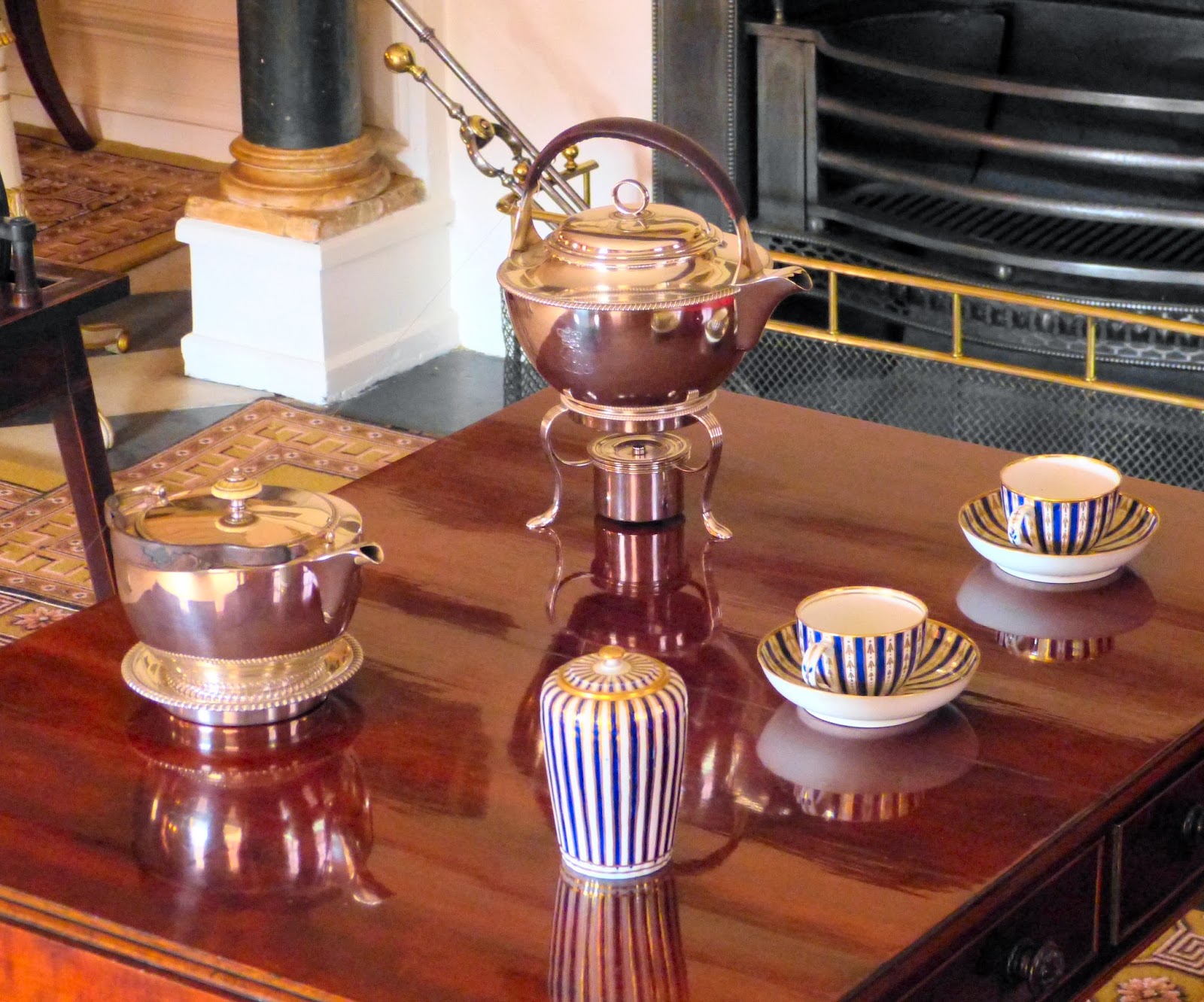
Tea set, Kew Palace
Tea set, Kew Palace
Gravesend to Portsmouth

The Abergavenny travelled in a convoy of East Indiamen from Gravesend to Portsmouth, arriving on 23 January 1805. When the convoy was in the Downs, a heavy gale caused it to collide with another East Indiaman, the Warren Hastings, which had dragged her anchor in the gale. The Abergavenny got off lightly, but the Warren Hastings suffered £2000 damage and the repairs caused her to miss the convoy.

The convoy

In Portsmouth, the Abergavenny took on board 108 of the Company’s troops and a number of the King’s troops, and, after uncertain weather, the convoy moved out to Spithead on the 30 January. The convoy included four other East Indiamen, the Royal George, the Henry Addington, the Wexford and the Bombay Castle, and two whalers, and was escorted by HMS Weymouth, a 44 gun frigate commanded by Captain Draper, commodore of the convoy.

They set sail on 1 February, but a further collision between the Henry Addington and HMS Weymouth caused yet more delay, and it was not until the 2 February that the convoy finally sailed through the Needles Channel. Despite the collisions already endured, the ships were under strict instructions to keep together in convoy.

What happened to HMS Weymouth?

HMS Weymouth led the convoy on a south-westerly course from the Needles Rocks, but at some point lost sight of the convoy. She burnt a blue light all night but failed to find them. Mistakenly believing the convoy to be ahead of her, the Weymouth sailed on west, eventually deciding to sail out into the Atlantic, presumably in the belief that the convoy was still ahead of her.

In reality, the convoy had spent 24 hours tacking off the Needles whilst the Weymouth sailed past them. Eventually the convoy gave up waiting for her and headed westwards, rounding Portland Bill and heading for Lyme Bay against the wind.

Latecomers

Here, Samuel Baggot, the first mate, Joseph Wordsworth, the third mate and a son of the older John Wordsworth, a Company cadet and Ensign Whitlow of the 22nd Foot, who had missed the boat in Portsmouth, succeeded in catching up with them, by means of an open boat that they had hired at an extortionate rate.

Back to Portland Roads

The coast off Portland
The coast off Portland (2012)
When the convoy was about 12 leagues to the west of Portland, Captain Clarke of the Wexford, who had taken charge of the convoy after losing contact with HMS Weymouth, decided that it was best to return to Portland Roads and wait for better weather. Accordingly, the convoy set off eastward, and about two leagues west of Portland, the ships picked up pilots to navigate them round Portland Bill.

The Abergavenny was the sternmost ship of the convoy and did not pick up its pilot until about 3pm in the afternoon. Despite, supposedly, being a local man, the pilot “did not seem well acquainted with the coast.” In fading light, the ship sailed south past Chesil Beach and the barren cliffs of Portland Island and carried on southwards out to sea.

The Shambles

Two miles out to sea to the south east of Portland Bill lies a shoal of coarse sand, shingle and crushed shells called the Shambles. It measures nearly 3 miles long and in the centre, is only 11 feet below the surface at low water. The pilot sought to avoid the Shambles, but failed to give the shoal a wide enough berth. When the fierce wind suddenly died away, the strong tide set the ship against the breakers and she was driven head on onto the Shambles about 5pm on 5 February.

Rocks on the coast of Portland
Rocks on the coast of Portland (2012)
Grounded

When the ship became grounded, Captain Wordsworth was appalled. He realised that the damage to his ship would prevent her from joining the convoy and therefore he would lose out on the profitable trading he had depended upon to make his fortune. He cried out in despair: “Oh pilot! Pilot! You have ruined me!”

But it was more than financial ruin that Wordsworth was to face; it was the loss of his ship and the lives of 260 of its passengers, including his own.

Read more about the ship's fate in The wreck of the Earl of Abergavenny

Headshot of Rachel Knowles author with sea in background(2021)
Rachel Knowles writes clean/Christian Regency era romance and historical non-fiction. She has been sharing her research on this blog since 2011. Rachel lives in the beautiful Georgian seaside town of Weymouth, Dorset, on the south coast of England, with her husband, Andrew.

Find out more about Rachel's books and sign up for her newsletter here.

If you have enjoyed this blog and want to encourage me and help me to keep making my research freely available, please buy me a virtual cup of coffee by clicking the button below.

 
Sources used include:
A gentleman in the East-India House, An Authentic Narrative of the Loss of the Earl of Abergavenny East Indiaman (1805)
Boddy, Maureen and West, Jack, Weymouth – an illustrated history (1983)
Chedzoy, Alan, Seaside Sovereign (2003)
Hayter, Alicia, The Wreck of the Abergavenny (2002)

Photographs © RegencyHistory

Thursday, 26 January 2012

Princess Charlotte in Weymouth

Princess Charlotte  from La Belle Assemblée (1807)
Princess Charlotte
from La Belle Assemblée (1807)
Princess Charlotte goes to the seaside

Princess Charlotte first visited Weymouth in 1799 whilst her grandparents, George III and Queen Charlotte, were staying there. The king had visited the town during the summer of 1789 whilst recuperating from his first serious bout of mental instability and liked Weymouth so much that he returned there almost every year until 1805.

Princess Charlotte arrived in Weymouth on 28 August, accompanied by her governess, the Countess Dowager of Elgin. She stayed in the house taken for her on Charlotte Row. A few days later, on 1 September, she bathed in the sea for the first time. As a lively three-year-old, Charlotte loved to collect shells on the beach. During her stay, she visited the village of Upwey and her aunts bought her toys from Mr Ryall’s toyshop.

At midnight on 16 September, Princess Charlotte’s father, George, Prince of Wales, arrived in Weymouth to visit his daughter. Unlike his father, the Prince of Wales did not like Weymouth. This is not surprising given that the King and his eldest son disagreed on virtually everything. The Prince of Wales preferred the freedom he found away from the royal court at the more fashionable resort of Brighton. However, on this occasion, he managed to overcome his dislike of the town sufficiently to visit his daughter.

The King’s party left Weymouth on 14 October, followed by Princess Charlotte and Lady Elgin on 23 October.

Weymouth beach (2012)
Recuperating in Weymouth 1814

In 1814, Charlotte visited Weymouth again, to try a sea water cure for the severe pains she was suffering in her knee. She was also emotionally worn down at this time, as her father’s reaction to her behaviour after breaking off her engagement to Prince William of Orange had been severe. Her party included Countess Rosslyn, Countess Ilchester, Mrs Campbell, the Misses Coates, General Garth and the Reverend Dr Short.

A royal welcome

Gloucester Lodge, Weymouth (2012)
Princess Charlotte arrived at Gloucester Lodge on 10 September 1814, where she was warmly welcomed by the inhabitants of Weymouth who had gathered on the Esplanade to applaud her arrival. Two days later, Henry Hayes Tozard, the Mayor of Weymouth, organised a formal celebration of her visit, with a display of standards at the custom house, Harvey’s Library and the Esplanade and on ships in the harbour, and a general illumination in the evening.

On 14 September, the mayor, aldermen and principal burgesses waited on Princess Charlotte and formally addressed her with a welcoming and dutiful speech:
We regard the auspicious appearance of your Royal Highness amongst us, not only as a happy omen of the future prosperity of the town, but as a revival of the joyful sensations we formerly experienced on the visits of your august grandfather, the paternal sovereign of a grateful people.1
Sea bathing

Charlotte went sea bathing every other day in an effort to cure the pains in her knee. According to a letter from her friend, Margaret Mercer Elphinstone, to Lord Grey, Charlotte’s health was becoming worse and the pains in her knee were preventing her from sleeping. Mr Keate came down from London to attend her.

Miss Elphinstone’s letter also claimed that 'the Prince has positively refused to allow her to drive her ponies there, as he says it would collect a mob at the door every time she went out.' However, Huish’s biography suggests that she did go for morning rides and was able to enjoy the beautiful countryside, and in particular, her favourite drive to the charming village of Upwey.

During her stay, Princess Charlotte attended services at the Melcombe church, which she found was far too small for the number of the people wishing to attend and was therefore rather hot and overcrowded.

Isle of Portland

Portland Bill (2012)
During her stay in Weymouth, Princess Charlotte was able to satisfy her desire to visit the Isle of Portland. Although the short voyage was tedious because of lack of wind, she was fascinated by the huge expanse of barren rock. Huish recorded:
She was going too near the verge of the rocks, which presented a high perpendicular face to the ocean, when one of her ladies, alarmed at her boldness, implored her to go no further; she replied, in the most significant manner: ‘I wish every one standing on the brink of destruction could retrace their steps as easily as I can.’2
Princess Charlotte eagerly sought the details of the East India company ships, the Halswell and the Abergavenny, which had been wrecked off the island.

Abbotsbury, Lulworth and Corfe

Charlotte was cordially received by the Countess of Ilchester at Abbotsbury Castle. Abbotsbury village was once home to a monastery of Benedictine monks and the princess was pleased to visit the famous decoy there.

The decoy, Abbotsbury Swannery (2012)

She also visited Lulworth Castle, the seat of Thomas Weld, and Corfe Castle, the property of Henry Bankes, where she marvelled at the ancient castle ruins.

Corfe Castle (2012)
Corfe Castle (2012)
An anniversary celebration

According to Huish, 'On the anniversary of the jubilee, the day was observed by her Royal Highness with every testimony of regard.'3 I believe that the anniversary referred to is that of George III’s accession to the throne, which was on 25 October. Princess Charlotte gave out gifts of money and bibles to the poor, and the nobility were invited to the King’s Lodge where they were entertained by the famous Italian minstrel, Signor Rivolta, who performed a concert on eight instruments at one time. There was also a magnificent firework display with an emblematical device of the king.

Charlotte had one final marine excursion, on board his Majesty’s ship, Zephyr, before leaving Weymouth on 15 November, breaking her journey at Salisbury where she was able to admire the cathedral before returning to Cranbourne Lodge.

Another seaside holiday 1815

Princess Charlotte visited Weymouth again the following year when the pains in her knee began to reoccur. Arriving in Weymouth at the end of July, the princess was, once again, enthusiastically received, and a general illumination was given in her honour. She stayed until the end of the year, leaving Weymouth on 1 January 1816.

Weymouth beach (2012)
On board the Leviathan

On one occasion during this visit, Charlotte was on board the royal yacht when the Leviathan fired a salute and Captain Nixon came on board to pay his respects. At her request, the princess was rowed across to the man-of-war, despite the disapproval of the Bishop of Salisbury, who was of the party. She insisted on ascending the side of the boat rather than have a chair of state let down for her and then proceeded to inspect the whole ship before descending over the side of the boat in the same manner. Though her behaviour was applauded by many, it was chastised by others as unladylike.

Weymouth remembers
 
The marriage of Princess Charlotte to Prince Leopold of Saxe-Coburg was celebrated with enthusiasm in Weymouth in 1816; her death the following year was most solemnly mourned.

A letter of commiseration dated 20 November 1817 said:
Yesterday being the day appointed for the funeral of the ever-to-be-regretted Princess Charlotte of Wales, it was observed here with the most mournful solemnities.4
We had witnessed, during two successive seasons, which she passed among us, those charitable dispositions, those affable and endearing manners, those elegant attainments, which formed her bright character.5

Headshot of Rachel Knowles author with sea in background(2021)
Rachel Knowles writes clean/Christian Regency era romance and historical non-fiction. She has been sharing her research on this blog since 2011. Rachel lives in the beautiful Georgian seaside town of Weymouth, Dorset, on the south coast of England, with her husband, Andrew.

Find out more about Rachel's books and sign up for her newsletter here.

If you have enjoyed this blog and want to encourage me and help me to keep making my research freely available, please buy me a virtual cup of coffee by clicking the button below.


 Notes
(1) From Huish, Robert, Memoirs of her late royal highness Charlotte Augusta, Princess of Wales (Thomas Kelly, 1818, London)(p151)
(2) From Huish, Robert, Memoirs of her late royal highness Charlotte Augusta, Princess of Wales (Thomas Kelly, 1818, London)(p158)
(3) From Huish, Robert, Memoirs of her late royal highness Charlotte Augusta, Princess of Wales (Thomas Kelly, 1818, London)(p165)
(4) From Huish, Robert, Memoirs of her late royal highness Charlotte Augusta, Princess of Wales (Thomas Kelly, 1818, London)(p638)
(5) From Huish, Robert, Memoirs of her late royal highness Charlotte Augusta, Princess of Wales (Thomas Kelly, 1818, London)(p639)

Sources used include:
Chedzoy, Alan, Seaside Sovereign - King George III at Weymouth, (2003)
Hibbert, Christopher, George IV (1972, 1973)
Huish, Robert, Memoirs of her late royal highness Charlotte Augusta (1818)
Parissien, Steven, George IV, The Grand Entertainment (2001)
Times Digital Archive

All photographs © RegencyHistory.net