Search this blog

Showing posts with label Duchess of Gloucester. Show all posts

Saturday, 25 July 2015

Princess Augusta, Duchess of Cambridge (1797-1889)

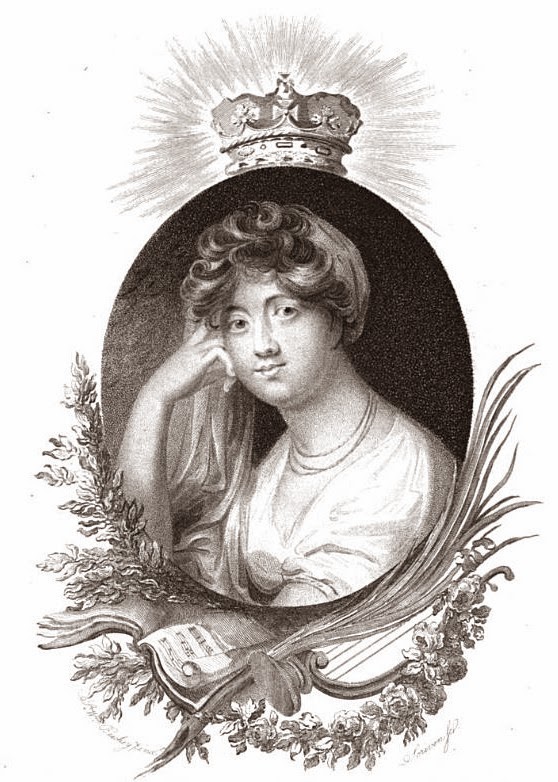
Augusta, Duchess of Cambridge from La Belle Assemblée (1830)
Augusta, Duchess of Cambridge
from La Belle Assemblée (1830)
Profile

Augusta, Duchess of Cambridge (25 July 1797 – 6 April 1889) was the wife of Adolphus, Duke of Cambridge, seventh son of George III.

Birth of a German princess

Princess Augusta Wilhelmina Louisa was born in Cassel on 25 July 1797, the third daughter of Frederick, Landgrave of Hesse-Cassel, and his wife Caroline Polyxena of Nassau-Usingen.1

A royal marriage

On 7 May 1818, Augusta married her second cousin, Adolphus, Duke of Cambridge, the seventh son of George III, in Cassel.2
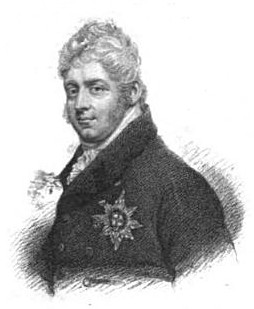
Adophus, Duke of Cambridge from A Biographical Memoir of Frederick,  Duke of York and Albany by John Watkins (1827)
Adolphus, Duke of Cambridge
from A Biographical Memoir of Frederick,
 Duke of York and Albany by John Watkins (1827)
Adolphus wrote soon after his engagement:
Every hour I feel that my esteem and attachment for my bride increase; and she really is everything both as to heart, mind and Person that I could wish.3
The marriage ceremony was repeated at the Queen’s Palace—Buckingham House—on 1 June.4

According to La Belle Assemblée:
A temporary altar was fixed in her [the Queen’s] blue drawing-room, and the Duke and Duchess were again united in presence of her Majesty, the Prince Regent, the royal Dukes, and the Princesses their sisters. The ceremony was performed by the Archbishop of Canterbury, assisted by the Bishop of London. A royal salute was, as usual, fired at this conclusion of the ceremony, and a splendid dinner, in honour of the nuptials, given by the Prince Regent.5
A happy marriage

Adolphus was more than twenty years older than Augusta, but it was a happy marriage. After the birth of Mary Adelaide, Adolphus’ sister Elizabeth, the Landgravine of Hesse-Homburg, wrote: 
Thank God my dearest Adolphus’ mind is at ease about the Duchess of Cambridge; she has given him another little girl…She was woefully alarmed about herself, which affected him, as he adores her to a degree that almost made him ill.6
Until 1837, Adolphus and Augusta lived in Hanover where the Duke was Governor General and, from 1831, Viceroy.

Family life

Adolphus and Augusta had three children: George William Frederick Charles (1819), Augusta Caroline (1822) and Mary Adelaide (1833). They liked to have their children with them and frequently provided dances and the like for their amusement. 

At the age of eleven, George was sent to England to be educated at Windsor. Augusta took Mary to England when she was three to stay at Windsor, but although she was always welcomed by William IV and Queen Adelaide, Augusta was not a good traveller and avoided the journey whenever possible.
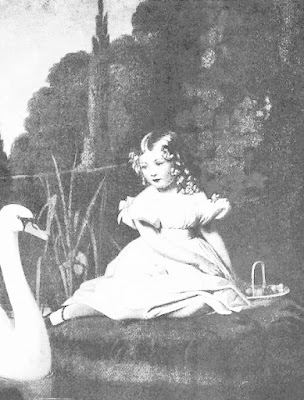
Princess Mary Adelaide aged 4 from   A Memoir of Princess Mary Adelaide of Teck    by Sir Clement Kinloch-Cooke (1900)
Princess Mary Adelaide aged 4 from
A Memoir of Princess Mary Adelaide of Teck
 by Sir Clement Kinloch-Cooke (1900)
Return to England

In 1837, William IV died and Ernest, Duke of Cumberland, the Duke of Cambridge’s eldest surviving brother, became King of Hanover. On 1 September, the Duke and Duchess of Cambridge left Hanover for England, where they took up residence in London at Cambridge House, 94 Piccadilly.

Cambridge Cottage

In the summer of 1838, Augusta and Adolphus moved to Cambridge Cottage in Kew. An eastern wing and a portico were added to the house which had been used many years before by Prince Edward, Duke of Kent, and Prince William, Duke of Clarence, later William IV. It is believed that George III gave the house to Adolphus in 1801 when he was made Duke of Cambridge.

Augusta loved Kew and spent a lot of her time outside, playing with her younger daughter, Mary Adelaide, and tending the garden. She drove a light pony carriage around the grounds. Her favourite seat was under a horse chestnut tree outside the dining room and throughout the summer, Augusta received visitors there and served tea in its shade.

Cambridge Cottage from A Memoir of Princess Mary Adelaide of Teck by Sir Clement Kinloch-Cooke (1900)
Cambridge Cottage from A Memoir of Princess Mary Adelaide
of Teck by Sir Clement Kinloch-Cooke (1900)
A keen gardener

Augusta introduced two lilacs from her family home in Germany and sought out new plants for the garden including rhododendrons. Mary Adelaide grew up sharing her love of the garden. The family were lifelong friends with the director of the Botanic Gardens, Sir William Hooker, and later his son, Sir Joseph.

Visitors

Cambridge Cottage received many visitors including the young Prince of Wales, the future Edward VII, who rowed up the Thames to visit his aunt and cousin. It was here that the Prince of Wales attended his first dinner party. Maybe it was fond memories of this time that inspired the match between the Prince of Wales’ son, the future George V, and Mary Adelaide’s daughter, Mary of Teck.

What was the Duchess of Cambridge like?

Augusta, Duchess of Cambridge from La Belle Assemblée (1818)
Augusta, Duchess of Cambridge
from La Belle Assemblée (1818)
According to Kinloch-Cooke, the Duchess of Cambridge was 
...a handsome, stately lady somewhat above the average height of women...Her features were striking, and the dark eyes and eyebrows made her appearance most attractive...perfectly shaped hands...a charming smile.7
Augusta was an efficient and kindly mistress, managing the household herself. She loved reading and being read to, was a good conversationalist and had a keen interest in politics. She and Adolphus both enjoyed music and regularly attended the opera, but according to Princess Elizabeth, her “sister-in-law’s passion is the theatre.”8

Augusta liked to be busy, whether tending the garden or working on a piece of needlework or knitting. Like her husband, she was very charitable and strove to help the poor of Kew as well as supporting charities back in Germany.

Years of widowhood

Adolphus died in 1850. Augusta continued to live mostly at Kew. It was from Cambridge Cottage that Mary Adelaide was married to the Duke of Teck on 12 June 1866, in the local church at Kew. In the days running up to the wedding, there was a banquet and ball at Kew and two tents were erected in the garden in order to accommodate 140 people at dinner.

Princess Mary Adelaide from   A Memoir of Princess Mary Adelaide of Teck    by Sir Clement Kinloch-Cooke (1900)
Princess Mary Adelaide from
A Memoir of Princess Mary Adelaide of Teck
 by Sir Clement Kinloch-Cooke (1900)
During the London season, Augusta stayed at St James’ Palace. She entertained a great deal both at home and in London and was close to Princess Mary, Duchess of Gloucester, and sometimes dined with the Duchess of Inverness, the Duke of Sussex’s second wife.

Together with Mary Adelaide, she attended the opening of the Crystal Palace in 1854 and attended a ball in the Waterloo Gallery at Windsor.

A beloved old lady

By 1875, Augusta was an invalid. Her solace in her affliction was music and visits from her friends and family, especially Mary Adelaide and her children.

Mary Adelaide wrote of her mother:
She is carried down to the drawing-room every day about two o’clock, and after her early dinner at three is wheeled into the garden in a delightful chair, and when fine remains out till after seven, sometimes taking a turn in the great gardens, for her chair can either be drawn by hand or a pony.9
The chair was a gift from Queen Victoria.

Augusta survived her husband by almost 40 years, dying at St James’ Palace on 6 April 1889 at the age of 91. She was buried at St Anne’s Church, Kew, but her remains were later transferred, with those of her husband, to the royal vault in St George’s Chapel, Windsor.

Headshot of Rachel Knowles author with sea in background(2021)
Rachel Knowles writes clean/Christian Regency era romance and historical non-fiction. She has been sharing her research on this blog since 2011. Rachel lives in the beautiful Georgian seaside town of Weymouth, Dorset, on the south coast of England, with her husband, Andrew.

Find out more about Rachel's books and sign up for her newsletter here.

If you have enjoyed this blog and want to encourage me and help me to keep making my research freely available, please buy me a virtual cup of coffee by clicking the button below.


Notes
(1) Modern day Kassel – it was spelt Cassel until 1928.
(2) Augusta’s father was the son of Princess Mary, a daughter of George II, and sister of Frederick, Prince of Wales, George III’s father. This made Augusta’s father and George III first cousins and their children, Augusta and Adolphus, second cousins.
(3) In a letter from Adolphus to Lady Harcourt in A Memoir of Princess Mary Adelaide of Teck by Sir Clement Kinloch-Cooke (1900).
(4) La Belle Assemblée said 2 June.
(5) From La Belle Assemblée (August 1818).
(6) In a letter from Princess Elizabeth to a Miss Swinburne dated 4 December 1833 in A Memoir of Princess Mary Adelaide of Teck by Sir Clement Kinloch-Cooke (1900).
(7) In A Memoir of Princess Mary Adelaide of Teck by Sir Clement Kinloch-Cooke (1900) p26.
(8) In a letter by Princess Elizabeth in A Memoir of Princess Mary Adelaide of Teck by Sir Clement Kinloch-Cooke (1900).
(9) In a letter from Princess Mary of Teck to a friend dated 9 August 1875 in A Memoir of Princess Mary Adelaide of Teck by Sir Clement Kinloch-Cooke (1900).

Sources used include:
La Belle Assemblée (1818 and 1830)
Kinloch-Cooke, Clement Sir, A Memoir of Princess Mary Adelaide of Teck (1900)
Cotton, AD, The Cambridge Cottage Garden, published as a supplement to The Journal of the Kew Guild (1942)
Palmer, Alan, Adolphus Frederick, Prince, first Duke of Cambridge, (1774-1850), Oxford Dictionary of National Biography, (Oxford University Press, 2004, online edn, May 2009, accessed 23 Mar 2013)

Thursday, 28 November 2013

Princess Sophia Matilda of Gloucester (1773-1844)

Princess Sophia of Gloucester  from La Belle Assemblée (1806)
Princess Sophia of Gloucester
from La Belle Assemblée (1806)
Profile

Princess Sophia (29 May 1773 - 29 November 1844) was the daughter of Prince William Henry, 1st Duke of Gloucester, a younger brother of George III.

Family history

Princess Sophia Matilda was born in Grosvenor Street, Mayfair, on 29 May 1773, the eldest child and only surviving daughter of William Henry, 1st Duke of Gloucester, a younger brother of George III, and his wife, Maria, the illegitimate daughter of Sir Edward Walpole MP and widow of the 2nd Earl Waldegrave.

A family in disgrace

Sophia’s parents had married in secret in 1766 and her father did not tell his brother the King about his marriage until they found that Maria was pregnant. George III was hurt by his brother’s deceitfulness and instigated an investigation into the validity of the marriage which was carried out just six days before Sophia was born.

According to The Gentleman’s Magazine, “the usual notice was sent to the King requesting he would direct the proper officers to attend the birth” but “no notice was taken of the message.”1 George III was so displeased with the marriage that he banned the Duke of Gloucester and his family from the royal presence.

Maria Waldegrave, later Duchess of Gloucester and  William Henry, Duke of Gloucester
Maria Waldegrave, later Duchess of Gloucester
from Letters of Horace Walpole to Sir Horace Mann Vol 4 (1844) and
William Henry, Duke of Gloucester
 by Richard Earlom after Hugh Douglas Hamilton
pubd by Robert Sayer (1771) © British Museum
Christening

Sophia was christened privately on 26 June 1773 at Gloucester House by David Moss, Lord Bishop of St David’s and Rector of St George’s, Hanover Square. According to The Gentleman’s Magazine, her sponsors were “the Princess Amelia in person and their Royal Highnesses the Duke and Duchess of Cumberland.”1

Continental living

The Duke and Duchess and their daughter spent many years abroad for reasons of economy and for the sake of the Duke’s health. He suffered repeated bouts of a debilitating illness with symptoms not dissimilar to those later suffered by his brother George III. Sophia’s brother William was born in Rome in 1776 and the family returned to England the following year, but were abroad again for most of the period from 1784 to 1787. In time, the King became reconciled to the Duke, but not to the Duke’s marriage.

Royal provision

In 1778, at the King’s request, parliament made provision for the Duke’s children, by which Sophia was awarded a grant of £4000 a year after her father’s death.

George III also arranged for a Miss Dee to be governess to Sophia and her brother William.

Debut

Sophia made her debut at the King’s birthday in 1790, accompanied by her brother and her governess-companion, Miss Dee. According to Charlotte Keppel, Sophia was not treated very well. She and William were not invited to the dinner before the ball as they had expected and had to wait around for the ball to start. Sophia was “not dressed well in a very old fashioned style – her gown was very magnificent but the hair was dressed quite out of fashion.” She “danced very well but nobody paid her the least respect, and after the King and Queen were gone she was treated quite as a common person and pushed about.”2

Noble modesty

According to her profile in La Belle Assemblée:
Her Royal Highness the Princess Sophia of Gloucester has kept an equal pace with her Royal cousins in the cultivation of every virtue and feminine accomplishment; she is to be distinguished for the same noble modesty of demeanour, the same benevolence and affability, the same preference of retirement and domestic life.3
Fanny Burney described Princess Sophia in her diary:
She is very fat, with very fine eyes, a bright, even dazzling bloom, fine teeth, a beautiful skin, and a look of extreme modesty and sweetness.4
Weymouth

Sophia’s father owned a house in Weymouth, Gloucester Lodge, which the King used for his visits to the seaside from 1789 onwards. During the royal family’s visit of August to October 1804, Sophia and her father were of the party. The Gentleman’s Magazine records that on the 8 September, they travelled to Bincomb Downs where they watched “a grand review and sham fight between all the regiments.”5

Gloucester Lodge, the Duke of Gloucester's house,  Weymouth seafront
Gloucester Lodge, the Duke of Gloucester's house,
Weymouth seafront (2012)
Ranger of Greenwich Park

In 1813, Sophia was appointed Ranger of Greenwich Park and Ranger’s House was altered to provide her with suitable accommodation. She was very popular with the people of Greenwich who saw her as a kind and generous benefactor to the town’s poor.

Devotion to William

William Frederick, Duke of Gloucester
from A Biographical Memoir of Frederick,
 Duke of York and Albany
by John Watkins (1827)
Sophia never married nor had any children, but she was excessively fond of her brother. After his marriage to Princess Mary in 1816, she was a frequent visitor to their home, Bagshot Park, but her sister-in-law resented her interfering behaviour which did not promote domestic harmony. When William died quite suddenly in 1834, Sophia was devastated. Princess Mary made sure that Sophia was not her constant companion in her widowhood.

The final years

Princess Sophia Matilda of Gloucester
from from The Girlhood of Queen Victoria (1912)
Sophia died at Blackheath, Kent, on 29 November 1844 and was buried in St George’s Chapel, Windsor.

Headshot of Rachel Knowles author with sea in background(2021)
Rachel Knowles writes clean/Christian Regency era romance and historical non-fiction. She has been sharing her research on this blog since 2011. Rachel lives in the beautiful Georgian seaside town of Weymouth, Dorset, on the south coast of England, with her husband, Andrew.

Find out more about Rachel's books and sign up for her newsletter here.

If you have enjoyed this blog and want to encourage me and help me to keep making my research freely available, please buy me a virtual cup of coffee by clicking the button below.

 
Notes
(1) From The Gentleman’s Magazine (May 1773).
(2) From a letter by Charlotte Keppel to Anne Clement (June 1790) in Princesses by Flora Fraser.
(3) From La Belle Assemblée (1806).
(4) From The Diaries and Letters of Madame D’Arblay, Volume 3 of 3 (1846).
(5) From The Gentleman’s Magazine (Supp 1804)

Sources used include:
Bell, John, La Belle Assemblée (John Bell, 1806)
Burney, Fanny, Diary and letters of Madame D'Arblay, edited by her niece, Charlotte Barrett, volume III (Henry Colburn, 1846, London)
Fraser, Flora, Princesses, the six daughters of George III (2004)
The Gentleman's Magazine and Historical Chronicle (1773-1804)
Victoria, Queen, The Girlhood of Queen Victoria, A Selection from Her Majesty's Diaries between the years 1832 and 1840, edited Viscount Esher 2 Volumes (1912)
Royal Borough of Greenwich website

All photographs by © RegencyHistory.net

Thursday, 21 November 2013

Maria, Duchess of Gloucester, formerly Countess Waldegrave (1736-1807)

Maria Waldegrave, later Duchess of Gloucester
from Letters of Horace Walpole
to Sir Horace Mann Vol 4 (1844)
Profile

Maria, Duchess of Gloucester (baptized 10 July 1736 - 22 August 1807), was the beautiful but illegitimate daughter of Sir Edward Walpole. She married first the 2nd Earl Waldegrave and then William Henry, 1st Duke of Gloucester, younger brother of George III who disapproved of their marriage.

Family background

Maria Walpole was baptized on 10 July 1736 at St James’, Westminster. Her father was Sir Edward Walpole, MP, a younger son of Sir Robert Walpole, Prime Minister, and her mother was Dorothy Clement, who had been apprenticed to a Covent Garden milliner. Although her parents were not married, Maria was brought up in her father’s household with her sisters, Laura and Charlotte, and treated as if she was his legitimate offspring. Her aunt, Jane Clement, was also part of the household.

Maria's uncle, Horace Walpole
from the European Magazine and London Review (1797)
Beauty itself

Maria’s uncle, Horace Walpole, admired her beauty and took it upon himself to launch her into society:
It is the second, Maria, who is beauty itself! Her face, bloom, eyes, hair, teeth, and person are all perfect. You may imagine how charming she is, when her only fault, if one must find one, is, that her face is rather too round. She has a great deal of wit and vivacity, with perfect modesty.1
An illustrious marriage 

James Waldegrave, 2nd Earl Waldegrave
Print by J McArdell after Sir Joshua Reynolds (1762)
© British Museum
On 15 May 1759, Maria married James Waldegrave, 2nd Earl Waldegrave, a Lord of the Bedchamber to George II and governor to the future George III, at her father’s house in Pall Mall. Horace Walpole wrote:
For character and credit, he is the first match in England – for beauty, I think she is.2

Maria was in a white silver gown, with a hat very much pulled over her face; what one could see of it was handsomer than ever; a cold maiden blush gave her the sweetest delicacy in the world.3
Short-lived happiness

The Earl was more than twenty years older than Maria, but the marriage was deemed a success. They had three beautiful daughters: Elizabeth Laura (1760), Charlotte Maria (1761) and Anna Horatia (1762).

Lady Maria Waldegrave, Laura Viscountess Chewton  and Lady Horatia Waldegrave
Lady Maria Waldegrave, Laura Viscountess Chewton
and Lady Horatia Waldegrave from The Letters of
Horace Walpole ed P Cunningham Vol 5 (1859)
Sadly, the Earl died suddenly of smallpox in Albemarle Street, London, on 8 April 1763. Maria was distraught. For a while, she thought she was carrying his child, but eventually she had to admit that it was not so and the estates went to the Earl’s brother, leaving Maria with a comparatively meagre allowance of £1,000 a year.

A second marriage

Horace Walpole had high hopes that Maria would make a second advantageous marriage:
She is allowed the handsomest woman in England; as she is so young, she may find as great a match and a younger lover — but she never can find another Lord Waldegrave!4
On 6 September 1766, Maria married William, 1st Duke of Gloucester, at his house in Pall Mall. The ceremony was performed in secret by her chaplain, Dr Morton, and there were no witnesses.

William Henry, Duke of Gloucester
 by Richard Earlom after Hugh Douglas Hamilton
pubd by Robert Sayer (1771) © British Museum
In 1768, the Duke bought Maria a house at St Leonard’s Hill, near Cranborne Lodge, the house that went with his role as Ranger of Cranborne Chase.

Banned from the Court

George III thought that Maria was a bad influence on his brother and refused to believe the rumours that he had married her. He granted her a pension of £5,000 a year from the Irish revenues, and sent the Duke abroad on diplomatic visits in an effort to wean him from her company.

When Maria became pregnant, the Duke finally confessed his marriage in a letter to the King. As the ceremony h without witnesses and Maria’s chaplain had since died, George III launched an enquiry into the legitimacy of the marriage, just days before her baby was born. The King was forced to accept his brother’s marriage, but he felt betrayed over his secrecy and banned William and Maria and their family from the royal presence.

Family life

Maria had three children by her second marriage: Sophia Matilda (1773), Caroline Augusta Maria (1774) who died before her first birthday, and William Frederick (1776).

Princess Sophia of Gloucester and Prince William Frederick, 2nd Duke of Gloucester
Princess Sophia of Gloucester from La Belle Assemblée (1806)
and Prince William Frederick, 2nd Duke of Gloucester
from A Biographical Memoir of Frederick, Duke of York and Albany
by John Watkins (1827)
Marriage breakdown

In time, the King became reconciled to his brother William, but not to Maria. William’s own relationship with Maria deteriorated and he started an affair with Lady Almeria Carpenter, Maria’s lady in waiting. Sometimes he denied Maria access to her children, but despite their difficulties, they continued to keep a joint household and Lady Almeria never completely eclipsed Maria.

Religious commitment

During the latter years of her life, Maria’s religious commitment increased. Her eldest daughter Laura, who had married her cousin and become Countess Waldegrave, lost first her husband and then her eldest son. The bluestocking evangelical Hannah More was a correspondent of Maria’s uncle Horace Walpole and she offered religious consolation to the grief-stricken Countess and her mother. Although Maria did not fully embrace evangelicalism, she supported More’s Cheap Repository Tracts and welcomed Wilberforce’s Practical View.

The last few years

For the sake of economy and William’s health, the Duke and Duchess lived much of their married life on the continent. William suffered from several bouts of a debilitating illness similar to that suffered by his brother George III and he died on 25 August 1805. The King was kind to Maria after William’s death, for the sake of their children.

After the Duke’s death, Maria lived at Oxford Lodge, Brompton Road, London, where she died on 22 August 1807. She was buried at St George’s Chapel, Windsor, on 31 August.

Headshot of Rachel Knowles author with sea in background(2021)
Rachel Knowles writes clean/Christian Regency era romance and historical non-fiction. She has been sharing her research on this blog since 2011. Rachel lives in the beautiful Georgian seaside town of Weymouth, Dorset, on the south coast of England, with her husband, Andrew.

Find out more about Rachel's books and sign up for her newsletter here.

If you have enjoyed this blog and want to encourage me and help me to keep making my research freely available, please buy me a virtual cup of coffee by clicking the button below.

 
Notes
(1) In a letter from Horace Walpole to Sir Horace Mann (9 Sept 1758) about his brother’s second daughter - from The Letters of Horace Walpole, Earl of Orford, Vol 3 of 6 (1840).
(2) In a letter from Horace Walpole to Sir Horace Mann (11 Apr 1759) - from The Letters of Horace Walpole, Earl of Orford, Vol 3 of 6 (1840).
(3) In a letter from Horace Walpole to George Montagu (16 May 1759) from The Letters of Horace Walpole, Earl of Orford, Vol 3 of 6 (1840).
(4) In a letter from Horace Walpole to Sir Horace Mann (10 Apr 1763) - from The Letters of Horace Walpole, ed P Cunningham Vol 4 of 8 (1857).

Sources used include:
Hibbert, Christopher, George III (1998, Viking, Great Britain)
Kilburn, Matthew, William Henry, Prince, first Duke of Gloucester and Edinburgh (1743-1805) Oxford Dictionary of National Biography (Oxford University Press, 2004; online edn Jan 2008, accessed 28 Oct 2013)
Stott, Anne, Hannah More, The First Victorian (2003)
Walpole, Horace, The Letters of Horace Walpole, Earl of Orford, in six volumes (1840)
Walpole, Horace, Letters of Horace Walpole to Sir Horace Mann in four volumes (1844)
Walpole, Horace, The Letters of Horace Walpole, edited by P Cunningham, in eight volumes (1857)