Search this blog

Showing posts with label Duke of Gloucester. Show all posts

Monday, 9 March 2015

Royal residences of the Georgian kings

A collage of 12 royal residences
12 royal residences (details of each picture below)
Brighton Pavilion

George IV made the Royal Pavilion at Brighton his summer residence from 1786 until 1827, when he abandoned it as lacking in privacy. It started life as a modest farmhouse and was redeveloped into the magnificent, if somewhat eccentric, palace that exists today.
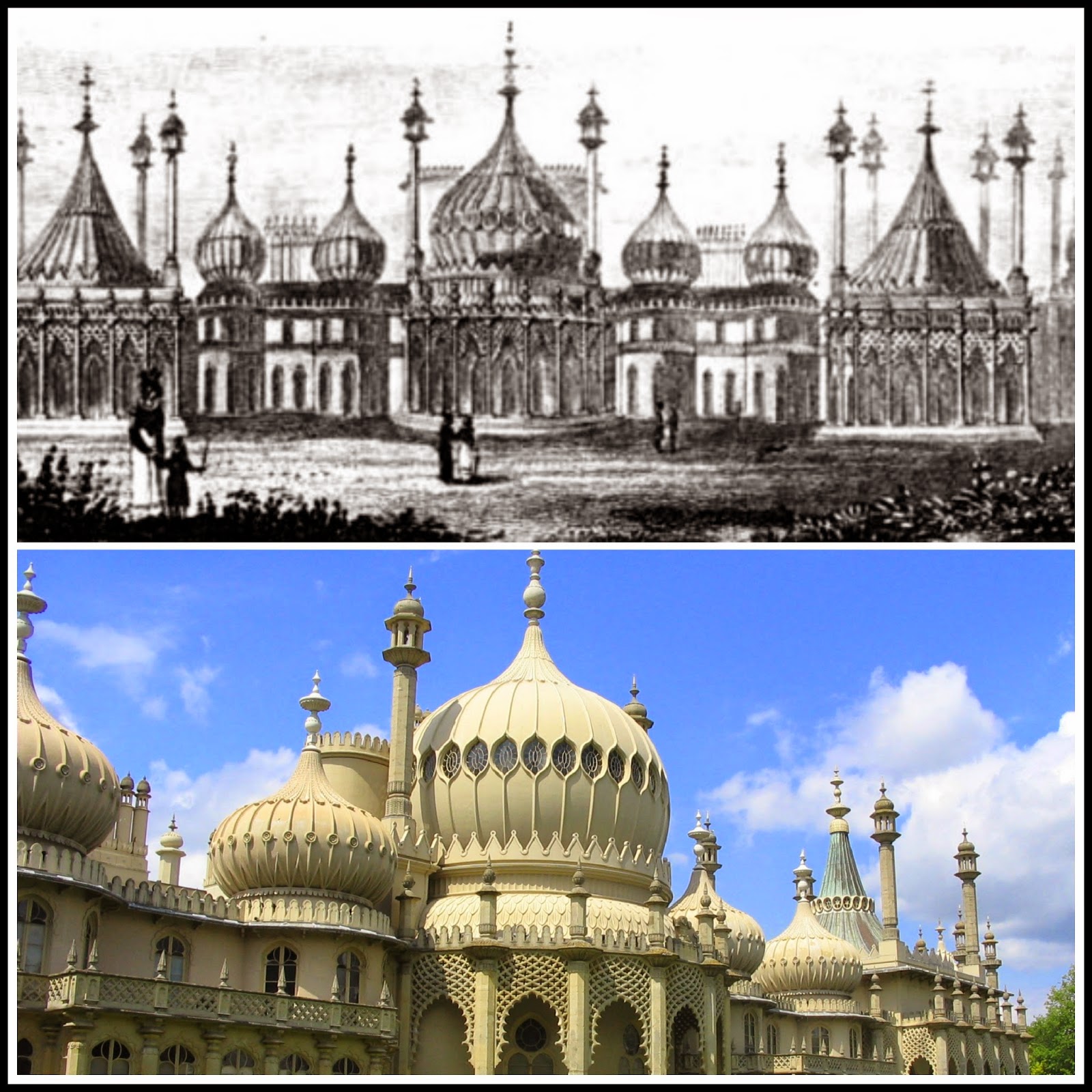
Brighton Pavilion  Top: From History of Brighton and its environs by R Sickelmore (1827)  Bottom: Brighton Pavilion today © Andrew Knowles
Top: Brighton Pavilion from  
History of Brighton and its environs by R Sickelmore (1827)
Bottom: Brighton Pavilion (2004) © Andrew Knowles
Read more about:
George IV’s Brighton
George IV and the Marine Pavilion, Brighton
George IV and the Brighton Pavilion
What did Regency visitors think of the Brighton Pavilion?
Watch my video: A litter of cupolas – Brighton Pavilion in 1823

Buckingham Palace

Buckingham Palace was acquired by George III as a private residence for the royal family in 1761 and was originally known as Buckingham House or the Queen’s House. George IV transformed it into a palace fit for a king, but did not live to see it completed. William IV disliked it and would not live there, but it became the official London residence of Queen Victoria and British monarchs ever since.

Top: Buckingham House from    The History of the Royal Residences by WH Pyne (1819)  Bottom: Buckingham Palace today © Andrew Knowles
Top: Buckingham House from  
The History of the Royal Residences by WH Pyne (1819)
Bottom: Buckingham Palace (2015) © Andrew Knowles
Bushy House

William IV resided at Bushy House from 1797 when, as Duke of Clarence, he was appointed Ranger of Bushy Park. He lived there with his mistress, Dorothea Jordan, until their relationship ended in 1811, and then later with his wife Princess Adelaide. He continued to live at Bushy House even after he became king and following his death, it became the official residence of Queen Adelaide until her death in 1849. In 1900, the site was offered to the Royal Society to house the National Physical Laboratory and ceased to be a royal residence.

Top: Bushy House from History of the life and reign   of William the Fourth (1837) by R Huish   Bottom: The house in Bushy Park today © Andrew Knowles
Top: Bushy House from History of the life and reign
 of William the Fourth (1837) by R Huish
Bottom: The house in Bushy Park (2014) © Andrew Knowles
Carlton House

Carlton House was purchased as the official residence of Frederick, Prince of Wales, George III’s father, in 1732. In 1783, it became the residence of the future George IV when he came of age. George IV continually remodelled it until he became king, at which point he transferred his interest to the other royal residences. It was demolished in 1825 and replaced by a number of prestigious houses - Carlton House Terrace.
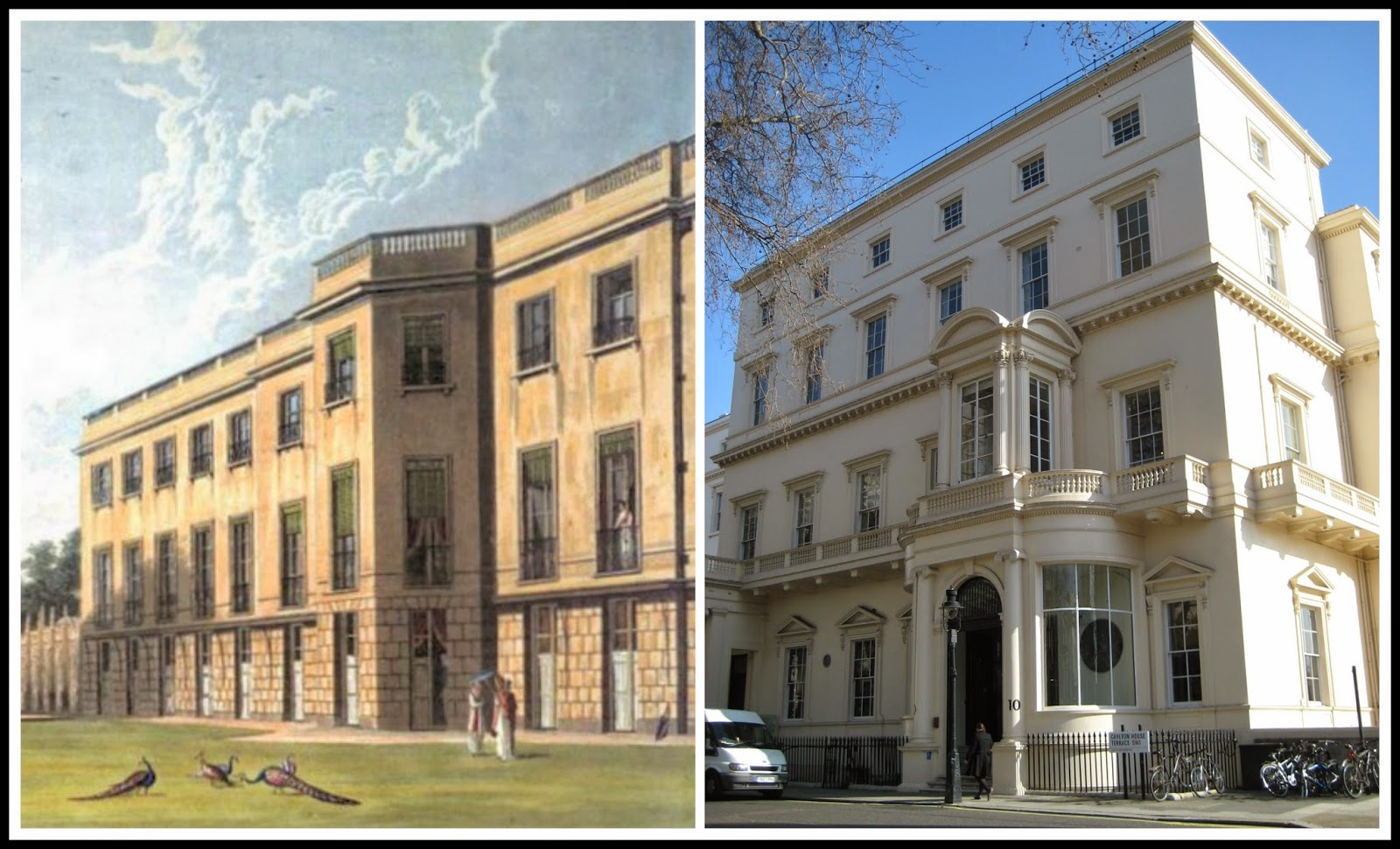
Left: Carlton House, south front,  from    The History of the Royal Residences by WH Pyne (1819)  Right: Carlton House Terrace © Andrew Knowles
Left: Carlton House, south front,  from  
The History of the Royal Residences by WH Pyne (1819)
Right: Carlton House Terrace (2015) © Andrew Knowles
Clarence House

Clarence House was built in 1825-7 as the London residence of William IV when he was Duke of Clarence. He continued to live there after he became king in 1830. Following his death, it became the residence of Princess Augusta and the Princess Victoria, Duchess of Kent, Queen Victoria’s mother. It is now the official residence of the Prince of Wales.

Top: Clarence House from The Graphic (Nov 1874)  Bottom: Clarence House today © Andrew Knowles
Top: Clarence House from The Graphic (Nov 1874)
Bottom: Clarence House (2015) © Andrew Knowles
Gloucester Lodge

George III visited Weymouth nearly every year from 1789 to 1805 and stayed at Gloucester Lodge, the house built for his brother William, Duke of Gloucester, on the seafront. It was sold by George IV when he became king and is now a hotel.

Top: Weymouth seafront from The Lady's Magazine (1789)  Bottom: Gloucester Lodge today © Andrew Knowles
Top: Weymouth seafront from The Lady's Magazine (1789)
Bottom: Gloucester Lodge (2012) © Andrew Knowles
Read more about:
George III in Weymouth
Sea bathing in Regency Weymouth
Fashionable entertainment in Regency Weymouth
Watch my video: George’s seaside adventure - George III in Weymouth

Hampton Court

Hampton Court first became a royal residence after it was acquired by Henry VIII in 1528 and rebuilt to his design. It was used by the early Georgian monarchs, but under George III, the palace was divided up into grace-and-favour apartments – rent-free accommodation for those favoured by the King. It is now in the care of Historic Royal Palaces and is open to the public.
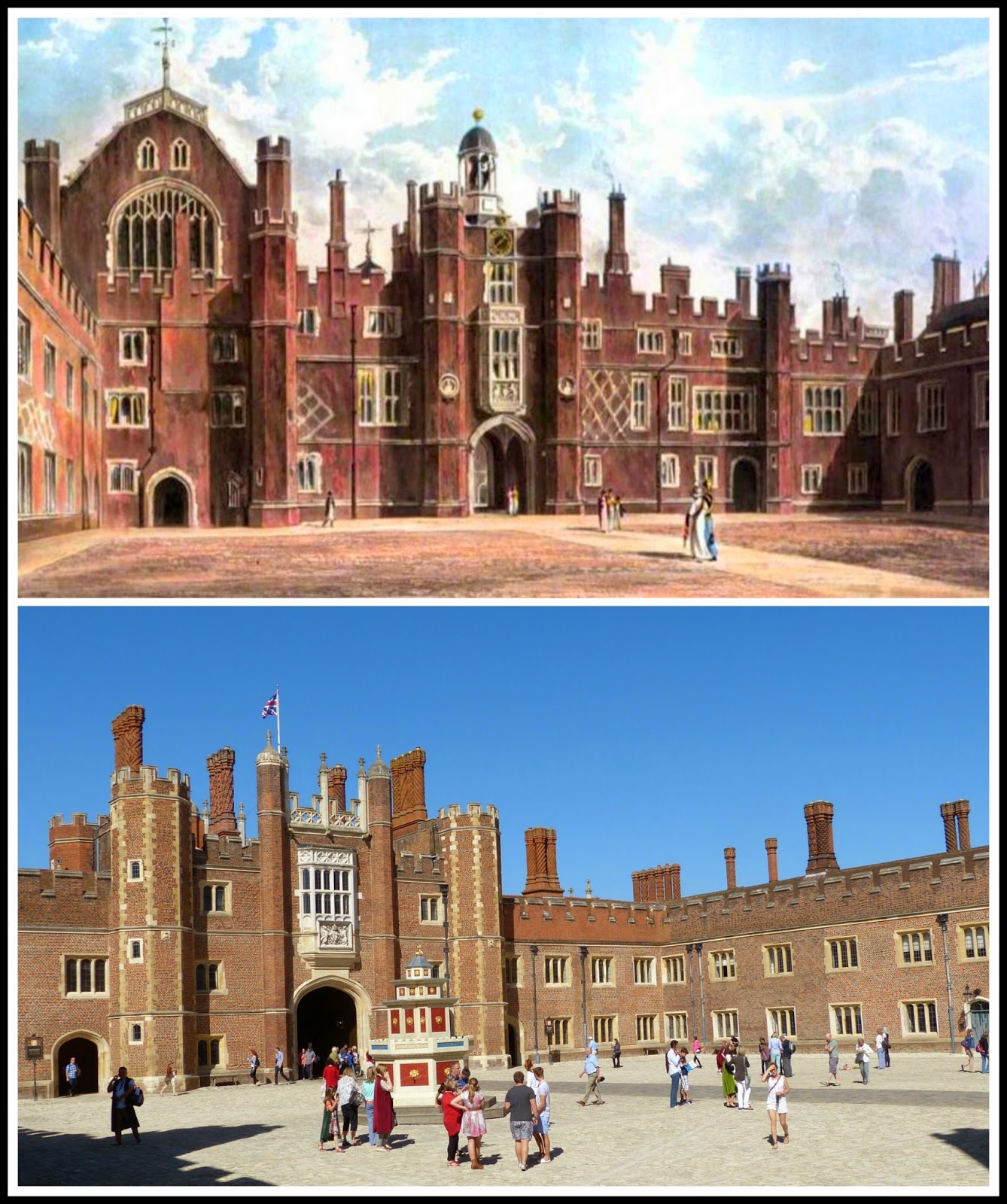
Top: Quadrangle, Hampton Court, from    The History of the Royal Residences by WH Pyne (1819)  Bottom: Hampton Court today © Andrew Knowle
Top: Quadrangle, Hampton Court, from  
The History of the Royal Residences by WH Pyne (1819)
Bottom: Hampton Court (2014) © Andrew Knowles
Kensington Palace

William III and Mary bought Nottingham House in 1689 and transformed it into Kensington Palace, an out-of-town royal residence in which to live in preference to St James’s Palace. It was renovated under George I and used extensively by George II. Members of the royal family continued to live there, but it was never used as the residence of the sovereign again. Kensington Palace is in the care of Historic Royal Palaces and is open to the public.

Top: Kensington Palace from  
The History of the Royal Residences by WH Pyne (1819)
Bottom: Kensington Palace (2012) © Andrew Knowles
Read more about Kensington Palace

Kew Palace

George II first used Kew Palace as a royal residence for part of his family from 1729. George III housed his two eldest sons here whilst using the White House, Kew, as a country retreat. Kew Palace was used during George III’s mentally incapacitating illness and Queen Charlotte died there in 1818. Queen Victoria gave the palace to the public and it is now managed by Historic Royal Palaces.
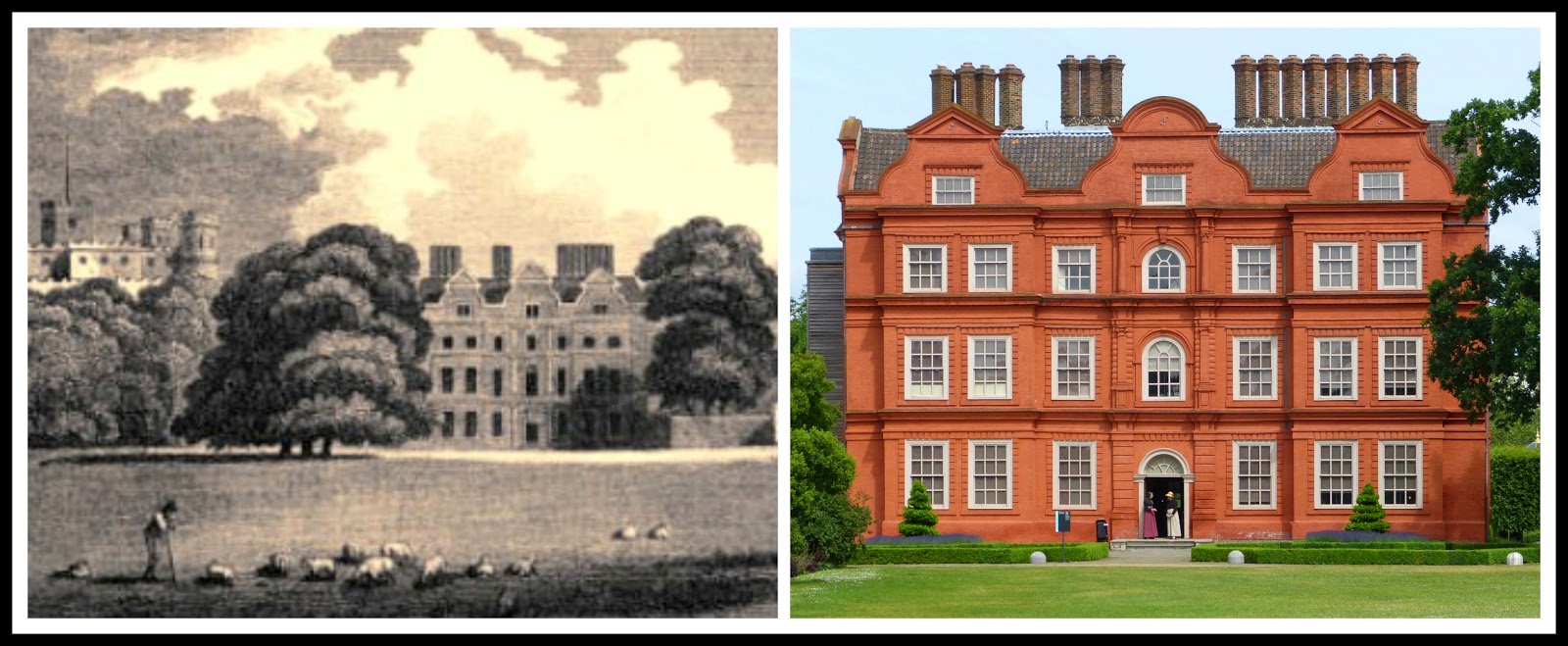
Left: The old palace at Kew from Memoirs of HM Sophia Charlotte   of Mecklenburg Strelitz, Queen of Great Britain by WM Craig (1818)  Right: Kew Palace today © Andrew Knowles
Left: The old palace at Kew from Memoirs of HM Sophia Charlotte
 of Mecklenburg Strelitz, Queen of Great Britain by WM Craig (1818)
Right: Kew Palace (2014) © Andrew Knowles
Read more about:
Kew Palace
Kew Gardens
Queen Charlotte’s Cottage, within Kew Gardens

St James’s Palace

Built for Henry VIII in the 1530s, St James’s Palace became the principal London palace of the British sovereign after the Palace of Whitehall was destroyed by fire in 1698. Part of the St James’s Palace was destroyed by fire in 1809, but court levĂ©es were still held here until 1939. It remains an official residence although no sovereign has resided here since the time of William IV.


Top: St James' Palace from    The History of the Royal Residences by WH Pyne (1819)  Bottom: St James' Palace today © Andrew Knowles
Top: St James's Palace from  
The History of the Royal Residences by WH Pyne (1819)
Bottom: St James's Palace (2014) © Andrew Knowles
White House, Kew

Frederick, Prince of Wales, George III’s father, lived in the White House at Kew from 1730. George III inherited the White House from his mother and used it as a country retreat. George III was incarcerated here during several bouts of mental illness and he ordered its demolition in 1802. All that remains to mark the site is a sundial opposite to Kew Palace.

Left: The north prospect of HRH The Prince of Wales' House at Kew  - detail from John Rocue's map A New Plan of Richmond Garden (1748)  Right: The sundial opposite Kew Palace that marks the site  of the White House © Andrew Knowles
Left: The north prospect of HRH The Prince of Wales' House at Kew
- detail from John Rocque's map A New Plan of Richmond Garden (1748)
Right: The sundial opposite Kew Palace that marks the site
of the White House (2014) © Andrew Knowles
Read more about the White House at Kew

Windsor Castle

Windsor Castle has been a royal residence since about 1100. It was a favoured out-of-town residence of both George III and George IV who carried out extensive building works at the castle. It remains an official residence of the King today.

Top: The Upper Ward, Windsor Castle from   The History of the Royal Residences by WH Pyne (1819)  Bottom: The Lower Ward, Windsor Castle today © Andrew Knowles
Top: The Upper Ward, Windsor Castle from 
The History of the Royal Residences by WH Pyne (1819)
Bottom: The Lower Ward, Windsor Castle (2015) © Andrew Knowles
Read more about:
Windsor Castle
St George’s Chapel, Windsor Castle
1815 exhibition: Waterloo at Windsor 1815-2015
Updated 30/9/22

Headshot of Rachel Knowles author with sea in background(2021)
Rachel Knowles writes faith-based Regency romance and historical non-fiction. She has been sharing her research on this blog since 2011. Rachel lives in the beautiful Georgian seaside town of Weymouth, Dorset, on the south coast of England, with her husband, Andrew.

Find out more about Rachel's books and sign up for her newsletter here.

If you have enjoyed this blog and want to encourage me and help me to keep making my research freely available, please buy me a virtual cup of coffee by clicking the button below.

 
Sources used include:
Craig, William Marshall, Memoirs of HM Sophia Charlotte of Mecklenburg Strelitz, Queen of Great Britain (1818)
Huish, Robert, History of the life and reign of William the Fourth (1837)
Pyne, WH, The history of the Royal Residences of Windsor Castle, St James's Palace, Carlton House, Kensington Palace, Hampton Court, Buckingham House and Frogmore (1819)
Rocque, John, A New Plan of Richmond Garden (1748)
Sickelmore, Richard, History of Brighton and its environs (1827)
The Graphic (1874)
The Lady's Magazine (1789)

Historic Royal Palaces website
Royal Collection Trust website
The official website of The British Monarchy 
 
© RegencyHistory

Thursday, 28 November 2013

Princess Sophia Matilda of Gloucester (1773-1844)

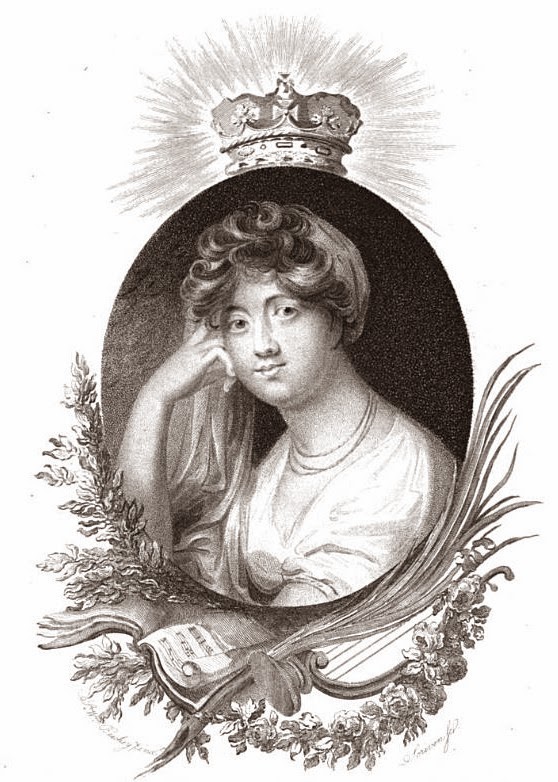
Princess Sophia of Gloucester  from La Belle Assemblée (1806)
Princess Sophia of Gloucester
from La Belle Assemblée (1806)
Profile

Princess Sophia (29 May 1773 - 29 November 1844) was the daughter of Prince William Henry, 1st Duke of Gloucester, a younger brother of George III.

Family history

Princess Sophia Matilda was born in Grosvenor Street, Mayfair, on 29 May 1773, the eldest child and only surviving daughter of William Henry, 1st Duke of Gloucester, a younger brother of George III, and his wife, Maria, the illegitimate daughter of Sir Edward Walpole MP and widow of the 2nd Earl Waldegrave.

A family in disgrace

Sophia’s parents had married in secret in 1766 and her father did not tell his brother the King about his marriage until they found that Maria was pregnant. George III was hurt by his brother’s deceitfulness and instigated an investigation into the validity of the marriage which was carried out just six days before Sophia was born.

According to The Gentleman’s Magazine, “the usual notice was sent to the King requesting he would direct the proper officers to attend the birth” but “no notice was taken of the message.”1 George III was so displeased with the marriage that he banned the Duke of Gloucester and his family from the royal presence.

Maria Waldegrave, later Duchess of Gloucester and  William Henry, Duke of Gloucester
Maria Waldegrave, later Duchess of Gloucester
from Letters of Horace Walpole to Sir Horace Mann Vol 4 (1844) and
William Henry, Duke of Gloucester
 by Richard Earlom after Hugh Douglas Hamilton
pubd by Robert Sayer (1771) © British Museum
Christening

Sophia was christened privately on 26 June 1773 at Gloucester House by David Moss, Lord Bishop of St David’s and Rector of St George’s, Hanover Square. According to The Gentleman’s Magazine, her sponsors were “the Princess Amelia in person and their Royal Highnesses the Duke and Duchess of Cumberland.”1

Continental living

The Duke and Duchess and their daughter spent many years abroad for reasons of economy and for the sake of the Duke’s health. He suffered repeated bouts of a debilitating illness with symptoms not dissimilar to those later suffered by his brother George III. Sophia’s brother William was born in Rome in 1776 and the family returned to England the following year, but were abroad again for most of the period from 1784 to 1787. In time, the King became reconciled to the Duke, but not to the Duke’s marriage.

Royal provision

In 1778, at the King’s request, parliament made provision for the Duke’s children, by which Sophia was awarded a grant of £4000 a year after her father’s death.

George III also arranged for a Miss Dee to be governess to Sophia and her brother William.

Debut

Sophia made her debut at the King’s birthday in 1790, accompanied by her brother and her governess-companion, Miss Dee. According to Charlotte Keppel, Sophia was not treated very well. She and William were not invited to the dinner before the ball as they had expected and had to wait around for the ball to start. Sophia was “not dressed well in a very old fashioned style – her gown was very magnificent but the hair was dressed quite out of fashion.” She “danced very well but nobody paid her the least respect, and after the King and Queen were gone she was treated quite as a common person and pushed about.”2

Noble modesty

According to her profile in La Belle Assemblée:
Her Royal Highness the Princess Sophia of Gloucester has kept an equal pace with her Royal cousins in the cultivation of every virtue and feminine accomplishment; she is to be distinguished for the same noble modesty of demeanour, the same benevolence and affability, the same preference of retirement and domestic life.3
Fanny Burney described Princess Sophia in her diary:
She is very fat, with very fine eyes, a bright, even dazzling bloom, fine teeth, a beautiful skin, and a look of extreme modesty and sweetness.4
Weymouth

Sophia’s father owned a house in Weymouth, Gloucester Lodge, which the King used for his visits to the seaside from 1789 onwards. During the royal family’s visit of August to October 1804, Sophia and her father were of the party. The Gentleman’s Magazine records that on the 8 September, they travelled to Bincomb Downs where they watched “a grand review and sham fight between all the regiments.”5

Gloucester Lodge, the Duke of Gloucester's house,  Weymouth seafront
Gloucester Lodge, the Duke of Gloucester's house,
Weymouth seafront (2012)
Ranger of Greenwich Park

In 1813, Sophia was appointed Ranger of Greenwich Park and Ranger’s House was altered to provide her with suitable accommodation. She was very popular with the people of Greenwich who saw her as a kind and generous benefactor to the town’s poor.

Devotion to William

William Frederick, Duke of Gloucester
from A Biographical Memoir of Frederick,
 Duke of York and Albany
by John Watkins (1827)
Sophia never married nor had any children, but she was excessively fond of her brother. After his marriage to Princess Mary in 1816, she was a frequent visitor to their home, Bagshot Park, but her sister-in-law resented her interfering behaviour which did not promote domestic harmony. When William died quite suddenly in 1834, Sophia was devastated. Princess Mary made sure that Sophia was not her constant companion in her widowhood.

The final years

Princess Sophia Matilda of Gloucester
from from The Girlhood of Queen Victoria (1912)
Sophia died at Blackheath, Kent, on 29 November 1844 and was buried in St George’s Chapel, Windsor.

Headshot of Rachel Knowles author with sea in background(2021)
Rachel Knowles writes clean/Christian Regency era romance and historical non-fiction. She has been sharing her research on this blog since 2011. Rachel lives in the beautiful Georgian seaside town of Weymouth, Dorset, on the south coast of England, with her husband, Andrew.

Find out more about Rachel's books and sign up for her newsletter here.

If you have enjoyed this blog and want to encourage me and help me to keep making my research freely available, please buy me a virtual cup of coffee by clicking the button below.

 
Notes
(1) From The Gentleman’s Magazine (May 1773).
(2) From a letter by Charlotte Keppel to Anne Clement (June 1790) in Princesses by Flora Fraser.
(3) From La Belle Assemblée (1806).
(4) From The Diaries and Letters of Madame D’Arblay, Volume 3 of 3 (1846).
(5) From The Gentleman’s Magazine (Supp 1804)

Sources used include:
Bell, John, La Belle Assemblée (John Bell, 1806)
Burney, Fanny, Diary and letters of Madame D'Arblay, edited by her niece, Charlotte Barrett, volume III (Henry Colburn, 1846, London)
Fraser, Flora, Princesses, the six daughters of George III (2004)
The Gentleman's Magazine and Historical Chronicle (1773-1804)
Victoria, Queen, The Girlhood of Queen Victoria, A Selection from Her Majesty's Diaries between the years 1832 and 1840, edited Viscount Esher 2 Volumes (1912)
Royal Borough of Greenwich website

All photographs by © RegencyHistory.net

Thursday, 21 November 2013

Maria, Duchess of Gloucester, formerly Countess Waldegrave (1736-1807)

Maria Waldegrave, later Duchess of Gloucester
from Letters of Horace Walpole
to Sir Horace Mann Vol 4 (1844)
Profile

Maria, Duchess of Gloucester (baptized 10 July 1736 - 22 August 1807), was the beautiful but illegitimate daughter of Sir Edward Walpole. She married first the 2nd Earl Waldegrave and then William Henry, 1st Duke of Gloucester, younger brother of George III who disapproved of their marriage.

Family background

Maria Walpole was baptized on 10 July 1736 at St James’, Westminster. Her father was Sir Edward Walpole, MP, a younger son of Sir Robert Walpole, Prime Minister, and her mother was Dorothy Clement, who had been apprenticed to a Covent Garden milliner. Although her parents were not married, Maria was brought up in her father’s household with her sisters, Laura and Charlotte, and treated as if she was his legitimate offspring. Her aunt, Jane Clement, was also part of the household.

Maria's uncle, Horace Walpole
from the European Magazine and London Review (1797)
Beauty itself

Maria’s uncle, Horace Walpole, admired her beauty and took it upon himself to launch her into society:
It is the second, Maria, who is beauty itself! Her face, bloom, eyes, hair, teeth, and person are all perfect. You may imagine how charming she is, when her only fault, if one must find one, is, that her face is rather too round. She has a great deal of wit and vivacity, with perfect modesty.1
An illustrious marriage 

James Waldegrave, 2nd Earl Waldegrave
Print by J McArdell after Sir Joshua Reynolds (1762)
© British Museum
On 15 May 1759, Maria married James Waldegrave, 2nd Earl Waldegrave, a Lord of the Bedchamber to George II and governor to the future George III, at her father’s house in Pall Mall. Horace Walpole wrote:
For character and credit, he is the first match in England – for beauty, I think she is.2

Maria was in a white silver gown, with a hat very much pulled over her face; what one could see of it was handsomer than ever; a cold maiden blush gave her the sweetest delicacy in the world.3
Short-lived happiness

The Earl was more than twenty years older than Maria, but the marriage was deemed a success. They had three beautiful daughters: Elizabeth Laura (1760), Charlotte Maria (1761) and Anna Horatia (1762).

Lady Maria Waldegrave, Laura Viscountess Chewton  and Lady Horatia Waldegrave
Lady Maria Waldegrave, Laura Viscountess Chewton
and Lady Horatia Waldegrave from The Letters of
Horace Walpole ed P Cunningham Vol 5 (1859)
Sadly, the Earl died suddenly of smallpox in Albemarle Street, London, on 8 April 1763. Maria was distraught. For a while, she thought she was carrying his child, but eventually she had to admit that it was not so and the estates went to the Earl’s brother, leaving Maria with a comparatively meagre allowance of £1,000 a year.

A second marriage

Horace Walpole had high hopes that Maria would make a second advantageous marriage:
She is allowed the handsomest woman in England; as she is so young, she may find as great a match and a younger lover — but she never can find another Lord Waldegrave!4
On 6 September 1766, Maria married William, 1st Duke of Gloucester, at his house in Pall Mall. The ceremony was performed in secret by her chaplain, Dr Morton, and there were no witnesses.

William Henry, Duke of Gloucester
 by Richard Earlom after Hugh Douglas Hamilton
pubd by Robert Sayer (1771) © British Museum
In 1768, the Duke bought Maria a house at St Leonard’s Hill, near Cranborne Lodge, the house that went with his role as Ranger of Cranborne Chase.

Banned from the Court

George III thought that Maria was a bad influence on his brother and refused to believe the rumours that he had married her. He granted her a pension of £5,000 a year from the Irish revenues, and sent the Duke abroad on diplomatic visits in an effort to wean him from her company.

When Maria became pregnant, the Duke finally confessed his marriage in a letter to the King. As the ceremony h without witnesses and Maria’s chaplain had since died, George III launched an enquiry into the legitimacy of the marriage, just days before her baby was born. The King was forced to accept his brother’s marriage, but he felt betrayed over his secrecy and banned William and Maria and their family from the royal presence.

Family life

Maria had three children by her second marriage: Sophia Matilda (1773), Caroline Augusta Maria (1774) who died before her first birthday, and William Frederick (1776).

Princess Sophia of Gloucester and Prince William Frederick, 2nd Duke of Gloucester
Princess Sophia of Gloucester from La Belle Assemblée (1806)
and Prince William Frederick, 2nd Duke of Gloucester
from A Biographical Memoir of Frederick, Duke of York and Albany
by John Watkins (1827)
Marriage breakdown

In time, the King became reconciled to his brother William, but not to Maria. William’s own relationship with Maria deteriorated and he started an affair with Lady Almeria Carpenter, Maria’s lady in waiting. Sometimes he denied Maria access to her children, but despite their difficulties, they continued to keep a joint household and Lady Almeria never completely eclipsed Maria.

Religious commitment

During the latter years of her life, Maria’s religious commitment increased. Her eldest daughter Laura, who had married her cousin and become Countess Waldegrave, lost first her husband and then her eldest son. The bluestocking evangelical Hannah More was a correspondent of Maria’s uncle Horace Walpole and she offered religious consolation to the grief-stricken Countess and her mother. Although Maria did not fully embrace evangelicalism, she supported More’s Cheap Repository Tracts and welcomed Wilberforce’s Practical View.

The last few years

For the sake of economy and William’s health, the Duke and Duchess lived much of their married life on the continent. William suffered from several bouts of a debilitating illness similar to that suffered by his brother George III and he died on 25 August 1805. The King was kind to Maria after William’s death, for the sake of their children.

After the Duke’s death, Maria lived at Oxford Lodge, Brompton Road, London, where she died on 22 August 1807. She was buried at St George’s Chapel, Windsor, on 31 August.

Headshot of Rachel Knowles author with sea in background(2021)
Rachel Knowles writes clean/Christian Regency era romance and historical non-fiction. She has been sharing her research on this blog since 2011. Rachel lives in the beautiful Georgian seaside town of Weymouth, Dorset, on the south coast of England, with her husband, Andrew.

Find out more about Rachel's books and sign up for her newsletter here.

If you have enjoyed this blog and want to encourage me and help me to keep making my research freely available, please buy me a virtual cup of coffee by clicking the button below.

 
Notes
(1) In a letter from Horace Walpole to Sir Horace Mann (9 Sept 1758) about his brother’s second daughter - from The Letters of Horace Walpole, Earl of Orford, Vol 3 of 6 (1840).
(2) In a letter from Horace Walpole to Sir Horace Mann (11 Apr 1759) - from The Letters of Horace Walpole, Earl of Orford, Vol 3 of 6 (1840).
(3) In a letter from Horace Walpole to George Montagu (16 May 1759) from The Letters of Horace Walpole, Earl of Orford, Vol 3 of 6 (1840).
(4) In a letter from Horace Walpole to Sir Horace Mann (10 Apr 1763) - from The Letters of Horace Walpole, ed P Cunningham Vol 4 of 8 (1857).

Sources used include:
Hibbert, Christopher, George III (1998, Viking, Great Britain)
Kilburn, Matthew, William Henry, Prince, first Duke of Gloucester and Edinburgh (1743-1805) Oxford Dictionary of National Biography (Oxford University Press, 2004; online edn Jan 2008, accessed 28 Oct 2013)
Stott, Anne, Hannah More, The First Victorian (2003)
Walpole, Horace, The Letters of Horace Walpole, Earl of Orford, in six volumes (1840)
Walpole, Horace, Letters of Horace Walpole to Sir Horace Mann in four volumes (1844)
Walpole, Horace, The Letters of Horace Walpole, edited by P Cunningham, in eight volumes (1857)

Thursday, 14 November 2013

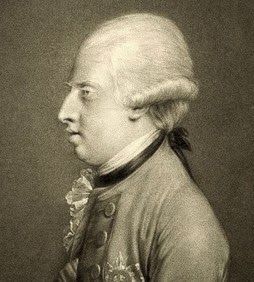
Prince William Henry, 1st Duke of Gloucester (1743-1805)

William Henry, Duke of Gloucester
 by Richard Earlom after Hugh Douglas Hamilton
pubd by Robert Sayer (1771) © British Museum
Profile

Prince William Henry, 1st Duke of Gloucester (14 November 1743 - 25 August 1805), was one of the younger brothers of George III. He was a regular visitor to Weymouth and he lent his house there to his brother George for his seaside breaks.

Family background

Prince William Henry was born on 14 November 1743 at Leicester House, London, the third son of Frederick, Prince of Wales, and his wife Augusta of Saxe-Gotha.

William’s father, Frederick, did not get on well with his parents, George II and Queen Caroline, and his behaviour on the birth of his first child, Augusta, in 1737 resulted in him being banned from his father’s Court.

As a result, William lived mostly at Kew, in Kew House (also known as the White House), where his father accumulated a menagerie of exotic animals and pursued a passion for botany which he shared with his wife. Frederick taught his family astronomy and encouraged a variety of entertainments including rowing, cricket, outings to fairs and play acting.

A view of the menagerie and its pavilion at Kew
Print by C Grignion after T Sandby
pubd by Sir William Chambers (1763) © British Museum
In 1751, Frederick caught pneumonia and died. Augusta made her peace with the King, who allowed her to continue bringing up her family at Kew. William and his brother Henry had a house on Kew Green which included a billiard room and a colonnade for fencing lessons. His studies included ancient and modern languages, history and geography. In 1765, he toured Kent and Cornwall and in 1766, Guernsey and Paris.

Titles

William was made a Knight of the Garter at Windsor in 1762 and Duke of Gloucester and Edinburgh and Earl of Connaught in Ireland on 19 November 1764 (1).

He was made Ranger of Hampton Court Park, Ranger and Keeper of Cranborne Chase in Windsor Forest and Lord Warden and Keeper of the New Forest. He became Chancellor of the University of Dublin in 1771.

A secret marriage

In 1764, William started courting Maria, the Countess Dowager Waldegrave. Maria was the illegitimate daughter of Sir Edward Walpole and the widow of 2nd Earl Waldegrave. On 6 September 1766, they were married secretly, without witnesses, at the Duke’s house in Pall Mall by Maria’s chaplain, Dr Morton.

George III did not believe the rumours that William had actually married Maria and sent his brother abroad to visit other European royal families as a diplomatic envoy for the British monarchy in an attempt to extricate him from his entanglement with Maria, whom he felt was a bad influence on him.

Maria Waldegrave, later Duchess of Gloucester
from Letters of Horace Walpole
to Sir Horace Mann Vol 4 (1844)
Banned from the Court

When Maria became pregnant, William wrote to the King to acknowledge his marriage. An enquiry into the validity of the marriage was held by the Privy Council on 23 May 1773, just days before the birth of a daughter, Sophia Matilda. The King was forced to admit the legality of the marriage and the child was given the title of Princess.

But the King was deeply hurt by his favourite brother’s deception. Whilst William had been ranting about the Duke of Cumberland’s shameful marriage to Lady Ann Horton the previous year, he had all the time been married to a commoner himself. The Duke and Duchess and their children were banned from the Court and William’s diplomatic missions came to an end. For the sake of economy and William’s health, they went to live on the continent.

The family complaint?

In 1771, William became very unwell with a similar illness to that from which his brother George later suffered. He endured a further bout a few years later and an even more serious episode whilst returning to England in 1777.

Reconciliation

The King’s concern over William’s health softened his attitude towards his brother, but he refused his request to be allowed to take an active military role in the American war.

Eager to serve his country, William managed to acquire a copy of the French plans for invading England which he sent to George, but it was not until the Gordon Riots of 1780 when he helped to restore peace as Colonel of the 1st regiment of foot guards, that he earned the King’s gratitude and was once more received by his brother.

Weymouth

William had a long and happy association with Weymouth which began, by accident, on Saturday 24 August 1771, when he first visited the town:
“The Duke of Gloucester, being detained by contrary winds, came from aboard the Venus, dined and drank tea at the Rooms at Weymouth, and afterwards returned on board.”(2)
The Old Rooms, Weymouth
William spent the winter of 1780 in Weymouth and commissioned a house – Gloucester House or Lodge – to be built on the seafront.

Gloucester Lodge on Weymouth seafront
In 1789, William lent Gloucester Lodge to the King so that he could recuperate after his illness. George III eventually bought the house from his brother.

William continued to visit Weymouth. In 1790, he visited with his brother, the Duke of Cumberland, and in 1794, he was there with the King’s party, accompanied by his daughter.

A problematic marriage

William and Maria had three children: Sophia Matilda (1773), Caroline Augusta Maria (1774) who died as a baby and William Frederick (1776).

Over time, their relationship soured. William had an affair with Lady Almeria Carpenter, Maria’s lady in waiting, by whom he had an illegitimate daughter, Louisa Maria La Coast in 1782. For the majority of the period from 1784 to 1787, William and Maria lived in Geneva and Italy, with Lady Almeria still part of their household.

Lady Almeria Carpenter
from Macdonald of the Isles by AM Stirling (1913)
By the early 1790s, the Duke and Duchess were living separate lives, and sometimes William prevented Maria from seeing her children, but despite this, they continued to keep a joint household.

Family relationships

William was of a quiet, retiring disposition and managed to maintain good relationships with his nephews. He tried unsuccessfully to effect a reconciliation between George, Prince of Wales, and his wife Caroline in 1796.

Death of the Duke of Gloucester

William’s health deteriorated and he died on 25 August 1805 at his home, Gloucester House, Upper Grosvenor Street, London. By his own desire, he was buried privately at St George’s Chapel, Windsor, on 4 September.

The King was in Weymouth when he received news of his brother’s death and the town went into a week of mourning for “their first patron and benefactor and as the sole means of introducing his royal brother here”(3).

Notes
(1) The date is given as 19 November in the Oxford Dictionary of National Biography but 17 November in Debrett’s.
(2) From The Gentleman’s Magazine (Aug 1771).
(3) From Weymouth, an illustrated history (1983).

Sources used include:
Boddy, Maureen and West, Jack, Weymouth, an illustrated history (The Dovecote Press, 1983, Wimborne)
Delamotte, Peter, The Weymouth Guide (1785, Weymouth)
Groom, Susanne and Prosser, Lee, Kew Palace, the official illustrated history (2006)
Hibbert, Christopher, George III (1998, Viking, Great Britain)
Kilburn, Matthew, William Henry, Prince, first Duke of Gloucester and Edinburgh (1743-1805) Oxford Dictionary of National Biography (Oxford University Press, 2004; online edn Jan 2008, accessed 28 Oct 2013)
The Gentleman's Magazine and Historical Chronicle (1771)
Walpole, Horace, Letters of Horace Walpole to Sir Horace Mann in 4 volumes (1844)

Photographs by Andrew Knowles - www.flickr.com/photos/dragontomato

Saturday, 8 September 2012

Regency History's guide to Lulworth Castle

The early history of Lulworth Castle

Lulworth Castle
Lulworth Castle was built as a hunting lodge at the beginning of the 17th century in Lulworth, Dorset, by Thomas Howard, Viscount Bindon. It was purchased by Humphrey Weld in 1641 and has belonged to the Weld family ever since. The Castle has played host to Kings; both James I and Charles II stayed there.

The Fitzherbert connection

Mrs Fitzherbert
from Memoirs of George IV
by Robert Huish (1831)
Edward Weld inherited the Castle from his father in 1761. His first wife died without giving him an heir and in 1775, he married the beautiful Mary-Anne Smythe. Tragically, Edward died a few months later following a fall from his horse. Mary-Anne, known as Maria, then married Thomas Fitzherbert, and on his death, she became the secret wife of the future George IV.

Thomas Weld and St Mary’s Chapel

St Mary's Chapel
On Edward’s death, Lulworth Castle passed to his brother, Thomas, who rebuilt much of the Castle’s interior in the Neo-classical style. The Welds were devout Roman Catholics and Thomas was influential in promoting Catholic emancipation and helping Catholics fleeing from the French Revolution.

In 1786, George III gave Thomas permission to build a mausoleum, purportedly with the licence to “furnish it inside as you wish”.

The Chapel of St Mary’s was designed by John Tasker to look like a classical garden building and it became the first free-standing Roman Catholic Church to be built for public worship in England since the Reformation.

George III’s visit

In 1789, George III and Queen Charlotte visited Thomas Weld at Lulworth Castle whilst they were on holiday in Weymouth. They saw inside the Chapel and gave it their approval.

The Royal connection continued when the Duke of Gloucester leased the Castle from Thomas’ son from 1824 to 1827.

Lulworth Castle today

The Castle was gutted by fire in 1929 but has now been restored. It was visited by the Queen in 1984 and is now a family-friendly visitor attraction.

Inside Lulworth Castle today

Sources used include:
Chedzoy, Alan, Seaside Sovereign - King George III at Weymouth (The Dovecote Press, 2003, Wimborne)
Delamotte, Peter, The Weymouth Guide (1785, Weymouth)
Feltham, John, Editor of the Picture of London, A Guide to all the Watering and Sea-Bathing Places (1815)
Groves, E, The Weymouth and Melcombe Regis New Guide (E Groves, 1835, Weymouth)
Huish, Robert, Memoirs of George IV (Thomas Kelly, 1830, 1831, London)
Weld, Wilfrid, The Weld Family & Lulworth (Guidebook to Lulworth Castle purchased Aug 2012)

Photographs by Andrew Knowles - www.flickr.com/photos/dragontomato

Wednesday, 20 June 2012

After the Prince Regent’s FĂŞte

Carlton Palace
From Memoirs of George IV
by Robert Huish (1831)

Public days

On 19 June 1811, the Prince Regent held a lavish fĂŞte at Carlton House. His critics may have balked at the cost, but it was generally deemed to have been a great success and seen as an entertainment “worthy of a Prince”.

You can read about the Prince's fĂŞte here.

After the fĂŞte, the Regent graciously opened his palace to the public so that they could share in the magnificence of his home and the superb decorations specially built for the fĂŞte. The Gentleman’s Magazine reported that

...many thousands were delighted by the sight, which however, we are sorry to say, did not close without some serious accidents.1
Garments torn off in the crowds 

The Edinburgh Annual Register reported that on 24 June, 20-30,000 respectable visitors were admitted by ticket to Carlton House. Some ladies fainted and
...at the entrance, several ladies lost their scarves and mantles; cloaks, tippets, and other garments were torn off; some lost their shoes, and a variety of other ornaments were torn off and trod upon.2
Lord Yarmouth to the rescue

The crowds were so great that Colonel Bloomfield ordered a party of life guards to attend in Pall Mall to regulate the carriages. The throng was so great that a system of timed entrance was instigated, letting a few hundred visitors in at a time and then closing the gates.

Unfortunately this caused great pressure on the steps and several elegantly dressed ladies were in danger of being crushed. According to The Edinburgh Annual Register:
Lord Yarmouth very gallantly stood forward to their relief, and lifted them in at the windows of the great hall.3
The rush of the crowds

The following day, on 25 June, the crowds were even larger as this was the last day that the palace was to be open to the public. Horse guards paraded in front of the house and along Pall Mall. The gates were only opened periodically in an attempt to regulate the flow of visitors, but when this happened “the torrent was so rapid, that many people were taken off their feet, some with their backs towards the entrance, screaming to get out.”4 
 
To avoid further incident, Lord Yarmouth and the Duke of Gloucester announced that no more visitors would be admitted.

The Duke of Gloucester
from A Biographical Memoir of Frederick,
Duke of York and Albany
by John Watkins (1827)
Chaos at Carlton House

The multitude, however, refused to disperse and the gates were necessarily opened again later to ease the congestion inside Carlton House. The masses pushed forwards relentlessly and 
...when at last the crowd got inside the Carlton House gates, four females were found in a lifeless state, lying on their backs on the ground, with their clothes almost completely torn off.5
One lady was trodden on so badly that she was not expected to live, an elderly lady had her leg broken and two others were seriously hurt.
They were to be seen all round the gardens, most of them without shoes or gowns; and many almost completely undressed, and their hair hanging about their shoulders.6
No more visitors

The Regent was very upset by the way that the public days had been managed, though blame could not be attributed anywhere. A notice was put up on the walls of Carlton House announcing that it would not again be open to visitors, by order of the Prince Regent.
George IV
from Memoirs of Her Late MajestyQueen Charlotte
by WC Oulton (1819)
 

Headshot of Rachel Knowles author with sea in background(2021)
Rachel Knowles writes clean/Christian Regency era romance and historical non-fiction. She has been sharing her research on this blog since 2011. Rachel lives in the beautiful Georgian seaside town of Weymouth, Dorset, on the south coast of England, with her husband, Andrew.

Find out more about Rachel's books and sign up for her newsletter here.

If you have enjoyed this blog and want to encourage me and help me to keep making my research freely available, please buy me a virtual cup of coffee by clicking the button below.

Notes

  1. The Gentleman's Magazine and Historical Chronicle (E Cave, 1811, London).
  2. The Edinburgh Annual Register (John Ballantyne & Co., 1813, Edinburgh).
  3. Ibid.
  4. Ibid.
  5. Ibid.
  6. Ibid.
Sources used include:
Hibbert, Christopher, George IV (Longmans,1972, Allen Lane, 1973, London)
Huish, Robert, Memoirs of George IV (Thomas Kelly, 1830, 1831, London)
Stuart, Dorothy Margaret, Regency Roundabout (Macmillan & Co. Ltd, 1943, London)
The Edinburgh Annual Register (John Ballantyne & Co., 1813, Edinburgh)
The Gentleman's Magazine and Historical Chronicle (E Cave, 1811, London)