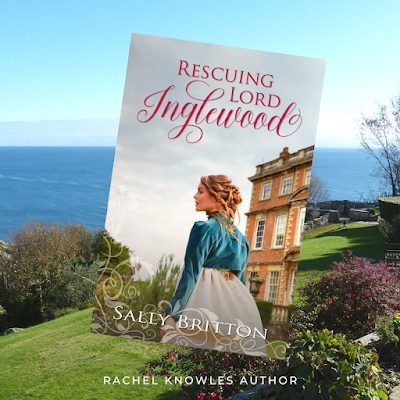
Esther Fox has never felt she
belonged. She always feels on the outside and other people are always making
decisions for her. With her brother Isaac at war, she is forced to live in
London with her step-brother. When her quick actions save the life of her
brother’s best friend, Silas Riley, Lord Inglewood, in a somewhat compromising
manner, the cold earl decides he must marry her to save her reputation. Esther has
no say in the matter.
With such an unpromising start to
their marriage, can a shared loss draw them together to find love?
A moving story of loss, loyalty
and love
Rescuing Lord Inglewood is the first
book in the Inglewood series but not the first one I read. I picked up Engaging
Sir Isaac (book 4) in a deal last year and ever since reading it, I’ve been
looking forward to the rest of the series. I was not disappointed. It was a
captivating and easy-to-read Regency romance with a reputation-saving-marriage theme.
I loved reading Esther’s story. It
is so true to the period – for women to be free to make so few decisions for
themselves, and how trapped that must have made them feel. I really enjoyed the
intensity of Esther’s emotions, how Silas gradually opens up, and the moving
descriptions of experiencing loss.
The book opens in March 1814. I like
to know when a story is set, so for me, this is always the best way to start. There
were some nice historical details, such as references to events in the Napoleonic
war and to Mrs Radcliffe’s novels, and only a couple of things I stopped to
question.
Probably the best recommendation I
can give this book is that as soon as I finished it, I started reading the next
book in the series.
Night-rails
I’m always interested in new words,
and when I came across the word night-rail, I went scurrying to my etymological
dictionary. That didn’t help, as there was no mention of the word, but I found
an entry in Dr Johnson’s dictionary—spelt without the hyphen—meaning a light kind
of nightdress.
Baronets and baronetesses
At one point, Esther refers to her mother
as a baronetess—not a term I was particularly familiar with. A little research showed me that it was a
perfectly valid use as it can refer to the wife or widow of a baronet, as well
as to a woman holding the rank of baronet in her own right.
A little quibble. At one point, Sir
Isaac is referred to as a titled lord. Baronet is a hereditary title, but baronets
are not peers.
Periods of mourning
Six months is quoted as the usual
period of mourning for a sibling. There is plenty of information available
about mourning in the Victorian period, but much less about mourning in the
Regency. I have started to research this area, but so far have struggled to
find any definitive list of periods of mourning in the Regency with satisfactory
sources. I will keep searching!
Clean and sweet?
Clean language and low heat level. Some
trauma from dealing with grief.
Rachel Knowles writes clean/Christian Regency era romance and historical non-fiction. She has been sharing her research on this blog since 2011. Rachel lives in the beautiful Georgian seaside town of Weymouth, Dorset, on the south coast of England, with her husband, Andrew.
Find out more about Rachel's books and sign up for her newsletter here.
If you have enjoyed this blog and want to encourage me and help me to keep making my research freely available, please buy me a virtual cup of coffee by clicking the button below.
Find more of my reviews of clean/Christian Regency era romance here.