Search this blog

Showing posts with label Regency Christmas. Show all posts

Friday, 1 December 2023

A Regency Christmas romance full of hope


A heartbroken widower. A downtrodden companion. 

Their instant attraction offers hope for the future—if their secrets don’t destroy them first.

Estate manager Peter Crowley has abandoned hope of ever loving again. No woman has touched his heart since the death of his wife.

Now his life is centred on the beloved daughter he’s been forced to send away to school.

Meg Harding knows nothing of love. The sole companion of a cantankerous old lady, she smiles in the face of adversity, but dreams of a better life.

Thrown into conversation on the coach to Weymouth, Peter and Meg are drawn to each other by a shared sense of humour.

The downtrodden Meg revels in Peter’s kindness—and he yearns to rescue her.

Six months later they meet again. Both their situations have changed—and not all for the better.

As they share the joy of the Christmas season, their love is given a chance to flourish. But all is not as it seems. Secrets from their past cast shadows over their future and threaten to destroy them…

Set in 1810 in the seaside town of Weymouth, Dorset, this novella is rich in historical detail and includes a glossary and historical notes.

An introduction to the Women of Weymouth series, this is a clean and wholesome, faith-based, standalone romance with witty dialogue and its own happily ever after. 

Available in Kindle ebook and paperback versions Get Miss Harding's Hope here.

Read more about Regency Christmas celebrations here.

Thursday, 15 December 2022

Kissing under the mistletoe in the Regency

The Mistletoe in Popular Pastimes by FW Stephanoff (1816)

A Christmas tradition that romance authors love is kissing under the mistletoe.

But when did the tradition begin? Did young ladies of quality kiss under the mistletoe in the Regency? These are the questions I set out to answer in this blog.

What is mistletoe?

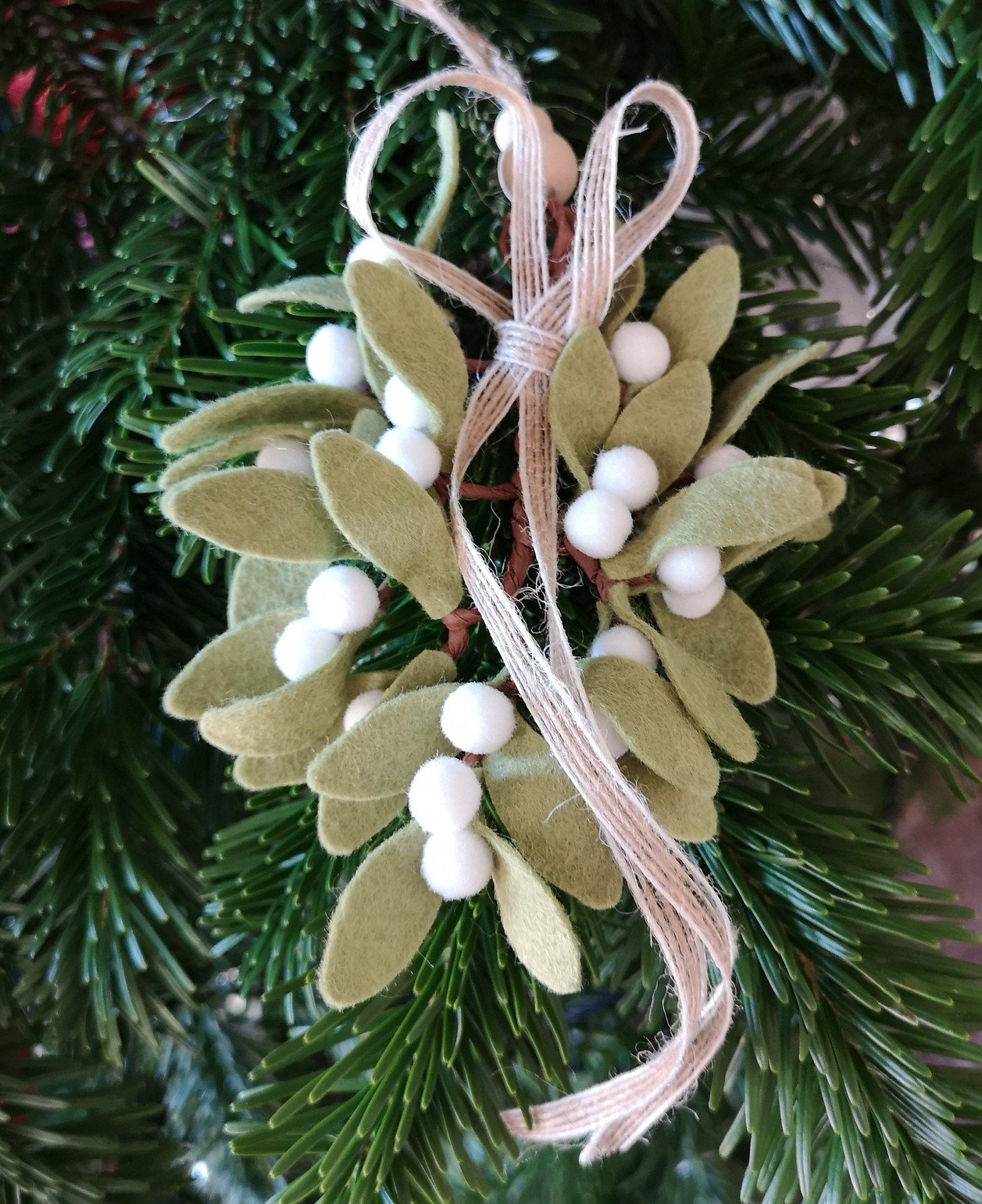
Mistletoe decoration (2022)

Mistletoe—sometimes spelt misletoe in old texts—is an evergreen plant with oval leaves that grow in pairs. It produces small white flowers, but is better known for its waxy, white berries which grow in clusters from October to May—right over the Christmas season.

It is an unusual plant because it is semi-parasitic. Rather than growing in the ground, it lives on the branches of other trees, such as apple, lime, pear, or oak.  

Although all parts of the plant are poisonous, mistletoe is used in medicines to treat certain disorders like epilepsy and cancer.

When was mistletoe first associated with Christmas?

In pre-Christian Britain, mistletoe was connected with the winter solstice. The Druids revered the oak, and this reverence spread to everything connected with it—including mistletoe that grew on oak. It was revered for its healing properties and gathered in a ceremony steeped with superstition at the winter solstice.

When Christianity was established in Britain, new traditions developed. Stephanoff wrote in Popular Pastimes (1816):

The custom of decking our churches and habitations with evergreens, has existed from the very establishment of Christianity, and was unquestionably derived from the like similar practice of our Pagan ancestors.1

These evergreens included mistletoe, which is mentioned in Candlemas Eve, a poem written by Robert Herrick (1591–1674). He wrote about taking down the greenery, including mistletoe, on Candlemas Eve, signalling the end of the Christmas season:2

Down with the rosemary and bays,
Down with the mistletoe;
Instead of holly, now up-raise
The greener box, for show.3

Another early reference to mistletoe is in Art of Simpling, published in 1656. Coles wrote of mistletoe:

It is carryed many miles to set up in houses about Christmas time, when it is adorned with a white glistering berry.4

When did people first kiss under the mistletoe?

Man wearing hat leans over pretty wife's shoulder under mistletoe. Old lady sleeps at table and young boy looks on.
Christmas Eve by J Burnett (1815)
The earliest reference to kissing under the mistletoe that I’ve come across is in a comic opera written in 1784 called Two to One:

When at Christmas in the hall

The men and maids are hopping

If by chance I hear ‘em bawl,

Amongst ‘em quick I pop in.


When all the men, Jem, John, and Joe,

Cry, “What good luck has sent ye?”

And kiss beneath the mistletoe

The girl not turn’d of twenty.5

A poem quoted in Popular Pastimes (1816) is undated, but it hints at the possibility that the custom went back earlier:

The Misletoe hangs from an oaken beam,

The Ivy creeps up the outer wall;

The Bays our broken casements screen,

The Holly-bush graces the hall.


Then hey for our Christmas revelling,


For all its pastimes pleasures bring.

The Misletoe's berries are fair and white,

The Ivy's of gloomy sable hue;

Red as blood the Laurel's affect our sight,

And the Holly's the same with prickles too.

Then hey, & c.

Nor black nor ensanguined red for me: -

The Misletoe only is my delight:

For pure as love all its berries be,

And to kissing my Fanny's sweet lips invite.


Then hey for our Christmas revelling,

For thus its symbols pleasures bring.6

Upstairs or downstairs?

Raucous Regency scene in kitchen with servants kissing under the mistletoe
Christmas Gambols by Thomas Rowlandson (1812)
Contemporary prints from the late Georgian period show mistletoe hung up in the kitchen—below stairs.

Mary Robinson’s poem, The Mistletoe – a Christmas Tale (1800) says:

‘Twas Christmas time, the peasant throng
Assembled gay, with dance and Song:
The Farmer's Kitchen long had been
Of annual sports the busy scene

It happen'd, that some sport to shew
The ceiling held a MISTLETOE.
A magic bough, and well design'd
To prove the coyest Maiden, kind.
A magic bough, which DRUIDS old
Its sacred mysteries enroll'd;
And which, or gossip Fame's a liar,
Still warms the soul with vivid fire;
Still promises a store of bliss
While bigots snatch their Idol's kiss.7

Observations on Popular Antiquities (1841) stated that mistletoe

…was the heathenish or profane plant, as having been of such distinction in the Pagan rites of Druidism, and it therefore had its place assigned it in kitchens.8

Stephanoff’s Popular Pastimes (1816) confirms this. He wrote mistletoe

…is still beheld with emotions of pleasurable interest, when hung up in our kitchens at Christmas; it gives licence to seize “the soft kiss” from the ruby lips of whatever female can be enticed or caught beneath. So custom authorizes, and it enjoins also, that one of the berries of the Misletoe be plucked off after every salute. Though coy in appearance, the “chariest maid” at this season of festivity is seldom loth to submit to the established usage; especially when the swain who tempts her is one whom she approves.9

Pickwick Papers by Charles Dickens (1836–7) suggests that though mistletoe was hung below stairs, the kissing was not restricted to the servants:

From the centre of the ceiling of this kitchen, old Wardle had just suspended, with his own hands, a huge branch of mistletoe, and this same branch of mistletoe instantaneously gave rise to a scene of general and most delightful struggling and confusion; in the midst of which, Mr Pickwick, with a gallantry that would have done honour to a descendant of Lady Tollimglower herself, took the old lady by the hand, led her beneath the mystic branch, and saluted her in all courtesy and decorum.
The old lady submitted to this piece of practical politeness with all the dignity which befitted so important and serious a solemnity, but the younger ladies, not being so thoroughly imbued with a superstitious veneration for the custom, or imagining that the value of a salute is very much enhanced if it cost a little trouble to obtain it, screamed and struggled, and ran into corners, and threatened and remonstrated, and did everything but leave the room, until some of the less adventurous gentlemen were on the point of desisting, when they all at once found it useless to resist any longer, and submitted to be kissed with a good grace.
Mr Winkle kissed the young lady with the black eyes, and Mr Snodgrass kissed Emily; and Mr Weller, not being particular about the form of being under the mistletoe, kissed Emma and the other female servants, just as he caught them. As to the poor relations, they kissed everybody, not even excepting the plainer portions of the young lady visitors, who, in their excessive confusion, ran right under the mistletoe, as soon as it was hung up, without knowing it!10

Christmas Eve at Mr Wardle's by Phiz from Pickwick Papers by Charles Dickens (1836-7)
Christmas Eve at Mr Wardle's by Phiz
from Pickwick Papers by Charles Dickens (1836-7)
When was the mistletoe put up?

I’ve not found a definitive answer to this one, although I’ve read multiple times of a superstition that it was bad luck to decorate the house before Christmas Eve. I’ve not found any contemporary evidence as yet to support this, but it is possible that the church discouraged people from decorating before the winter solstice (21 December) to separate the Christian festival of Christmas from the pagan celebration of the solstice.

Also, as Christmas Day was the start of the Christmas festivities, decorating on Christmas Eve would make sense. In the excerpt above from Pickwick Papers, this scene took place on Christmas Eve.

When was mistletoe taken down?

Another superstition I’ve come across is that it was bad luck to leave greenery up after Twelfth Night (5 January). Traditionally, greenery was taken down on Candlemas Eve (2 February) but at some point this changed to Twelfth Night.

Some sources suggest the lower classes were keen to keep the celebrations going and clung onto Candlemas as the end of the festivities for as long as possible.

What was a kissing bough? 

The Mistletoe Bough by F Wheatley (c1790)
Mistletoe may have been incorporated into kissing boughs before it was hung up alone as a Christmas decoration. I’ve not found any references to kissing boughs in the books of customs and other contemporary records I’ve looked at, so my information here is based on secondary sources.

According to the English Heritage website, a kissing bough comprised two intersecting circles of greenery. It says:

It is not certain when kissing boughs were first introduced in England although they are often considered to have been a popular Christmas decoration in the Tudor period.11 

A kissing bough was hung on a wall or from a ceiling or in a doorway near the entrance of the house to welcome visitors. Visitors embraced the master and mistress of the house under the kissing bough as a sign of goodwill.

I’ve come across various other names for a kissing bough, though it’s unclear whether these were all the same: a kissing ball, a Christmas bough, a mistletoe bough or a holy bough, with a clay figure of the baby Jesus in the middle.

Other sources suggest a kissing bough was the top part of a tree, hung upside down as a symbol of the Holy Trinity.

The inclusion of mistletoe in a kissing bough may have given rise to the tradition of kissing under the mistletoe.

In John Leech’s illustration of Mr Fezziwig’s Christmas party in A Christmas Carol (below), there appears to be a kissing bough hanging from the ceiling as well as mistletoe being held by hand over a girl’s head. 

Mr Fezziwig's Ball by John Leech from A Christmas Carol by Charles Dickens (1920 reprint of original 1843 edition)
Mr Fezziwig's Ball by John Leech from A Christmas Carol
by Charles Dickens (1920 reprint of original 1843 edition)

 Was mistletoe used to decorate churches?

There seems to be some debate whether mistletoe was used to decorate churches or not.

John Gay (1685–1732) wrote in his poem The Approach of Christmas:

When Rosemary and Bays, the poet's crown,

Are bawled in frequent cries through all the town;

Then judge the festival of Christmas near,

Christmas, the joyous period of the year!

Now with bright Holly all the temples strew,

With Laurel green, and sacred MISLETOE.12  

This seems to imply that all these evergreens were used to decorate churches at Christmas.

Observations on Popular Antiquities (1841) disagreed, stating that mistletoe

…never entered those sacred edifices, but by mistake or ignorance of the sextons.13

However, Popular Pastimes quoted Dr Stukeley as saying that the druids had a custom of laying mistletoe, which they called “All-heal”, on their altars, and that this custom still continued in the north, at York Minster.

Stephanoff added:

We learn that it [mistletoe] is still suffered to be put up (without scruple by the incumbent) in many of our churches at Christmas, where it remains with the other evergreens, till Candlemas-day.14

You can read more about Regency Christmas celebrations here.

You can read about Christmas trees in the Regency here.

Headshot of Rachel Knowles author with sea in background(2021)
Rachel Knowles writes faith-based Regency romance and historical non-fiction. She has been sharing her research on this blog since 2011. Rachel lives in the beautiful Georgian seaside town of Weymouth, Dorset, on the south coast of England, with her husband, Andrew.

Find out more about Rachel's books and sign up for her newsletter here.

If you have enjoyed this blog and want to encourage me and help me to keep making my research freely available, please buy me a virtual cup of coffee by clicking the button below.

Notes

  1. Stephanoff, Francis William, Popular Pastimes, Being a Selection of Picturesque Representations of the Customs & Amusements of Great Britain, in Ancient and Modern Times: Accompanied with Historical Descriptions (1816).
  2. Candlemas is on 2 February—40 days after Christmas—and celebrates the day Mary was purified according to Jewish law after giving birth to Jesus.
  3. Vizetelly, Henry, Christmas with the poets (1851).
  4. Quoted in Brand, John, & Ellis, Henry, Observations on Popular Antiquities (1841).
  5. Arnold, Dr, Two to One, a comic opera (1784).
  6. Stephanoff op cit.
  7. Robinson, Mary, The Mistletoe - a Christmas tale (1800).
  8. Brand & Ellis op cit.
  9. Stephanoff op cit.
  10. Dickens, Charles, The Pickwick Papers (1836-7).
  11. English Heritage website
  12. Vizetelly op cit.
  13. Brand & Ellis op cit.
  14. Stephanoff op cit.

Sources used include:

Arnold, Dr, Two to One, a comic opera (1784)

Brand, John, & Ellis, Henry, Observations on Popular Antiquities (1841)

Dickens, Charles, A Christmas Carol (1843)

Dickens, Charles, The Pickwick Papers (1836-7)

Hone, William, The Everyday Book (1826)

Newcomb, G, History of the Christmas Festival (1843)

Robinson, Mary, Lyrical Tales including The Mistletoe - a Christmas tale (1800)

Stephanoff, Francis William, Popular Pastimes, Being a Selection of Picturesque Representations of the Customs & Amusements of Great Britain, in Ancient and Modern Times: Accompanied with Historical Descriptions (1816)

The Kaleidoscope: or, Literary and scientific mirror (1821)

The New Monthly Magazine and Universal Register (1817)

Vizetelly, Henry, Christmas with the poets (1851)

English Heritage website on Tudor Christmas decorations 

English Heritage website on Christmas greenery 

Photograph © Rachel Knowles regencyhistory.net


Wednesday, 19 December 2018

Regency Christmas celebrations

Mr Fezziwig's Ball by John Leech from A Christmas Carol  by Charles Dickens (1920 reprint of original 1843 edition)
Mr Fezziwig's Ball by John Leech from A Christmas Carol
by Charles Dickens (1920 reprint of original 1843 edition)
I have just watched The Man Who Invented Christmas (2017) starring Dan Stevens (alias Edward Ferrars from the 2008 BBC adaptation of Sense and Sensibility/Matthew Crawley from Downton Abbey). It tells the story of Charles Dickens, a successful writer who is struggling to meet his bills and support his ever-increasing family and desperately seeking inspiration for his next book. Once he has visualised the character of Scrooge (played by Christopher Plummer of Sound of Music fame), the story of A Christmas Carol writes itself around him.


A Christmas Carol was published on 19 December 1843 and was a huge success. It is still very popular today and numerous adaptations have been made (two of which I’ve already watched this Christmas – Scrooged starring Bill Murray and A Christmas Carol starring Patrick Stewart). Some credit Dickens with bringing Christmas back into fashion, but is this true? I thought I would see what I could find in contemporary sources and novels about Christmas celebrations in the late Georgian and Regency periods.

Marley's Ghost by John Leech from A Christmas Carol  by Charles Dickens (1920 reprint of original 1843 edition)
Marley's Ghost by John Leech from A Christmas Carol
by Charles Dickens (1920 reprint of original 1843 edition)
Was Christmas Day a public holiday?

Bank Holidays were first introduced by an act in 1871 but Christmas Day was not included as, along with Good Friday, it was already traditionally accepted as a public holiday in Britain. There is evidence that this holiday was observed in late Georgian England. The Persian ambassador, Mirza Abul Hassan, visiting England in 1809-10, wrote in his journal on Monday 25 December 1809:
This morning a messenger brought a note from Sir Gore Ouseley to say that Lord Wellesley had forgotten that today is one of their holidays and that it would not be possible for him to visit me. He would see me tomorrow night. In reply I wrote: ‘Such an excuse is unacceptable.’1
The Persian ambassador clearly did not understand the necessity for a holiday on Christmas Day!

It would appear that the theatres were closed on Christmas Day. The Theatrical Register for December 1809 showed that the theatre was not open on Sundays or on Christmas Day.2

Did people attend a church service on Christmas Day?

St George's, Hanover Square  from Ackermann's Repository (1812)
St George's, Hanover Square
from Ackermann's Repository (1812)
Jane Austen’s novel Emma indicates that Austen certainly thought it was normal to go to church on Christmas Day. Emma’s misunderstanding of Mr Elton’s intentions made her keen to avoid the clergyman whom she would have expected to see taking the service on Christmas Day:
The weather was most favourable for her; though Christmas Day, she could not go to church. Mr. Woodhouse would have been miserable had his daughter attempted it, and she was therefore safe from either exciting or receiving unpleasant and most unsuitable ideas. The ground covered with snow, and the atmosphere in that unsettled state between frost and thaw, which is of all others the most unfriendly for exercise, every morning beginning in rain or snow, and every evening setting in to freeze, she was for many days a most honourable prisoner.3
Harriet Leveson-Gower, Lady Granville, daughter of Georgiana Cavendish, Duchess of Devonshire, spent Christmas 1824 in Brighton with the king, George IV. She wrote:
On Christmas Day we processed into the chapel, where the service was really divine, but what with heat and emotion very overpowering.4
Perhaps surprisingly, the marriage registers of St George’s Hanover Square show that people could get married on Christmas Day.5

In Mansfield Park, Edmund Bertram expected to take orders at Christmas and wrote:
On the 23rd he was going to a friend near Peterborough, in the same situation as himself, and they were to receive ordination in the course of the Christmas week.6
Was Christmas a time for family?

Jane Austen certainly thought so. Christmas was a time of the year when the whole family could be together. Many gentlemen’s sons (and sometimes daughters) were sent away to be educated at boarding schools such as Eton, and the Michaelmas Term ran from late September or October until Christmas.

Eton College from Picturesque Views of the River Thames by S Ireland (1792)
In Persuasion, Mr and Mrs Musgrove needed to ‘return in time to receive their younger children for the Christmas holidays.’7 Austen proceeded to paint a picture of a family Christmas:
Immediately surrounding Mrs Musgrove were the little Harvilles, whom she was sedulously guarding from the tyranny of the two children from the Cottage, expressly arrived to amuse them. On one side was a table occupied by some chattering girls, cutting up silk and gold paper; and on the other were tressels and trays, bending under the weight of brawn and cold pies, where riotous boys were holding high revel; the whole completed by a roaring Christmas fire, which seemed determined to be heard, in spite of all the noise of the others. Charles and Mary also came in, of course, during their visit, and Mr Musgrove made a point of paying his respects to Lady Russell, and sat down close to her for ten minutes, talking with a very raised voice, but from the clamour of the children on his knees, generally in vain. It was a fine family piece.7
In Emma, Emma’s sister and husband were coming to stay at Hartfield for Christmas. Emma commented:
It is unfortunate that they cannot stay longer—but it seems a case of necessity. Mr John Knightley must be in town again on the 28th, and we ought to be thankful, papa, that we are to have the whole of the time they can give to the country, that two or three days are not to be taken out for the Abbey. Mr Knightley promises to give up his claim this Christmas—though you know it is longer since they were with him, than with us.8
In Pride and Prejudice, Mr and Mrs Gardiner arrived to stay with the Bennet family for Christmas:
On the following Monday, Mrs Bennet had the pleasure of receiving her brother and his wife, who came as usual to spend the Christmas at Longbourn.9
After becoming betrothed to Mr Darcy, Elizabeth Bennet wrote to her Aunt Gardiner:
Mr Darcy sends you all the love in the world that he can spare from me. You are all to come to Pemberley at Christmas.9
Lyme Park, Cheshire - Pemberley in the BBC's 1995  adapation of Pride and Prejudice
Lyme Park, Cheshire - Pemberley in the BBC's 1995
adapation of Pride and Prejudice
Did they have Christmas house parties?

For some, Christmas was spent away from home with friends. Horace Walpole wrote on 30 December 1761:
I have been my out-of-town with lord Waldegrave, Selwyn, and Williams; it was melancholy the missing poor Edgecumbe, who was constantly of the Christmas and Easter parties.10
Maria Edgeworth spent Christmas Day 1807 at Pakenham Hall, the home of Kitty Pakenham, who later became the wife of Arthur Wellesley, Duke of Wellington. Maria wrote:
A merry Christmas to you, my dear Henry and Sneyd! I wish you were here at this instant, and you would be sure of one; for this is really the most agreeable family and the pleasantest and most comfortable castle I ever was in. We came here yesterday – the we being Mr and Mrs Edgeworth, Honora, and ME. A few minutes after we came, arrived Hercules Pakenham – the first time he had met his family since his return from Copenhagen.’11
Harriet Leveson-Gower, Lady Granville, described the party gathered in Brighton for Christmas 1824:
We arrived here on the 24th in time for dinner. The King received us more than graciously. I never saw him in such health and spirits. He scarcely ever sits down or is still for a moment, but allows us. No legs but royal ones could otherwise endure. The company assembled were the Duke of York, who adores us, breakfasts en trio with us every morning, says Wherstead is the best house in England, and my toilette the most perfect. Partiality could no further go. The Duke of Clarence, the Duchess, a very excellent, amiable, well-bred little woman, who comes in and out of the room a ravir, with nine new gowns (the most loyal of us not having been able to muster above six), moving a la Lieven, independent of her body. Lord and Lady Erroll with faces like angels, that look as if they ought to have wings under their chins. She is a domestic, lazy, fat woman, excédée with curtseying and backsliding. Lord and Lady Maryborough, a very agreeable woman, with a fine back and very plausible ugliness. The usual Dukes and gentlemen-in-waiting. Lord Exeter, who pays no attention to Lady Exeter, who, nevertheless, is as handsome and as delightful as ever.12
The Royal Pavilion, Brighton © A Knowles
Did they have Christmas parties?

Jane Austen referred to the gaieties of the Christmas season in her novels. In Emma, Mr Elton noted that:
This is quite the season indeed for friendly meetings. At Christmas every body invites their friends about them, and people think little of even the worst weather. I was snowed up at a friend's house once for a week. Nothing could be pleasanter. I went for only one night, and could not get away till that very day se'nnight.13
In Persuasion, Mary moaned to her sister Anne Elliot:
We have had a very dull Christmas; Mr and Mrs Musgrove have not had one dinner party all the holidays. I do not reckon the Hayters as anybody. The holidays, however, are over at last: I believe no children ever had such long ones. I am sure I had not.14
In Mansfield Park, Miss Crawford is eager for news of Edmund. She asked:
Was his letter a long one? Does he give you much account of what he is doing? Is it Christmas gaieties that he is staying for? She continued: Oh! if he wrote to his father; but I thought it might have been to Lady Bertram or you. But if he wrote to his father, no wonder he was concise. Who could write chat to Sir Thomas? If he had written to you, there would have been more particulars. You would have heard of balls and parties.15
In Pride and Prejudice, on setting out to follow her brother to London, Caroline Bingley wrote to Jane Bennet:
Many of my acquaintances are already there for the winter; I wish that I could hear that you, my dearest friend, had any intention of making one of the crowd—but of that I despair. I sincerely hope your Christmas in Hertfordshire may abound in the gaieties which that season generally brings, and that your beaux will be so numerous as to prevent your feeling the loss of the three of whom we shall deprive you.16
In Sense and Sensibility, Sir John described Willoughby:
‘He is as good a sort of fellow, I believe, as ever lived,’ repeated Sir John. ‘I remember last Christmas at a little hop at the park, he danced from eight o'clock till four, without once sitting down.’17
Did people play games at Christmas?

Fanny Burney recorded an instance of playing Christmas games in her diary for December 1785. She was teaching games to a little girl when they were disturbed by the entrance of the king, George III:
After dinner, while Mrs Delany was left alone, as usual, to take a little rest—for sleep it but seldom proves—Mr B Dewes, his little daughter, Miss Port, and myself, went into the drawing-room. And here, while, to pass the time, I was amusing the little girl with teaching her some Christmas games, in which her father and cousin joined, Mrs Delany came in … The Christmas games we had been showing Miss Dewes, it seemed as if we were still performing, as none of us thought it proper to move, though our manner of standing reminded one of “Puss in the corner.” Close to the door was posted Miss Port; opposite her, close to the wainscot, stood Mr Dewes; at just an equal distance from him, close to a window, stood myself. Mrs.Delany, though seated, was at the opposite side to Miss Port; and his majesty kept pretty much in the middle of the room. The little girl, who kept close to me, did not break the order, and I could hardly help expecting to be beckoned, with a PUSS! PUSS! PUSS! to change places with one of my neighbours.18
In Emma, Mrs Elton is scornful of the game suggested by Frank Churchill:
I really cannot attempt—I am not at all fond of the sort of thing. I had an acrostic once sent to me upon my own name, which I was not at all pleased with. I knew who it came from. An abominable puppy!—You know who I mean (nodding to her husband). These kind of things are very well at Christmas, when one is sitting round the fire; but quite out of place, in my opinion, when one is exploring about the country in summer.19
Did they give to the poor?

Wilson spoke of the generosity of the actress Harriot Mellon’s mother:
And when some kind patron would send her a Christmas or Easter present in money, a portion of it always was devoted to the purchase of common clothing for infants, or to materials for a dinner to indigent persons in her parish.20
Watkins wrote of Queen Charlotte in 1800:
At the beginning of October the royal family left the coast for Windsor, where Her Majesty kept the Christmas-day following in a very pleasing manner. Sixty poor families had a substantial dinner given them; and in the evening the children of the principal families in the neighbourhood were invited to an entertainment at the Lodge.21
Did they give each other presents?

Harriet Leveson-Gower, Lady Granville, wrote about Lady Conyngham’s Christmas presents in 1824:
I went after it to Lady Conyngham, and saw her Christmas gifts, which made my mouth water, and made me almost wish for a situation. A magnificent cross, seized from the expiring body of a murdered bishop in the island of Scio. An almanack, gold with flowers embossed on it of precious stones. A gold melon, which upon being touched by a spring falls into compartments like the quarters of an orange, each containing different perfumes. I returned like Aladdin after the cave, only empty-handed, which, I believe, he was not.22
The future Queen Victoria wrote in her diary for Christmas Eve, 1832:
Mamma gave me a lovely pink bag which she had worked with a little sachet likewise done by her; a beautiful little opal brooch and earrings; books, some lovely prints, a pink satin dress and a cloak lined with fur. Aunt Sophia gave me a dress which she worked herself, and Aunt Mary a pair of amethyst earrings. Lehzen a lovely music book. Victoire a very pretty white bag worked by herself and Sir John a silver brush. I gave Lehzen some little things and Mamma gave her a writing ¬table. We then went to my room where I had arranged Mamma’s table. I gave Mamma a white bag which I had worked, a collar and a steel chain for Flora and an annual; Aunt Sophia a pair of turquoise earrings; Lehzen, a little white and gold pin cushion and a pin with two little gold hearts hanging to it. Sir John, flora and a book holder and an annual. Mamma then took me up into my bedroom with all the ladies. There was my new toilet table with a white muslin cover over pink of all my silver things standing on it with a fine new looking glass. I stayed up till ½ past 9. The dog went away again to the doctor for her leg. I saw good Louis for an instant and she gave me a lovely little wooden box with bottles. I was soon in bed and asleep.23
Did they have special Christmas food?

Ghost of Christmas Present by John Leech   from A Christmas Carol by Charles Dickens   (1920 reprint of original 1843 edition)
Ghost of Christmas Present by John Leech
from A Christmas Carol by Charles Dickens
(1920 reprint of original 1843 edition)
Mince pies go back to at least 1666 as Samuel Pepys refers to them in his diary of that year for Christmas Day:
Lay pretty long in bed, and then rose, leaving my wife desirous to sleep, having sat up till four this morning seeing her mayds make mince-pies. I to church, where our parson Mills made a good sermon. Then home, and dined well on some good ribbs of beef roasted and mince pies; only my wife, brother, and Barker, and plenty of good wine of my owne, and my heart full of true joy; and thanks to God Almighty for the goodness of my condition at this day.24
Wilson also referred to mince pies when talking of the superstitious rituals that Harriot Mellon’s mother adhered to:
Mrs Entwisle had brought her up with the firm belief in the necessity of complying with the superstitious customs attached to certain days, the omission of which would infallibly be followed by ill luck; and therefore, the Christmas mince-pie, Shrove-Tuesday pancakes, Easter tansy-pudding, or Michaelmas-goose, must be tasted, though in ever so small a quantity, nay, even though disagreeable to the partaker, as was her own case respecting the Michaelmas dainty.25
On 16 December 1766, Horace Walpole wrote to his friend George Montagu:
Thank you for your offer of a do; you know, when I dine at home here, it is quite alone, and venison frightens my little meal; yet, as half of it is designed for dimidium animce meee Mrs Clive (a pretty round half), I must not refuse it; venison will make such a figure at her Christmas gambols! only let me know when and how I am to receive it, that she may prepare the rest of her banquet; I will convey it to her.26
Scrooge and Bob Cratchit by John Leech from A Christmas Carol  by Charles Dickens (1920 reprint of original 1843 edition)
Scrooge and Bob Cratchit by John Leech from A Christmas Carol
by Charles Dickens (1920 reprint of original 1843 edition)
Did they decorate their homes?

In his journal of his residence in Great Britain in 1810-11, Louis Simond refers to houses decorated with greenery at Christmas:
The villages along the road are in general not beautiful, the houses very poor indeed; the walls old and rough, but the windows generally whole and clean; no old hats or bundles of rags stuck in as in America, where people build, but do not repair. Peeping in, as we pass along, the floors appear to be a pavement of round stones like the streets— a few seats, in the form of short benches — a table or two — a spinning-wheel — a few shelves — and just now (Christmas,) greens hanging about.27
Did they have Christmas trees?

Christmas trees did not become widespread in England until after 1848 although Queen Charlotte had a Christmas tree from at least 1800. You can read more about this on my blog: Did they have Christmas trees in the Regency?

Christmas tree at Windsor Castle from The Illustrated London News Christmas supplement (1848)
Christmas tree at Windsor Castle from The Illustrated 
London News Christmas supplement (1848)

Headshot of Rachel Knowles author with sea in background(2021)
Rachel Knowles writes clean/Christian historical romance set in the time of Jane Austen. She has been sharing her research on this blog since 2011. Rachel lives in the beautiful Georgian seaside town of Weymouth, Dorset, on the south coast of England, with her husband, Andrew.

Find out more about Rachel's books and sign up for her newsletter here.

If you have enjoyed this blog and want to encourage me and help me to keep making my research freely available, please buy me a virtual cup of coffee by clicking the button below.


Notes
1. Hassan Khan, Mirza Abul, A Persian at the Court of King George 1809-10, edited by Margaret Morris Cloake (1988)
2. The Gentleman's Magazine Supplement July-December 1809
3. Austen, Jane, Emma (1815)
4. Granville, Harriet, Countess, Letters of Harriet, Countess Granville 1810-1845 (1894)
5. Chapman, John H (ed) The Register book of marriages belonging to the Parish of St George, Hanover Square in the County of Middlesex Vol 3 1810-1823 (1896)
6. Austen, Jane, Mansfield Park (1814)
7. Austen, Jane, Persuasion (1817)
8. Austen, Jane, Emma (1815)
9. Austen, Jane, Pride and Prejudice (1813)
10. Walpole, Horace, Correspondence of Horace Walpole with George Montagu (1837)
11. Edgeworth, Maria, A Memoir of Maria Edgeworth with a selection from her letters (1867)
12. Granville, Harriet, Countess, Letters of Harriet, Countess Granville 1810-1845 (1894)
13. Austen, Jane, Emma (1815)
14. Austen, Jane, Persuasion (1817)
15. Austen, Jane, Mansfield Park (1814)
16. Austen, Jane, Pride and Prejudice (1813)
17. Austen, Jane, Sense and Sensibility (1811)
18. Burney, Fanny, Diary and letters of Madame D'Arblay, edited by her niece, Charlotte Barrett (1842)
19. Austen, Jane, Emma (1815)
20. Wilson, Mrs Cornwell Baron, Memoirs of Miss Mellon, afterwards Duchess of St Albans (1886)
21. Watkins, John, Memoirs of her most excellent majesty Sophia-Charlotte, Queen of Great Britain (1819)
22. Granville, Harriet, Countess, Letters of Harriet, Countess Granville 1810-1845 (1894)
23. Queen Victoria’s journals online
24. Samuel Pepys diary online
25. Wilson, Mrs Cornwell Baron, Memoirs of Miss Mellon, afterwards Duchess of St Albans (1886)
26. Walpole, Horace, Correspondence of Horace Walpole with George Montagu (1837)
27. Simond, Louis, Journal of a Tour and Residence in Great Britain, during the years 1810 and 1811 (1815)

Sources used include:
Austen, Jane, Emma (1815)
Austen, Jane, Mansfield Park (1814)
Austen, Jane, Persuasion (1817)
Austen, Jane, Pride and Prejudice (1813)
Austen, Jane, Sense and Sensibility (1811)
Burney, Fanny, Diary and letters of Madame D'Arblay, edited by her niece, Charlotte Barrett (1842)
Chapman, John H (ed) The Register book of marriages belonging to the Parish of St George, Hanover Square in the County of Middlesex Vol 3 1810-1823 (1896)
Edgeworth, Maria, A Memoir of Maria Edgeworth with a selection from her letters (1867)
Granville, Harriet, Countess, Letters of Harriet, Countess Granville 1810-1845 (1894)
Hassan Khan, Mirza Abul, A Persian at the Court of King George 1809-10, edited by Margaret Morris Cloake (1988)
Simond, Louis, Journal of a Tour and Residence in Great Britain, during the years 1810 and 1811 (1815)
The Gentleman's Magazine Supplement July-December 1809
Walpole, Horace, Correspondence of Horace Walpole with George Montagu (1837)
Watkins, John, Memoirs of her most excellent majesty Sophia-Charlotte, Queen of Great Britain (1819)
Wilson, Mrs Cornwell Baron, Memoirs of Miss Mellon, afterwards Duchess of St Albans (1886)

Queen Victoria’s journals online
Samuel Pepys diary online

Wednesday, 30 December 2015

Regency era fashion for Christmas 1806-1820

Each day during advent I posted a different Regency era Christmas fashion on my Facebook page. Here are the 24 fashion prints which all appeared in the December issues of either La Belle Assemblée or Ackermann's Repository between 1806 and 1820.

Pre-Regency: 1806-1810


1806 - English morning dress: “Of French cambric, made with a train; plain waist, rather high behind, and sharply rounded at the chest; trimmed round the bottom with muslin à la corkscrew; long and very full sleeves, edged at the hands with the same; a blue ribband round the waist, terminating with bows and ends on the right side. The cap à la cloister, entirely concealing the hair, flowing loose, and shading the face on the left side, gathered above the right eye-brow in a sort of irregular nosel, and simply confined round the head with a blue ribband, which finishing behind with a bow, forms the crown, or caul of the cap. A neckerchief, or shirt, sitting full in the front, and high towards the throat, with a deep falling collar, embroidered at the edge. Limerick gloves, and jean shoes.”

Mourning full or opera dress: “A Spanish vest and petticoat of Italian crape, worn over white satin, with a rich border of embossed velvet, terminating at the extreme edge with a narrow Vandyke, or fringe of bugles; the petticoat gathered in a drapery towards the right knee, with a chord and tassels; the front of the vest made high, and formed in irregular horizontal gathers; confined with two narrow bands of bugles, terminating at the corners of the bosom, where the vest flows loose, and forms the square bust, which is finished with a pearl or diamond brooch in the centre. A short full twisted or rucked sleeve, bordered at the bottom similar with the vest. The hair in a plain band round the right temple, relieved, and terminated by loose curls, which commences on the crown of the head, and flow in long irregular ringlets from the left eye-brow, so as to reach the shoulder.” From La Belle Assemblée (Dec 1806).

1806 - Parisian morning walking dress: “Of twill sarsnet, cambric or velvet, embroidered round the bottom and up the right side, where it confines the front which wraps under it, with three bows and the ends of correspondent ribband; long waist with robin front; and long sleeve, nearly to fit the arm.” Worn with a “poke bonnet, of woven willow, or fancy straw, blended with crimson velvet”.

Ball dress: “A frock of white Italian crape, over a white satin slip; the latter edged with a narrow border of pink velvet at the feet; the frock festooned with gentle curves round the bottom, with single Persian rose” and the hair “divided behind; part formed in braids, and brought in loose loops over the right eye”. From La Belle Assemblée (Dec 1806).

1807 - Morning dress: “A round cambric gown, a walking length, with short full sleeve, and puckered cuff, buttoned or laced down the back, and made high round the neck , with a full frill of lace. A military stock, edged round the chin with the same. A figured Chinese scarf, the colour American green, twisted round the figure in the style of antique drapery. Melon bonnet the same colour, striped, and trimmed to correspond with the scarf.”

Morning walking or carriage dress: “A simple breakfast robe of Indian muslin, or cambric; with plain high collar, and long sleeve. Plain chemisette front, buttoned down the bosom. A Calypso wrap of morone velvet, or kerseymere, trimmed entirely round with white ermine, or swansdown.” Worn with a “mountain hat of white imperial beaver, or fur, tied under the chin with a ribband the colour of the coat. Gloves and shoes of American green, or buff. Cropt hair, confined with a band, and curled over the left eye.” From La Belle Assemblée (Dec 1807).

1808 - Carriage costume: “A round robe, with short train and long sleeves, of fine grey cloth, shawl muslin, or velvet. A Spanish cape, or pelerine of the same. Each extremity bordered with a narrow crimson velvet, or chenille. A helmet bonnet of crimson velvet, ornamented with narrow sable, or other well-contrasted fur.”

Carriage costume: “A round high morning robe, of muslin or cambric; with long sleeves, worn quite plain, or otherwise ornamented with lace or needlework. A Spanish mantle, or cloak of purple, green or flame coloured cloth, lined and trimmed with skin, with high collars, and Maltese hood”. From La Belle Assemblée (Dec 1808).

1809 - Evening dress: “A white satin round robe, with demi-traine. A short sleeve of interjoined lace and gold beading. A military front, composed of gold cord and frogs. A peleriae of white satin, with full collar, and border of swansdown, and a rich cord and tassel of gold. A Grecian coif of white satin, with appliqued border of lace, and band and crescent of pearls. A long sleeve, of French lace; or a long glove, of French kid; with bracelets and necklace of pearl. Crimson slippers, with gold imperial trimming. Ivory fan, with mount of crimson crape, ornamented with a border of gold jessamine.” From Ackermann's Repository (Dec 1809).

1810 - Evening dress: “An amber colour crape dress, with long sleeves, and frock waist, tied with white ribband; slashed Spanish front, let in with satin of the same colour, ornamented with white beads, the bosom and sleeves trimmed with beads, on the back of the dress is worn a drapery of amber colour satin hanging over the shoulders in front, or tied in a bow behind, which either way forms a pretty finish to the dress.” Worn with a cap “composed of amber plaited ribband and lace, edged with vandyke lace, tied in a bow on the left side, with amber flower in front.” From La Belle Assemblée (Dec 1810).

Early Regency: 1811-1813


1811 - A mourning dress: “A round robe of fine iron-grey cloth or velvet, with long sleeves and demi high front, trimmed down the center of the figure, at a measured distance, with chenille fur, and clasped in the center, from the bosom to the feet, with lozenge clasps of jet; the belt confined with the same. Antique scalloped ruff of white crape; cuffs to correspond. Hungarian mantle, with double capes, trimmed with chenille fur” worn with “a small Eastern turban of grey and silver tissue; short willow feathers (alternately grey and white) drooping on the left side”. From Ackermann's Repository (Dec 1811).

1811 - Riding dress: “Of fine Georgian cloth; colour, a pale lead or olive tinge; ornamented with frogs à la militaire in front, and finished at the pocket-holes to correspond. Beehive hat of fine moss or cottage straw; white lace curtain veil, twisted occasionally round the rim of the hat.” From Ackermann's Repository (Dec 1811).

1812 - Evening dress: “A round robe of fine Georgian cloth, a pale olive colour, with full puckered sleeves, of white satin. Worn with a French quartered cap, composed of satin and thread lace, ornamented with bows of net, and a wreath of barberries. The hair as a curled crop.” From Ackermann's Repository (Dec 1812).

1812 - Morning or carriage costume: “A white cambric round robe, with long full sleeves, stomacher front, and full ruff round the throat. A Russian mantle of pale fawn-coloured cloth or velvet, with capes of the same; trimmed entirely round with angola trimming fur, or full feathered border; and lined with rose-coloured sarsnet, tied in front of the throat, with a ribbon of a correspondent colour. A traveller's hat, composed of fawn-coloured and rose velvet, with curled ostrich feathers on one side.” From Ackermann's Repository (Dec 1812).

1813 - Evening or opera costume: “A round robe of morone or crimson-coloured Merino, kerseymere, or queen's cloth, ornamented round the bottom and up the front with a fancy gold embroidered border” with the “hair disposed in dishevelled curls, falling on the left side, and decorated with clusters of variegated autumnal flowers” and matching “slippers, of crimson velvet, ornamented with gold fringe and rosettes” and a fan of “richly frosted silver crape”. From Ackermann's Repository (Dec 1813).

1813 - Promenade or carriage costume: “The great convenience and novel attraction of this dress, consist in its admitting of a spencer of the same material as the robe (as seen in our promenade figure), which is richly ornamented, à la militaire, with gold braid and netted buttons, forming a sort of epaulette on the shoulders. The spencer is embroidered up the seams of the back, on the shoulders, and cuffs, to correspond with the bottom of the robe” and worn with “a straw or velvet hat, ornamented with feathers”. From Ackermann's Repository (Dec 1813).

Mid-Regency 1814-1817


1814 - Walking dress: “A pelisse, of short walking length, made either in erminette or silk velvet of puce colour, open down the front, and bound entirely round with celestial blue satin, terminating at the feet with a broad border of white lace; high plain collar, and treble copes bound to correspond; full lace ruff. The Spanish hat composed of erminette or velvet and blue satin, corresponding to the pelisse, trimmed round the edge with quilled lace, and ornamented in the front with a plume of ostrich feathers. Half boots, blue kid or erminette. Gloves, Limerick or York tan.” From Ackermann's Repository (Dec 1814).

1815 - Evening dress: “A crimson satin slip, underneath a frock of three-quarters length made of the silver-striped French gauze; the slip ornamented at the feet with clusters of flowers, and a narrow border of white satin edged with crimson ribbon; the frock has a border of white satin, edged to correspond, and is drawn up in the Eastern style, confined by a cluster of flowers. The body of the dress has open fronts, with a stomacher, which are severally trimmed en suite; short open sleeve, to correspond with a quilling of tull round the arm. Head-dress à la Chinoise, composed of pearl; the hair braided, and ornamented with a wreath of flowers. Ear-rings and drops, pearl; necklace, the French neglige. Gloves, French kid, worn below the elbow, and trimmed with a quilling of tull. Sandals, white kid.” From Ackermann's Repository (Dec 1815).

1815 - Walking dress:
“Pelisse, of walking length, composed of blue twilled sarsnet, fastened down the front with large bows of white satin ribbon, and ornamented at the feet with a border of leaves formed of the same sarsnet, edged with white satin: the bottom of the pelisse, trimmed with white satin, is drawn into small festoons; sleeve ornamented at the shoulder and the hand to correspond; a French embroidered ruff. A French hat composed of the blue twilled sarsnet, trimmed with white satin edged with blue, and decorated with a large plume of ostrich feathers. An Indian silk shawl of crimson silk, richly embroidered in shaded silks. The pocket-handkerchief French cambric, embroidered at the corners. Shoes, blue morocco, tied with bows high upon the instep. Stockings with embroidered clocks. Gloves, York tan.” ‪From Ackermann's Repository (Dec 1815).

1816 - Carriage costume: “A velvet pelisse of bright carmine red, superbly trimmed with ermine; the tops of the sleeves caught up à-la-Mancheron, with rich military silk chain work, the colour of the pelisse. Russian hussar cap of ermine, ornamented with gold military chain. Limerick gloves and half-boots or shoes of kid, of a correspondent colour.” From La Belle Assemblée (Dec 1816)

1816 - Promenade dress: “A high dress of cambric muslin trimmed at the bottom with a single flounce of work. The body, which is composed entirely of work, fits the shape without any fulness. A plain long sleeve, finished by a triple fall of narrow lace. Over this dress is worn the Angouleme pelisse, composed of crimson velvet, lined with white sarsnet, and trimmed with a single welt of crimson satin, a shade lighter than the pelisse. The body is made exactly to the shape; the back is of course a moderate breadth, and without fulness; for the form of the front we refer our readers to our print; it is confined at the waist, which is very short, by a narrow velvet band, edged to correspond. A small collar, of a novel and pretty shape, stands up and supports a rich lace ruff, which is worn open in front of the throat. The sleeve has very little fulness, and that little is confined at the wrist by three narrow bands of puckered satin. Bonnet à la Royale, composed of white satin, very tastefully intermixed with a large bunch of fancy flowers, and tied under the chin by a white satin ribbon, which is brought in a bow to the left side; a full quilling of tulle finishes the front. Black silk ridicule, exquisitely worked in imitation of the ends of an Indian shawl, and trimmed with black silk fringe. White kid gloves, and black walking shoes.” ‪From Ackermann's Repository (Dec 1816).

1817 - Walking dress:
“A high dress composed of bombazeen; the bottom of the skirt is ornamented with black crape, disposed in a very novel style. The body, which is made tight to the shape, wraps across to the right side; it is adorned in a very novel style with pipings of black crape disposed like braiding, and finished by rosettes of crape, in the centre of each of which is a small jet ornament. Long sleeve, tastefully finished at the wrist to correspond with the body, and surmounted by a half sleeve of a new form trimmed with crape. A high standing collar partially displays a mourning ruff. Claremont bonnet, so called because it is the same shape as the one recently worn by the Princess: it is composed of black crape over black sarsnet, and is lined with double white crape. The crown is rather low, the front large, and ornamented by a bunch of crape flowers placed to one side. Black shamoy gloves, and black shoes.” From Ackermann's Repository (Dec 1817).

Late Regency: 1817-1820


1817 - Evening dress: “A black crape frock over a black sarsnet slip. The skirt of the frock is finished by full flounces of the fashionable chevaux de frise trimming. The body, which is cut very low round the bust, is elegantly decorated with jet beads. Short full sleeve, ornamented to correspond with the body. The hair is much parted in front, so as to display the forehead, and dressed lightly at each side of the face; the hind hair is drawn up quite tight behind. Head-dress a jet comb, to the back of which is affixed a novel and elegant mourning ornament; and a long black crape veil placed at the back of the head, which falls in loose folds round the figure, and partially shades the neck. Ear-rings, necklace, and cross of jet. Black shamoy gloves, and black slippers.” From Ackermann's Repository (Dec 1817).

1818 - Evening dress: “A black crape dress over a black sarsnet slip; the body is cut very low and square round the bust, and is tight to the shape; it is trimmed round the bottom and the back with a rouleau of crape intermixed with jet beads; this trimming does not go round the shoulders. The bottom of the waist is finished by rounded tabs. Long sleeve, made very loose, and finished at the band by a rouleau to correspond with the bosom; the fulness of the sleeve is disposed on the shoulder in puffs, which are interspersed with jet beads, some of which also confine it across the arm: this forms a new and elegant style of half-sleeve. The bottom of the skirt is cut in broad scollops, the edges of which are ornamented with narrow black fancy trimming, and an embroidery of crape roses, with branches of crape leaves disposed between each; a second row of this trimming is laid on at a little distance from the first. The front hair is much parted on the forehead, and disposed in light loose ringlets, which fall over each ear. The hind hair is braided, and brought round the crown of the head. Head-dress, a long veil placed at the back of the head, and an elegant jet ornament, consisting of a rose and aigrette, which is also placed far back. Shamois leather gloves and shoes. Ear-rings, necklace and cross, jet.” From Ackermann's Repository (Dec 1818). ‪

1818 - A "fancy mourning dinner dress": “White crape with pointed festoons of the same, fastened at each point by black rosettes, and folds of black satin placed above and below the festoons. Black satin Canezou spenser, elegantly ornamented with white crape. Frederica hat of white crape, surmounted by a plume of black feathers. Necklace of jet; black gloves and slippers.” From La Belle Assemblée (Dec 1818).

1819 - Parisian evening costume: “Dress of gros-d’Eté of a faded violet colour, with white satin sleeves; and ornamented round the border and bust with rich gauze en carreaux, set in separate squares. Buffont sash of white silk net, fastened on the left side. White satin dress hat ornamented with violets, and a superb plume of marabout feathers. Necklace and bracelets of rubies, set in gold à-l’Antique. White satin slippers, and white kid gloves.” From La Belle Assemblée (Dec 1819).

1820 - An English walking dress: “Round dress of fine cambric, with broad honeycomb border, surmounted by two narrow full quilled flounces of the same material. Fichu spencer of black satin or velvet; the fichu points edged round with a rich cordon of black and pink entwined, and terminating by a pink tassel: the tops of the sleeves and cuffs trimmed to correspond. Long elastic scarf of pink net, with very rich white silk tassels. Bonnet to answer the spencer, with battlement edge of pink satin, and ornamented with a small plume of black ostrich feathers; from which depends, on the left side, a beautiful pleureuse feather. Black satin slippers, Limerick gloves, and pink ridicule.” From La Belle Assemblée (Dec 1820).

1820 - Evening dress:
“Round dress of celestial blue gros-de-Naples, made partially high, and trimmed down the front and round the border with Jabots volans, with satin rouleaux between the surrounding Jabots. (A drapery scarf shawl of Lyonese silk is often thrown in graceful folds over this dress.) Hat of quadrille gauze of celestial blue and black, with superb plumage of blue marabout feathers: the hair arranged underneath à-l’Anglaise, with a white satin bow in front. Necklace and ear-rings of rubies: carved ivory fan dyed yellow, with a space left white, which is elegantly painted en medallion. Shoes of blue gros-de-Naples, and white kid long gloves.” From La Belle Assemblée (Dec 1820).

Headshot of Rachel Knowles author with sea in background(2021)
Rachel Knowles writes clean/Christian historical romance set in the time of Jane Austen. She has been sharing her research on this blog since 2011. Rachel lives in the beautiful Georgian seaside town of Weymouth, Dorset, on the south coast of England, with her husband, Andrew.

Find out more about Rachel's books and sign up for her newsletter here.

If you have enjoyed this blog and want to encourage me and help me to keep making my research freely available, please buy me a virtual cup of coffee by clicking the button below.


Sources used include:
Ackermann, Rudolph, The Repository of Arts, Literature, Commerce, Manufactures, Fashions and Politics (various)
Bell, John, La Belle Assemblée (John Bell, 1806-1837, London)