Search this blog

Saturday, 19 November 2011

George IV and Queen Caroline: a disastrous royal marriage

Princess Caroline of Brunswick by Sir Thomas Lawrence (c1804) © National Portrait Gallery, London George IV when Prince of Wales by John Hoppner (1792) © The Wallace Collection
Princess Caroline of Brunswick by Sir Thomas Lawrence (c1804)
© National Portrait Gallery, London
George IV when Prince of Wales by John Hoppner (1792)
© The Wallace Collection
Resigned to an arranged marriage

George, Prince of Wales, and Princess Caroline of Brunswick were married on 8 April 1795. Although they were first cousins, the couple had not met before the marriage was arranged. Neither the Prince of Wales nor the Princess Caroline wanted the match, but they both agreed to it.

Engraving of Princess Caroline from La Belle Assemblée (1806)
Engraving of Princess Caroline
from La Belle Assemblée (1806)
British law had severely restricted George’s choice of bride.1 His secret marriage to his mistress, Mrs Fitzherbert, was not legal, and, desperate for money, the Prince had agreed to marry his father’s choice of bride.

But George was not the only one to suffer from this arranged marriage. After accepting the Prince’s proposal, Princess Caroline wrote to a friend: 
I am indifferent to my marriage, but not averse to it; I think I shall be happy, but I fear my joy will not be enthusiastic. The man of my choice I am debarred from possessing, and I resign myself to my destiny.2
An uncouth bride?

Lord Malmesbury was sent to Brunswick to present the Prince’s proposal and describes his first impressions of Caroline in his diary:
Pretty face — not expressive of softness — her figure not graceful — fine eyes — good hand — tolerable teeth, but going — fair hair and light eye-brows, good bust — short.3
Lord Malmesbury from Diaries and Correspondence of James Harris,  First Earl of Malmesbury, Volume III (1834)
Lord Malmesbury
from Diaries and Correspondence of James Harris,
 First Earl of Malmesbury, Volume III (1834)
He goes on to record his reservations about Caroline’s suitability as a bride for the Prince: 
Princess Caroline very missish at supper. I much fear these habits are irrecoverably rooted in her — she is naturally curious, and a gossip.3
He was obliged to caution her “to think always before she speaks” and to make improvements in her personal hygiene.3 He was particularly revolted when she had a tooth drawn and had it sent to him as a gift!

But he was not blind to her good points, noting that “she improves very much on closer acquaintance - cheerful, and loves laughing” and that she “understands a joke and can make one.”3

Lord Malmesbury remained very concerned about the suitability of the match:
We regret the apparent facility of the Princess Caroline's character—her want of reflection and substance— agree that with a steady man she would do vastly well, but with one of a different description, there are great risks.3
First impressions

Neither party was expecting a love match, but Princess Caroline, at least at the start, was hopeful of a good relationship with her cousin. She wrote to her friend:
I esteem and respect my intended husband, and I hope for great kindness and attention ... I shall strive to render my husband happy.2
Lord Malmesbury records their first meeting:
I, according to the established etiquette, introduced ... the Princess Caroline to him. She very properly ... attempted to kneel to him. He raised her (gracefully enough), and embraced her, said barely one word, turned round, retired to a distant part of the apartment, and calling me to him, said, "Harris, I am not well; pray get me a glass of brandy."3
Caroline was unimpressed. When Lord Malmesbury rejoined her she exclaimed in French, asking if the Prince was always like that and declaring that she found him very fat and nothing like as handsome as his portrait.

Wronged wife

When Princess Caroline arrived in England she hoped for “great kindness and attention.” She received neither. The King was effusive in welcoming her, but the Queen was cold and her future husband indifferent. George had never wanted the marriage apart from as a way to secure funds, and he was heavily influenced by his new mistress, Frances, Countess of Jersey, whom he heartlessly appointed as a Lady of the Bedchamber for his new wife.

From the first moment of setting foot on English soil, Princess Caroline was subject to Lady Jersey’s spite. The Prince made no secret of the fact that Caroline was his wife in name only. When she unwisely revealed her previous attachment, Lady Jersey had no scruples in laying this before the Prince and poisoning his mind against his new wife.

Separation

The Prince of Wales’ dislike grew. He wanted to divorce his wife, but the King was emphatically against it. A separation, however, was unavoidable.

In a letter from the Prince of Wales to his wife dated 30 April 1796, the Prince stated that:
Our inclinations are not in our power; nor should either of us be held answerable to the other, because nature has not made us suitable to each other. Tranquil and comfortable society is, however, in our power; let our intercourse, therefore, be restricted to that.4
Caroline’s reply was also printed, saying that his letter “merely confirmed what you tacitly insinuated for this twelvemonth.”5 She confirms that this long-standing estrangement between them had been instigated by the Prince and the Prince alone.

Vindictive libertine
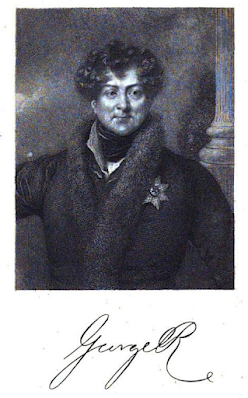
George, Prince of Wales from Memoirs of George IV by Robert Huish (1830)
George, Prince of Wales
from Memoirs of George IV
by Robert Huish (1830)
The Prince was inconstant in his affections. In time, Lady Jersey was abandoned for a succession of other mistresses, including a return to his long term lover, Mrs Fitzherbert. But at no time did the Prince show any kindness towards his wife. He did not desire her company, and yet, when he could, he restricted her movements and limited her access to her daughter. She could not expect his love, but she deserved his respect and received none.

In 1806, Caroline’s behaviour was examined by parliament after accusations that she had given birth to an illegitimate child; the “Delicate Investigation” exonerated Caroline, who won great public support through the affair.

When George became king in 1820, he publicly accused his wife of adultery and Queen Caroline was put on trial in an attempt to prevent her from being crowned as queen. Public support once again rallied to the Queen and the Bill of Pains and Penalties, which would have dissolved the marriage, had to be abandoned. George did, however, succeed in barring Caroline from his coronation. Popular media of the time represented George as a libertine and Caroline as the wronged wife.

A disastrous marriage

From start to finish, the Prince’s behaviour was unpardonable. He had agreed to marry Princess Caroline, but failed to show her the respect due to her as wife. He paraded his mistresses in front of her and yet accused her of improper behaviour at every opportunity.

Caroline, on the other hand, was an unfortunate choice of bride; her character and person disgusted her husband and her lack of restraint brought his dislike into the open. Their domestic dispute was paraded in front of the British public for over twenty years, causing the royal family acute embarrassment and loss of popularity.

But perhaps the most sobering reflection is that this match was carried forward against the natural inclinations of both parties and as such, was a recipe for marital disharmony before ever the marriage vows had been exchanged.

Headshot of Rachel Knowles author with sea in background(2021)
Rachel Knowles writes clean/Christian Regency era romance and historical non-fiction. She has been sharing her research on this blog since 2011. Rachel lives in the beautiful Georgian seaside town of Weymouth, Dorset, on the south coast of England, with her husband, Andrew.

Find out more about Rachel's books and sign up for her newsletter here.

If you have enjoyed this blog and want to encourage me and help me to keep making my research freely available, please buy me a virtual cup of coffee by clicking the button below.


Notes
(1) The Act of Settlement of 1701 prevented George from marrying a Catholic, and the Royal Marriage Act of 1772 required the King’s consent to his marriage until he was over 25 years of age. As George III was vehemently opposed to his children marrying beneath them, this effectively left only German royalty as potential spouses.
(2) From a letter dated 28 November 1794 quoted in Opinions on Politics, Theology, &c by Henry Brougham (1839).
(3) From Diaries and Correspondence of James Harris, First Earl of Malmesbury, Volume III (1834).
(4) From John Fairburn's account of the trial of Queen Caroline (1820)(see sources for full title).
(5) From Huish's Memoirs of George IV (1830).

Sources used include:
Brougham, Henry, Baron Brougham and Vaux, Opinions on Politics, Theology, &c (1839)
Cobbett, Cobbett's Political Register (1813)
Fairburn, John, The whole proceedings on the trial of Her Majesty, Caroline Amelia Elizabeth, Queen of England, for 'adulterous intercourse' with Bartolomeo Bergami (1820)
Harris, James, First Earl of Malmesbury, Diaries and Correspondence of James Harris, First Earl of Malmesbury, Volume III (1834)
Huish, Robert, Memoirs of George IV (1830)
Parissien, Steven, George IV, The Grand Entertainment (2001)
Watson, J Steven, Oxford History of England: The Reign of George III 1760-1815 (1960)

Wednesday, 16 November 2011

La Belle Assemblée

Front cover of La Belle Assemblée (1806)
An unparallelled periodical

La Belle Assemblée, or Bell’s Court and Fashionable Magazine addressed particularly to the ladies, was a monthly ladies’ periodical which first appeared in February 1806. It continued under this name until 1832 when it became The Court Magazine and Belle Assemblée and later it merged with the Lady’s Magazine and Museum.

It was the creation of John Bell who published it from 1806 until his retirement in 1821. He recommended his new magazine to its readers with these words:
In introducing the first Number of our Miscellany to the world, we flatter ourselves that we are laying the foundation of a Work, which, in the comprehensiveness of its instruction, the variety of its amusements, and the elegance of its embellishment, has had no parallel in the history of periodical publications.1
It was quite expensive compared to other periodicals at the time. At the beginning of 1807, the magazine cost 2 shillings and 6d, that is, half a crown. An alternative version was then introduced which containing coloured plates for the higher price of 3s 6d. The price advertised at the end of 1811 was 3 shillings for the 1812 series.

A magazine with embellishments

When it was first published, La Belle Assemblée was available in two parts – a magazine section and a fashion section, though this distinction was later dropped. It offered a lot more reading material than other contemporary magazines, like the Lady’s Monthly Museum, and a number of embellishments which usually included an engraving, an original piece of music, a needlework pattern and two fashion plates.

Left: Evening or ball dress
Right: Walking or carriage costume
from La Belle Assemblée (April 1807)
Biographical sketches of illustrious ladies

The magazine section opened with a biographical sketch of an eminent lady accompanied by an expert engraving. During the first volume, the ladies profiled were: Queen Charlotte; the Princess of Wales; Princess Sophia of Gloucester; the Duchess of Devonshire (no engraving); Charlotte, the Princess Royal; Princess Sophia Augusta and Princess Elizabeth. Later issues included profiles of the actress, Mrs Siddons, the Prince Regent’s mistress, Mrs Fitzherbert, and the famous singer, Madame Catalani.
Engraving of the Duchess of Brunswick
from La Belle Assemblée (1807)
Original contents

La Belle Assemblée prided itself on the originality of its contents and within the sections that followed, published a variety of original communications and letters, under section titles that varied over the years. These included miscellaneous anecdotes and pieces of prose such as “A history of the new world” which appeared in the first issue and advice on health, beauty and behaviour, such as “Maxims and rules for the conduct of women”.

Article from La Belle Assemblée (1806)
Lectures on useful sciences were also included covering such subjects as the culinary system, botany, heraldry and gardening.

The serialised novel

It also included short stories and serialised novels, such as Hymenea in Search of a Husband and Oakwood House, later published as Oakwood Hall, by Catherine Hutton. Poetry and music were another important element, with issues including both original and select poetry and an original piece of sheet music.

The cabinet of taste

The first volume included a retrospect of politics which had a section looking at the public amusements currently available in London, including a critical evaluation of what was on at the theatre. This section expanded in later volumes to form a 'cabinet of taste' which gave reviews of paintings, books, music and the theatre. Births, marriages and deaths were also published.

Fashion in the 1800s

The second division of the magazine was devoted to fashion and included the two fashion plates with detailed descriptions. These were originally printed in black and white, for ladies to colour themselves, but from 1807, they were available ready-coloured. As well as general information about fashions for the coming month, this section included detailed descriptions of the dress worn by the social elite at important events, such as the king’s birthday celebrations. It also included a needlework pattern. The periodical finished with a section of advertisements, which included a list of the latest novels.
Walking dress
from La Belle Assemblée (October 1808)
Supplemental numbers

Every volume offered a supplemental number with embellishments which was devoted to art and literature. The supplement to the first volume included a review of the literature of the previous six months but later supplements were sometimes focused on a single subject, such as the works of Alexander Pope.

A list of editions available online with links to fashion plates where available on this page.

Note
(1) From La Belle Assemblée (1806).

Sources used include:
Morison, Stanley, A Memoir of John Bell (1930)
Bell, John, La Belle Assemblée, various (1806-1831)

Sunday, 13 November 2011

Frankenstein's author, Mary Shelley (1797-1851)

Mary Shelley  from The Life and Letters of Mary Wollstonecraft Shelley  by Mrs Julian Marshall (1889)
Mary Shelley
from The Life and Letters of Mary Wollstonecraft Shelley
by Mrs Julian Marshall (1889)
Profile

Mary Shelley (30 August 1797 - 1 February 1851) was an English writer who is most famous for her novel Frankenstein. She was the wife of the Romantic poet, Percy Bysshe Shelley.

Family history

Mary Wollstonecraft Godwin was born in London on 30 August 1797, the daughter of William Godwin and Mary Wollstonecraft. Godwin was a radical political philosopher and author; his most famous work, Political Justice, was published in 1793. Wollstonecraft was an ardent feminist and author of A Vindication of the Rights of Woman, published in 1792. In this work, she spoke out vehemently against the position of women in society, most notably describing marriage as “legal prostitution”.

Given their radical views, it is perhaps surprising that Godwin and Wollstonecraft married. However, Godwin’s intent was to provide security for their unborn child, which Wollstonecraft had lacked when her older daughter, Fanny Imlay, had been born and her lover, Gilbert, had deserted them.

After Wollstonecraft’s death, Godwin published Memoirs of the Author of A Vindication of the Rights of Woman; the scandalous book was not received well as the memoirs included details of Wollstonecraft’s affairs and her illegitimate child.

Childhood

Mary’s mother died from complications shortly after her birth leaving her and her half-sister, Fanny, to be raised by Godwin. In 1801, he married Mrs Claremont, who brought her own children, Charles and Jane - later known as Claire - into the Godwin family unit. Mary resented her step-mother whilst idealising her own mother. Her early years were spent in Scotland, near Dundee, and in London, where her family had a house in Skinner Street, Holborn. The Godwins were often plagued with a shortage of funds.

Godwin describes his daughter in a letter to an unknown correspondent:
She is singularly bold, somewhat imperious and active of mind. Her desire of knowledge is great, and her perseverance in everything she undertakes almost invincible. My own daughter is, I believe, very pretty.1
The house in Skinner Street was a stimulating intellectual environment. Godwin received many visitors including Lamb, Burr and Coleridge, who read his poem, The Ancient Mariner, in Mary’s hearing.

Percy Bysshe Shelley

Percy Bysshe Shelley  from Percy Bysshe Shelley, a monograph  by HS Salt (1888)
Percy Bysshe Shelley
from Percy Bysshe Shelley, a monograph
by HS Salt (1888)
The poet, Percy Bysshe Shelley, and his wife, Harriet, were regular visitors to Skinner Street. Shelley was a much younger man than most of Godwin’s other friends and he revered his work, Political Justice, giving it a fanatical interpretation.

Mary and Shelley fell in love and embarked upon a scandalous affair. Despite his views on marriage, Godwin did not support the relationship; he had fallen out with Shelley who had promised him money which he was not then able to give him due to his own financial situation.

Elopement

Together with Mary’s stepsister, Claire Claremont, Shelley and Mary went abroad in July 1814, travelling throughout Europe. When they returned to England, Mary was pregnant with Shelley’s child, and Godwin refused to receive them. The couple were penniless and found themselves ostracised from society. When her baby daughter died shortly after her birth in February 1815, Mary became depressed and isolated from Shelley who was trying to avoid his creditors.

The birth of Frankenstein

However, Mary fell pregnant again and gave birth to a son, William, on 24 January 1816, which eased her depression. The couple’s monetary problems were pressing, and so in the summer, they decided to go abroad to Geneva in Switzerland in the company of Lord Byron, John Polidori and Claire Claremont. It was while this illustrious company were writing ghost stories together that Mary conceived the idea for her novel, Frankenstein.

Front cover of Frankenstein  (1831 edition)
Front cover of Frankenstein
(1831 edition)
Marriage

On 30 December 1816, Shelley and Mary were married, following the death of Shelley’s first wife. Godwin now became reconciled to the match, but the relationship between them continued to be strained as he regularly demanded financial support from his son-in-law.

Travels in Italy

In 1818, plagued by debt, the couple and their young family – William and baby Clara, who had been born on 2 September 1817 – went abroad again. Over the next three years, the Shelleys travelled around Italy, to Venice, Naples, Rome and Florence, but it was a time of great sadness. First Clara and then William became ill and died. Mary was devastated. “Everything on earth has lost its interest to me,” she wrote to her friend, Miss Curran.2

On 12 November 1819, Percy Florence was born, but Mary feared she would lose him just like her other children. The Shelleys were constantly short of money but gained enjoyment from reading and writing and the intellectual stimulus of their own company and that of their many visitors.

Widowhood

On 8 July 1822, tragedy struck: Shelley was drowned when his sailing boat sunk during a storm. Mary returned to England the following year and devoted herself to bringing up her son and continuing her writing. Sir Timothy Shelley provided her with a small income on the understanding that she would not publish any of Shelley’s work or a biography during his lifetime.

Mary never remarried; no one else was Shelley’s equal. “Mary Shelley shall be written on my tomb,” she wrote to her friend and suitor, Trelawney.3 Her son, Percy, studied at Harrow and Cambridge, but showed no signs of his parents’ genius. Mary struggled with continued social ostracism and friends who continually let her down. Jane St John, who became Percy’s wife, was a great source of comfort to Mary in the last years of her life.

Illness and death

Mary grew increasingly unwell during the last years of her life and died on 1 February 1851 after a series of strokes. She was buried in St. Peter’s churchyard, Bournemouth, in Dorset.

Mary Shelley's gravestone in St Peter's churchyard, Bournemouth
The works of Mary Shelley

As well as Frankenstein, Mary wrote several other lesser known novels: Valperga (1823), The Last Man (1826), Perkin Warbeck (1830), Lodore (1835) and Falkner (1837). She also wrote a volume of travel studies – Rambles in Germany and Italy (1844). She also edited and promoted the work of her husband, Percy Shelley.

Headshot of Rachel Knowles author with sea in background(2021)
Rachel Knowles writes clean/Christian Regency era romance and historical non-fiction. She has been sharing her research on this blog since 2011. Rachel lives in the beautiful Georgian seaside town of Weymouth, Dorset, on the south coast of England, with her husband, Andrew.

Find out more about Rachel's books and sign up for her newsletter here.

If you have enjoyed this blog and want to encourage me and help me to keep making my research freely available, please buy me a virtual cup of coffee by clicking the button below.


Notes

  1. Marshall, Mrs. Julian, The Life and Letters of Mary Wollstonecraft Shelley (1889).
  2. Ibid.
  3. Ibid.

Sources used include:
Marshall, Mrs. Julian, The Life and Letters of Mary Wollstonecraft Shelley (1889) in 2 volumes
Spark, Muriel, Mary Shelley (1988)

Photos © RegencyHistory.net