Search this blog

Showing posts with label Frances Countess of Jersey. Show all posts

Monday, 15 April 2013

Frances Villiers, Countess of Jersey (1753-1821)

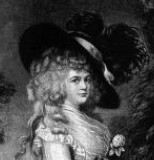
Frances, Countess of Jersey,  by Thomas Watson after Daniel Gardner,  mezzotint pub 1774 © National Portrait Gallery, London
Frances, Countess of Jersey,
by Thomas Watson after Daniel Gardner,
mezzotint pub 1774 © National Portrait Gallery, London
Profile

Frances Villiers, Countess of Jersey (25 February 1753 - 25 July 1821), was an influential member of Georgian society and a mistress of George IV.

An Irish beauty

Frances Twysden was born on 25 February 1753 in Raphoe, Donegal, in Ireland, the posthumous daughter of Philip Twysden, the bankrupt Bishop of Raphoe, and his second wife, Frances.

Marriage to “the Prince of Maccaronies”

On 26 March 1770, Frances married George Bussy Villiers, the 4th Earl of Jersey, at the home of her step-father, General James Johnston, an aide-de-camp to George III. The Earl was almost twenty years her senior and was Gentleman of the Bedchamber to George III. He was known for his courtly manners, leading to the bluestocking Mrs Montagu dubbing him “the Prince of Maccaronies.”1

Family life

George and Frances had ten children, two sons and eight daughters: Charlotte (1771), Anna (1772), George (1773), Caroline (1774), Georgiana who died as an infant (1776), Sarah (1779), William (1780), Elizabeth (1782), Frances (1786) and Harriet. (1788)2

As Frances was by no means faithful, it is probable that some of her children were fathered by other men. However, she appears to have been genuinely attached to her husband who stood by her throughout their marriage.

What was she like?

A great beauty, known for her charm, intelligence and wit, Frances was also a malicious gossip, notorious for her spiteful and vengeful nature. She was described in the Journal of Mary Frampton as
a clever, unprincipled, but beautiful and fascinating woman, though with scarcely any retrieving really good quality.3
Lady Bessborough was equally condemnatory, once remarking that Lady Jersey could not be happy “without a rival to trouble and torment.”4

Georgiana, Duchess of Devonshire, referred to Lady Jersey as ‘Peste’ – the French for plague.5
Georgiana Cavendish in the "picture hat"  after Thomas Gainsborough c1785-7    from The Two Duchesses,  Family Correspondence (1898)
Georgiana Cavendish in the "picture hat"
after Thomas Gainsborough c1785-7
  from The Two DuchessesFamily Correspondence (1898)
Richard Brinsley Sheridan modelled his character Lady Sneerwell on a combination of her and Lady Melbourne in his play School for Scandal in 1777.

Whig campaigner

Frances became friends with Georgiana, Duchess of Devonshire, and was part of the Devonshire House set that formed the hub of the Whig party. In the election of 1784, she campaigned alongside Georgiana and her sister Harriet in support of Charles James Fox, dressed in the Whig uniform of blue and buff with a foxtail in her hat.

Lovers

Frances was not faithful to her husband and engaged in a succession of affairs. Her lovers included Frederick Howard, 5th Earl of Carlisle; Lord Morpeth; William Augustus Fawkener, clerk to the Privy Council; and William Cavendish, 5th Duke of Devonshire, husband of her ‘friend’ Georgiana, with whom she had a brief affair in 1778, which was terminated through the intervention of Georgiana’s family, the Spencers.

Frederick Howard, 5th Earl of Carlisle  from the History of White's  by A Bourke (1892)
Frederick Howard, 5th Earl of Carlisle
from the History of White's
by A Bourke (1892)
Mistress to the Prince of Wales

But by far the most famous of Lady Jersey’s lovers was George, Prince of Wales. From as early as 1782, George was attracted to Frances, who was nine years older than him, but it was not until 1793 that she became his mistress, by which time she was forty years old and a grandmother.

Having become George’s mistress, Frances was keen to establish her position. She encouraged the Prince to abandon Mrs Fitzherbert permanently and get married to solve his financial problems. She supported the choice of his cousin Caroline, believing that she would be no competition for her own attractions.
George IV  from La Belle Assemblée (1830)
George IV
from La Belle Assemblée (1830)
The misery of the Princess of Wales

In 1795, the besotted Prince appointed Lord Jersey as his Master of the Horse and made Frances Lady of the Bedchamber to his new bride. Frances lost no opportunity to taunt the Princess of Wales. She arrived late to meet her when she first arrived in England and then criticised her dress. She appeared openly as the Prince’s consort and drove about in a carriage accompanied by servants wearing the Prince’s livery.

Princess Caroline hated Frances’ influence and begged to have her removed from her position by writing repeatedly to the Prince. Frances was also accused of stealing Caroline’s letters and passing them to the Queen.
The Jersey smuggler detected; - or - good causes for discontent [separation]  Print made by James Gillray 24 May 1796  Published by Hannah Humphrey © British Museum
The Jersey smuggler detected; - or - good causes for discontent [separation]
Print made by James Gillray 24 May 1796
Published by Hannah Humphrey © British Museum
Growing unpopularity

Public opinion sided with the seemingly ill-treated Princess of Wales, and Lady Jersey and the Prince became increasingly unpopular. A mob stoned Frances’ London house and, when she visited Brighton, she was humiliated by a skimmington - two people masquerading as herself and the Prince, parading through the town on a donkey. Even amongst the ton she was shunned, most notably at a ball held by the Duchess of Gordon.

Lady Spencer declared that
Lady J. is in everything, and by everybody most thoroughly disapproved.6
Eventually, on 29 June 1796, Frances offered to resign from her post, claiming that she would have resigned earlier except that such an action seemed to prove her guilt.

Caroline, Princess of Wales  from La Belle Assemblée (1806)
Caroline, Princess of Wales
from La Belle Assemblée (1806)
But it was not the end of the Prince’s affair with Frances. The Jerseys moved into a house in Warwick Street, adjacent to Carlton House, creating fresh scandal, and Lady Jersey spent Christmas with the Prince at Critchell House near Wimborne Minster.

The end of the affair

By 1798, the fickle Prince had tired of Lady Jersey. He sent his friends to negotiate an amicable parting, but Frances was reluctant to be put aside. But by June 1799, the affair was over. The Jerseys moved out of the house in Warwick Street and the Earl was dismissed from his role as Master of the Horse. All intimacy was at an end.

"That infernal Jezabel"

Frances was furious and blamed Georgiana, who had been reconciled with the Prince, for turning him against her. She determined to plague the Prince, and by all accounts succeeded, as in 1814, he railed against “all the wickedness, perseverance and trick of that infernal Jezabel Lady Jersey.”7

According to Aspinall, Lady Jersey
tried to pay off old scores by making mischief in the Orange marriage, but it does not seem that her influence on Princess Charlotte was considerable.8.
Money problems

After her separation from the Prince, Frances was beset with financial difficulties, and in 1802, Lord Jersey was threatened with imprisonment over his debts.

On 22 August 1805, the Earl died and Frances was left without sufficient means to support her in the life to which she was accustomed. She applied to the Prince for a pension which was eventually, reluctantly, granted (9). Her son George, the 5th Earl of Jersey, increased her jointure and paid her debts from time to time, but she had no notion of economy.

Death

Frances died on 25 July 1821 in Cheltenham and was buried in the family vault at Middleton Stoney. After her death, her executor, Lord Clarendon, burned many of her papers, including correspondence relating to George IV.

The other Lady Jersey 

Sarah Sophia, Countess of Jersey  from The Illustrated Belle Assemblée (1844)
Sarah Sophia, Countess of Jersey
from The Illustrated Belle Assemblée (1844)
Frances is not to be confused with her daughter-in-law, Sarah, who was married to her elder son George Child Villiers, 5th Earl of Jersey, and was a leading member of the ton and a patroness of Almack’s.

If you enjoyed this post, you might like to read about some other women in George IV's life: Maria Fitzherbert, Lady Melbourne and Lady Hertford.

Headshot of Rachel Knowles author with sea in background(2021)
Rachel Knowles writes clean/Christian Regency era romance and historical non-fiction. She has been sharing her research on this blog since 2011. Rachel lives in the beautiful Georgian seaside town of Weymouth, Dorset, on the south coast of England, with her husband, Andrew.

Find out more about Rachel's books and sign up for her newsletter here.

If you have enjoyed this blog and want to encourage me and help me to keep making my research freely available, please buy me a virtual cup of coffee by clicking the button below.

Notes
(1) From George Bussy Villiers , fourth Earl of Jersey (1735-1805) Oxford Dictionary of National Biography by HE Maxwell (2004).
(2) From Debrett's Complete Peerage (1838).
(3) From The Journal of Mary Frampton (1885).
(4) From George IV by Christopher Hibbert (1972, 1973).
(5) From Georgiana, Duchess of Devonshire by Amanda Foreman (1998).
(6) From Georgiana, Duchess of Devonshire by Amanda Foreman (1998).
(7) From The Letters of King George IV edited by A Aspinall (1838).
(8) From The Letters of King George IV edited by A Aspinall (1838).
(9) From George IV by Christopher Hibbert (1972, 1973).

Sources used include:
Bourke, Hon Algernon, The History of White's (1892)
Courthope, William, editor, Debrett's Complete Peerage of the United Kingdom of Great Britain and Ireland (1838)
Foreman, Amanda, Georgiana, Duchess of Devonshire (HarperCollins, 1998, London)
Frampton, Mary, The Journal of Mary Frampton (1779-1846) edited by Harriot Georgiana Mundy (1885)
George IV, The Letters of King George IV 1812-1830 edited by A Aspinall in 3 volumes (1838)
Hibbert, Christopher, George IV (1972, Longmans, 1973, Allen Lane, London)
Levy, Martin J, Villiers, Frances, Countess of Jersey (1753-1821) Oxford Dictionary of National Biography (Oxford University Press, 2004; online edn Jan 2008, accessed 8 Apr 2013)
Maxwell, HE, Villiers, George Bussy, fourth Earl of Jersey (1735-1805) Oxford Dictionary of National Biography, rev MJ Mercer (Oxford University Press, 2004; online edn Jan 2008, accessed 10 Apr 2013)

Saturday, 19 November 2011

George IV and Queen Caroline: a disastrous royal marriage

Princess Caroline of Brunswick by Sir Thomas Lawrence (c1804) © National Portrait Gallery, London George IV when Prince of Wales by John Hoppner (1792) © The Wallace Collection
Princess Caroline of Brunswick by Sir Thomas Lawrence (c1804)
© National Portrait Gallery, London
George IV when Prince of Wales by John Hoppner (1792)
© The Wallace Collection
Resigned to an arranged marriage

George, Prince of Wales, and Princess Caroline of Brunswick were married on 8 April 1795. Although they were first cousins, the couple had not met before the marriage was arranged. Neither the Prince of Wales nor the Princess Caroline wanted the match, but they both agreed to it.

Engraving of Princess Caroline from La Belle Assemblée (1806)
Engraving of Princess Caroline
from La Belle Assemblée (1806)
British law had severely restricted George’s choice of bride.1 His secret marriage to his mistress, Mrs Fitzherbert, was not legal, and, desperate for money, the Prince had agreed to marry his father’s choice of bride.

But George was not the only one to suffer from this arranged marriage. After accepting the Prince’s proposal, Princess Caroline wrote to a friend: 
I am indifferent to my marriage, but not averse to it; I think I shall be happy, but I fear my joy will not be enthusiastic. The man of my choice I am debarred from possessing, and I resign myself to my destiny.2
An uncouth bride?

Lord Malmesbury was sent to Brunswick to present the Prince’s proposal and describes his first impressions of Caroline in his diary:
Pretty face — not expressive of softness — her figure not graceful — fine eyes — good hand — tolerable teeth, but going — fair hair and light eye-brows, good bust — short.3
Lord Malmesbury from Diaries and Correspondence of James Harris,  First Earl of Malmesbury, Volume III (1834)
Lord Malmesbury
from Diaries and Correspondence of James Harris,
 First Earl of Malmesbury, Volume III (1834)
He goes on to record his reservations about Caroline’s suitability as a bride for the Prince: 
Princess Caroline very missish at supper. I much fear these habits are irrecoverably rooted in her — she is naturally curious, and a gossip.3
He was obliged to caution her “to think always before she speaks” and to make improvements in her personal hygiene.3 He was particularly revolted when she had a tooth drawn and had it sent to him as a gift!

But he was not blind to her good points, noting that “she improves very much on closer acquaintance - cheerful, and loves laughing” and that she “understands a joke and can make one.”3

Lord Malmesbury remained very concerned about the suitability of the match:
We regret the apparent facility of the Princess Caroline's character—her want of reflection and substance— agree that with a steady man she would do vastly well, but with one of a different description, there are great risks.3
First impressions

Neither party was expecting a love match, but Princess Caroline, at least at the start, was hopeful of a good relationship with her cousin. She wrote to her friend:
I esteem and respect my intended husband, and I hope for great kindness and attention ... I shall strive to render my husband happy.2
Lord Malmesbury records their first meeting:
I, according to the established etiquette, introduced ... the Princess Caroline to him. She very properly ... attempted to kneel to him. He raised her (gracefully enough), and embraced her, said barely one word, turned round, retired to a distant part of the apartment, and calling me to him, said, "Harris, I am not well; pray get me a glass of brandy."3
Caroline was unimpressed. When Lord Malmesbury rejoined her she exclaimed in French, asking if the Prince was always like that and declaring that she found him very fat and nothing like as handsome as his portrait.

Wronged wife

When Princess Caroline arrived in England she hoped for “great kindness and attention.” She received neither. The King was effusive in welcoming her, but the Queen was cold and her future husband indifferent. George had never wanted the marriage apart from as a way to secure funds, and he was heavily influenced by his new mistress, Frances, Countess of Jersey, whom he heartlessly appointed as a Lady of the Bedchamber for his new wife.

From the first moment of setting foot on English soil, Princess Caroline was subject to Lady Jersey’s spite. The Prince made no secret of the fact that Caroline was his wife in name only. When she unwisely revealed her previous attachment, Lady Jersey had no scruples in laying this before the Prince and poisoning his mind against his new wife.

Separation

The Prince of Wales’ dislike grew. He wanted to divorce his wife, but the King was emphatically against it. A separation, however, was unavoidable.

In a letter from the Prince of Wales to his wife dated 30 April 1796, the Prince stated that:
Our inclinations are not in our power; nor should either of us be held answerable to the other, because nature has not made us suitable to each other. Tranquil and comfortable society is, however, in our power; let our intercourse, therefore, be restricted to that.4
Caroline’s reply was also printed, saying that his letter “merely confirmed what you tacitly insinuated for this twelvemonth.”5 She confirms that this long-standing estrangement between them had been instigated by the Prince and the Prince alone.

Vindictive libertine
George, Prince of Wales from Memoirs of George IV by Robert Huish (1830)
George, Prince of Wales
from Memoirs of George IV
by Robert Huish (1830)
The Prince was inconstant in his affections. In time, Lady Jersey was abandoned for a succession of other mistresses, including a return to his long term lover, Mrs Fitzherbert. But at no time did the Prince show any kindness towards his wife. He did not desire her company, and yet, when he could, he restricted her movements and limited her access to her daughter. She could not expect his love, but she deserved his respect and received none.

In 1806, Caroline’s behaviour was examined by parliament after accusations that she had given birth to an illegitimate child; the “Delicate Investigation” exonerated Caroline, who won great public support through the affair.

When George became king in 1820, he publicly accused his wife of adultery and Queen Caroline was put on trial in an attempt to prevent her from being crowned as queen. Public support once again rallied to the Queen and the Bill of Pains and Penalties, which would have dissolved the marriage, had to be abandoned. George did, however, succeed in barring Caroline from his coronation. Popular media of the time represented George as a libertine and Caroline as the wronged wife.

A disastrous marriage

From start to finish, the Prince’s behaviour was unpardonable. He had agreed to marry Princess Caroline, but failed to show her the respect due to her as wife. He paraded his mistresses in front of her and yet accused her of improper behaviour at every opportunity.

Caroline, on the other hand, was an unfortunate choice of bride; her character and person disgusted her husband and her lack of restraint brought his dislike into the open. Their domestic dispute was paraded in front of the British public for over twenty years, causing the royal family acute embarrassment and loss of popularity.

But perhaps the most sobering reflection is that this match was carried forward against the natural inclinations of both parties and as such, was a recipe for marital disharmony before ever the marriage vows had been exchanged.

Headshot of Rachel Knowles author with sea in background(2021)
Rachel Knowles writes clean/Christian Regency era romance and historical non-fiction. She has been sharing her research on this blog since 2011. Rachel lives in the beautiful Georgian seaside town of Weymouth, Dorset, on the south coast of England, with her husband, Andrew.

Find out more about Rachel's books and sign up for her newsletter here.

If you have enjoyed this blog and want to encourage me and help me to keep making my research freely available, please buy me a virtual cup of coffee by clicking the button below.


Notes
(1) The Act of Settlement of 1701 prevented George from marrying a Catholic, and the Royal Marriage Act of 1772 required the King’s consent to his marriage until he was over 25 years of age. As George III was vehemently opposed to his children marrying beneath them, this effectively left only German royalty as potential spouses.
(2) From a letter dated 28 November 1794 quoted in Opinions on Politics, Theology, &c by Henry Brougham (1839).
(3) From Diaries and Correspondence of James Harris, First Earl of Malmesbury, Volume III (1834).
(4) From John Fairburn's account of the trial of Queen Caroline (1820)(see sources for full title).
(5) From Huish's Memoirs of George IV (1830).

Sources used include:
Brougham, Henry, Baron Brougham and Vaux, Opinions on Politics, Theology, &c (1839)
Cobbett, Cobbett's Political Register (1813)
Fairburn, John, The whole proceedings on the trial of Her Majesty, Caroline Amelia Elizabeth, Queen of England, for 'adulterous intercourse' with Bartolomeo Bergami (1820)
Harris, James, First Earl of Malmesbury, Diaries and Correspondence of James Harris, First Earl of Malmesbury, Volume III (1834)
Huish, Robert, Memoirs of George IV (1830)
Parissien, Steven, George IV, The Grand Entertainment (2001)
Watson, J Steven, Oxford History of England: The Reign of George III 1760-1815 (1960)

Wednesday, 9 November 2011

Princess Caroline of Brunswick (1768-1821)

Princess Caroline of Brunswick  from Huish's Memoirs of her late   royal highness Charlotte Augusta (1818)
Princess Caroline of Brunswick
from Huish's Memoirs of her late
 royal highness Charlotte Augusta (1818) 


Profile

Princess Caroline of Brunswick (17 May 1768 - 7 August 1821) was the hated wife of George IV. Her reckless behaviour was investigated twice by parliament and although the King failed to divorce her, she was deprived of being crowned as Queen.

Family history

Caroline Amelia Elizabeth was born on 17 May 1768, the second daughter of Karl Wilhelm, the Duke of Brunswick-Wolfenbuttel, and Princess Augusta, the eldest sister of George III. She was brought up in the German principality with a great deal of freedom, resulting in unrestrained speech which tended to be vulgar and lacking in respect, particularly towards her mother. Unfortunately, her personal cleanliness also left much to be desired.

A disastrous marriage

On 8 April 1795, Princess Caroline and George, Prince of Wales, were married. From the outset, the prospects of a happy union were slim; in the event, it was an unmitigated disaster. The prince’s motivation for getting married was to appease parliament and persuade them to pay his enormous debts. Although he had separated from Maria Fitzherbert, his long-term mistress, George was at this time infatuated with Frances, Countess of Jersey, who had encouraged him to marry to shield their relationship.
George IV  from La Belle Assemblée (1830)
George IV
from La Belle Assemblée (1830)
George disliked Princess Caroline on sight. He heartlessly made his mistress a Lady of the Bedchamber for his new wife and did not scruple to advertise that she was her rival. Lady Jersey’s behaviour towards Caroline was unkind and cruel; the prince treated Caroline with disdain and rudeness.


The royal couple only remained together as man and wife for a few weeks, but Caroline fell pregnant; she gave birth to a daughter, Princess Charlotte Caroline Augusta, on 7 January 1796.

Princess Charlotte  from La Belle Assemblée (1816)
Princess Charlotte
from La Belle Assemblée (1816)
Separation

By March 1796, George wanted an official separation from his wife, but his father would not allow it. The prince refused to see his wife except on formal occasions, but nevertheless restricted Caroline’s freedom and access to her daughter. In 1805, the king, George III, made her Ranger of Greenwich Park allowing her greater independence and financial security.

The Delicate Investigation

In 1806, Lady Douglas, a former companion of the Princess of Wales, accused her of having given birth to an illegitimate child in 1802. The government made a thorough investigation into the claims which were proved to be unfounded. It appears that the child Caroline was accused of conceiving out of wedlock was William Austin whom she had legally adopted.

Spencer Perceval threatened to publish the findings of the investigation if Caroline was not fully restored to her royal position; “The Book” was printed despite Caroline being hastily received at Court and provided fuel for her supporters for many years.

The wayward wife

In 1814, Caroline was given leave to travel abroad, firstly to Germany and then on to Italy. Her behaviour at this time can only be described as reckless; she publicly engaged in adulterous affairs without the least discretion, the most notable of which was with Barolomeo Bergami, also known as Count Pergami.

The Queen Caroline Affair

When George acceded to the throne in 1820, Caroline technically became the Queen Consort of England and on 5 June, she arrived from Italy, amidst public rejoicing, to claim her rights as queen. George wanted to divorce his adulterous wife and deprive her of her rank.

In response, the cabinet introduced what is commonly known as the Bill of Pains and Penalties, which would have dissolved the king’s marriage and deprived her of her title. Her adultery was easily proven and the bill was passed by a small majority in the House of Lords, but it was dropped because of its widespread unpopularity.

Decline

Although championed by ardent supporters such as Sarah, Lady Jersey, Caroline’s popularity waned; she withdrew from public view, accepting a house and an allowance of £50,000 a year. She made one final attempt to be recognised as Queen; she attempted to enter the abbey for the coronation and be crowned alongside her estranged husband. She was refused admittance, despite the sympathy of the crowd, and gave up the attempt. She died just a few weeks later, on 7 August 1821, at Brandenburg House, the house of Elizabeth, Margravine of Brandenburg-Ansbach-Bayreuth.

Sources used include:
Chedzoy, Alan, Seaside Sovereign - King George III at Weymouth, (2003)
Fry, Plantagenet Somerset, The Kings & Queens of England & Scotland, (1990)
Harris, James, First Earl of Malmesbury, Diaries and Correspondence of James Harris, First Earl of Malmesbury, Volume III (1834)
Huish, Robert, Memoirs of her late royal highness Charlotte Augusta (1818)
Parissien, Steven, George IV, The Grand Entertainment (2001)
Watson, J. Steven, Oxford History of England: The Reign of George III 1760-1815, (1960)

Friday, 4 November 2011

Sarah Child Villiers, Countess of Jersey (1785-1867)

Sarah Sophia Villiers, Countess of Jersey © Rachel Knowles
Profile

Sarah Child Villiers, Countess of Jersey (4 March 1785 – 26 January 1867), was a leading figure in Regency society and one of the patronesses of Almack's Assembly Rooms.

Family history

Lady Sarah Sophia Fane was born on 4 March 1785, the eldest daughter of John Fane, the tenth Earl of Westmorland, and Sarah Anne Child.

Her mother, Sarah Child, was the only daughter and heiress of Robert Child, the senior partner in Child’s bank. He was vehemently opposed to her marrying the Earl and so the couple were forced to elope to Gretna Green, where they were married in 1782.

Heiress to Child’s fortune

Robert Child was so incensed that his daughter had married against his wishes that he cut her out of his will, determined not to let the Earls of Westmorland benefit from his wealth. Under the terms of his new will, everything was left in trust for his daughter’s second surviving son or eldest daughter.

On this basis, on her mother's death in 1793, Lady Sarah became heiress to all her grandfather's wealth, with an estimated income in the region of £60,000 a year. She was a very wealthy lady!1  She also inherited his position as senior partner of the Child and Co Bank, a role which she actively held from her majority in 1806 until her death.

The Earl of Jersey's seat at Middleton Stoney, Oxfordshire  from Oxfordshire, The history and antiquities of the hundreds of Bullington and Ploughley by J Dunkin (1823)
The Earl of Jersey's seat at Middleton Stoney, Oxfordshire
from Oxfordshire, The history and antiquities of the hundreds
of Bullington and Ploughley
by J Dunkin (1823)
Marriage and family life

Lady Sarah married George Villiers, Viscount Villiers, on 23 May 1804. George Villiers became the 5th Earl of Jersey on his father’s death in 1805. The Earl took his wife’s name in addition to his own by royal licence in 1819 and became known as George Child Villiers.2 The couple had seven children who survived infancy: George (1808), Augustus (1810), Frederick (1815), Francis (1819), Sarah (1822), Clementina (1824) and Adela (1828).

Although Lady Jersey had inherited Osterley Park from her grandfather, the couple chose rather to live at Middleton Park in Middleton Stoney in Oxfordshire, where Lord Jersey successfully bred and trained racehorses. When in London, they resided at 38 Berkeley Square.
 

Osterley Park
Osterley Park (2014)
“Queen Sarah”

Throughout the Regency period and beyond, Lady Jersey held a leading role in the ton, and was nicknamed “Queen Sarah” in acknowledgement of her position. According to Chancellor:
Her amiable manners, her interest in politics, her admirable linguistic powers, her kindly, genial nature, all combined to give her a sort of prescriptive right to the exalted sphere in which she moved.3
The first quadrille at Almack's  from The Reminiscences and Recollections of Captain Gronow (1889)
The first quadrille at Almack's
from The Reminiscences and Recollections of Captain Gronow (1889)
She was one of the patronesses of Almack’s Assembly Rooms, where she famously refused entry to the Duke of Wellington who turned up at the Rooms at seven minutes after 11pm when the doors were shut. On returning from Paris in 1815, she introduced the quadrille to the Rooms.

“Silence”

In her letters, Harriet, Countess of Granville, refers to Lady Jersey as “Silence”. The nickname does not appear to be used maliciously – it is rather a joke on her friend’s loquaciousness.

Captain Gronow describes Lady Jersey as being “inconceivably rude”, but Sir William Fraser describes her as being:
...very quick and intelligent, with the strongest sense of humour that I have ever seen in a woman; taking the keenest delight in a good joke, and having, I should say, great physical enjoyment of life.4
Sarah Sophia, Countess of Jersey  from The Illustrated Belle Assemblée (1844)
Sarah Sophia, Countess of Jersey
from The Illustrated Belle Assemblée (1844)
Lady Jersey was immortalised as Zenobia in Disraeli’s Endymion. She also featured as Lady Augusta in Lady Caroline Lamb's scandalous novel Glenarvon.

Political activist

For many years, Lady Jersey was an ardent supporter of the Whigs. She was a passionate advocate for Princess Caroline, Princess of Wales, and was her most prominent female supporter during the “Queen Caroline Affair” of 1820-21, when the Prince of Wales sought to prevent his estranged wife from assuming her role as Queen. Lady Jersey found herself under personal attack from John Bull, the most successful and widely circulated contemporary loyalist newspaper, which led to a libel suit against John Bull for impugning her honour.

By the end of the 1820s, she had switched her political allegiance to the Tory party and was championing Wellington and Peel. Her influence as a political hostess faded in the 1840s and she was eclipsed by others, particularly by her old rival Lady Cowper who had married Lord Palmerston in 1839.

Engraving of the Princess of Wales  from La Belle Assemblée (1807)
Engraving of the Princess of Wales
from La Belle Assemblée (1807)
The other Lady Jersey

Lady Jersey is not to be confused with Frances Villiers, Countess of Jersey, her notorious mother-in-law, who was once mistress to George IV while he was Prince Regent and was instrumental in encouraging his hatred towards Princess Caroline.

Death

Lady Jersey died on 26 January 1867 at the age of 81 years. She left most of her property to her grandson, the 7th Earl of Jersey, but made generous bequests to her other grandchildren. She was buried at Middleton Stoney in Oxfordshire.

Headshot of Rachel Knowles author with sea in background(2021)
Rachel Knowles writes faith-based Regency romance and historical non-fiction. She has been sharing her research on this blog since 2011. Rachel lives in the beautiful Georgian seaside town of Weymouth, Dorset, on the south coast of England, with her husband, Andrew.

Find out more about Rachel's books and sign up for her newsletter here.

If you have enjoyed this blog and want to encourage me and help me to keep making my research freely available, please buy me a virtual cup of coffee by clicking the button below.


Notes
1. The estimated income of £60,000 is from the Oxford Dictionary of National Biography (see below), but it gives no date as to which year it relates to. Taking 1804, the year of Sarah's marriage, as a base point and using the Measuring Worth website, an income of £60,000 would be equivalent to £4.12 million using the retail price index or an even greater £51.5 million using their average earnings method. Either way, it was a huge income!
2. The Oxford Dictionary of National Biography suggests an earlier date of 1812.
3. Memorials of St. James’s Street and Chronicles of Almack’s by E Beresford Chancellor (1922).
4. Ibid.

For a discussion about relative costs in the Regency period, see my blog post: How much did a ticket to a Regency ball really cost?

Sources used include:
Chancellor, E. Beresford, Memorials of St. James’s Street and Chronicles of Almack’s (1922)
Dunkin, John, Oxfordshire, The history and antiquities of the hundreds of Bullington and Ploughley vol II (1823)
Granville, Harriet, Countess of, Letters of Harriet, Countess of Granville 1810-1845, edited by F. Leveson Gower (1894)
Gronow, Captain, The Reminiscences and Recollections of Captain Gronow (1889, 1900)
Reynolds, KD, Villiers, Sarah Sophia Child-, Countess of Jersey (1785-1867) Oxford Dictionary of National Biography (Oxford University Press, 2004; online edn May 2006, accessed 6 Oct 2012)

Photograph © RegencyHistory