Search this blog

Showing posts with label Chatsworth. Show all posts

Tuesday, 15 October 2019

The Bachelor Duke - William Spencer Cavendish, 6th Duke of Devonshire (1790-1858)

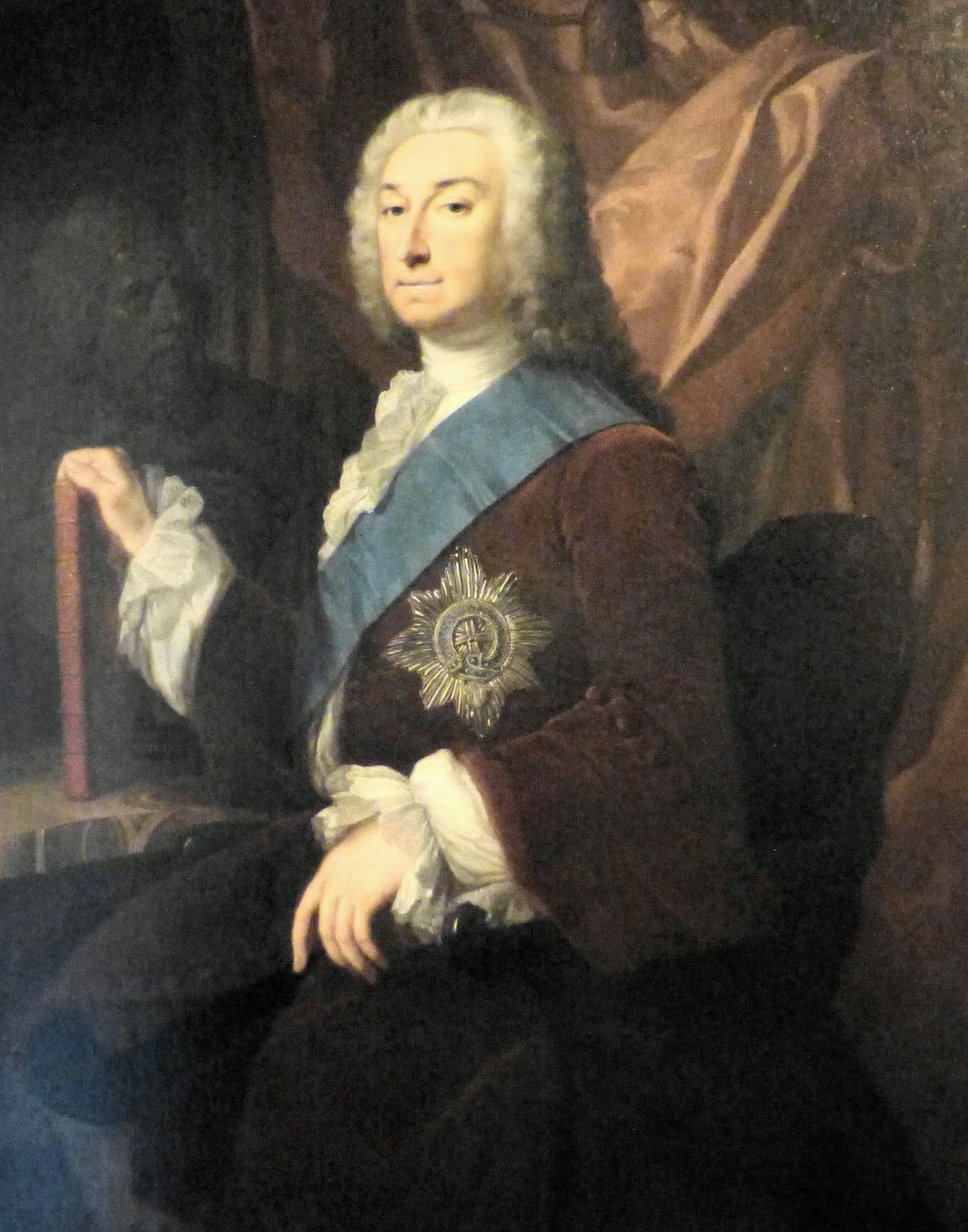
William Spencer Cavendish, 6th Duke of   Devonshire - on Oak Stairs at Chatsworth  Photo © A Knowles (2014)
William Spencer Cavendish, 6th Duke of
Devonshire - on Oak Stairs at Chatsworth
Photo © A Knowles (2014)
Profile

William Spencer Cavendish, 6th Duke of Devonshire (21 May 1790 - 18 January 1858), was known as the Bachelor Duke, because he never married. He was a patron of the Whigs, but his absorbing passions were more cultural than political with deep interests in horticulture, literature, science and sculpture.

Birth and family

William Spencer Cavendish was born in Paris on 21 May 1790, the long-awaited son and heir of William Cavendish, 5th Duke of Devonshire, and his first wife, Lady Georgiana Spencer. He had two older sisters, Georgiana (1783-1858) and Harriet (1785-1862). His family called him Hart (as I have throughout this post), an abbreviation of his title, the Marquess of Hartington, which he used from birth until he became Duke. Hart was baptised at St George’s Hanover Square on 21 May 1791.

Bust of William Cavendish, 6th Duke of Devonshire   in Sculpture Gallery, Chatsworth  © A Knowles (2014)
Bust of William Cavendish, 6th Duke of Devonshire
 in Sculpture Gallery, Chatsworth
© A Knowles (2014)
Two years without a mother

The relationship between Hart’s parents was very strained. They lived in a strange ménage à trois with Georgiana’s intimate friend, Lady Elizabeth Foster, who was also the Duke’s mistress. Indeed, rumours circulated from time to time that Lady Elizabeth was really Hart’s mother.

Georgiana’s huge gambling debts threatened her marriage, but it was her affair with Charles Grey, later 2nd Earl Grey, which brought things to a head. Georgiana became pregnant with Grey’s child and the Duke sent her abroad in disgrace. She gave birth to her daughter Eliza in February 1792, but she was not allowed to return home until the following autumn.

For two years, Hart and his sisters were left under the care of their governess, Selina Trimmer. When Georgiana returned, the three-and-a-half-year-old Hart did not recognise his mother and screamed when she tried to touch him. It later transpired that he was profoundly deaf – the result of an infection he had contracted whilst she was abroad. Georgiana felt so guilty for being away that she was inclined to spoil her son.  

Georgiana, Duchess of Devonshire, and child  after the painting by Sir Joshua Reynolds  from The Two Duchesses (1898)
Georgiana, Duchess of Devonshire, and child
after the painting by Sir Joshua Reynolds
from The Two Duchesses (1898)
Education and character

As a boy, Hart was temperamental and isolated, and his mother deplored the fact that he seemed to prefer the company of servants. He was educated at Harrow School before going up to Trinity College, Cambridge. He continued to shy away from physical contact and was inclined to hysterics if his sisters teased him.

Lady Caro

Hart was very attached to his cousin, Lady Caroline Ponsonby, and was distraught when she married William Lamb, the future Prime Minister, Lord Melbourne, in 1805. It was, however, the act of allowing his mother to comfort him that established a friendship between them that had been lacking.

Lady Caroline Lamb from Wives of the Prime Ministers (1844-1906)
Lady Caroline Lamb
from Wives of the Prime Ministers (1844-1906)
Lady Elizabeth Foster

After Georgiana’s death in March 1806, Hart and his sisters deeply resented Lady Elizabeth Foster taking their mother’s place and her eventual marriage with their father in October 1809. In later years, however, the new Duchess seemed to regain the influence which she had possessed over Hart as a child.

Lady Elizabeth Foster, later Duchess of Devonshire, in South Sketch Gallery, Chatsworth
Lady Elizabeth Foster, later Duchess of Devonshire,
in South Sketch Gallery, Chatsworth
The 6th Duke

Hart became the 6th Duke of Devonshire on the death of his father on 29 July 1811, at the age of 21. He inherited eight houses, including Chatsworth, Devonshire House, Hardwick Hall and Chiswick, and around 200,000 acres of land. He took his family responsibilities very seriously and continued to pay off his mother’s debts.

The Oak Stairs, Chatsworth © A Knowles (2014)
Politics

Hart was a Whig and a reformist, but more through patronage than from an active political career in the House of Lords as he was impeded by his deafness.

He was appointed Ambassador Extraordinary to the Russian Empire and visited St Petersburg in 1826 for the coronation of Tsar Nicholas I and was decorated with the orders of St Andrew and St Alexander Nevsky in recognition of the £26,000 of his own money he spent on the occasion.

Hart was sworn in as a member of the Privy Council in April 1827 and was Lord Chamberlain to George IV (1827-8) and William IV (1830-4). He took over from his father as Lord Lieutenant of Derbyshire in 1811, a position he held until his death.

Hart was a friend of the Prince Regent, later George IV, and carried the orb at his coronation in 1821.

George IV in his coronation robes from An authentic history of the coronation of His Majesty, King George the Fourth   by Robert Huish (1821)
George IV in his coronation robes
from An authentic history of the coronation
of His Majesty, King George the Fourth

  by Robert Huish (1821)
The Bachelor Duke

After his disappointment over Lady Caro Ponsonby, Hart did not embark upon any serious courtship – at least not one that is mentioned in any of my chief sources. He did, however, appear to have had at least one mistress. He had a secret, ten-year relationship with Eliza Warwick from 1827, but little is known about her. It has been suggested that Hart abandoned Eliza after his conversion to Evangelical Christianity.

Modernisation of Chatsworth

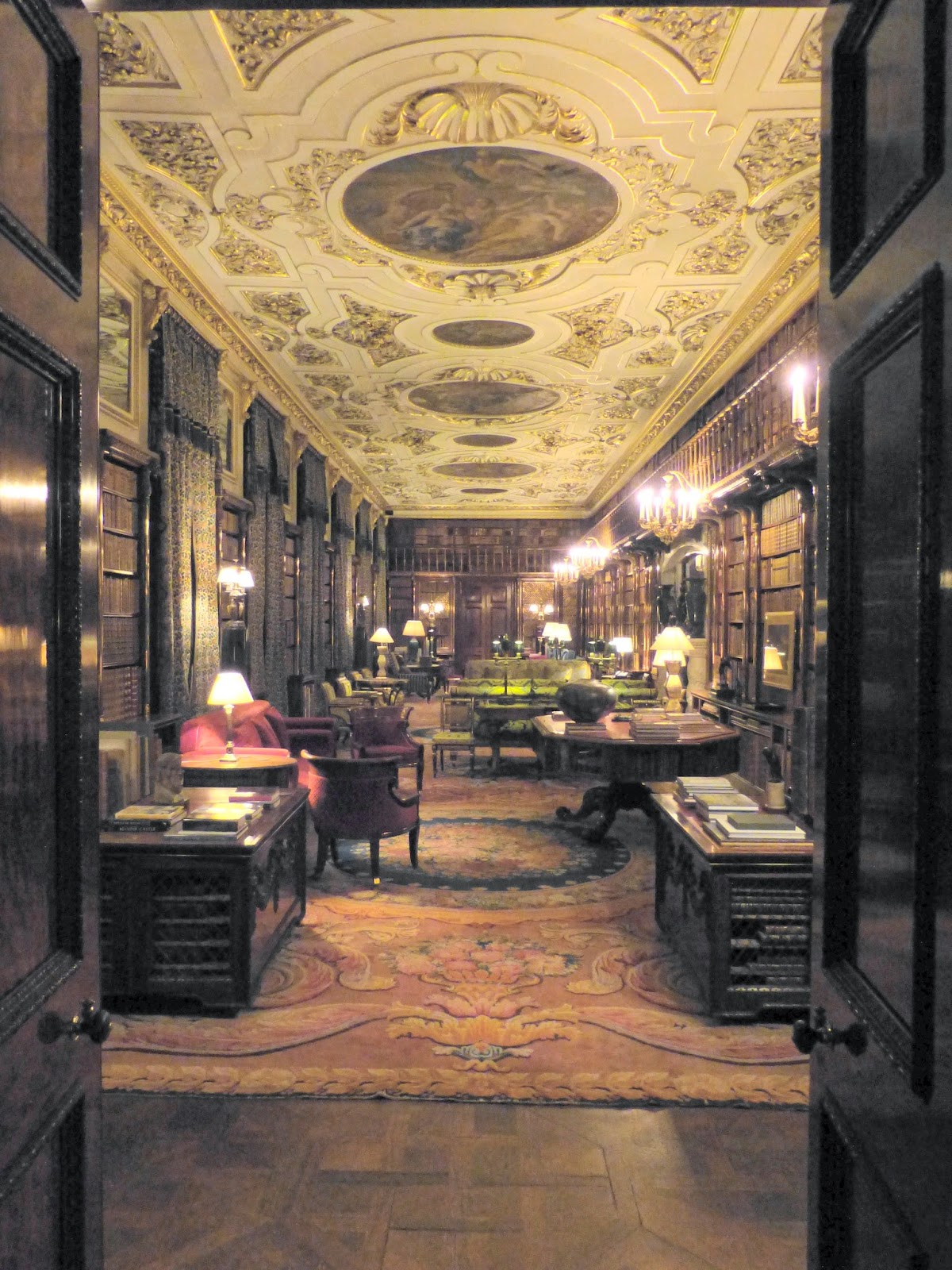
Hart employed the architect Sir Jeffry Wyatville to modernise and extend Chatsworth. He built a magnificent oak staircase leading to the new north wing which included a Dining Room, Orangery, private Theatre and Sculpture Gallery. He also turned the Long Gallery into the Library and added ground floor windows to the Painted Gallery.

The Library, Chatsworth © A Knowles (2014)
Redecorating Chiswick

In the 1840s, Hart lavishly redecorated the interiors of Chiswick House, using the firm of Crace & Son. His sister Harriet exclaimed:
Oh! Chiswick! Dearest brother, Chiswick! What shall I say? Chatsworth, be jealous.1
Sadly, the decorations were left to decay and the east and west wings were demolished in the 1950s. You can read a description of the decorations on the Chiswick House website.

Horticulturalist

Hart made Joseph Paxton Head Gardener at Chatsworth and with his help, he redeveloped the gardens. Hart was very fond of travelling and in 1838, Paxton accompanied him on a Grand Tour of Europe. He built the Rockery at Chatsworth to imitate the alpine scenery. He also built the Emperor Fountain, which can rise to the height of 90 metres, and the Grand Conservatory – the forerunner of Paxton’s Crystal Palace, built for the Great Exhibition of 1851.

Hart was President of the Royal Horticultural Society (1838-58) and the Cavendish banana is named for him.

The Emperor Fountain, Chatsworth © A Knowles (2014)
Hart the collector

The Sculpture Gallery, Chatsworth © A Knowles (2014)
Hart was a great collector – of minerals, coins, medals, sculpture and books. He bought several complete libraries, including those of Thomas Dampier, Bishop of Ely, the Duke of Roxburghe, and John Kemble. His papers include correspondence with several authors including Charles Dickens, Wilkie Collins and William Makepeace Thackeray.

He was passionate about marble and formed a great friendship with the sculptor Antonio Canova. The Sculpture Gallery was created to display his collection of contemporary sculpture and is presided over by busts of Canova and Hart.

Bust of Canova in Sculpture Gallery, Chatsworth © A Knowles (2014)
Bust of Canova in Sculpture Gallery, Chatsworth
© A Knowles (2014)
Hart the historian

Hart was also very interested in the history of his family and of their estates at Chatsworth and Hardwick. In 1844, he privately published the first volume of a book called Handbook to Chatsworth and Hardwick, written in the first person to his sister, Harriet, Countess Granville.

He was instrumental in the formation of the Derby Museum and Art Gallery in 1836.

Debts

Hart’s expensive habits of building, collecting and travelling came with a cost. He ran up extensive debts and was obliged to sell some of his estates to settle them.

Illness and death

Hart suffered a paralytic seizure in 1854 and died at Hardwick Hall in Derbyshire on 18 January 1858. He was buried at Edensor, Derbyshire.

He was succeeded by his first cousin, once removed, another William Cavendish, 2nd Earl of Burlington (1808-1891).2

Headshot of Rachel Knowles author with sea in background(2021)
Rachel Knowles writes clean/Christian historical romance set in the time of Jane Austen. She has been sharing her research on this blog since 2011. Rachel lives in the beautiful Georgian seaside town of Weymouth, Dorset, on the south coast of England, with her husband, Andrew.

Find out more about Rachel's books and sign up for her newsletter here.

If you have enjoyed this blog and want to encourage me and help me to keep making my research freely available, please buy me a virtual cup of coffee by clicking the button below.

Notes
1. From the Chiswick House website (see link below).
2. The 7th Duke's father, yet another William Cavendish (1783-1812), was Hart's first cousin, and he would have inherited if he had not already died.

Sources used include:
Cavendish, Georgiana, Duchess of Devonshire and others, The Two Duchesses, Family Correspondence, ed by Vere Foster (Blackie & Son, 1898, London)
Foreman, Amanda, Georgiana, Duchess of Devonshire (HarperCollins, 1998, London)
Fowler, Claire, Your guide to Chatsworth (Chatsworth House Trust, 2010)
Huish, Robert, An authentic history of the coronation of His Majesty, King George the Fourth (1821)
Reynolds, KD, Cavendish, William George Spencer, 6th Duke of Devonshire (1790-1858), Oxford Dictionary of National Biography (Oxford University Press, 2004; online edn Jan 2008, accessed 30 Oct 2014)

Friday, 21 November 2014

Blue John: Britain's Georgian gemstone

Another post by my husband Andrew, inspired by our visit to Derbyshire.

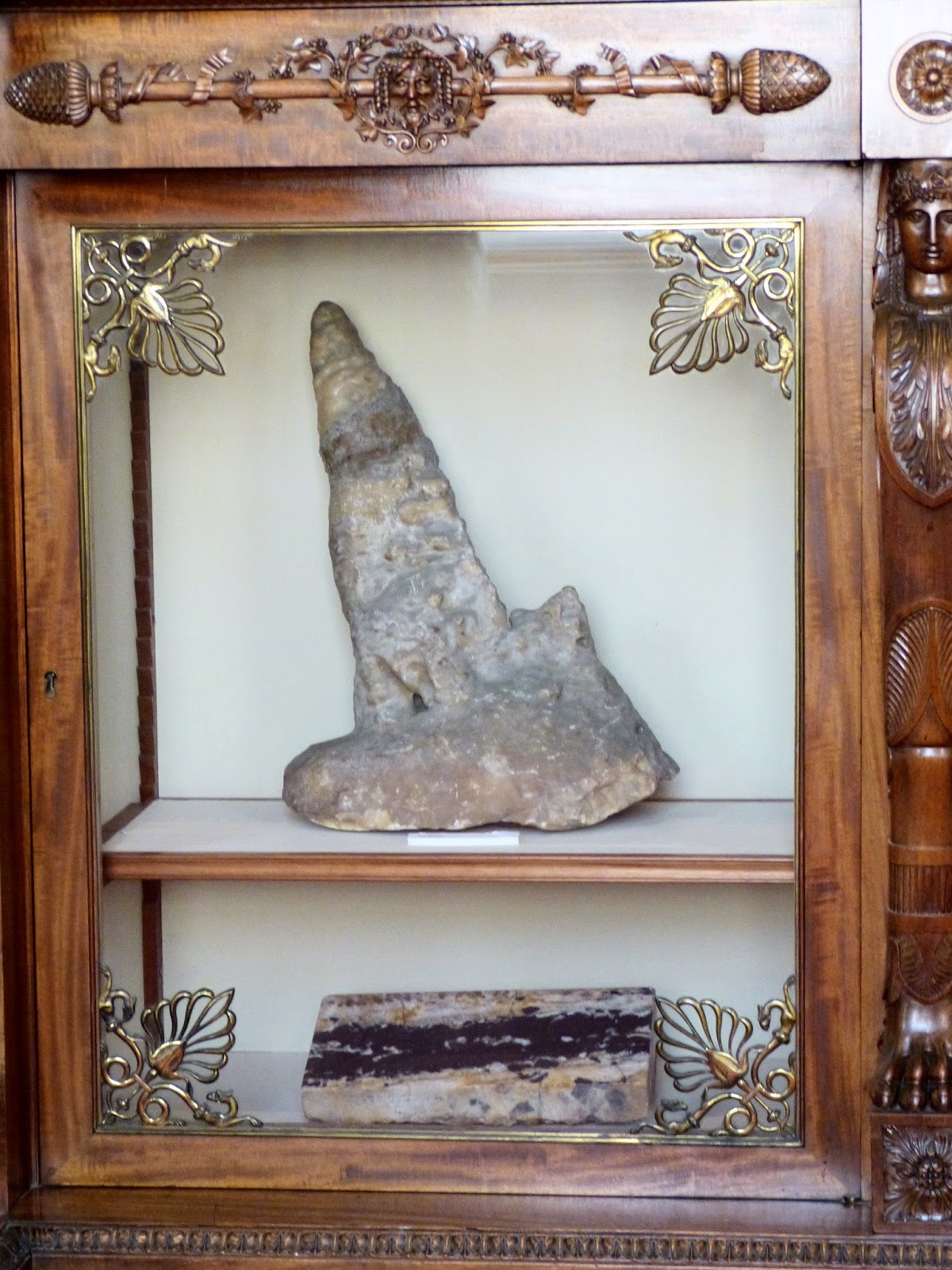
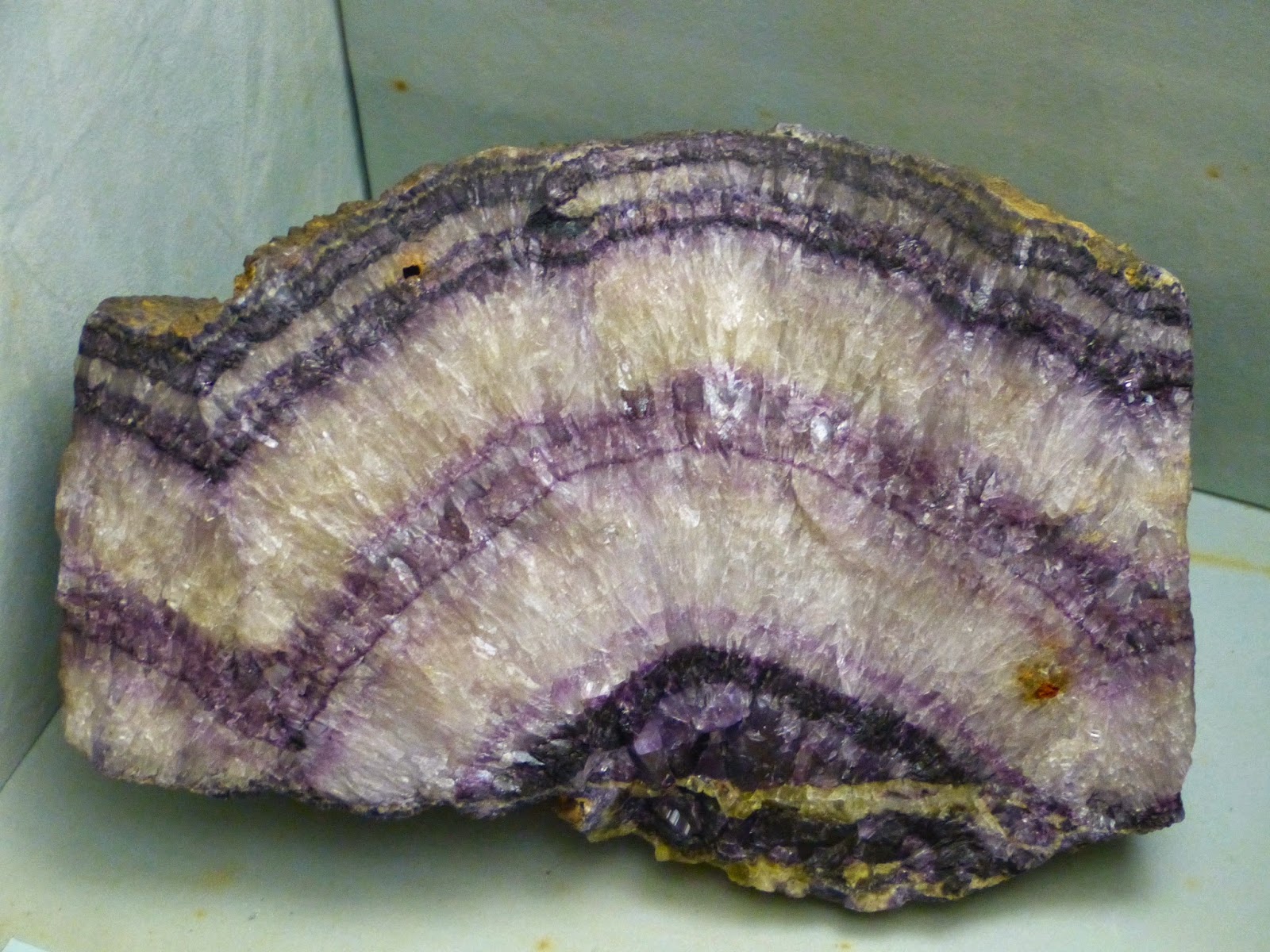
Blue John - Millers Vein - from Treak Cliff, Castleton  on display in Buxton Museum
Blue John - Millers Vein - from Treak Cliff, Castleton
on display in Buxton Museum
One of the less well known facts about Georgiana Cavendish, Duchess of Devonshire and leader of fashion in the late eighteenth century, was that she collected rocks.

Georgiana Cavendish, Duchess of Devonshire (painting in the South Sketch Gallery)
Georgiana Cavendish, Duchess of Devonshire
(painting in the South Sketch Gallery)
Visitors to Chatsworth, home of the Duke of Devonshire, can view her mineral collection, along with vases and bowls made from Britain's rarest semi-precious stone, Blue John. The mineral became hugely popular with craftsmen and their customers in the late Georgian period, and coincidentally its only known source was just a few miles from Chatsworth, in the hills above Castleton.

Display case in South Sketch Gallery, Chatsworth
Display case of minerals
in South Sketch Gallery, Chatsworth
Blue John is found nowhere else in the world. It is still mined today, but only in tiny quantities as very little remains in the ground. The two remaining mines, which are mainly natural caverns, are now largely tourist attractions.

The beginnings of Blue John mining 

Lead has been mined around Castleton for hundreds of years, possibly even by the Romans, and mining records began in 1280. But there is no reference to the mining and use of Blue John before the 1760s. Trevor Ford, in his book Derbyshire Blue John, explores and debunks stories of Blue John ware being found in Roman Pompeii.

Blue John is a form of fluorspar, a common mineral that occurs in many colours. What makes it unique to Derbyshire is the particular colouring, with bands of purple and blue, yellow and off-white. Formed in the cracks within limestone, no two sections of Blue John are alike.

Blue John spar, Buxton Museum
Where the bands of Blue John reached the surface, they would have been visible. Seventeenth century travellers refer to azure or sapphire spar being found in the Peak District but say nothing about it being mined or used in any way.

All that changed in the 1760s, when the name 'Blue John' appeared in guidebooks and the mineral was used in ornaments. Robert Adam inlaid Blue John into fireplaces at Kedleston Hall and manufacturer Matthew Boulton used it extensively.

In his Sketch of a Tour, dated 1777, William Bray wrote of a mine near Castleton: "They get out of it some blue-john, used by the polishers for making vases etc."1

Blue John urn, Buxton Museum
How Blue John was mined

The lead miners of Castleton must have observed Blue John as they went about their business underground. In naturally formed caverns, loose pieces of both lead and Blue John would be mixed in with the silt that filled the caves, and which the miners dug out and searched through for minerals.

Entrance to the Blue John Cavern
Digging Blue John out of the cave walls demanded some skill, as it is relatively fragile. The limestone around the mineral would have been chipped away to release it, with miners using various techniques to break into the rock walls.

One of these ways was to push wooden pegs into cracks, then soak the wood with water, causing it to swell and break the crack open further. Another approach was to light a fire against a wall, leave it to burn overnight, then throw water against the wall. The sudden change in temperature would cause it to crack.

Blue John vein in the rock, Blue John Cavern
Having been extracted, Blue John had to be dried for a year or two before it could be worked without damaging it structure. Because it is relatively soft, Blue John is easily damaged. Many objects are coated in resin to protect them and the process of applying this resin was often regarded as a trade secret.

While they are tourist caverns today, the mines held little to interest Georgian visitors. William Bray seems to be have been persuaded to go down during his tour and records: "The descent, however, is dirty and difficult, and there is not any thing at the bottom worth seeing."1

The popularity of Blue John

"I have found a new use for Blew John," wrote Matthew Boulton in 1768, which was to turn it into vases. His intent was expressed in a letter, in which he asked someone to enquire about the possibility of leasing a Blue John mine. He also asked that his contact not reveal the name of Boulton as part of the enquiry: "I beg you will be quite secret as to my intentions."2

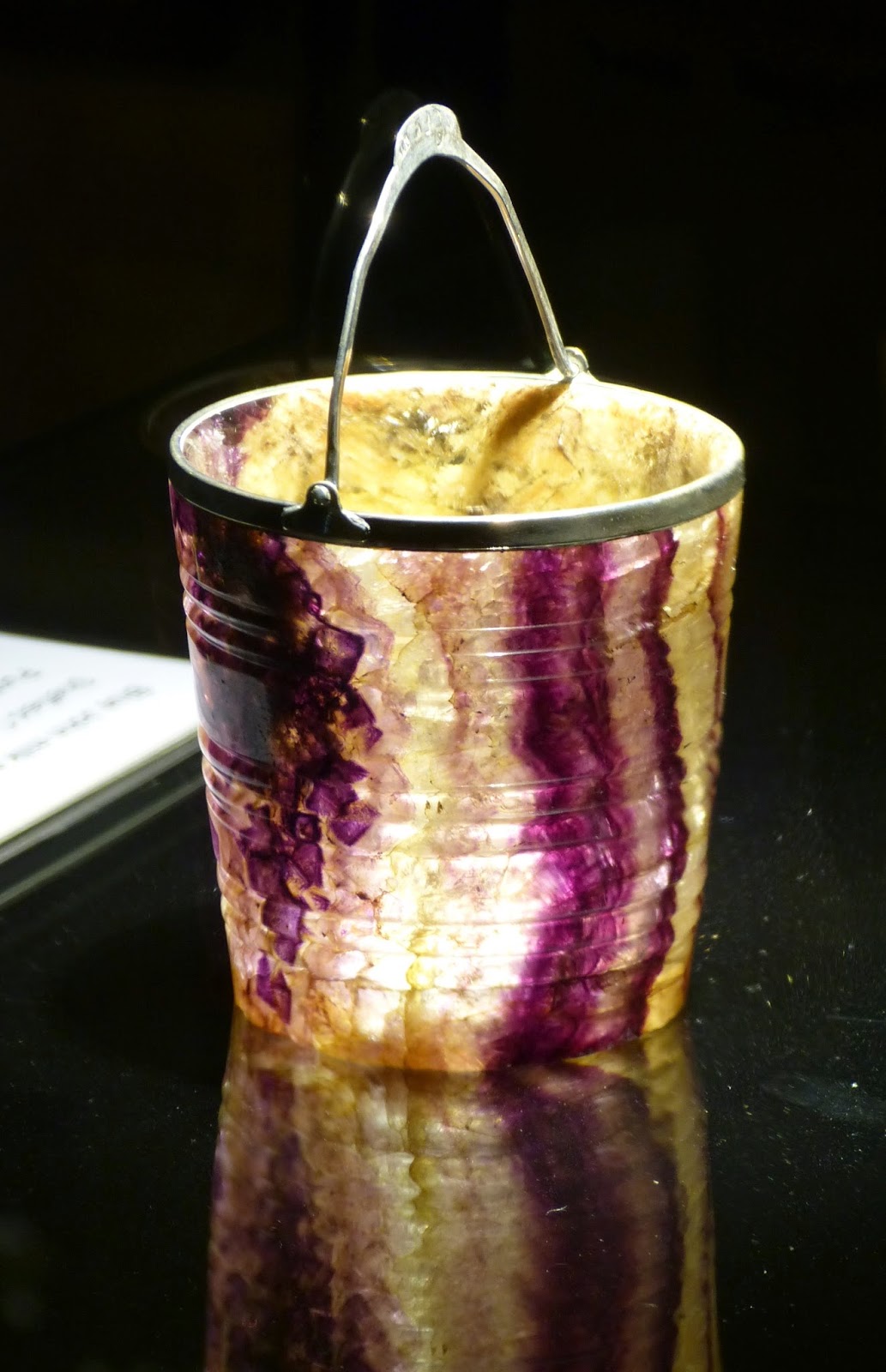
Blue John milk pail, Buxton Museum
A year later, Boulton bought 14 tons of best quality Blue John, from which he made vases, candelabra and other ornaments. Some survive in Britain's great houses, including Buckingham Palace.

A tourist trade developed around the Blue John mines in the early 1800s, although going underground remained difficult. It wasn't until 1836 that a new, easier path was cut through the rock into the Blue John Cavern mines, and concrete steps were not laid until the early twentieth century.

Inside the Blue John Cavern today
William Adam had plenty to say about Blue John in his book The Gem of the Peak, or Matlock Bath and its vicinity, first published in 1838. He noted that a tour of the mine cost  one shilling per person, and that "the descent is very rapid and over very rough but safe steps, down which a rail is carried for the passage of the mining wagon."3

But by the time Adam was exploring the Blue John mines, the mineral was already starting to fall from favour and the latter half of the nineteenth century saw the small industry decline sharply. The stone is still being mined today, although in very small quantities. The supply of this rare mineral, highly prized by Georgian gentry, could be exhausted within the next decade.

Georgian examples of Blue John

Here are some of the places where you can see Blue John being used in Georgian decorative objects:

Chatsworth House

Unsurprisingly, given its proximity to the source of Blue John, the house contains several vases and other ornaments and even a window made of Blue John. The collection includes the Chatsworth Tazza, the largest single-piece ornament, made in 1842, and currently on display in the dining room. The house also contains the Shore vase, made in 1815, although it's not clear whether this is on public display.

The Chatsworth Tazza, Chatsworth
Natural History Museum

Here you can see several Blue John vases. According to Ford, the collection includes what is probably the largest Blue John vase ever made, created by John Vallance around 1840.

Lauriston Castle, Edinburgh

This museum houses a collection of over 80 Blue John ornaments from the late eighteenth century.

Fireplaces containing Blue John can be found at Kedleston Hall and the Georgian House Museum in Bristol (see below). Others exist, but are less accessible to the public.

Blue John fire surround in the study  of the Georgian House, Bristol
Blue John fire surround in the study of the
Georgian House Museum, Bristol (July 2018)
Notes
(1) From Sketch of a Tour into Derbyshire and Yorkshire by William Bray (1777).
(2) Quoted in Derbyshire Blue John by Trevor Ford (2005) p64.
(3) From The Gem of the Peak by William Adam (1838).

Sources used include:
Adam, William, The Gem of the Peak or Matlock Bath and its vicinity (1838, this 6th edition 1857)
Bray, William, Sketch of a Tour into Derbyshire and Yorkshire (1777, this 2nd edition 1783)
Ford, Trevor D, Derbyshire Blue John (Landmark Publishing, 2005) Castleton Historical Society
Harrison, Peter C, Some Castleton History and Things Remembered (2010) PDF

BBC Derbyshire
Bulletin of the Peak District Mines Historical Society, Vol 11, No 5, (1992)
Edinburgh Museums
Natural History Museum

Photographs © Andrew Knowles - www.flickr.com/photos/dragontomato

Wednesday, 5 November 2014

Chatsworth - a photo tour of the home of the Dukes of Devonshire

Chatsworth from across the river
Chatsworth from across the River Derwent

In 1760 Horace Walpole wrote: 

It is a glorious situation; the vale rich in corn and verdure, vast woods hang down the hills, which are green to the top, and the immense rocks only serve to dignify the prospect. The river runs before the door, and serpentises more than you can conceive in the vale. The Duke is widening it, and will make it the middle of his park.1

Chatsworth from the gardens

Horace Walpole wrote:

The principal front of the house is beautiful, and executed with the neatness of wrought plate.1

Chatsworth from across the river with Paine's bridge
Chatsworth and Paine's bridge from across the River Derwent
The bridge was designed by James Paine for the 4th Duke of Devonshire (1720-1764) in the 1760s.

The Stables

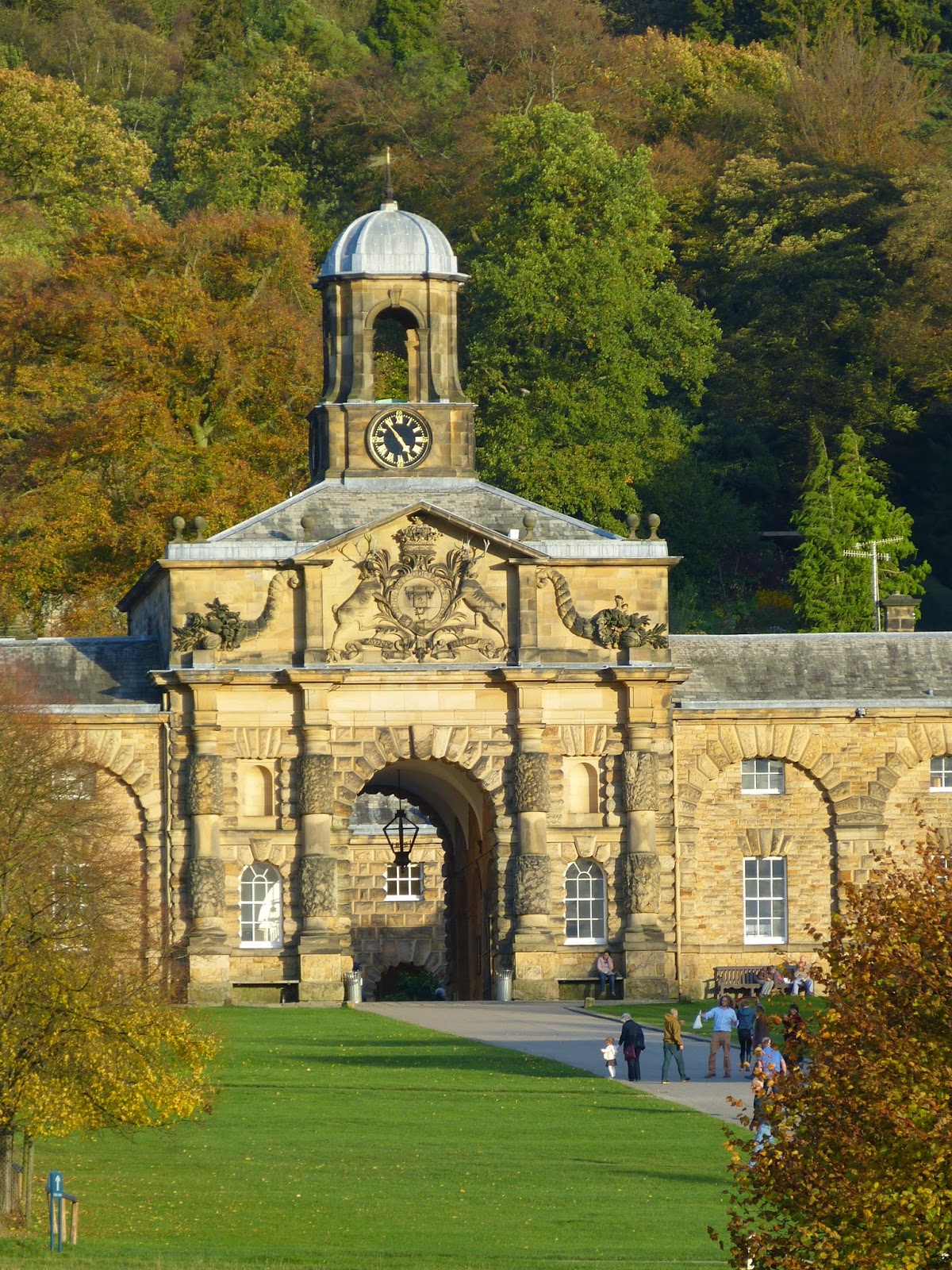
The Stables, Chatsworth
Horace Walpole wrote: 
A heavy quadrangle of stables is part of the plan, is very cumbrous, and standing higher than the house, is ready to overwhelm it.1
The North Entrance Hall

The North Entrance Hall, Chatsworth
This room was originally the kitchen, but the 4th Duke turned it into an entrance hall in the 1760s.

The North Sub Corridor

The North Sub Corridor, Chatsworth
This was originally an open colonnade offering some protection from the weather to visitors as they crossed the Courtyard.

The Painted Hall

The Painted Hall, Chatsworth
The 5th Duke (1748-1811) laid the first black and white marbled floor in 1779.

The Courtyard, Chatsworth
When it was built by the 1st Duke (1640-1707), the Painted Hall was entered through the Courtyard.

The Painted Hall, Chatsworth, from the balcony
The Painted Hall originally had no ground floor windows; these were added by the 6th Duke in the 1820s.

The Grotto

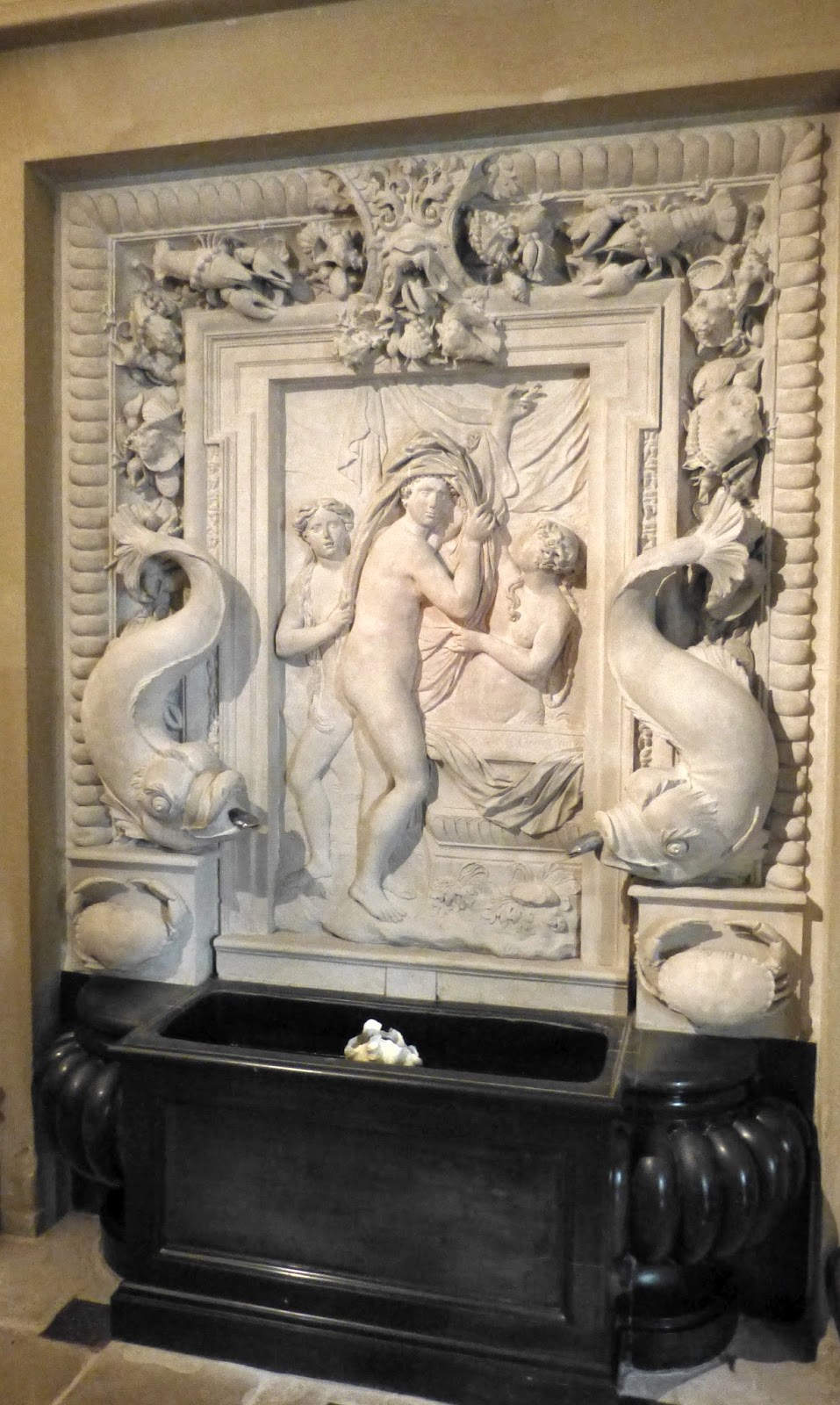
The Grotto, Chatsworth House
The Grotto was at the heart of the 1st Duke's very modern plumbing system which provided both hot and cold running water.

The Chapel Corridor

The Chapel Corridor, Chatsworth
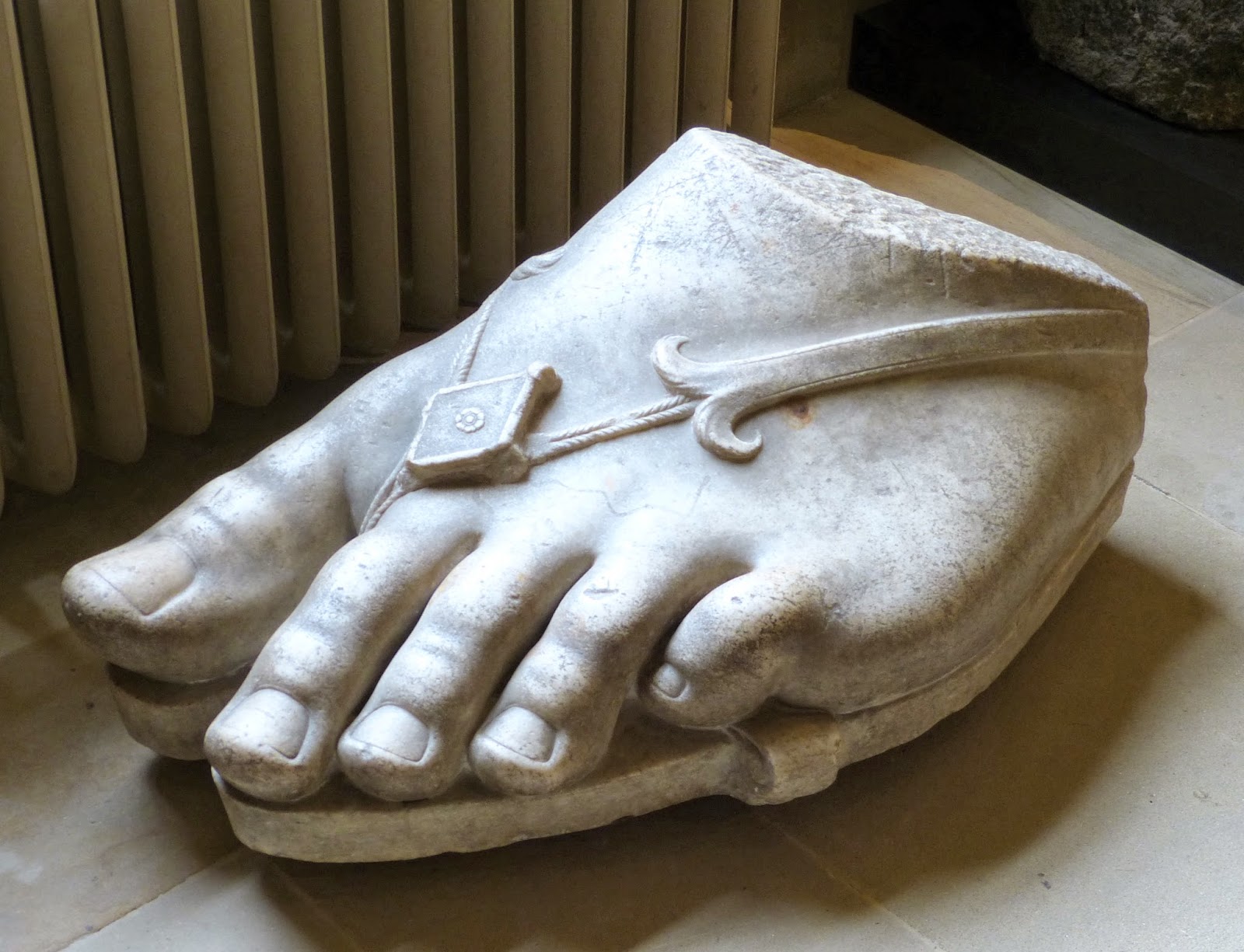
A gigantic foot from a 1st century Greek statue on display in the Chapel Corridor, Chatsworth
A gigantic foot, in the Chapel Corridor, Chatsworth
It used to be thought that the colossal foot on display in the Chapel Corridor was a fake from the 19th century, but it is now believed to be part of a genuine 1st century Greek statue.

The Oak Room
 
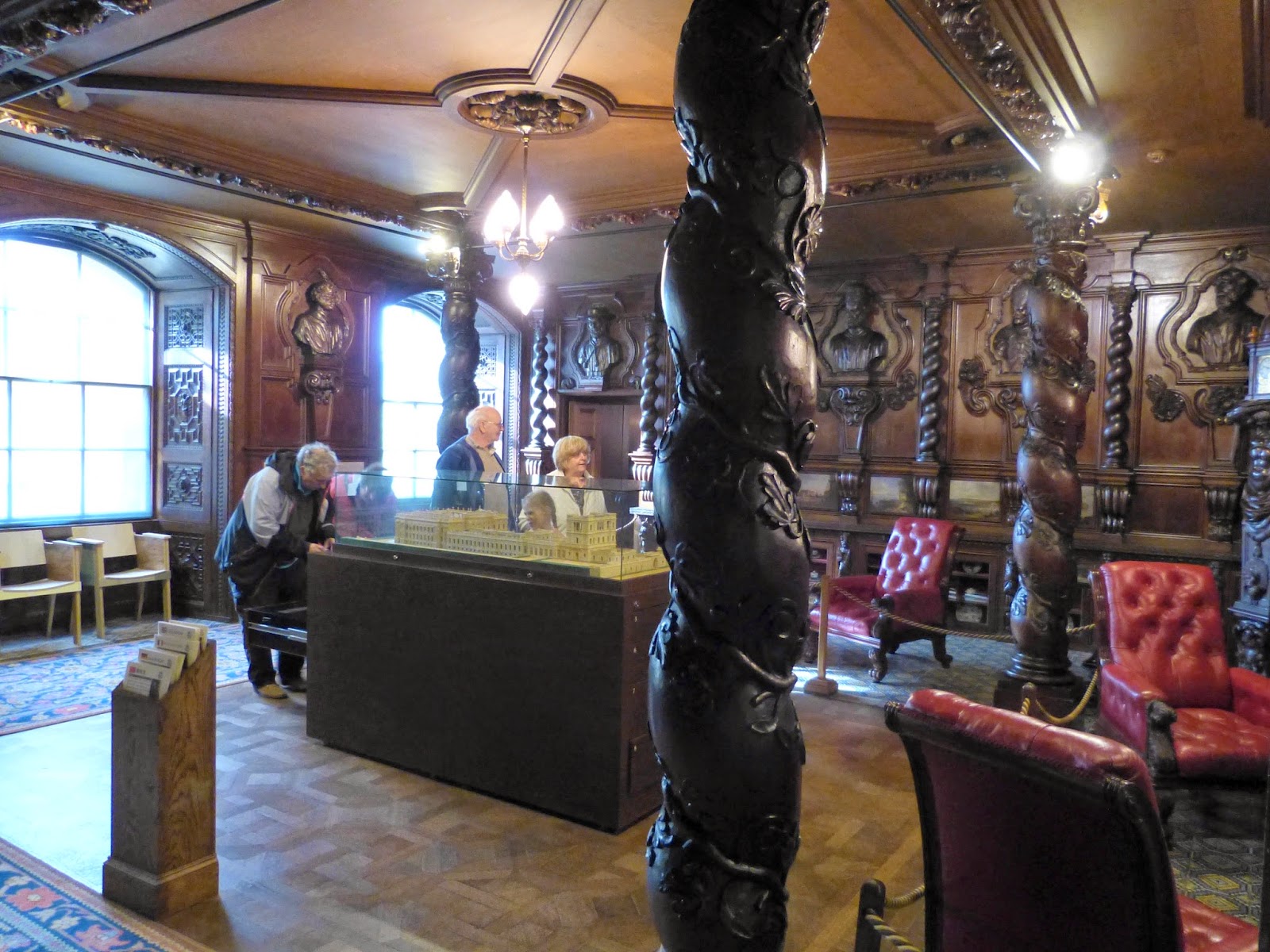
The Oak Room with a model of Chatsworth House in the centre
The Oak Room, displaying a model of
Chatsworth House in the centre
The Oak Room, Chatsworth
The 6th Duke bought the oak panelling in this room at auction without knowing what he was going to do with it!

The Chapel

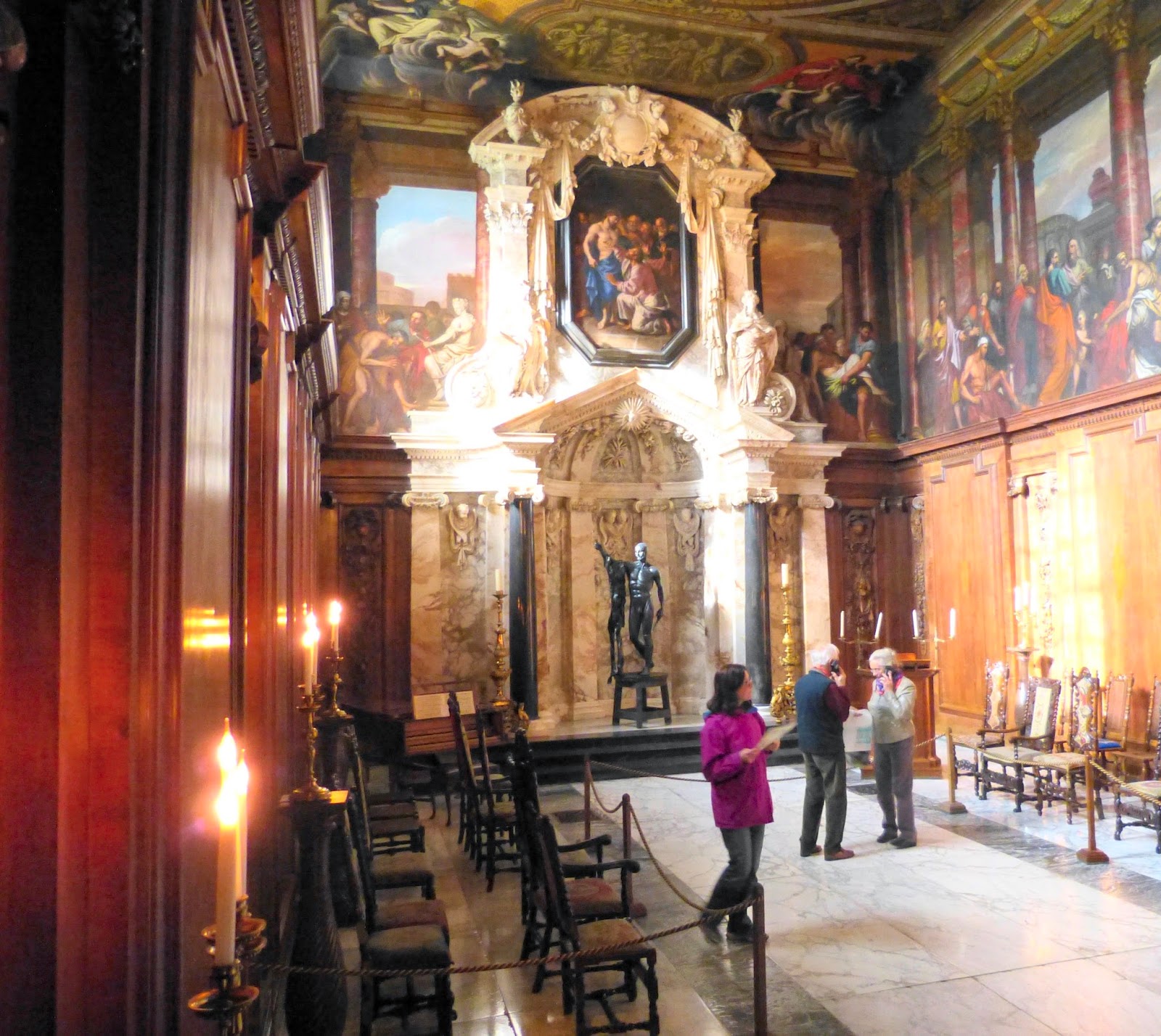
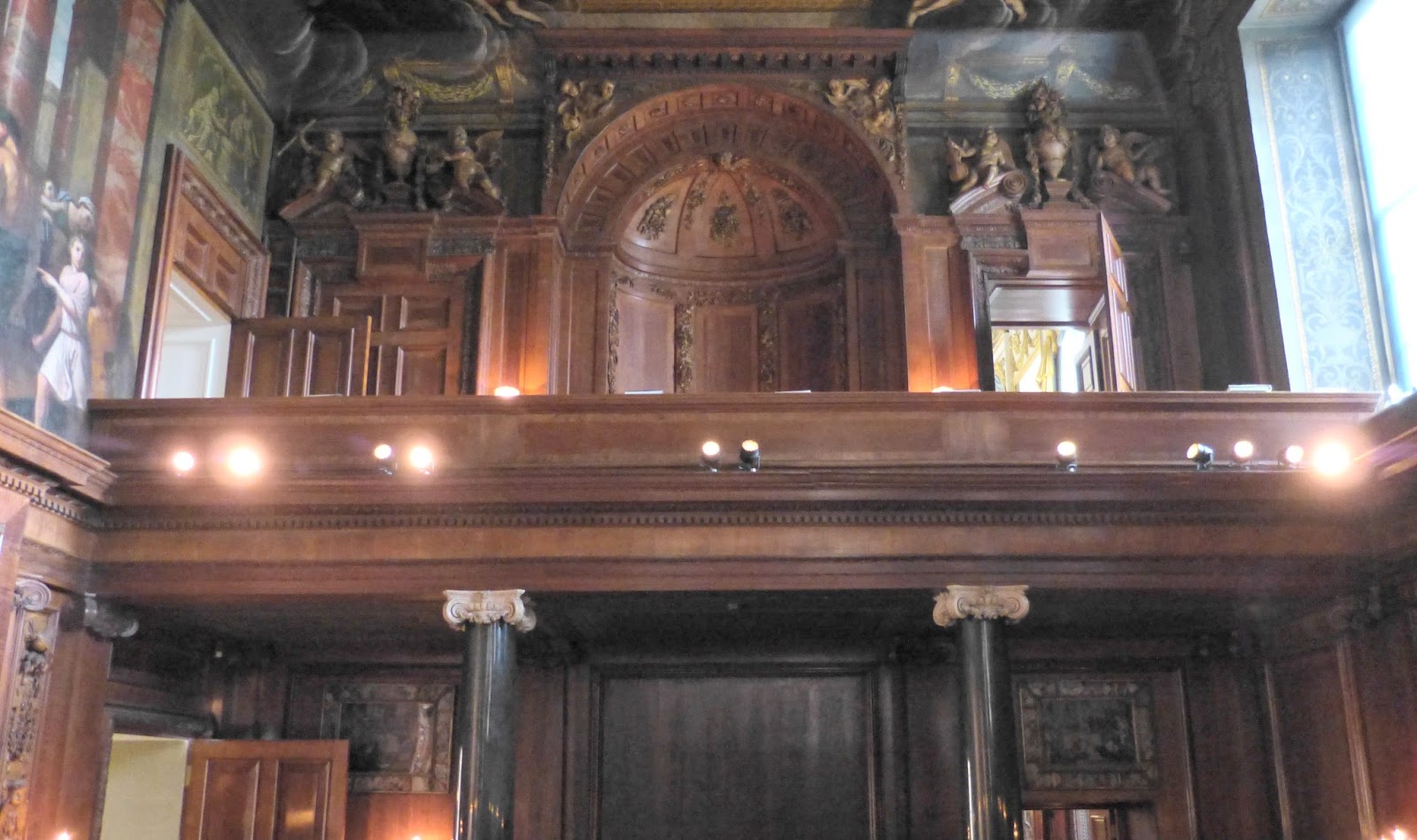
The Chapel, Chatsworth
Horace Walpole declared that: "The chapel is charming."1
 
The Chapel has four Ashford black marble columns which were carved from a single block quarried on Sheldon Moor, near Ashford-in-the-Water, just a few miles away from Chatsworth.

The Chapel, Chatsworth
An account from 1824 said:
On entering the chapel we felt the delightful fragrance of the cedar wood, of which it is almost entirely composed: it is a richly ornamented place, and carving, painting, and sculpture, have all contributed to its decoration: the ceiling, and every part of it which is not otherwise appropriated, have been embellished by the pencils of Verrio and Laguerre.2
The Great Stairs

The Great Stairs, Chatsworth
The gilded iron banister was made by William III's ironworker, Jean Tijou.

The State Apartment: The Great Chamber

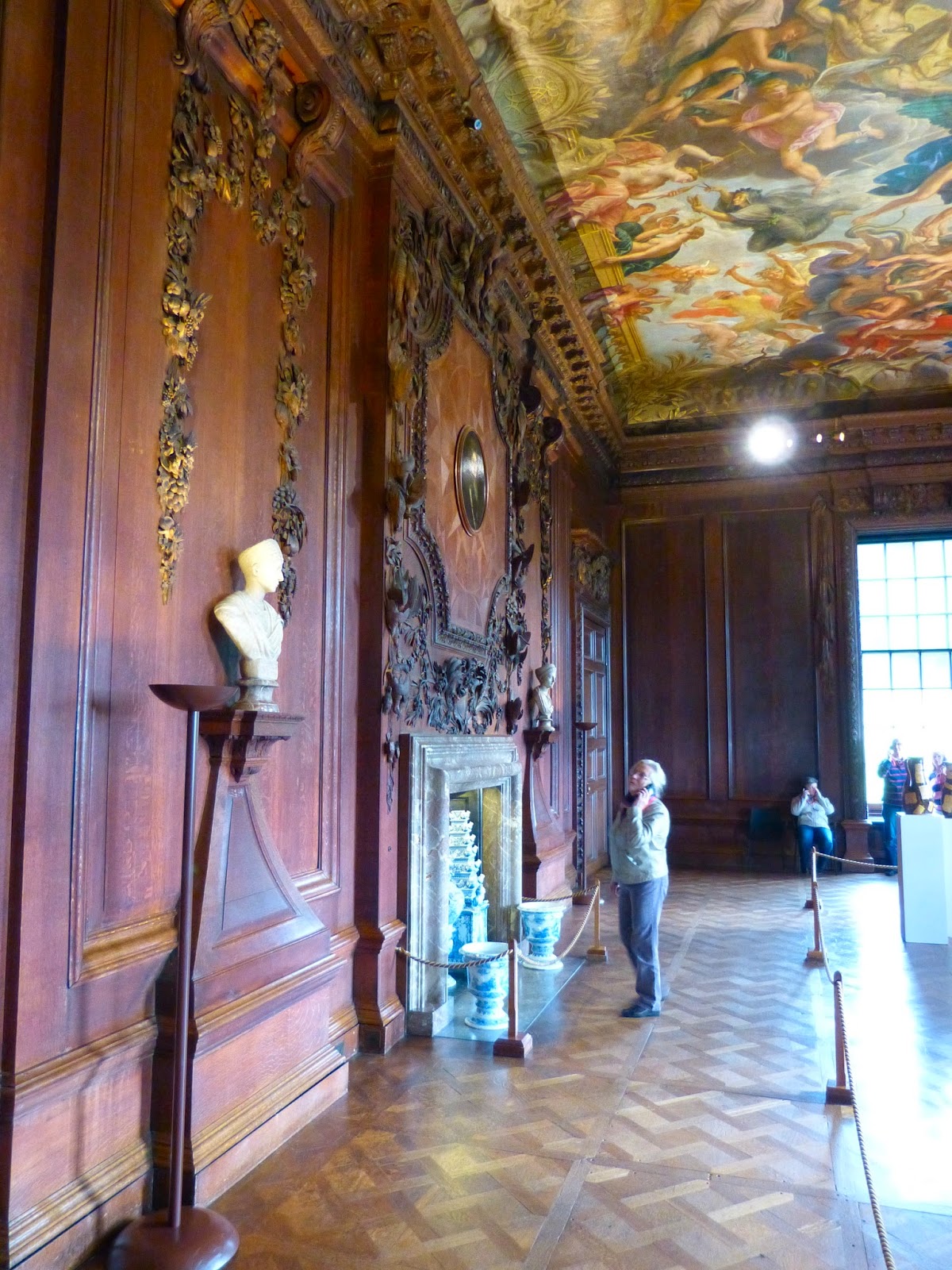
The Great Chamber, Chatsworth
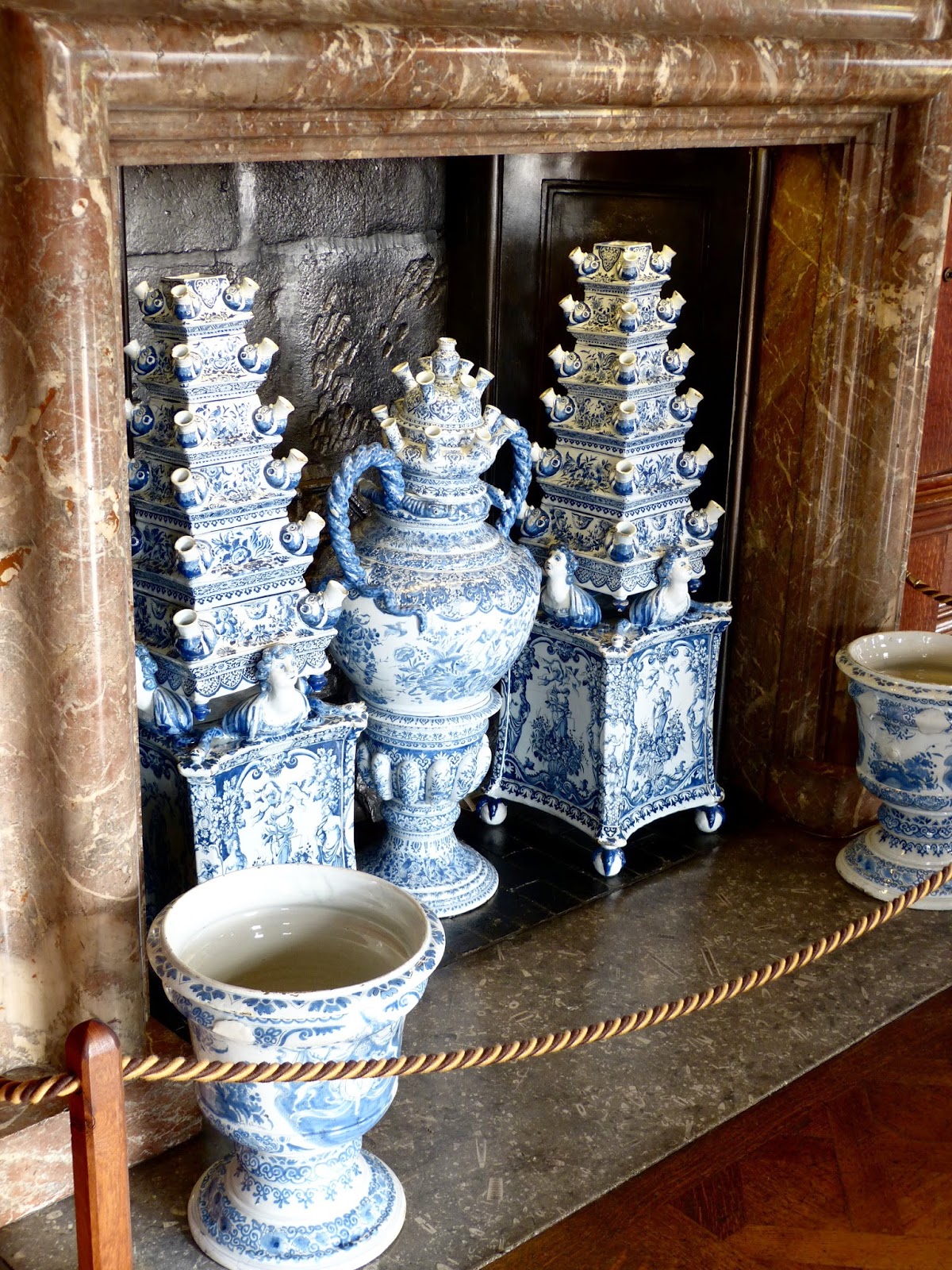
Delftware vases  in the Great Chamber, Chatsworth
Delftware vases
in the Great Chamber, Chatsworth
The 1st Duke supported William III and Mary's accession to the throne and was rewarded by his dukedom. He built the State Apartment for their use, but alas, they never visited!

The State Apartment: The State Music Room

The State Music Room, Chatsworth
The violin door  in the State Music Room, Chatsworth
The violin door
in the State Music Room, Chatsworth
The violin door was brought here by the 6th Duke from Devonshire House, his London home. Despite appearances, the violin is not real but painted.

State Apartment: the State Bedroom

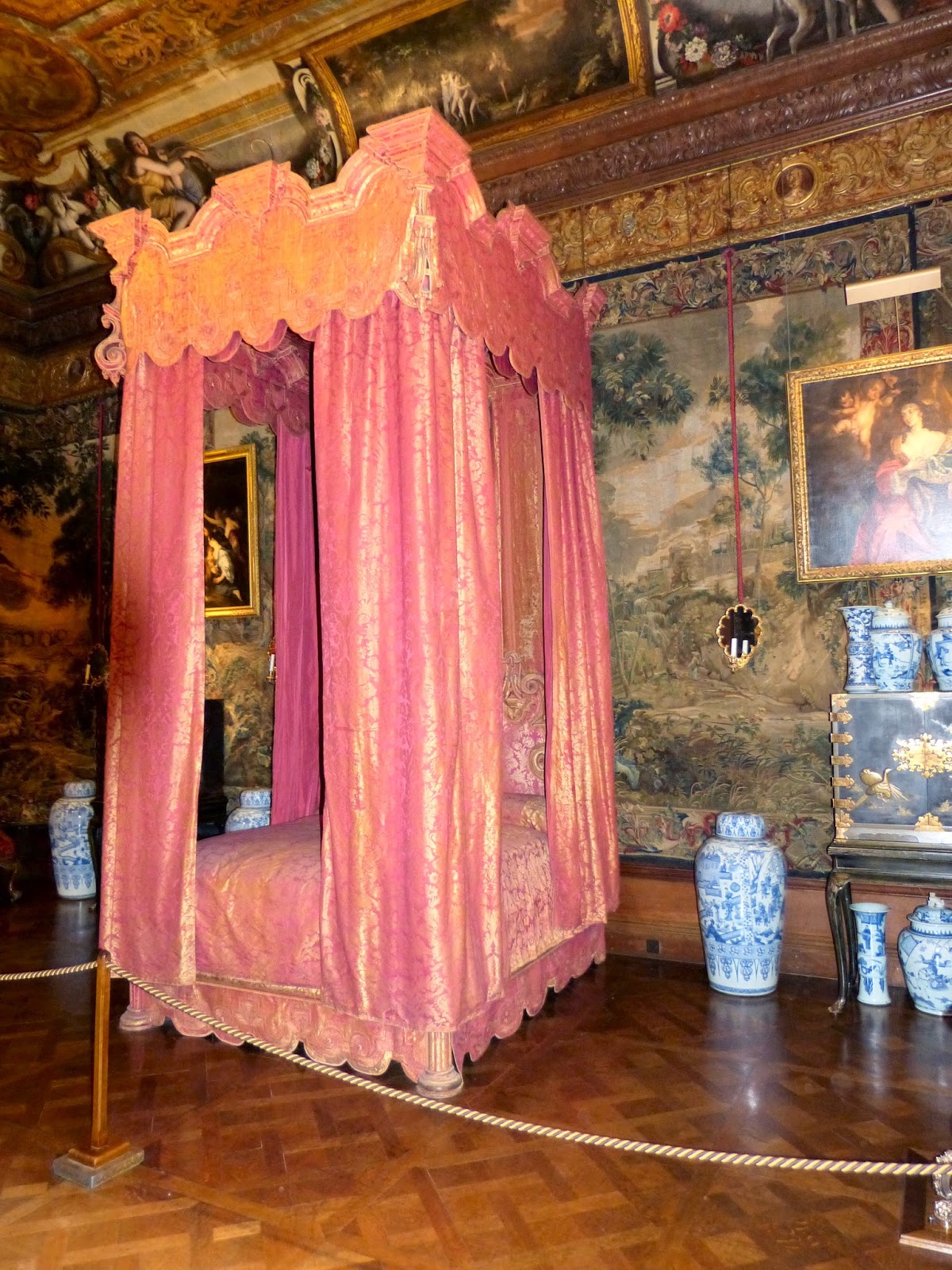
The State Bedroom, Chatsworth
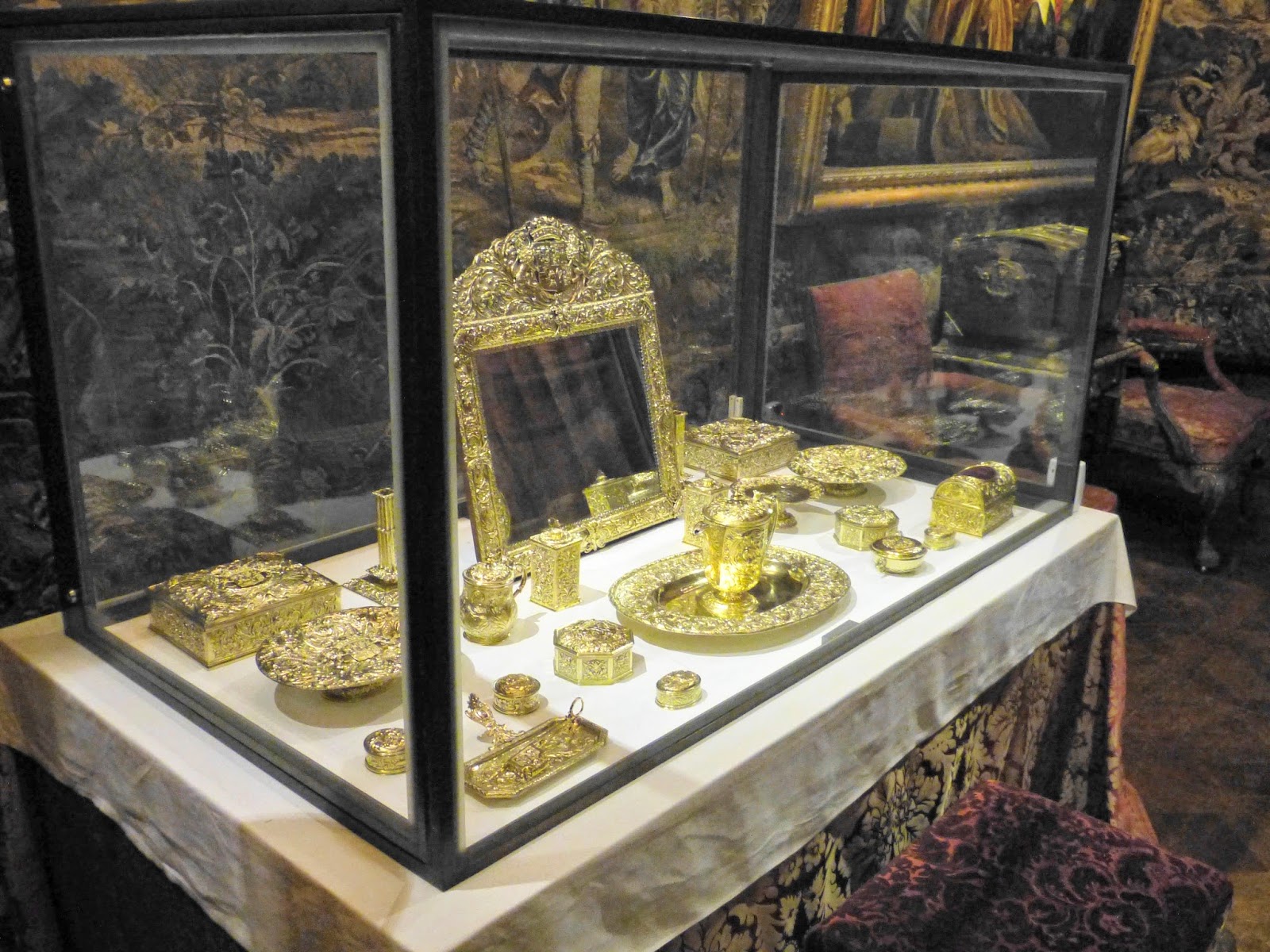
Silver gilt toilet set in State Bedroom, Chatsworth
Silver-gilt toilet set in State Bedroom, Chatsworth
This French silver-gilt toilet set dates from the late 17th century and is engraved with the arms and monogram of William III and Mary.

The State Apartment: The State Closet

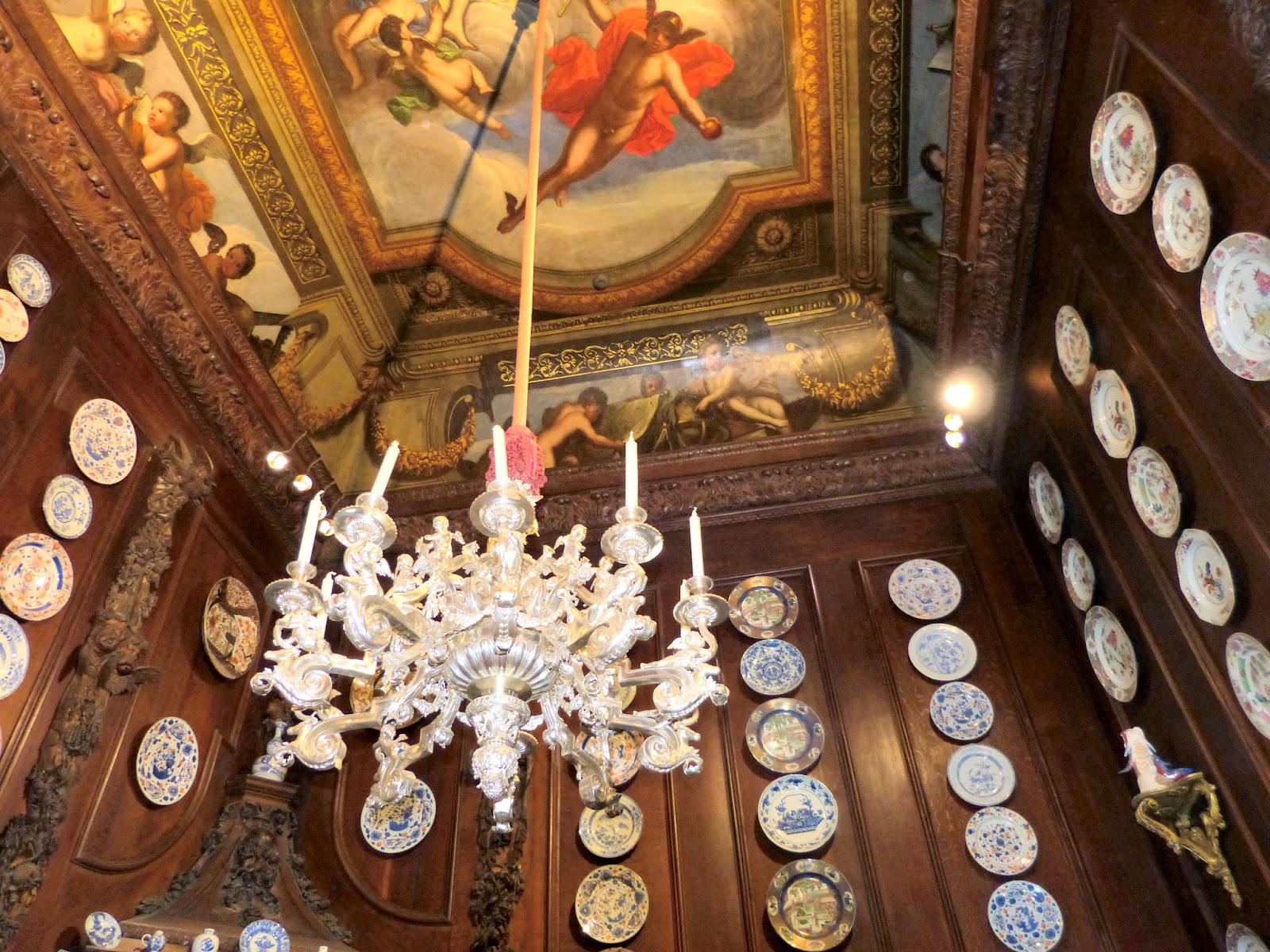
The State Closet, Chatsworth
The State Closet was where the King and Queen would have conducted their most important business, should they ever have visited. The collection of porcelain displayed on the walls was designed to impress.

The Old Master Drawings Cabinet

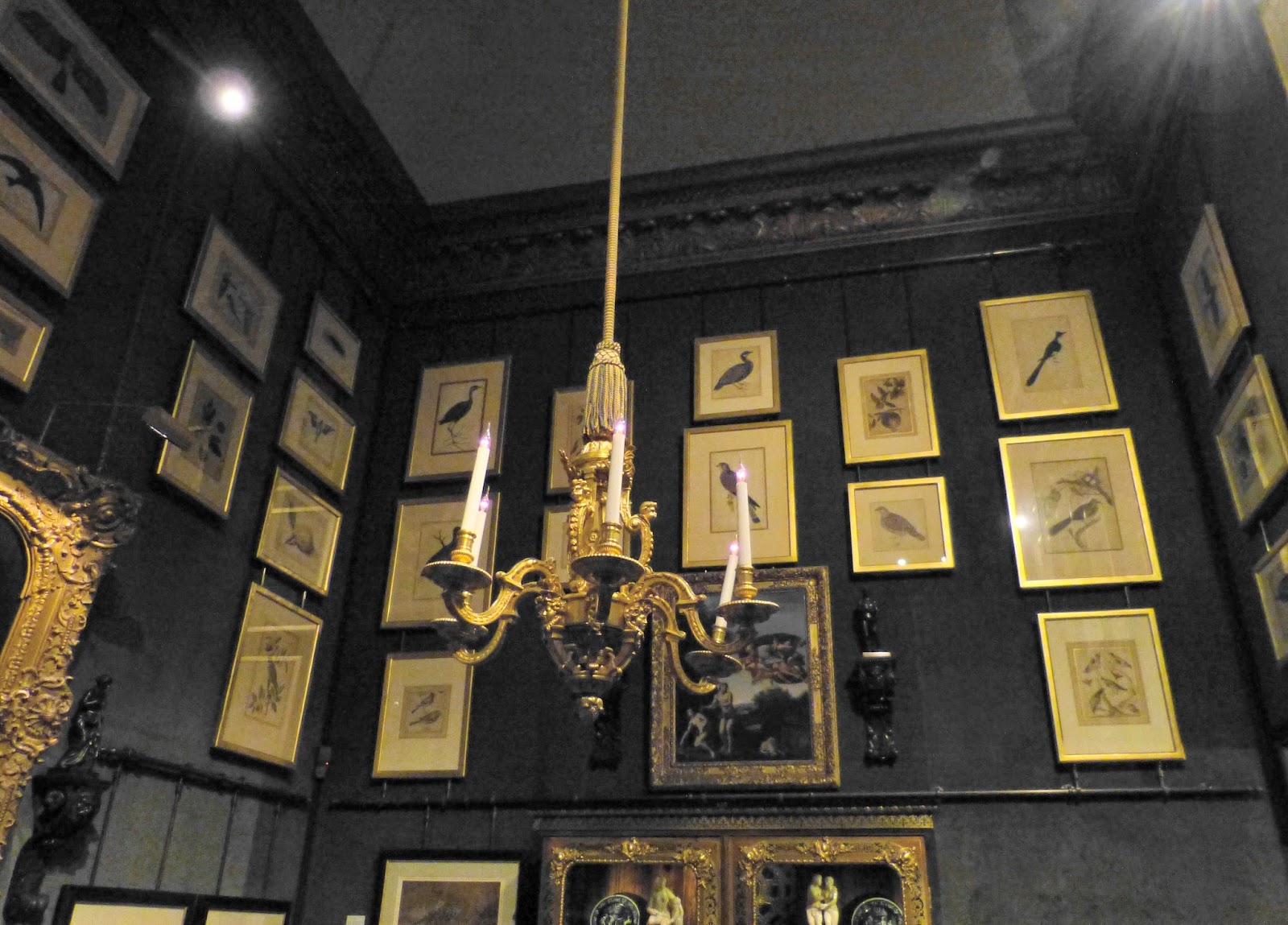
The Old Master Drawings Cabinet, Chatsworth
On display is a small selection from the current Duke's collection which consists of over 3000 drawings, mostly collected by the 2nd Duke (1673-1729) and his son, the 3rd Duke (1698-1755).

South Sketch Gallery

The South Sketch Gallery, Chatsworth
Portraits of the 5th Duke and his two wives, on the right, Lady Georgiana Spencer, and on the left, Lady Elizabeth Foster in the South Sketch Gallery, Chatsworth
Portraits of the 5th Duke and his two wives:
on the right, Lady Georgiana Spencer, and on the left,
Lady Elizabeth Foster, in the South Sketch Gallery, Chatsworth
The South Sketch Gallery is devoted to the 5th Duke and his wife, Georgiana. The Duke's portrait is displayed between those of Georgiana and his mistress, Lady Elizabeth Foster, who became his second wife after Georgiana's death.

Part of the mineral collection on display  in the South Sketch Gallery, Chatsworth
Part of the mineral collection on display
in the South Sketch Gallery, Chatsworth
A visitor in 1824 complained that:
The cabinet of fossils and minerals which was collected and formed by the late Duchess of Devonshire...has been lately removed from a public to a private apartment, and it is now not shewn to strangers. That any consideration should induce the Duke of Devonshire to exclude the casual visitors to Chatsworth, from beholding this collection, may be regretted, and particularly so as it contains many choice and beautiful specimens.2
West Sketch Gallery

Lord Burlington in West Sketch Gallery, Chatsworth
The West Sketch Gallery is devoted to the collections of the 3rd Earl of Burlington, whose daughter, Lady Charlotte Boyle, married the 4th Duke.

North Sketch Gallery

North Sketch Gallery, Chatsworth
The ceramic panels on the right show an artistic representation of the Devonshire family based on DNA strands.

Guest bedrooms

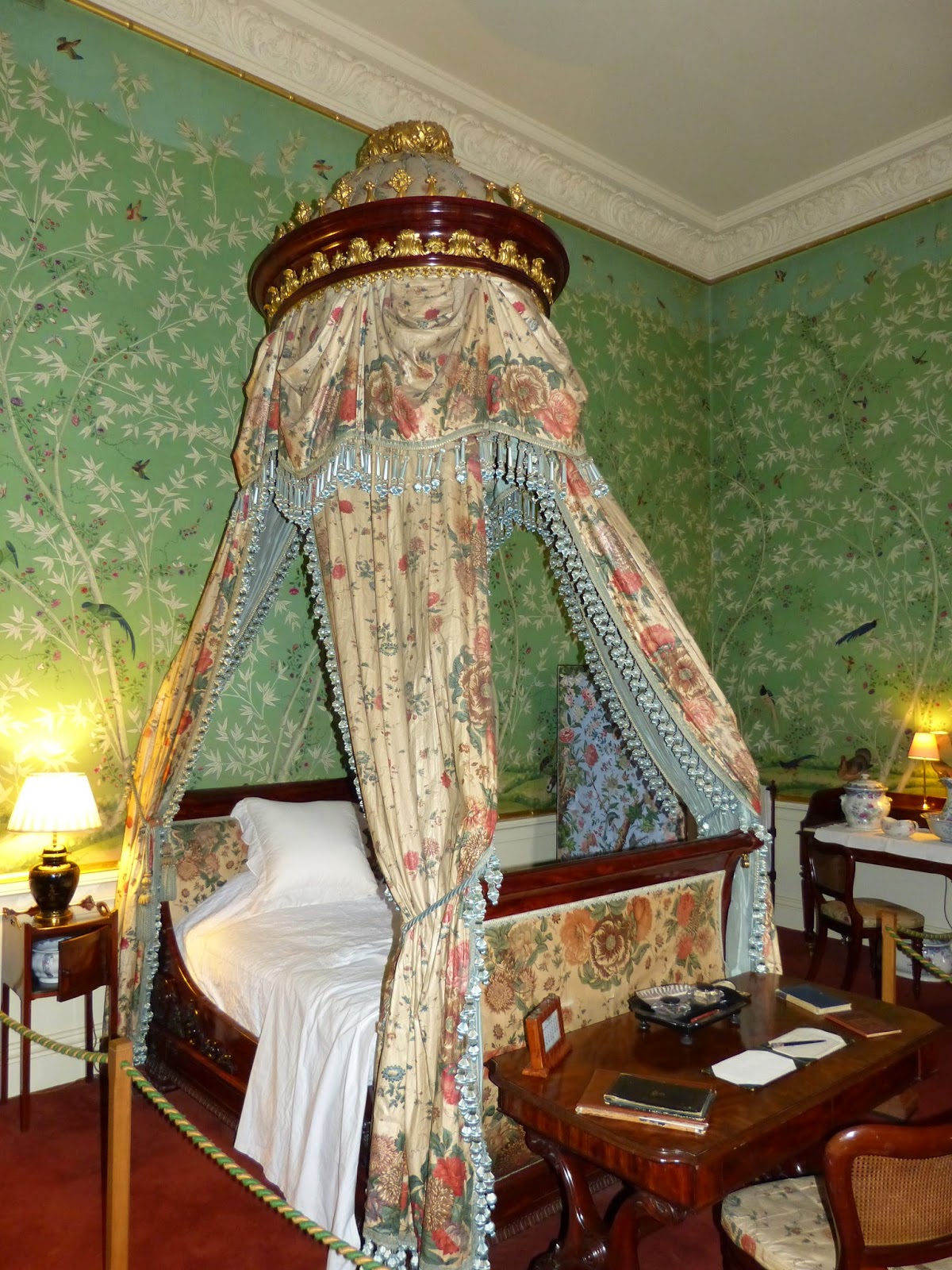
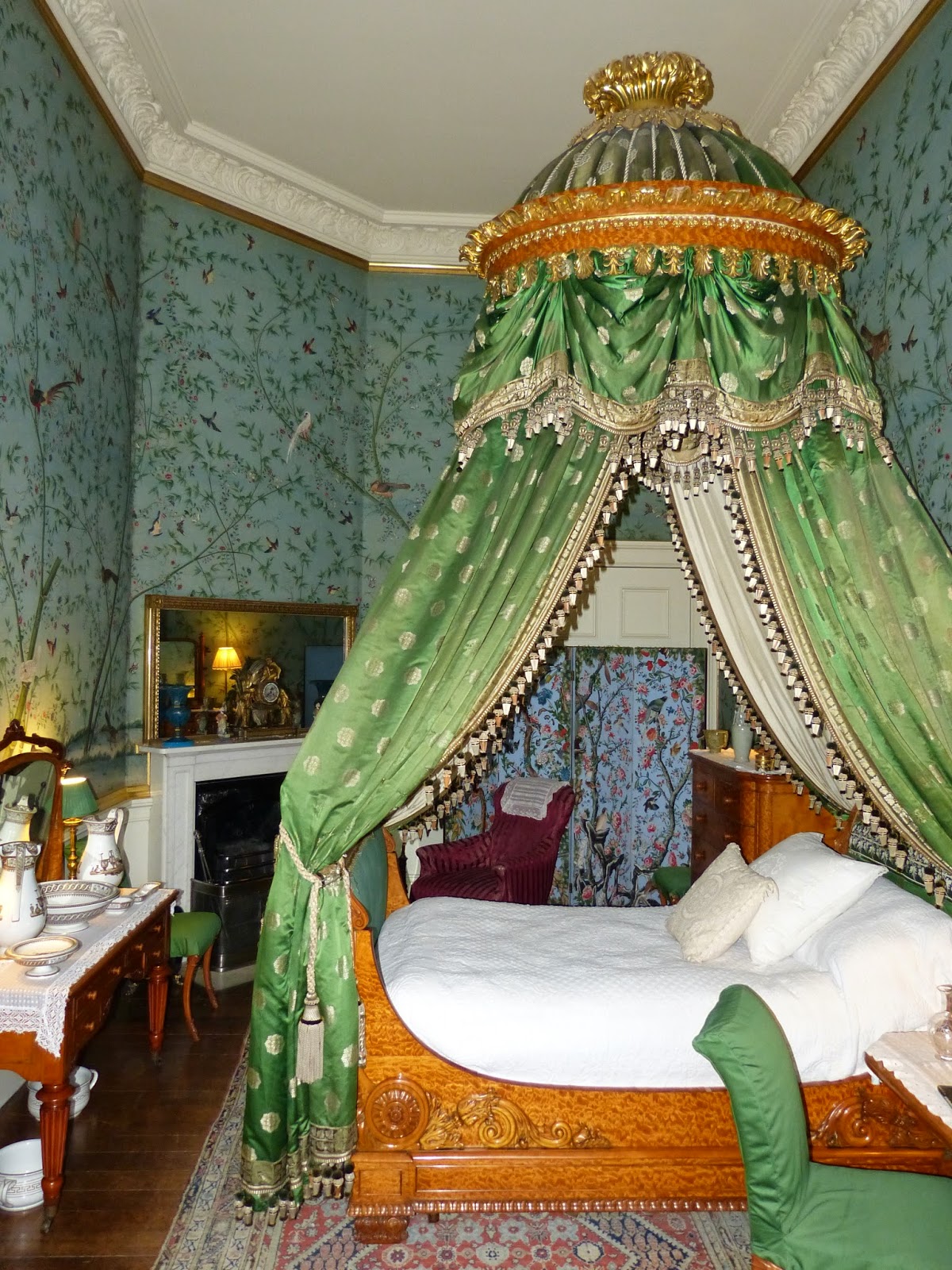
Guest bedroom, Chatsworth
These rooms were converted into bedrooms by the 6th Duke. The Chinese wallpaper is hand-painted and was very fashionable during the Regency period.

The Oak Stairs

The Oak Stairs, Chatsworth
 The 6th Duke built the Oak Stairs to lead to his new north wing.

The Library

The Library, Chatsworth
The 6th Duke turned the 1st Duke's Long Gallery into a sumptuous new library.

The Ante-Library

The Ante-Library, Chatsworth
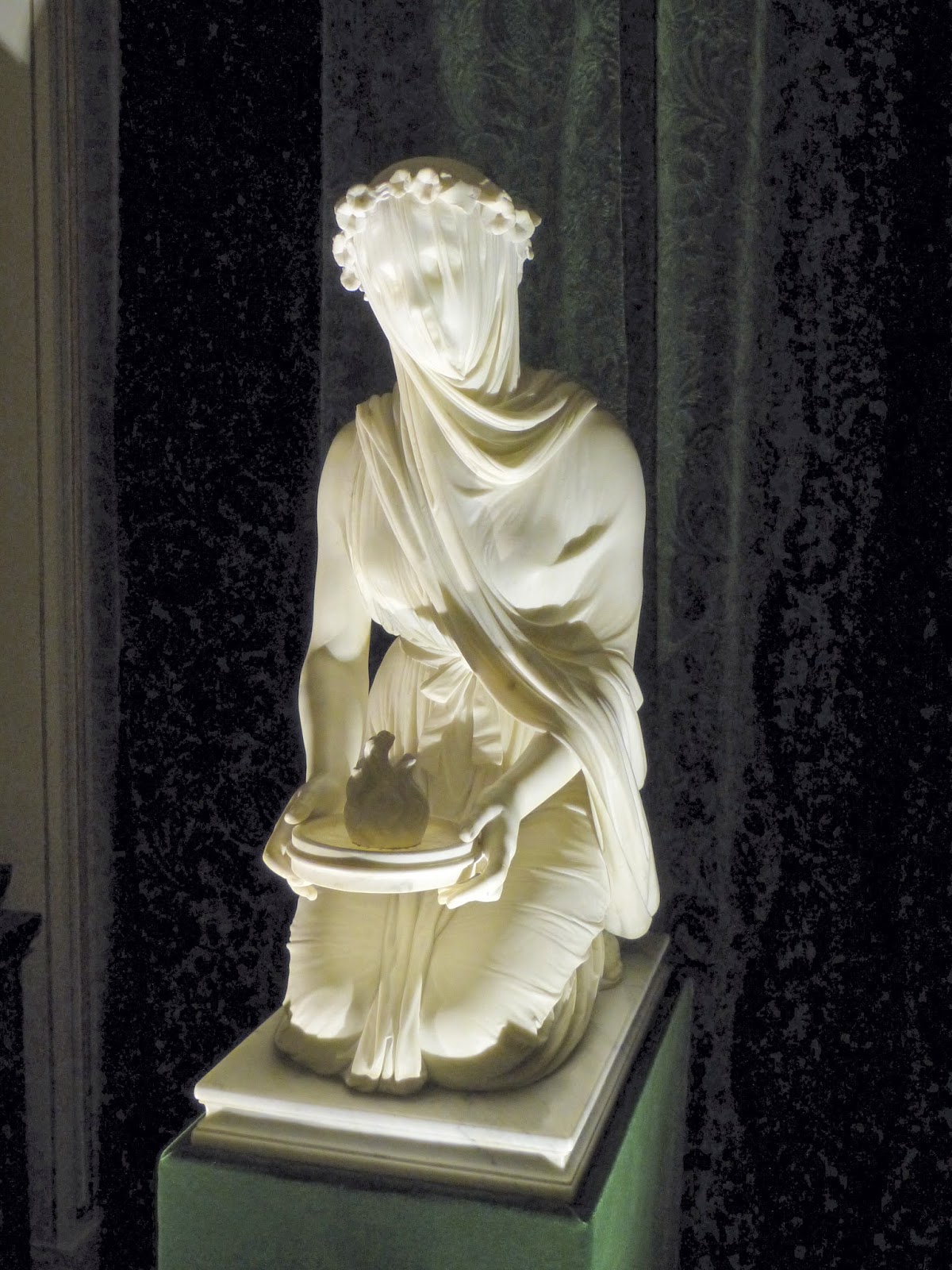
The Dome Room

The Dome Room, Chatsworth
The Veiled Vestal Virgin (above) was carved in marble by Raffaelle Monti for the 6th Duke in 1846.

The Great Dining Room

The Great Dining Room Chatsworth
The young Queen Victoria had her first adult dinner here when she was 13.

Sculpture Gallery

The Sculpture Gallery, Chatsworth
The sculptures in the 6th Duke's collection were created by contemporary artists in the classical style. His most prized pieces were by the sculptor Antonio Canova who became his close friend.


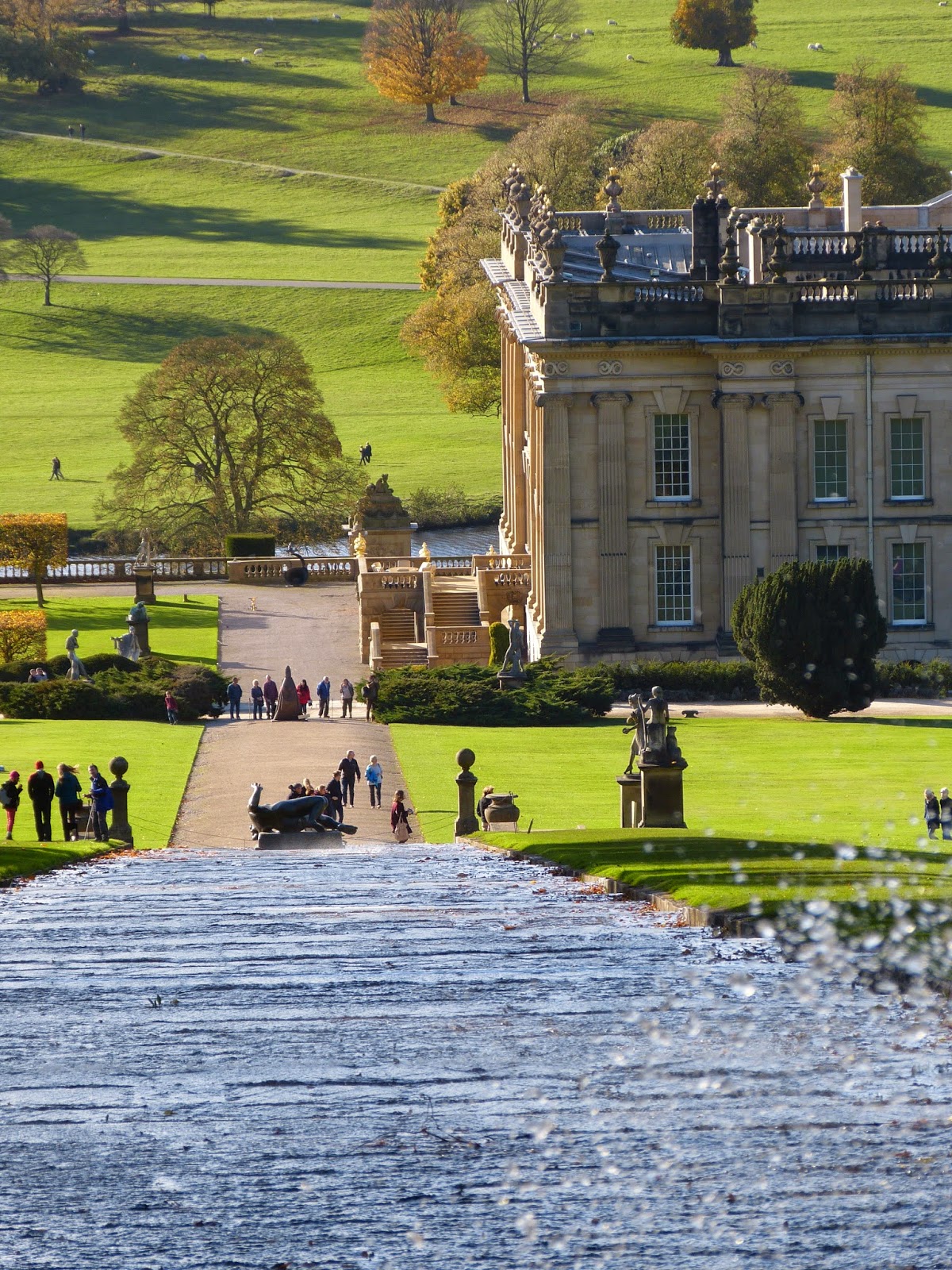
The Cascade

The Cascade, Chatsworth
A foreigner visiting in 1810-11 described the Cascade:
Exactly behind the house, and looking up towards the top of the hill, you see, between two lines of lofty wood, a flight of colossal stone steps, straight like Jacob's ladder, terminated at the top by a temple with a metal cupola. The gardener made a sign, and water flowed over this cupola and down the sides of the temple, and burst from the ground before it, then began to fall from step to step, sweeping off and carrying along the accumulated dirt of the winter, covering the whole in due time with a sheet of foam, and sparkling in the sun.3

Horace Walpole bemoaned the "absurdity of a cascade tumbling down marble steps, which reduces the steps to be of no use at all."1

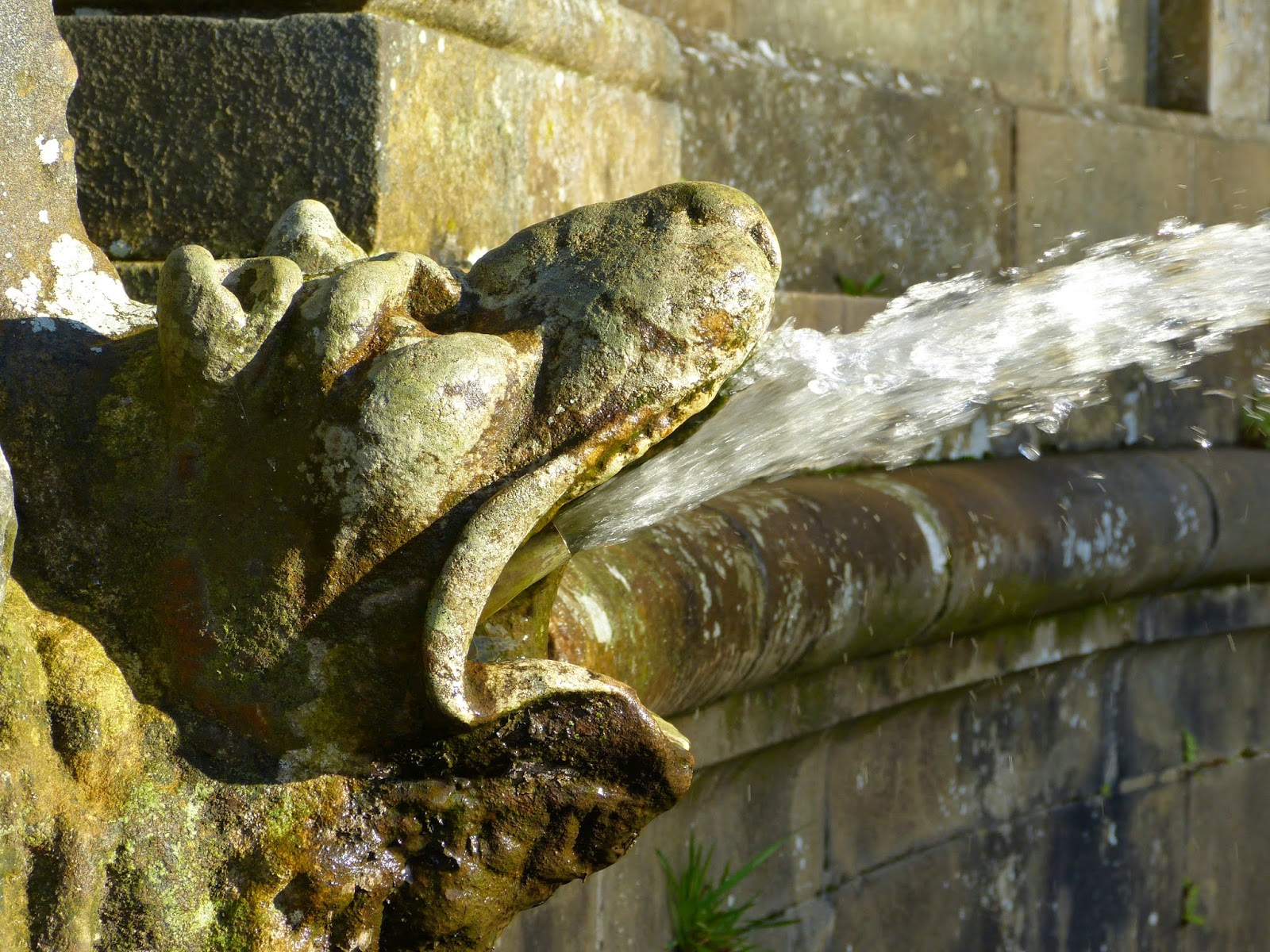
Dragon at the top of the Cascade, Chatsworth

Another visitor wrote in 1811:

The famous Cascade, one of those grand water works, which half a century ago, rendered Chatsworth the greatest wonder of Derbyshire, and gave it a celebrity which it has not yet lost, lies to the south-east of the house. It consists of a series or flight of steps, extending nearly two hundred yards from one end to the other, down a steep hill, crowned at the top with a Temple.

This fane, (observes Mr. Warner) should certainly be dedicated to Mercury, the god of fraud and deceit, as a piece of roguery is practiced upon the incautious stranger within its very sanctuary; from the floor of which, a multitude of little fountains suddenly spout up, whilst he is admiring the prospect through the portal, and quickly wet him to the skin.

After this practical joke, the cascade is put in motion by another screw, and certainly is grand in its kind; the water rushes in a vast quantity, and with great force and noise, from the domed roof of the temple, and from a great variety of dolphins, dragons, and a number of other figures that ornament it ; and falling into a basin in front of the building, (which also throws up several fountains) is thence discharged, and rolls down the long stages of steps before-described; and having reached the bottom, disappears by sinking into the earth.4

The Cascade, Chatsworth
The 1st Duke’s Greenhouse

The 1st Duke's Greenhouse, Chatsworth
The Emperor Fountain

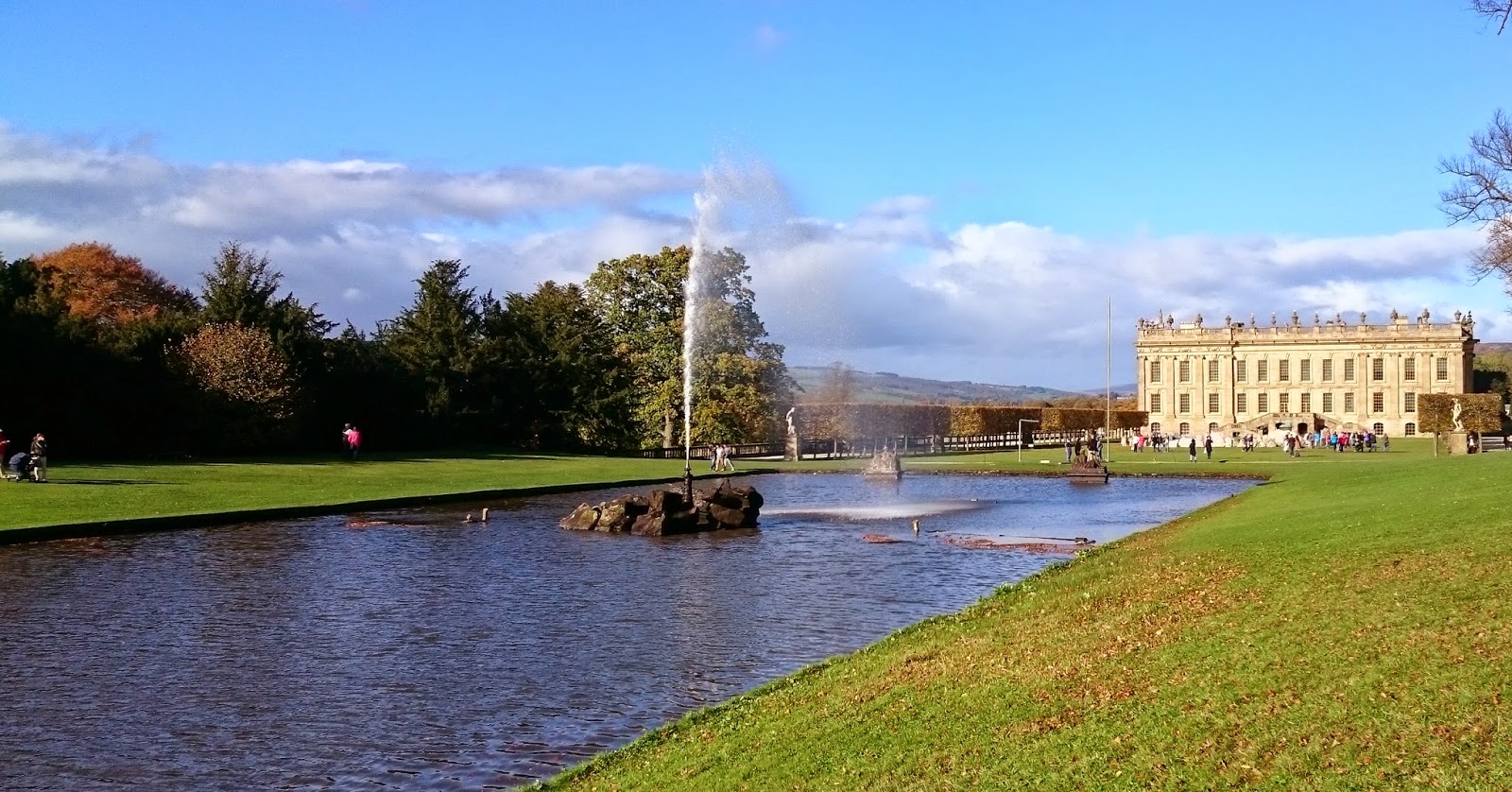
The Emperor Fountain with Chatsworth House in the background
The Grotto Pond

The Grotto Pond, Chatsworth
The Maze

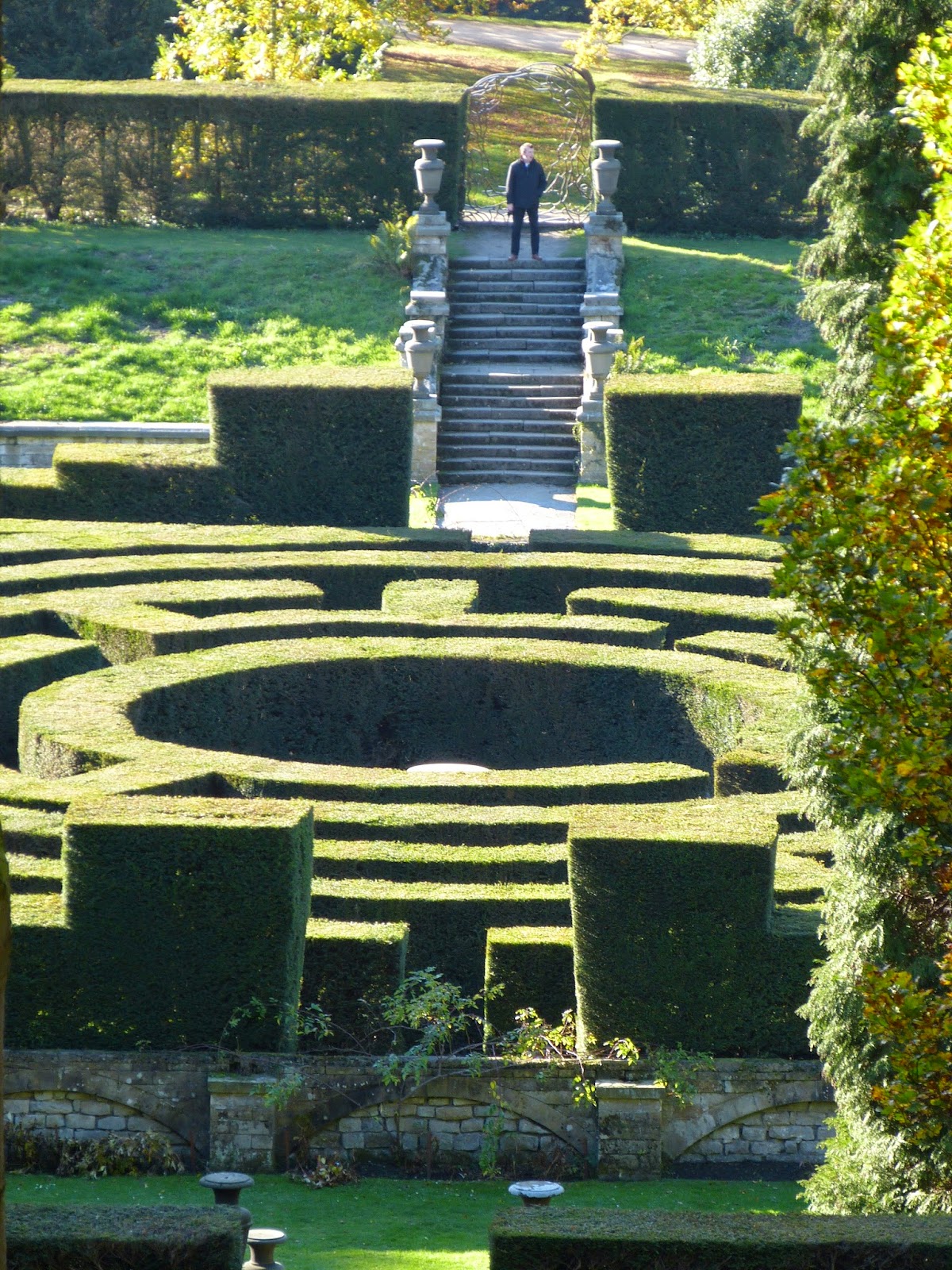
The Maze, Chatsworth
Sadly, not as old as the one at Hampton Court - this maze was planted in the 1960s!

For more about the history of Chatsworth and the Georgians who lived there, see my Regency History guide to Chatsworth.

Headshot of Rachel Knowles author with sea in background(2021)
Rachel Knowles writes clean/Christian Regency era romance and historical non-fiction. She has been sharing her research on this blog since 2011. Rachel lives in the beautiful Georgian seaside town of Weymouth, Dorset, on the south coast of England, with her husband, Andrew.

Find out more about Rachel's books and sign up for her newsletter here.

If you have enjoyed this blog and want to encourage me and help me to keep making my research freely available, please buy me a virtual cup of coffee by clicking the button below.


Notes
1. From a letter from Horace Walpole to George Montagu dated 1 September 1760.
2. From Peak Scenery or The Derbyshire Tourist by E Rhodes (1824).
3. From Louis Simond's Journal of his tour in 1810-11.
4. From David Davies' A new historical and descriptive view of Derbyshire (1811).

Sources used include:
Chatsworth House Trust, Chatsworth, Home of the Duke and Duchess of Devonshire, guidebook (2005)
Chatsworth House Trust, Your guide to Chatsworth (2014)
Davies, David Peter, A new historical and descriptive view of Derbyshire: from the remotest period to the present time, Volume 1 (1811)
Rhodes, E, Peak Scenery or The Derbyshire Tourist (1824)
Simond, Louis, Journal of a Tour and Residence in Great Britain, during the years 1810 and 1811 vol 2 (1815)
Walpole, Horace, Letters of Horace Walpole, selected and edited by Charles Duke Yonge Vol I 1736-1764 (1890)

All photographs and video © RegencyHistory.net