Search this blog

Showing posts with label Georgiana Duchess of Devonshire. Show all posts

Tuesday, 15 October 2019

The Bachelor Duke - William Spencer Cavendish, 6th Duke of Devonshire (1790-1858)

William Spencer Cavendish, 6th Duke of   Devonshire - on Oak Stairs at Chatsworth  Photo © A Knowles (2014)
William Spencer Cavendish, 6th Duke of
Devonshire - on Oak Stairs at Chatsworth
Photo © A Knowles (2014)
Profile

William Spencer Cavendish, 6th Duke of Devonshire (21 May 1790 - 18 January 1858), was known as the Bachelor Duke, because he never married. He was a patron of the Whigs, but his absorbing passions were more cultural than political with deep interests in horticulture, literature, science and sculpture.

Birth and family

William Spencer Cavendish was born in Paris on 21 May 1790, the long-awaited son and heir of William Cavendish, 5th Duke of Devonshire, and his first wife, Lady Georgiana Spencer. He had two older sisters, Georgiana (1783-1858) and Harriet (1785-1862). His family called him Hart (as I have throughout this post), an abbreviation of his title, the Marquess of Hartington, which he used from birth until he became Duke. Hart was baptised at St George’s Hanover Square on 21 May 1791.

Bust of William Cavendish, 6th Duke of Devonshire   in Sculpture Gallery, Chatsworth  © A Knowles (2014)
Bust of William Cavendish, 6th Duke of Devonshire
 in Sculpture Gallery, Chatsworth
© A Knowles (2014)
Two years without a mother

The relationship between Hart’s parents was very strained. They lived in a strange ménage à trois with Georgiana’s intimate friend, Lady Elizabeth Foster, who was also the Duke’s mistress. Indeed, rumours circulated from time to time that Lady Elizabeth was really Hart’s mother.

Georgiana’s huge gambling debts threatened her marriage, but it was her affair with Charles Grey, later 2nd Earl Grey, which brought things to a head. Georgiana became pregnant with Grey’s child and the Duke sent her abroad in disgrace. She gave birth to her daughter Eliza in February 1792, but she was not allowed to return home until the following autumn.

For two years, Hart and his sisters were left under the care of their governess, Selina Trimmer. When Georgiana returned, the three-and-a-half-year-old Hart did not recognise his mother and screamed when she tried to touch him. It later transpired that he was profoundly deaf – the result of an infection he had contracted whilst she was abroad. Georgiana felt so guilty for being away that she was inclined to spoil her son.  

Georgiana, Duchess of Devonshire, and child  after the painting by Sir Joshua Reynolds  from The Two Duchesses (1898)
Georgiana, Duchess of Devonshire, and child
after the painting by Sir Joshua Reynolds
from The Two Duchesses (1898)
Education and character

As a boy, Hart was temperamental and isolated, and his mother deplored the fact that he seemed to prefer the company of servants. He was educated at Harrow School before going up to Trinity College, Cambridge. He continued to shy away from physical contact and was inclined to hysterics if his sisters teased him.

Lady Caro

Hart was very attached to his cousin, Lady Caroline Ponsonby, and was distraught when she married William Lamb, the future Prime Minister, Lord Melbourne, in 1805. It was, however, the act of allowing his mother to comfort him that established a friendship between them that had been lacking.

Lady Caroline Lamb from Wives of the Prime Ministers (1844-1906)
Lady Caroline Lamb
from Wives of the Prime Ministers (1844-1906)
Lady Elizabeth Foster

After Georgiana’s death in March 1806, Hart and his sisters deeply resented Lady Elizabeth Foster taking their mother’s place and her eventual marriage with their father in October 1809. In later years, however, the new Duchess seemed to regain the influence which she had possessed over Hart as a child.

Lady Elizabeth Foster, later Duchess of Devonshire, in South Sketch Gallery, Chatsworth
Lady Elizabeth Foster, later Duchess of Devonshire,
in South Sketch Gallery, Chatsworth
The 6th Duke

Hart became the 6th Duke of Devonshire on the death of his father on 29 July 1811, at the age of 21. He inherited eight houses, including Chatsworth, Devonshire House, Hardwick Hall and Chiswick, and around 200,000 acres of land. He took his family responsibilities very seriously and continued to pay off his mother’s debts.

The Oak Stairs, Chatsworth © A Knowles (2014)
Politics

Hart was a Whig and a reformist, but more through patronage than from an active political career in the House of Lords as he was impeded by his deafness.

He was appointed Ambassador Extraordinary to the Russian Empire and visited St Petersburg in 1826 for the coronation of Tsar Nicholas I and was decorated with the orders of St Andrew and St Alexander Nevsky in recognition of the £26,000 of his own money he spent on the occasion.

Hart was sworn in as a member of the Privy Council in April 1827 and was Lord Chamberlain to George IV (1827-8) and William IV (1830-4). He took over from his father as Lord Lieutenant of Derbyshire in 1811, a position he held until his death.

Hart was a friend of the Prince Regent, later George IV, and carried the orb at his coronation in 1821.

George IV in his coronation robes from An authentic history of the coronation of His Majesty, King George the Fourth   by Robert Huish (1821)
George IV in his coronation robes
from An authentic history of the coronation
of His Majesty, King George the Fourth

  by Robert Huish (1821)
The Bachelor Duke

After his disappointment over Lady Caro Ponsonby, Hart did not embark upon any serious courtship – at least not one that is mentioned in any of my chief sources. He did, however, appear to have had at least one mistress. He had a secret, ten-year relationship with Eliza Warwick from 1827, but little is known about her. It has been suggested that Hart abandoned Eliza after his conversion to Evangelical Christianity.

Modernisation of Chatsworth

Hart employed the architect Sir Jeffry Wyatville to modernise and extend Chatsworth. He built a magnificent oak staircase leading to the new north wing which included a Dining Room, Orangery, private Theatre and Sculpture Gallery. He also turned the Long Gallery into the Library and added ground floor windows to the Painted Gallery.

The Library, Chatsworth © A Knowles (2014)
Redecorating Chiswick

In the 1840s, Hart lavishly redecorated the interiors of Chiswick House, using the firm of Crace & Son. His sister Harriet exclaimed:
Oh! Chiswick! Dearest brother, Chiswick! What shall I say? Chatsworth, be jealous.1
Sadly, the decorations were left to decay and the east and west wings were demolished in the 1950s. You can read a description of the decorations on the Chiswick House website.

Horticulturalist

Hart made Joseph Paxton Head Gardener at Chatsworth and with his help, he redeveloped the gardens. Hart was very fond of travelling and in 1838, Paxton accompanied him on a Grand Tour of Europe. He built the Rockery at Chatsworth to imitate the alpine scenery. He also built the Emperor Fountain, which can rise to the height of 90 metres, and the Grand Conservatory – the forerunner of Paxton’s Crystal Palace, built for the Great Exhibition of 1851.

Hart was President of the Royal Horticultural Society (1838-58) and the Cavendish banana is named for him.

The Emperor Fountain, Chatsworth © A Knowles (2014)
Hart the collector

The Sculpture Gallery, Chatsworth © A Knowles (2014)
Hart was a great collector – of minerals, coins, medals, sculpture and books. He bought several complete libraries, including those of Thomas Dampier, Bishop of Ely, the Duke of Roxburghe, and John Kemble. His papers include correspondence with several authors including Charles Dickens, Wilkie Collins and William Makepeace Thackeray.

He was passionate about marble and formed a great friendship with the sculptor Antonio Canova. The Sculpture Gallery was created to display his collection of contemporary sculpture and is presided over by busts of Canova and Hart.

Bust of Canova in Sculpture Gallery, Chatsworth © A Knowles (2014)
Bust of Canova in Sculpture Gallery, Chatsworth
© A Knowles (2014)
Hart the historian

Hart was also very interested in the history of his family and of their estates at Chatsworth and Hardwick. In 1844, he privately published the first volume of a book called Handbook to Chatsworth and Hardwick, written in the first person to his sister, Harriet, Countess Granville.

He was instrumental in the formation of the Derby Museum and Art Gallery in 1836.

Debts

Hart’s expensive habits of building, collecting and travelling came with a cost. He ran up extensive debts and was obliged to sell some of his estates to settle them.

Illness and death

Hart suffered a paralytic seizure in 1854 and died at Hardwick Hall in Derbyshire on 18 January 1858. He was buried at Edensor, Derbyshire.

He was succeeded by his first cousin, once removed, another William Cavendish, 2nd Earl of Burlington (1808-1891).2

Headshot of Rachel Knowles author with sea in background(2021)
Rachel Knowles writes clean/Christian historical romance set in the time of Jane Austen. She has been sharing her research on this blog since 2011. Rachel lives in the beautiful Georgian seaside town of Weymouth, Dorset, on the south coast of England, with her husband, Andrew.

Find out more about Rachel's books and sign up for her newsletter here.

If you have enjoyed this blog and want to encourage me and help me to keep making my research freely available, please buy me a virtual cup of coffee by clicking the button below.

Notes
1. From the Chiswick House website (see link below).
2. The 7th Duke's father, yet another William Cavendish (1783-1812), was Hart's first cousin, and he would have inherited if he had not already died.

Sources used include:
Cavendish, Georgiana, Duchess of Devonshire and others, The Two Duchesses, Family Correspondence, ed by Vere Foster (Blackie & Son, 1898, London)
Foreman, Amanda, Georgiana, Duchess of Devonshire (HarperCollins, 1998, London)
Fowler, Claire, Your guide to Chatsworth (Chatsworth House Trust, 2010)
Huish, Robert, An authentic history of the coronation of His Majesty, King George the Fourth (1821)
Reynolds, KD, Cavendish, William George Spencer, 6th Duke of Devonshire (1790-1858), Oxford Dictionary of National Biography (Oxford University Press, 2004; online edn Jan 2008, accessed 30 Oct 2014)

Wednesday, 15 August 2018

Lady M – The Life and Loves of Elizabeth Lamb, Viscountess Melbourne by Colin Brown - a review

Front cover of Lady M – The Life and Loves of Elizabeth Lamb, Viscountess Melbourne 1751-1818 by Colin Brown

Lady M is the story of Elizabeth Lamb, Viscountess Melbourne (1751-1818), a powerful and ambitious Georgian socialite and political hostess for the Whigs. Lady Melbourne is much less known than her son William Lamb, 2nd Viscount Melbourne, who became Prime Minister to William IV and Queen Victoria, or her intimate friend, Georgiana Cavendish, Duchess of Devonshire. 

In Lady M, Brown paints a vivid picture of the powerful Lady Melbourne and the society in which she lived. I enjoyed reading this comprehensive biography but feel that it is let down by a number of errors and a poor index. 

The ruthless Lady Melbourne

Having blogged about Lady Melbourne’s life back in 2013 (you can find the post here), I came to this biography with a good understanding of Lady Melbourne’s immoral and ruthlessly ambitious character. Brown’s book did nothing to change this.

Lady Melbourne’s identity is characterised by the way she related to the important people in her life – her husband, her children, her lovers and her intimate friends. Her desire for status over faithfulness is illustrated by her relationship with her husband – the weak and extravagant Sir Peniston Lamb. She was seemingly indifferent to his adulterous relationship with the actress Sophia Baddeley and remained ambitious to improve his – and therefore her own – rank and position.

Lady Melbourne had numerous lovers, most importantly George Wyndham, 3rd Earl of Egremont; George, Prince of Wales (the future George IV); and Francis Russell, 5th Duke of Bedford. She did not seem to give or require exclusivity. 

George, Prince of Wales, by Hoppner © The Wallace Collection
George, Prince of Wales, by Hoppner
© The Wallace Collection
Her most enduring passion was for her children and she was severe on anything or anyone that threatened her ambitions for them. Her relationship with her daughter-in-law, Lady Caroline Lamb, was stormy. She was furious at Lady Caro’s lack of discretion in her affair with Lord Byron and how it threatened William’s political career. 

What I liked about Lady M

I love to see quotes from original sources and in this, Brown did not disappoint. There is evidence throughout the book of Brown’s extensive research with numerous quotes from contemporary letters and memoirs, including some from manuscript sources in the Chatsworth Archives and the Lamb papers in the British Library.

There is a good-sized colour plate section in the middle of the book which includes some contemporary prints and portraits as well as up-to-date photographs of places connected with Lady Melbourne, including Brocket Hall in Hertfordshire, Melbourne Hall in Derbyshire and Melbourne House in Whitehall.
 
Brocket Hall, Hertfordshire © Colin Brown
Though I wasn’t surprised to learn of the Melbournes’ ongoing financial difficulties (so many Georgian peers seemed to struggle with money), I don’t think I realised the extent of this before reading Lady M.

The detail included in the chapter devoted to the military encampment on Cocks Heath was largely new to me. The encampment was visited by many ladies of consequence including Lady Melbourne, the Duchess of Devonshire and the scandalous Lady Worsley. It was here that Lady Melbourne’s son William was conceived with Lord Egremont.

Where’s the family tree?

I feel there are several things that let the book down. Although the contents section lists a family tree – a very useful tool for a historical biography – the family tree itself is missing!

A bevy of errors

It is a hard task writing a historical biography. Not only do you need to research the life of the chosen person; you also need to understand the world in which they lived and the myriad of people with whom they interacted. There is danger in almost every sentence. A throwaway comment or line written from memory may prove to be inaccurate if every single fact and name is not checked and double-checked. 

I know how easy it is for errors to creep in during the editing stage and typos to pass unnoticed. If it was not for my editor spotting my typo in What Regency Women Did For Us, I would have had Jane Austen born in Stevenage instead of Steventon!

In my opinion, Lady M would have benefitted from a beta reader who is familiar with the characters and period. Too many errors crept into the manuscript that someone like me would have spotted (and did). It is not my intention to list every mistake I found. Some were clearly typos eg calling Lady Elizabeth Foster’s illegitimate daughter by the Duke of Devonshire Caroline St James instead of Caroline St Jules. Others, however, were not. I will mention a few.

Special licences

Lady Melbourne was married by special licence – not, as Brown says, because she was a minor, but because this enabled her to be married in the house of the Lord Bishop of Peterborough. A special licence was the only way to be married anywhere else other than the parish church. As a minor, she could have been married in the parish church by ordinary licence with her father’s consent or by banns if her father did not file an objection. 

George III in Sidmouth?

Having written extensively about George III’s recuperation in my home town of Weymouth in Dorset (you can read about George III in Weymouth here), I was considerably surprised to read that the king went to Sidmouth in Devon instead! And though he certainly brought a good deal of popularity to Weymouth through his repeated visits, the king could hardly be said to have started the fashion for sea bathing there.

Titles

 Writing a historical book about the aristocracy is always a tricky business as there are rules about titles and it is not easy to get them right. I recently re-researched the subject. You can find my blog post here: A Regency History guide to dukes, marquesses and other titles.

Peers (from left to right): duke, marquess, earl, viscount, baron from A book explaining the ranks and dignitaries of British Society (1809)
Peers (from left to right): duke, marquess, earl, viscount, baron
from A book explaining the ranks and dignitaries of British Society (1809)
I spotted a number of instances in Lady M where titles were used incorrectly. A person’s title should only include their Christian name if the title comes from their father. For example, when she was single, Lady Sarah Lennox was so called as she took her title from her father, the 2nd Duke of Richmond, but Lord Byron was a baron in his own right and should never be referred to as Lord George Gordon Byron. 

It should also be noted that the wife of a duke should never referred to as Lady So and So, but always as the Duchess of So and So. For example, when talking about the Duchess of Richmond’s ball, the Duchess should not have been referred to as Charlotte, Lady Richmond, but as Charlotte, Duchess of Richmond, or Charlotte Lennox, Duchess of Richmond, or simply as the Duchess of Richmond (and her husband, the 4th Duke of Richmond, was called Charles, by the way, and not George – that was his father). Whilst getting titles right is not a deal breaker for most people, it is a detail that I like get right.

Poor indexing

In my opinion, for a historical biography to be useful as a reference book, it needs a comprehensive and easy-to-use index so that names of people and places can be easily looked up. Unfortunately, I found the index to Lady M sadly lacking. 

Having written a historical book myself, I know how difficult it is to decide how to index names, especially when you are referring to the nobility whose titles may change over their lifetimes, but whatever policy is chosen, it is essential to apply it consistently with plenty of cross-references.

The naming policy in the index is all over the place. Sometimes a person is listed under their title eg Lady Oxford is listed under Oxford; other times under their surname eg Francis Russell, 5th Duke of Bedford, is listed under Russell. Bizarrely, sometimes a person is listed under their rank eg Frederick, Duke of York, is listed under Duke, or even, in the case of Georgiana Cavendish, Duchess of Devonshire, under her Christian name with no reference to her surname at all. George III is listed under King whilst Queen Victoria is listed under Victoria. 

Some people appear in the index multiple times eg Lady Bessborough appears under Spencer, Ponsonby, Duncannon and Bessborough, whilst others you might have expected to find an entry for eg William Cavendish, 5th Duke of Devonshire, don’t appear to be there at all. I would have expected to find one entry for a person under either title or surname with cross-references under the other and previous titles if necessary eg I would have expected to find a ‘see Russell, Francis, 5th Duke of Bedford’ entry under Bedford. 

This is also where the correct use of titles comes into play again. Several of the index entries incorrectly include Christian names in the title eg Lady Harriet Duncannon. The entry for George Wyndham, 3rd Earl of Egremont is even worse. He is incorrectly listed under Egremont as Lord George Egremont and there is no mention of his surname at all! 

One final gripe. There is only one index entry for Lady Jersey, but there are two different Lady Jerseys referred to in the text – Sarah Child Villiers, Countess of Jersey and Patroness of Almack’s, and Frances Villiers, Countess of Jersey, her mother-in-law.

In summary

Lady M is a comprehensive biography but it is let down by a number of errors and a poor index. 

Tuesday, 12 January 2016

Hair powder and pomatum

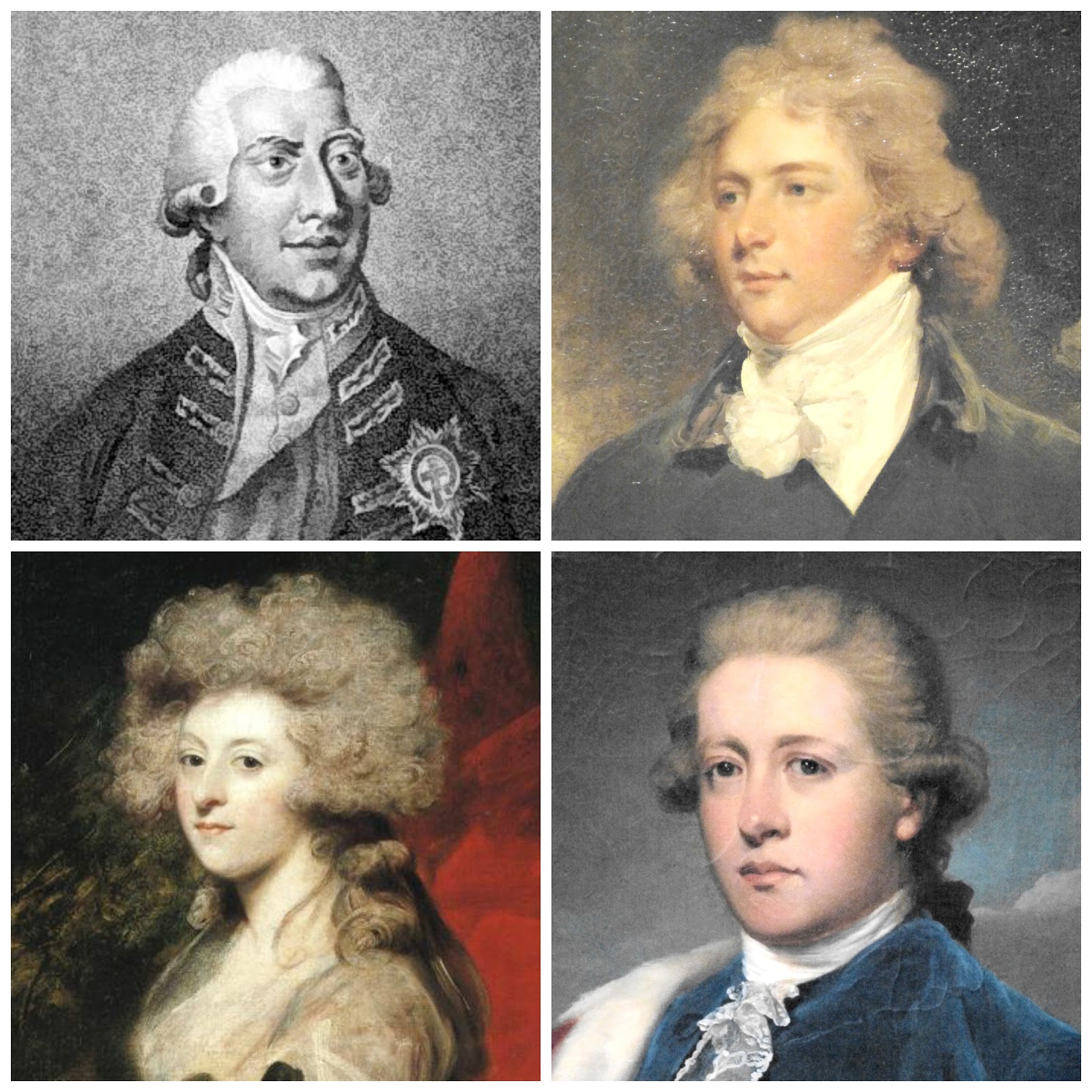
George III in a white wig; George IV, Maria Fitzherbert and William Cavendish, Duke of Devonshire, showing the effect of powder in the hair
George III in a white wig; George IV, Maria Fitzherbert
and William Cavendish, Duke of Devonshire,
showing the effect of powder in the hair
The fashion for hair powder

The fashion for putting powder in your hair allegedly started with Henry IV of France (1553-1610) who started using brown powder in his hair to hide the grey hairs. Those around him hurried to adopt the custom. It did have an additional benefit. Powder helped to reduce the greasiness of the hair which was useful at a time when hair washing was certainly not a daily pursuit!

Wigs and white powder

Henry IV’s son Louis XIII (1601-1643) also had a hair problem—he started to go bald at a young age. To hide his baldness, he started to wear a long haired wig and, unsurprisingly, his courtiers soon followed suit. The fashion spread to England and was adopted by Charles II (1630-85) and his court. 

The rarest and most expensive wigs were white. As a result, people put white powder on their wigs in order to make them look as white as possible. People also used white powder on their hair. It intensified the blondeness of very fair hair but made darker hair look grey, the shade depending on the natural hair colour.

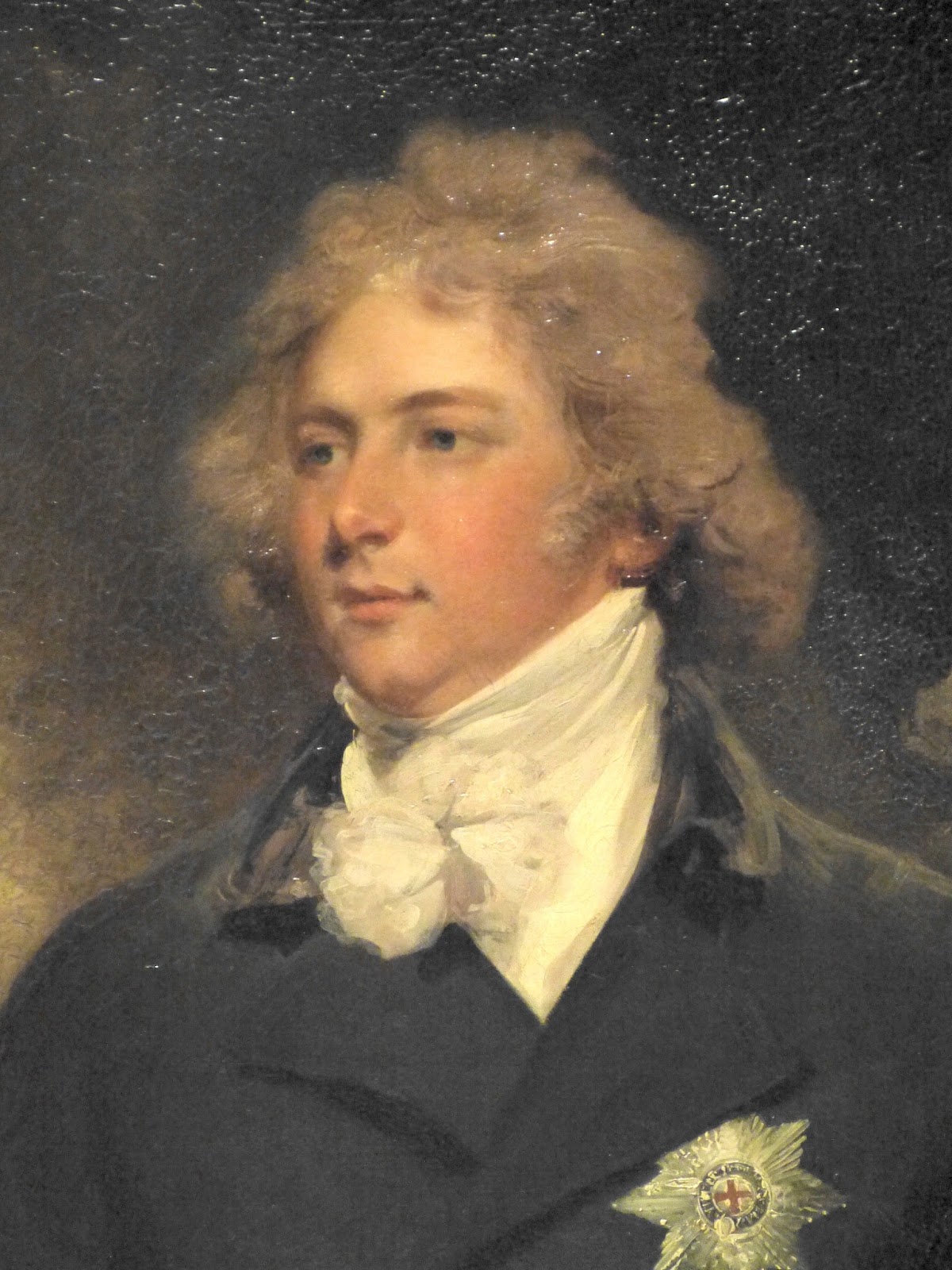
George IV as Prince of Wales by John Hoppner (1792) © The Wallace Collection
George IV as Prince of Wales
by John Hoppner (1792) © The Wallace Collection
In the first of The Merry Romances,  A Perfect Match, Mr Merry reluctantly allows his manservant to powder his hair for a ball:
John handed Mr Merry his hat and cane and grinned. For once, he had managed to persuade his young master to stand still for long enough to powder his hair thoroughly, heightening the blondeness of its colour. John secretly thought that there were few gentlemen who could wear powder to such good effect.1
A universal fashion

Powder was not just a fashion adopted by the few; its use was widespread throughout most of the 18th century and not to use it was seen as a breach of social etiquette.

In her novel, The Sylph, published in 1778, Georgiana Cavendish, Duchess of Devonshire, wrote:
Monsieur bowed and shrugged, just like an overgrown monkey. In a moment I was overwhelmed with a cloud of powder. ‘What are you doing? I do not mean to be powdered,’ I said.
‘Not powdered!’ repeated Sir William; ‘why you would not be so barbarous as to appear without—it positively is not decent2
In her journal, Mary Frampton wrote of 1780:
At that time everybody wore powder and pomatum.3
In 1789, she went on to write:
I was dressed as a grown-up person for the first time, and wore powder, then the mark of distinction of womanhood.4
What was hair powder made from?

Hair powder was made from flour or starch and varied considerably in quality, with the best powders being made from highly refined starch. 

Although white was the most popular colour, other shades were also used, including brown, grey, orange, pink, red, blue and violet.

Horn and ivory powder bottles on display at the Science Museum, London
Horn and ivory powder bottles
on display at the Science Museum, London
Powdering room

Putting on hair powder was a messy and time consuming business. First the hair was covered with hair lotion known as pomade or pomatum which helped the powder to stick. Then the person being powdered was covered with a powdering gown or protective apron whilst the powder was applied using a set of bellows. A cone shaped device could be used to cover their face to prevent the powder going into their eyes.

In 1791, Mary Frampton’s journal stated:
The ladies wore the hair flowing down their backs and high in front, with much pomatum and powder put on with different kinds of puffs. The finishing powder had a brown hue and a strong perfumed smell, and was called ‘Maréchale’ powder. This powder was applied at a distance, that every hair might be frosted with it. One pound, and even two pounds, of powder were sometimes put into the hair or wasted in the room in one dressing.5
Ideally, this operation would take place in a special room – a powdering room or closet – in order to contain the mess. In Dr Johnson’s House Museum in Gough Square, London, there is a set of double doors off the parlour which lead to his powdering closet. This was where he stored his wigs and sat to have powder applied without spreading it all over the house.

The Parlour, Dr Johnson's House Museum, Gough Square, London The double doors to the right of the fireplace lead to  Dr Johnson's powdering closet.
The Parlour, Dr Johnson's House Museum, Gough Square, London
The double doors to the right of the fireplace lead to
 Dr Johnson's powdering closet.
Sweet Cypress Hair Powder

In A Perfect Match, set in 1788-9, the heroine’s mother, Mrs Westlake, wears her hair “fashionably powdered”. She could have bought her hair powder from Sharp’s along with the Olympian Dew she used to prevent wrinkles.  
 

According to an advertisement in The Times, Sharp’s could offer:
Sweet Cypress Hair Powder (made by Sharp). It is the lightest, sweetest and the best for the Hair of any 1s 2d per Pound, Stamp included; or 11s per Dozen – All Sorts of Hair Powders made (as may be seen every Day) from the purest French Starch, and sold Cheaper than at any other House.6
What does “stamp included” mean?

William Pitt the Younger introduced a sales tax on hair powder in 1786. Taxing fashion was a clever move as people who wanted to be fashionable were forced to pay the tax. It is this tax that the phrase “stamp included” refers to. Clearly the seller was paying the sales tax on behalf of the consumer. The tax was charged at a rate of 1d for items costing less than 8d; increased to 1½d for items costing between 8d and 1s; and rose to a maximum of 1s for items costing more than 5s. 

This stamp duty was not just on hair powder but was payable on 
...every packet, box, bottle, phial, or other inclosure, that shall contain any sweet scents, odours, or perfumes, or any dentifrice, or other preparation for the teeth, or any pomatum, hair powder, or other preparation for the hair.7
However, it was only the hair powder that was advertised as “stamp included”.

Pomades and pomatums

In the advertisement in The Times, Sharps also recommended:
Rose, Orange, Jessamine, Violet, and white Marechalle Pomatums, that will keep good in any Climate twelve months; 1s per Roll and Pot.
The Pomade de Grasse, Sharp has sold with great Reputation and Success for many Years; and now, as heretofore, does most solemnly assure the Public, that it will certainly and effectually thicken and strengthen the Hair; keep it from falling off or turning Grey. Sold with Directions for Use.
The very best Foreign Powders and Pomatum, wholesale and Retail.8
The decline of hair powder

In 1795, Pitt introduced a new tax on hair powder. Those wishing to use hair powder had to obtain an annual certificate for the privilege at a cost of one guinea. There was an outcry against the expense of this licence and the tax did not have quite the effect that Pitt had hoped for. 

There was already a move toward more natural hairstyles and many people chose to abandon their hair powder altogether rather than spend a guinea on a licence. The tax never brought in the anticipated revenues; it simply hastened the demise of the fashion for hair powder.

'Leaving off powder, -or- a frugal family saving the guinea'
by James Gillray (1795) © British Museum

Headshot of Rachel Knowles author with sea in background(2021)
Rachel Knowles writes clean/Christian historical romance set in the time of Jane Austen. She has been sharing her research on this blog since 2011. Rachel lives in the beautiful Georgian seaside town of Weymouth, Dorset, on the south coast of England, with her husband, Andrew.

Find out more about Rachel's books and sign up for her newsletter here.

If you have enjoyed this blog and want to encourage me and help me to keep making my research freely available, please buy me a virtual cup of coffee by clicking the button below.

Notes
1. A Perfect Match, chapter 10, by Rachel Knowles (2015).
2. The Sylph by Georgiana Cavendish, Duchess of Devonshire (1778).
3. The Journal of Mary Frampton (1779-1846) by Mary Frampton, edited by Harriot Georgiana Mundy (1885).
4. Ibid.
5. Ibid.
6. "To The Ladies. Sharp,." Times [London, England] 12 Apr. 1788: 2. The Times Digital Archive. Web. 24 Jan. 2015. The monetary system was in pounds, shillings and pence represented by the letters l, s and d respectively.
7. Debrett (ed), The Parliamentary Register or History of the Proceedings and Debates of the House of Commons during the third session of the Sixteenth Parliament of Great Britain (1787).
8. Times op cit.
 
The collage consists of the following pictures:
George III from Bissett, Robert, The History of the Reign of George III (Edward Parker, 1822, Philadelphia)
George IV as Prince of Wales by John Hoppner (1792) Photo by Andrew Knowles Portrait © The Wallace Collection
Maria Fitzherbert by Sir Joshua Reynolds (c1788) © NPG London
William Cavendish, 5th Duke of Devonshire by Anton von Maron Photo by Andrew Knowles Portrait © Chatsworth

Sources used include:
Cavendish, Georgiana, Duchess of Devonshire, The Sylph (1778)
Debrett (ed), The Parliamentary Register or History of the Proceedings and Debates of the House of Commons during the third session of the Sixteenth Parliament of Great Britain (1787)
Frampton, Mary, The Journal of Mary Frampton (1779-1846) edited by Harriot Georgiana Mundy (1885)
Knowles, Rachel, A Perfect Match (2015)
Demodecouture.com on hairstyles-cosmetics-18th-century
Times Digital Archive

All photographs © regencyhistory.net

Friday, 20 November 2015

Rowlandson’s comic art at the Queen’s Gallery, London - 2016 exhibition

Doctor Convex and Lady Concave
by Thomas Rowlandson (1802)
Thomas Rowlandson (1756-1827) was one of the greatest caricaturists of his time. The exhibition at the Queen’s Gallery – High Spirits – was all about his comic art and included nearly 100 of his prints and drawings. The exhibition ended on 14 February 2016, but you can still enjoy it on this blog.

High Spirits exhibition at the Queen's Gallery,
Buckingham Palace, London
Here is the promotional video for the exhibition narrated by Brian Blessed. It is a lovely introduction to the subject of Thomas Rowlandson's art and caricatures in general.


There is a comprehensive book that accompanies the exhibition which includes all the prints and pictures on display (and a few more besides) together with the background and provenance for each.
 
The fashion for caricatures

Before I start telling you about the exhibition, I have a confession to make. I am not a huge fan of caricatures—they are very Georgian, but not always to my taste. Rowlandson’s cartoons are often quite ugly and frequently bawdy. However, I appreciate their cleverness even when I’m not keen on the pictures and I did find some prints in the exhibition that I liked.

A wall of Rowlandson prints at the exhibition
Caricatures were a great source of amusement to rich and poor alike. It was fashionable to collect prints and display them on a wall or screen or keep them in an album. Showing off your print collection was a popular after dinner entertainment. If you couldn’t afford to build up your own portfolio, then you could hire one from a print shop for the evening to share with your guests. If that was beyond your means, you could still enjoy spotting the royals and politicians lampooned in cartoon form by gazing at the latest prints on display in the print shop window.

I'm looking at a screen at the exhibition covered
 with cut-outs of Thomas Rowlandson prints
 which dates from c1806
A close-up of the print screen shown above
Everyday life

Many of Rowlandson’s prints were social satires – taking a humorous view of daily life and topics that were in the news. Rowlandson was fond of depicting opposites - such as Doctor Convex and Lady Concave at the top of the page and the very streamlined outline of Buck's Beauty contrasting with the curves of Rowlandson's Connoisseur below.

Buck's Beauty and Rowlandson's Connoisseur
by Thomas Rowlandson (c1799)
Three Principal Requisites to form a Modern Man of Fashion
by Thomas Rowlandson (1814)
Overset by Thomas Rowlandson (c1790)
Rowlandson delighted in caricaturing current events, such as the news that Richard Brinsley Sheridan was going to pull down the Theatre Royal in Drury Lane in order to build a bigger one. Rowlandson depicted this as the theatre tumbling down during a performance.

Chaos is Come Again! by Thomas Rowlandson (1791)
Ridiculing the royals

George III and his family were frequently the subject of Rowlandson’s cartoons. His caricatures included prints about George III's illness of 1788-9; George, Prince of Wales' bad behaviour; and the Mrs Clarke scandal of 1809 involving the Duke of York. During the Mrs Clarke scandal, Rowlandson produced an incredible 27 caricatures in little over 6 weeks!

Money Lenders [featuring the young George IV]
by Thomas Rowlandson (1784)
Suitable Restrictions [for a regency] by Thomas Rowlandson (1789)
Yorkshire Hieroglyphics by Thomas Rowlandson (1809)
[depicting a love letter from the Duke of York to Mrs Clarke in pictures]
A York address to the Whale. Caught lately off Gravesend.
[The Duke of York pleads with the whale to distract the public
from the Mrs Clarke scandal] by Thomas Rowlandson (1809)
Political satire

Rowlandson began producing political caricatures around 1780. The battle between the Whigs led by Fox and the Tories led by Pitt gave ample scope for his wicked wit. His series of prints on the Westminster Election of 1784, published by William Humphrey, was particularly successful, firmly establishing him as one of the leading satirists of his day.

The Devonshire or Most Approved Method of Securing Votes
by Thomas Rowlandson (1784)
 Georgiana, Duchess of Devonshire, is shown kissing a butcher
 in order to secure his vote for Fox.
Views of England and other works of art

In addition to all the caricatures, a number of Rowlandson's other works were on display. These included book illustrations from Ackermann’s Microcosm of London and An excursion to Brighthelmstone made in the year 1789. This volume included what was probably my favourite picture in the whole exhibition – that of the bathing machines at Brighton pictured below.

Bathing Machines by Thomas Rowlandson in An excursion
to Brighthelmstone made in the year 1789 by H Wigstead (1790)
Christie's Auction Room from The Microcosm of London
published by R Ackermann (1808)and illustrated by Augustus
Pugin [the architecture] and Thomas Rowlandson [the people].
The paintings in the exhibition included this one, featuring George III returning from a hunting trip.

King George III returning from hunting through Eton
by Thomas Rowlandson (c1800)
A Georgian connection with the Dutch paintings

Having examined the Rowlandson exhibition thoroughly, we decided to take a quick look round the exhibition of Dutch paintings which ran alongside it. Although these were pre-Georgian, mostly dating from the 17th century, there was a Georgian connection. Many of the paintings were acquired by George IV and prints of various rooms in Carlton House and Windsor Castle from Pyne’s The History of the Royal Residences showed the paintings had been displayed. One or two of the paintings in the exhibition were even identifiable in the prints.

An Old Woman called The Artist's Mother
by Rembrandt van Rijn (1627)
The King's Drawing Room, Windsor Castle
from The History of the Royal Residences by WH Pyne (1819).
The Old Woman is on display to the right of the doorway.
There was also a small selection of Sèvres porcelain on display.

Chocolatière from the Sèvres
porcelain factory (1777)
Acquired by George IV in 1815.
Pot-pourri à vaisseau or pot-pourri en navire
from the Sèvres porcelain factory (1758-9).
It is extremely likely that this item was originally
owned by Madame de Pompadour,
mistress of King Louis XV of France.
In summary, High Spirits was a great little exhibition and the exhibition book details all the works of art on display.

All photos © Regencyhistory.net except Money Lenders and The Devonshire © The Royal Collection.
All prints and objects © HM Queen Elizabeth II.
 
 Headshot of Rachel Knowles author with sea in background(2021)
Rachel Knowles writes faith-based Regency romance and historical non-fiction. She has been sharing her research on this blog since 2011. Rachel lives in the beautiful Georgian seaside town of Weymouth, Dorset, on the south coast of England, with her husband, Andrew.

Find out more about Rachel's books and sign up for her newsletter here.

If you have enjoyed this blog and want to encourage me and help me to keep making my research freely available, please buy me a virtual cup of coffee by clicking the button below.