Search this blog

Showing posts with label English Heritage. Show all posts

Tuesday, 30 April 2019

Kenwood - a Regency History guide

Kenwood House (2014)
Kenwood (2014)
Kenwood is a stunning neoclassical villa on Hampstead Heath in London. You may recognise its beautiful white façade from one of my favourite films, Notting Hill, where it is the backdrop for the Henry James film that Anna Scott (played by Julia Roberts) is shooting. It also appears in Mansfield Park (1999) starring Frances O’Connor, and Belle (2014) starring Gugu Mbatha-Raw. Belle is based on the story of Dido Elizabeth Belle (1761-1804), the illegitimate, mixed-race great niece of Lord Chief Justice William Murray, Earl of Mansfield, who once lived there. Kenwood also boasts some of architect Robert Adam’s best work.

William Murray, Earl of Mansfield (1705-1793)
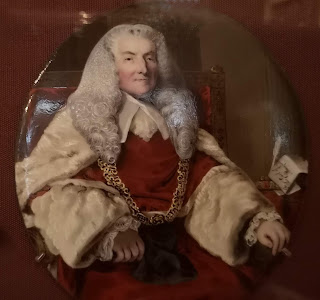
William Murray, 1st Earl of Mansfield  from a miniature on display in Kenwood House
William Murray, 1st Earl of Mansfield
from a miniature on display in Kenwood (2019)
The first house at Kenwood was built in the early 17th century. In 1746, the estate was bought by John Stuart, 3rd Earl Bute, who added the orangery. He sold Kenwood to lawyer William Murray in 1754. Two years later, Murray became Lord Chief Justice and received a barony, thereby becoming Lord Mansfield, the name by which he is better known. Lord Mansfield is famous for his legal judgements which aided the abolition of slavery, in particular, the Somerset case of 1772. He lived in a house in Bloomsbury during the week and spent the weekends at Kenwood. In 1776, he was made Earl of Mansfield.
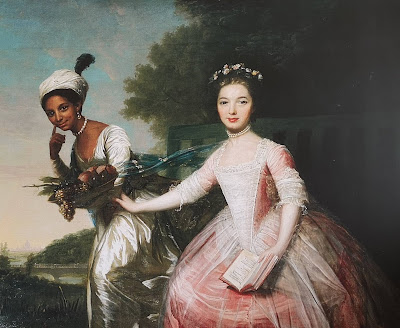
Dido Elizabeth Belle and Lady Elizabeth Murray from a replica   of the painting by David Martin (c1778) on display in Kenwood House.   The original hangs in Scone Palace, Scotland.
Dido Elizabeth Belle and Lady Elizabeth Murray from a replica
of the painting by David Martin (c1778) on display in Kenwood.
The original hangs in Scone Palace, Scotland.
Lord Mansfield and his wife Lady Elizabeth Finch (1704-84) had no children. However, from about 1766, Kenwood became home to three of Lord Mansfield’s relations – his niece, Anne Murray, the sister of his heir, David Murray, 7th Viscount Stormont; Elizabeth Murray, Viscount Stormont’s daughter by his first marriage; and Dido Elizabeth Belle, the illegitimate, mixed-race daughter of another of Lord Mansfield’s nephews, Sir John Lindsay. 

Kenwood from The Works in Architecture of Robert and James Adam (1773)
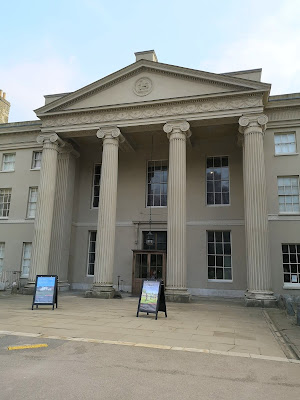
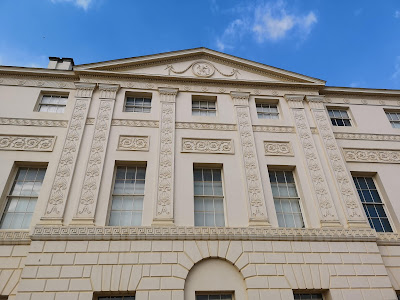
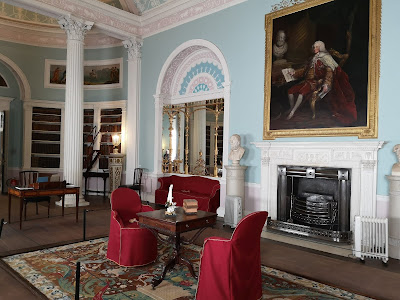
Between 1767 and 1779, Lord Mansfield employed Robert Adam and his brother James to remodel Kenwood. Adam built the library on the east side to counterbalance the orangery already existing on the west, achieving a neoclassical symmetry on the south front overlooking the park. He also designed the new north front with its pillared portico. Adam remodelled and redecorated the interiors using master craftsmen such as Joseph Rose and Antonio Zucchi. The library is reckoned to be one of Adam’s masterpieces and I would agree – it is an amazing room, worth just whiling away some time in.

The library, Kenwood House (2019)
The library, Kenwood (2019)
During the Gordon Riots of 1780, Lord Mansfield became a target for anti-Catholic sentiment. He was known for his Catholic sympathies and his Scottish descent led people to suspect him of Jacobite sympathies too. Lord Mansfield’s London home was attacked, and his legal library destroyed. Fortunately, Lord Stormont was able to use the militia to deter the mob from descending on Kenwood, diverting their attention by offering them refreshments at the nearby Spaniards Inn.

Toll gate house, Spaniards Gate (left) and Spaniards Inn,  less than half a mile from Kenwood House, Hampstead
Toll gate house, Spaniards Gate (left) and Spaniards Inn (right),
less than half a mile from Kenwood, Hampstead (2019)
David Murray, 7th Viscount Stormont and 2nd Earl of Mansfield (1727-96)

Viscount Stormont inherited Kenwood from his uncle in 1793. He employed architect Robert Nasmith, and later George Saunders, to make improvements to the house. He added a music room, decorated by Julius Caesar Ibbetson, and service wings including a new dairy. He diverted Hampstead Lane away from the house to gain more privacy and commissioned Humphry Repton to landscape the grounds. Repton’s designs for Kenwood appear in his Red Book of before and after pictures in 1793.

The sham bridge, Kenwood (2019)
The bridge - picturesque but sham, Kenwood (2019)
David William Murray, 3rd Earl of Mansfield (1777-1840)

The third earl carried out some necessary work at Kenwood but spent most of his time at his Scottish seat of Scone Palace. He entertained William IV with a grand luncheon at Kenwood in 1835.

Later history

Like his father, the fourth earl, William David Murray (1806-1898) also preferred Scone Palace but he spent three months of the year at Kenwood. His son, another William David Murray (1860-1906) loved to entertain at Kenwood but on his sudden death in 1906, his brother Alan David Murray (1864-1935) inherited and as he preferred Scone Palace, Kenwood was leased to tenants.

The sixth earl planned to sell Kenwood for redevelopment and sold off the contents by auction in 1922. Edward Cecil Guinness, 1st Earl of Iveagh, was a Hampstead resident at this time. He took out a lease on Kenwood in 1924 and his family trust then bought the house and the remaining land. Lord Iveagh bequeathed Kenwood to the nation and it became an independent museum which is now managed by English Heritage.

What you can see today

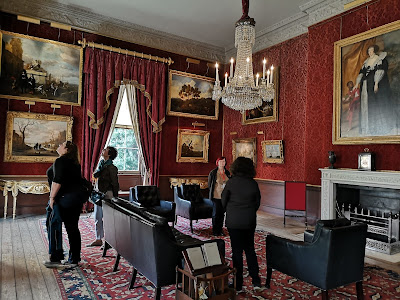
Kenwood is open to visitors and offers free admission. It is well worth a visit. Although the original contents were sold, Kenwood is full of works of art bequeathed by Lord Iveagh, including both Old Masters and Georgian portraits.

The north front
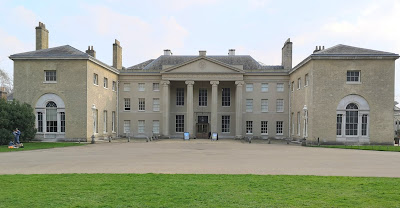
The north front, Kenwood (2019)
The portico of the north front, Kenwood (2019)
 The south front

The south front, Kenwood (2019)
Detail of the south front, Kenwood (2019)
The entrance hall

Entrance hall, Kenwood (2019)
Entrance hall ceiling, Kenwood (2019)
The great staircase

The great staircase, Kenwood (2019)
The antechamber

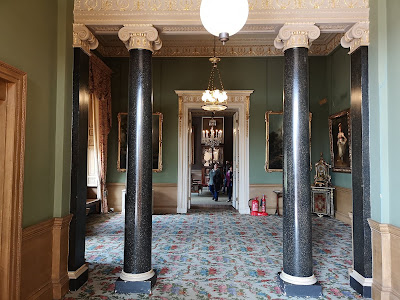
The antechamber, Kenwood (2019)
The library

The library, Kenwood House (2019)
The library, Kenwood (2019)
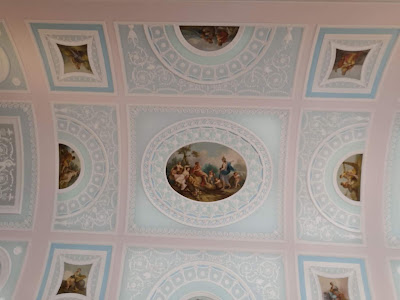
The library ceiling, Kenwood House (2019)
The library ceiling, Kenwood (2019)
 The dining room

The dining room, Kenwood House (2019)
The dining room, Kenwood (2019)
 The breakfast room

The breakfast room, Kenwood House (2019)
The breakfast room, Kenwood (2019)
The orangery

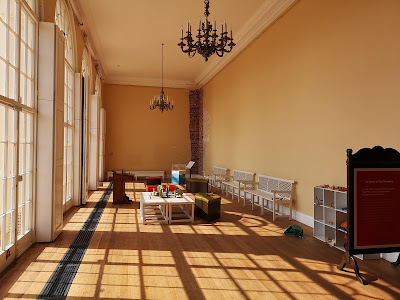
The orangery, Kenwood House (2019)
The orangery, Kenwood (2019)
The green room

The green room, Kenwood (2019)
The music room

The music room, Kenwood (2019)
Mrs Jordan by John Hoppner in the music room, Kenwood (2019)
Actress Mrs Jordan by John Hoppner
in the music room, Kenwood (2019)
 The upper hall

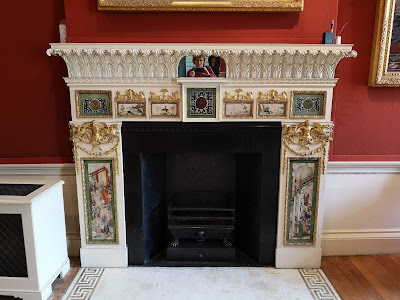
Adam fireplace in the upper hall, Kenwood (2019)
The miniatures room

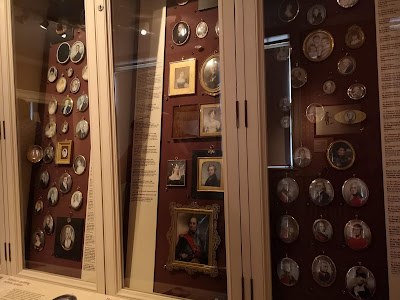
Miniatures cabinet, Kenwood (2019)
Miniature of Earl Grey in the Miniatures cabinet, Kenwood (2019)
Miniature of Earl Grey in the miniatures room, Kenwood (2019)
The bath house

The restored 18th century cold bath, Kenwood (2014)
Last visited March 2019.

Headshot of Rachel Knowles author with sea in background(2021)
Rachel Knowles writes clean/Christian Regency era romance and historical non-fiction. She has been sharing her research on this blog since 2011. Rachel lives in the beautiful Georgian seaside town of Weymouth, Dorset, on the south coast of England, with her husband, Andrew.

Find out more about Rachel's books and sign up for her newsletter here.

If you have enjoyed this blog and want to encourage me and help me to keep making my research freely available, please buy me a virtual cup of coffee by clicking the button below.

Sources used include:
Houliston, Laura and Jenkins, Susan, Kenwood, The Iveagh Bequest (English Heritage, 2014)

All photos © RegencyHistory.net

Monday, 8 July 2013

Wellington's victory arch

Wellington Arch, Hyde Park Corner, London
Wellington Arch, Hyde Park Corner, London (2013)
The Wellington Arch

The Wellington Arch is a victory arch, celebrating the Duke of Wellington’s defeat of Napoleon. It stands in the middle of the Hyde Park Corner roundabout opposite to Apsley House, Wellington’s London residence.

The Green Park arch

The arch was originally planned as a grand gateway to Buckingham Palace. A design by Decimus Burton was approved as part of a scheme to improve the royal parks. The arch could not straddle the road as this would limit the width of the carriageway and cause congestion. So when it was built in 1825-7, the 'Green Park Arch' was placed on one side of the road, providing an entrance into Green Park, whilst a screen of pillars was placed on the opposite side of the road, providing an entrance into Hyde Park.

Design for the Green Park Arch  from Illustrations of the public buildings  of London by WH Leeds (1838)
Design for the Green Park Arch
from Illustrations of the public buildings
of London by WH Leeds (1838)
A sculpture of a quadriga – an ancient four-horsed chariot - was originally planned for the top, but the building works went over budget and so the sculpture was never built.

The controversial equestrian statue of Wellington 

The Triumphal Arch near Hyde Park from Constitution Hill  with large equestrian statue of the Duke of Wellington on top  Wood engraving, prob by E Landells,  from Illustrated London News 15 August 1846  © The Trustees of the British Museum
The Triumphal Arch near Hyde Park from Constitution Hill
with large equestrian statue of the Duke of Wellington on top
Wood engraving, prob by E Landells,
from Illustrated London News 15 August 1846
© The Trustees of the British Museum
During the 1830s, the Wellington Memorial Committee was formed. They wanted a fitting monument to the hero of Waterloo and thought that an equestrian statue of Wellington on top of Green Park Arch, which stood near to the Duke’s home, Apsley House, would be a suitable monument. The committee pushed through its plans and, in 1846, a huge statue of Wellington on his horse, sculpted by Matthew Cotes Wyatt, was placed on the top of the arch. The decision was widely controversial and the size of the statue was ridiculed by the cartoonists of the day as being oversized.

The Triumphal Arch near Hyde Park with large  equestrian statue of the Duke of Wellington on top  Wood engraving, prob by WJ Linton,  from Illustrated London News 21 November 1846  © The Trustees of the British Museum
The Triumphal Arch near Hyde Park with large
equestrian statue of the Duke of Wellington on top
Wood engraving, prob by WJ Linton,
from Illustrated London News 21 November 1846
© The Trustees of the British Museum
The government insisted that the statue should be taken down, but when Wellington declared that he would resign if they removed it, they backed down.

Constitution Arch 

In 1883-5, the statue was taken down so that the arch could be moved to its current position at the top of Constitution Hill to allow the widening of the carriageway. One side of the arch became a park-keeper’s residence whilst the other was used as a police station.

The equestrian statue of Wellington was not replaced and the arch stood empty for many years. The original equestrian statue of Wellington was moved to a new plinth near the Garrison Church in Aldershot.

The quadriga

In 1891, Adrian Jones, a sculptor, exhibited a model of a quadriga named Triumph at the Royal Academy exhibition. It was decided that this would make a fitting sculpture for the top of the arch. The resulting bronze statue of the Angel of Peace descending on the quadriga of war was mounted on the arch in 1911-12.

The Angel of Peace descending on the quadriga of war  on top of the Wellington Arch
The Angel of Peace descending on the quadriga of war
on top of the Wellington Arch (2013)
The Wellington Arch today

In the 1960s, further road improvements led to the creation of the Hyde Park Corner roundabout. The Wellington Arch became isolated in the centre of this roundabout.

Today, the Wellington Arch is in the care of English Heritage and it is possible to climb up inside it and obtain views of Apsley House and the surrounding area of London.

Headshot of Rachel Knowles author with sea in background(2021)
Rachel Knowles writes clean/Christian Regency era romance and historical non-fiction. She has been sharing her research on this blog since 2011. Rachel lives in the beautiful Georgian seaside town of Weymouth, Dorset, on the south coast of England, with her husband, Andrew.

Find out more about Rachel's books and sign up for her newsletter here.

If you have enjoyed this blog and want to encourage me and help me to keep making my research freely available, please buy me a virtual cup of coffee by clicking the button below.


Sources used include:
Leeds, William Henry, Illustrations of the public buildings of London (1838)

English Heritage webpage on the Wellington Arch

Photographs © RegencyHistory.net

Tuesday, 2 July 2013

Apsley House, home of the Duke of Wellington

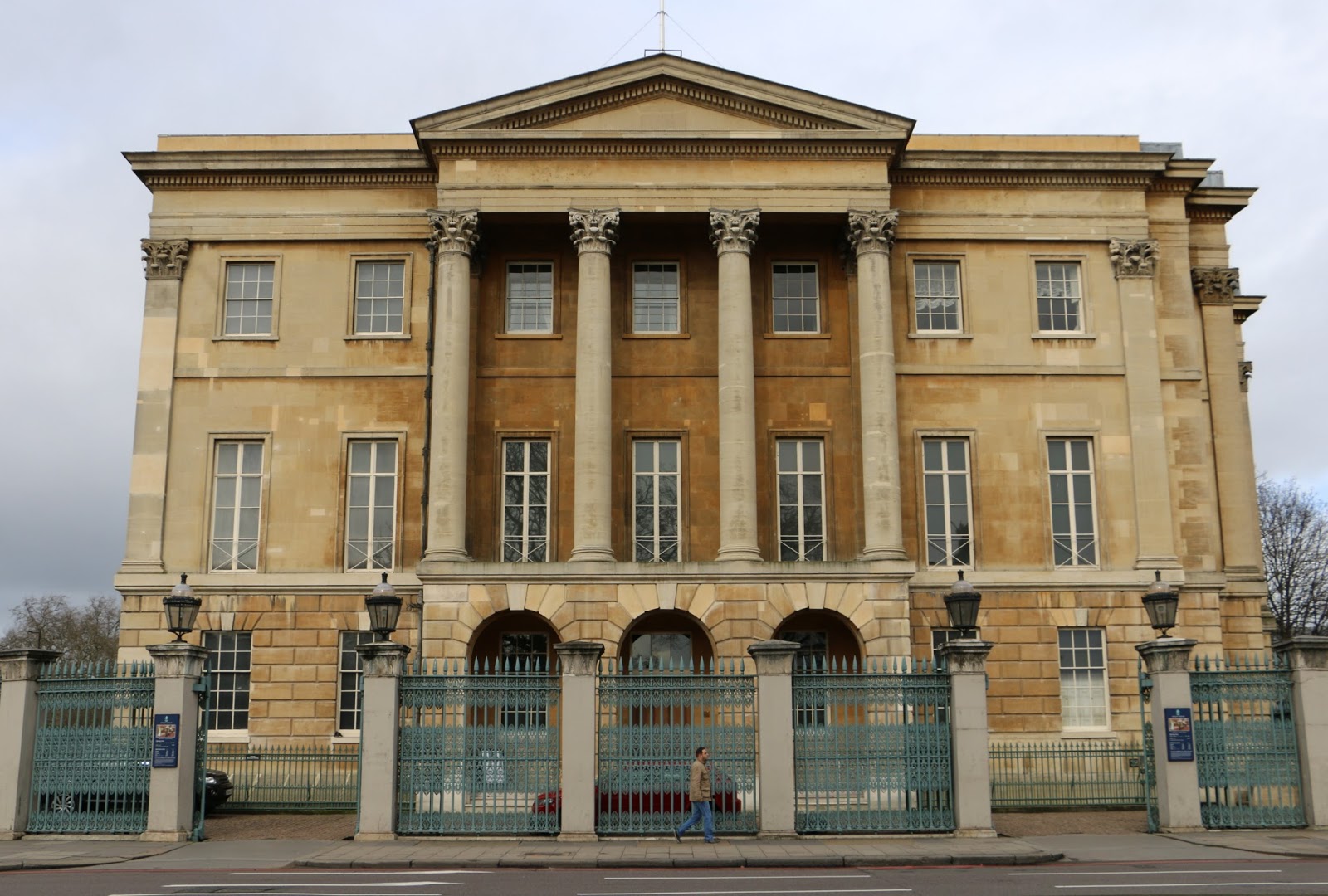
Apsley House, London (2017)
Apsley House - No. 1 London

Apsley House is situated near Hyde Park Corner, London. It was the London residence of Arthur Wellesley, 1st Duke of Wellington, and was popularly known as No. 1 London because it was the first house to be reached after passing through the toll gate at Knightsbridge by people coming into London.
A family acquisition

Apsley House in 1800 from Old and New London by E Walford (1873)
Built by Robert Adam in the 1770s for Baron Apsley, from whom the house derives its name, Apsley House was bought by Richard Wellesley, Marquess Wellesley, in 1807. He sold it in 1817 to his younger brother, the Duke of Wellington, who purchased it for the generous sum of £40,000 out of the grant given him by parliament in honour of his military victories.

Richard, Marquess Wellesley  from The History of White's  by A Bourke (1892)
Richard, Marquess Wellesley
from The History of White's
by A Bourke (1892)
A display home

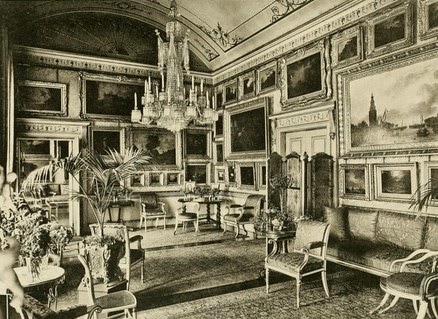
After the Duke’s successes in the Napoleonic wars, and particularly at the Battle of Waterloo, many foreign heads of state honoured him with a variety of gifts which demonstrated the best workmanship of the time. The Duke wanted to display these treasures and had many cabinets specially made to house his magnificent collection. These still form the museum room in Apsley House.

Piccadilly Room, Apsley House,  from Private Palaces of London by EB Chancellor (1908)
Piccadilly Room, Apsley House,
from Private Palaces of London by EB Chancellor (1908)
Napoleon's statue and the porter's chair

In the entrance hall stands a black hooded chair, where the porter could sit all day, waiting in case he was needed to answer the door, shielded from draughts by the chair’s hood.

At the foot of the grand staircase is a huge marble statue of Napoleon by Canova.

The Waterloo Gallery

Wellington extended Apsley House, using Benjamin Wyatt as his architect. As part of the extensions, the Duke had a long gallery built on the first floor where he could display some of his art collection and hold balls – the Waterloo Gallery. It became the venue for the annual Waterloo Banquets from 1830, allowing him to invite more guests than before because of its grand dimensions.

No doubt influenced by the Hall of Mirrors at Versailles, the Waterloo Gallery was built with windows down the whole length of one side which had sliding mirror panels which could be drawn across them at night reflecting the candlelight back into the room.

Waterloo Gallery, Apsley House,  from Private Palaces of London by EB Chancellor (1908)
Waterloo Gallery, Apsley House,
from Private Palaces of London by EB Chancellor (1908)
Night attack

Apsley House had its windows broken twice by rioters. On the first occasion, in April 1831, households had been called upon to light their windows to show their support of the Reform Bill, which Wellington opposed. Apsley House was dark because the Duke was away arranging the funeral of his wife, Kitty (née Pakenham), who had died on 24 April. Whilst her body still lay within its walls, the house was attacked by rioters who ruthlessly smashed its windows until a servant went up on the roof and fired a gun into the air to disperse the demonstrators.

After the attacks, the Duke had iron shutters fitted to his windows and it is thought that this gave rise to the popular nickname of the ‘Iron Duke’.
Arthur Wellesley, 1st Duke of Wellington,  from Life of Field Marshal, his Grace the Duke of Wellington by JE Alexander (1840)
Arthur Wellesley, 1st Duke of Wellington,
from Life of Field Marshal, his Grace the Duke of Wellington
by JE Alexander (1840)
Apsley House today

Apsley House and much of its contents were given to the nation by the seventh Duke and the house is currently maintained by English Heritage. It remains the residence of the Dukes of Wellington today.

Headshot of Rachel Knowles author with sea in background(2021)
Rachel Knowles writes clean/Christian Regency era romance and historical non-fiction. She has been sharing her research on this blog since 2011. Rachel lives in the beautiful Georgian seaside town of Weymouth, Dorset, on the south coast of England, with her husband, Andrew.

Find out more about Rachel's books and sign up for her newsletter here.

If you have enjoyed this blog and want to encourage me and help me to keep making my research freely available, please buy me a virtual cup of coffee by clicking the button below.


Sources used include:
Alexander, James Edward, Life of Field Marshal, his Grace the Duke of Wellington (1840)
Gash, Norman, Wellesley, Arthur, 1st Duke of Wellington, (1769-1852), Oxford Dictionary of National Biography (Oxford University Press, 2004; online edn Jan 2011, accessed 2 Jul 2013)
Walford, Edward, Old and New London: A narrative of its history, its people, and its places (Cassell, Petter & Galpin, 1873, London) Vol 4

English Heritage audio tour of Apsley House
English Heritage webpage on Apsley House


Photographs © RegencyHistory.net