Search this blog

Showing posts with label Sir Joshua Reynolds. Show all posts

Wednesday, 3 June 2015

Georgians celebrated in London statues

Trafalgar Square, London
Although I live down by the sea in sunny Weymouth in Dorset, I am fortunate to have the opportunity to visit London on a regular basis as my parents live a short train journey away from the capital. Walking through the streets of London, I always try to spot things with a Georgian connection and my husband, Andrew, obligingly takes lots of photos for me.

This post takes a look at some of the statues in London that commemorate Georgian royalty and other prominent figures. It is by no means an exhaustive list and no doubt I will discover more in the future.

George III and George IV

Let us start with royalty. There are impressive equestrian statues in London of both George III (1738-1820) and George IV (1762-1830) situated within a short distance of each other. George III, by the sculptor Matthew Cotes Wyatt, is on Cockspur Street—a two minute walk away from Sir Francis Legatt Chantrey’s statue in Trafalgar Square, where George IV sits astride his horse in front of the National Gallery.

Equestrian statue of George III, Cockspur Street, London
Equestrian statue of George III,
Cockspur Street, London
Equestrian statue of George III, Cockspur Street, London
Equestrian statue of George III,
Cockspur Street, London
Equestrian statue of George IV, Trafalgar Square, London
Equestrian statue of George IV,
Trafalgar Square, London
Detail from equestrian statue of George IV, Trafalgar Square, London
Detail from equestrian statue of George IV,
Trafalgar Square, London
Two commemorative columns

At the top of his column in Trafalgar Square is the famous naval hero of the Battle of Trafalgar, Admiral Horatio Lord Nelson (1758-1805). But perhaps lesser known is the Duke of York column, just off The Mall, supporting a statue of Frederick, Duke of York (1763-1827), George III’s second son, who was Commander in Chief of the British Army 1795-1809 and 1811-1827.

Nelson's Column, Trafalgar Square, London
Statue of Admiral Horatio Lord Nelson on Nelson's Column, Trafalgar Square, London
Statue of Admiral Horatio Lord
 Nelson on Nelson's Column,
 Trafalgar Square, London
Duke of York Column, The Mall, London
Duke of York Column,
The Mall, London
Statue of Frederick, Duke of York, at top of Duke of York Column, The Mall, London
Statue of Frederick, Duke of York,
on Duke of York Column, The Mall, London
Artists and architects

Appropriately, there is a statue of Sir Joshua Reynolds (1723-1792), the first President of the Royal Academy, in the courtyard of Burlington House on Piccadilly, home to the Royal Academy since 1874.

Statue of Sir Joshua Reynolds, Burlington House, Piccadilly, London
Statue of Sir Joshua Reynolds,
Burlington House, Piccadilly, London
On the outside of the Royal Society of Painters in Watercolours on Piccadilly, you can see the busts of famous artists including JMW Turner (1775-1851) and Paul Sandby (1731-1809), one of the founder members of the Royal Academy.

Bust of Turner, Piccadilly, London
Bust of JMW Turner, Piccadilly, London
Bust of Paul Sandby, Piccadilly, London
In 1956, a bust of the architect John Nash (1752-1835) was erected outside All Souls Langham Place—a church that he had designed.

Bust of John Nash, outside All Souls Langham Place, London
Bust of John Nash, outside
All Souls Langham Place, London
Fashionable Regency figures remembered

The statue of Beau Brummell (1778-1840) on Jermyn Street is relatively new—it was only erected in 2002. It seems a fitting site for Beau—looking down the Piccadilly Arcade with its superior shops selling everything for the gentleman of fashion, from made-to-measure suits and footwear to jewellery and grooming products.

Statue of Beau Brummell, Jermyn Street, London
Statue of Beau Brummell,
Jermyn Street, London
Statue of Beau Brummell, Jermyn Street, London
Statue of Beau Brummell,
Jermyn Street, London
Statue of Beau Brummell, Jermyn Street, London
Statue of Beau Brummell,
Jermyn Street, London
The famous Romantic poet, Lord Byron (1788-1824), is commemorated by a somewhat isolated statue in a very unromantic position on a traffic island on the hugely busy Park Lane.

Statue of Lord Byron, Park Lane, London
An economist and an explorer

Adam Smith (1723-1790) was a Scottish economist and philosopher. He wrote The Wealth of Nations in 1776—it was still on the reading list when I studied economics at university! You can find his statue on the rear of Burlington House.

Statue of Adam Smith, Burlington House, Piccadilly, London
Statue of Adam Smith,
Burlington House, Piccadilly, London
Captain James Cook (1728-1779) was a naval captain, explorer and cartographer. His statue was erected on The Mall in 1914.

Statue of Captain James Cook, The Mall, London
Statue of Captain James Cook,
The Mall, London
Politicians

An equestrian statue of Arthur Wellesley, 1st Duke of Wellington (1769-1852), military hero of the Battle of Waterloo and British Prime Minister stands on Threadneedle Street, outside the Bank of England.

Equestrian statue of 1st Duke of Wellington, Threadneedle Street, London
Equestrian statue of 1st Duke of Wellington,
Threadneedle Street, London
Equestrian statue of 1st Duke of Wellington, Threadneedle Street, London
Equestrian statue of 1st Duke of Wellington,
Threadneedle Street, London
Another Georgian Prime Minister, George Canning (1770-1827), stands in Parliament Square along with several of his successors, including Sir Robert Peel (1788-1850).

George Canning, Parliament Square, London
Sir Robert Peel, Parliament Square, London
Sir Robert Peel,
Parliament Square, London
A statue of the Whig politician Charles James Fox (1749-1806) stands in Bloomsbury Square Gardens. He holds a copy of the Magna Carta in his hand, signifying his role as the 'Man of the People'.

Statue of Charles James Fox, Bloomsbury Square, London
Statue of Charles James Fox,
Bloomsbury Square, London
A philanthropist and an evangelical

Thomas Coram (1668-1751) set up the Foundling Hospital in 1741. His statue is outside the Foundling Museum on Brunswick Square, London.

Statue of Thomas Coram, Brunswick Square, London
Statue of Thomas Coram,
Brunswick Square, London
John Wesley (1703-1791) was an evangelical Anglican minister who, together with his brother Charles and George Whitefield, founded the Methodist movement. His statue stands in the gardens of St Paul’s Cathedral.

Statue of John Wesley, outside St Paul's Cathedral, London
Statue of John Wesley,
outside St Paul's Cathedral, London

Headshot of Rachel Knowles author with sea in background(2021)
Rachel Knowles writes clean/Christian Regency era romance and historical non-fiction. She has been sharing her research on this blog since 2011. Rachel lives in the beautiful Georgian seaside town of Weymouth, Dorset, on the south coast of England, with her husband, Andrew.

Find out more about Rachel's books and sign up for her newsletter here.

If you have enjoyed this blog and want to encourage me and help me to keep making my research freely available, please buy me a virtual cup of coffee by clicking the button below.

 
All photographs © RegencyHistory.net

Saturday, 21 March 2015

Joshua Reynolds: Experiments in Paint – exhibition at the Wallace Collection

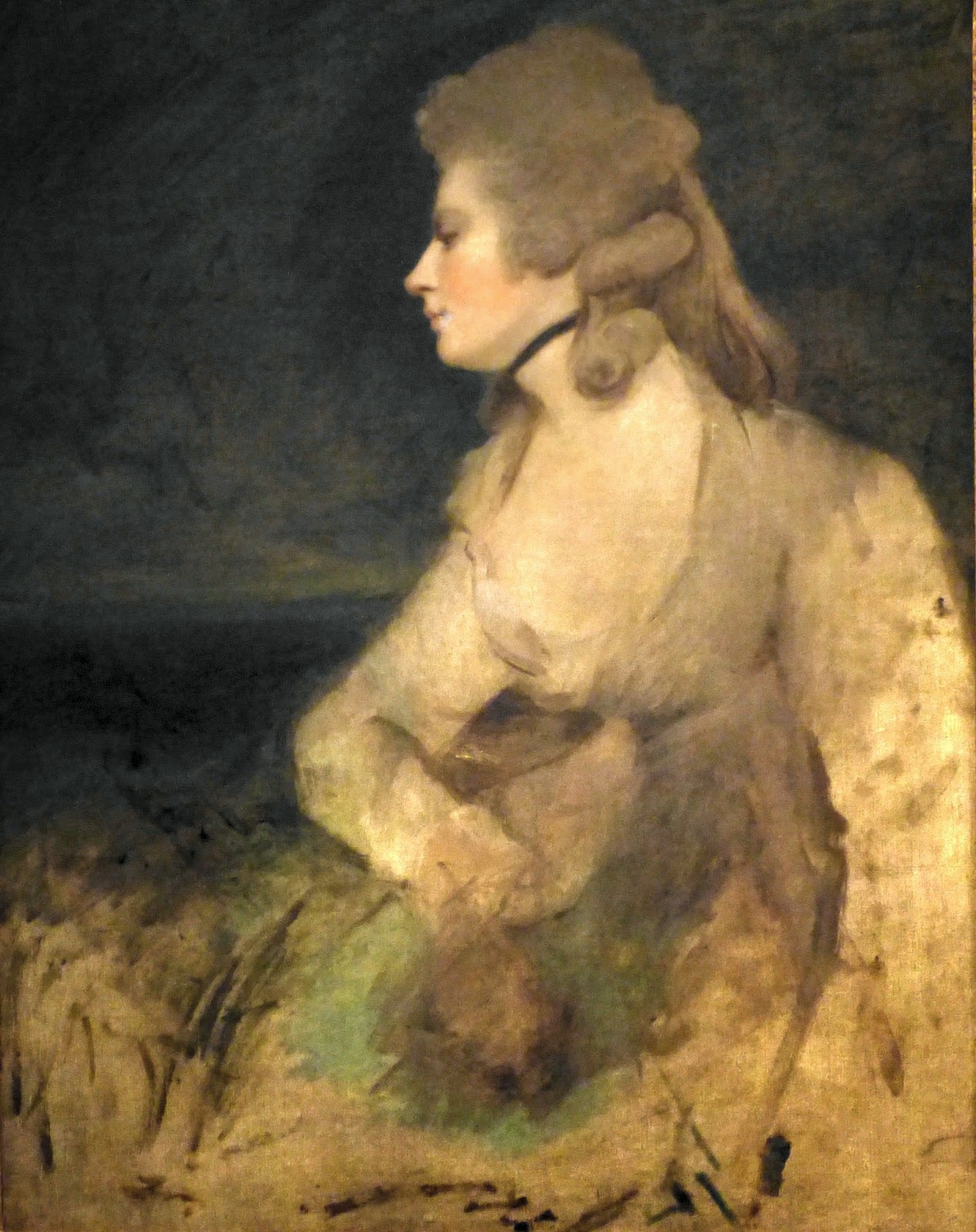
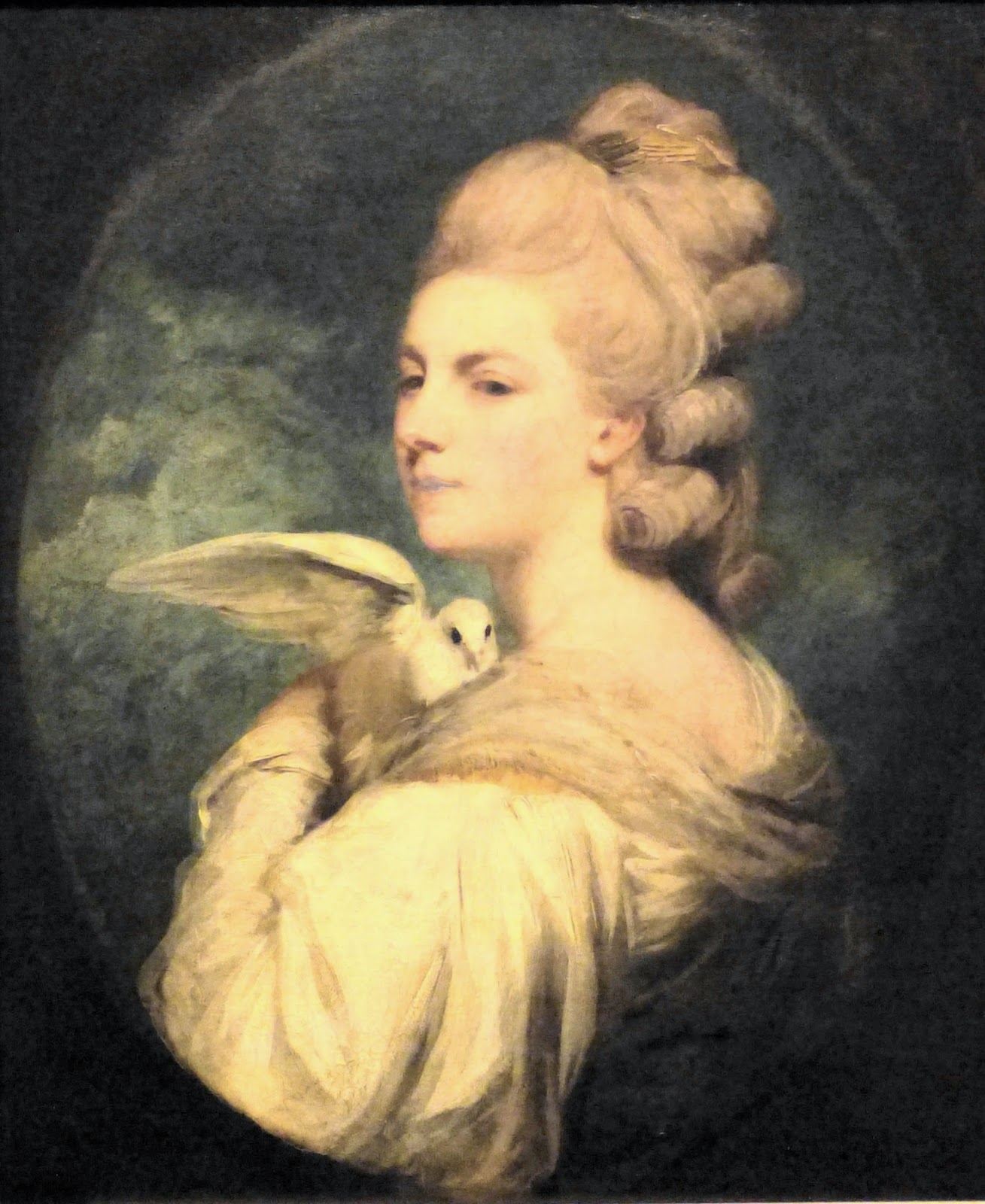
Mrs Mary Robinson by Sir Joshua Reynolds (1783-4)  © The Wallace Collection; Photo © Andrew Knowles
Mrs Mary Robinson by Sir Joshua Reynolds (1783-4)
© The Wallace Collection; Photo © Andrew Knowles
Last week, I visited a relatively little known museum, the Wallace Collection, for a special bloggers’ event to celebrate the opening of a new exhibition: Joshua Reynolds: Experiments in Paint. The exhibition runs ended on 7 June 2015 and comprised two rooms displaying 20 Reynolds paintings – 11 belonging to the Wallace Collection and the remainder on loan.

Here is a short video of the exhibition:


Popular and experimental

Sir Joshua Reynolds (1723-1792) was a very fashionable portrait painter during the second half of the 18th century and the first President of the Royal Academy.

The exhibition is the culmination of a four-year research project into the Reynolds paintings owned by the Wallace. Using various techniques including X-ray and infrared imaging, the paintings have been investigated by experts at the Wallace with advice from the National Gallery and the Yale Center for British Art.

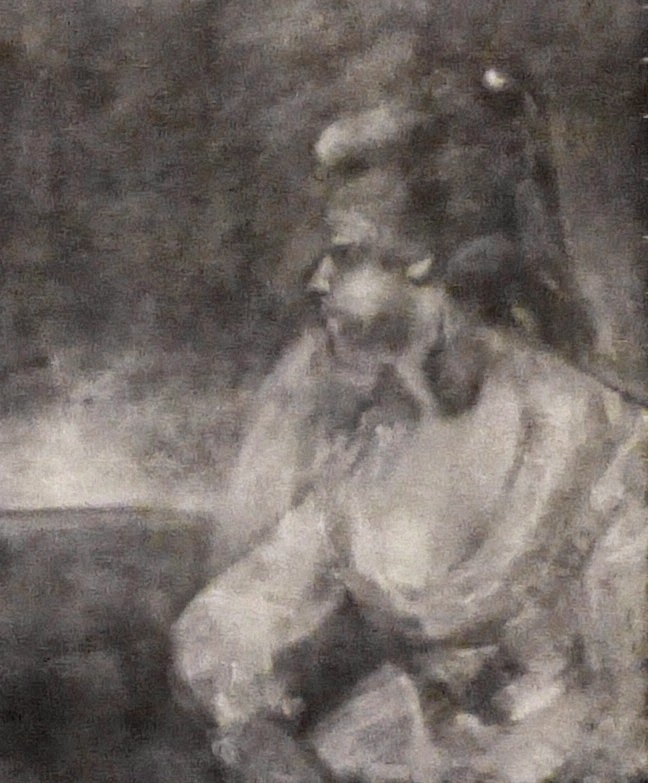
X-ray image of the portrait of Mary Robinson shown   above.
X-ray image of the portrait of Mary Robinson shown
above. The X-ray shows that Mary's hand was
originally painted supporting her chin
Photo © Andrew Knowles
The research has given new insights into the way that Reynolds painted. Some of the images produced during the research are on display alongside the actual paintings. These reveal earlier details, from the position of Mary's hand, shown above, to old paintings that have been painted over.

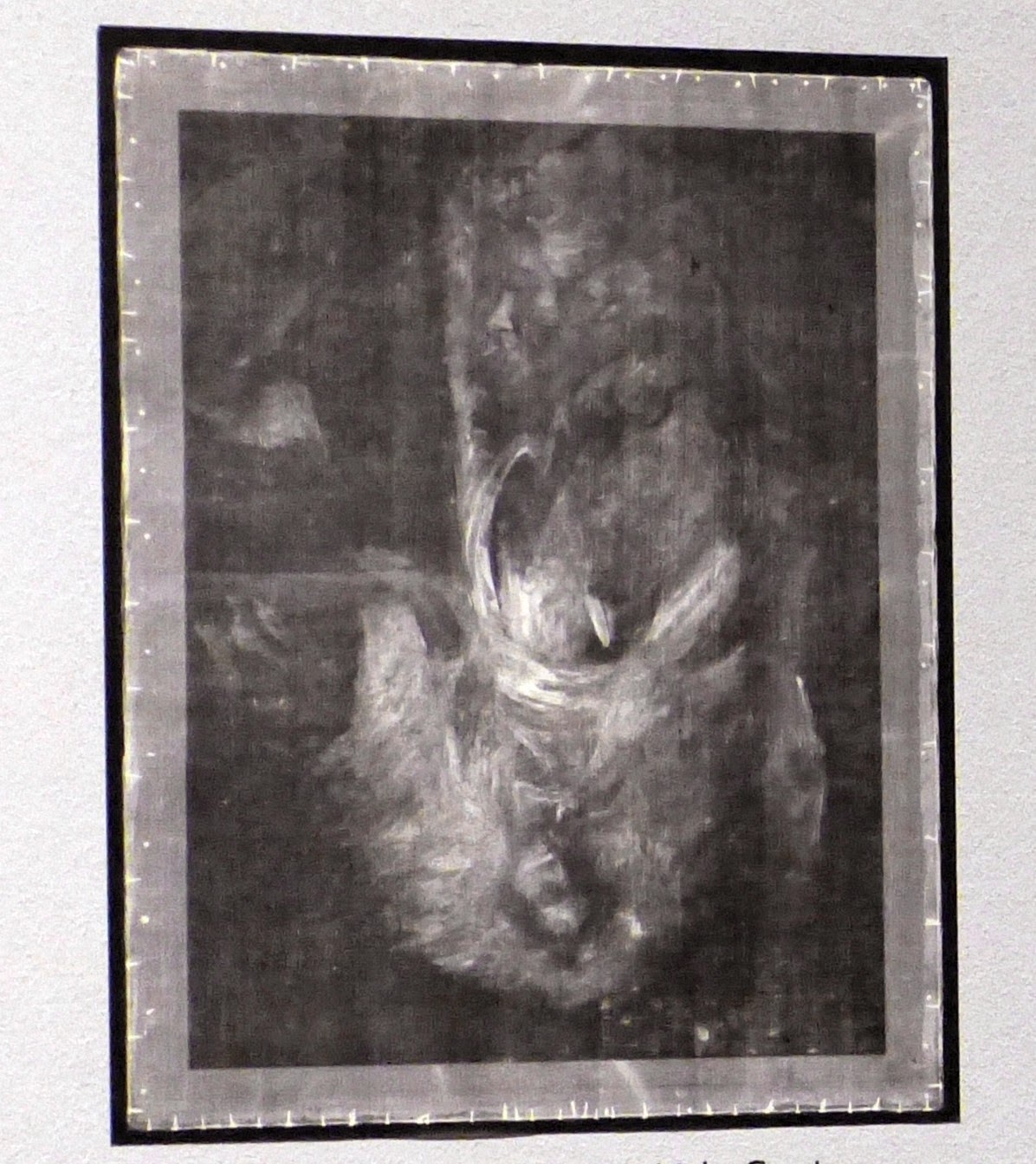
The X-ray image of the Yale Center's portrait of Mary Robinson shown below reveals that the painting was not Reynold’s first attempt, but that underneath the existing painting is another, earlier painting, upside down.

X-ray image of the Yale Center's portrait of Mary   Robinson shown below.
X-ray image of the Yale Center's portrait of Mary
Robinson shown below. The X-ray shows another
portrait that has been painted over.
Photo © Andrew Knowles
Early paintings

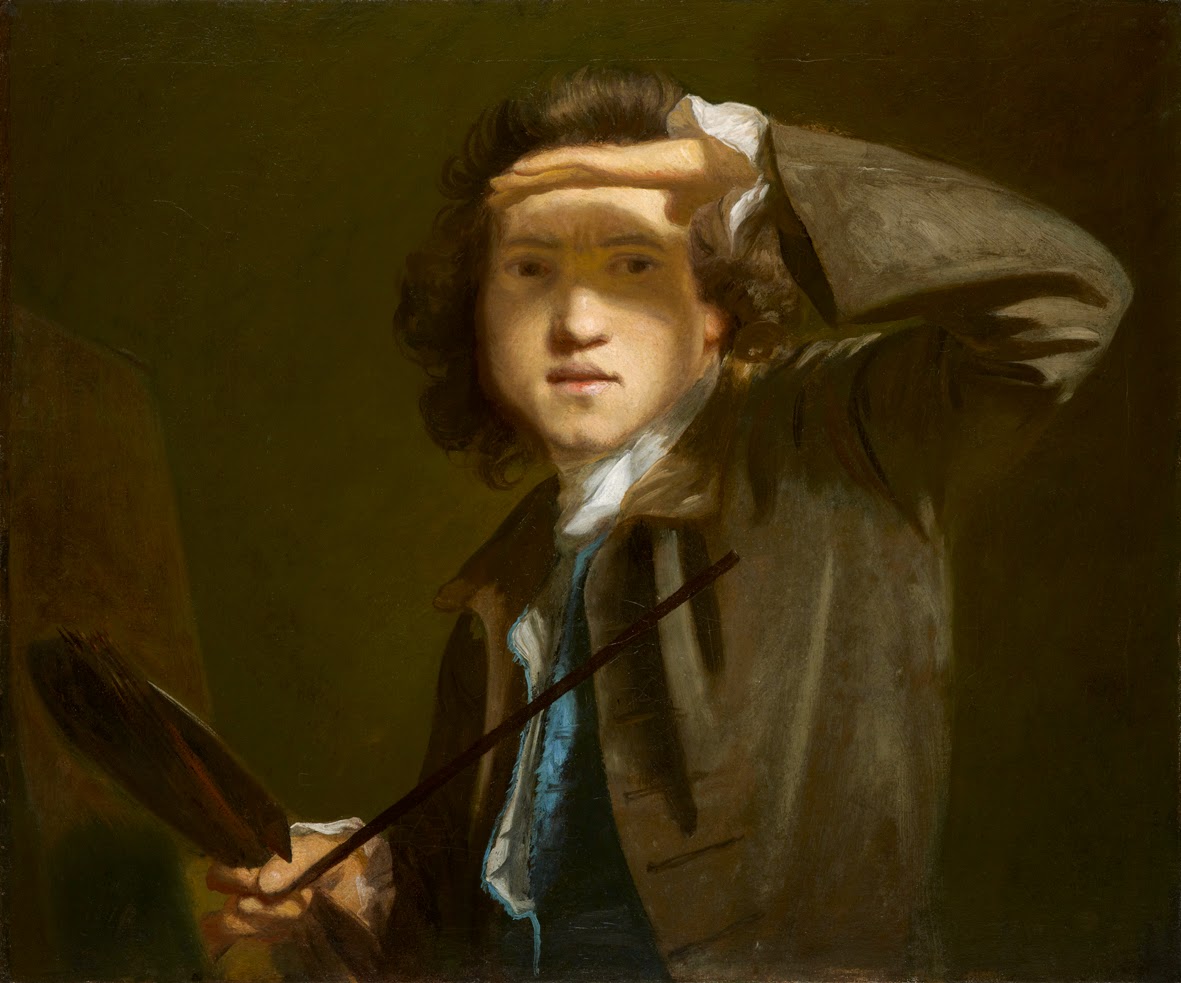
The paintings on display include some of Reynold's earliest work such as his self-portrait, painted c1747-9, before he went on the Grand Tour and a canvas entitled Studio Experiments in Colour and Media.

Self-portrait by Sir Joshua Reynolds (1747-9)  © The National Portrait Gallery, London
Self-portrait Shading the Eyes by Sir Joshua Reynolds (1747-9)
© The National Portrait Gallery, London
Studio Experiments in Colour and Media © Royal Academy of Arts, London
Studio Experiments in Colour and Media
© Royal Academy of Arts, London
Fancy paintings

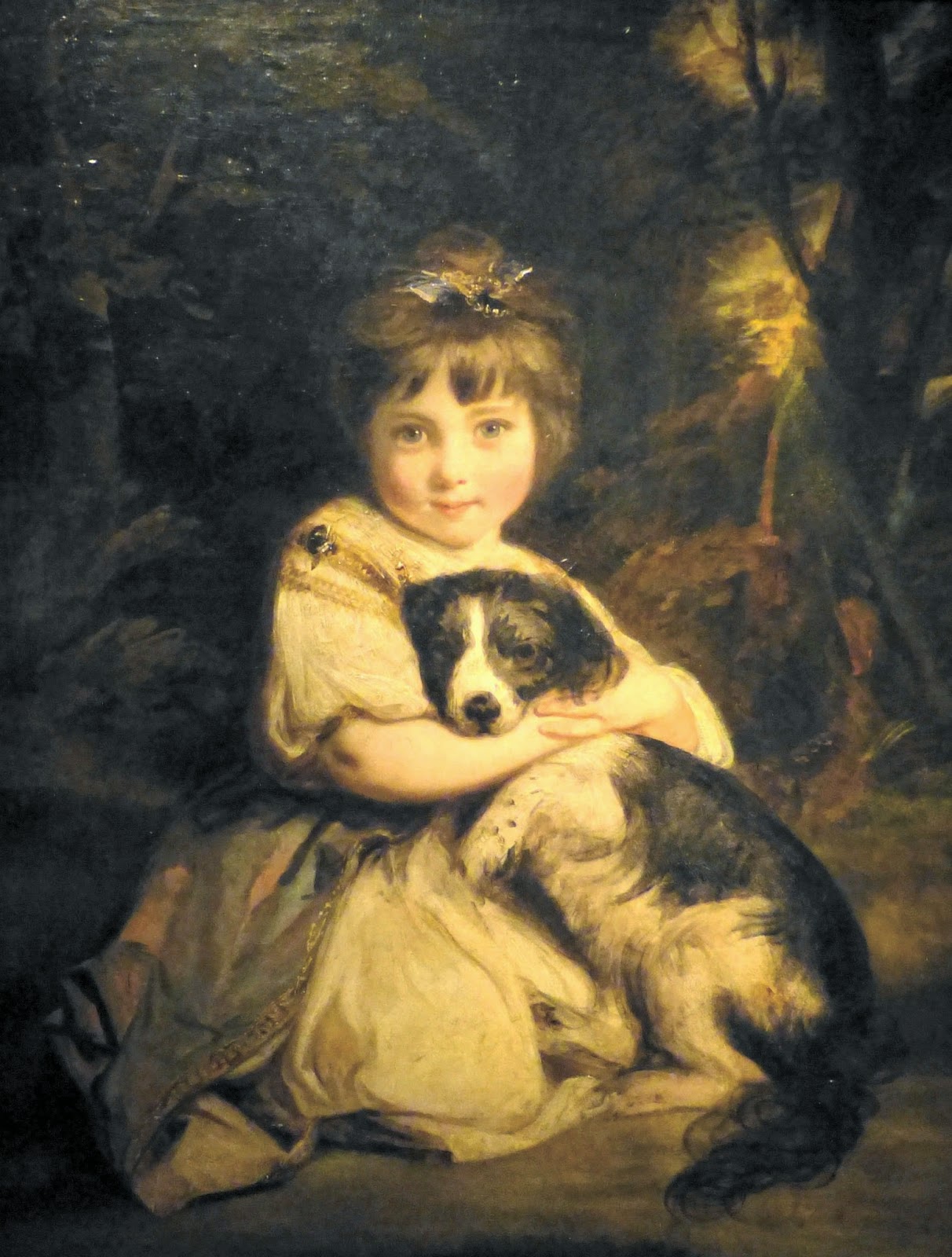
The exhibition includes a number of fancy paintings – imaginative paintings of people, representing ideas rather than intended as portraits. These include The Strawberry Girl and The Age of Innocence.

The Strawberry Girl by Sir Joshua Reynolds (1772-3)  © The Wallace Collection; Photo © Andrew Knowles
The Strawberry Girl by Sir Joshua Reynolds (1772-3)
© The Wallace Collection; Photo © Andrew Knowles
The Age of Innocence by Sir Joshua Reynolds (1788)  © The Tate; Photo © Andrew Knowles
The Age of Innocence by Sir Joshua Reynolds (1788)
© The Tate; Photo © Andrew Knowles
Portraits

I particularly liked the two paintings of Mary Robinson, probably because she is the character with whom I am most familiar. The portrait owned by the Wallace Collection is shown at the top of this blog post and is very similar to that owned by the Yale Center for British Art (shown below) although this latter portrait is less finished.

Mrs Mary Robinson by Sir Joshua Reynolds (1783-5)  © The Yale Center for British Art, Paul Mellon Collection  Photo © Andrew Knowles
Mrs Mary Robinson by Sir Joshua Reynolds (1783-5)
© The Yale Center for British Art, Paul Mellon Collection
Photo © Andrew Knowles
4th Duke of Queensbury (Old Q)   by Sir Joshua Reynolds (1759)  © The Wallace Collection; Photo © Andrew Knowles
4th Duke of Queensbury ('Old Q') as Earl of March
by Sir Joshua Reynolds (1759)
© The Wallace Collection; Photo © Andrew Knowles
Miss Jane Bowles by Sir Joshua Reynolds (1775)  © The Wallace Collection; Photo © Andrew Knowles
Miss Jane Bowles by Sir Joshua Reynolds (1775)
© The Wallace Collection; Photo © Andrew Knowles
Miss Nelly O'Brien by Sir Joshua Reynolds (c1762-4)  © The Wallace Collection; Photo © Andrew Knowles
Miss Nelly O'Brien by Sir Joshua Reynolds (c1762-4)
© The Wallace Collection; Photo © Andrew Knowles
There is a second portrait of Miss Nelly O'Brien and a lovely portrait of Miss Kitty Fisher which were on loan and could not be photographed.

Mrs Susanna Hoare and Child
by Sir Joshua Reynolds (c1763-4)
© The Wallace Collection; Photo © Andrew Knowles
Mrs Mary Nesbitt by Sir Joshua Reynolds (c1781)  © The Wallace Collection; Photo © Andrew Knowles
Mrs Mary Nesbitt by Sir Joshua Reynolds (c1781)
© The Wallace Collection; Photo © Andrew Knowles
Reynolds sometimes depicted his sitters in character, such as Mrs Abington as Miss Prue in Love for Love by William Congreve (below).

Mrs Abington as Miss Prue by Sir Joshua Reynolds (1771)  © The Yale Center for British Art, Paul Mellon Collection  Photo © Andrew Knowles
Mrs Abington as Miss Prue by Sir Joshua Reynolds (1771)
© The Yale Center for British Art, Paul Mellon Collection
Photo © Andrew Knowles
The Wallace Collection is in Hertford House in Manchester Square, London and is open every day from 10am to 5pm. Admission to the museum is free.

Headshot of Rachel Knowles author with sea in background(2021)
Rachel Knowles writes faith-based Regency romance and historical non-fiction. She has been sharing her research on this blog since 2011. Rachel lives in the beautiful Georgian seaside town of Weymouth, Dorset, on the south coast of England, with her husband, Andrew.

Find out more about Rachel's books and sign up for her newsletter here.

If you have enjoyed this blog and want to encourage me and help me to keep making my research freely available, please buy me a virtual cup of coffee by clicking the button below.

Thursday, 21 August 2014

Mount Edgcumbe – a Regency History guide

Mount Edgcumbe
Mount Edgcumbe (2014)
Where is it?

Mount Edgcumbe is a Tudor mansion in South East Cornwall.

History

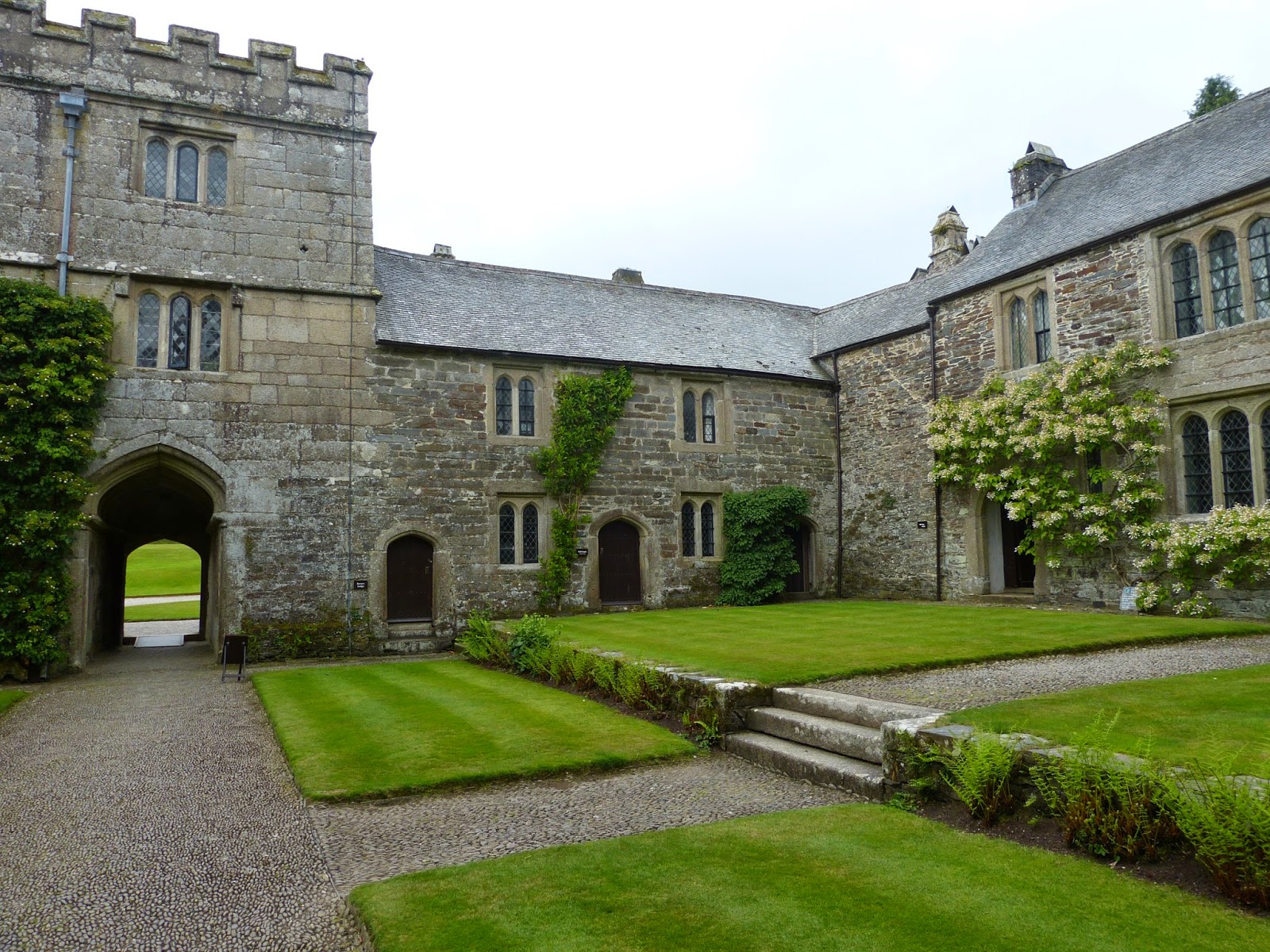
In 1515, Henry VIII granted permission to Sir Piers Edgcumbe to enclose a deer park on his land on a peninsula in South East Cornwall. His son, Sir Richard Edgcumbe, built Mount Edgcumbe House on this land between 1547 and 1553 and moved there from his previous home, Cotehele.

The courtyard at Cotehele
Mount Edgcumbe was built according to a forward-thinking design for the time with the rooms constructed around a central hall rather than a courtyard and focused on looking outwards rather than inwards.

During the Second World War, Mount Edgcumbe was bombed; the west wing was destroyed and most of the contents were ravaged by fire. Between 1958 and 1964, it was rebuilt in 18th century style by the 6th Earl, but in 1971, the house and surrounding area was sold for use as a country park. The property was bought by Cornwall and Plymouth City Councils and operates today under their joint management.

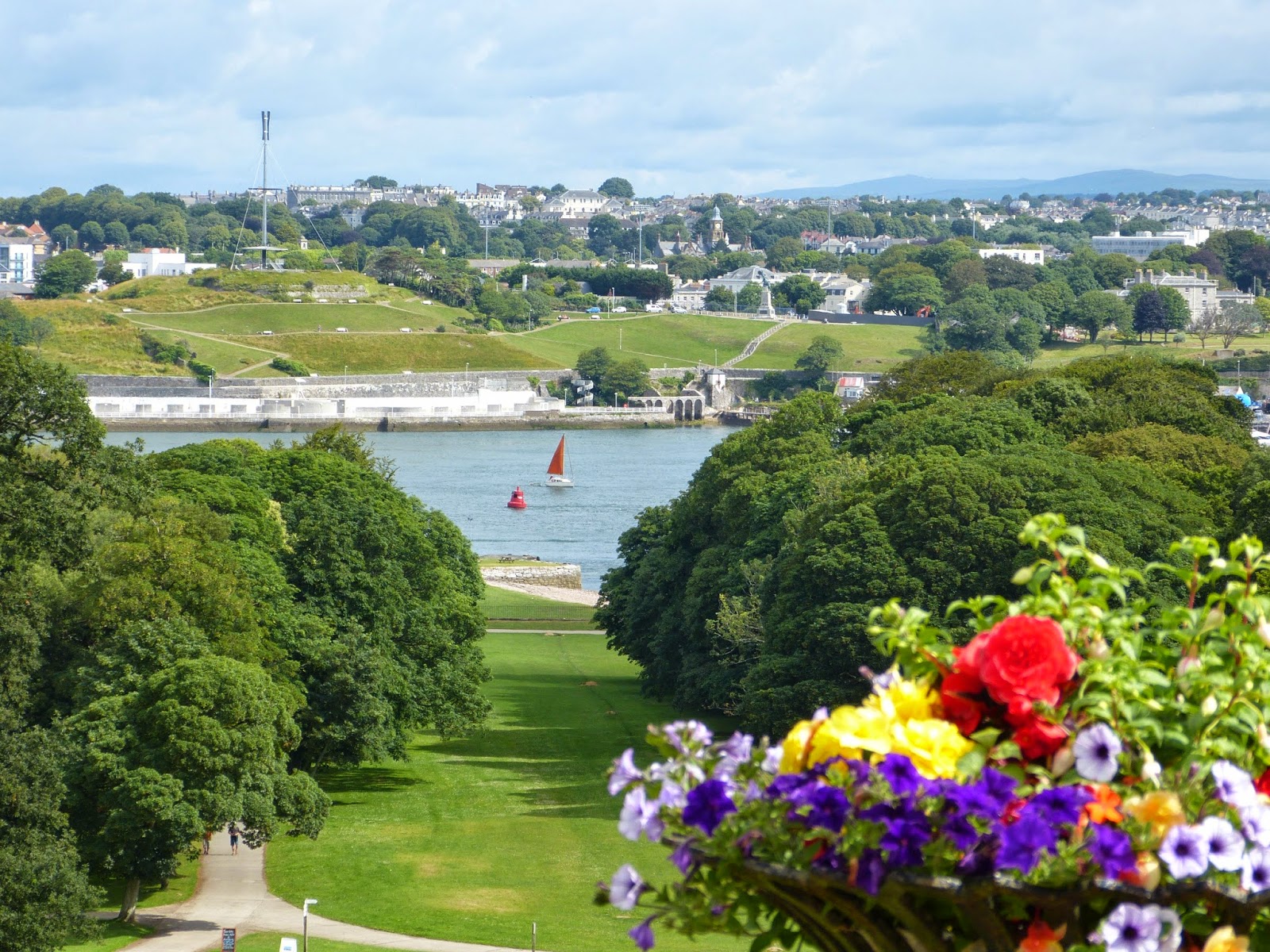
View from Mount Edgcumbe
The Georgian connection

Richard Edgcumbe, 1st Baron Edgcumbe (1680-1758)

Richard Edgcumbe was educated at Trinity College Cambridge and was a close friend of Robert Walpole. He was an active MP and held various offices, including Lord of the Treasury, Chancellor of the Duchy of Lancaster and Lord Lieutenant of Cornwall. He was made Baron Edgcumbe on 20 April 1742.

Richard was an early patron of Sir Joshua Reynolds and arranged for him to travel to Italy in 1749 to study art. Sir Joshua painted many portraits for the Edgcumbe family, but the majority of these were destroyed when Mount Edgcumbe was bombed.

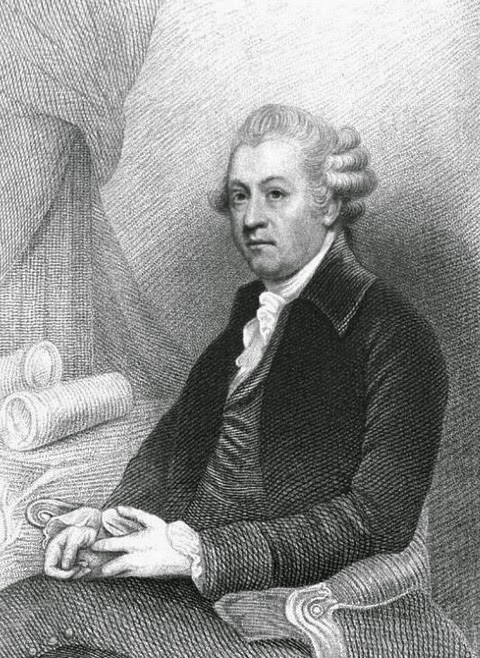
Sir Joshua Reynolds from The Literary Works of Sir Joshua Reynolds by HW Beechey (1852)
Sir Joshua Reynolds
from The Literary Works of Sir Joshua
Reynolds by HW Beechey (1852)
Richard has two sons, Richard and George:

Richard Edgcumbe, 2nd Baron Edgcumbe (1716-1761)

Richard, known as Dick, was a close friend of Horace Walpole and the black sheep of the family. He was witty and charming but an inveterate gambler. He kept a succession of mistresses rather than settling down with a wife and had four children with one of them, Mrs Ann Franks Day. It was perhaps his unsavoury reputation that led to his portrait not being on the wall when Mount Edgcumbe was bombed and so it survived.

Dick went on the Grand Tour for around seven years and reputedly brought back the first orange trees to Mount Edgcumbe.

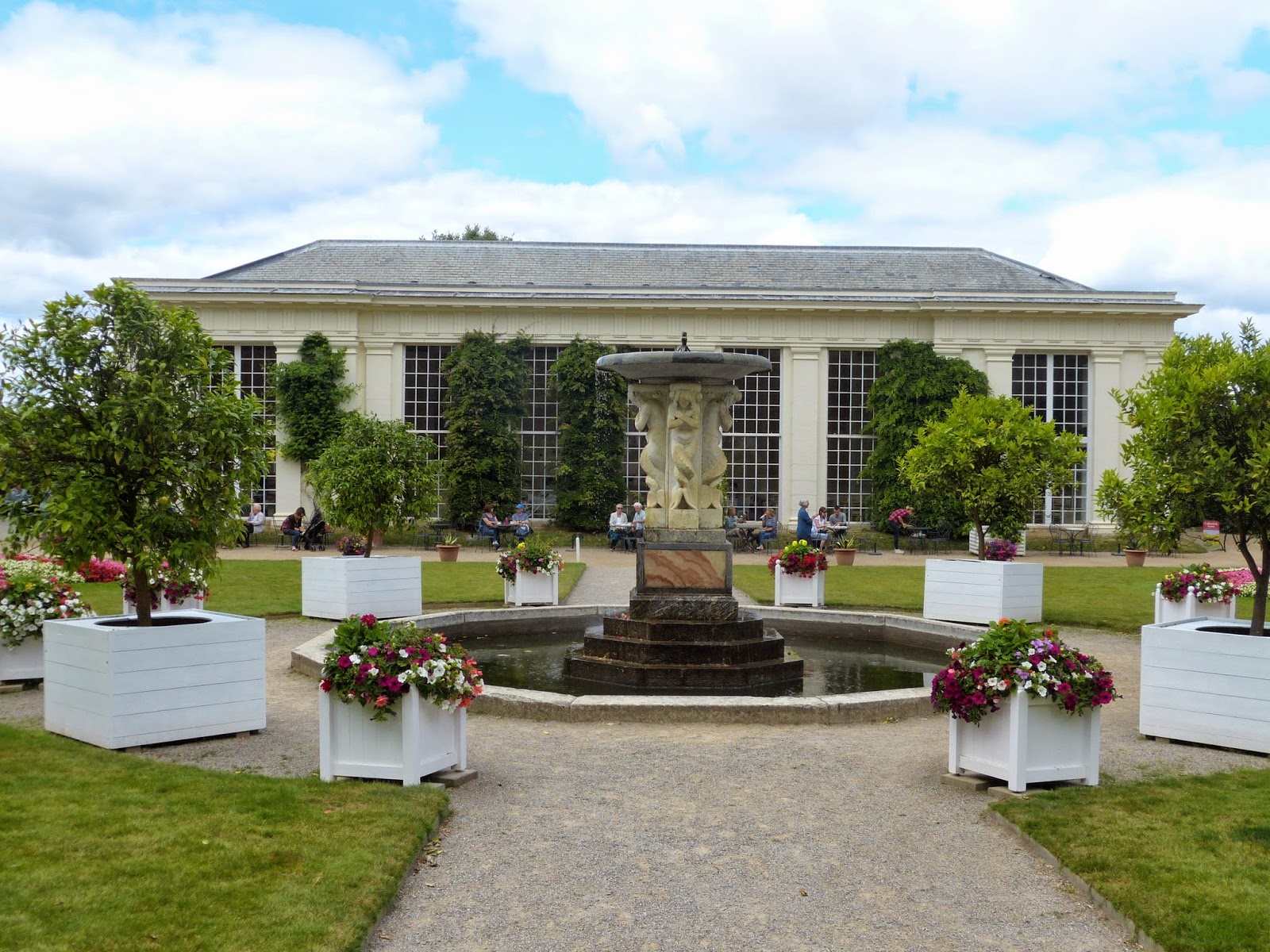
Italian garden with mermaid fountain and the Orangery
George Edgcumbe, 1st Earl of Mount Edgcumbe (1721-95)

George was among the first pupils to graduate from the Royal Naval College at Portsmouth and saw action at the Siege of Louisbourg (1758) and the Battle of Quiberon Bay (1759).

He succeeded his brother as Baron Edgcumbe in 1761 and married Emma Gilbert, the somewhat eccentric daughter of the Archbishop of York by whom he had one son, Richard. Emma was notorious for her card playing and for keeping a pet pig called Cupid who ate at her table. She was a popular target for caricaturists, most famously James Gillray in A witch, upon a mount’s edge (1791).

A witch, upon a mount's edge. - Vide: Fuzelli  by James Gillray Pub Hannah Humphrey (1791)  © British Museum
A witch, upon a mount's edge. - Vide: Fuzelli
by James Gillray Pub Hannah Humphrey (1791)
© British Museum
George was interested in antiquities and science and a patron of artists such as Sir Joshua Reynolds and John Opie. Many well-known people visited him at Mount Edgcumbe including Horace Walpole, Dr Johnson, Captain Cook, Sir Joshua Reynolds and David Garrick.

George III and Queen Charlotte visited Mount Edgcumbe in August 1789, during their stay at Saltram in Plymouth.

In 1780, George allowed more than a hundred trees to be felled to make room for a battery. He was rewarded by being made Viscount Mount Edgcumbe on 5 March 1781. After the King's visit, he was made Earl of Mount Edgcumbe on 31 August 1789.

Richard Edgcumbe, 2nd Earl of Edgcumbe (1764-1839)

Richard was an active MP, supporting the government of William Pitt. In 1789, he gained the courtesy title of Viscount Valletort when his father was made Earl of Mount Edgcumbe. He entered the House of Lords in 1795 after inheriting the earldom and became a member of the Privy Council in 1808.

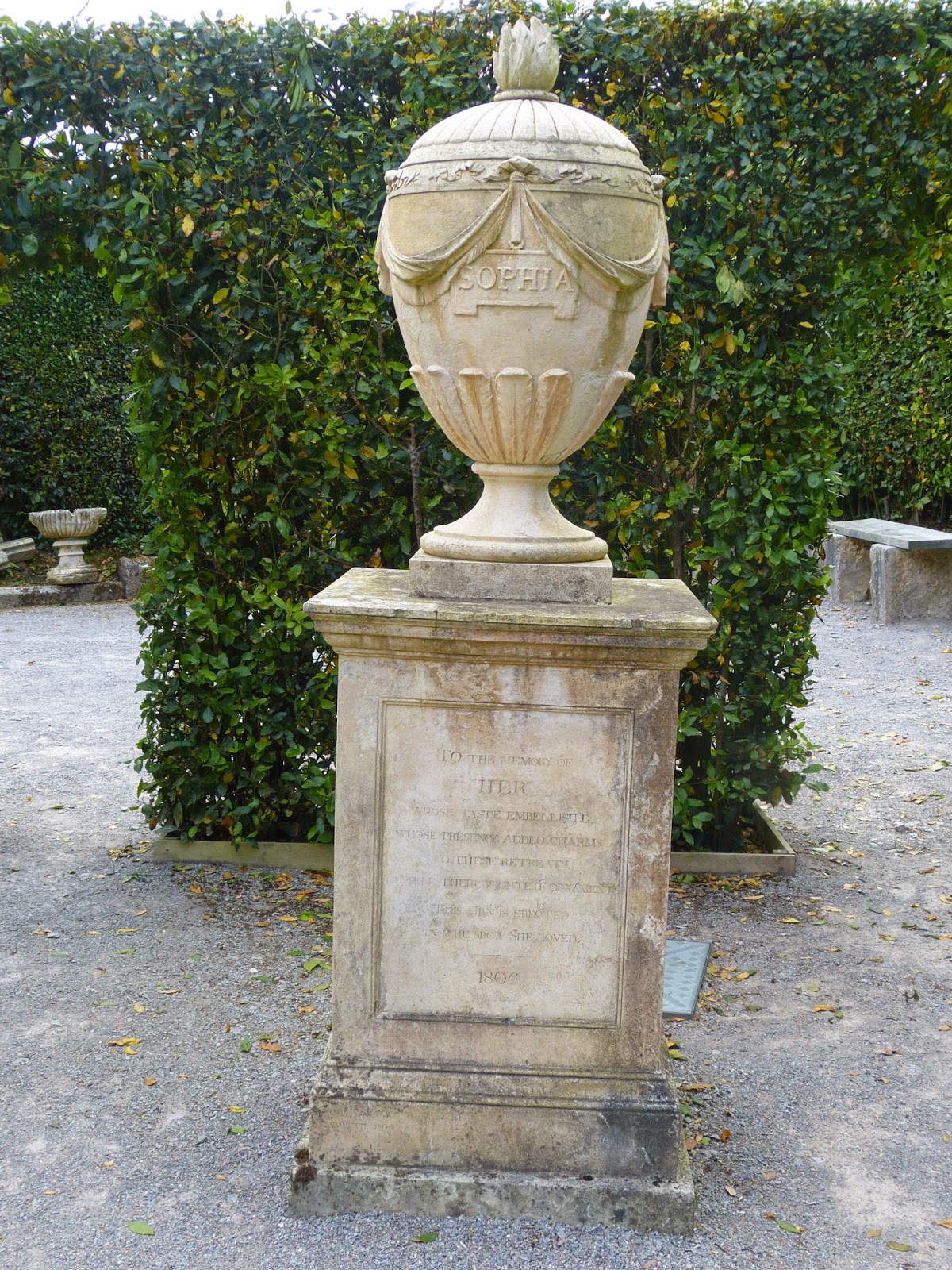
In 1789, Richard married Lady Sophia Hobart of Bickling Hall, Norfolk, and they had five (1) children. Sophia was known as one of Pharaoh’s daughters because she kept a faro table.

Memorial to Sophia in the French garden
Richard was a keen amateur actor and musician and wrote a prologue for a performance at Strawberry Hill in 1800. He wrote Musical Reminiscences of the Earl of Mount Edgcumbe (1823) about Italian operas in England and an opera, Zenobia (1801).

Richard and Sophia had a keen interest in gardening and they developed the Italian (1785) and French (1803) gardens at Mount Edgcumbe. The mermaid fountain in the Italian garden was a gift from Richard’s godfather, Lord Bessborough, in 1809. They also developed drives around the estate.

Italian garden, Mount Edgcumbe
What can you see today?

The grounds are extensive - make sure you take a map with you if you go walking as we found the footpaths inadequately signposted and walked much farther than we had intended! When we visited in 2014, it was possible to explore some of the area on a Segway adventure.

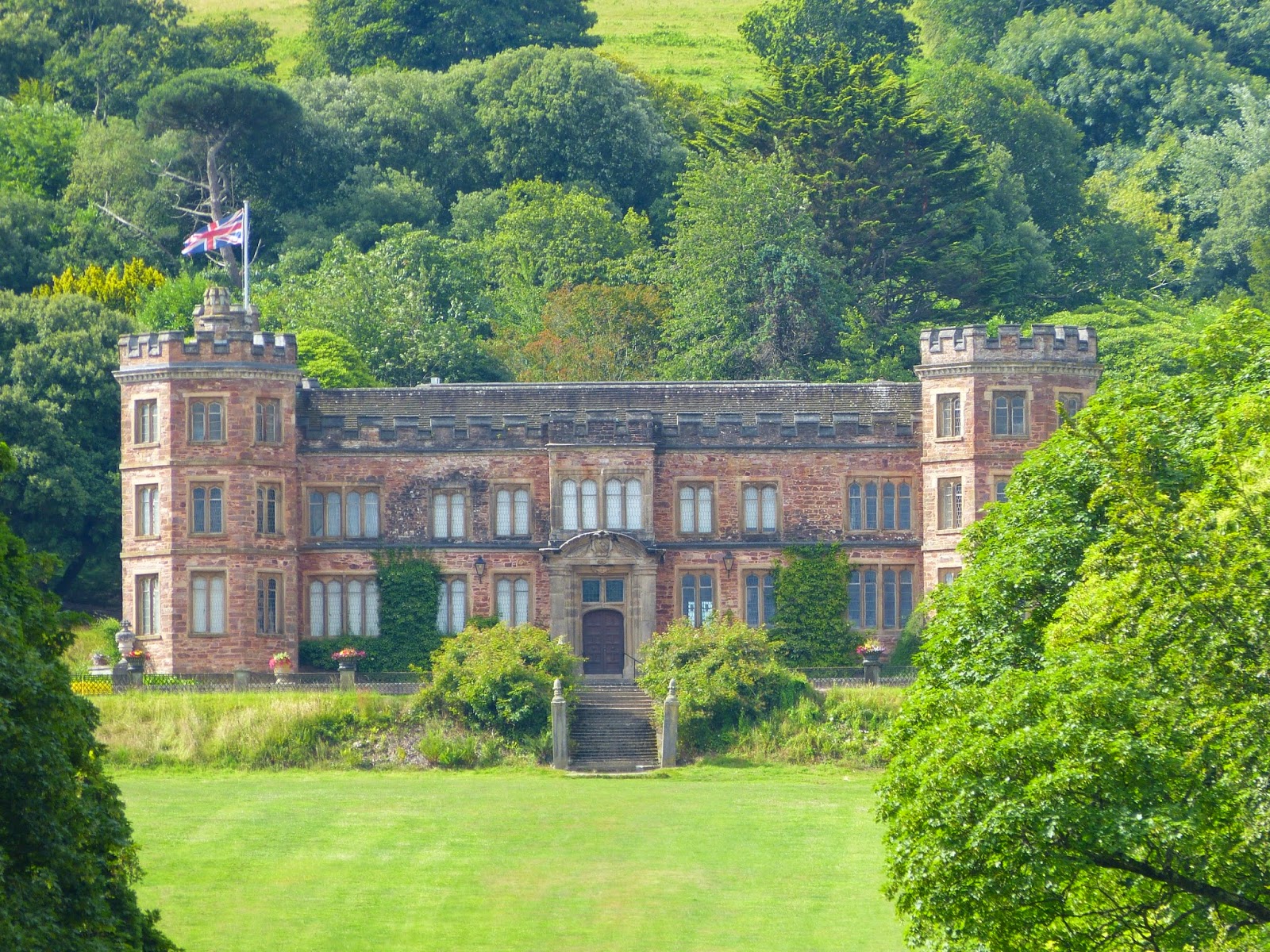
• Externally, the main part of the original Tudor building, but not as it would have been seen in Georgian times – it used to be rendered white.

Mount Edgcumbe
Mount Edgcumbe
• Internally, the house as it was rebuilt in the 1950s/60s. (The only photography allowed in the house was of visitors dressed up in the Tudor and Georgian clothes, so, of course, I dressed up in a Georgian outfit.) The current building allows you to get a feel for the original design, with rooms off a central hall, but it was not rebuilt to replicate the original and I looked in vain for the pillars in the hall which were depicted in a painting from 1749.

Rachel in Georgian costume  inside Mount Edgcumbe House
Rachel in Georgian costume
inside Mount Edgcumbe House (2014)
• The portrait of Richard Edgcumbe, 2nd Baron, by Sir Joshua Reynolds.

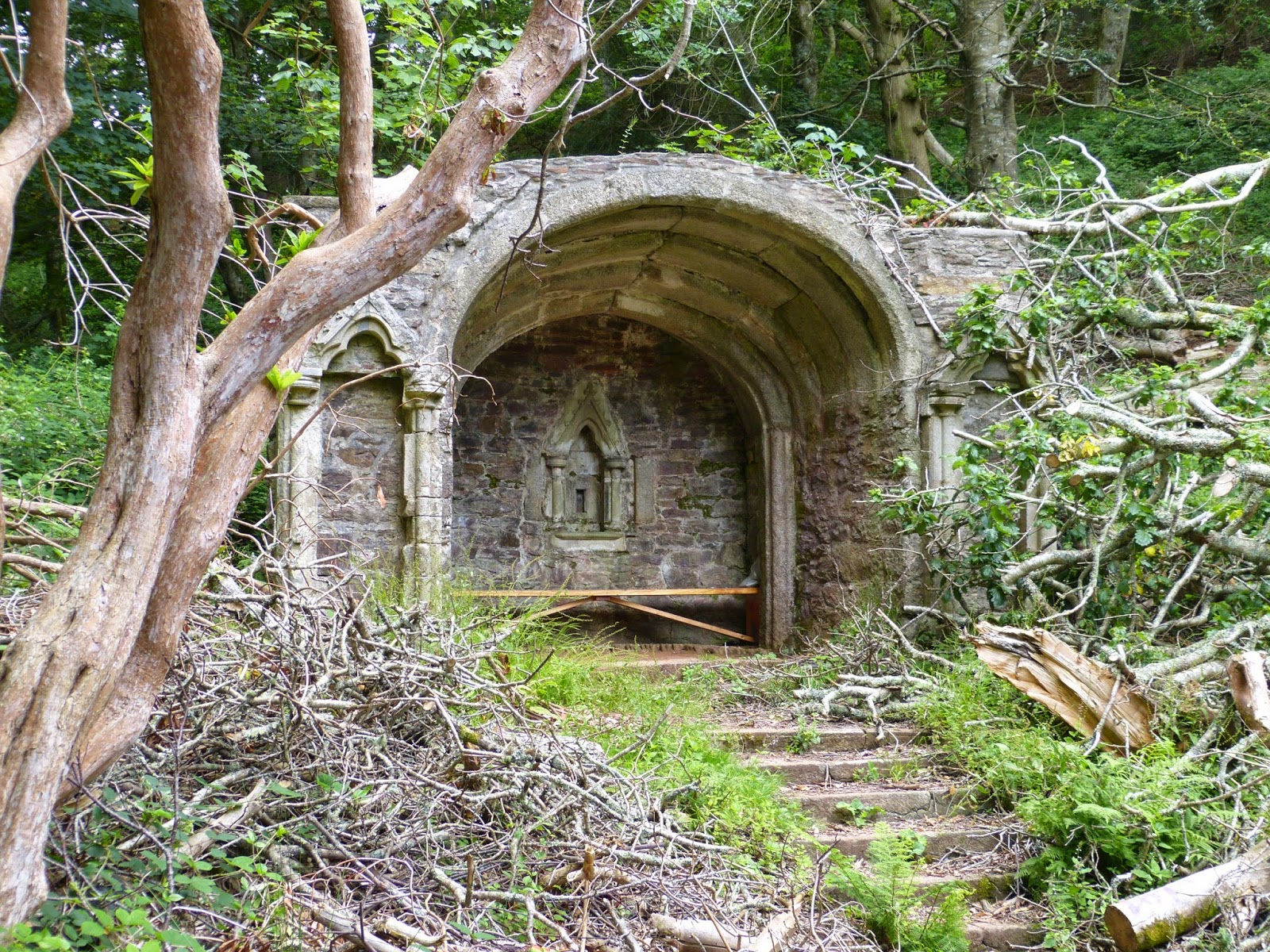
• Acres of beautiful parkland, with stunning views of the sea and a number of Georgian buildings such as the Picklecombe Seat (c1788).

Picklecombe Seat
Picklecombe Seat
• The formal gardens including the Italian garden with the mermaid fountain (shown above).

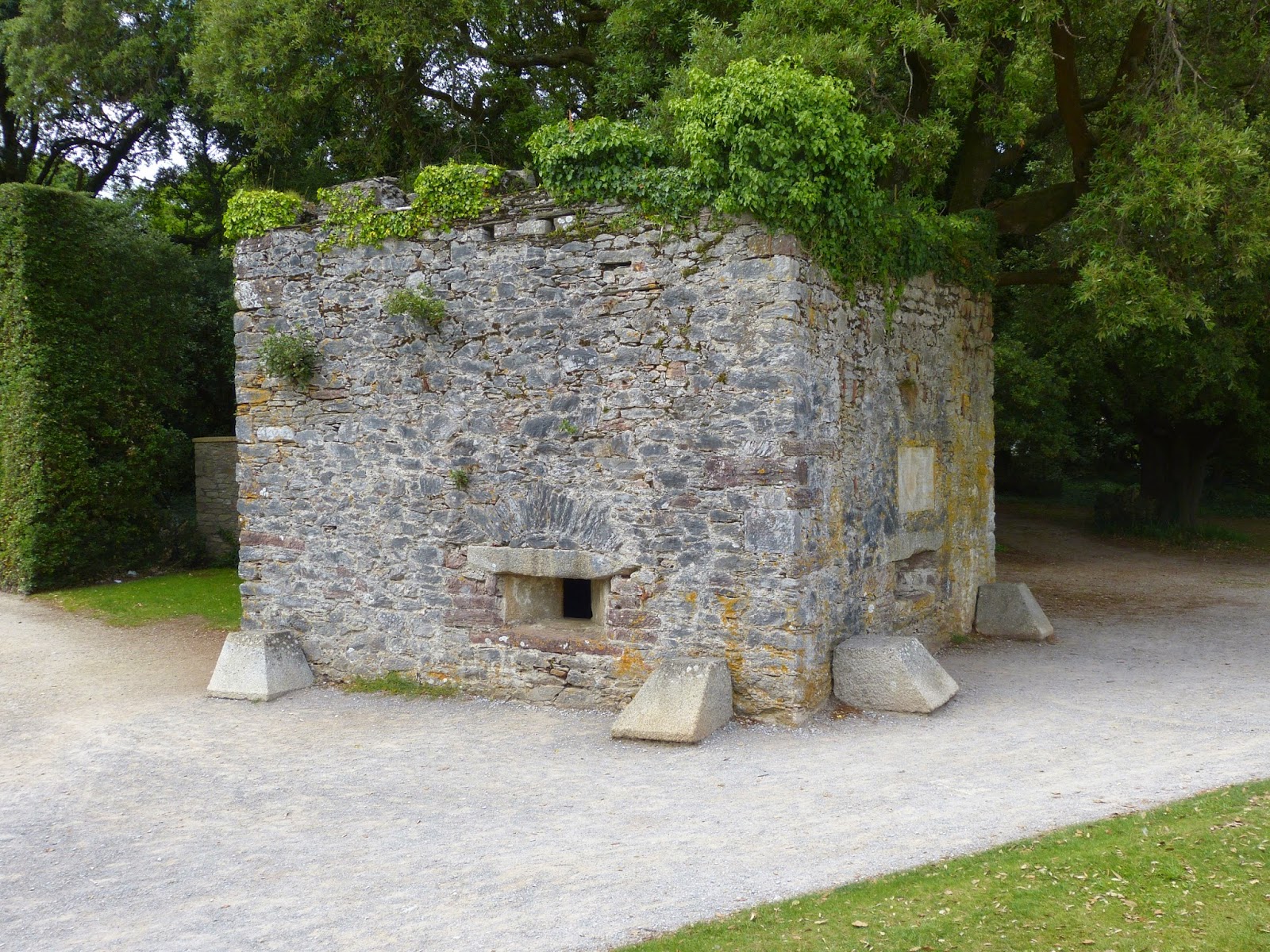
• The Tudor Blockhouse in the lower park.

Tudor blockhouse
Tudor blockhouse
• Last visited: July 2014.

Note
(1) Wikipedia lists five children but the family tree in the Cotehele guidebook only shows four.

Sources used include:
Brown, Cynthia Gaskell Brown, editing and additional text by Marshall, David, Cairns, Jo and Berry, Ian, Mount Edgcumbe House and Country Park Guidebook (Purchased 2014)
Hunt, Rachel, ed by Anna Groves, Cotehele, National Trust Guide (2013)