Search this blog

Showing posts with label Mary Robinson. Show all posts

Thursday, 15 December 2022

Kissing under the mistletoe in the Regency

The Mistletoe in Popular Pastimes by FW Stephanoff (1816)

A Christmas tradition that romance authors love is kissing under the mistletoe.

But when did the tradition begin? Did young ladies of quality kiss under the mistletoe in the Regency? These are the questions I set out to answer in this blog.

What is mistletoe?
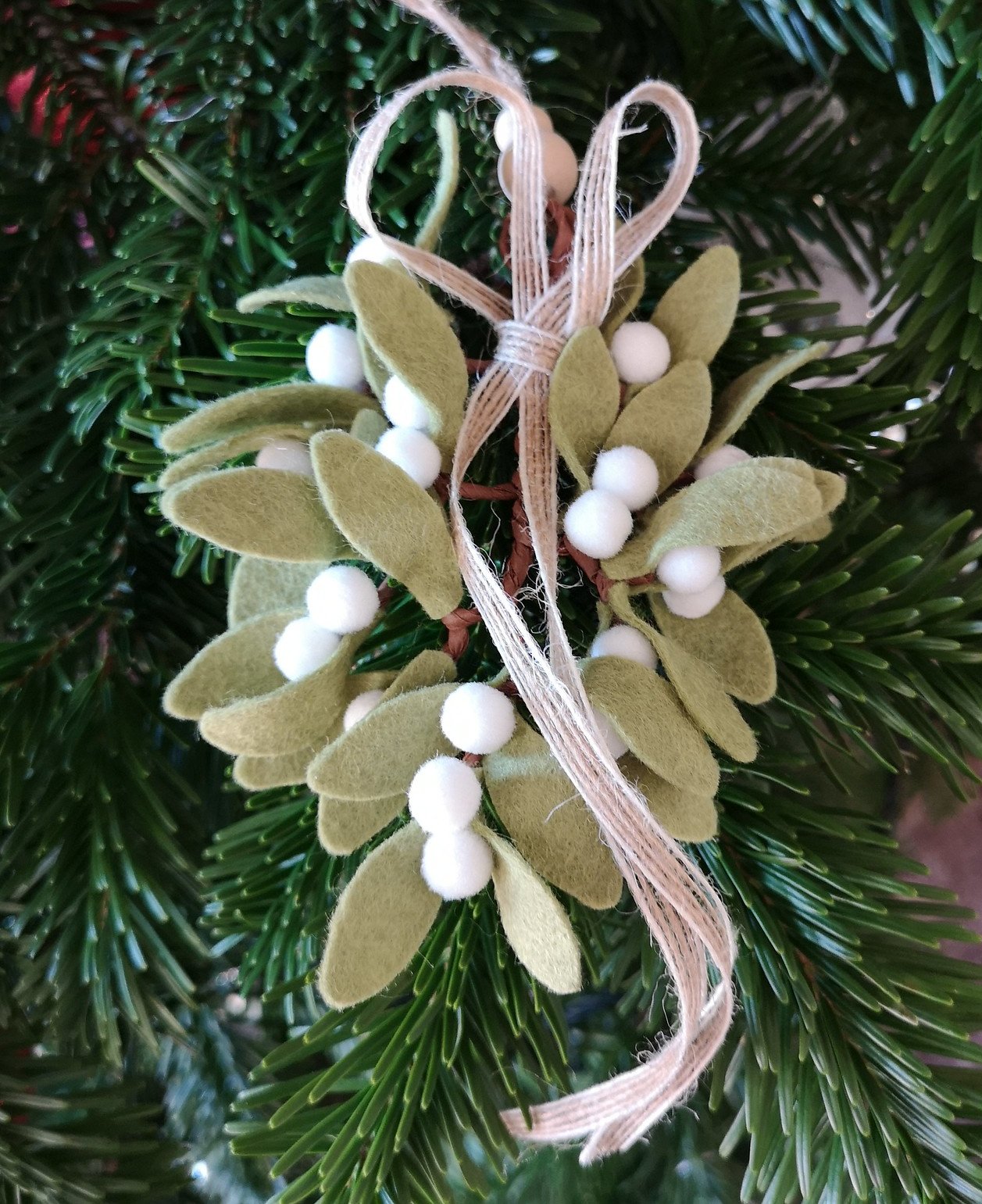
Mistletoe decoration (2022)

Mistletoe—sometimes spelt misletoe in old texts—is an evergreen plant with oval leaves that grow in pairs. It produces small white flowers, but is better known for its waxy, white berries which grow in clusters from October to May—right over the Christmas season.

It is an unusual plant because it is semi-parasitic. Rather than growing in the ground, it lives on the branches of other trees, such as apple, lime, pear, or oak.  

Although all parts of the plant are poisonous, mistletoe is used in medicines to treat certain disorders like epilepsy and cancer.

When was mistletoe first associated with Christmas?

In pre-Christian Britain, mistletoe was connected with the winter solstice. The Druids revered the oak, and this reverence spread to everything connected with it—including mistletoe that grew on oak. It was revered for its healing properties and gathered in a ceremony steeped with superstition at the winter solstice.

When Christianity was established in Britain, new traditions developed. Stephanoff wrote in Popular Pastimes (1816):

The custom of decking our churches and habitations with evergreens, has existed from the very establishment of Christianity, and was unquestionably derived from the like similar practice of our Pagan ancestors.1

These evergreens included mistletoe, which is mentioned in Candlemas Eve, a poem written by Robert Herrick (1591–1674). He wrote about taking down the greenery, including mistletoe, on Candlemas Eve, signalling the end of the Christmas season:2

Down with the rosemary and bays,
Down with the mistletoe;
Instead of holly, now up-raise
The greener box, for show.3

Another early reference to mistletoe is in Art of Simpling, published in 1656. Coles wrote of mistletoe:

It is carryed many miles to set up in houses about Christmas time, when it is adorned with a white glistering berry.4

When did people first kiss under the mistletoe?

Man wearing hat leans over pretty wife's shoulder under mistletoe. Old lady sleeps at table and young boy looks on.
Christmas Eve by J Burnett (1815)
The earliest reference to kissing under the mistletoe that I’ve come across is in a comic opera written in 1784 called Two to One:

When at Christmas in the hall

The men and maids are hopping

If by chance I hear ‘em bawl,

Amongst ‘em quick I pop in.


When all the men, Jem, John, and Joe,

Cry, “What good luck has sent ye?”

And kiss beneath the mistletoe

The girl not turn’d of twenty.5

A poem quoted in Popular Pastimes (1816) is undated, but it hints at the possibility that the custom went back earlier:

The Misletoe hangs from an oaken beam,

The Ivy creeps up the outer wall;

The Bays our broken casements screen,

The Holly-bush graces the hall.


Then hey for our Christmas revelling,


For all its pastimes pleasures bring.

The Misletoe's berries are fair and white,

The Ivy's of gloomy sable hue;

Red as blood the Laurel's affect our sight,

And the Holly's the same with prickles too.

Then hey, & c.

Nor black nor ensanguined red for me: -

The Misletoe only is my delight:

For pure as love all its berries be,

And to kissing my Fanny's sweet lips invite.


Then hey for our Christmas revelling,

For thus its symbols pleasures bring.6

Upstairs or downstairs?

Raucous Regency scene in kitchen with servants kissing under the mistletoe
Christmas Gambols by Thomas Rowlandson (1812)
Contemporary prints from the late Georgian period show mistletoe hung up in the kitchen—below stairs.

Mary Robinson’s poem, The Mistletoe – a Christmas Tale (1800) says:

‘Twas Christmas time, the peasant throng
Assembled gay, with dance and Song:
The Farmer's Kitchen long had been
Of annual sports the busy scene
…
It happen'd, that some sport to shew
The ceiling held a MISTLETOE.
A magic bough, and well design'd
To prove the coyest Maiden, kind.
A magic bough, which DRUIDS old
Its sacred mysteries enroll'd;
And which, or gossip Fame's a liar,
Still warms the soul with vivid fire;
Still promises a store of bliss
While bigots snatch their Idol's kiss.7

Observations on Popular Antiquities (1841) stated that mistletoe

…was the heathenish or profane plant, as having been of such distinction in the Pagan rites of Druidism, and it therefore had its place assigned it in kitchens.8

Stephanoff’s Popular Pastimes (1816) confirms this. He wrote mistletoe

…is still beheld with emotions of pleasurable interest, when hung up in our kitchens at Christmas; it gives licence to seize “the soft kiss” from the ruby lips of whatever female can be enticed or caught beneath. So custom authorizes, and it enjoins also, that one of the berries of the Misletoe be plucked off after every salute. Though coy in appearance, the “chariest maid” at this season of festivity is seldom loth to submit to the established usage; especially when the swain who tempts her is one whom she approves.9

Pickwick Papers by Charles Dickens (1836–7) suggests that though mistletoe was hung below stairs, the kissing was not restricted to the servants:

From the centre of the ceiling of this kitchen, old Wardle had just suspended, with his own hands, a huge branch of mistletoe, and this same branch of mistletoe instantaneously gave rise to a scene of general and most delightful struggling and confusion; in the midst of which, Mr Pickwick, with a gallantry that would have done honour to a descendant of Lady Tollimglower herself, took the old lady by the hand, led her beneath the mystic branch, and saluted her in all courtesy and decorum.
The old lady submitted to this piece of practical politeness with all the dignity which befitted so important and serious a solemnity, but the younger ladies, not being so thoroughly imbued with a superstitious veneration for the custom, or imagining that the value of a salute is very much enhanced if it cost a little trouble to obtain it, screamed and struggled, and ran into corners, and threatened and remonstrated, and did everything but leave the room, until some of the less adventurous gentlemen were on the point of desisting, when they all at once found it useless to resist any longer, and submitted to be kissed with a good grace.
Mr Winkle kissed the young lady with the black eyes, and Mr Snodgrass kissed Emily; and Mr Weller, not being particular about the form of being under the mistletoe, kissed Emma and the other female servants, just as he caught them. As to the poor relations, they kissed everybody, not even excepting the plainer portions of the young lady visitors, who, in their excessive confusion, ran right under the mistletoe, as soon as it was hung up, without knowing it!10

Christmas Eve at Mr Wardle's by Phiz from Pickwick Papers by Charles Dickens (1836-7)
Christmas Eve at Mr Wardle's by Phiz
from Pickwick Papers by Charles Dickens (1836-7)
When was the mistletoe put up?

I’ve not found a definitive answer to this one, although I’ve read multiple times of a superstition that it was bad luck to decorate the house before Christmas Eve. I’ve not found any contemporary evidence as yet to support this, but it is possible that the church discouraged people from decorating before the winter solstice (21 December) to separate the Christian festival of Christmas from the pagan celebration of the solstice.

Also, as Christmas Day was the start of the Christmas festivities, decorating on Christmas Eve would make sense. In the excerpt above from Pickwick Papers, this scene took place on Christmas Eve.

When was mistletoe taken down?

Another superstition I’ve come across is that it was bad luck to leave greenery up after Twelfth Night (5 January). Traditionally, greenery was taken down on Candlemas Eve (2 February) but at some point this changed to Twelfth Night.

Some sources suggest the lower classes were keen to keep the celebrations going and clung onto Candlemas as the end of the festivities for as long as possible.

What was a kissing bough? 

The Mistletoe Bough by F Wheatley (c1790)
Mistletoe may have been incorporated into kissing boughs before it was hung up alone as a Christmas decoration. I’ve not found any references to kissing boughs in the books of customs and other contemporary records I’ve looked at, so my information here is based on secondary sources.

According to the English Heritage website, a kissing bough comprised two intersecting circles of greenery. It says:

It is not certain when kissing boughs were first introduced in England although they are often considered to have been a popular Christmas decoration in the Tudor period.11 

A kissing bough was hung on a wall or from a ceiling or in a doorway near the entrance of the house to welcome visitors. Visitors embraced the master and mistress of the house under the kissing bough as a sign of goodwill.

I’ve come across various other names for a kissing bough, though it’s unclear whether these were all the same: a kissing ball, a Christmas bough, a mistletoe bough or a holy bough, with a clay figure of the baby Jesus in the middle.

Other sources suggest a kissing bough was the top part of a tree, hung upside down as a symbol of the Holy Trinity.

The inclusion of mistletoe in a kissing bough may have given rise to the tradition of kissing under the mistletoe.

In John Leech’s illustration of Mr Fezziwig’s Christmas party in A Christmas Carol (below), there appears to be a kissing bough hanging from the ceiling as well as mistletoe being held by hand over a girl’s head. 

Mr Fezziwig's Ball by John Leech from A Christmas Carol by Charles Dickens (1920 reprint of original 1843 edition)
Mr Fezziwig's Ball by John Leech from A Christmas Carol
by Charles Dickens (1920 reprint of original 1843 edition)

 Was mistletoe used to decorate churches?

There seems to be some debate whether mistletoe was used to decorate churches or not.

John Gay (1685–1732) wrote in his poem The Approach of Christmas:

When Rosemary and Bays, the poet's crown,

Are bawled in frequent cries through all the town;

Then judge the festival of Christmas near,

Christmas, the joyous period of the year!

Now with bright Holly all the temples strew,

With Laurel green, and sacred MISLETOE.12  

This seems to imply that all these evergreens were used to decorate churches at Christmas.

Observations on Popular Antiquities (1841) disagreed, stating that mistletoe

…never entered those sacred edifices, but by mistake or ignorance of the sextons.13

However, Popular Pastimes quoted Dr Stukeley as saying that the druids had a custom of laying mistletoe, which they called “All-heal”, on their altars, and that this custom still continued in the north, at York Minster.

Stephanoff added:

We learn that it [mistletoe] is still suffered to be put up (without scruple by the incumbent) in many of our churches at Christmas, where it remains with the other evergreens, till Candlemas-day.14

You can read more about Regency Christmas celebrations here.

You can read about Christmas trees in the Regency here.

Headshot of Rachel Knowles author with sea in background(2021)
Rachel Knowles writes faith-based Regency romance and historical non-fiction. She has been sharing her research on this blog since 2011. Rachel lives in the beautiful Georgian seaside town of Weymouth, Dorset, on the south coast of England, with her husband, Andrew.

Find out more about Rachel's books and sign up for her newsletter here.

If you have enjoyed this blog and want to encourage me and help me to keep making my research freely available, please buy me a virtual cup of coffee by clicking the button below.

Notes

  1. Stephanoff, Francis William, Popular Pastimes, Being a Selection of Picturesque Representations of the Customs & Amusements of Great Britain, in Ancient and Modern Times: Accompanied with Historical Descriptions (1816).
  2. Candlemas is on 2 February—40 days after Christmas—and celebrates the day Mary was purified according to Jewish law after giving birth to Jesus.
  3. Vizetelly, Henry, Christmas with the poets (1851).
  4. Quoted in Brand, John, & Ellis, Henry, Observations on Popular Antiquities (1841).
  5. Arnold, Dr, Two to One, a comic opera (1784).
  6. Stephanoff op cit.
  7. Robinson, Mary, The Mistletoe - a Christmas tale (1800).
  8. Brand & Ellis op cit.
  9. Stephanoff op cit.
  10. Dickens, Charles, The Pickwick Papers (1836-7).
  11. English Heritage website
  12. Vizetelly op cit.
  13. Brand & Ellis op cit.
  14. Stephanoff op cit.

Sources used include:

Arnold, Dr, Two to One, a comic opera (1784)

Brand, John, & Ellis, Henry, Observations on Popular Antiquities (1841)

Dickens, Charles, A Christmas Carol (1843)

Dickens, Charles, The Pickwick Papers (1836-7)

Hone, William, The Everyday Book (1826)

Newcomb, G, History of the Christmas Festival (1843)

Robinson, Mary, Lyrical Tales including The Mistletoe - a Christmas tale (1800)

Stephanoff, Francis William, Popular Pastimes, Being a Selection of Picturesque Representations of the Customs & Amusements of Great Britain, in Ancient and Modern Times: Accompanied with Historical Descriptions (1816)

The Kaleidoscope: or, Literary and scientific mirror (1821)

The New Monthly Magazine and Universal Register (1817)

Vizetelly, Henry, Christmas with the poets (1851)

English Heritage website on Tudor Christmas decorations 

English Heritage website on Christmas greenery 

Photograph © Rachel Knowles regencyhistory.net


Saturday, 21 March 2015

Joshua Reynolds: Experiments in Paint – exhibition at the Wallace Collection

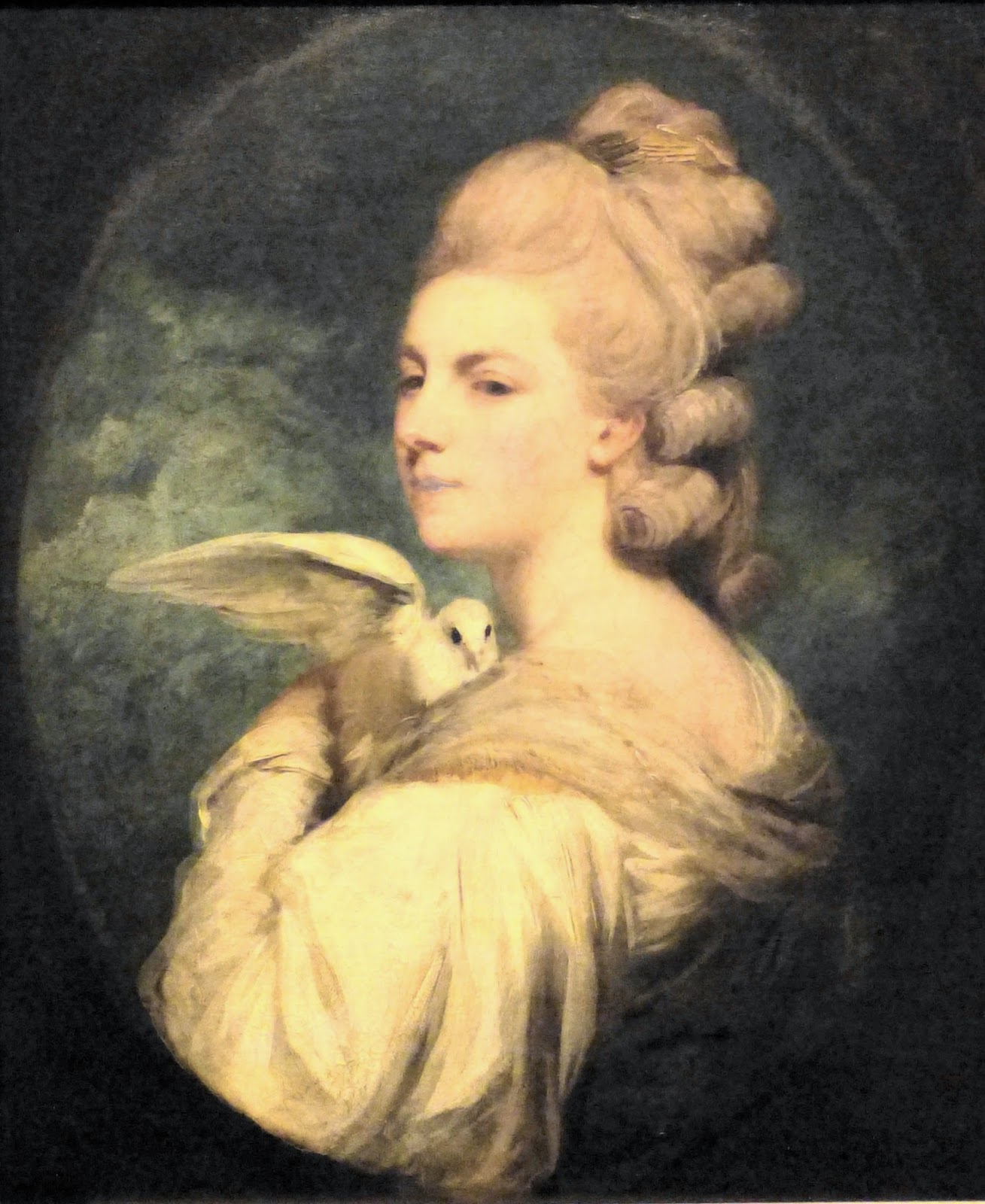
Mrs Mary Robinson by Sir Joshua Reynolds (1783-4)  © The Wallace Collection; Photo © Andrew Knowles
Mrs Mary Robinson by Sir Joshua Reynolds (1783-4)
© The Wallace Collection; Photo © Andrew Knowles
Last week, I visited a relatively little known museum, the Wallace Collection, for a special bloggers’ event to celebrate the opening of a new exhibition: Joshua Reynolds: Experiments in Paint. The exhibition runs ended on 7 June 2015 and comprised two rooms displaying 20 Reynolds paintings – 11 belonging to the Wallace Collection and the remainder on loan.

Here is a short video of the exhibition:


Popular and experimental

Sir Joshua Reynolds (1723-1792) was a very fashionable portrait painter during the second half of the 18th century and the first President of the Royal Academy.

The exhibition is the culmination of a four-year research project into the Reynolds paintings owned by the Wallace. Using various techniques including X-ray and infrared imaging, the paintings have been investigated by experts at the Wallace with advice from the National Gallery and the Yale Center for British Art.

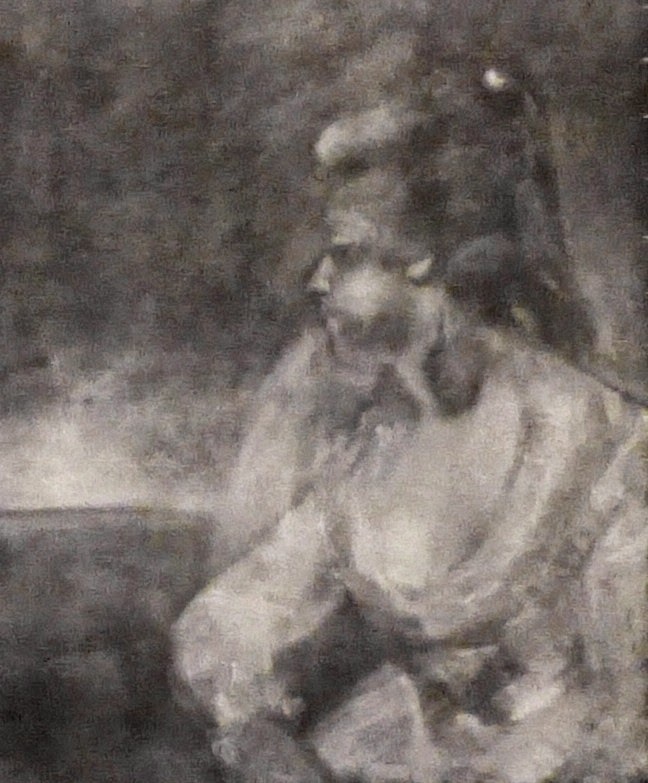
X-ray image of the portrait of Mary Robinson shown   above.
X-ray image of the portrait of Mary Robinson shown
above. The X-ray shows that Mary's hand was
originally painted supporting her chin
Photo © Andrew Knowles
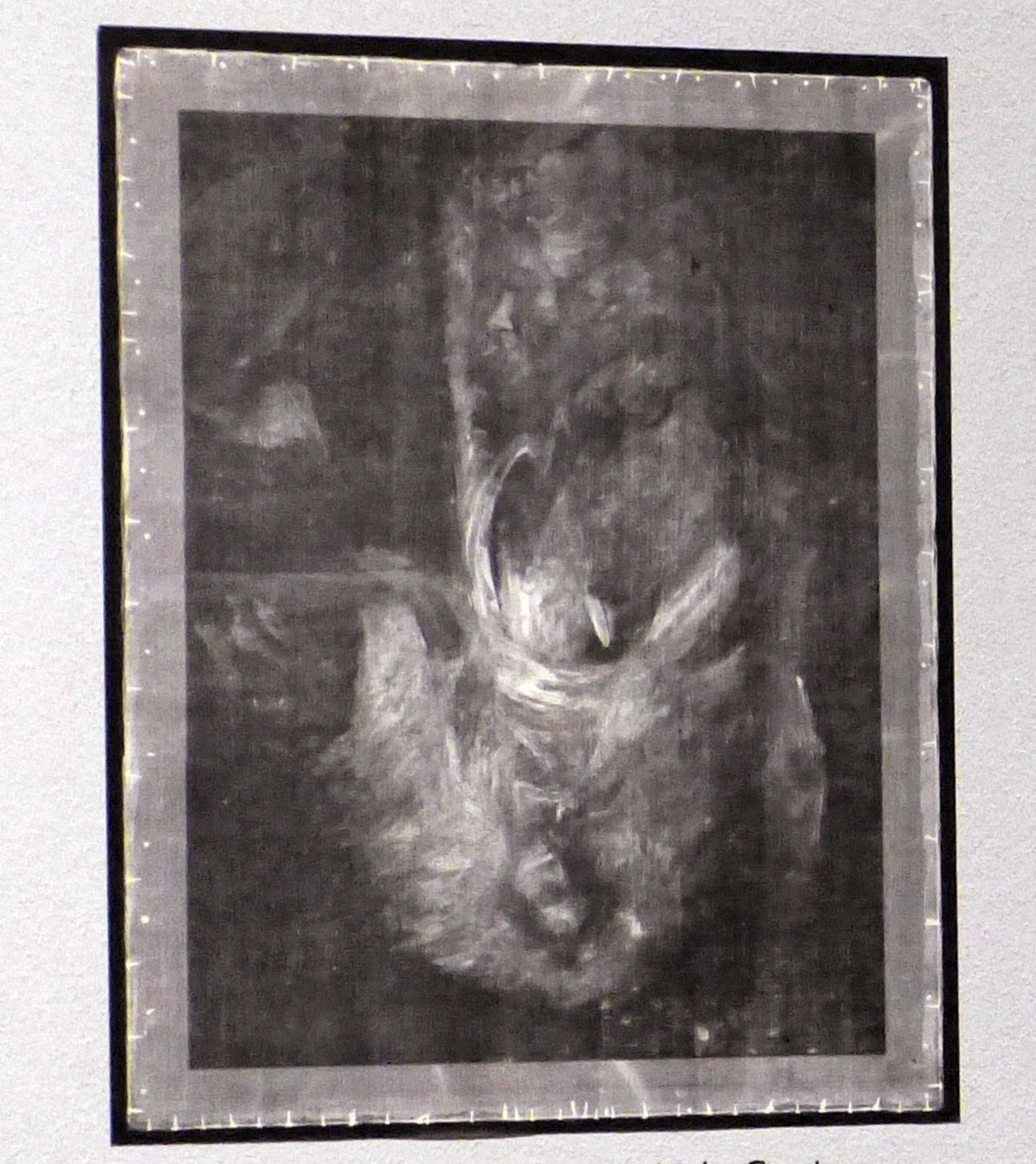
The research has given new insights into the way that Reynolds painted. Some of the images produced during the research are on display alongside the actual paintings. These reveal earlier details, from the position of Mary's hand, shown above, to old paintings that have been painted over.

The X-ray image of the Yale Center's portrait of Mary Robinson shown below reveals that the painting was not Reynold’s first attempt, but that underneath the existing painting is another, earlier painting, upside down.

X-ray image of the Yale Center's portrait of Mary   Robinson shown below.
X-ray image of the Yale Center's portrait of Mary
Robinson shown below. The X-ray shows another
portrait that has been painted over.
Photo © Andrew Knowles
Early paintings

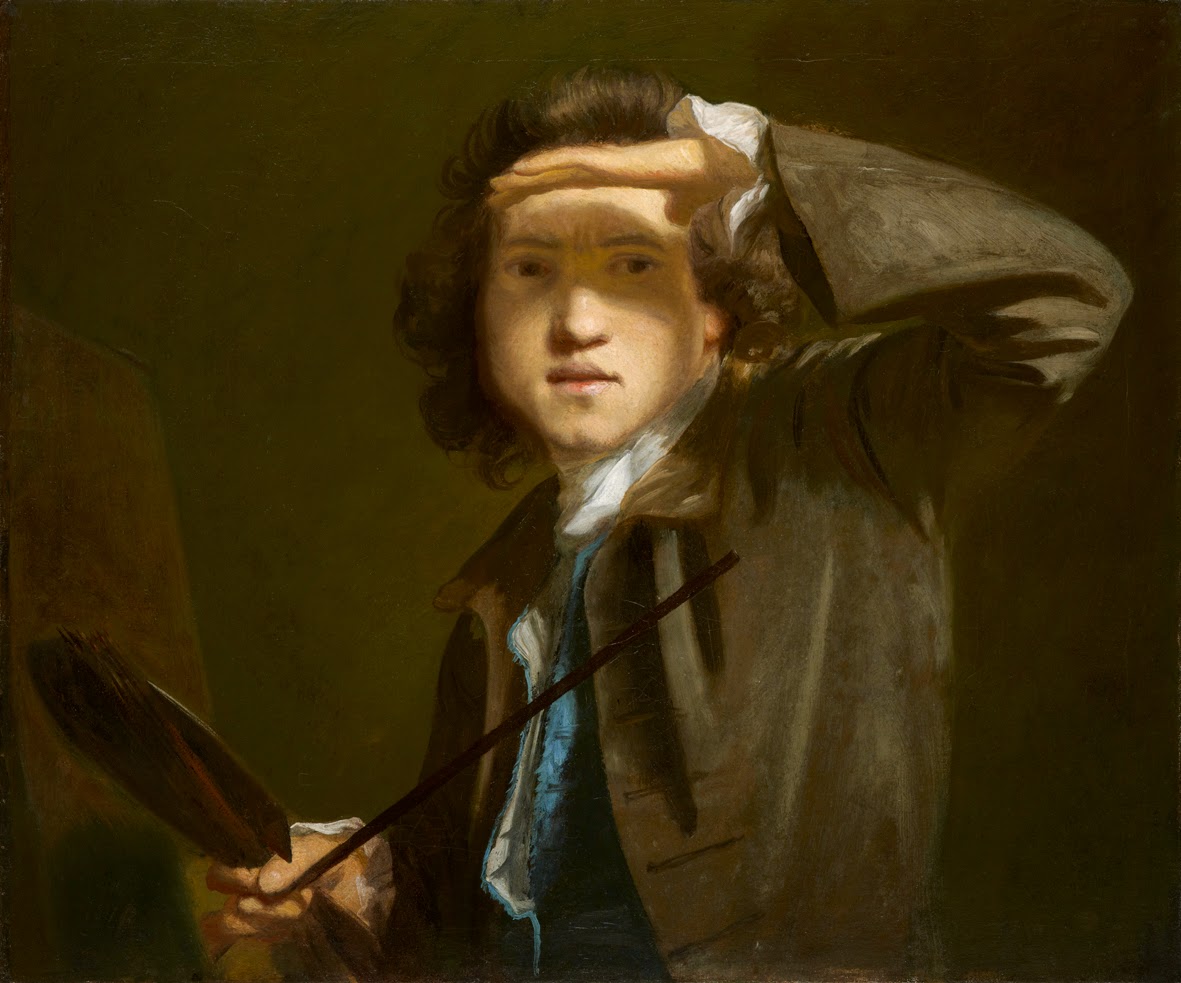
The paintings on display include some of Reynold's earliest work such as his self-portrait, painted c1747-9, before he went on the Grand Tour and a canvas entitled Studio Experiments in Colour and Media.

Self-portrait by Sir Joshua Reynolds (1747-9)  © The National Portrait Gallery, London
Self-portrait Shading the Eyes by Sir Joshua Reynolds (1747-9)
© The National Portrait Gallery, London
Studio Experiments in Colour and Media © Royal Academy of Arts, London
Studio Experiments in Colour and Media
© Royal Academy of Arts, London
Fancy paintings

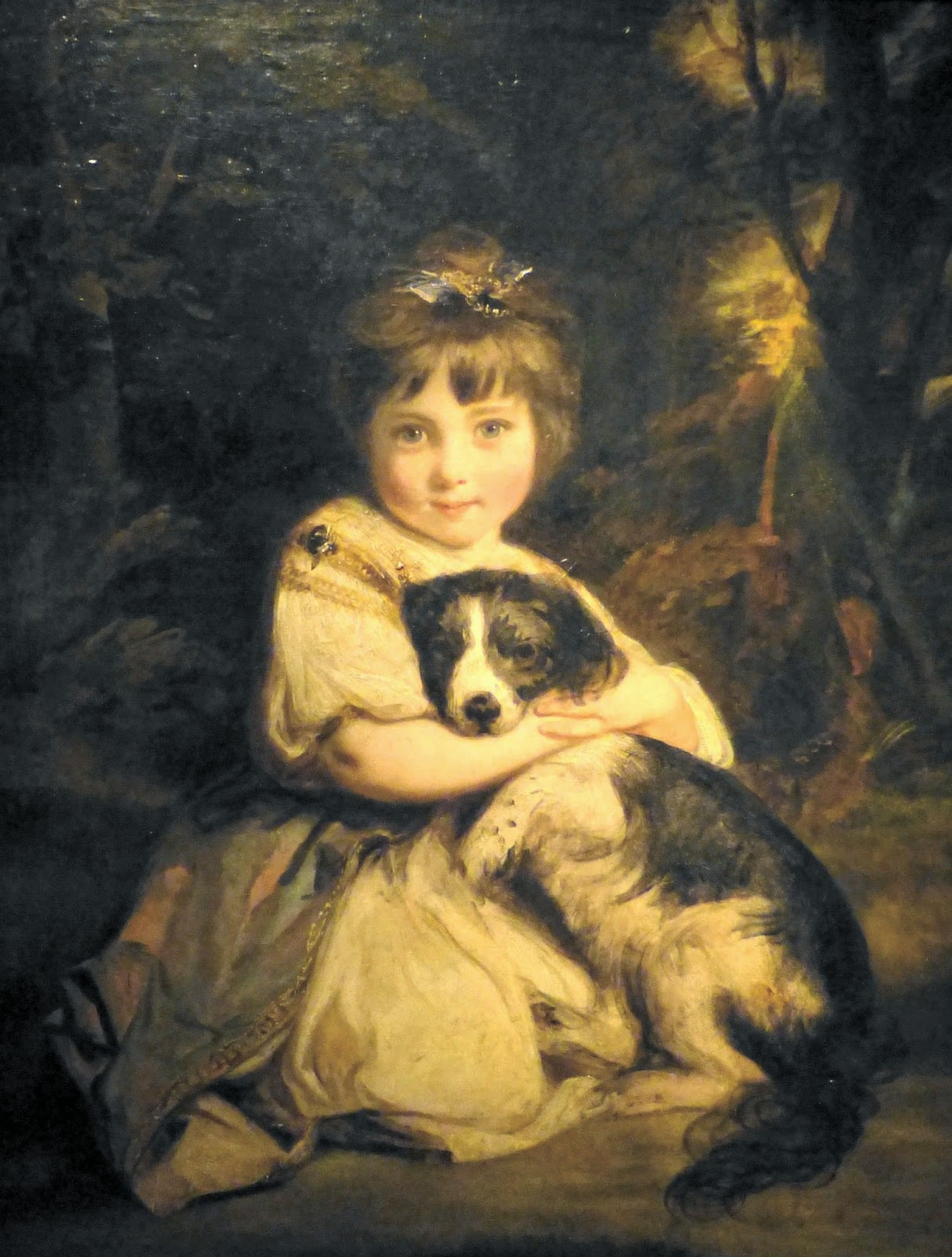
The exhibition includes a number of fancy paintings – imaginative paintings of people, representing ideas rather than intended as portraits. These include The Strawberry Girl and The Age of Innocence.

The Strawberry Girl by Sir Joshua Reynolds (1772-3)  © The Wallace Collection; Photo © Andrew Knowles
The Strawberry Girl by Sir Joshua Reynolds (1772-3)
© The Wallace Collection; Photo © Andrew Knowles
The Age of Innocence by Sir Joshua Reynolds (1788)  © The Tate; Photo © Andrew Knowles
The Age of Innocence by Sir Joshua Reynolds (1788)
© The Tate; Photo © Andrew Knowles
Portraits

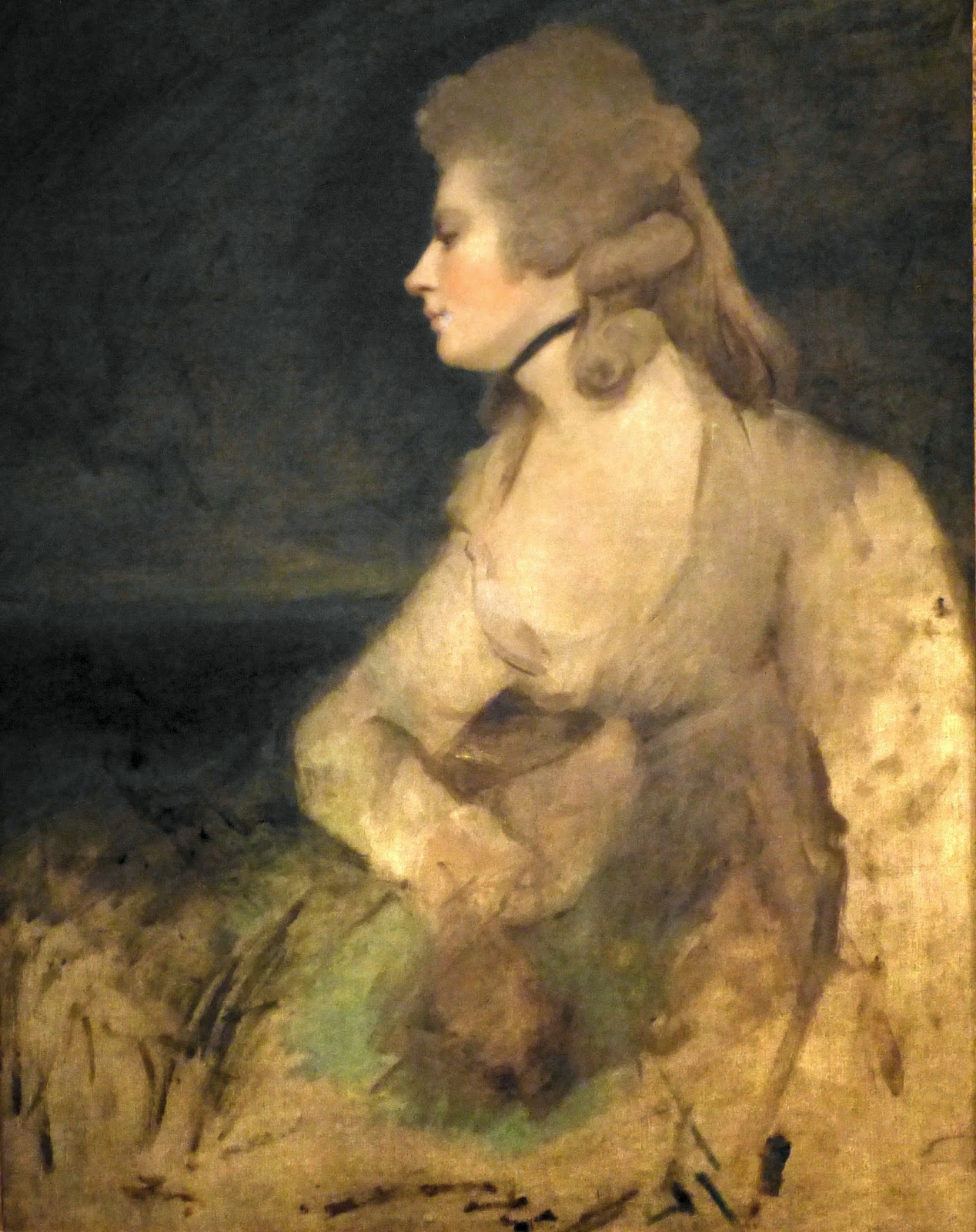
I particularly liked the two paintings of Mary Robinson, probably because she is the character with whom I am most familiar. The portrait owned by the Wallace Collection is shown at the top of this blog post and is very similar to that owned by the Yale Center for British Art (shown below) although this latter portrait is less finished.

Mrs Mary Robinson by Sir Joshua Reynolds (1783-5)  © The Yale Center for British Art, Paul Mellon Collection  Photo © Andrew Knowles
Mrs Mary Robinson by Sir Joshua Reynolds (1783-5)
© The Yale Center for British Art, Paul Mellon Collection
Photo © Andrew Knowles
4th Duke of Queensbury (Old Q)   by Sir Joshua Reynolds (1759)  © The Wallace Collection; Photo © Andrew Knowles
4th Duke of Queensbury ('Old Q') as Earl of March
by Sir Joshua Reynolds (1759)
© The Wallace Collection; Photo © Andrew Knowles
Miss Jane Bowles by Sir Joshua Reynolds (1775)  © The Wallace Collection; Photo © Andrew Knowles
Miss Jane Bowles by Sir Joshua Reynolds (1775)
© The Wallace Collection; Photo © Andrew Knowles
Miss Nelly O'Brien by Sir Joshua Reynolds (c1762-4)  © The Wallace Collection; Photo © Andrew Knowles
Miss Nelly O'Brien by Sir Joshua Reynolds (c1762-4)
© The Wallace Collection; Photo © Andrew Knowles
There is a second portrait of Miss Nelly O'Brien and a lovely portrait of Miss Kitty Fisher which were on loan and could not be photographed.

Mrs Susanna Hoare and Child
by Sir Joshua Reynolds (c1763-4)
© The Wallace Collection; Photo © Andrew Knowles
Mrs Mary Nesbitt by Sir Joshua Reynolds (c1781)  © The Wallace Collection; Photo © Andrew Knowles
Mrs Mary Nesbitt by Sir Joshua Reynolds (c1781)
© The Wallace Collection; Photo © Andrew Knowles
Reynolds sometimes depicted his sitters in character, such as Mrs Abington as Miss Prue in Love for Love by William Congreve (below).

Mrs Abington as Miss Prue by Sir Joshua Reynolds (1771)  © The Yale Center for British Art, Paul Mellon Collection  Photo © Andrew Knowles
Mrs Abington as Miss Prue by Sir Joshua Reynolds (1771)
© The Yale Center for British Art, Paul Mellon Collection
Photo © Andrew Knowles
The Wallace Collection is in Hertford House in Manchester Square, London and is open every day from 10am to 5pm. Admission to the museum is free.

Headshot of Rachel Knowles author with sea in background(2021)
Rachel Knowles writes faith-based Regency romance and historical non-fiction. She has been sharing her research on this blog since 2011. Rachel lives in the beautiful Georgian seaside town of Weymouth, Dorset, on the south coast of England, with her husband, Andrew.

Find out more about Rachel's books and sign up for her newsletter here.

If you have enjoyed this blog and want to encourage me and help me to keep making my research freely available, please buy me a virtual cup of coffee by clicking the button below.

Wednesday, 3 December 2014

Perdita and Florizel - Mary Robinson's affair with the Prince

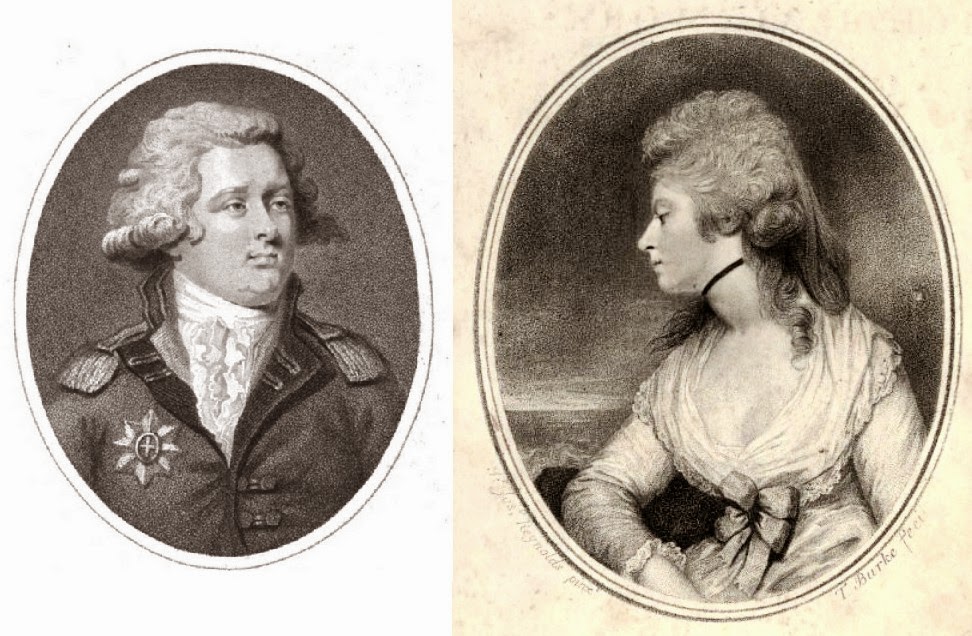
Left: Florizel - George, Prince of Wales from The Lady's Magazine (1792)  Right: Perdita - Mary Robinson from The Poetical Works of   the late Mrs Mary Robinson (1806)
Left: Florizel - George, Prince of Wales from The Lady's Magazine (1792)
Right: Perdita - Mary Robinson from The Poetical Works of 
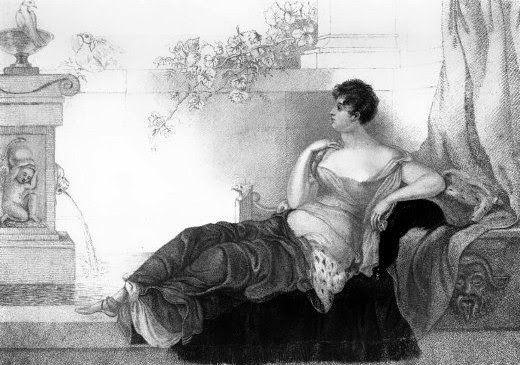
the late Mrs Mary Robinson (1806)
Who was Perdita?

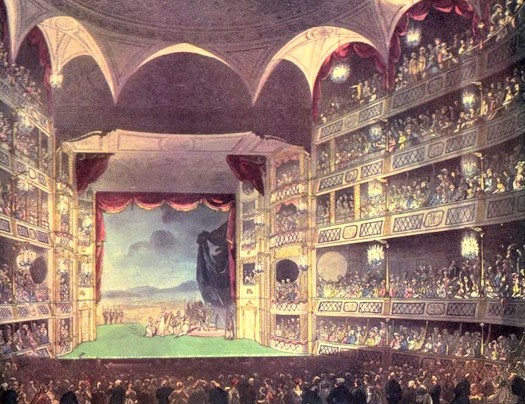
On Saturday 20 November 1779, Mary Robinson first played the part of Perdita at the Theatre Royal, Drury Lane. Perdita was the female lead in Perdita and Florizel, David Garrick’s adaptation of the last two acts of Shakespeare’s A Winter’s Tale.

Rather than the flowing pretty dress usually worn by Perdita, Mary sported a closely fitted jacket with the red ribbons of a common milkmaid. Although this costume was criticised in some of the papers, it undoubtedly contributed to Mary’s success.

Mary Robinson

Mary had been about to launch her theatrical career in 1773 but had been persuaded to get married instead. Her husband was Thomas Robinson, an indigent solicitor’s clerk, who had lied about his future prospects. The couple lived beyond their means and, desperate for money, Robinson agreed to Mary becoming an actress.

Richard Brinsley Sheridan engaged Mary to perform at his theatre in Drury Lane. David Garrick, who had coached her for her 1773 debut that had never taken place, loyally came out of retirement to prepare her for the part of Juliet. Mary gave her first performance on 10 December 1776 to widespread acclaim.

Theatre Royal, Drury Lane, from The Microcosm of London (1808-10)
The royal command performance

Perdita and Florizel was well-received and the King commanded a royal performance which took place on 3 December 1779. The King’s eldest son, George, Prince of Wales, accompanied his parents to the theatre. The royal box was very close to the stage and gave the 17-year-old Prince a close view of the actors on the stage and in the wings.

George IV from Huish's Memoirs of her late royal highness Charlotte Augusta (1818)
George IV
from Huish's Memoirs of her late
royal highness Charlotte Augusta (1818)
George made flattering comments that were loud enough for Mary to hear whilst Mary performed her lines as if for the Prince alone. George was dazzled. The next morning, he declared to his confidante Mary Hamilton, one of the ladies in waiting at court, that he had fallen madly in love with Mary Robinson.

Florizel in love

Adopting the name Florizel, the Prince started a passionate correspondence with ‘Perdita’. His friend, George Capel, Viscount Malden, acted as messenger, urging Mary to meet the Prince. Mary wrote back, encouraging the Prince to be patient and offering sisterly advice.

Writing table at Hampton Court Palace
Although for many months, George’s affair with Mary was no more than a passionate correspondence, the press was quick to comment on their relationship.

In order to quash this unfavourable publicity and comply with the Prince’s wishes, Mary agreed to leave the theatre. On 31 May 1780, she gave her farewell performance, playing the cross-dressed part of Eliza/Sir Harry Revel in The Miniature Picture and Widow Brady in The Irish Widow.

Mrs Robinson - the celebrated Perdita  from The Memoirs of George IV by R Huish (1830)
Mrs Robinson - the celebrated Perdita
from The Memoirs of George IV by R Huish (1830)
Reputation at risk

The Prince continued to push for a meeting. Mary knew that she was risking her entire reputation if she agreed. It was not until George enclosed a bond for £20,000 to be paid on his reaching his majority in one of his letters that Mary eventually agreed to an assignation.

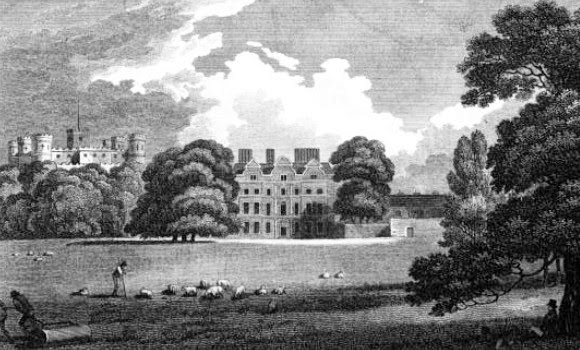
George and Mary probably did not meet until as late as June 1780. The chosen venue was Kew, near to the house where the Prince lived with the Duke of York. Over the next few months, they met many times at Kew, either in the gardens or at one of the servants’ houses or at the inn on nearby Eel Pie Island in the River Thames.

The Old Palace at Kew  from Memoirs of HM Sophia Charlotte of Mecklenburg Strelitz, Queen of Great Britain, by WM Craig (1818)
The Old Palace at Kew
from Memoirs of HM Sophia Charlotte of Mecklenburg Strelitz,
Queen of Great Britain
, by WM Craig (1818)
Celebrity status

Mary’s relationship with the Prince pushed her into the limelight even more than her acting career had done. People were interested in what she wore and where she went. She had become a Georgian celebrity!

The Prince established Mary in a house in Cork Street where she lavishly entertained him and his male friends. She wore a miniature of George around her neck and paraded around town in a variety of carriages. One carriage in particular was emblazoned with her initials encircled by a wreath of rosebuds which at a distance gave the appearance of a royal coronet.

Vauxhall by T Rowlandson  - Mary is on the right in a white dress with the Prince of Wales  at her side © British Museum
Vauxhall by T Rowlandson
- Mary is on the right in a white dress with the Prince of Wales
at her side © British Museum
The end of the affair

Mary continued to receive bad press. Cartoons were printed lampooning the Prince and his lover. There was outrage when Mary had dared to take a side box at the Opera House as if she was one of the nobility and not merely a courtesan. There was an unfortunate incident at Covent Garden where Mary flew into a rage on finding her husband with another woman. The King did not like all the bad publicity and wanted the affair finished, promising George his own establishment.

Opera House from The Microcosm of London (1808-10)
The Prince’s interest began to wane. The bad press was uncomfortable and George doubted Mary’s faithfulness to him. And with good cause; Mary was intimately involved with his friend, Lord Malden. By the end of 1780, Mary’s charms had been superseded by those of the courtesan, Elizabeth Armistead. All at once, it was over. Mary did not see it coming.

The price of a reputation

Mary was determined not to go quietly. She had been living expensively and had massive debts. The Prince’s desertion was disastrous. She had a large number of the Prince’s love letters which she threatened to publish, using them as leverage in negotiations to compensate her for the loss of her reputation and her career. Eventually Mary agreed to give up the letters in return for £5,000 and the promise of an annuity.

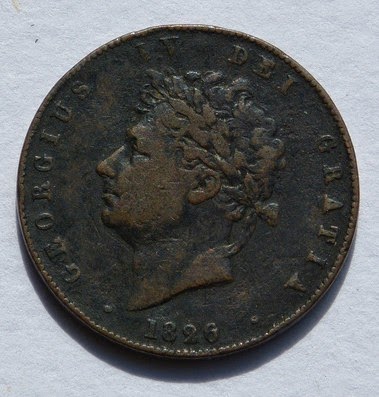
George IV coin
George IV coin (2012)
The papers continued to link their names together for years, perhaps encouraged by Mary’s persistence in wearing the Prince’s miniature, now encrusted with diamonds, around her neck.

It is a sad reflection that Mary Robinson, an acclaimed actress and later a feminist writer and poet, is remembered today for her brief affair with the Prince of Wales and not for her other achievements.

Headshot of Rachel Knowles author with sea in background(2021)
Rachel Knowles writes clean/Christian Regency era romance and historical non-fiction. She has been sharing her research on this blog since 2011. Rachel lives in the beautiful Georgian seaside town of Weymouth, Dorset, on the south coast of England, with her husband, Andrew.

Find out more about Rachel's books and sign up for her newsletter here.

If you have enjoyed this blog and want to encourage me and help me to keep making my research freely available, please buy me a virtual cup of coffee by clicking the button below.


Sources used include:
Ackermann, Rudolph, and Pyne, William Henry, The Microcosm of London or London in miniature (1808-1810, reprinted 1904)
Byrne, Paula, Perdita, the life of Mary Robinson (2004)
Huish, Robert, Memoirs of George IV (1830)
Levy, Martin J, Robinson, Mary (Perdita) (1756/8-1800) Oxford Dictionary of National Biography (Oxford University Press, 2004; online edn Jan 2008, accessed 2 July 2013)
Robinson, Mrs Mary, The Poetical Works of the late Mrs Mary Robinson: including many pieces never before published (1806)

All photographs © RegencyHistory.net

Monday, 14 July 2014

Mary Robinson - more than Perdita

Mary Robinson  from an engraving by Smith after Romney  in Memoirs of Mary Robinson (1895)
Mary Robinson
from an engraving by Smith after Romney
in Memoirs of Mary Robinson (1895)
Mary Robinson the writer

Mary ‘Perdita’ Robinson (1757-1800) was an actress who famously became the first mistress of George IV when he was still a teenager. But what is less well known today is that in addition to her beauty, her exalted lover and her success on the stage, Mary was a talented writer.


Early patronage

In 1775, Mary published her first volume of poems. She presented the Duchess of Devonshire with a copy, and in return, the Duchess was pleased to offer her support. A second volume of poems in 1777 was dedicated to her patroness.

Georgiana, Duchess of Devonshire  from Posthumous memoirs of his own time  by NW Wraxall (1836)
Georgiana, Duchess of Devonshire
from Posthumous memoirs of his own time
by NW Wraxall (1836)
Reinventing Mary

A severe illness in 1783 left Mary lame and she struggled with ill health for the rest of her life. The following year, Lister published his Memoirs of Perdita, a scandalous history of Mary's life that she was eager to contradict. She wanted to create a new persona for herself as a respectable person and not as the courtesan Perdita that the world labelled her. Her writing gave her that opportunity.

Mary’s obituary

On 14 July 1786, The Morning Post announced that Mrs Robinson, the once famous Perdita, had died a few days before in Paris. It printed an obituary that praised her beauty and person, but reminded its readers of her immoral relationships. Mary’s response was to write a witty letter declaring that she was alive and well, apart from her lameness, and implying that the details of her life were as fictional as her death.

The Della Cruscans

In 1788, Mary started writing poems under the pseudonym of Laura in response to Robert Merry’s Della Crusca in The World. The Della Cruscans favoured a flowery sort of poetry and included Hannah Cowley and Hester Theale amongst their number.

When The Oracle started up as a rival paper to The World, Mary became its regular poet, writing under the pseudonym Laura Maria. One poem of particular note was Insanity (1791) which Mary composed whilst drugged with opium to dull the pain of her illness. It was later renamed The Maniac.

Mary also wrote poems for The Morning Post and essays under the pseudonym The Sylphid.

The English Sappho

Mary published a deluxe anthology of her poems in 1791 with 600 subscribers. It was later republished as a cheaper volume as The Beauties of Mrs Robinson. It was generally well received by the critics and the Monthly Review labelled Mary “our English Sappho”—a nickname that stuck.

Her final volume of poetry—Lyrical Tales—was published in 1800 shortly before her death. This included the poem The Mistletoe—a Christmas tale. You can read an excerpt from this poem in my blog about mistletoe here.

Novels

Mary wrote a number of novels of varying quality. Her first, Vancenza, or the Dangers of Credulity (1792) was a Gothic romance and included veiled references to the Prince of Wales. Her second novel, The Widow, or a Picture of Modern Times (1794), painted faro players in a bad light and was less popular.

Angelina (1796) was enthusiastically reviewed by Mary Wollstonecraft, but Hubert de Sevrac: A Romance of the Eighteenth Century (1796) was hastily written and was a rather poor Gothic novel.

Walsingham (1797) had a cross-dressed hero/heroine, The False Friend (1799) was full of feminist ideas and The Natural Daughter, with portraits of the Leadenhead Family (1799) was her most autobiographical novel but was poorly received because of its radical content.

Writing for the stage

Mary returned to the theatre, not to perform, but to write. However her major attempts did not meet with success. Her play, Nobody, written to showcase the comedic talents of Dora Jordan, but its anti-gambling undertones prompted hate mail to Mary and Dora and it failed after only three performances.

Mrs Jordan  from The Life of Mrs Jordan by J Boaden (1831)
Mrs Jordan
from The Life of Mrs Jordan by J Boaden (1831)
Another play, A Sicilian Lover—a tragedy—was greatly admired by the Duke of Leeds, but poorly received by everyone else.

She also wrote an opera for Sheridan called Kate of Aberdeen, but it was never performed.

Radical writings

Toward the end of her life, Mary became increasingly radical in her views, possibly influenced by such friends as William Godwin and Mary Wollstonecraft.

In 1790, she wrote a poem Ainsi va le Monde, in support of the French revolution, inscribed to Robert Merry.

She also wrote anti-slavery poems and a feminist essay—A Letter to the Women of England, on the Injustice of Mental Subordination (1799) under the pseudonym of Anne Frances Randall. In this essay she advocated the creation of a university for women.

Monodies and Memoirs

Mary wrote a monody—a poem lamenting another’s death—in honour of her close friend Sir Joshua Reynolds who died in 1792 and another to the memory of Marie Antoinette in 1793.

Sir Joshua Reynolds  from The Literary Works of Sir Joshua Reynolds  ed Farington and Malone (1819)
Sir Joshua Reynolds
from The Literary Works of Sir Joshua Reynolds
ed Farington and Malone (1819)
Intense personal emotion also impelled her to write Stanzas written between Dover and Calais, July 24th 1792 inscribed to... which were dedicated to her lover Tarleton, when she thought they had separated irrevocably. The stanzas were set to music and became very popular.

Tarleton’s History of the Campaigns in Virginia and the Neighbouring Provinces (1787) was generally believed to have been written, at least in part, by Mary.

Mary also wrote her memoirs—Memoirs of the Late Mrs Robinson written by herself (1801)—which, though undeniably biased in her own favour, are one of the first examples of an English author writing an autobiography. They were published posthumously by her daughter.

Headshot of Rachel Knowles author with sea in background(2021)
Rachel Knowles writes faith-based Regency romance and historical non-fiction. She has been sharing her research on this blog since 2011. Rachel lives in the beautiful Georgian seaside town of Weymouth, Dorset, on the south coast of England, with her husband, Andrew.

Find out more about Rachel's books and sign up for her newsletter here.

If you have enjoyed this blog and want to encourage me and help me to keep making my research freely available, please buy me a virtual cup of coffee by clicking the button below.

 
Sources used include:
Byrne, Paula, Perdita, the life of Mary Robinson (2004)
Levy, Martin J, Robinson, Mary (Perdita) (1756/8-1800) Oxford Dictionary of National Biography (Oxford University Press, 2004; online edn Jan 2008, accessed 2 July 2013)
Robinson, Mary, Memoirs of Mary Robinson "Perdita" from the edition edited by her daughter with intro & notes by J Fitzgerald Molloy (1895)
Robinson, Mrs Mary, The Poetical Works of the late Mrs Mary Robinson: including many pieces never before published (1806)