Search this blog

Showing posts with label museum. Show all posts

Tuesday, 8 December 2015

The blacksmith's shop at Gretna Green - a Regency History guide

Anvil in the main marriage room of the blacksmith's shop, Gretna Green (2015)
Where is Gretna Green?

Gretna Green is a village in the Scottish county of Dumfries and Galloway, just over the border from England.

What is so special about Gretna Green?

Gretna Green is famous for the huge number of couples who eloped there to get married. After Hardwicke’s Marriage Act came into force in 1754, couples under the age of 21 needed parental consent to get married. As this law did not apply in Scotland, couples who wanted to wed without this consent fled to the border and were married before their parents could stop them. As the first village in Scotland on the main post road from London, Gretna Green became a popular destination for eloping couples.

You can read more about why people ran away to Gretna in my earlier post: Why did Regency lovers elope to Gretna Green?

The blacksmith's shop, Gretna Green (2015)
The blacksmith’s shop

Many of the runaway couples were married over the anvil in the blacksmith’s shop. The handfasting (1) ceremony was conducted by one of the self-appointed ‘anvil priests’ who would bring his hammer down on the anvil as he completed the marriage ceremony. It was a very lucrative business. The eloping couples were typically well off and in such a hurry to get married that the anvil priest could charge a substantial fee for obliging them. Once the ceremony had taken place, the marriage was legally binding.

The main marriage room in the blacksmith's shop, Gretna Green (2015)
The anvil priests

The most famous anvil priests during the Georgian period were:

Joseph Paisley (anvil priest 1754-1814)

Joseph Paisley was an ex-tobacconist and smuggler, renowned for his strength. He became a blacksmith, but quickly recognised that it was more lucrative to marry eloping couples and became one of the first blacksmith priests in 1754. Despite becoming immensely fat and addicted to drink, he continued to conduct marriage ceremonies until his death in 1814.

David Lang (anvil priest 1792-1827)

David Lang was Paisley’s nephew. He was pressganged into the British Navy as a young man and then captured by the American pirate John Paul Jones and made part of his crew. He escaped from Jones’ ship when it was near the Solway coast, swimming to the shore near Gretna.

In 1792, he became a rival blacksmith priest and was known as Bishop Lang because of the clerical style of dress he adopted. Like his uncle, he had a reputation for drinking too much. He was the anvil priest responsible for marrying Ellen Turner to her abductor, Edward Gibbon Wakefield, in the notorious Shrigley abduction and gave evidence at the trial in 1827. He died the same year.

David Lang - picture from the blacksmith's museum, Gretna Green (2015)
David Lang - picture from the blacksmith's
museum, Gretna Green (2015)
Simon Lang (anvil priest 1827-1872)

Simon Lang was David Lang’s son and took over from his father in 1827. When the number of marriages started decreasing, he supplemented his income from the wedding business with weaving and smuggling, but he continued as an anvil priest until his death in 1872.

Robert Elliot (anvil priest 1814-1840)

Robert Elliot was a farmer’s son who worked for a stagecoach company. In 1811, he married Paisley’s granddaughter, Ann Graham, in the parish church at Gretna Green. He became Paisley’s assistant in the marriage business and took over from him on his death in 1814. 

In his memoirs, Elliot claimed to have performed between 4,000 and 8,000 marriage ceremonies before he retired from the business in 1840. However, some of the other facts in his memoirs were clearly wrong, so it is hard to know how accurate this figure is and impossible to confirm one way or the other as his registers, and those of Paisley, were destroyed in a fire.

The end of runaway marriages

Travelling chariot in the museum at the blacksmith's shop, Gretna Green (2015)
In 1856, the Marriage (Scotland) Act was passed which changed the law in Scotland. At least one of the people getting married now had to live in Scotland for a minimum of 21 days before they could get married. There was still no need of parental consent for underage couples, but the residency requirement made runaway matches much less appealing as parents had plenty of time to catch their errant offspring. 

The number of eloping couples dwindled and Gretna Green’s once thriving marriage industry petered away.

The blacksmith’s shop gets a new lease of life

Sign on blacksmith's shop, Gretna Green (2015)
It is unlikely that we would be so familiar with the Gretna Green story if it wasn’t for Hugh Mackie. Back in the 1880s, he bought the Gretna estate, including the famous blacksmith’s shop, and founded the family business which still runs Gretna Green today, promoting it as a romantic tourist spot. 

The blacksmith’s shop remained a popular wedding venue until 1940 when an Act of Parliament made handfasting (1) ceremonies illegal, though some couples still liked to have a blessing over the anvil. 

Today, the blacksmith’s shop at Gretna Green is once again in high demand as a romantic place to get married with over 1000 weddings taking place there every year. Scottish law now allows couples to get married over the anvil in either a religious or civil ceremony and, since the residency requirement no longer applies (2), Gretna Green is the obvious romantic destination for eloping couples.

Arch outside the blacksmith's shop, Gretna Green (2015)
What can you see today?

The blacksmith’s shop is part museum, part wedding venue. The museum is not expensive, but when I walked into the room initially, I was somewhat disappointed. There are a number of signboards telling the Gretna Green story, together with a couple of room sets (including one with a spinning wheel set up some years ago by my mother-in-law), a few costumes and various documents displayed on the walls.

The museum at the blacksmith's shop, Gretna Green (2015)
A room depicting a household scene with a spinning wheel set up by my mother-in-law in the blacksmith's shop museum, Gretna Green (2015)
A room depicting a household scene with a spinning wheel set up by
my mother-in-law in the blacksmith's shop museum, Gretna Green (2015)
At the end of the room is the way through to the anvil room. While we were parking our car, we saw one couple who had just been married, but by the time we were in the museum, another ceremony was already in progress. We were told that people were only allocated half hour slots!

Between weddings (there was another wedding group waiting to come in!), we had a few brief moments in the anvil room, enabling us to grab a few pictures. At this stage, I decided that the few pounds I had paid were probably worth it. After all, I had managed to see where the famous runaway weddings had taken place.

With my hand on the anvil at the blacksmith's shop, Gretna Green (2015)
With my hand on the anvil
at the blacksmith's shop, Gretna Green (2015)
But there was more to come. Beyond the entrance to the anvil room, there were more marriage rooms, each with their own anvil. There are a lot of anvils in Gretna, both inside and out!

Another marriage room in the blacksmith's shop, Gretna Green (2015)
Another marriage room in the
blacksmith's shop, Gretna Green (2015)
And the museum continued. There was a collection of horse-drawn vehicles, including a travelling chariot (shown above), a barouche, a Brougham and a stagecoach. I was not expecting this and it was a lovely surprise.

Barouche, blacksmith's shop museum, Gretna Green (2015)
Brougham, blacksmith's shop museum, Gretna Green (2015)
Stagecoach, blacksmith's shop museum, Gretna Green (2015)
Outside, there are various shops and the newest attraction—the Courtship Maze. Not much to look at yet, but I expect it will prove to be a nice addition to the complex when the hedges are fully grown.

Entrance to Courtship Maze, Gretna Green (2015)
If you are looking for a romantic and historic venue for a wedding, what better place than Gretna Green!

Rear entrance into courtyard outside the blacksmith's shop, Gretna Green (2015)
Rear entrance into courtyard outside
the blacksmith's shop, Gretna Green (2015)

Headshot of Rachel Knowles author with sea in background(2021)
Rachel Knowles writes clean/Christian Regency era romance and historical non-fiction. She has been sharing her research on this blog since 2011. Rachel lives in the beautiful Georgian seaside town of Weymouth, Dorset, on the south coast of England, with her husband, Andrew.

Find out more about Rachel's books and sign up for her newsletter here.

If you have enjoyed this blog and want to encourage me and help me to keep making my research freely available, please buy me a virtual cup of coffee by clicking the button below.

 
Notes
(1) A handfasting ceremony simply required a couple to declare their intention to marry in front of witnesses and was a legal form of marriage in Scotland until 1940.
(2) The residency requirement established by the 1856 Marriage (Scotland) Act requiring at least one party to a marriage to live in Scotland for 21 days before the wedding could take place was abolished in 1977.

Sources used include:
Glasgow University website
Gretna Green website
Parliament website

All photographs © regencyhistory.net

Thursday, 10 September 2015

Dr Johnson's House Museum - a Regency History Guide

From left to right: Dr Johnson's House Museum, 17 Gough Square, London; plaque on 17 Gough Square, London; view down the staircase in 17 Gough Square, London Photos © Andrew Knowles
From left to right: Dr Johnson's House Museum, 17 Gough Square;
plaque outside 17 Gough Square;  view down the staircase,
17 Gough Square Photos © Andrew Knowles
After walking a long way to visit various small museums in London, Rachel and I found ourselves around the corner from 17 Gough Square, historic home of Dr Samuel Johnson. It seemed a sensible opportunity to take a look at this Georgian relic and small museum.

Where is it?

Dr Johnson's House Museum is just off Fleet Street, on Gough Square.

Dr Johnson's House Museum, 17 Gough Square, London Photo © Andrew Knowles
Dr Johnson's House Museum, 17 Gough Square, London
Photo © Andrew Knowles
History of the house

I'm always interested to know how 'ordinary' buildings, such as this, have made it to the twenty-first century, and how much it has been altered over the years.

Built in 1700 by wool merchant Richard Gough, the four-storey house is a rare survival on the edge of the City of London. Following Johnson's departure in 1759, it housed other tenants, was apparently a small hotel for a while and a photograph from 1911 indicates it was the premises of Waller & Baines, General Printers.

That same year it was bought by Cecil Harmsworth, a Liberal MP, and became a museum to Samuel Johnson. A tiny house, believed to be the smallest residence in the City, was built beside it as home for the curator. During the Blitz in 1940, when the area was regularly bombed, the house became a social club for auxiliary firemen. The house itself was struck by incendiary bombs and while the roof and garret were damaged, the repairs have not detracted from the character of the building.

We were pleased to discover that the museum is a National Trust partner, meaning NT members get entry at half price.

Samuel Johnson at 17 Gough Square (1748-1759)

Samuel Johnson (1709-1784) is famous for compiling not the first, but what many considered to be the definitive, English dictionary. He was a prolific writer, turning out essays, literary criticism, poetry and more.

Dr Johnson from The Life of Samuel Johnson   by James Boswell (1791)
Dr Johnson from The Life of Samuel Johnson 
by James Boswell (1791)
During his many years in London, from 1737 until his death, Johnson is believed to have lived in at least 17 different locations. He rented the house in Gough Square in 1748, in order to complete the work on his dictionary—a project that took nine years until its publication in 1755.

He lived there with his increasingly sick wife, Elizabeth, commonly known as Tetty, whom he had married 24 years earlier. Tetty was 21 years his senior and a widow with three children when they wed. For several years, until moving into Gough Square, they had lived separately, and even when together in the house, they slept in separate rooms - at her insistence. They had no children of their own.

Elizabeth Johnson from print on display on 1st floor, Dr Johnson's House Museum
Elizabeth Johnson from print on display
on 1st floor, Dr Johnson's House Museum
Tetty's final years were blighted by ill health for which she became increasingly dependent upon opium and in addition she was often drunk. She died in March 1752. Johnson felt her loss deeply and never fully recovered, though he outlived her by over 30 years.

Days after her death, a friend gave his young black slave, Francis Barber, to Johnson as a helper. Two years later, Barber's owner died and granted him freedom in his will. He was sent away to school, but returned to serve Johnson later in life.

Portrait thought to be of Francis Barber in Parlour, Dr Johnson's House Museum
Portrait thought to be of Francis Barber
in the parlour, Dr Johnson's House Museum
Working in the Garret

The work on the dictionary was carried out in the Garret where Johnson "fitted up a room with desks and other accommodations" (1) for his assistants. Johnson was famously untidy, much to the annoyance of his wife while she was alive.

James Boswell, Johnson's friend and biographer, presents a small insight into Johnson's Garret when relating the visit of Dr Burney, the author Fanny Burney’s father, in 1758, after the dictionary was complete.
"After dinner, Mr Johnson proposed to Mr Burney to go up with him into his garret, which being accepted, he there found about five or six Greek folios, a deal writing-desk, and a chair and a half. Johnson giving to his guest the entire seat, tottered himself on one with only three legs and one arm." (1)
Johnson moved out of Gough Square in 1759.

An original volume of Samuel Johnson's dictionary published in 1755
A brief tour of the house

We'd heard that the Samuel Johnson museum on Gough Square was a little thin on actual exhibits and this turned out to be the case. That said, we did not regret the visit. For me, the house itself was the highlight of the trip, with its delightful steep staircase rising through four storeys, and the curious room partition arrangement on the first floor. Including the basement, which contains visitor toilets and a couple of information boards, the house has five levels.

A view down the spiral staircase, Dr Johnson's House Museum © Andrew Knowles
A view down the spiral staircase, Dr Johnson's House Museum
Photo © Andrew Knowles
The ground floor contains the museum reception and bookshop, the Front Hall including eighteenth century security measures on the front door and the Parlour. A cabinet contains various artefacts including a teaset owned by Hester Thrale, a great friend of Johnson.

Front door, Dr Johnson's House Museum © Andrew Knowles
Front door, Dr Johnson's House Museum
Dr Johnson's tea cupboard, in the reception of Dr Johnson's House Museum © Andrew Knowles
Dr Johnson's tea cupboard,
in the reception of Dr Johnson's House Museum
The Parlour, Dr Johnson's House Museum © Andrew Knowles
The Parlour, Dr Johnson's House Museum
Hester Thrale's teaset, in the Parlour, Dr Johnson's House Museum © Andrew Knowles
Hester Thrale's teaset,
in the Parlour, Dr Johnson's House Museum
Dr Johnson's letter case - later decorated with his picture and writing, in the Parlour, Dr Johnson's House Museum © Andrew Knowles
Dr Johnson's letter case - later decorated with
his picture and writing, in the Parlour,
Dr Johnson's House Museum
The first floor comprises a single room, although it can be separated using a huge pair of room partitions on massive hinges. While the rooms are given names and assigned possible uses, it seems unlikely that their true function during Johnson's occupation can be ascertained. There is a little furniture of the period but nothing that can be tied directly back to Johnson himself.

1st floor, Dr Johnson's House Museum Photo © Andrew Knowles
The second floor includes the Will Room, displaying the document written for Johnson a short while before he died. He left most of his estate to his black servant, Francis Barber. It amounted to £70 per year. Johnson was never a wealthy man and while he was paid to write the dictionary, the notion of royalties was unknown so he received nothing after its publication.

Also on the second floor is a library containing an original copy of Johnson's dictionary, in a glass cabinet. Nearby is a facsimile copy of the two volumes that you can handle, allowing a very tactile engagement with the two hundred and fifty year old work.

Dictionary Room, 2nd floor, Dr Johnson's House Museum Photo © Andrew Knowles
Dictionary Room, 2nd floor, Dr Johnson's House Museum
Rachel Knowles looking at the facsimile copy of Dr Johnson's dictionary © Andrew Knowles
Looking at the facsimile copy
of Dr Johnson's dictionary
A curiosity here is a brick from the Great Wall of China. The house contains a number of items donated in recognition of Johnson's contribution to literature, including this brick. While Johnson was not a great traveller, he expressed the desire to cross continents in order to learn.

A brick from the Great Wall of China on display on the 2nd floor of Dr Johnson's House Museum © Andrew Knowles
A brick from the Great Wall of China
on display on the 2nd floor of
Dr Johnson's House Museum
The highest level, or Garret, is where Johnson worked on the dictionary. During our visit it was given over to an exhibition of Shakespeare in Johnson's day. Johnson was a great friend of the actor and theatre manager David Garrick.

The Garret, Dr Johnson's House Museum © Andrew Knowles
The Garret, Dr Johnson's House Museum
David Garrick's oak chest used for storing his costumes on display in the Garret, Dr Johnson's House Museum © Andrew Knowles
David Garrick's oak chest used for storing his costumes
on display in the Garret, Dr Johnson's House Museum
We were pleased to have toured 17 Gough Square, although I’m not sure that it’s worth making a long journey specifically to visit the house unless you are a Johnson enthusiast. The museum is doing a good job of making a few artefacts and images go a long way, but because so few tangible reminders of Johnson have survived, the collection is always going to be a little thin.

Note
(1) From The Life of Samuel Johnson by James Boswell (1791).

Sources used include:
Boswell, James, The Life of Samuel Johnson (1791)
Nokes, David, A Life of Samuel Johnson (2009)

Dr Johnson's House museum website
All photos © Andrew Knowles
 

Saturday, 21 March 2015

Joshua Reynolds: Experiments in Paint – exhibition at the Wallace Collection

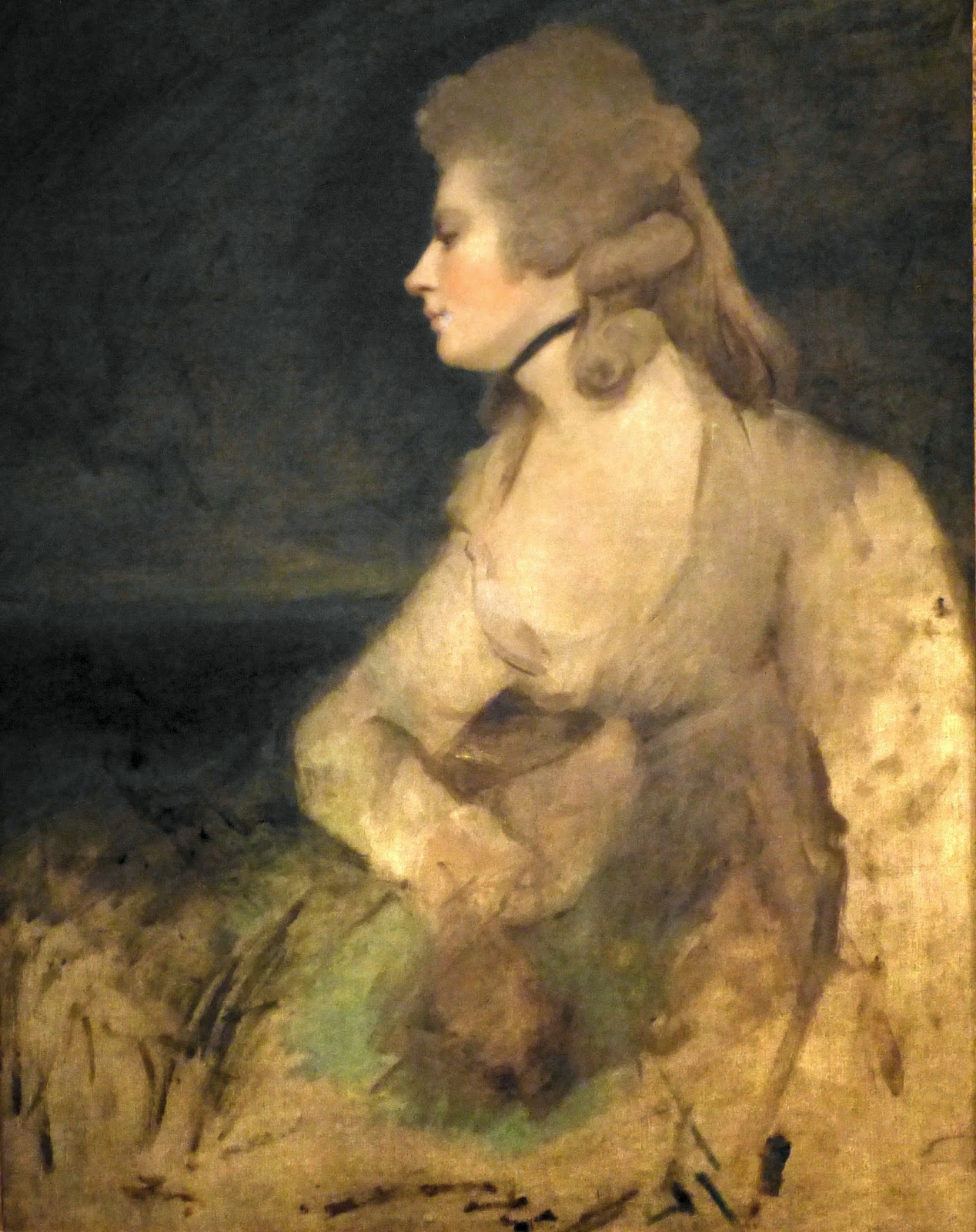
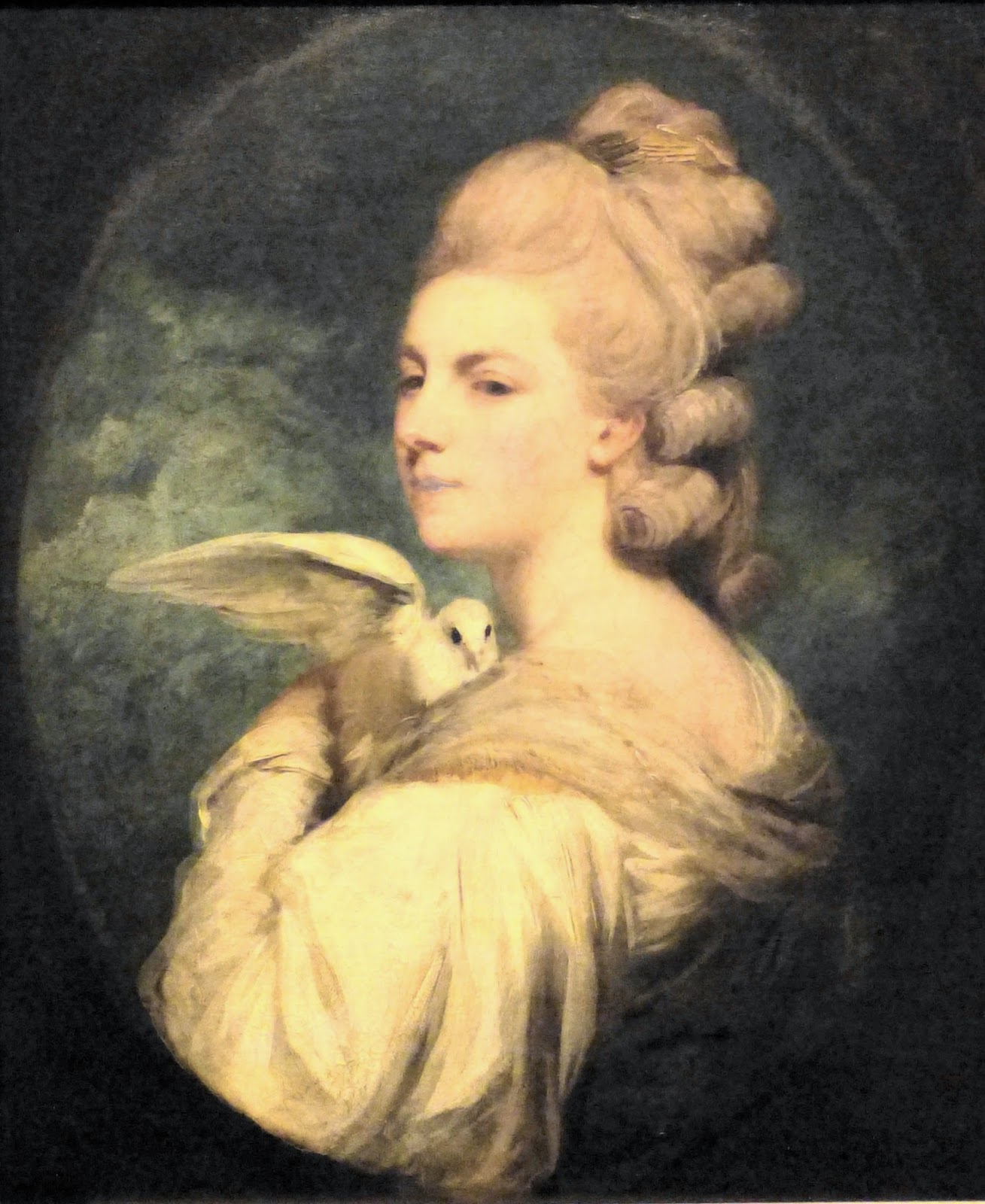
Mrs Mary Robinson by Sir Joshua Reynolds (1783-4)  © The Wallace Collection; Photo © Andrew Knowles
Mrs Mary Robinson by Sir Joshua Reynolds (1783-4)
© The Wallace Collection; Photo © Andrew Knowles
Last week, I visited a relatively little known museum, the Wallace Collection, for a special bloggers’ event to celebrate the opening of a new exhibition: Joshua Reynolds: Experiments in Paint. The exhibition runs ended on 7 June 2015 and comprised two rooms displaying 20 Reynolds paintings – 11 belonging to the Wallace Collection and the remainder on loan.

Here is a short video of the exhibition:


Popular and experimental

Sir Joshua Reynolds (1723-1792) was a very fashionable portrait painter during the second half of the 18th century and the first President of the Royal Academy.

The exhibition is the culmination of a four-year research project into the Reynolds paintings owned by the Wallace. Using various techniques including X-ray and infrared imaging, the paintings have been investigated by experts at the Wallace with advice from the National Gallery and the Yale Center for British Art.

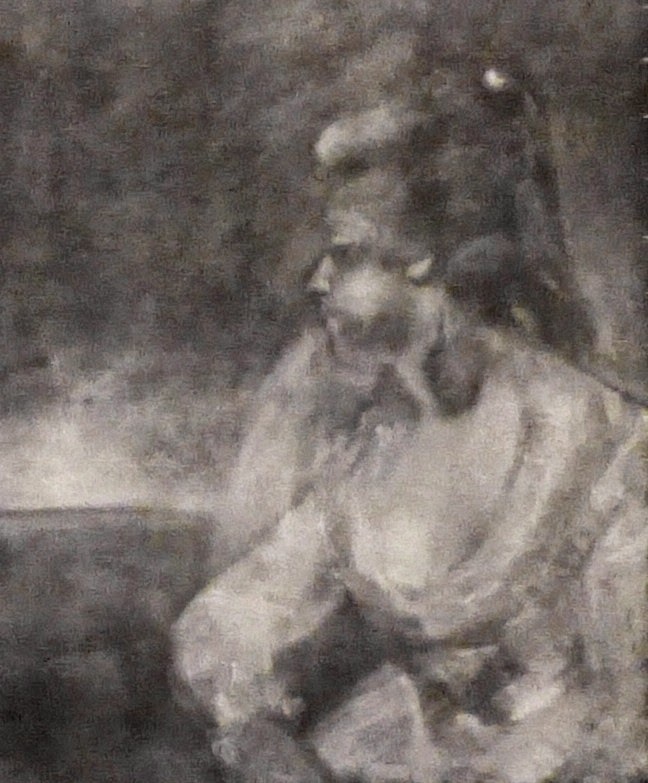
X-ray image of the portrait of Mary Robinson shown   above.
X-ray image of the portrait of Mary Robinson shown
above. The X-ray shows that Mary's hand was
originally painted supporting her chin
Photo © Andrew Knowles
The research has given new insights into the way that Reynolds painted. Some of the images produced during the research are on display alongside the actual paintings. These reveal earlier details, from the position of Mary's hand, shown above, to old paintings that have been painted over.

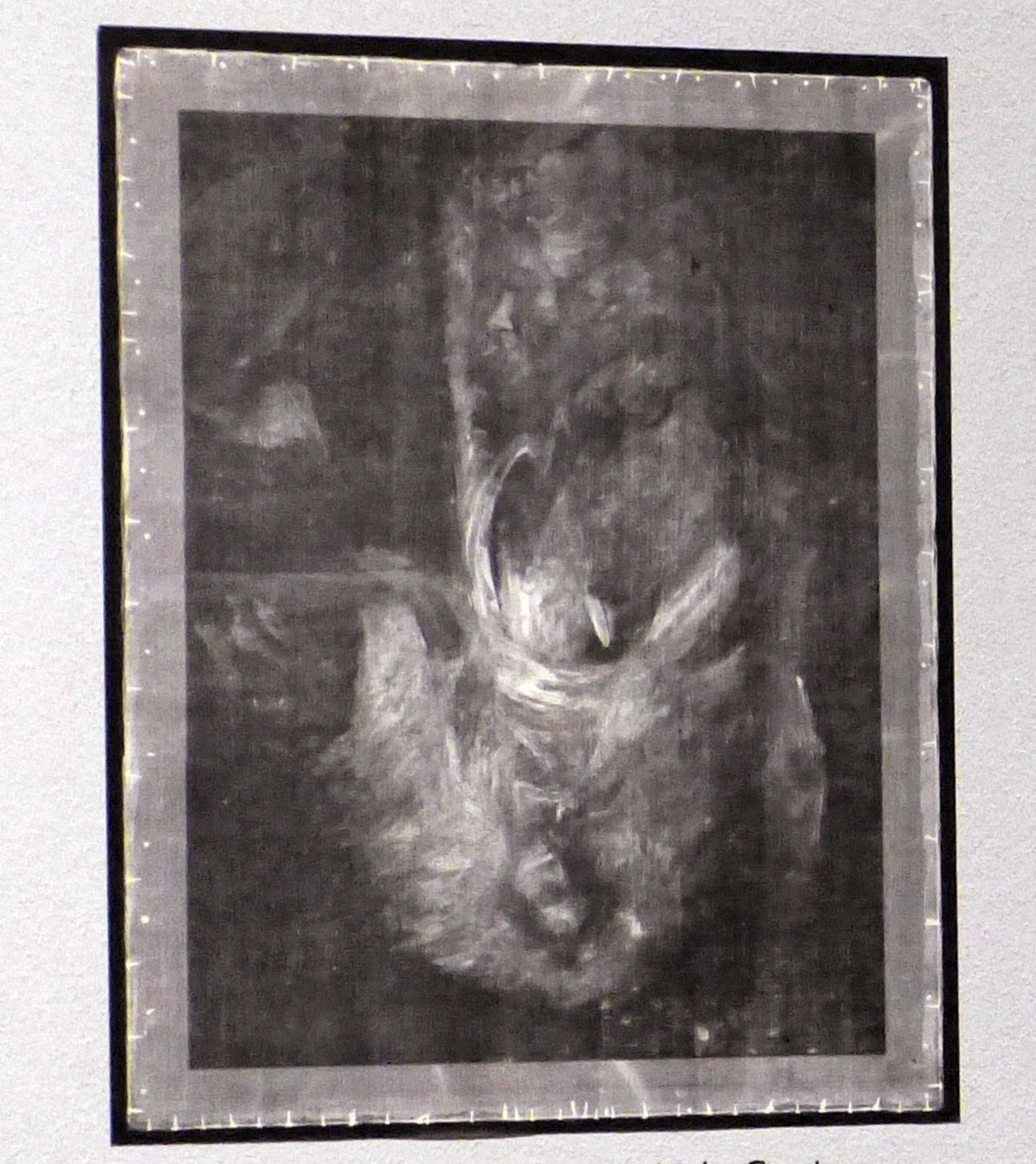
The X-ray image of the Yale Center's portrait of Mary Robinson shown below reveals that the painting was not Reynold’s first attempt, but that underneath the existing painting is another, earlier painting, upside down.

X-ray image of the Yale Center's portrait of Mary   Robinson shown below.
X-ray image of the Yale Center's portrait of Mary
Robinson shown below. The X-ray shows another
portrait that has been painted over.
Photo © Andrew Knowles
Early paintings

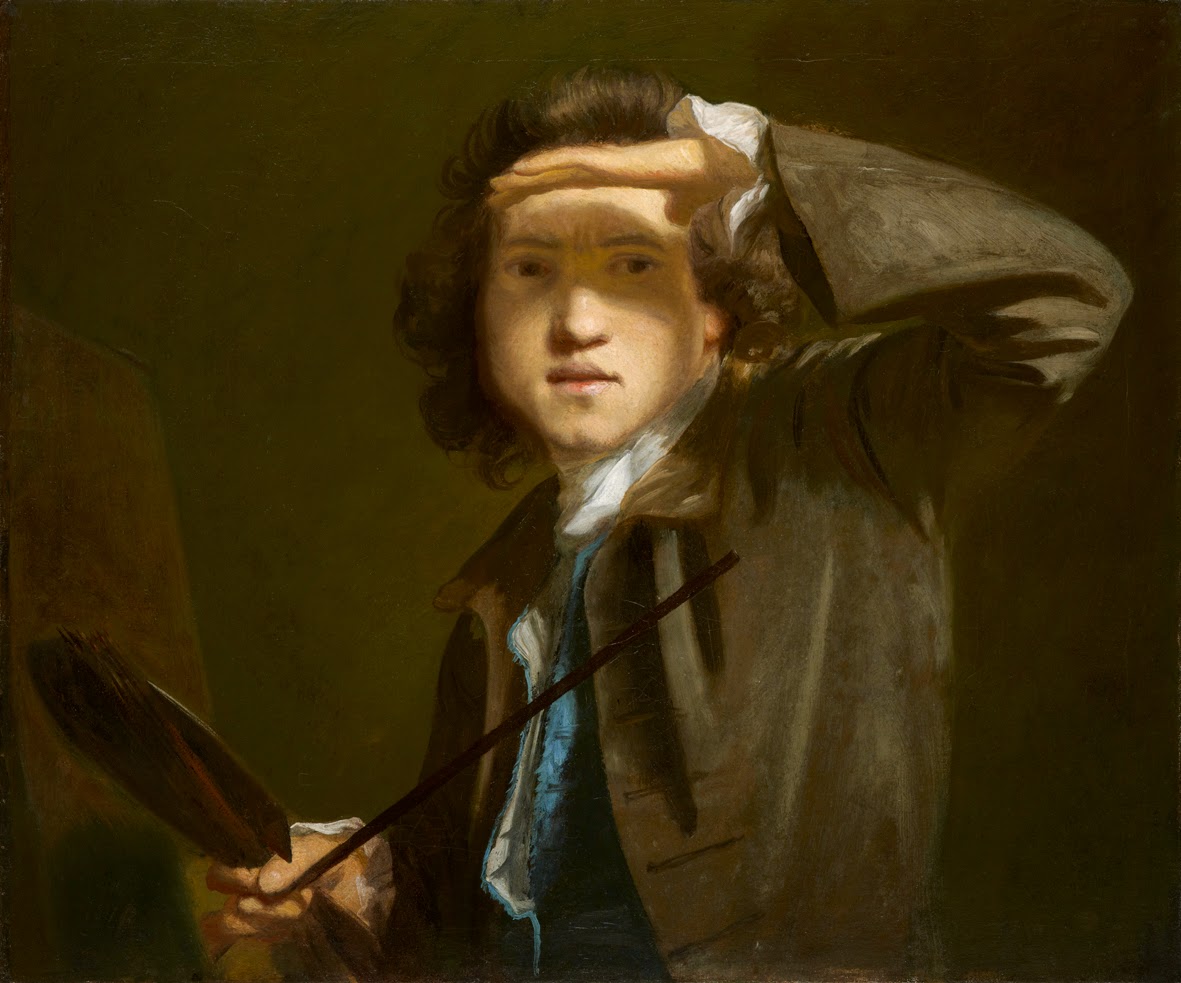
The paintings on display include some of Reynold's earliest work such as his self-portrait, painted c1747-9, before he went on the Grand Tour and a canvas entitled Studio Experiments in Colour and Media.

Self-portrait by Sir Joshua Reynolds (1747-9)  © The National Portrait Gallery, London
Self-portrait Shading the Eyes by Sir Joshua Reynolds (1747-9)
© The National Portrait Gallery, London
Studio Experiments in Colour and Media © Royal Academy of Arts, London
Studio Experiments in Colour and Media
© Royal Academy of Arts, London
Fancy paintings

The exhibition includes a number of fancy paintings – imaginative paintings of people, representing ideas rather than intended as portraits. These include The Strawberry Girl and The Age of Innocence.

The Strawberry Girl by Sir Joshua Reynolds (1772-3)  © The Wallace Collection; Photo © Andrew Knowles
The Strawberry Girl by Sir Joshua Reynolds (1772-3)
© The Wallace Collection; Photo © Andrew Knowles
The Age of Innocence by Sir Joshua Reynolds (1788)  © The Tate; Photo © Andrew Knowles
The Age of Innocence by Sir Joshua Reynolds (1788)
© The Tate; Photo © Andrew Knowles
Portraits

I particularly liked the two paintings of Mary Robinson, probably because she is the character with whom I am most familiar. The portrait owned by the Wallace Collection is shown at the top of this blog post and is very similar to that owned by the Yale Center for British Art (shown below) although this latter portrait is less finished.

Mrs Mary Robinson by Sir Joshua Reynolds (1783-5)  © The Yale Center for British Art, Paul Mellon Collection  Photo © Andrew Knowles
Mrs Mary Robinson by Sir Joshua Reynolds (1783-5)
© The Yale Center for British Art, Paul Mellon Collection
Photo © Andrew Knowles
4th Duke of Queensbury (Old Q)   by Sir Joshua Reynolds (1759)  © The Wallace Collection; Photo © Andrew Knowles
4th Duke of Queensbury ('Old Q') as Earl of March
by Sir Joshua Reynolds (1759)
© The Wallace Collection; Photo © Andrew Knowles
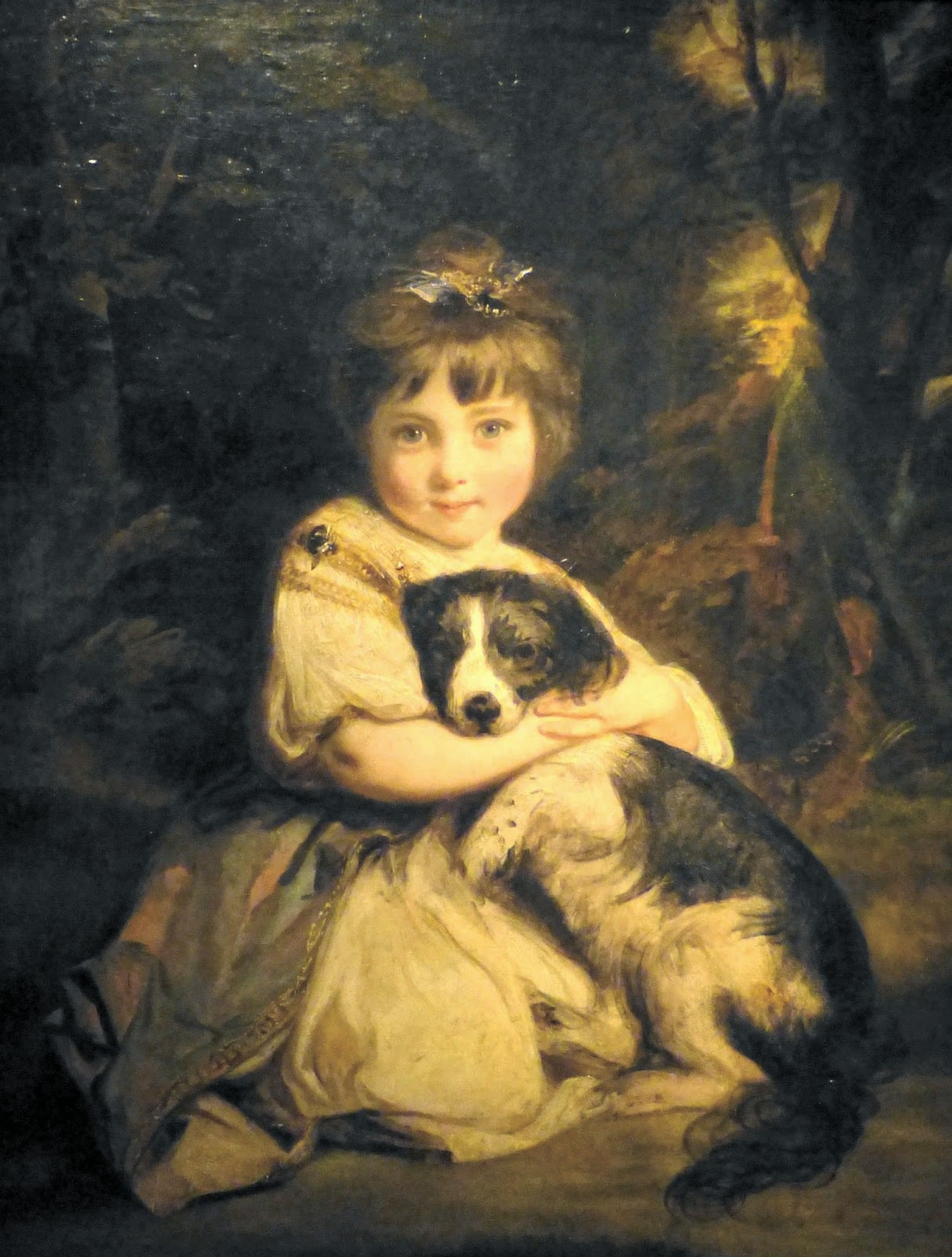
Miss Jane Bowles by Sir Joshua Reynolds (1775)  © The Wallace Collection; Photo © Andrew Knowles
Miss Jane Bowles by Sir Joshua Reynolds (1775)
© The Wallace Collection; Photo © Andrew Knowles
Miss Nelly O'Brien by Sir Joshua Reynolds (c1762-4)  © The Wallace Collection; Photo © Andrew Knowles
Miss Nelly O'Brien by Sir Joshua Reynolds (c1762-4)
© The Wallace Collection; Photo © Andrew Knowles
There is a second portrait of Miss Nelly O'Brien and a lovely portrait of Miss Kitty Fisher which were on loan and could not be photographed.

Mrs Susanna Hoare and Child
by Sir Joshua Reynolds (c1763-4)
© The Wallace Collection; Photo © Andrew Knowles
Mrs Mary Nesbitt by Sir Joshua Reynolds (c1781)  © The Wallace Collection; Photo © Andrew Knowles
Mrs Mary Nesbitt by Sir Joshua Reynolds (c1781)
© The Wallace Collection; Photo © Andrew Knowles
Reynolds sometimes depicted his sitters in character, such as Mrs Abington as Miss Prue in Love for Love by William Congreve (below).

Mrs Abington as Miss Prue by Sir Joshua Reynolds (1771)  © The Yale Center for British Art, Paul Mellon Collection  Photo © Andrew Knowles
Mrs Abington as Miss Prue by Sir Joshua Reynolds (1771)
© The Yale Center for British Art, Paul Mellon Collection
Photo © Andrew Knowles
The Wallace Collection is in Hertford House in Manchester Square, London and is open every day from 10am to 5pm. Admission to the museum is free.

Headshot of Rachel Knowles author with sea in background(2021)
Rachel Knowles writes faith-based Regency romance and historical non-fiction. She has been sharing her research on this blog since 2011. Rachel lives in the beautiful Georgian seaside town of Weymouth, Dorset, on the south coast of England, with her husband, Andrew.

Find out more about Rachel's books and sign up for her newsletter here.

If you have enjoyed this blog and want to encourage me and help me to keep making my research freely available, please buy me a virtual cup of coffee by clicking the button below.