Search this blog

Showing posts with label etiquette. Show all posts

Wednesday, 1 June 2022

Visiting cards in the Regency

Copper plate filled with facsimile Regency visiting cards (Rachel Knowles's experimental history 2022)
Facsimile Regency visiting cards
(Rachel Knowles's experimental history 2022)
Visiting cards

Visiting cards or calling cards were small rectangular pieces of card similar to a business card today. They were inscribed with a person’s name and often but not always with their address. An important part of Regency etiquette, visiting cards could be used for initiating contact with a stranger, as well as letting someone know you had called.

What did a Regency visiting card look like?

They varied in size and design, but the consistent theme seems to have been small and rectangular.

Some were plain rectangles of parchment or card, whereas others came with a pre-printed design around the edge.

Several of the printed cards I looked at were by William Sharp (1749–1824) – one of the most distinguished British line engravers. He engraved plates for trade cards as well as visiting cards.

Trade card for William Sharp, Engraver London (1749-1824) The Met Museum DP885194
Trade card for William Sharp, Engraver
London (1749-1824) The Met Museum DP885194
Calling cards were always inscribed with the person’s name. I came across a few examples of cards with two names on—typically, a lady and her daughter. The cards did not always include their address. Some mentioned the person’s position.

Some cards had the details handwritten, others had the name engraved onto the card. Some, like Colonel Roche’s card designed by Cipriani, had the name incorporated in an elaborate design.

You can look at a large collection of calling cards in the British Museum collections here.

How big were Regency visiting cards?

The visiting cards I looked at in the British Museum’s collection varied in size, ranging from 32mm X 66mm to 78mm X 121mm. The majority of cards were at the smaller end of the scale.

To put this into context, a standard US business card today is 50.8mm X 88.9mm (3.5 X 2 inches) and a standard British card today is a little wider and shorter at 55mm X 85mm.

I decided to do a little bit of experimental history. Using the cards on the British Museum’s website as a guide, I created a number of facsimile Regency visiting cards for characters in my novels using the dimensions of actual cards and similar designs.  

The photo below shows my card (based on US measurements despite being in the UK!) and a selection of the cards I made. As you can see, most of the calling cards are smaller.

Although many of the plainest and smallest cards I looked at were for men, some gentlemen’s cards were as big and as elaborate as those used by ladies.

Facsimile Regency visiting cards with a modern business card to show relative sizes (Rachel Knowles's experimental history 2022)
Facsimile Regency visiting cards with a modern business
card to show relative sizes
(Rachel Knowles's experimental history 2022)
Leaving cards when someone was ‘not at home’

The etiquette of leaving cards is linked to the etiquette surrounding morning calls.

You can read about morning calls here.

When making a morning call, it was customary to present your card on arrival. By this means, the visitor discovered whether the host was ‘at home’ to visitors and specifically, whether they were willing to receive you.

If the visitor was an acquaintance, then the response of ‘not at home’ either meant that the person was out, or that it was simply not a convenient time for visitors.

In Domestic Duties or Instructions to young married ladies on the management of their households (1825), Mrs Parkes wrote:

As the words ‘not at home’ have become synonymous with ‘being engaged’, they neither deceive , nor are intended to deceive; therefore they may be employed innocently, as far as regards our friends and ourselves.1

If the visitor was a stranger, then ‘not at home’ might mean the same, but it might indicate that the person did not desire the acquaintance.

Either way, if the person was not at home, the visitor would leave their card. They might turn down the corner of the card to indicate they had visited personally. Alternatively, as in one example I found at the British Museum, they might write the words ‘called’ or similar on it to indicate that they had left the card in person.

In Sense and Sensibility, Elinor Dashwood knew that Edward Ferrars was in town because he left his card:

Edward assured them himself of his being in town, within a very short time, by twice calling in Berkeley Street. Twice was his card found on the table, when they returned from their morning’s engagements. Elinor was pleased that he had called; and still more pleased that she had missed him.2

Etiquette dictated that the person should return the visit as soon as possible. However, if the visitor was a stranger and the person did not desire the acquaintance, it was sufficient to send a card instead.

In February 1807 Jane Austen wrote of a visitor they had missed whose visit they were unable to return because the visitor had left no address:

Mary has for some time had notice from Mrs Dickson of the intended arrival of a certain Miss Fowler in this place. Miss Fowler is an intimate friend of Mrs Dickson, and a good deal known as such to Mary. On Thursday last she called here while we were out. Mary found, on our return, her card with only her name on it, and she had left word that she would call again. The particularity of this made us talk, and, among other conjectures, Frank said in joke, “I dare say she is staying with the Pearsons.” The connection of the names struck Mary, and she immediately recollected Miss Fowler's having been very intimate with persons so called, and, upon putting everything together, we have scarcely a doubt of her being actually staying with the only family in the place whom we cannot visit.3

19th century silver calling card tray, Redlich Co. Minneapolis Institute of Art
19th century silver calling card tray, Redlich Co.
Minneapolis Institute of Art
How many cards should be left?

It was polite to leave a card to each person in the household whom you had intended to visit.

In Domestic Duties (1825) Mrs Parkes wrote:

Where cards are to be left, the number must be determined according to the various members of which the family called upon is composed. For instance, where there are the mother, aunt, and daughters (the latter having been introduced to society), three cards should be left.4

Leaving cards on arrival in town

When a person arrived in a town where they had some acquaintance, it was customary to call or leave cards to let them know of your arrival.

In Jane Austen’s Sense and Sensibility, Mrs Jennings left cards on her return to London:

The morning was chiefly spent in leaving cards at the houses of Mrs Jennings’s acquaintance to inform them of her being in town.5

Some hotels had printed cards for those staying there to use. A hotel guest could write their details on these cards and leave them with their acquaintances so they would know where they were staying.

Facsimile hotel cards with handwritten names (Rachel Knowles's experimental history 2022)
Facsimile hotel cards with handwritten names
(Rachel Knowles's experimental history 2022)
Leaving cards to begin an acquaintance

If you deemed someone worthy of being included in your circle of acquaintance, you could leave your card in the hope of initiating a relationship.

In Persuasion, Sir Walter Elliot and Miss Elliot made such an impact on Bath society that they were inundated with cards:

Their acquaintance was exceedingly sought after. Everybody was wanting to visit them. They had drawn back from many introductions, and still were perpetually having cards left by people of whom they knew nothing.6

In a letter to her sister in January 1807 Jane Austen complained that their acquaintance was growing too quickly:

Our acquaintance increase too fast. He was recognized lately by Admiral Bertie, and a few days since arrived the Admiral and his daughter Catherine to wait upon us. There was nothing to like or dislike in either. To the Berties are to be added the Lances, with whose cards we have been endowed, and whose visit Frank and I returned yesterday.7

Leaving cards to convey thanks

Cards could also be sent to convey thanks. In Arthur Freeling’s The Pocket Book of Etiquette (1837) he wrote:

After dining at the house of a lady , it is customary to leave a card the next day, or as soon after as circumstances will permit.8

Leaving cards to take leave

When a person was leaving the area, such as going from London to the country, it was customary to take leave in person, or by leaving cards.

Leaving a calling card after receiving a verbal invitation

In The Pocket Book of Etiquette (1837) Freeling wrote that it was advisable to leave a card after a verbal invitation from an acquaintance:

Occasionally verbal invitations are given to evening parties, by persons with whom you have not been in habits of intimacy. To prevent the awkwardness of being an unexpected visitor, you will, previous to the party, leave your card with the lady of the house.9

Sending and receiving cards when someone got married

When a gentleman married, he might have acquaintances that he would not wish to be part of the circle he would introduce to his wife. After his marriage, he and his wife would send cards to those acquaintances they wished to keep. If you did not receive a card, you assumed that the relationship had been dropped.

In The Pocket Book of Etiquette (1837) Freeling wrote:

When a man is about to be married, it is customary for him to give a dinner to his bachelor friends. He then informs them of the intended alteration in his circumstances; the health of the bride elect is drank, and it is understood that the visiting acquaintanceship ceases, unless a special invitation is received, or unless a desire to renew it be intimated by his sending his own and his wife's cards, with the customary favors.10

Etiquette required the couple to send cards in return for any left at their house after their marriage. Mrs Parkes wrote in Domestic Duties (1825):

A newly married woman, on arriving at her future home, will have to send her cards in return for those which are left at her house, after her marriage. She may afterwards expect the calls of her acquaintance; for which it is not absolutely necessary to remain at home, although politeness require that they should be returned as soon as possible. But having performed this, any further intercourse may be avoided (where it is deemed necessary) by a polite refusal of invitations.11

In Sense and Sensibility, the self-interested Lady Middleton

…determined (though rather against the opinion of Sir John) that as Mrs Willoughby would at once be a woman of elegance and fortune, to leave her card with her as soon as she married.12

Leaving cards when someone died

It was customary to leave a card in condolence rather than visiting someone who had been bereaved unless you knew the person very well.

Sending a card with a letter of recommendation

Sometimes, a stranger was given a letter of introduction by a mutual acquaintance or someone of importance. In these cases, it was customary to deliver the letter in person, and to include a visiting card with the letter.

Etiquette demanded that the person receiving the letter of introduction should respond by sending a card as soon as possible. They were not, however, obliged to receive the person.

Putting your connections on display 

Facsimile Regency visiting cards for the Earl and Countess of Castleford (the couple from A Reason for Romance) I'm sure Sir Walter would have wanted these cards on display too! (Rachel Knowles's experimental history 2022)
Facsimile Regency visiting cards for the Earl and
Countess of Castleford (the couple from A Reason for Romance)
I'm sure Sir Walter would have wanted these cards on display too!
(Rachel Knowles's experimental history 2022)

Having the right connections could make a lot of difference to your standing in society. In Persuasion, Sir Walter Elliot is desperate for his relative, the Dowager Viscountess Dalrymple, to recognise him:

Sir Walter, however, would choose his own means, and at last wrote a very fine letter of ample explanation, regret, and entreaty, to his right honourable cousin. Neither Lady Russell nor Mr Elliot could admire the letter; but it did all that was wanted, in bringing three lines of scrawl from the Dowager Viscountess. "She was very much honoured, and should be happy in their acquaintance." The toils of the business were over, the sweets began. They visited in Laura Place, they had the cards of Dowager Viscountess Dalrymple, and the Honourable Miss Carteret, to be arranged wherever they might be most visible: and "Our cousins in Laura Place,"—"Our cousin, Lady Dalrymple and Miss Carteret," were talked of to everybody.13

Headshot of Rachel Knowles author with sea in background(2021)
Rachel Knowles writes clean/Christian Regency era romance and historical non-fiction. She has been sharing her research on this blog since 2011. Rachel lives in the beautiful Georgian seaside town of Weymouth, Dorset, on the south coast of England, with her husband, Andrew.

Find out more about Rachel's books and sign up for her newsletter here.

If you have enjoyed this blog and want to encourage me and help me to keep making my research freely available, please buy me a virtual cup of coffee by clicking the button below.


Notes

  1. Parkes, Mrs William, Domestic Duties or Instructions to young married ladies on the management of their households (London, 1825).
  2. Austen, Jane, Sense and Sensibility (1811).
  3. Austen, Jane, Jane Austen's Letters, Collected and Edited by Le Faye, Deirdre (1995).
  4. Parkes op cit.
  5. Austen, Jane, Sense and Sensibility (1811).
  6. Austen, Jane, Persuasion (1817).
  7. Austen, Jane, Jane Austen's Letters, Collected and Edited by Le Faye, Deirdre (1995).
  8. Freeling, Arthur, The Pocket Book of Etiquette (Liverpool, 1837).
  9. Ibid.
  10. Freeling op cit.
  11. Parkes op cit.
  12. Austen, Jane, Sense and Sensibility (1811).
  13. Austen, Jane, Persuasion (1817, London)

Sources used include:
Austen, Jane, Emma (1815, London)
Austen, Jane, Jane Austen's Letters, Collected and Edited by Le Faye, Deirdre (Oxford University Press, 1995)
Austen, Jane, Mansfield Park (1814, London)
Austen, Jane, Northanger Abbey (1817, London)
Austen, Jane, Persuasion (1817, London)
Austen, Jane, Pride and Prejudice (1813, London)
Austen, Jane, Sense and Sensibility (1811, London)
Freeling, Arthur, The Ladies' Pocket Book of Etiquette (7th edition) (London, 1840)
Freeling, Arthur, The Pocket Book of Etiquette (Liverpool, 1837)
Parkes, Mrs William, Domestic Duties or Instructions to young married ladies on the management of their households (London, 1825)
Trusler, Rev Dr John, A System of Etiquette (1804) 

All photos © RegencyHistory.net

Friday, 6 May 2022

Morning calls in the Regency - a Regency History guide

Morning dress on a visit  La Belle Assemblée (Sept 1810)
Morning dress on a visit
 La Belle Assemblée (Sept 1810)
What was a morning call?

Morning calls were short visits of ceremony paid to your acquaintances. There were rules of etiquette surrounding these visits—when they should be made, how long and how often, and suitable topics of conversation.

What was the purpose of a morning call?

In her book, Domestic Duties or Instructions to young married ladies on the management of their households (1825), Mrs Parkes explained that these calls were necessary to maintain a wide circle of acquaintance:

When it is desirable to keep together a large circle of acquaintance, morning visits cannot very well be dispensed with. You must be aware that as time and circumstances seldom permit the frequent interchange of other visits, our acquaintance would become estranged from us, if our intercourse with them were not occasionally renewed by receiving and paying morning visits. A good economist of time will, of course, keep morning visits strictly for this purpose; and, not considering them as intended merely for amusement, will not make them more frequently than is necessary. By the occasional appropriation of a few hours many debts of this kind may be paid off at once.1

When did you make morning calls?

Contrary to what you might think, given their name, morning calls were usually made in the afternoon. This is somewhat confusing but arises from the fact that during the Regency, the morning referred to the whole period of time before dinner.

In The Pocket Book of Etiquette (1837), Freeling stated:

The most proper time to pay a morning visit, in the fashionable world, is between one and four o'clock.2

He went on to say:

A certain discretion as to the time of visiting is necessary; you would not therefore call on a person at three o'clock if you were aware that he dined or was specially occupied at that hour.3

Jane Austen wrote in a letter to her sister Cassandra in June 1808 of receiving morning calls from noon:

Early as it was—only 12 o’clock—we had scarcely taken off our bonnets before company came, Lady Knatchbull and her mother; and after them succeeded Mrs White, Mrs Hughes and her two children, Mr Moore, Harriot and Louisa, and John Bridges, with such short intervals between any, as to make it a matter of wonder to me, that Mrs Knight and I should ever had been ten minutes alone, or have had any leisure for comfortable talk.4

John Dashwood calls on Mrs Jennings by Hugh Thomson in Sense and Sensibility by Jane Austen 1896 edition
John Dashwood calls on Mrs Jennings
by Hugh Thomson in Sense and Sensibility
by Jane Austen 1896 edition
‘At home’ or ‘not at home’

It was not always convenient or desirable to receive visitors.

In A System of Etiquette (1804), Trusler wrote:

It is the fashion in exalted life now among equals, never to be at home to a morning visitor; nor indeed to any visitor we are not in the habits of intimacy with; therefore to refuse admittance to a visitor, you are not disposed to receive, will not be considered as rude. At such times, your servant should be directed to say that you are not at home. This is in fact no lie, for the expression not at home, merely implies that you are not disposed to see company, and is understood in this sense. Of course if you meet with the same reply when you go to pay a visit, you are not to be offended; unless you had been particularly invited, and you go at the appointed time.5

In Jane Austen’s Northanger Abbey, Catherine Morland misses the Tilneys calling for her to go on a walk because of Mr Thorpe’s duplicity. She calls on Miss Tilney to apologise:

She [Catherine] reached the house without any impediment, looked at the number, knocked at the door, and inquired for Miss Tilney. The man believed Miss Tilney to be at home, but was not quite certain. Would she be pleased to send up her name? She gave her card. In a few minutes the servant returned, and with a look which did not quite confirm his words, said he had been mistaken, for that Miss Tilney was walked out. Catherine, with a blush of mortification, left the house. She felt almost persuaded that Miss Tilney was at home, and too much offended to admit her; and as she retired down the street, could not withhold one glance at the drawing-room windows, in expectation of seeing her there, but no one appeared at them. At the bottom of the street, however, she looked back again, and then, not at a window, but issuing from the door, she saw Miss Tilney herself. She was followed by a gentleman, whom Catherine believed to be her father, and they turned up towards Edgar’s Buildings. Catherine, in deep mortification, proceeded on her way. She could almost be angry herself at such angry incivility; but she checked the resentful sensation; she remembered her own ignorance. She knew not how such an offence as hers might be classed by the laws of worldly politeness, to what a degree of unforgivingness it might with propriety lead, nor to what rigours of rudeness in return it might justly make her amenable.6

Miss Tilney was denied, but a deliberate lie was told rather than the more socially acceptable ‘not at home’.

In Jane Austen’s Emma, Emma Woodhouse calls on Miss Bates. Emma’s previous visit had been awkward, and so she gives the ladies the chance to be ‘not at home’ to visitors:

The fear of being still unwelcome, determined her, though assured of their being at home, to wait in the passage, and send up her name.—She heard Patty announcing it; but no such bustle succeeded as poor Miss Bates had before made so happily intelligible.—No; she heard nothing but the instant reply of, “Beg her to walk up.”7

Mrs Parkes wrote in Domestic Duties (1825):

The economy of time, so essential to the head of a family, will also prompt certain limitations as to the times of receiving morning visits. To have every morning liable to such interruptions, must be a great impediment in the way of more important avocations, and must occasion the useless dissipation of many an hour. Experience has found this out, or the custom of denial would not have become so prevalent.8

Sometimes ladies would establish which morning or mornings they were at home to visitors.

Emma Woodhouse calls on Miss Bates by Hugh Thomson in Pride and Prejudice by Jane Austen 1896 edition
Emma Woodhouse calls on Miss Bates
by Hugh Thomson in Emma
by Jane Austen 1896 edition
How long should a morning call be?

The books of etiquette I have looked at suggest that the ‘proper’ length of a morning call was between 15 and 20 minutes.

Freeling’s advice to gentlemen in The Pocket Book of Etiquette (1837) was:

In paying visits of ceremony, do not leave your hat in the hall, take it with you into the room; and, except under particular circumstances, do not remain more than a quarter of an hour, or twenty minutes.9

Trusler agreed with limiting calls to 15 or 20 minutes. In A System of Etiquette (1804) he wrote:

On paying visits of ceremony, care should be taken not to make them too long, nor too frequent; a quarter of an hour, or twenty minutes, is sufficient time to exchange compliments, or run over the topics of the day; but if the visitors become congenial to each other, and intimacy succeeds, times and lengths of visits, need not be pointed out, they will direct themselves.10

In Persuasion, Anne Elliot wished to avoid her cousin, Mr Elliot. She was glad that she had promised to visit her friend Mrs Smith and would likely miss his morning call.

She [Anne] found, on reaching home, that she had, as she intended, escaped seeing Mr Elliot; that he had called and paid them a long morning visit.11

The length of Mr Elliot’s morning call indicates the level of intimacy he had with Sir Walter’s family, allowing him to exceed the recommended 20-minute limit.

Mr Darcy and Colonel Fitzwilliam come to call on the ladies at the parsonage by Hugh Thomson in Pride and Prejudice by Jane Austen 1896 edition
Mr Darcy and Colonel Fitzwilliam come to call
on the ladies at the parsonage
by Hugh Thomson in Pride and Prejudice
by Jane Austen 1896 edition
Where should you receive visitors making morning calls?

According to Mrs Parkes:

Morning visitors are generally received in the drawing-room.12

She went on to say:

In the arrangement of the drawing-room for receiving morning visitors, the chairs should be placed so as to facilitate the colloquial intercourse of the strangers, without the necessity of a servant entering the room to place them; and this arrangement, whilst it is devoid of formality, should be done with some attention to good order. Ease, not carelessness, should predominate.13

What did people talk about during a morning call?

The simple answer seems to be nothing of any importance!

Trusler advised that conversation should be limited and kept short. As quoted above:

…a quarter of an hour, or twenty minutes, is sufficient time to exchange compliments, or run over the topics of the day.14

In Domestic Duties (1825), Mrs Parkes’s advice was presented as conversations between a young married lady and an older lady. The young married woman in her conversations voices what must have been a common opinion of morning calls:

I have often thought that morning visits are very annoying, both to receive and to pay. They fritter away so much time, without affording any adequate return; unless, indeed, anything be gained by hearing the little nothings of the day enlarged upon, and perhaps of acquiring one's self the art of discussing them as if they were matters of deep importance.15

Mrs Parkes continued:

Morning visits should not be long. In this species of intercourse, the manners should be easy and cheerful, and the subjects of conversation such as may be easily terminated. The time proper for such visits is too short to admit of serious discussions and arguments.16

In The Ladies' Pocket Book of Etiquette (1840) Freeling advised against supplying your visitors with gossip:

Do not amuse your friends by the relation of your private affairs; recollect these can only be interesting to yourself; and although you may occasionally find a good listener who has discretion, you may depend that such affairs, if listened to with interest, will be repeated. All, however, will think your mind to be but ill stored, if you are obliged to resort to egotism for their entertainment.17

Fanny Price talks over the ball by Hugh Thomson in Mansfield Park by Jane Austen 1897 edition
Fanny Price talks over the ball
by Hugh Thomson in Mansfield Park
by Jane Austen 1897 edition
What could a lady do during a morning call?

Mrs Parkes wrote that doing light needlework during a morning visit was acceptable:

It is almost unnecessary to add, that the occupations of drawing, music and reading, should be suspended on the entrance of morning visitors. But if a lady be engaged with light needlework, and none other is appropriate in the drawing-room, it promotes ease, and is not inconsistent with good breeding to continue it during conversation; particularly if the visit be protracted or the visitors be gentlemen.18

In his Ladies Pocket Book of Etiquette, Freeling wrote that all occupations should be put aside, unless you knew the visitor well:

In receiving morning visitors, it is necessary to lay aside any employment in which you may be engaged, unless indeed the visitors happen to be persons with whom you are on the most familiar terms of intimacy. You cannot do two things at once; if you attempt it, you will negligently pursue your employment, or leave undone some of those graceful lightnesses, those elegant attentions, which prevent such visits from degenerating into sombre ceremonies.19

Should you see your guests out?

Mrs Parkes was of the opinion that it was not necessary to see your guests out:

It was formerly the custom to see visitors to the door on taking leave; but this is now discontinued. The lady of the house merely rises from her seat, shakes hands or courtesies, according as her intimacy is with the parties, and then ringing the bell to summon a servant to attend them, leaves them to find their way out of the house.20

In The Pocket Book of Etiquette for gentlemen, Freeling suggested that seeing a guest out gave them a special distinction:

When any visitor leaves the room, ring the bell for a servant to be in attendance and open the street door; but if you wish to shew any person particular attention, and are not occupied with other company, it would be a great mark of deference for you to attend him half way down the stairs, after having secured the attendance of your servant at the door; this would of course only be done in extreme cases, and when you had a special desire to shew your high esteem for your visitor.21

Morning dress  Ackermann's Repository (May 1816)
Morning dress
 Ackermann's Repository (May 1816)
Returning visits

Etiquette demanded that morning calls were returned. It was polite to return the call as soon as possible.

In Pride and Prejudice, Jane Bennet calls on Caroline Bingley in London. Miss Bingley slighted Jane by leaving it a fortnight before returning her visit:

Caroline did not return my visit till yesterday; and not a note, not a line, did I receive in the meantime. When she did come, it was very evident that she had no pleasure in it; she made a slight, formal apology, for not calling before, said not a word of wishing to see me again, and was in every respect so altered a creature, that when she went away I was perfectly resolved to continue the acquaintance no longer.22

Visiting new neighbours in the country

When a gentleman took a house in the country, it was customary for the neighbouring gentry to visit them. It was polite for the new gentleman to return the visit as soon as possible if he wished to pursue the acquaintance. If he did not wish for the acquaintance, he should still send his card.

In Pride and Prejudice, Mrs Bennet urges her husband to visit Mr Bingley when he first takes Netherfield. Mr Bennet teases his wife, saying he does not intend to go:

“But consider your daughters. Only think what an establishment it would be for one of them. Sir William and Lady Lucas are determined to go, merely on that account, for in general, you know, they visit no newcomers. Indeed you must go, for it will be impossible for us to visit him, if you do not.”

“I am sick of Mr Bingley,” cried his wife.
“I am sorry to hear that; but why did not you tell me so before? If I had known as much this morning, I certainly would not have called on him. It is very unlucky; but as I have actually paid the visit, we cannot escape the acquaintance now.”23

Taking leave

It was customary to visit or send a calling card to take leave of your friends before going out of an area.

In Jane Austen’s Emma, Frank Churchill is called away from Highbury:

Mrs Weston added, “that he [Frank Churchill] could only allow himself time to hurry to Highbury, after breakfast, and take leave of the few friends there whom he could suppose to feel any interest in him; and that he might be expected at Hartfield very soon.”24

You can read more about visiting cards here.

Headshot of Rachel Knowles author with sea in background(2021)
Rachel Knowles writes clean/Christian Regency era romance and historical non-fiction. She has been sharing her research on this blog since 2011. Rachel lives in the beautiful Georgian seaside town of Weymouth, Dorset, on the south coast of England, with her husband, Andrew.

Find out more about Rachel's books and sign up for her newsletter here.

If you have enjoyed this blog and want to encourage me and help me to keep making my research freely available, please buy me a virtual cup of coffee by clicking the button below.


Notes

  1. Parkes, Mrs William, Domestic Duties or Instructions to young married ladies on the management of their households (London, 1825).
  2. Freeling, Arthur, The Pocket Book of Etiquette (Liverpool, 1837).
  3. Ibid.
  4. Austen, Jane, Jane Austen's Letters, Collected and Edited by Le Faye, Deirdre (1995).
  5. Trusler, Rev Dr John, A System of Etiquette (1804).
  6. Austen, Jane, Northanger Abbey (1817).
  7. Austen, Jane, Emma (1815).
  8. Parkes op cit.
  9. Freeling, Arthur, The Pocket Book of Etiquette (Liverpool, 1837).
  10. Trusler op cit.
  11. Austen, Jane, Persuasion (1817).
  12. Parkes op cit.
  13. Ibid.
  14. Trusler op cit.
  15. Parkes op cit.
  16. Ibid.
  17. Freeling, Arthur, The Ladies' Pocket Book of Etiquette (7th edition) (London, 1840).
  18. Parkes op cit.
  19. Freeling, Arthur, The Pocket Book of Etiquette (Liverpool, 1837).
  20. Austen, Jane, Pride and Prejudice (1813).
  21. Ibid.
  22. Austen, Jane, Emma (1815).
Sources used include:
Austen, Jane, Emma (1815, London)
Austen, Jane, Jane Austen's Letters, Collected and Edited by Le Faye, Deirdre (Oxford University Press, 1995)
Austen, Jane, Mansfield Park (1814, London)
Austen, Jane, Northanger Abbey (1817, London)
Austen, Jane, Persuasion (1817, London)
Austen, Jane, Pride and Prejudice (1813, London)
Austen, Jane, Sense and Sensibility (1811, London)
Freeling, Arthur, The Ladies' Pocket Book of Etiquette (7th edition) (London, 1840)
Freeling, Arthur, The Pocket Book of Etiquette (Liverpool, 1837)
Parkes, Mrs William, Domestic Duties or Instructions to young married ladies on the management of their households (London, 1825)
Trusler, Rev Dr John, A System of Etiquette (1804)

Saturday, 26 February 2022

How do you address a baronet or knight?

Sir Walter Elliot, Bt, walking with Colonel Wallis by H Thomson (1897) From Persuasion by Jane Austen (1897 edition)
Sir Walter Elliot, Bt, walking with 
Colonel Wallis by H Thomson (1897)
From Persuasion by Jane Austen (1897 edition)
Jane Austen rarely wrote about peers of the realm, but her books do contain a fair smattering of baronets and knights—the subject of this post.

In this post I answer the following questions:

Are baronets and knights peers?

Are the titles hereditary?

How do you address a baronet or a knight?

How do you address a baronet’s wife or a knight’s wife?

How do you address a baronet’s widow or a knight’s widow?

What is a baronetess?

Are all orders of knighthood the same?

I also highlight a mistake sometimes made by Regency romance authors.

Are baronets and knights peers?

No. Baronets and knights are titled gentlemen but not peers.

There are only five ranks in the English aristocracy: duke, marquess, earl, viscount and baron.

You can read about how to address peers here. 

Baronets and knights rank below this. They are not lords and could stand as Members of Parliament in the House of Commons.

Is baronet a hereditary title?

Yes. The title of baronet is hereditary, passing down the male line in the same way that aristocratic titles do.

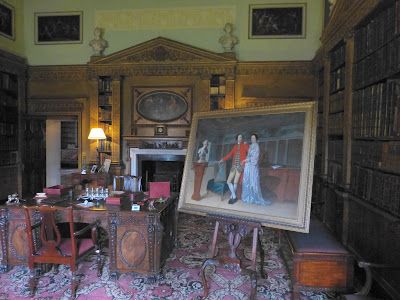
Sir Rowland Winn, 5th Baronet, and his wife in the library of their house, Nostell Priory (2014)
Sir Rowland Winn, 5th Baronet, and his wife
in the library of their house, Nostell Priory (2014)
How do you address a baronet?

A baronet adopts the title Sir Christian-name Surname with the abbreviation Bt or Bart after it.

For example, in Jane Austen’s Persuasion, Anne Elliot’s father is a baronet, and his full title is Sir Walter Elliot, Bt. He is always referred to as Sir Walter—never as Sir Elliot.1

How do you address a baronet’s wife?

The wife of a baronet is always referred to as Lady Surname unless she has a title of her own.

In Persuasion, Anne Elliot’s deceased mother is referred to as Lady Elliot.2

Similarly, in Mansfield Park, Sir Thomas Bertram’s wife is referred to as Lady Bertram.3

The exception to this rule is when a baronet’s wife has a title of her own.

For example, Sir William Wyndham, 3rd Baronet (c1688–1740) married Lady Catherine Seymour, a daughter of Charles Seymour, 6th Duke of Somerset. As her husband was not a peer, Lady Catherine was entitled to keep the title she held as the daughter of a duke and be called Lady Catherine Wyndham. 

You can read more about married daughters of peers here.

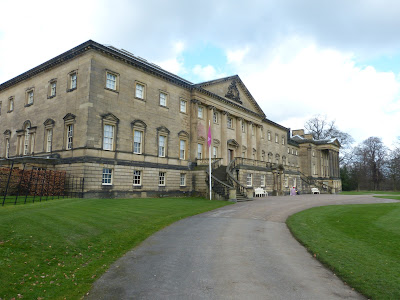
Nostell Priory (2014)
How do you address a baronet’s widow?

If a baronet dies, his widow retains the title she held as his wife unless and until the next baronet is married, in which case she becomes the Dowager Lady Surname, or Christian-name, Lady Surname, to distinguish her from the current baronet’s wife. If she has a title in her own right, she continues to use that.

If she remarries to a peer, she takes her new husband’s title.

If she remarries to a commoner, she loses her right to the title of Lady. But if she has her own title, she continues to use this eg as the daughter of an earl, she becomes Lady Christian-name New-husband’s-surname.

What is a baronetess?

A baronetess is either a woman holding the rank of baronet in her own right, or the wife or widow of a baronet.

It is extremely rare for women to hold the rank of baronet in their own right, and there were none during the Regency era. I have only been able to find a couple of contemporary uses of the term, one of which refers to Dame Mary Bolles, 1st Baronetess (1579–1662).4

Sir John Middleton and Mrs Jennings by H Thomson (1896) From Sense and Sensibility by Jane Austen (1896 edition)
Sir John Middleton and Mrs Jennings
by H Thomson (1896)
From Sense and Sensibility by Jane Austen (1896 edition)
Is knight a hereditary title?

No. There are different orders of knighthood, but unlike baronetcies, none of them are hereditary.

Are all knighthoods the same?

No. In the Regency, there were various orders of knighthood.5

In order of precedence they were:

Knights of the Most Noble Order of the Garter

Knights of the Most Honourable Order of the Bath

Knights of the Most Distinguished Order of Saint Michael and Saint George

Knights Bachelor

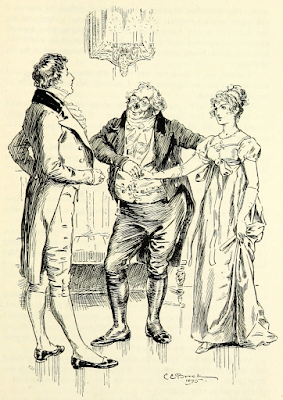
Sir William presents Elizabeth Bennet to Mr Darcy as a desirable partner by C E Brock (1895) From Pride and Prejudice by Jane Austen (1895 edition)
Sir William Lucas presents Elizabeth Bennet
to Mr Darcy as a desirable partner
by C E Brock (1895) from Pride and Prejudice
by Jane Austen (1895 edition)
How do you address a knight?

A knight bachelor is the lowest class of knight, and the most common. It is the one we come across in the novels of Jane Austen.

As with a baronet, a knight adopts the title Sir Christian-name Surname, though without the word or abbreviation for baronet after it. Sometimes the name might be written with Knight or Knt after it in formal documents.

In Jane Austen’s Pride and Prejudice, Charlotte Lucas’s father was a knight and was called Sir William Lucas:

Sir William Lucas had been formerly in trade in Meryton, where he had made a tolerable fortune, and risen to the honour of knighthood by an address to the king during his mayoralty.6

Similarly, in Sense and Sensibility, Mrs Dashwood had a relative, Sir John Middleton, who was “a gentleman of consequence and property in Devonshire.”7

For the variations for the other classes of knights, see the end of this post.

How do you address a knight’s wife?

The rules are the same as for a baronet’s wife. She is always referred to as Lady Surname unless she has a title of her own.

In the two examples above, Sir William Lucas’s wife is always referred to as Lady Lucas, and Sir John Middleton’s wife as Lady Middleton.

How do you address a knight’s widow?

The widow of a knight may continue to use the designation Lady Surname unless she remarries.

In Persuasion, Anne Elliot’s friend, Lady Russell, is the widow of Sir Henry Russell, a knight.8

If she has a title in her own right, she continues to use that.

In Pride and Prejudice, Mr Darcy’s aunt is referred to as Lady Catherine de Bourgh. Mr Collins writes:

I have been so fortunate as to be distinguished by the patronage of the Right Honourable Lady Catherine de Bourgh, widow of Sir Lewis de Bourgh.9

As Mr Collins made a lot of Lady Catherine’s patronage, and Sir Lewis de Bourgh is not described as a baronet, I assume he was a knight. On her marriage, Lady Catherine retained the use of her title as the daughter of an earl.

Although it doesn’t say this directly in the book, we can deduce this because we know that one of Lady Catherine’s nephews, Colonel Fitzwilliam, is the younger son of an earl—Lady Catherine’s brother. He must have inherited this title from his father, making Lady Catherine the daughter of an earl.

On her husband’s death, Lady Catherine continued to use her title, Lady Catherine de Bourgh.

Lady Catherine de Bourgh by C E Brock (1895) From Pride and Prejudice by Jane Austen (1895 edition)
Lady Catherine de Bourgh by C E Brock (1895)
From Pride and Prejudice by Jane Austen (1895 edition)
Who ranks more highly, a baronet or a knight?

With the exception of Knights of the Order of the Garter, baronets rank higher than knights.

In Persuasion, Lady Russell is fully aware of this:

Lady Russell…had a cultivated mind, and was, generally speaking, rational and consistent; but she had prejudices on the side of ancestry; she had a value for rank and consequence, which blinded her a little to the faults of those who possessed them. Herself the widow of only a knight, she gave the dignity of a baronet all its due; and Sir Walter, independent of his claims as an old acquaintance, an attentive neighbour, an obliging landlord, the husband of her very dear friend, the father of Anne and her sisters, was, as being Sir Walter, in her apprehension, entitled to a great deal of compassion and consideration under his present difficulties.10

A word of warning to Regency romance authors

Titles are tricky, and it is easy to make mistakes, particularly when introducing your characters for the first time. It is tempting to give the wife of a baronet or knight as full a name as possible, with both title and Christian name.

The basic rule is don’t mix and match! If she’s got no title, she’s always Lady Surname. If she has the courtesy title of Lady from her father, she’s always Lady Christian-name Surname.

Let us take the example of Lady Bertram in Mansfield Park. She has no title of her own and so would always be referred to as Lady Bertram, never as Lady Maria Bertram. If you wanted to introduce her with her Christian name, you could say Maria, Lady Bertram.

Jane Austen’s introduction of Lady Bertram reads:

About thirty years ago Miss Maria Ward, of Huntingdon, with only seven thousand pounds, had the good luck to captivate Sir Thomas Bertram, of Mansfield Park, in the county of Northampton, and to be thereby raised to the rank of a baronet’s lady, with all the comforts and consequences of a handsome house and large income.11

If Sir Thomas Bertram’s wife were titled eg as the daughter of an earl, it would be correct to call her Lady Maria Bertram, but then she would be referred to as Lady Maria all through the book and never Lady Bertram.

Lady Bertram by H Thomson (1897) From Mansfield Park by Jane Austen (1897 edition)
Lady Bertram by H Thomson (1897)
From Mansfield Park by Jane Austen (1897 edition)
The higher orders of knighthood

In addition to being called Sir Christian-name Surname if otherwise untitled, knights of the higher orders had letters after their names.

The Most Noble Order of the Garter

Knights of the Garter were members of royalty or peers, and were distinguished by the initials KG after their name eg Charles Lennox, 4th Duke of Richmond, KG, made a Knight of the Garter in 1812.

The Most Honourable Order of the Bath

This originally had a single class of membership—the Knights Companion—signified by the letters KB after the name. It was reorganised by the Prince Regent on 2 January 1815 to increase the opportunity for honouring those who had served in the Peninsular War.

The Order of the Bath was divided into three classes, the first two of which were knights. All existing members of the Order were automatically transferred to the highest level of the new system, Knights Grand Cross:

Knights Grand Cross distinguished by the initials GCB after the name eg Arthur Wellesley, 1st Duke of Wellington, GCB

Knights Commanders distinguished by the initials KCB after the name.

Companions – these are not knights but are distinguished by the letters CB after the name.

The Most Distinguished Order of St Michael and St George

The Order of St Michael and St George was introduced by the Prince Regent in 1818.

As above, there are three classes, the first two of which are knights:

Knights Grand Cross distinguished by the initials GCMG after the name.

Knights Commanders distinguished by the initials KCMG after the name.

Companions – these are not knights, but are distinguished by the letters CMG after the name.

Headshot of Rachel Knowles author with sea in background(2021)
Rachel Knowles writes clean/Christian Regency era romance and historical non-fiction. She has been sharing her research on this blog since 2011. Rachel lives in the beautiful Georgian seaside town of Weymouth, Dorset, on the south coast of England, with her husband, Andrew.

Find out more about Rachel's books and sign up for her newsletter here.

If you have enjoyed this blog and want to encourage me and help me to keep making my research freely available, please buy me a virtual cup of coffee by clicking the button below.

Notes

  1. Austen, Jane, Persuasion (1817).
  2. Ibid.
  3. Austen, Jane, Mansfield Park (1814).
  4. Brydson, Thomas, A Summary View of Heraldry (1795).
  5. Scottish nobles could be made Knights of the Most Ancient and Most Noble Order of the Thistle, which ranked after the Order of the Garter. They were distinguished by the initials KT after their name. A further order of knights was the knights banneret, a military honour conferred by the sovereign. It ranked below the Order of the Garter but above baronets, but there seems to be some debate as to whether this order still existed in the Regency or not.
  6. Austen, Jane, Pride and Prejudice (1813).
  7. Austen, Jane, Sense and Sensibility (1811).
  8. Austen, Jane, Persuasion (1817).
  9. Austen, Jane, Pride and Prejudice (1813).
  10. Austen, Jane, Persuasion (1817).
  11. Austen, Jane, Mansfield Park (1814).

Sources used include:

Austen, Jane, Mansfield Park (1814)
Austen, Jane, Persuasion (1817)
Austen,Jane, Pride and Prejudice (1813)
Austen,Jane, Sense and Sensibility (1811)
Black,Adam and Charles (publishers), Titles and forms of address - a guide to their correct use (9th edition)(1955)
Blackstone,Sir W, Commentaries on the Laws of England Vol 1 (1826)
Brydson,Thomas, A Summary View of Heraldry (1795)
Debrett,John, Debrett's Baronetage of England (1835)
Lamb,Charles, A book explaining the ranks and dignities of British Society (1809)