Search this blog

Showing posts with label titles. Show all posts

Saturday, 26 February 2022

How do you address a baronet or knight?

Sir Walter Elliot, Bt, walking with Colonel Wallis by H Thomson (1897) From Persuasion by Jane Austen (1897 edition)
Sir Walter Elliot, Bt, walking with 
Colonel Wallis by H Thomson (1897)
From Persuasion by Jane Austen (1897 edition)
Jane Austen rarely wrote about peers of the realm, but her books do contain a fair smattering of baronets and knights—the subject of this post.

In this post I answer the following questions:

Are baronets and knights peers?

Are the titles hereditary?

How do you address a baronet or a knight?

How do you address a baronet’s wife or a knight’s wife?

How do you address a baronet’s widow or a knight’s widow?

What is a baronetess?

Are all orders of knighthood the same?

I also highlight a mistake sometimes made by Regency romance authors.

Are baronets and knights peers?

No. Baronets and knights are titled gentlemen but not peers.

There are only five ranks in the English aristocracy: duke, marquess, earl, viscount and baron.

You can read about how to address peers here. 

Baronets and knights rank below this. They are not lords and could stand as Members of Parliament in the House of Commons.

Is baronet a hereditary title?

Yes. The title of baronet is hereditary, passing down the male line in the same way that aristocratic titles do.
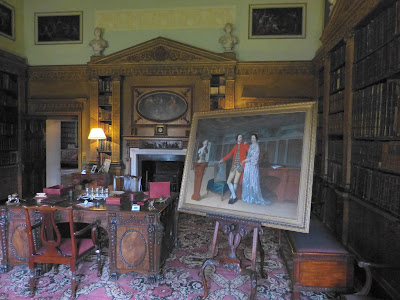
Sir Rowland Winn, 5th Baronet, and his wife in the library of their house, Nostell Priory (2014)
Sir Rowland Winn, 5th Baronet, and his wife
in the library of their house, Nostell Priory (2014)
How do you address a baronet?

A baronet adopts the title Sir Christian-name Surname with the abbreviation Bt or Bart after it.

For example, in Jane Austen’s Persuasion, Anne Elliot’s father is a baronet, and his full title is Sir Walter Elliot, Bt. He is always referred to as Sir Walter—never as Sir Elliot.1

How do you address a baronet’s wife?

The wife of a baronet is always referred to as Lady Surname unless she has a title of her own.

In Persuasion, Anne Elliot’s deceased mother is referred to as Lady Elliot.2

Similarly, in Mansfield Park, Sir Thomas Bertram’s wife is referred to as Lady Bertram.3

The exception to this rule is when a baronet’s wife has a title of her own.

For example, Sir William Wyndham, 3rd Baronet (c1688–1740) married Lady Catherine Seymour, a daughter of Charles Seymour, 6th Duke of Somerset. As her husband was not a peer, Lady Catherine was entitled to keep the title she held as the daughter of a duke and be called Lady Catherine Wyndham. 

You can read more about married daughters of peers here.
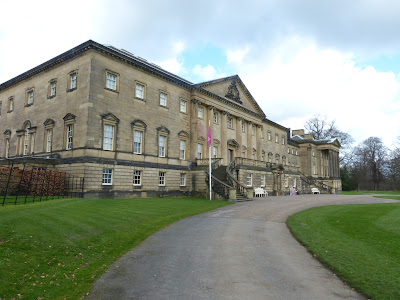
Nostell Priory (2014)
How do you address a baronet’s widow?

If a baronet dies, his widow retains the title she held as his wife unless and until the next baronet is married, in which case she becomes the Dowager Lady Surname, or Christian-name, Lady Surname, to distinguish her from the current baronet’s wife. If she has a title in her own right, she continues to use that.

If she remarries to a peer, she takes her new husband’s title.

If she remarries to a commoner, she loses her right to the title of Lady. But if she has her own title, she continues to use this eg as the daughter of an earl, she becomes Lady Christian-name New-husband’s-surname.

What is a baronetess?

A baronetess is either a woman holding the rank of baronet in her own right, or the wife or widow of a baronet.

It is extremely rare for women to hold the rank of baronet in their own right, and there were none during the Regency era. I have only been able to find a couple of contemporary uses of the term, one of which refers to Dame Mary Bolles, 1st Baronetess (1579–1662).4

Sir John Middleton and Mrs Jennings by H Thomson (1896) From Sense and Sensibility by Jane Austen (1896 edition)
Sir John Middleton and Mrs Jennings
by H Thomson (1896)
From Sense and Sensibility by Jane Austen (1896 edition)
Is knight a hereditary title?

No. There are different orders of knighthood, but unlike baronetcies, none of them are hereditary.

Are all knighthoods the same?

No. In the Regency, there were various orders of knighthood.5

In order of precedence they were:

Knights of the Most Noble Order of the Garter

Knights of the Most Honourable Order of the Bath

Knights of the Most Distinguished Order of Saint Michael and Saint George

Knights Bachelor
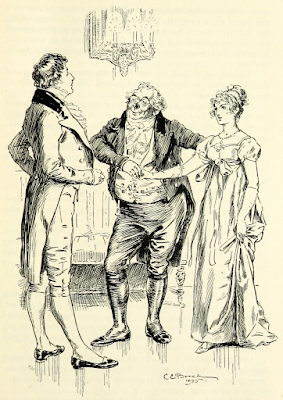
Sir William presents Elizabeth Bennet to Mr Darcy as a desirable partner by C E Brock (1895) From Pride and Prejudice by Jane Austen (1895 edition)
Sir William Lucas presents Elizabeth Bennet
to Mr Darcy as a desirable partner
by C E Brock (1895) from Pride and Prejudice
by Jane Austen (1895 edition)
How do you address a knight?

A knight bachelor is the lowest class of knight, and the most common. It is the one we come across in the novels of Jane Austen.

As with a baronet, a knight adopts the title Sir Christian-name Surname, though without the word or abbreviation for baronet after it. Sometimes the name might be written with Knight or Knt after it in formal documents.

In Jane Austen’s Pride and Prejudice, Charlotte Lucas’s father was a knight and was called Sir William Lucas:

Sir William Lucas had been formerly in trade in Meryton, where he had made a tolerable fortune, and risen to the honour of knighthood by an address to the king during his mayoralty.6

Similarly, in Sense and Sensibility, Mrs Dashwood had a relative, Sir John Middleton, who was “a gentleman of consequence and property in Devonshire.7

For the variations for the other classes of knights, see the end of this post.

How do you address a knight’s wife?

The rules are the same as for a baronet’s wife. She is always referred to as Lady Surname unless she has a title of her own.

In the two examples above, Sir William Lucas’s wife is always referred to as Lady Lucas, and Sir John Middleton’s wife as Lady Middleton.

How do you address a knight’s widow?

The widow of a knight may continue to use the designation Lady Surname unless she remarries.

In Persuasion, Anne Elliot’s friend, Lady Russell, is the widow of Sir Henry Russell, a knight.8

If she has a title in her own right, she continues to use that.

In Pride and Prejudice, Mr Darcy’s aunt is referred to as Lady Catherine de Bourgh. Mr Collins writes:

I have been so fortunate as to be distinguished by the patronage of the Right Honourable Lady Catherine de Bourgh, widow of Sir Lewis de Bourgh.9

As Mr Collins made a lot of Lady Catherine’s patronage, and Sir Lewis de Bourgh is not described as a baronet, I assume he was a knight. On her marriage, Lady Catherine retained the use of her title as the daughter of an earl.

Although it doesn’t say this directly in the book, we can deduce this because we know that one of Lady Catherine’s nephews, Colonel Fitzwilliam, is the younger son of an earl—Lady Catherine’s brother. He must have inherited this title from his father, making Lady Catherine the daughter of an earl.

On her husband’s death, Lady Catherine continued to use her title, Lady Catherine de Bourgh.

Lady Catherine de Bourgh by C E Brock (1895) From Pride and Prejudice by Jane Austen (1895 edition)
Lady Catherine de Bourgh by C E Brock (1895)
From Pride and Prejudice by Jane Austen (1895 edition)
Who ranks more highly, a baronet or a knight?

With the exception of Knights of the Order of the Garter, baronets rank higher than knights.

In Persuasion, Lady Russell is fully aware of this:

Lady Russell…had a cultivated mind, and was, generally speaking, rational and consistent; but she had prejudices on the side of ancestry; she had a value for rank and consequence, which blinded her a little to the faults of those who possessed them. Herself the widow of only a knight, she gave the dignity of a baronet all its due; and Sir Walter, independent of his claims as an old acquaintance, an attentive neighbour, an obliging landlord, the husband of her very dear friend, the father of Anne and her sisters, was, as being Sir Walter, in her apprehension, entitled to a great deal of compassion and consideration under his present difficulties.10

A word of warning to Regency romance authors

Titles are tricky, and it is easy to make mistakes, particularly when introducing your characters for the first time. It is tempting to give the wife of a baronet or knight as full a name as possible, with both title and Christian name.

The basic rule is don’t mix and match! If she’s got no title, she’s always Lady Surname. If she has the courtesy title of Lady from her father, she’s always Lady Christian-name Surname.

Let us take the example of Lady Bertram in Mansfield Park. She has no title of her own and so would always be referred to as Lady Bertram, never as Lady Maria Bertram. If you wanted to introduce her with her Christian name, you could say Maria, Lady Bertram.

Jane Austen’s introduction of Lady Bertram reads:

About thirty years ago Miss Maria Ward, of Huntingdon, with only seven thousand pounds, had the good luck to captivate Sir Thomas Bertram, of Mansfield Park, in the county of Northampton, and to be thereby raised to the rank of a baronet’s lady, with all the comforts and consequences of a handsome house and large income.11

If Sir Thomas Bertram’s wife were titled eg as the daughter of an earl, it would be correct to call her Lady Maria Bertram, but then she would be referred to as Lady Maria all through the book and never Lady Bertram.

Lady Bertram by H Thomson (1897) From Mansfield Park by Jane Austen (1897 edition)
Lady Bertram by H Thomson (1897)
From Mansfield Park by Jane Austen (1897 edition)
The higher orders of knighthood

In addition to being called Sir Christian-name Surname if otherwise untitled, knights of the higher orders had letters after their names.

The Most Noble Order of the Garter

Knights of the Garter were members of royalty or peers, and were distinguished by the initials KG after their name eg Charles Lennox, 4th Duke of Richmond, KG, made a Knight of the Garter in 1812.

The Most Honourable Order of the Bath

This originally had a single class of membership—the Knights Companion—signified by the letters KB after the name. It was reorganised by the Prince Regent on 2 January 1815 to increase the opportunity for honouring those who had served in the Peninsular War.

The Order of the Bath was divided into three classes, the first two of which were knights. All existing members of the Order were automatically transferred to the highest level of the new system, Knights Grand Cross:

Knights Grand Cross distinguished by the initials GCB after the name eg Arthur Wellesley, 1st Duke of Wellington, GCB

Knights Commanders distinguished by the initials KCB after the name.

Companions – these are not knights but are distinguished by the letters CB after the name.

The Most Distinguished Order of St Michael and St George

The Order of St Michael and St George was introduced by the Prince Regent in 1818.

As above, there are three classes, the first two of which are knights:

Knights Grand Cross distinguished by the initials GCMG after the name.

Knights Commanders distinguished by the initials KCMG after the name.

Companions – these are not knights, but are distinguished by the letters CMG after the name.

Headshot of Rachel Knowles author with sea in background(2021)
Rachel Knowles writes clean/Christian Regency era romance and historical non-fiction. She has been sharing her research on this blog since 2011. Rachel lives in the beautiful Georgian seaside town of Weymouth, Dorset, on the south coast of England, with her husband, Andrew.

Find out more about Rachel's books and sign up for her newsletter here.

If you have enjoyed this blog and want to encourage me and help me to keep making my research freely available, please buy me a virtual cup of coffee by clicking the button below.

Notes

  1. Austen, Jane, Persuasion (1817).
  2. Ibid.
  3. Austen, Jane, Mansfield Park (1814).
  4. Brydson, Thomas, A Summary View of Heraldry (1795).
  5. Scottish nobles could be made Knights of the Most Ancient and Most Noble Order of the Thistle, which ranked after the Order of the Garter. They were distinguished by the initials KT after their name. A further order of knights was the knights banneret, a military honour conferred by the sovereign. It ranked below the Order of the Garter but above baronets, but there seems to be some debate as to whether this order still existed in the Regency or not.
  6. Austen, Jane, Pride and Prejudice (1813).
  7. Austen, Jane, Sense and Sensibility (1811).
  8. Austen, Jane, Persuasion (1817).
  9. Austen, Jane, Pride and Prejudice (1813).
  10. Austen, Jane, Persuasion (1817).
  11. Austen, Jane, Mansfield Park (1814).

Sources used include:

Austen, Jane, Mansfield Park (1814)
Austen, Jane, Persuasion (1817)
Austen,Jane, Pride and Prejudice (1813)
Austen,Jane, Sense and Sensibility (1811)
Black,Adam and Charles (publishers), Titles and forms of address - a guide to their correct use (9th edition)(1955)
Blackstone,Sir W, Commentaries on the Laws of England Vol 1 (1826)
Brydson,Thomas, A Summary View of Heraldry (1795)
Debrett,John, Debrett's Baronetage of England (1835)
Lamb,Charles, A book explaining the ranks and dignities of British Society (1809)

Tuesday, 30 November 2021

How to inherit a dukedom

A duke from A book explaining the ranks and dignitaries of British Society (1809)
A duke from A book explaining
the ranks and dignitaries of British Society
by C Lamb
(1809)
Who inherits a peerage?

There are five ranks of the British peerage: duke, marquess, earl, viscount and baron.

These are all hereditary titles and, with a few exceptions, pass down from father to son in the male line.1

How do you inherit a dukedom?

To inherit a dukedom, you would need:

  1. To be a direct male descendant of a previous holder of the title.
  2. For all those with a greater claim to the title (if any) to have already died.

Normally, the dukedom would descend to the duke’s eldest son. But if he has already died, the dukedom would pass to the eldest son’s eldest son.

But what if both son and grandson have died or the duke has no sons?

The order of succession

You continue down the order of succession until you find a direct male descendant who is alive. The order of succession would look something like this:

  1. Duke’s eldest son and his direct male descendants, eldest first
  2. Duke’s 2nd son and his direct male descendants, eldest first
  3. Duke’s 3rd son etc
  4. If the Duke’s father held the title before him

  5. Duke’s next eldest brother and his direct male descendants, eldest first
  6. Duke’s next eldest brother etc
  7. If the duke’s grandfather held the title before him

  8. Duke’s father’s next eldest brother and his direct male descendants, eldest first

If there are no direct male descendants of a previous holder of the title, then the dukedom would normally become extinct.2

If, say, the current duke had been granted the dukedom and his father was only an earl, then his brothers could only inherit the earldom, not the dukedom, as they are not direct male descendants of a previous holder of the title.

Francis Russell, 5th Duke of Bedford (1765-1802) Died unmarried and was succeeded by his brother, John from The Life of George Brummell by W Jesse (1886 edition)
Francis Russell, 5th Duke of Bedford (1765-1802)
Died unmarried and was succeeded by his brother, John
from The Life of George Brummell by W Jesse (1886 edition)
What title, if any, does the heir hold before he inherits?

If the heir is the son of the current duke, then he usually takes the next highest title of the duke as a courtesy title before he inherits. The eldest son is known as the heir apparent as he is the highest in the succession order above, and will definitely inherit if he is still alive at the time of his father’s death.

In the same way, if the eldest son has died, his eldest son would be heir apparent and take his father’s courtesy title.

You can read more about the use of titles here.

If there is the possibility that another male could be born who would push the heir down the succession order, he is known as the heir presumptive.

Only direct descendants of the current duke can take a courtesy title.

What title, if any, do the relatives of the new duke use?

If the heir is a direct descendant of the current duke, then his mother and siblings will already have titles as the wife and children of the duke.

But if the heir is lower down the line of succession, then his mother and siblings may not have any title at all.

Typically, the siblings of the new duke will be awarded the rank and title of children of a duke by a royal warrant of precedence.

However, this does not usually apply to the duke’s mother who retains her previous rank.

The Dukes of Devonshire

I think it’s easier to explain using a real-life example, so we’ll look at the Dukes of Devonshire. The only problem with this example is that there are a lot of Williams!

William Cavendish, 4th Duke of Devonshire, after Thomas Hudson Hardwick Hall © National Trust via WikiMedi Commons
William Cavendish, 4th Duke of Devonshire,
after Thomas Hudson
Hardwick Hall © National Trust
via WikiMedi Commons
Let’s start with William Cavendish, 4th Duke of Devonshire (1720­–1764) who I’ll refer to as William 4. He had three sons:

William (1748–1811)(William 5)

Lord Richard (1752–1781)

Lord George (1754–1834) – made 1st Earl of Burlington in 1831.

On the death of William 4 in 1764, he was succeeded by his eldest son William 5 who became the 5th Duke of Devonshire. William 5 only had one son:

(Yet another) William (1790–1858), (William 6) who became the 6th Duke on his father’s death.

William Spencer Cavendish, 6th Duke of Devonshire - on Oak Stairs at Chatsworth Photo © A Knowles (2014)
William Spencer Cavendish, 6th Duke of
Devonshire - on Oak Stairs at Chatsworth
Photo © A Knowles (2014)
William 6 was known as the Bachelor Duke because he never married. You can read more about him here. 

When William 6 died, the title would have passed to his next oldest brother, but as he didn’t have any brothers, we have to go back another generation to the next oldest son of William 4.

However, Lord Richard had already died unmarried in 1781, so we have to go to William 4’s third son, Lord George. By the time William 6 died in 1858, George had already died, but George had married and had sons. The eldest of these was another William Cavendish (1783–1812).

As you can see from his dates, he had already died as well. But he had married, and his eldest son was also William Cavendish (1808–1891) (William 7) who became the 7th Duke of Devonshire.

William 7 already had a title – he had become the 2nd Earl of Burlington on his grandfather’s death in 1834.

If a person has already died, they cannot inherit a title posthumously. So, William 7’s father was never an earl or a duke and is always referred to as William Cavendish.

However, when a man inherits a title that his father would have inherited had he still been alive, his siblings may be granted the precedence as if he had inherited, by Royal Warrant. As Black points out, though, this is not a right but by favour of the Crown.3

So, when William 7 became Earl of Burlington in 1834, his brothers were granted the precedence of younger sons of an earl, and his sister, the precedence of a daughter of an earl.

In the same way, when William 7 became Duke of Devonshire in 1858, his brothers were granted the precedence of younger sons of a duke, and his sister, the precedence of a daughter of a duke.

His mother, however, who was still alive at the time, did not inherit the title of dowager countess or dowager duchess.4

Headshot of Rachel Knowles author with sea in background(2021)
Rachel Knowles writes clean/Christian historical romance set in the time of Jane Austen. She has been sharing her research on this blog since 2011. Rachel lives in the beautiful Georgian seaside town of Weymouth, Dorset, on the south coast of England, with her husband, Andrew.

Find out more about Rachel's books and sign up for her newsletter here.

If you have enjoyed this blog and want to encourage me and help me to keep making my research freely available, please buy me a virtual cup of coffee by clicking the button below.


Notes

  1. Some ladies hold a title in their own right. These titles, mostly baronies and a few earldoms, descend in the female line.
  2. Sometimes, a peer was given royal permission for his title to be inherited differently, eg an Act of Parliament gave John Churchill, 1st Duke of Marlborough (1650–1722), the right for his title to descend to his daughter Henrietta and then to his second daughter’s son.
  3. Black, Adam and Charles, Titles and forms of address - a guide to their correct use (9th edition)(1955).
  4. There is a long list of Royal Warrants of Precedence on Wikipedia, and this list doesn’t include any 19th century cases of precedence being granted to widows of peers. You can find the list here. The entries are all referenced with announcements in the Gazette.
Sources used include:
Black, Adam and Charles, Titles and forms of address - a guide to their correct use (9th edition)(1955)
Courthope, William, editor, Debrett's Complete Peerage of the United Kingdom of Great Britain and Ireland (1838)
Lamb, Charles, A book explaining the ranks and dignities of British Society (1809)

Friday, 21 September 2018

A Regency History guide to titles for married daughters of dukes, marquesses and other peers

From left: Lady Anne Barnard, Lady Elizabeth Foster and Lady Caro Lamb
(for details of each picture, see below)
Last month I blogged about the correct way to refer to dukes and lesser peers in narrative. You can find that blog post here. This post tackles the subject of titles of married daughters of peers. 

My previous post provoked a lot of discussion. The most searching question I was asked (by my husband Andrew who is used to me muttering about titles being used wrongly) was whether titles were used correctly at the time or whether these rules were just the ‘correct’ way and abused as much as the rules of grammar are today. In response to this, I have included some examples from contemporary newspapers and magazines to illustrate whether the rules seem to have been applied or not.

I have studied the rules and drawn up some charts which show what title the married daughter of a peer takes, based on my interpretation of these rules. 

Married daughters of dukes

If the daughter of a duke marries a peer, she takes his title. If she marries the eldest son of a peer, she takes his title, but in the case of the heir of an earl or lesser peer, she may choose to keep her own title until her husband inherits. In all other cases, she keeps her own title, even if she marries the younger son of a duke, as the daughter of a peer ranks higher than a younger son of the same level of peerage.

Let us take the fictitious example of Lady Augusta Hampton, daughter of the Duke of Wessex, and her marriage to Charles North of Swanage of varying rank. 

Table showing titles for married daughters of dukes

Did they follow the rules?

There were very few dukes (only 18 English dukes at the end of the Regency period) and as most of their daughters married peers, I have struggled to find records of these rules coming into play.

The only example I have found is in a newspaper report on the presentations at the Queen’s Drawing Room in The Times on 13 April 1810 and this appears to show them being used wrongly. Among those presented to the Queen were Lord and Lady Leveson Gower.

Granville Leveson Gower was the younger son of the Marquess of Stafford. At this date, he had no peerage of his own. His wife was Harriet, the daughter of the Duke of Devonshire. According to the rules, I would have expected to see them listed as Lord Granville Leveson Gower (title from his father) and Lady Harriet Leveson Gower (title from her father), but in this report, both Christian names were omitted. It is hard to tell whether this is significant or just a space saving exercise in the newspaper!

Harriet, Countess Granville, by Thomas Barber   the elder (1809-10), at Hardwick Hall,   National Trust via Wikimedia Commons
Harriet, Countess Granville, by Thomas Barber
the elder (1809-10), at Hardwick Hall,
National Trust via Wikimedia Commons
Married daughters of marquesses

If the daughter of a marquess marries a peer, she takes his title. If she marries the eldest son of a peer, she takes his title, but in the case of the heir of an earl or lesser peer, she may choose to keep her own title until her husband inherits. If she marries the younger son of a duke, she may choose to take his title or keep her own. In all other cases, she keeps her own title.

In this example, Lady Augusta Hampton is now the daughter of the Marquess of Denmead who is marrying Charles North of Swanage of varying rank.


As with dukes, there were similarly few marquesses in the Regency and I have no records of examples to share.

Married daughters of earls

If the daughter of an earl marries a man of equal or greater rank, she takes his title. In all other cases she retains her own title.

Lady Augusta Hampton is now the daughter of the Earl of Harting who is marrying Charles North of Swanage of varying rank.

Were these titles actually used? 

Earl’s daughter marrying a commoner

There were many more earls than dukes or marquesses in the Regency and there are plenty of instances of daughters of peers marrying commoners and retaining their titles. For example, Lady Anne Lindsay, the daughter of the 5th Earl of Balcarres, married a commoner, Andrew Barnard, and became known as Lady Anne Barnard (You can read about her here.)

Lady Anne Barnard from South Africa a Century Ago (1910)
Lady Elizabeth Foster is another example. The untitled Elizabeth Hervey married the untitled John Foster, but when her father became 4th Earl of Bristol, she was entitled to be known as Lady Elizabeth Foster – the title by which she is best known.

Lady Elizabeth Foster, later Duchess of Devonshire, in South Sketch Gallery, Chatsworth
Lady Elizabeth Foster, later Duchess of Devonshire,
in South Sketch Gallery, Chatsworth
Earl’s daughter marrying heir of viscount

Caroline Ponsonby was the daughter of Frederick Ponsonby, Viscount Duncannon. When her father became 3rd Earl of Bessborough, Caroline became known as Lady Caroline Ponsonby, and she kept this title on her marriage to William Lamb, who had no courtesy title as the eldest surviving son of Viscount Melbourne. As Caroline died before William inherited, she never shared his title.

Lady Caroline Lamb from Wives of the Prime Ministers (1844-1906)
Lady Caroline Lamb
from Wives of the Prime Ministers (1844-1906)
Earl’s daughter marrying baronet

Lady Anne Lowther, daughter of William Lowther, Earl of Lonsdale, married Sir John Beckett, Baronet. In an illustrative memoir in La Belle Assemblée in 1829, she was referred to as Lady Anne Beckett.

Married daughters of viscounts

If the daughter of a viscount marries a man of equal or higher rank, she takes his title. If she marries a man of lower rank, she retains her own title.

The Honourable Augusta Hampton is now the daughter of the Viscount Droxford who is marrying Charles North of Swanage of varying rank.


Married daughters of barons

If the daughter of a baron marries a man of equal or higher rank, she takes his title. If she marries a man of lower rank, she retains her own title.


A note about the use of “The Honourable”

The daughter of a peer ranks lower than the eldest son of the same level of peer and higher than the younger sons of the same level of peer. However, where both titles are “The Honourable” but the wife’s rank is higher (those entries marked *), I have not been able to determine whether she would use her Christian name or her husband’s or neither. It should be noted that the title “The Honourable” is never used in speech and according to Black’s, their visiting cards would simply state Mr North and Mrs North, without title or Christian names.

Headshot of Rachel Knowles author with sea in background(2021)
Rachel Knowles writes clean/Christian historical romance set in the time of Jane Austen. She has been sharing her research on this blog since 2011. Rachel lives in the beautiful Georgian seaside town of Weymouth, Dorset, on the south coast of England, with her husband, Andrew.

Find out more about Rachel's books and sign up for her newsletter here.

If you have enjoyed this blog and want to encourage me and help me to keep making my research freely available, please buy me a virtual cup of coffee by clicking the button below.

Sources used include:
A Member of the Aristocracy, Manners and Rules of Good Society (1888) (1916)
A Member of the Aristocracy, Manners and Tones of Good Society pre 1880
Bell, John, La Belle Assemblée (John Bell, 1806-1837, London)
Black, Adam and Charles (publishers), Titles and forms of address - a guide to their correct use (9th edition)(1955)
Debrett, John, The Peerage of the United Kingdom of Great Britain and Ireland (1820)
Lamb, Charles (?), A book explaining the ranks and dignities of British Society (1809)


Wednesday, 15 August 2018

Lady M – The Life and Loves of Elizabeth Lamb, Viscountess Melbourne by Colin Brown - a review

Front cover of Lady M – The Life and Loves of Elizabeth Lamb, Viscountess Melbourne 1751-1818 by Colin Brown

Lady M is the story of Elizabeth Lamb, Viscountess Melbourne (1751-1818), a powerful and ambitious Georgian socialite and political hostess for the Whigs. Lady Melbourne is much less known than her son William Lamb, 2nd Viscount Melbourne, who became Prime Minister to William IV and Queen Victoria, or her intimate friend, Georgiana Cavendish, Duchess of Devonshire

In Lady M, Brown paints a vivid picture of the powerful Lady Melbourne and the society in which she lived. I enjoyed reading this comprehensive biography but feel that it is let down by a number of errors and a poor index. 

The ruthless Lady Melbourne

Having blogged about Lady Melbourne’s life back in 2013 (you can find the post here), I came to this biography with a good understanding of Lady Melbourne’s immoral and ruthlessly ambitious character. Brown’s book did nothing to change this.

Lady Melbourne’s identity is characterised by the way she related to the important people in her life – her husband, her children, her lovers and her intimate friends. Her desire for status over faithfulness is illustrated by her relationship with her husband – the weak and extravagant Sir Peniston Lamb. She was seemingly indifferent to his adulterous relationship with the actress Sophia Baddeley and remained ambitious to improve his – and therefore her own – rank and position.

Lady Melbourne had numerous lovers, most importantly George Wyndham, 3rd Earl of Egremont; George, Prince of Wales (the future George IV); and Francis Russell, 5th Duke of Bedford. She did not seem to give or require exclusivity. 

George, Prince of Wales, by Hoppner © The Wallace Collection
George, Prince of Wales, by Hoppner
© The Wallace Collection
Her most enduring passion was for her children and she was severe on anything or anyone that threatened her ambitions for them. Her relationship with her daughter-in-law, Lady Caroline Lamb, was stormy. She was furious at Lady Caro’s lack of discretion in her affair with Lord Byron and how it threatened William’s political career. 

What I liked about Lady M

I love to see quotes from original sources and in this, Brown did not disappoint. There is evidence throughout the book of Brown’s extensive research with numerous quotes from contemporary letters and memoirs, including some from manuscript sources in the Chatsworth Archives and the Lamb papers in the British Library.

There is a good-sized colour plate section in the middle of the book which includes some contemporary prints and portraits as well as up-to-date photographs of places connected with Lady Melbourne, including Brocket Hall in Hertfordshire, Melbourne Hall in Derbyshire and Melbourne House in Whitehall.
 
Brocket Hall, Hertfordshire © Colin Brown
Though I wasn’t surprised to learn of the Melbournes’ ongoing financial difficulties (so many Georgian peers seemed to struggle with money), I don’t think I realised the extent of this before reading Lady M.

The detail included in the chapter devoted to the military encampment on Cocks Heath was largely new to me. The encampment was visited by many ladies of consequence including Lady Melbourne, the Duchess of Devonshire and the scandalous Lady Worsley. It was here that Lady Melbourne’s son William was conceived with Lord Egremont.

Where’s the family tree?

I feel there are several things that let the book down. Although the contents section lists a family tree – a very useful tool for a historical biography – the family tree itself is missing!

A bevy of errors

It is a hard task writing a historical biography. Not only do you need to research the life of the chosen person; you also need to understand the world in which they lived and the myriad of people with whom they interacted. There is danger in almost every sentence. A throwaway comment or line written from memory may prove to be inaccurate if every single fact and name is not checked and double-checked. 

I know how easy it is for errors to creep in during the editing stage and typos to pass unnoticed. If it was not for my editor spotting my typo in What Regency Women Did For Us, I would have had Jane Austen born in Stevenage instead of Steventon!

In my opinion, Lady M would have benefitted from a beta reader who is familiar with the characters and period. Too many errors crept into the manuscript that someone like me would have spotted (and did). It is not my intention to list every mistake I found. Some were clearly typos eg calling Lady Elizabeth Foster’s illegitimate daughter by the Duke of Devonshire Caroline St James instead of Caroline St Jules. Others, however, were not. I will mention a few.

Special licences

Lady Melbourne was married by special licence – not, as Brown says, because she was a minor, but because this enabled her to be married in the house of the Lord Bishop of Peterborough. A special licence was the only way to be married anywhere else other than the parish church. As a minor, she could have been married in the parish church by ordinary licence with her father’s consent or by banns if her father did not file an objection. 

George III in Sidmouth?

Having written extensively about George III’s recuperation in my home town of Weymouth in Dorset (you can read about George III in Weymouth here), I was considerably surprised to read that the king went to Sidmouth in Devon instead! And though he certainly brought a good deal of popularity to Weymouth through his repeated visits, the king could hardly be said to have started the fashion for sea bathing there.

Titles

 Writing a historical book about the aristocracy is always a tricky business as there are rules about titles and it is not easy to get them right. I recently re-researched the subject. You can find my blog post here: A Regency History guide to dukes, marquesses and other titles.

Peers (from left to right): duke, marquess, earl, viscount, baron from A book explaining the ranks and dignitaries of British Society (1809)
Peers (from left to right): duke, marquess, earl, viscount, baron
from A book explaining the ranks and dignitaries of British Society (1809)
I spotted a number of instances in Lady M where titles were used incorrectly. A person’s title should only include their Christian name if the title comes from their father. For example, when she was single, Lady Sarah Lennox was so called as she took her title from her father, the 2nd Duke of Richmond, but Lord Byron was a baron in his own right and should never be referred to as Lord George Gordon Byron. 

It should also be noted that the wife of a duke should never referred to as Lady So and So, but always as the Duchess of So and So. For example, when talking about the Duchess of Richmond’s ball, the Duchess should not have been referred to as Charlotte, Lady Richmond, but as Charlotte, Duchess of Richmond, or Charlotte Lennox, Duchess of Richmond, or simply as the Duchess of Richmond (and her husband, the 4th Duke of Richmond, was called Charles, by the way, and not George – that was his father). Whilst getting titles right is not a deal breaker for most people, it is a detail that I like get right.

Poor indexing

In my opinion, for a historical biography to be useful as a reference book, it needs a comprehensive and easy-to-use index so that names of people and places can be easily looked up. Unfortunately, I found the index to Lady M sadly lacking. 

Having written a historical book myself, I know how difficult it is to decide how to index names, especially when you are referring to the nobility whose titles may change over their lifetimes, but whatever policy is chosen, it is essential to apply it consistently with plenty of cross-references.

The naming policy in the index is all over the place. Sometimes a person is listed under their title eg Lady Oxford is listed under Oxford; other times under their surname eg Francis Russell, 5th Duke of Bedford, is listed under Russell. Bizarrely, sometimes a person is listed under their rank eg Frederick, Duke of York, is listed under Duke, or even, in the case of Georgiana Cavendish, Duchess of Devonshire, under her Christian name with no reference to her surname at all. George III is listed under King whilst Queen Victoria is listed under Victoria. 

Some people appear in the index multiple times eg Lady Bessborough appears under Spencer, Ponsonby, Duncannon and Bessborough, whilst others you might have expected to find an entry for eg William Cavendish, 5th Duke of Devonshire, don’t appear to be there at all. I would have expected to find one entry for a person under either title or surname with cross-references under the other and previous titles if necessary eg I would have expected to find a ‘see Russell, Francis, 5th Duke of Bedford’ entry under Bedford. 

This is also where the correct use of titles comes into play again. Several of the index entries incorrectly include Christian names in the title eg Lady Harriet Duncannon. The entry for George Wyndham, 3rd Earl of Egremont is even worse. He is incorrectly listed under Egremont as Lord George Egremont and there is no mention of his surname at all! 

One final gripe. There is only one index entry for Lady Jersey, but there are two different Lady Jerseys referred to in the text – Sarah Child Villiers, Countess of Jersey and Patroness of Almack’s, and Frances Villiers, Countess of Jersey, her mother-in-law.

In summary

Lady M is a comprehensive biography but it is let down by a number of errors and a poor index.