Search this blog

Monday, 15 April 2013

Frances Villiers, Countess of Jersey (1753-1821)

Frances, Countess of Jersey,  by Thomas Watson after Daniel Gardner,  mezzotint pub 1774 © National Portrait Gallery, London
Frances, Countess of Jersey,
by Thomas Watson after Daniel Gardner,
mezzotint pub 1774 © National Portrait Gallery, London
Profile

Frances Villiers, Countess of Jersey (25 February 1753 - 25 July 1821), was an influential member of Georgian society and a mistress of George IV.

An Irish beauty

Frances Twysden was born on 25 February 1753 in Raphoe, Donegal, in Ireland, the posthumous daughter of Philip Twysden, the bankrupt Bishop of Raphoe, and his second wife, Frances.

Marriage to “the Prince of Maccaronies”

On 26 March 1770, Frances married George Bussy Villiers, the 4th Earl of Jersey, at the home of her step-father, General James Johnston, an aide-de-camp to George III. The Earl was almost twenty years her senior and was Gentleman of the Bedchamber to George III. He was known for his courtly manners, leading to the bluestocking Mrs Montagu dubbing him “the Prince of Maccaronies.”1

Family life

George and Frances had ten children, two sons and eight daughters: Charlotte (1771), Anna (1772), George (1773), Caroline (1774), Georgiana who died as an infant (1776), Sarah (1779), William (1780), Elizabeth (1782), Frances (1786) and Harriet. (1788)2

As Frances was by no means faithful, it is probable that some of her children were fathered by other men. However, she appears to have been genuinely attached to her husband who stood by her throughout their marriage.

What was she like?

A great beauty, known for her charm, intelligence and wit, Frances was also a malicious gossip, notorious for her spiteful and vengeful nature. She was described in the Journal of Mary Frampton as
a clever, unprincipled, but beautiful and fascinating woman, though with scarcely any retrieving really good quality.3
Lady Bessborough was equally condemnatory, once remarking that Lady Jersey could not be happy “without a rival to trouble and torment.”4

Georgiana, Duchess of Devonshire, referred to Lady Jersey as ‘Peste’ – the French for plague.5
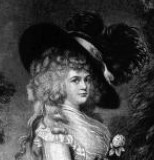
Georgiana Cavendish in the "picture hat"  after Thomas Gainsborough c1785-7    from The Two Duchesses,  Family Correspondence (1898)
Georgiana Cavendish in the "picture hat"
after Thomas Gainsborough c1785-7
  from The Two Duchesses,  Family Correspondence (1898)
Richard Brinsley Sheridan modelled his character Lady Sneerwell on a combination of her and Lady Melbourne in his play School for Scandal in 1777.

Whig campaigner

Frances became friends with Georgiana, Duchess of Devonshire, and was part of the Devonshire House set that formed the hub of the Whig party. In the election of 1784, she campaigned alongside Georgiana and her sister Harriet in support of Charles James Fox, dressed in the Whig uniform of blue and buff with a foxtail in her hat.

Lovers

Frances was not faithful to her husband and engaged in a succession of affairs. Her lovers included Frederick Howard, 5th Earl of Carlisle; Lord Morpeth; William Augustus Fawkener, clerk to the Privy Council; and William Cavendish, 5th Duke of Devonshire, husband of her ‘friend’ Georgiana, with whom she had a brief affair in 1778, which was terminated through the intervention of Georgiana’s family, the Spencers.

Frederick Howard, 5th Earl of Carlisle  from the History of White's  by A Bourke (1892)
Frederick Howard, 5th Earl of Carlisle
from the History of White's
by A Bourke (1892)
Mistress to the Prince of Wales

But by far the most famous of Lady Jersey’s lovers was George, Prince of Wales. From as early as 1782, George was attracted to Frances, who was nine years older than him, but it was not until 1793 that she became his mistress, by which time she was forty years old and a grandmother.

Having become George’s mistress, Frances was keen to establish her position. She encouraged the Prince to abandon Mrs Fitzherbert permanently and get married to solve his financial problems. She supported the choice of his cousin Caroline, believing that she would be no competition for her own attractions.
George IV  from La Belle Assemblée (1830)
George IV
from La Belle Assemblée (1830)
The misery of the Princess of Wales

In 1795, the besotted Prince appointed Lord Jersey as his Master of the Horse and made Frances Lady of the Bedchamber to his new bride. Frances lost no opportunity to taunt the Princess of Wales. She arrived late to meet her when she first arrived in England and then criticised her dress. She appeared openly as the Prince’s consort and drove about in a carriage accompanied by servants wearing the Prince’s livery.

Princess Caroline hated Frances’ influence and begged to have her removed from her position by writing repeatedly to the Prince. Frances was also accused of stealing Caroline’s letters and passing them to the Queen.
The Jersey smuggler detected; - or - good causes for discontent [separation]  Print made by James Gillray 24 May 1796  Published by Hannah Humphrey © British Museum
The Jersey smuggler detected; - or - good causes for discontent [separation]
Print made by James Gillray 24 May 1796
Published by Hannah Humphrey © British Museum
Growing unpopularity

Public opinion sided with the seemingly ill-treated Princess of Wales, and Lady Jersey and the Prince became increasingly unpopular. A mob stoned Frances’ London house and, when she visited Brighton, she was humiliated by a skimmington - two people masquerading as herself and the Prince, parading through the town on a donkey. Even amongst the ton she was shunned, most notably at a ball held by the Duchess of Gordon.

Lady Spencer declared that
Lady J. is in everything, and by everybody most thoroughly disapproved.6
Eventually, on 29 June 1796, Frances offered to resign from her post, claiming that she would have resigned earlier except that such an action seemed to prove her guilt.

Caroline, Princess of Wales  from La Belle Assemblée (1806)
Caroline, Princess of Wales
from La Belle Assemblée (1806)
But it was not the end of the Prince’s affair with Frances. The Jerseys moved into a house in Warwick Street, adjacent to Carlton House, creating fresh scandal, and Lady Jersey spent Christmas with the Prince at Critchell House near Wimborne Minster.

The end of the affair

By 1798, the fickle Prince had tired of Lady Jersey. He sent his friends to negotiate an amicable parting, but Frances was reluctant to be put aside. But by June 1799, the affair was over. The Jerseys moved out of the house in Warwick Street and the Earl was dismissed from his role as Master of the Horse. All intimacy was at an end.

"That infernal Jezabel"

Frances was furious and blamed Georgiana, who had been reconciled with the Prince, for turning him against her. She determined to plague the Prince, and by all accounts succeeded, as in 1814, he railed against “all the wickedness, perseverance and trick of that infernal Jezabel Lady Jersey.”7

According to Aspinall, Lady Jersey
tried to pay off old scores by making mischief in the Orange marriage, but it does not seem that her influence on Princess Charlotte was considerable.8.
Money problems

After her separation from the Prince, Frances was beset with financial difficulties, and in 1802, Lord Jersey was threatened with imprisonment over his debts.

On 22 August 1805, the Earl died and Frances was left without sufficient means to support her in the life to which she was accustomed. She applied to the Prince for a pension which was eventually, reluctantly, granted (9). Her son George, the 5th Earl of Jersey, increased her jointure and paid her debts from time to time, but she had no notion of economy.

Death

Frances died on 25 July 1821 in Cheltenham and was buried in the family vault at Middleton Stoney. After her death, her executor, Lord Clarendon, burned many of her papers, including correspondence relating to George IV.

The other Lady Jersey 

Sarah Sophia, Countess of Jersey  from The Illustrated Belle Assemblée (1844)
Sarah Sophia, Countess of Jersey
from The Illustrated Belle Assemblée (1844)
Frances is not to be confused with her daughter-in-law, Sarah, who was married to her elder son George Child Villiers, 5th Earl of Jersey, and was a leading member of the ton and a patroness of Almack’s.

If you enjoyed this post, you might like to read about some other women in George IV's life: Maria Fitzherbert, Lady Melbourne and Lady Hertford.

Headshot of Rachel Knowles author with sea in background(2021)
Rachel Knowles writes clean/Christian Regency era romance and historical non-fiction. She has been sharing her research on this blog since 2011. Rachel lives in the beautiful Georgian seaside town of Weymouth, Dorset, on the south coast of England, with her husband, Andrew.

Find out more about Rachel's books and sign up for her newsletter here.

If you have enjoyed this blog and want to encourage me and help me to keep making my research freely available, please buy me a virtual cup of coffee by clicking the button below.

Notes
(1) From George Bussy Villiers , fourth Earl of Jersey (1735-1805) Oxford Dictionary of National Biography by HE Maxwell (2004).
(2) From Debrett's Complete Peerage (1838).
(3) From The Journal of Mary Frampton (1885).
(4) From George IV by Christopher Hibbert (1972, 1973).
(5) From Georgiana, Duchess of Devonshire by Amanda Foreman (1998).
(6) From Georgiana, Duchess of Devonshire by Amanda Foreman (1998).
(7) From The Letters of King George IV edited by A Aspinall (1838).
(8) From The Letters of King George IV edited by A Aspinall (1838).
(9) From George IV by Christopher Hibbert (1972, 1973).

Sources used include:
Bourke, Hon Algernon, The History of White's (1892)
Courthope, William, editor, Debrett's Complete Peerage of the United Kingdom of Great Britain and Ireland (1838)
Foreman, Amanda, Georgiana, Duchess of Devonshire (HarperCollins, 1998, London)
Frampton, Mary, The Journal of Mary Frampton (1779-1846) edited by Harriot Georgiana Mundy (1885)
George IV, The Letters of King George IV 1812-1830 edited by A Aspinall in 3 volumes (1838)
Hibbert, Christopher, George IV (1972, Longmans, 1973, Allen Lane, London)
Levy, Martin J, Villiers, Frances, Countess of Jersey (1753-1821) Oxford Dictionary of National Biography (Oxford University Press, 2004; online edn Jan 2008, accessed 8 Apr 2013)
Maxwell, HE, Villiers, George Bussy, fourth Earl of Jersey (1735-1805) Oxford Dictionary of National Biography, rev MJ Mercer (Oxford University Press, 2004; online edn Jan 2008, accessed 10 Apr 2013)

Monday, 8 April 2013

Prince Adolphus, Duke of Cambridge (1774-1850)

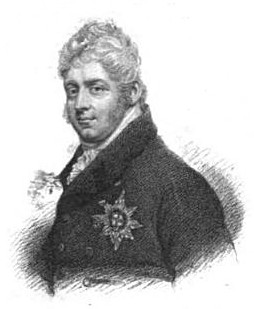
Adophus, Duke of Cambridge  from A Biographical Memoir of Frederick,   Duke of York and Albany by John Watkins (1827)
Adolphus, Duke of Cambridge
from A Biographical Memoir of Frederick,
 Duke of York and Albany by John Watkins (1827)
Profile

Prince Adolphus (24 February 1774 - 8 July 1850) was the seventh son of George III and Queen Charlotte. He was more economical than his brothers and was popular at court but did not get on well with his niece, Queen Victoria.

Early years

Prince Adolphus Frederick was born at Buckingham House on 24 February 1774. He spent his early years at Kew, sharing a house with his older brothers, Ernest and Augustus.

On 2 June 1786, he was made a Knight of the Garter and, shortly after, went with Ernest and Augustus to the University of Göttingen.1 Here his studies included the classics and theology, and he learned to fence.

A career in the army

In 1790, Adolphus travelled to Berlin to study military tactics before becoming a Colonel in the Hanoverian army. He fought in Flanders in 1793, where he was wounded and captured temporarily by the French. After recuperating in England, he returned to the Hanoverian army where he served again in Flanders. He retreated back to Hanover with the Hanoverians, but when they refused to stand up to Napoleon in 1803, Adolphus was forced to return to England.

Back in England, Adolphus was made Military Commander of the Home District and Colonel in Chief of the Coldstream Guards, but these were empty titles and he saw no active service. On 26 November 1813, he was promoted to Field Marshal in the British army.

Governor General of Hanover

In 1813, Adolphus returned to Hanover where he served as Governor General. He was made Viceroy in 1831 which gave him the power to introduce a more liberal constitution in Hanover.

On the death of William IV in 1837, his brother, the Duke of Cumberland, acceded to the Hanoverian crown and, once more, Adolphus was forced to return to England.

Duke of Cambridge

On 27 November 1801, Adolphus was made Duke of Cambridge, Earl of Tipperary and Baron of Culloden.2

Arms and label of the Duke of Cambridge  from Debrett's Complete Peerage (1838)
Arms and label of the Duke of Cambridge
from Debrett's Complete Peerage (1838)
A popular prince 

Adolphus was described by a lady visiting Hanover in 1799 as being
...extremely handsome, tall and finely formed with fair complexion and regular features, charming manners and a flow of amusing conversation.3
Caroline, Princess of Wales, on the other hand, described him in less flattering terms:
The Duke of Cambridge looks like a sergeant, and so vulgar with his ears full of powder.4
Adolphus was popular at court and with the public and was the only one of George III’s sons who successfully lived within his means and had a personal life that was free from scandal.

He was very fond of music and skilled at playing the violin. In later years, he was apt to join in impromptu at musical parties, either singing or on his violin. He became very deaf and was notorious for speaking out loudly during church services.

Adolphus was sympathetic towards the Jews and was criticised in the press for his religious tolerance after he went to the Great Synagogue in Duke’s Place in 1809 to see a Jewish service with his brothers the Duke of Cumberland and the Duke of Sussex.

A broken engagement

In 1797, Adolphus was unofficially engaged to his cousin Princess Frederica of Mecklenburg-Strelitz, the widow of Prince Louis of Prussia, but George III did not want them to marry until the war was over. In the meantime, Frederica became pregnant by Prince Frederick of Solms-Braunfels whom she subsequently married. After she had been widowed a second time, she married the Duke of Cumberland.

Frederica, Duchess of Cumberland  from La Belle Assemblée (1830)
Frederica, Duchess of Cumberland
from La Belle Assemblée (1830)
A successful marriage

On 7 May 1818, Adolphus married Princess Augusta Wilhelmina Louisa of Hesse-Cassel in Cassel. The ceremony was repeated at Buckingham House on 1 June. Adolphus and Augusta had three children: George William Frederick Charles (1819), Augusta Caroline (1822) and Mary Adelaide (1833).

Augusta, Duchess of Cambridge  from La Belle Assemblée (1830)
Augusta, Duchess of Cambridge
from La Belle Assemblée (1830)
Not the favourite uncle

Queen Victoria did not get on well with her uncle Adolphus or his wife. Adolphus’ son, George, spent much of his childhood at Windsor in the hopes that he would marry his cousin, but the match did not take place as neither Victoria nor George desired it. Moreover, Victoria seems to have been offended that it should ever have been suggested.

In addition, there was the matter of precedence. The Duke of Cambridge allowed Victoria’s husband, Prince Albert, to take precedence over him. But instead of receiving this graciously, the Queen assumed this as a matter of course, offending the Duke and Duchess.

Prince George of Cambridge  from The Girlhood of Queen Victoria (1912)
Prince George of Cambridge
from The Girlhood of Queen Victoria (1912)
The Duchess retaliated by sitting during a toast to Prince Albert at a party; the Queen insulted the Cambridges by excluding them from a ball at Buckingham Palace. When Prince Albert failed to appear at a banquet to celebrate being given the freedom of the city of London, the Duke of Cambridge gave a rather coarse speech which was reported in the press, much to the Queen’s horror and embarrassment. Fortunately, their relationship improved over time.

Prince Albert and Queen Victoria  from portraits by Dalton after F Winterhalter  from The Girlhood of Queen Victoria (1912)
Prince Albert and Queen Victoria
from portraits by Dalton after F Winterhalter
from The Girlhood of Queen Victoria (1912)
Final years

Having left Hanover in 1837, Adolphus was obliged to start a new life in England, devoting much of his time to charitable works. Adolphus died at Cambridge House, Piccadilly, on 8 July 1850. He was buried at Kew on 17 July, but his remains were transferred to the royal vault in St George’s Chapel, Windsor, on 10 January 1930.5

Headshot of Rachel Knowles author with sea in background(2021)
Rachel Knowles writes clean/Christian Regency era romance and historical non-fiction. She has been sharing her research on this blog since 2011. Rachel lives in the beautiful Georgian seaside town of Weymouth, Dorset, on the south coast of England, with her husband, Andrew.

Find out more about Rachel's books and sign up for her newsletter here.

If you have enjoyed this blog and want to encourage me and help me to keep making my research freely available, please buy me a virtual cup of coffee by clicking the button below.


Notes
(1) From Ernest Augustus (1771-1851), Oxford Dictionary of National Biography by Alan Palmer (2004)
(2) From Debrett's Complete Peerage (1838); Adolphus Frederick, Oxford Dictionary of National Biography by Alan Palmer (2004) states 24 November 1801 and Wikipedia states 17 November 1801.
(3) From Royal Dukes by Roger Fulford (1933, revised 1973)
(4) From George IV by Christopher Hibbert (1972, 1973)
(5) From College of St George's Chapel, Windsor website.

Sources used include:
Courthope, William, editor, Debrett's Complete Peerage of the United Kingdom of Great Britain and Ireland (1838)
Fulford, Roger, Royal Dukes (1933, revised 1973)
Hibbert, Christopher, George III (1998, Viking, Great Britain)
Hibbert, Christopher, George IV (1972, Longmans, 1973, Allen Lane, London)
Hibbert, Christopher, Queen Victoria (HarperCollins, 2000, London)
Huish, Robert, Memoirs of her late royal highness Charlotte Augusta (1818)
Palmer, Alan, Adolphus Frederick, Prince, first Duke of Cambridge, (1774-1850), Oxford Dictionary of National Biography, (Oxford University Press, 2004, online edn, May 2009, accessed 23 Mar 2013)
Palmer, Alan, Ernest Augustus (1771-1851), Oxford Dictionary of National Biography, (Oxford University Press, 2004, online edn, May 2009, accessed 23 Mar 2013)
Victoria, Queen, The Girlhood of Queen Victoria, A Selection from Her Majesty's Diaries between the years 1832 and 1840, edited Viscount Esher 2 Volumes (1912)
Watkins, John, A Biographical Memoir of Frederick, Duke of York and Albany (1827, London)

Saturday, 6 April 2013

Prince Augustus, Duke of Sussex (1773-1843)

Augustus, Duke of Sussex from A Biographical Memoir of Frederick,  Duke of York and Albany by John Watkins (1827)
Augustus, Duke of Sussex
from A Biographical Memoir of Frederick,
 Duke of York and Albany
by John Watkins (1827)
Profile

Prince Augustus, Duke of Sussex (27 January 1773 - 21 April 1843), was the sixth son of George III and Queen Charlotte.

Early years

Prince Augustus Frederick was born on 27 January 1773 at Buckingham House. He spent his early years at Kew, sharing a house with his brothers Ernest and Adolphus. He was nominated a Knight of the Garter on 2 June 1786 and then travelled to the University of Göttingen to study.1

Ill health

Augustus was prevented from joining the army like his brothers because of ill health; he suffered badly from asthma. In later years, he habitually wore a black skull cap and was constantly worrying about his health. In 1832, he started to go blind, but underwent what was then a new and dangerous cataract operation which saved his sight.

Appearance and character

Augustus was over six foot three inches tall and had a handsome face like his brother George IV. He was gifted musically with a particularly fine singing voice of which he was very proud. 
I have the most wonderful voice that was ever heard – three octaves – and I do understand music.2
The Freemasons' Hall, Great Queen Street from The Microcosm of London volume 2 (1808-10)
The Freemasons' Hall, Great Queen Street
from The Microcosm of London volume 2 (1808-10)

He had a genuine interest in the arts and science and amassed a huge library, a variety of singing birds and a large number of clocks. He also became involved with many charitable concerns. He became grand master of the Freemasons in 1811, was elected president of the Society of Arts in 1816 and was elected president of the Royal Society in 1830, though he resigned from the latter in 1838 because the presidential dinners were costing him too much money.

Romance in Rome

In 1792, Augustus spent the winter in Rome, as the warmer climate was better for his asthma. During this time, he met and fell in love with Lady Augusta Murray, a daughter of the Earl of Dunmore who was some years his senior. They were married on 4 April 1793 in a private ceremony without witnesses conducted by an English clergyman, the Reverend Gunn. The ceremony was repeated on 5 December at St George’s Hanover Square, using the names Augustus Frederick and Augusta Murray.

St George's Hanover Square (2015)
 Illegal and unsuccessful

Under the Royal Marriages Act of 1772 Augustus needed the King's consent for his marriage to Augusta in order for it to be valid. As Lady Augusta was not of royal birth, that consent was not given, and the King had the marriage set aside in August 1794. The couple had two children, Augustus Frederick (1794) and Augusta Emma (1801), who took the surname d’Este.

They lived together in Berlin and then in London until 1801 when the couple separated. Later, Lady Augusta had to be restrained from using the title of Duchess of Sussex and she lost custody of the two children. From 1809 until her death in 1830, she was known as the Countess d’Ameland.

After William IV became king, Augustus d’Este caused a scandal by trying to prove that his parents’ marriage was legitimate and claiming the right to inherit his father’s title.

Duke of Sussex

On 27 November 1801, Augustus was made Duke of Sussex, Earl of Inverness and Baron Arklow and given a parliamentary allowance of £12,000, which he desperately needed.

Augustus was a devoted Whig and held very progressive political views in complete opposition to his father and later his brother George, supporting the abolition of the slave trade, Catholic emancipation and political reform.

In 1830, when William IV became king, he made Augustus ranger of the royal parks.

Princess Charlotte

When Princess Charlotte ran away to her mother at Connaught House in 1814 as a result of her father’s harsh treatment, it was to the Duke of Sussex that she looked for help. Advised that they had no legal right to resist the Princess being taken forcibly back to Carlton House, Augustus encouraged her to return to her father.

But the matter did not stop there. Augustus wrote to Lord Liverpool, the Prime Minister, demanding to see his niece and referring to her virtual imprisonment in her father’s house.

On 19 July 1814, Augustus took it one step further and addressed Lord Liverpool in public in the House of Lords, asking whether the Princess was allowed to see her friends, whether she was allowed “the free exercise of her pen”, whether she had personal liberty, whether she was to be allowed to go sea-bathing (which had been recommended for her health) and whether she was to be given an establishment of her own.

Princess Charlotte of Wales
from La Belle Assemblée (1816)
The address caused considerable embarrassment in the House; Lord Liverpool forbore to make any answer and the Lord Chancellor, Lord Eldon, took it upon himself to rebuke Augustus.

But the publicity had the desired effect; Princess Charlotte was soon seen riding in Windsor Park and in September, she was sent to Weymouth for her health. However, it caused a further deterioration in the relationship between Augustus and his brother George.

A second illegal marriage

After the death of Lady Augusta in 1830, Augustus contracted a second illegal marriage. On 2 May 1831 he married Lady Buggin, the widowed daughter of the Earl of Arran, who became known as Lady Cecilia Underwood. In 1840, she was made Duchess of Inverness by Queen Victoria, who was very fond of Augustus, her favourite uncle.

Death

Kensington Palace (2017)
The Duke of Sussex died on 21 April 1843 at Kensington Palace from erysipelas, a bacterial infection of the skin sometimes known as St Anthony’s Fire. He was buried in the public cemetery at Kensal Green on 4 May 1843 and Lady Cecilia was later buried beside him.
 
The grave of Augustus, Duke of Sussex, in Kensal Green Cemetery, London (2015)
The grave of Augustus, Duke of Sussex,
in Kensal Green Cemetery, London (2015)

Headshot of Rachel Knowles author with sea in background(2021)
Rachel Knowles writes clean/Christian Regency era romance and historical non-fiction. She has been sharing her research on this blog since 2011. Rachel lives in the beautiful Georgian seaside town of Weymouth, Dorset, on the south coast of England, with her husband, Andrew.

Find out more about Rachel's books and sign up for her newsletter here.

If you have enjoyed this blog and want to encourage me and help me to keep making my research freely available, please buy me a virtual cup of coffee by clicking the button below.


Notes
(1) From Ernest Augustus (1771-1851), Oxford Dictionary of National Biography by Alan Palmer (2004)
(2) From Royal Dukes by Roger Fulford (1933, revised 1973)

Sources used include:
Ackermann, Rudolph and Pyne, William Henry, The Microcosm of London or London in miniature Volume 2 (Rudolph Ackermann 1808-1810, reprinted 1904)
Fulford, Roger, Royal Dukes (1933, revised 1973)
Henderson, TF and revised by Van der Kiste, John, Augustus Frederick, Prince, Duke of Sussex (1773-1843) Oxford Dictionary of National Biography (Oxford University Press, 2004; online edn Jan 2008, accessed 23 Mar 2013)
Hibbert, Christopher, George IV (1972, Longmans, 1973, Allen Lane, London)
Huish, Robert, Memoirs of her late royal highness Charlotte Augusta (1818)
Palmer, Alan, Ernest Augustus (1771-1851), Oxford Dictionary of National Biography, (Oxford University Press, 2004, online edn, May 2009, accessed 23 Mar 2013)
Watkins, John, A Biographical Memoir of Frederick, Duke of York and Albany (1827, London)

All photographs © RegencyHistory.net