Search this blog

Showing posts with label Chippendale. Show all posts

Thursday, 5 February 2015

Waterloo at Windsor 1815-2015 exhibition

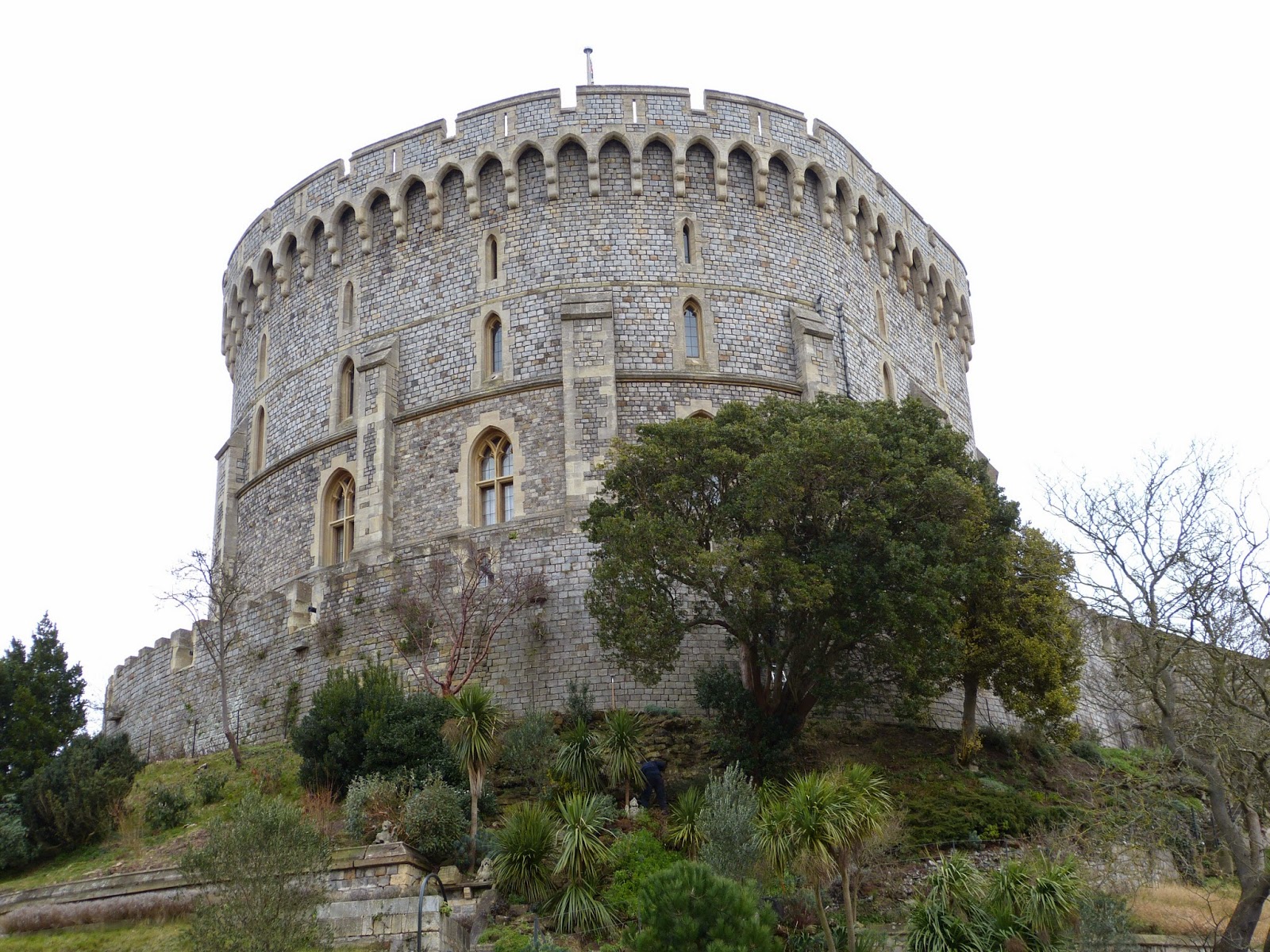
Windsor Castle
Windsor Castle (2015)
The Waterloo at Windsor 1815-2015 exhibition celebrated the 200th anniversary of the Battle of Waterloo which took place on 18 June 1815. This battle marked the defeat of Napoleon and ushered in an era of peace between Britain and France.

The main part of the exhibition is in the Drawings Gallery with other items spread throughout the State Apartments. There is a souvenir map and guide to the exhibition which is included free with the Windsor Castle guidebook or it can be bought separately for £2. The exhibition closed on 6 January 2016.

Read about the history of Windsor Castle in my Regency History guide.

Napoleon Bonaparte, after Nanine Vallain (1802)  Royal Collection Trust   © Her Majesty Queen Elizabeth II 2014
Napoleon Bonaparte, after Nanine Vallain (1802)
Royal Collection Trust
© Her Majesty Queen Elizabeth II 2014
The Drawings Gallery

The Drawings Gallery is at the top of the stairs leading to the State Apartments. Don’t miss it! First time round, we walked straight past it into the State Apartments on the right and had to go back to find out where it was.

Entrance to State Apartments,  Windsor Castle
Entrance to State Apartments,
Windsor Castle
The Drawings Gallery contains a display of pictures and prints about Waterloo from the Royal Collection, most of which were collected by George IV who was fanatical about the Battle of Waterloo. These include contemporary satirical prints and drawings of the battlefield as well as pictures of the military leaders from both sides.
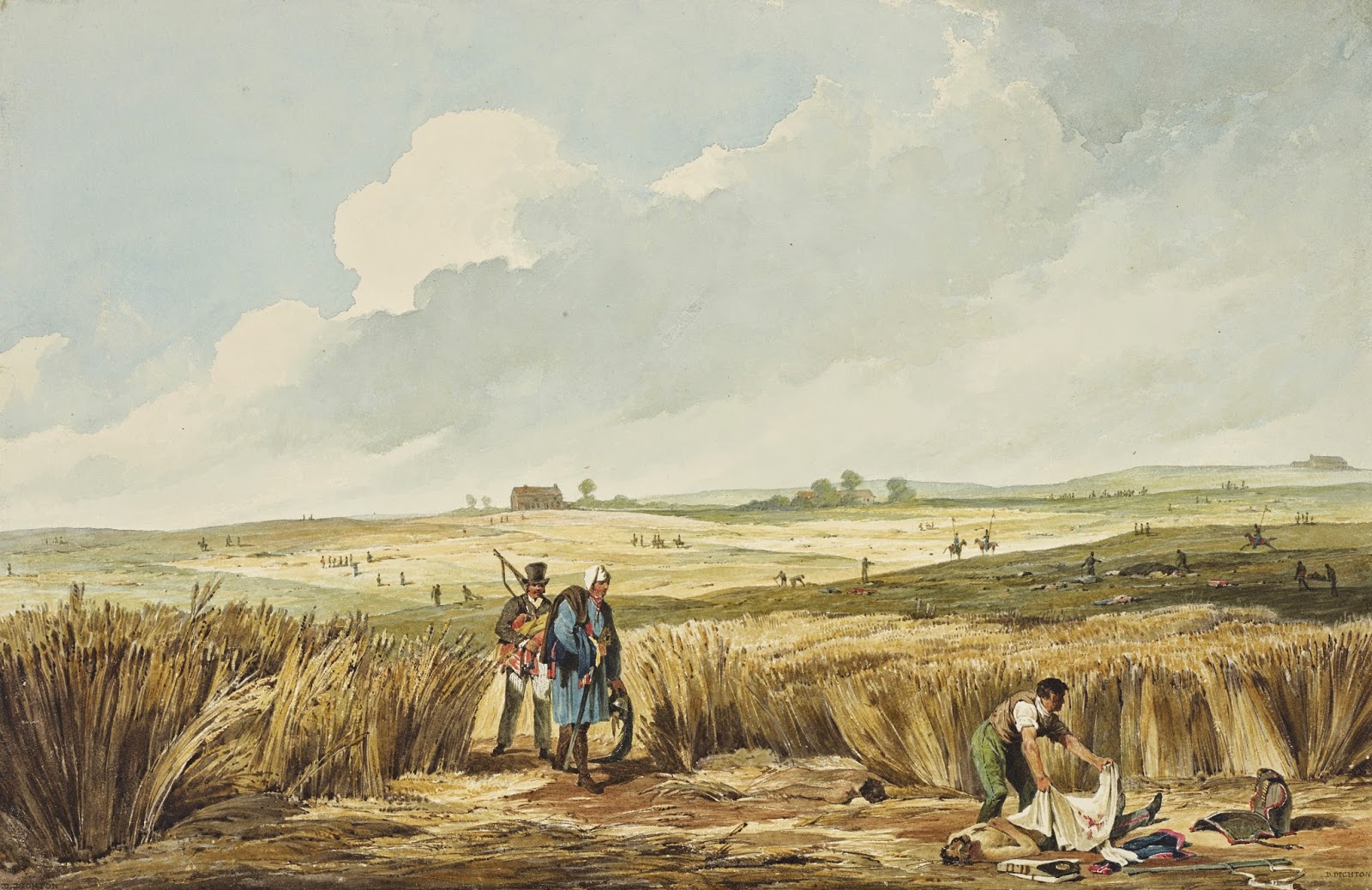
Distant View of La Belle Alliance, Field of Waterloo (1815)  by Denis Dighton  Royal Collection Trust © Her Majesty Queen Elizabeth II 2014
Distant View of La Belle Alliance, Field of Waterloo (1815)
by Denis Dighton
Royal Collection Trust © Her Majesty Queen Elizabeth II 2014

Napoleon's letter of surrender sent to   George, Prince Regent, 13 July 1815  Royal Archives  © Her Majesty Queen Elizabeth II 2014
Napoleon's letter of surrender sent to
George, Prince Regent, 13 July 1815
Royal Archives © Her Majesty Queen Elizabeth II 2014
Napoleon Bonaparte,   published by Rudolph Ackermann (1816)  Royal Collection Trust   © Her Majesty Queen Elizabeth II 2014
Napoleon Bonaparte,
published by Rudolph Ackermann (1816)
Royal Collection Trust
© Her Majesty Queen Elizabeth II 2014
Napoleon’s carriage on display at Bullock’s Museum – a print

I was especially interested in a Rowlandson print of Bullock’s Museum from 1816. After the Battle of Waterloo, Napoleon’s carriage was captured by the allied army. The British government sold the carriage to William Bullock who put it on display in his museum in London in 1816. The print depicts a huge crowd of people climbing all over Napoleon’s carriage which proved to be a very popular exhibit. What I cannot figure out is why he was allowed to buy the carriage in the first place. Given George IV’s obsession with Waterloo, I thought he would have bought it for his collection. I guess that he could not afford it!

Exhibition at Bullocks Museum of Bonepartes Carriage taken at
Waterloo by Thomas Rowlandson, published by Ackermann (1816)
 © The Trustees of the British Museum1
The Waterloo Elm

The other picture I particularly liked was a drawing by Anna Children – The Waterloo Elm (1818). This depicts the tree under which the Duke of Wellington sat on the battlefield of Waterloo. After the battle, it became a popular haunt of tourists who took bits of tree home with them as souvenirs. The owner of the land grew tired of having his crops ruined and decided to cut the tree down. Fortunately, Anna was able to draw the tree before it was felled and her father bought the wood from the owner.
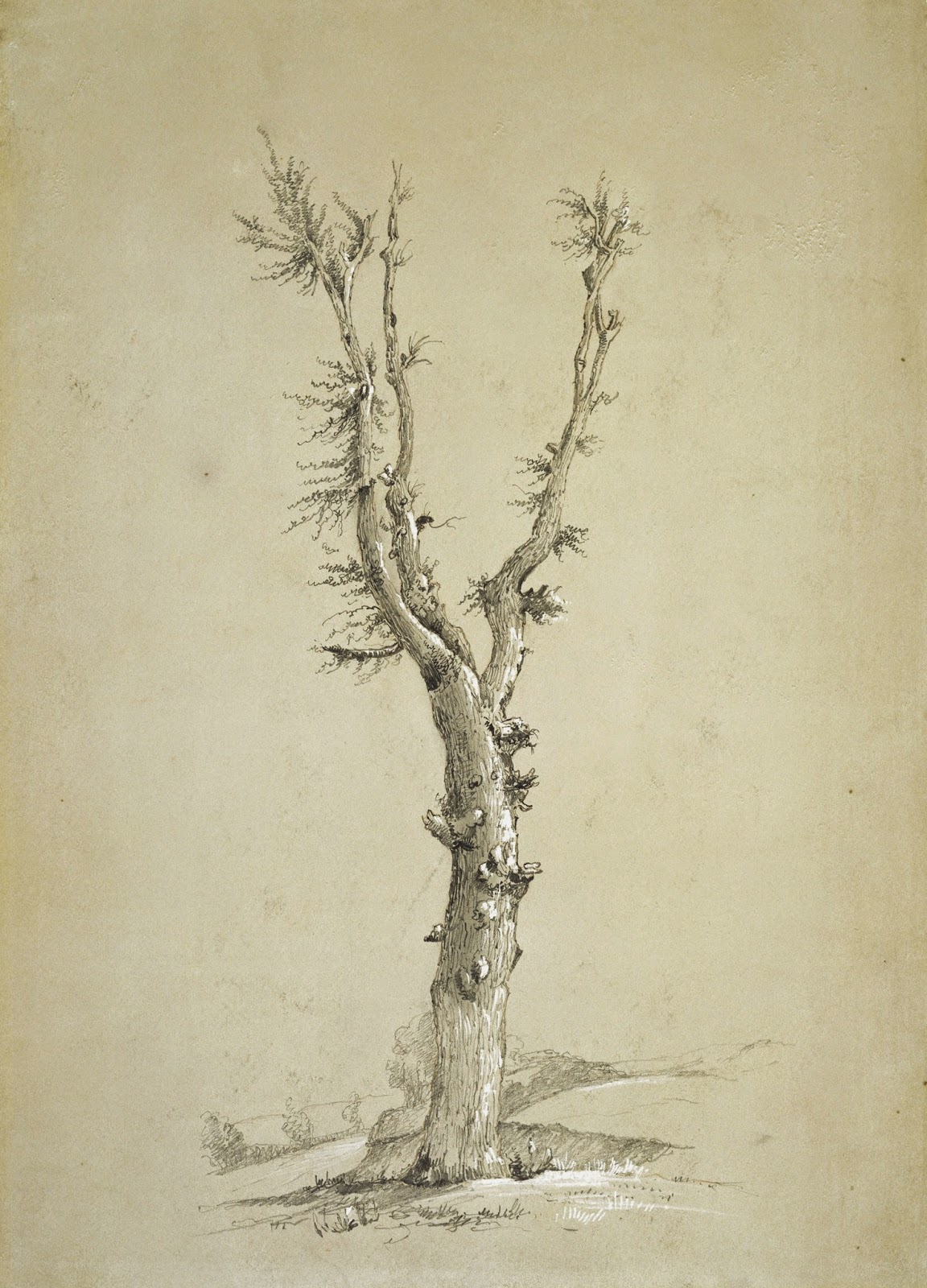
The Waterloo Elm by Anna Children (1818)  Royal Collection Trust   © Her Majesty Queen Elizabeth II 2015
The Waterloo Elm by Anna Children (1818)
Royal Collection Trust
© Her Majesty Queen Elizabeth II 2015
The Waterloo Chair

One of the pieces of furniture made from wood from the elm tree was The Waterloo Chair. It was carved by Thomas Chippendale the Younger and presented to George IV in 1821. It is on display in King’s Drawing Room.

The Waterloo Chair   made by Thomas Chippendale the Younger  Royal Collection Trust  © Her Majesty Queen Elizabeth II 2015
The Waterloo Chair
made by Thomas Chippendale the Younger
Royal Collection Trust
© Her Majesty Queen Elizabeth II 2015
The Table of the Great Commanders

Next to The Waterloo Chair, is the Table of the Great Commanders. This exquisite table was made for Napoleon and given to George IV while he was Regent by the restored King of France, Louis XVIII. George liked it so much that he had it painted in the background of all his state portraits. I saw it last year at Buckingham Palace where it is usually on show.

Tables des Grands Capitaines from the Sevres   porcelain factory gifted to George, Prince Regent,   by Louis XVIII of France (1806-12)  Royal Collection Trust  © Her Majesty Queen Elizabeth II 2014
Tables des Grands Capitaines from the Sèvres
 porcelain factory - given to George, Prince Regent,
 by Louis XVIII of France (1806-12)
Royal Collection Trust
© Her Majesty Queen Elizabeth II 2014
Napoleon’s cloak

There are a number of Napoleon Bonaparte’s belongings on display which were retrieved from his carriage and baggage train after they were captured. One of the most impressive of these is Napoleon’s cloak – a stunning, full-length, hooded red felt cloak lined with yellow silk – which is on display in the Grand Vestibule. If you stand next to the display, you can get a feel for how tall Napoleon really was. The audio guide says he was about 5 foot 6 inches which was average for the time.

Cloak belonging to Napoleon Bonapartetaken from the Emperor's   fleeing baggage train and presented to George, Prince Regent,  by Field-Marshal Blucher (1797-1805)  Royal Collection Trust © Her Majesty Queen Elizabeth II 2014
Cloak belonging to Napoleon Bonaparte taken from the Emperor's
fleeing baggage train and presented to George, Prince Regent,
by Field-Marshal Blucher (1797-1805)
Royal Collection Trust © Her Majesty Queen Elizabeth II 2014
Across the room from Napoleon’s cloak is his old adversary, the Duke of Wellington, represented by a marble bust.

More items from Napoleon’s baggage train are on display in the Queen’s Guard Chamber, including his travelling desk set, an engraved silver-gilt tea service and a sword.

Silver-gilt teapot made by Martin Guillaume Biennais,  engraved with Napoleon's coat of arms  acquired by Queen Mary - Royal Collection Trust  © Her Majesty Queen Elizabeth II 2015
Silver-gilt teapot made by Martin Guillaume Biennais,
engraved with Napoleon's coat of arms
acquired by Queen Mary - Royal Collection Trust
© Her Majesty Queen Elizabeth II 2015
In honour of the Duke of Wellington

In the Queen’s Guard Chamber there is a copper cast of the Duke of Wellington’s hands. There is also a second marble bust of the Duke and above this hangs what is known as a rent flag. The Duke of Wellington was awarded the estate of Stratfield Saye in 1817 in thanks for his military endeavours at Waterloo. His rent to the crown each year is the presentation of a ‘rent flag’ to the crown – a tricolour flag edged in gold braid ending in two golden tassels and with the year to which it relates embroidered or printed on. Flags from previous years can be seen hanging from the ceiling in the Drawings Gallery.

The hands of the Duke of Wellington by Baron Carlo Marochetti  Royal Collection Trust © Her Majesty Queen Elizabeth II 2015
The hands of the Duke of Wellington by Baron Carlo Marochetti
Royal Collection Trust © Her Majesty Queen Elizabeth II 2015
The Waterloo Chamber

The Waterloo Chamber holds an impressive display of portraits of the allied sovereigns, military leaders and statesmen of the time. They were largely commissioned by George IV and painted by Sir Thomas Lawrence, but the room itself was not created until the 1830s, in the reign of William IV. Although these paintings are always on display at Windsor, the Chamber has been specially opened up for the exhibition this year and it is possible to walk all around the room and get a much closer look than normal.

The Waterloo Chamber, Windsor Castle  Photo: Mark Fiennes  Royal Collection Trust © Her Majesty Queen Elizabeth II 2014
The Waterloo Chamber, Windsor Castle
Photo: Mark Fiennes
Royal Collection Trust © Her Majesty Queen Elizabeth II 2014
George IV by Sir Thomas Lawrence (1821)  Royal Collection Trust  © Her Majesty Queen Elizabeth II 2014
George IV by Sir Thomas Lawrence (1821)
Royal Collection Trust
© Her Majesty Queen Elizabeth II 2014
Arthur Wellesley, 1st Duke of Wellington,
by Sir Thomas Lawrence (1814-15)
Royal Collection Trust
© Her Majesty Queen Elizabeth II 2014
Windsor - well worth a visit

The Waterloo at Windsor exhibition is free with a standard entry ticket to Windsor Castle. For me, the highlights of the exhibition were Napoleon’s cloak and The Waterloo Chair, and being able to take a closer look at all the portraits in the Waterloo Chamber.

I would have liked to have seen a few more items of Waterloo memorabilia on display; the drawings were interesting but it is the objects that really bring the subject to life. If you have visited Windsor recently, I would hesitate to recommend going just to see the exhibition unless you are a big fan of Napoleon or Waterloo. However, Windsor Castle is well worth seeing and this is a really good time to visit as the Waterloo Chamber is so much more accessible than usual.

An added bonus if you visit before 29 March is that the Semi-State Rooms are open, giving you a peek at several rooms not open during the summer, including the Crimson Drawing Room with its superb portraits of all six of George III’s daughters.

Rachel at the Waterloo at Windsor 1815-2015 exhibition

Headshot of Rachel Knowles author with sea in background(2021)
Rachel Knowles writes clean/Christian Regency era romance and historical non-fiction. She has been sharing her research on this blog since 2011. Rachel lives in the beautiful Georgian seaside town of Weymouth, Dorset, on the south coast of England, with her husband, Andrew.

Find out more about Rachel's books and sign up for her newsletter here.

If you have enjoyed this blog and want to encourage me and help me to keep making my research freely available, please buy me a virtual cup of coffee by clicking the button below.

 
Note
(1) There was a limited number of photographs available to me from the exhibition and this particular print was not included. However, I found the same print on the British Museum website.

All photographs not otherwise credited © RegencyHistory.net

Thursday, 22 May 2014

Sir Richard Colt Hoare, 2nd Baronet (1758-1838)

Sir Richard Colt Hoare - a painting at Stourhead
Sir Richard Colt Hoare - a painting at Stourhead (2014)
Profile

Sir Richard Colt Hoare (9 December 1758 – 19 May 1838) was an antiquarian and historian and the owner of the Stourhead estate in Wiltshire.
 

Family background

Richard Colt Hoare was born in Barnes, Surrey, on 9 December 1758, the eldest son of Sir Richard Hoare, 1st Baronet, who had married his first cousin, Anne Hoare, the younger daughter of Henry Hoare of Stourhead, senior partner of Hoare’s Bank. Richard’s mother died when he was six months old and his father remarried. He had six children by his second wife, Frances Acland, and Richard grew up with his half-siblings in Surrey.

Hoare's Bank

Richard pursued his classical studies with a tutor whilst training for a role in the family business, Hoare’s Bank. His grandfather, known as ‘Henry the Magnificent’, gave him a house in Lincoln’s Inn Fields and an allowance of £2,000 a year when he came of age.

Marriage

On 18 August 1783, Richard married Hester Lyttelton, daughter of William Lyttelton of Hagley, 1st Baron Lyttelton. They had one son, Henry, on 17 September 1784, but tragically, Hester died the following year, on 22 August 1785.

Grand Tour

Shortly after the death of his wife, Richard inherited Stourhead from his grandfather, Henry Hoare, on the condition that he left the bank. Henry made this stipulation to ensure the survival of the Stourhead estate in the event that the bank should fail in the future.
 
Stourhead
Stourhead
Deprived of both wife and career, Richard went on a Grand Tour, and for the next six years, he travelled extensively abroad, keeping detailed diaries. These were later published in Recollections abroad: journals of tours on the continent, 1785-1791 (1815-18). He subsequently toured throughout Britain and Ireland, recording his travels with the same meticulous detail.

Antiquarian
 
Richard was very interested in the history and archaeology of Wiltshire and amassed a huge collection of books and drawings. He was the author of The Ancient History of South Wiltshire (1812, 1819) and wrote the majority of The History of Modern Wiltshire (1822-44).

He was elected a fellow of the Society of Antiquaries and admitted to the Society of Dilettanti in 1792. In 1825, he gave his collection of Italian topographical and historical works to the British Museum.

Sportsman
 
Richard was a keen sportsman and bought a fishing lodge in Bala in Gwynedd, Wales, in 1796. He also had a house in St James’s Square, London.

Stourhead

The Temple of Apollo in the gardens at Stourhead
The Temple of Apollo in the gardens at Stourhead (2014)
Richard developed the gardens at Stourhead, planting trees and collecting exotic plants, leading to his election as a member of the Linnean Society in 1812.

Finding that the house at Stourhead did not have enough room for his collections, in 1800 he added two wings, one for the Library to house his books and the other the Picture Gallery to display his paintings.1

Richard Colt Hoare in his library at Stourhead
Richard Colt Hoare in his Library at Stourhead (Photo 2014)
Patron of the arts

Chippendale chairs in the Picture Room, Stourhead
Chippendale chairs in the Picture Room, Stourhead (2014)
Between 1798 and 1820, Richard employed Thomas Chippendale the Younger to make furnishings for Stourhead to the value of around £3,500. Chippendale’s work included furniture for Richard’s two new rooms, some pieces in the Egyptian style and others in an advanced Grecian taste.

Sarcophagus planter by Chippendale in the Picture Room, Stourhead
Sarcophagus planter by Chippendale in the Picture Room, Stourhead (2014)
Richard commissioned works from the water-colourist Francis Nicholson, the portrait artist Samuel Woodforde and JMW Turner.

An unsatisfactory son

The relationship between Richard and his son Henry was very strained. Henry was devoted to a life of pleasure and his father was left to settle his debts. Henry died in 1836 leaving one daughter, Ann.

Illness and death

Richard suffered from gout and rheumatism and became increasingly deaf. He lived mainly at Stourhead with occasional visits to Bath. He died on 19 May 1838 at Stourhead and was buried at St Peter’s, Stourton. There is a marble statue to his memory in Salisbury Cathedral.

Salisbury Cathedral
Salisbury Cathedral (2014)

Headshot of Rachel Knowles author with sea in background(2021)
Rachel Knowles writes faith-based Regency romance and historical non-fiction. She has been sharing her research on this blog since 2011. Rachel lives in the beautiful Georgian seaside town of Weymouth, Dorset, on the south coast of England, with her husband, Andrew.

Find out more about Rachel's books and sign up for her newsletter here.

If you have enjoyed this blog and want to encourage me and help me to keep making my research freely available, please buy me a virtual cup of coffee by clicking the button below.


Note
(1) These were the only rooms to escape the fire which devastated the house at Stourhead in 1902.

Sources used include:
Hutchings, Victoria, Hoare, Henry (1705-1785) Oxford Dictionary of National Biography (Oxford University Press, 2004; online edn May 2009; accessed 15 May 2014)
Hutchings, Victoria, Hoare, Sir Richard Colt (1758-1838) Oxford Dictionary of National Biography (Oxford University Press, 2004; online edn May 2009; accessed 15 May 2014)
Lomax, James, Chippendale, Thomas (bap 1718, d1779) Oxford Dictionary of National Biography (Oxford University Press, 2004; online edn May 2009, accessed 22 May 2014)

Blog update (May 2014)

Whilst researching a post on some paintings at Stourhead for my newsletter, I discovered that the painting which I had previously labelled as Hester Lyttelton, Sir Richard Colt Hoare's wife, was in fact of NOT of her at all! 
 
Someone had previously suggested that the painting was not of Hester, but as it was inscribed as such, I thought I was on safe ground. But no! According to the detailed description of this painting in the National Trust Collections, it was probably of Mrs John O'Neill (someone that I had never heard of before!)

Probably Mrs John O'Neill - a painting at Stourhead
Probably Mrs John O'Neill -
a painting at Stourhead (2014)
   

All photographs © Andrew Knowles - RegencyHistory.net

Thursday, 15 May 2014

Stourhead – a Regency History guide

The Palladian mansion at Stourhead
The Palladian mansion at Stourhead (2020)
Where is it?

Stourhead is a Palladian mansion with beautifully landscaped gardens situated near Mere in Wiltshire.

History

The Stourton estate was bought by the banker, Henry Hoare, in 1717. He replaced the existing manor house with a Palladian mansion and christened it Stourhead. His son, also called Henry Hoare, was responsible for landscaping the gardens.

The Stone Bridge, Stourhead
The Stone Bridge, Stourhead (2014)
In 1902, the central section of the house was completely gutted by fire and Sir Henry Hugh Arthur Hoare oversaw its restoration. In 1946, after his only son was killed in the war, Sir Henry gave Stourhead to the National Trust in order to keep the estate intact.

Georgian connections

Henry Hoare I (1677-1725)

Henry Hoare was a partner in Hoare’s Bank, which his father, Sir Richard Hoare, had founded in 1672. He bought Stourton manor in 1717 and replaced the existing building with a Palladian mansion designed by Colen Campbell which he renamed Stourhead.

The front of the Palladian mansion at Stourhead
The front of the Palladian mansion at Stourhead (2014)
Henry married his cousin Jane and had 11 children. His two surviving sons, Henry and Richard, succeeded him in the bank. He increased his wealth by successful speculation, especially in South Sea Company stock.

Henry was known for his philanthropy to the poor which gained him the nickname ‘Good Henry’.

Henry Hoare II (1705-1785)

Henry’s eldest son, also called Henry, inherited the estate in 1725, just after the house was completed. He became a partner in Hoare’s bank in the same year, at the age of 19, a position he held for the rest of his life. Henry was MP for Salisbury (1734-41).

In 1726, Henry married Anne Masham but she died a year later leaving a daughter who did not live to adulthood. He remarried in 1728 and had five children with his second wife, Susan Colt. Sadly, two of his three sons died in infanthood and the other in his early twenties. His younger daughter Anne married her first cousin, Richard Hoare, but also died young. Their son, Richard Colt Hoare, inherited his grandfather’s estate.

The lake, Stourhead
The lake, Stourhead (2014)
After the death of his second wife, Henry devoted himself to Stourhead. He dammed the River Stour to create an ornamental lake and commissioned Henry Flitcroft to design buildings around it – the classical temples of Flora (1745) and Apollo (1765) and the Pantheon (1753-4). The sculptor John Michael Rysbrack worked at Stourhead and his Hercules (1756) is in the Pantheon. Other features added include the Stone Bridge, a cascade, the Grotto and the Hermit’s Cave. When they were finished, the gardens attracted numerous visitors and were widely admired.

Temple of Flora, Stourhead
Temple of Flora, Stourhead (2014)
Henry was a prolific collector and acquired many works of art which he displayed at Stourhead. He gained the nickname ‘Henry the Magnificent’.

Sir Richard Colt Hoare, 2nd Baronet (1758-1838)
Richard Colt Hoare married Hester Lyttelton in 1783 and they had a son, Henry, the following year. In August 1785, Hester died. The following month, Henry’s grandfather died and he inherited the Stourhead estate on condition that he left the bank. Deprived of both wife and career, Richard went on a Grand Tour over the next six years, keeping detailed diaries of his travels.

The Library, Stourhead
The Library, Stourhead (2015)
Richard returned home and spent the next forty years developing the house and gardens at Stourhead. He was a keen antiquarian and spent many years researching the history of Wiltshire, amassing a huge collection of books and drawings. He also collected many works of art and he added two wings to Stourhead to hold his collections – the Library at one end and the Picture Gallery at the other. Thomas Chippendale the Younger made furniture for these and other rooms at Stourhead. These were the only rooms to escape the fire of 1902.

The Library, Stourhead
The Library, Stourhead (2015)
What can you see today?

• The Palladian exterior of Stourhead designed by Colen Campbell

The Palladian exterior of Stourhead
Stourhead (2014)
• A Canaletto (under cover in the library)

• Library steps by Thomas Chippendale the Younger

Library steps made by Thomas Chippendale the Younger

• Wedgwood pots on the mantelpiece in the Picture Room

Wedgwood pots on the mantelpiece in the Picture Room, Stourhead

• Sarcophagus-shaped planters in the Picture Room

Sarcophagus-shaped planters in the Picture Room

• Stripy sofa by Thomas Chippendale the Younger

Stripy sofa by Thomas Chippendale the Younger

• Landscaped gardens centred around an ornamental lake with a stone bridge (see above)
 
• Ornamental buildings around the lake designed by Henry Flitcroft – the Temples of Flora and Apollo and the Pantheon.

The newly restored Pantheon at Stourhead
The Pantheon, Stourhead (2015)
Inside the Pantheon during renovation work 2014
Inside the Pantheon during renovation work in 2014
(I thought it looked like a Dr Who set!)
The Pantheon statues at Stourhead restored (2015)
 • The Grotto beside the lake with its statue of the River God

View over the lake from the Grotto, Stourhead
View from the Grotto, Stourhead (2014)
Inside the Grotto, Stourhead
Inside the Grotto, Stourhead (2014)
 • The Gothic Cottage

The Gothic Cottage, Stourhead

Last visited: July 2022

Headshot of Rachel Knowles author with sea in background(2021)
Rachel Knowles writes clean/Christian Regency era romance and historical non-fiction. She has been sharing her research on this blog since 2011. Rachel lives in the beautiful Georgian seaside town of Weymouth, Dorset, on the south coast of England, with her husband, Andrew.

Find out more about Rachel's books and sign up for her newsletter here.

If you have enjoyed this blog and want to encourage me and help me to keep making my research freely available, please buy me a virtual cup of coffee by clicking the button below.


Sources used include:
Hutchings, Victoria, Hoare, Henry (1677-1725) Oxford Dictionary of National Biography (Oxford University Press, 2004; online edn May 2009; accessed 15 May 2014)
Hutchings, Victoria, Hoare, Henry (1705-1785) Oxford Dictionary of National Biography (Oxford University Press, 2004; online edn May 2009; accessed 15 May 2014)
Hutchings, Victoria, Hoare, Sir Richard Colt (1758-1838) Oxford Dictionary of National Biography (Oxford University Press, 2004; online edn May 2009; accessed 15 May 2014)

Hoare’s Bank website
National Trust Stourhead website

More of Andrew's photographs of Stourhead here.

All photos © RegencyHistory

Thursday, 27 March 2014

Nostell Priory – a Regency History guide

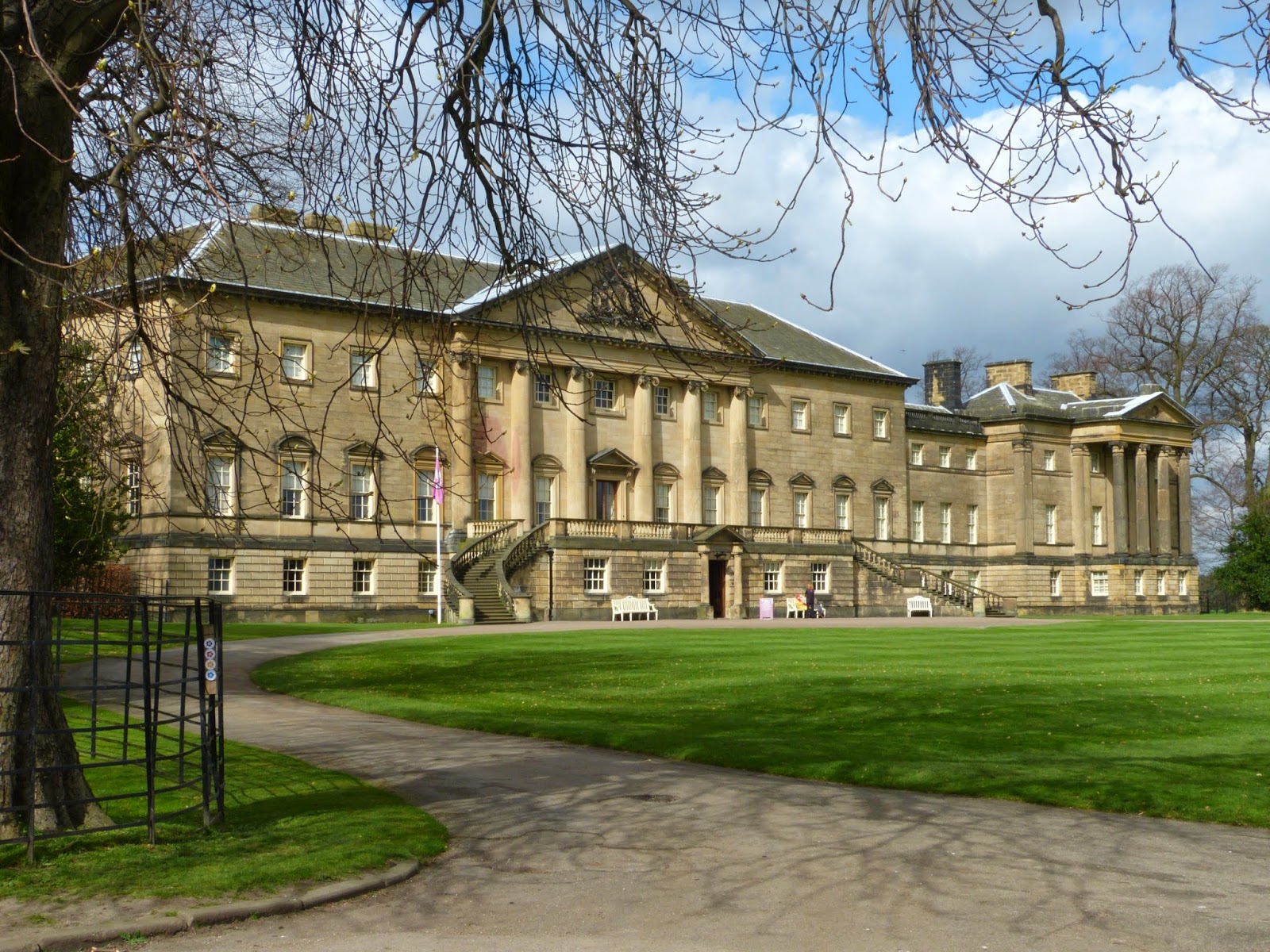
Nostell Priory
Nostell Priory (2014)
Where is it?

Nostell Priory is a Palladian mansion with Neoclassical interiors designed by Robert Adam. It is situated near Wakefield in Yorkshire.

History

When Sir Rowland Winn, 4th Baronet, returned from his Grand Tour in 1727, he was inspired to build a new house on his land in the Palladian style. Colonel James Moyser, a local gentleman architect, drew up plans and in 1736, the young James Paine was employed to work them out. Paine was still working on the house in 1765 when the 4th Baronet died.

Sir Rowland’s son employed Robert Adam to continue work on the house. Adam designed the interiors of the house in the Neo-classical style and added the curving stairways at the front of the house leading to the first floor entrance hall. He also planned four new wings, but only one – the family wing - was ever built. The 5th Baronet died in 1785 before Adam’s work was completed, leaving the asymmetrical façade that we see today.
Robert Adam's sweeping stairway leading  to the first floor entrance hall of Nostell Priory
Robert Adam's sweeping stairway leading
to the first floor entrance hall of Nostell Priory
Nostell Priory was given to the National Trust in 1954.

Georgian connections

Sir Rowland Winn, 4th Baronet (1706-1765)

Sir Rowland Winn, 4th Baronet, inherited Nostell at the age of 16. He started to build the Palladian house after returning from his Grand Tour in 1727. He married Susanna Henshaw, an heiress, in 1729, and they had three children, Rowland, Edward and Anne. Sir Rowland was made High Sheriff of Yorkshire in 1731.

James Paine was employed to work on Nostell Priory on and off for thirty years. Nostell was one of his first commissions after finishing his studies at St Martin’s Lane Academy in London and it was significant in the development of his architectural career.

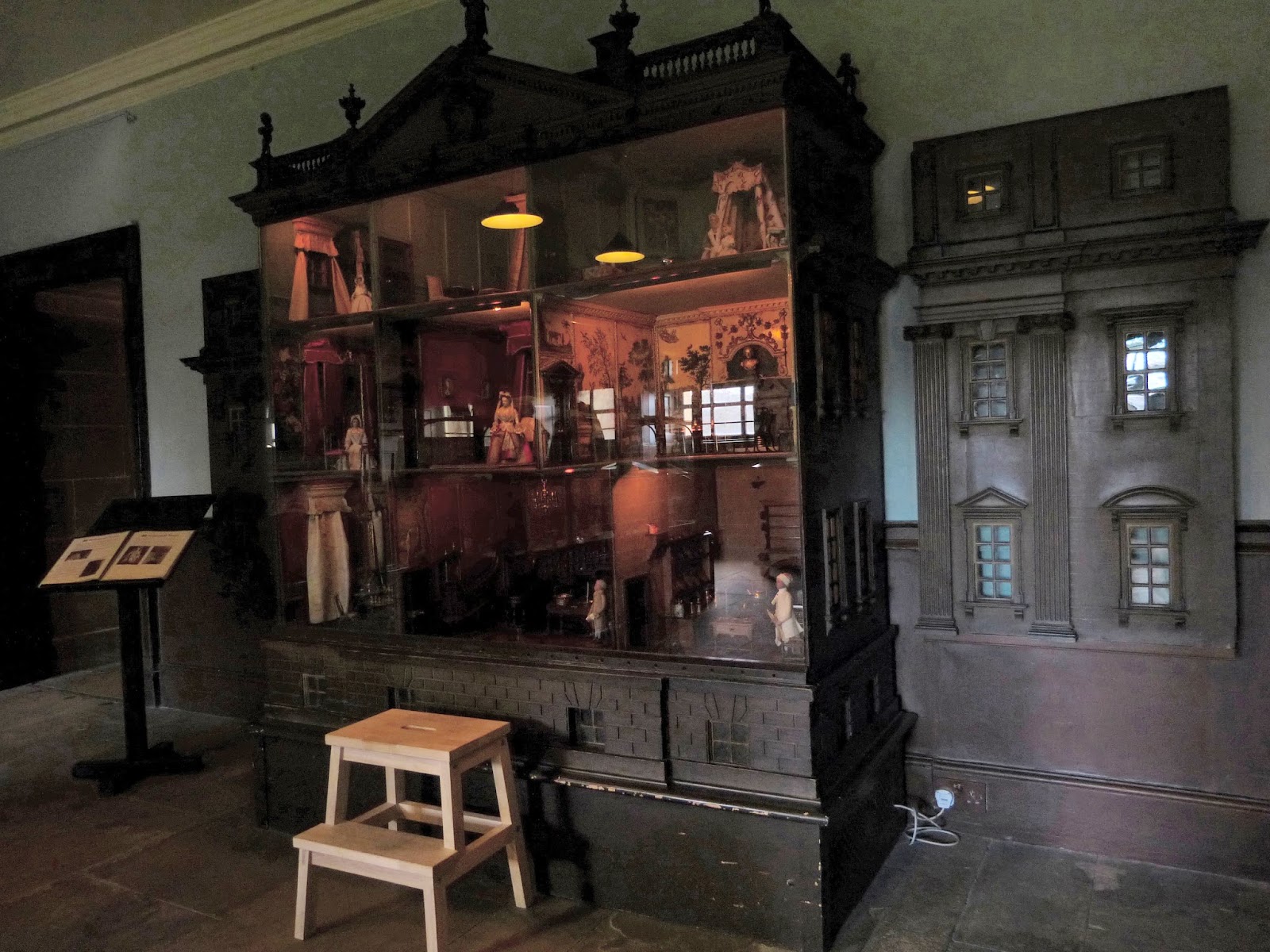
An exquisite doll’s house was made for the Winns in about 1735 which is on display in the house. The doll’s house is architecturally accurate and beautifully crafted, which has led to the family tradition that it was made by Thomas Chippendale when he was a boy. Sadly there is no evidence to support this. The model was probably made for adults to enjoy rather than as a children’s toy.

Georgian doll's house, Nostell Priory
Sir Rowland Winn, 5th Baronet (1739-1785)

The 5th Baronet was born in 1739 and finished his education in Switzerland. He spent a lot of money on horses and later built a riding school at Nostell. Whilst in Switzerland, he met Sabine d’Hervart, daughter of the Governor of Vevey, whom he married in 1761. The couple were devoted to each other and had two children, Rowland and Esther. After inheriting in 1765, Rowland replaced Paine with Robert Adam to finish work on the house.

Robert Adam was the most successful architect of the late 18th century. He was good at cultivating important contacts and had a much closer relationship with his employers than his predecessors had done. Adam designed Neo-classical interiors for the house and employed a trio of master craftsmen to help him: Antonio Zucchi for decorative painting, Joseph Rose the Younger for plastering and Thomas Chippendale for cabinet making.

As a result, Nostell Priory has a huge collection of Chippendale furniture, complete with bills of sale to verify its authenticity and date his work, as well as stunning interior decorations.

The State Dressing Room, Nostell Priory,  with green and gilt japanned chinoiserie furniture by Chippendale
The State Dressing Room, Nostell Priory,
with green and gilt japanned chinoiserie furniture by Chippendale
Adam’s work was brought to an abrupt end when Sir Rowland was killed in a carriage accident in 1785 .

Sir Rowland Winn, 6th Baronet (1775-1805)

Sir Rowland’s wife Sabine was devastated at her husband’s death. She continued to live at Nostell with her two children, Esther and Sir Rowland, 6th Baronet, who was only ten when his father died. The new Sir Rowland became an avid sportsman and kept several racehorses in the stables at Nostell. He was made High Sheriff of Yorkshire in 1799 but died unmarried in 1805.

John and Charles Winn

When the 6th Baronet died, the title was inherited by a cousin, but Sir Rowland provided for his sister’s children, John, Charles and Louisa Williamson, whose father was a Manchester baker. They assumed the name Winn and became heirs to the estate. John died in Rome in 1817 whilst on the Grand Tour.

Charles married his cousin Priscilla Strickland in 1819 and employed Thomas Ward to redecorate Nostell. Charles bought lots of furniture from Gillows and became an avid collector. He brought back his brother John’s collection of Etruscan vases from Rome and acquired vast numbers of paintings, books and antiquities.

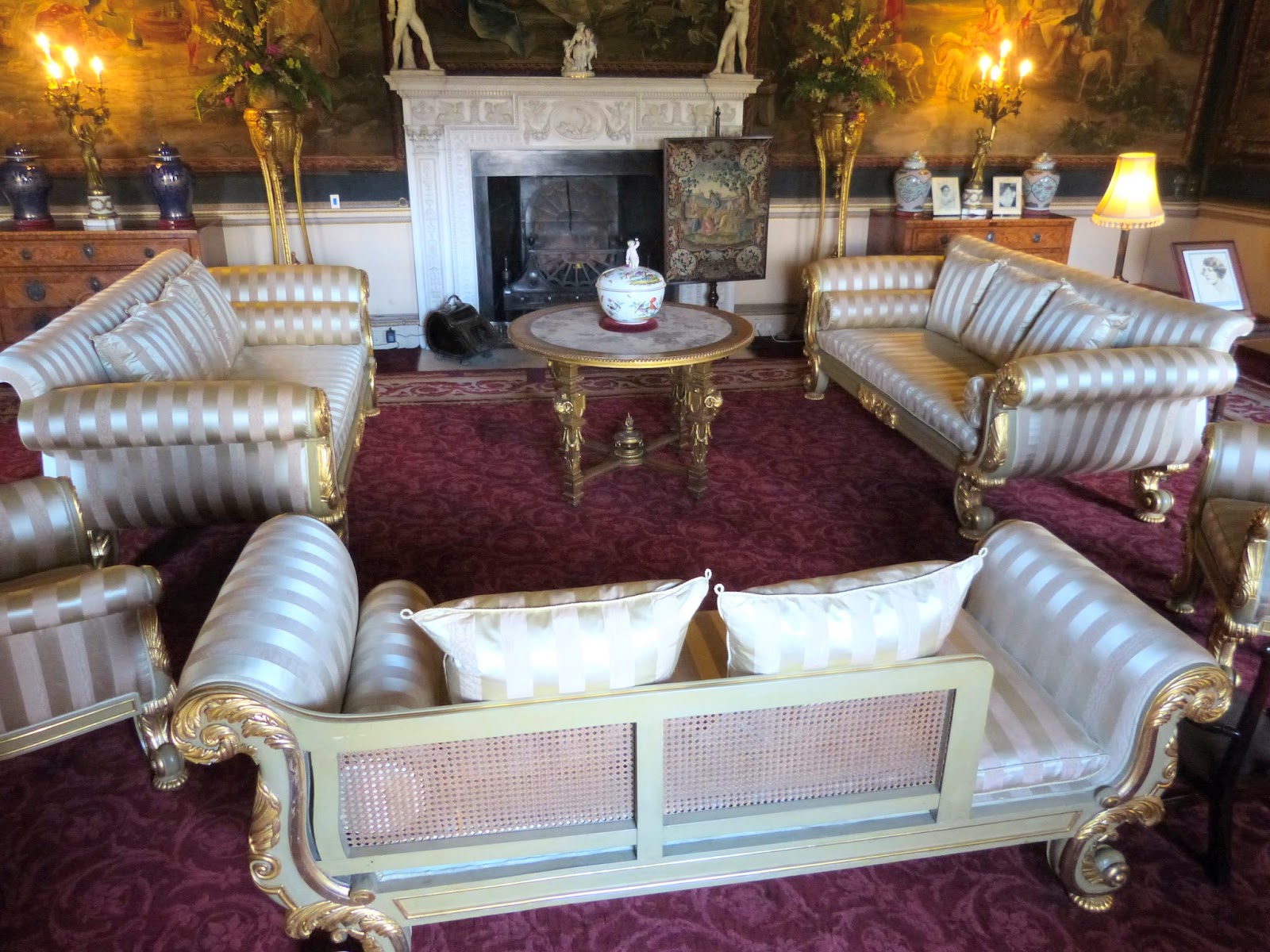
The Tapestry Room with 1820s giltwood furniture  and a white marble chimneypiece by Adam
The Tapestry Room with 1820s giltwood furniture
and a white marble chimneypiece by Adam
What can you see today?

There is so much to see at Nostell Priory that it would be impossible to list everything worthy of note, but some of my favourites are:

• The Palladian exterior of Nostell Priory designed by James Paine

Nostell Priory (2014)

• Robert Adam’s majestic steps leading to the first floor entrance (shown above)

• The decorated alcove in the Top Hall designed by Robert Adam and carried out by Joseph Rose the Younger


• The Chippendale chairs in the Top Hall

The Chippendale chairs in the Top Hall

• The lady’s writing table with retractable fire-screen by Chippendale in the Saloon

The lady’s writing table with retractable fire-screen by Chippendale in the Saloon

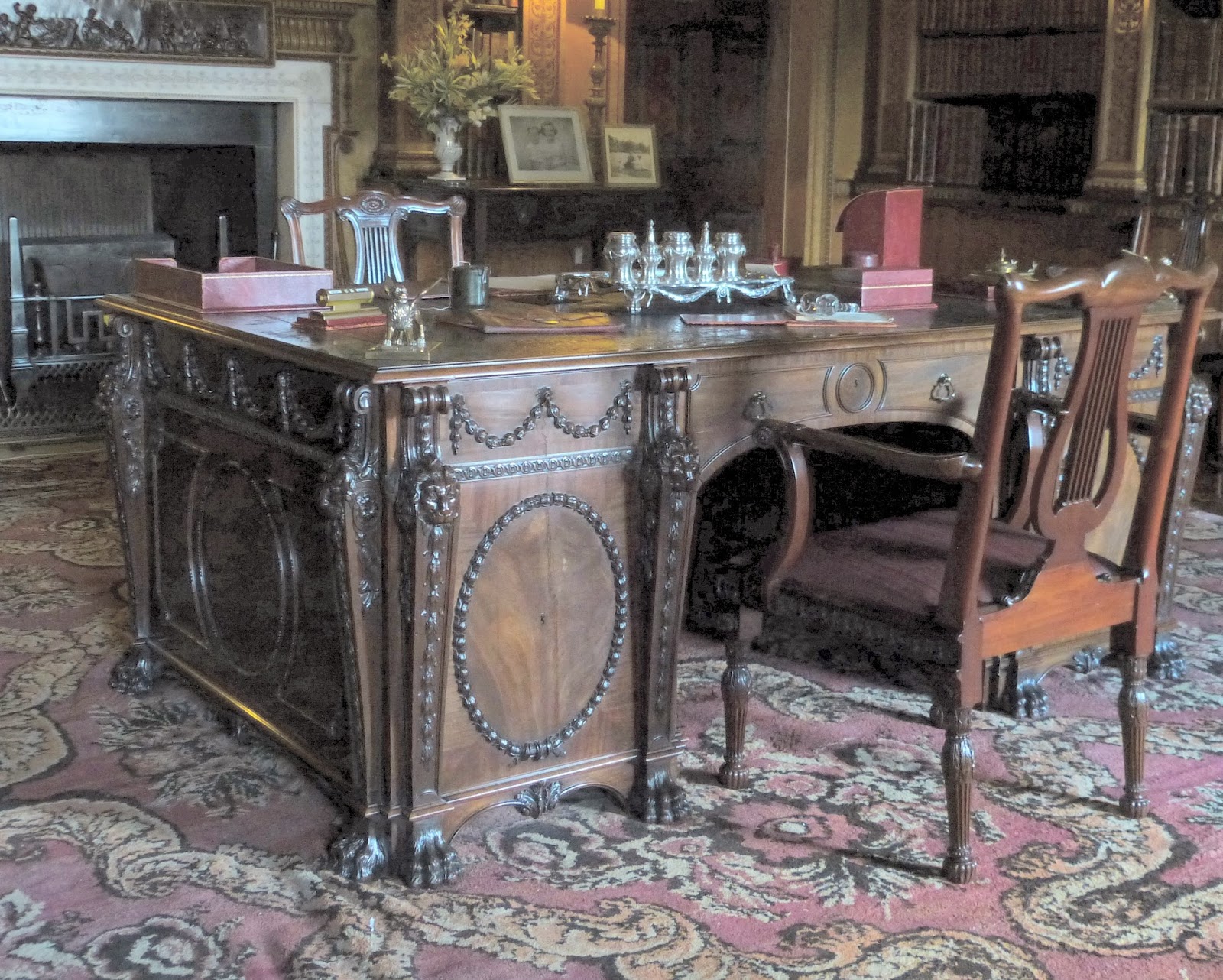
• Chippendale’s Palladian-style desk in the Library

Chippendale’s Palladian-style desk in the Library

• The portrait of Sir Rowland Winn, 5th Baronet, and his wife Sabine displayed in the library in which it was painted

The portrait of Sir Rowland Winn 5th Baronet and his wife Sabine displayed in the library in which it was painted

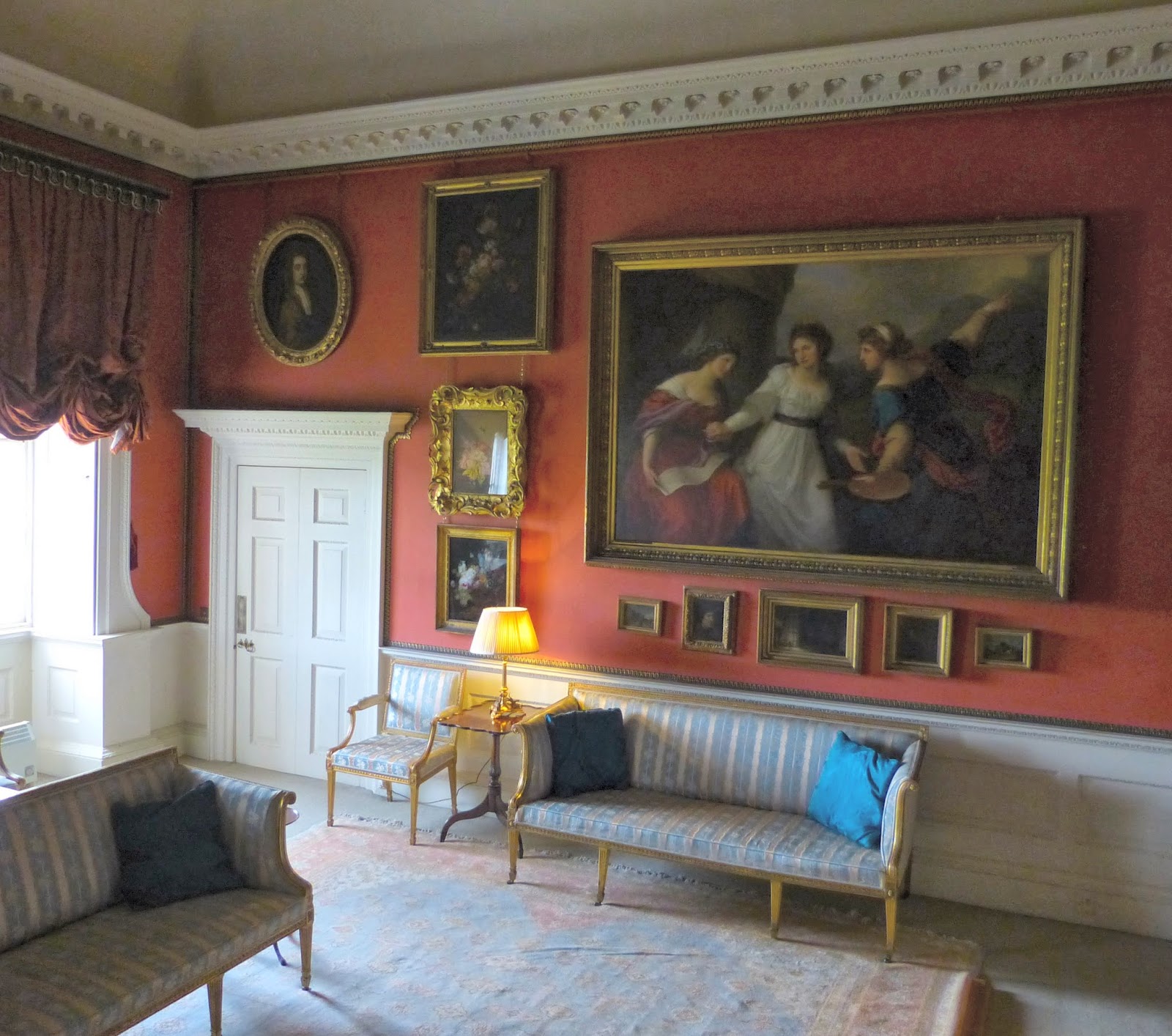
• Angelica Kauffman’s self-portrait in the Drawing Room

"Angelica hesitating between the Arts of Music and Painting"  by Angelica Kauffman (1791) in the Drawing Room, Nostell Priory
"Angelica hesitating between the Arts of Music and Painting"
by Angelica Kauffman (1791) in the Drawing Room, Nostell Priory
• The doll’s house (shown above)

Last visited: March 2014

More gems about Nostell Priory in my April 2014 newsletter.

Headshot of Rachel Knowles author with sea in background(2021)
Rachel Knowles writes clean/Christian Regency era romance and historical non-fiction. She has been sharing her research on this blog since 2011. Rachel lives in the beautiful Georgian seaside town of Weymouth, Dorset, on the south coast of England, with her husband, Andrew.

Find out more about Rachel's books and sign up for her newsletter here.

If you have enjoyed this blog and want to encourage me and help me to keep making my research freely available, please buy me a virtual cup of coffee by clicking the button below.


Sources used include:
Raikes, Sophie and Knox, Tim, Nostell Priory and Parkland (2001)
The National Trust website

All photographs © RegencyHistory.net