Search this blog

Showing posts with label Princess Augusta of Wales. Show all posts

Wednesday, 9 August 2017

Enlightened Princesses - 2017 exhibition at Kensington Palace


Enlightened Princesses: Caroline, Augusta, Charlotte and the Shaping of the Modern World was an exhibition at Kensington Palace, London, which ran from 22 June until 12 November 2017.

Who were these enlightened princesses?

The enlightened princesses were three German princesses who married into the Georgian royal family:

Caroline of Ansbach (1683-1737) – wife of George II

Queen Caroline by J Highmore (c1735)  Royal Collection  Photo from The First Georgians exhibition
Queen Caroline by J Highmore (c1735)
Royal Collection
Photo from The First Georgians exhibition

Augusta of Saxe-Gotha (1719-1772) – wife of Frederick, Prince of Wales, and mother of George III

Princess Augusta of Wales  by Jean-Etienne Liotard (1754)  Royal Collection
Princess Augusta of Wales
by Jean-Etienne Liotard (1754)
Royal Collection
Charlotte of Mecklenburg-Strelitz (1744-1818) – wife of George III

Queen Charlotte  by Johan Joseph Zoffany (1771)  Royal Collection
Queen Charlotte
by Johan Joseph Zoffany (1771)
Royal Collection
Why were they considered ‘enlightened’?

These three German princesses had widespread interests in art, medicine, science and charitable concerns which they pursued with enthusiasm. Together they changed the role of women in the royal family and influenced the development of British culture.

What objects are on display?

The exhibition includes objects owned by the princesses and reflects their diverse interests.The following pictures are just a taster of the items on display.

Queen Charlotte and inoculation

Queen Charlotte was an advocate of inoculation against smallpox and supported Edward Jenner’s research which determined that cowpox vaccination was less hazardous than smallpox vaccination.

Left arm showing cowpox inoculation compared to smallpox inoculation  Watercolour by G Kirtland after Charles Gold (1802)  Wellcome Library, London
Left arm showing cowpox inoculation compared to smallpox inoculation
Watercolour by G Kirtland after Charles Gold (1802)
Wellcome Library, London
Kew Gardens

All three princesses were interested in botany and gardening. Queen Caroline developed the gardens at Richmond Lodge and commissioned buildings and sculpture, whilst her daughter-in-law Princess Augusta developed the botanical gardens at Kew and commissioned the Orangery and the Pagoda.

Elevation of the Great Pagoda, Kew, as first intended  T Miller after William Chambers (1763)  Board of Trustees of the Royal Botanic Gardens, Kew
Elevation of the Great Pagoda, Kew, as first intended
T Miller after William Chambers (1763)
Board of Trustees of the Royal Botanic Gardens, Kew
Queen Charlotte continued to develop the gardens at Kew and expanded the collection of exotic plants. She also kept a menagerie which inclued a pair of Nilgai - Asian antelope.

The Nilgai by George Stubbs (1769)  Hunterian Museum and Art Gallery, University of Glasgow
The Nilgai by George Stubbs (1769)
Hunterian Museum and Art Gallery, University of Glasgow
Foundling Hospital

The princesses actively supported charities, particularly those that helped women and children, including the Magdalen Hospital, of which Queen Charlotte was patroness, and the Foundling Hospital.

Foundling tokens from the Foundling Hospital
British industry

Queen Charlotte supported national industry including the silk-weavers at Spitalfields. The photograph shows fragments of material from dresses worn by the royal family for the wedding of the future George IV and Caroline of Brunswick in 1795, some of which were woven in Spitalfields.

Queen's silk samples  Historic Royal Palaces
Queen's silk samples
Historic Royal Palaces
Progressive education

Queen Caroline’s children were taught how to turn a lathe. The photograph shows the work of her eldest daughter, Princess Anne.

Woodturnings by Princess Anne (1709-1759)  Royal Collections, the Netherlands
Woodturnings by Princess Anne (1709-1759)
Royal Collections, the Netherlands
Princess Augusta’s children used a camera obscura both as a drawing aid and as a means of entertainment. The placard under the camera obscura explains that it ‘projected a reversed image of an object through its lens onto a glass screen’.

Camera obscura - Stephen Demainbray, before 1753  Camera obscura - Stephen Demainbray, before 1753  King's College London
Camera obscura - Stephen Demainbray, before 1753
King's College London
Lady Charlotte Finch, governess to Queen Charlotte’s children, used dissected geographical maps, flash cards and counters to educate her royal pupils.

Group of dissected maps of America - Lady Charlotte Finch  Historic Royal Palaces and V&A Museum of Childhood
Group of dissected maps of America - Lady Charlotte Finch
Historic Royal Palaces and V&A Museum of Childhood
Needlework

This needlework pocket-book is thought to have been made by Queen Charlotte as a gift for her friend, the artist Mrs Delany. It contains tools for making the paper mosaics for which Mrs Delany is famous.

Needlework pocket-book - Queen Charlotte (1781)  Lent by Her Majesty the Queen
Needlework pocket-book - Queen Charlotte (1781)
Lent by Her Majesty the Queen
Tribuna of the Uffizi

Many drawings and paintings are on display, including what for many is the highlight of the exhibition – this vibrant painting by Johan Zoffany of the Tribuna room in the Uffizi Gallery in Florence which was commissioned by Queen Charlotte.

Tribuna of the Uffizi by J Zoffany (1772-8)  Lent by Her Majesty the Queen
Tribuna of the Uffizi by J Zoffany (1772-8)
Lent by Her Majesty the Queen
© Various collections as indicated. All photographs © RegencyHistory.net

Headshot of Rachel Knowles author with sea in background(2021)
Rachel Knowles writes faith-based Regency romance and historical non-fiction. She has been sharing her research on this blog since 2011. Rachel lives in the beautiful Georgian seaside town of Weymouth, Dorset, on the south coast of England, with her husband, Andrew.

Find out more about Rachel's books and sign up for her newsletter here.

If you have enjoyed this blog and want to encourage me and help me to keep making my research freely available, please buy me a virtual cup of coffee by clicking the button below.

Wednesday, 12 March 2014

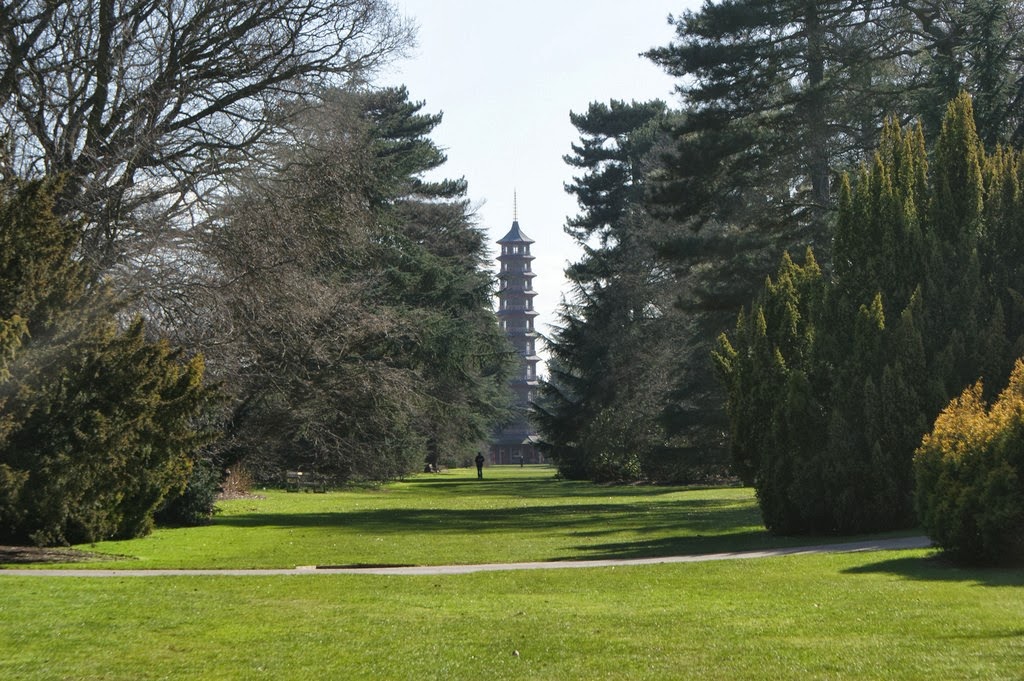
Kew Gardens - a Regency History guide to the Royal Botanic Gardens, Kew

A view of the Pagoda, Kew Gardens
A view of the Pagoda, Kew Gardens (2009)
Where are they?

The Royal Botanic Gardens, Kew, often referred to as Kew Gardens, are in Kew in the London Borough of Richmond upon Thames. Kew Palace is situated within the gardens.

History

Amongst the Georgian royals there were a number of keen gardeners: Queen Caroline; her son Prince Frederick and his wife Princess Augusta; and their son George III’s wife, Queen Charlotte.

Queen Caroline developed the gardens around Richmond Lodge whilst Prince Frederick developed the gardens at Kew. After Prince Frederick’s death, Princess Augusta continued to follow her husband’s plans for the gardens. In 1759, she employed William Aiton to develop her botanical garden and this is considered to be the foundation of the Royal Botanic Gardens, Kew.

Bluebells in front of Kew Palace
Bluebells in front of Kew Palace (2013)
The Royal Botanic Gardens at Kew now include both of these royal estates – Richmond GardensGeorge III and Kew Gardens, separated by Love Lane. They were combined into one estate by George III who inherited Richmond from his grandfather in 1760 and Kew Gardens from his mother in 1772.

The botanic gardens were given to the state in 1841 and further land was donated in subsequent years. The gardens now cover over 300 acres of land and serve as both a scientific institution and a public park.

Georgian connection

Princess Caroline

The future George II and Queen Caroline started using Richmond Lodge as their summer residence in 1719. The gardens included a number of exotic plants and trees including orange trees, pomegranates, nut trees, myrtles and bay trees.

Caroline consulted Alexander Pope and commissioned William Kent to build various buildings in the grounds including a new pavilion at Richmond, a Gothic Hermitage and Merlin’s Cave.

Prince Frederick and Princess Augusta

George II’s son Frederick and his wife Augusta lived a short distance away at Kew. Frederick had a passion for botany and with the help of Lord Bute, he started to collect exotic plants and trees.

After Frederick’s death in 1751, Augusta continued to develop her husband’s plant collection, using about 9 acres of the Kew estate as a botanical garden.

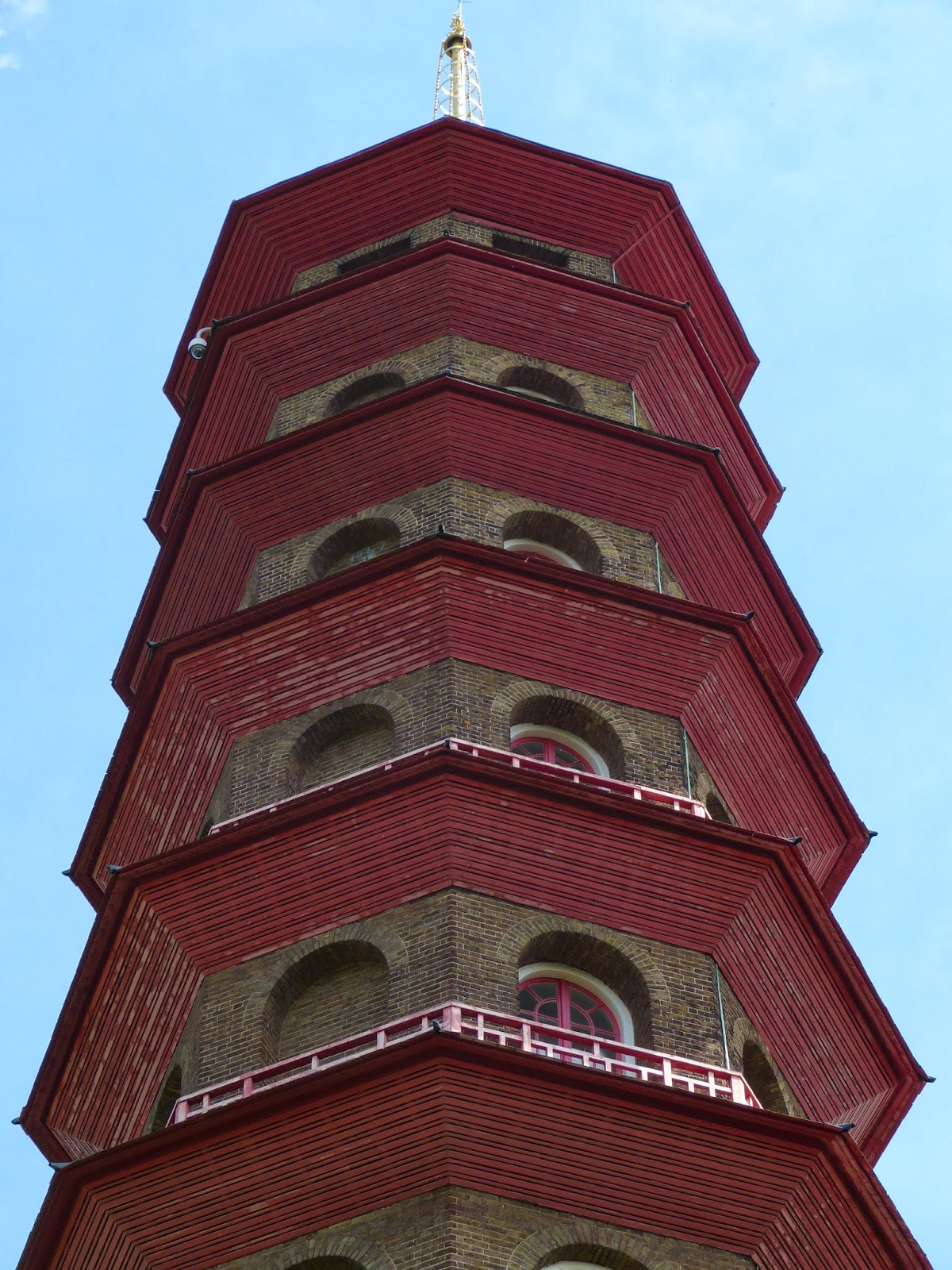
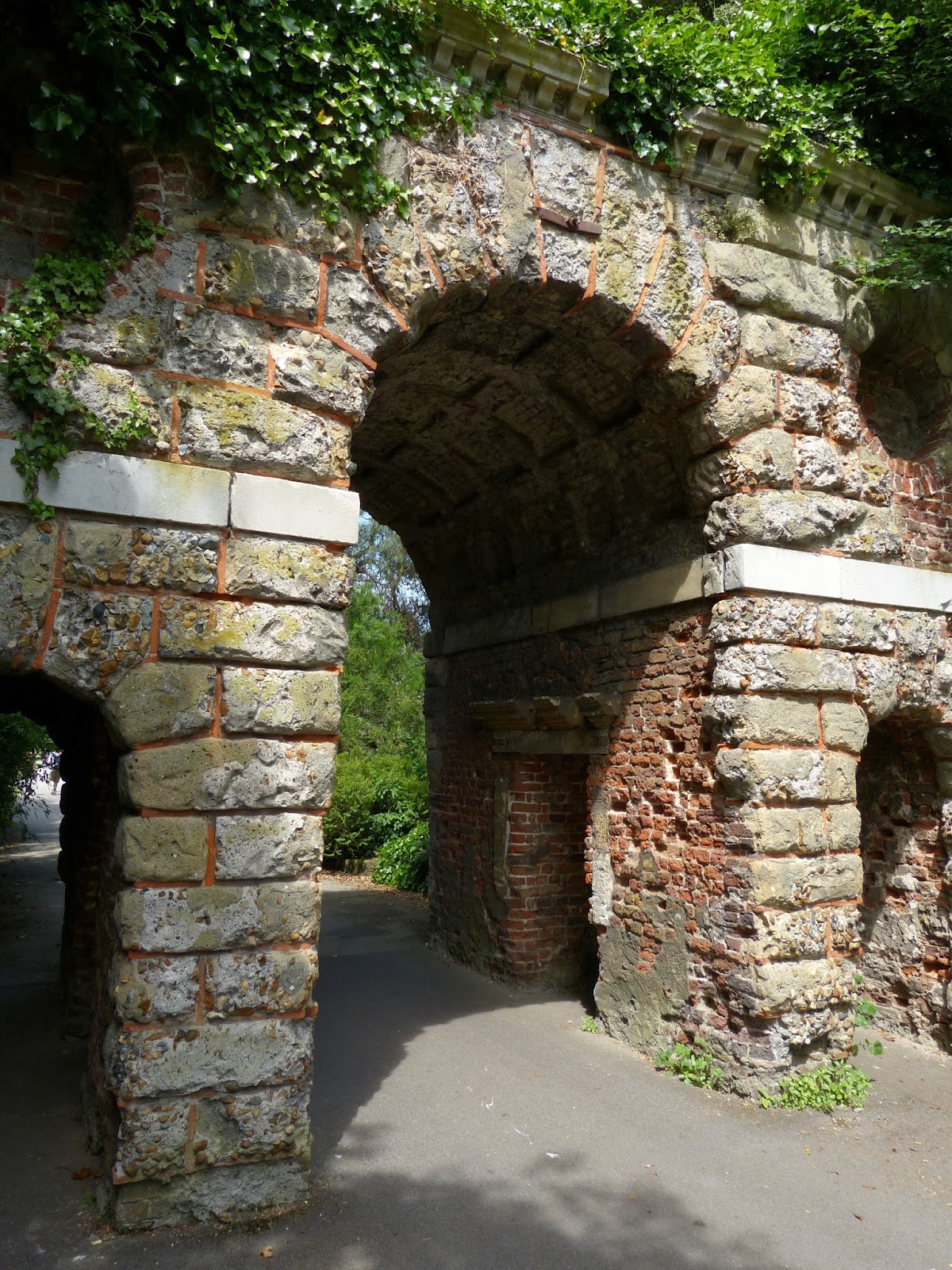
Augusta continued to accept Lord Bute’s support and appointed William Aiton as her head gardener. She commissioned Sir William Chambers to design various buildings around the estate including the Pagoda, the Ruined Arch and the Orangery.

The Pagoda, Kew Gardens (2014)
Queen Charlotte

George III and Queen Charlotte used Richmond Lodge and then the White House at Kew as their country retreat. Queen Charlotte shared her mother-in-law’s love of botany and continued to develop the gardens. Sir Joseph Banks often visited and brought a collection of over 1000 new seeds and plants from the South Seas.

Sir Joseph was the unofficial director of Kew and ensured that the study of plants at Kew was done scientifically. Aiton started to create a catalogue of all the plants being introduced, the Hortus Kewensis (1789).

Franz Bauer became the resident artist at Kew and taught botanical drawing to the princesses.

Part of the ceiling detail from the tea room  in Queen Charlotte's cottage painted by Princess Elizabeth
Part of the ceiling detail from the tea room
in Queen Charlotte's cottage painted by Princess Elizabeth (2014)
What can you see today?

Highlights to look out for in the gardens include:

• Queen Charlotte’s Cottage

Queen Charlotte's Cottage, Kew
Queen Charlotte's Cottage, Kew (2014)
 • The Pagoda

The Pagoda, Kew
The Pagoda, Kew Gardens (2014)
• The Ruined Arch

The Ruined Arch, Kew
The Ruined Arch, Kew Gardens (2014)
• The Orangery

The Orangery, Kew
The Orangery, Kew Gardens (2014)

Headshot of Rachel Knowles author with sea in background(2021)
Rachel Knowles writes clean/Christian Regency era romance and historical non-fiction. She has been sharing her research on this blog since 2011. Rachel lives in the beautiful Georgian seaside town of Weymouth, Dorset, on the south coast of England, with her husband, Andrew.

Find out more about Rachel's books and sign up for her newsletter here.

If you have enjoyed this blog and want to encourage me and help me to keep making my research freely available, please buy me a virtual cup of coffee by clicking the button below.

Last visited: June 2013.

If you enjoyed this article, you might also like my guides to Queen Charlotte's Cottage and Kew Palace.

Sources used include:
Groom, Susanne and Prosser, Lee, Kew Palace, the official illustrated history (2006)
Kew Gardens website

Photographs © RegencyHistory.net

Thursday, 27 February 2014

The White House, Kew - a Regency History guide

Sundial marking the site of the White House,
opposite to Kew Palace, Kew
Where was it?

The White House was a royal residence which used to stand opposite to Kew Palace in what is now the Royal Botanic Gardens at Kew in London.

History

The origins of the White House are not known, but it is thought to have been built in Tudor times. Before becoming a royal residence, Kew House, as it was then known, belonged to Lady Elizabeth Capel. Lady Elizabeth’s husband, Samuel Molyneux, was George II’s secretary and a keen astronomer. He built an observatory in the attic of Kew House.

Prince Frederick of Wales, George III’s father, started renting the house in 1730 and it became known as His Royal Highness’ House at Kew and later, the White House.

The south prospect of HRH The Prince of Wales' House at Kew
- detail from John Rocque's map A New Plan of Richmond Garden (1748)
It was not until 1799, that George III acquired the freehold, but by this time the house was in a poor state of repair and in 1802, the process of demolition began.

The only evidence of the White House now is a sundial in the ground opposite Kew Palace that marks the site.

Georgian connections

Prince Frederick and Princess Augusta

Princess Augusta and Prince Frederick of Wales
from The Georgian Era (1832)
Frederick, Prince of Wales, arrived in England in December 1728 having spent his childhood in Hanover. Initially he got on well with his family and spent time at Richmond and Kew. He took a lease on Kew House, which stood opposite to Kew Palace where his sisters Anne, Caroline and Amelia were living. In 1730, he commissioned the architect William Kent to extend and remodel Kew House. The finished building was rendered and whitewashed and became known as the White House.

The north prospect of HRH The Prince of Wales' House at Kew
- detail from John Rocque's map A New Plan of Richmond Garden (1748)
After his estrangement from his father, Frederick lived the life of a country gentleman at Kew with his wife, Augusta, and a growing number of children: Augusta, George, Edward, Elizabeth, William, Henry, Louisa, Frederick and Caroline Matilda, who was born posthumously. They played cricket, rowed on the river, performed plays and celebrated birthdays with fun and fireworks. Frederick gave his family astronomy lessons in the attic observatory and promoted the development of the gardens aided by Lord Bute.

After Frederick’s sudden death from pneumonia in 1751, Augusta continued to live at Kew and under her auspices, the Royal Botanic Gardens were founded in 1759.

George III and Queen Charlotte

George III inherited the White House from his mother, Augusta, on her death in 1772. George III and Queen Charlotte used the White House as their country retreat, whilst their eldest sons, George and Frederick, moved into Kew Palace opposite.

At Kew, the King and Queen were able to live a much more informal life than in London. The princes learned about farming and played games of cricket and football, occasionally joined by their sisters, especially Princess Augusta. They visited the royal menagerie of exotic animals and took picnics in the gardens at Queen Charlotte’s Cottage. The King was frequently visited by the botanist Joseph Banks who fascinated him with tales of his travels, brought new seeds and plants for the gardens and in 1774, introduced him to the Tahitian warrior Omai.

Omai - mezzotint by J Jacobé after J Reynolds (1777)
published by J Boydell (1780) © British Museum
After 1776, George III developed a preference for Windsor and spent less time at Kew, until 1788, when a long visit was forced upon him.

George III’s illness

In 1788, George III became mentally incapacitated and it was necessary to move him to a quieter location than Windsor. Kew was the obvious answer. The King was restricted to apartments in the White House from November 1788 to March 1789 whilst he underwent treatment for his condition by Dr Willis.

When his illness returned in 1801, George III once again found himself a prisoner in the White House. Although it had largely fallen into disrepair and most of its furniture moved to Kew Palace, apartments had been prepared there for Prince Adolphus, and it was decided to use these to house the King.

Once more, the King recovered, and, perhaps anxious to ensure that he was never incarcerated there again, the following year, George III ordered the demolition of the White House.

What can you see today?

Not much!

• A sundial marking the site of the White House.

The sundial marking the site of the White House (indicated by the arrow)
from the first floor of Kew Palace
Last visited Kew Palace: June 2013.

To discover more about Kew, read my guides to Kew Palace and Queen Charlotte's Cottage.

Sources used include:
Groom, Susanne and Prosser, Lee, Kew Palace, the official illustrated history (2006)

Photographs © RegencyHistory.net