Search this blog

Showing posts with label Kew Palace. Show all posts

Monday, 9 March 2015

Royal residences of the Georgian kings

A collage of 12 royal residences
12 royal residences (details of each picture below)
Brighton Pavilion

George IV made the Royal Pavilion at Brighton his summer residence from 1786 until 1827, when he abandoned it as lacking in privacy. It started life as a modest farmhouse and was redeveloped into the magnificent, if somewhat eccentric, palace that exists today.
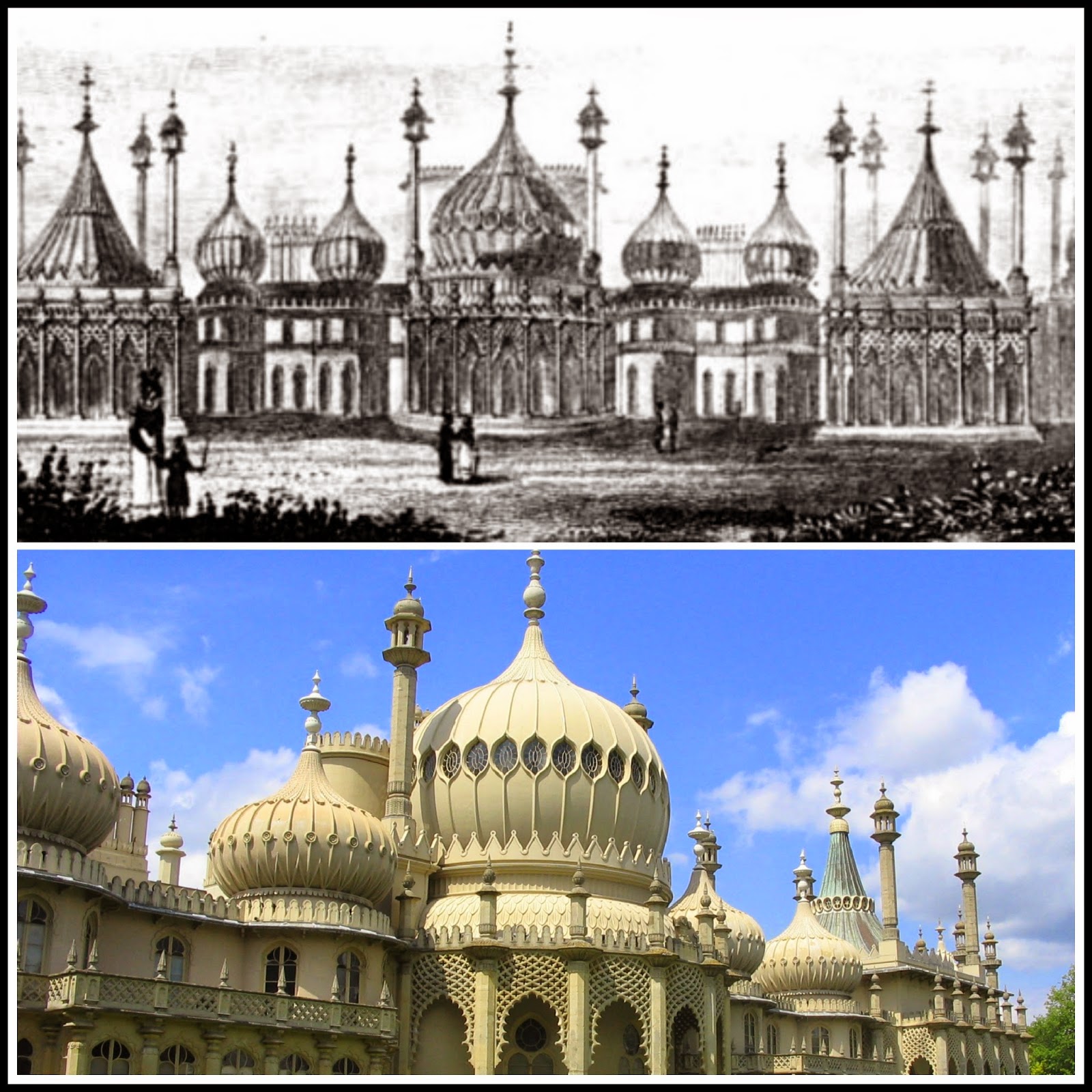
Brighton Pavilion  Top: From History of Brighton and its environs by R Sickelmore (1827)  Bottom: Brighton Pavilion today © Andrew Knowles
Top: Brighton Pavilion from  
History of Brighton and its environs by R Sickelmore (1827)
Bottom: Brighton Pavilion (2004) © Andrew Knowles
Read more about:
George IV’s Brighton
George IV and the Marine Pavilion, Brighton
George IV and the Brighton Pavilion
What did Regency visitors think of the Brighton Pavilion?
Watch my video: A litter of cupolas – Brighton Pavilion in 1823

Buckingham Palace

Buckingham Palace was acquired by George III as a private residence for the royal family in 1761 and was originally known as Buckingham House or the Queen’s House. George IV transformed it into a palace fit for a king, but did not live to see it completed. William IV disliked it and would not live there, but it became the official London residence of Queen Victoria and British monarchs ever since.

Top: Buckingham House from    The History of the Royal Residences by WH Pyne (1819)  Bottom: Buckingham Palace today © Andrew Knowles
Top: Buckingham House from  
The History of the Royal Residences by WH Pyne (1819)
Bottom: Buckingham Palace (2015) © Andrew Knowles
Bushy House

William IV resided at Bushy House from 1797 when, as Duke of Clarence, he was appointed Ranger of Bushy Park. He lived there with his mistress, Dorothea Jordan, until their relationship ended in 1811, and then later with his wife Princess Adelaide. He continued to live at Bushy House even after he became king and following his death, it became the official residence of Queen Adelaide until her death in 1849. In 1900, the site was offered to the Royal Society to house the National Physical Laboratory and ceased to be a royal residence.

Top: Bushy House from History of the life and reign   of William the Fourth (1837) by R Huish   Bottom: The house in Bushy Park today © Andrew Knowles
Top: Bushy House from History of the life and reign
 of William the Fourth (1837) by R Huish
Bottom: The house in Bushy Park (2014) © Andrew Knowles
Carlton House

Carlton House was purchased as the official residence of Frederick, Prince of Wales, George III’s father, in 1732. In 1783, it became the residence of the future George IV when he came of age. George IV continually remodelled it until he became king, at which point he transferred his interest to the other royal residences. It was demolished in 1825 and replaced by a number of prestigious houses - Carlton House Terrace.
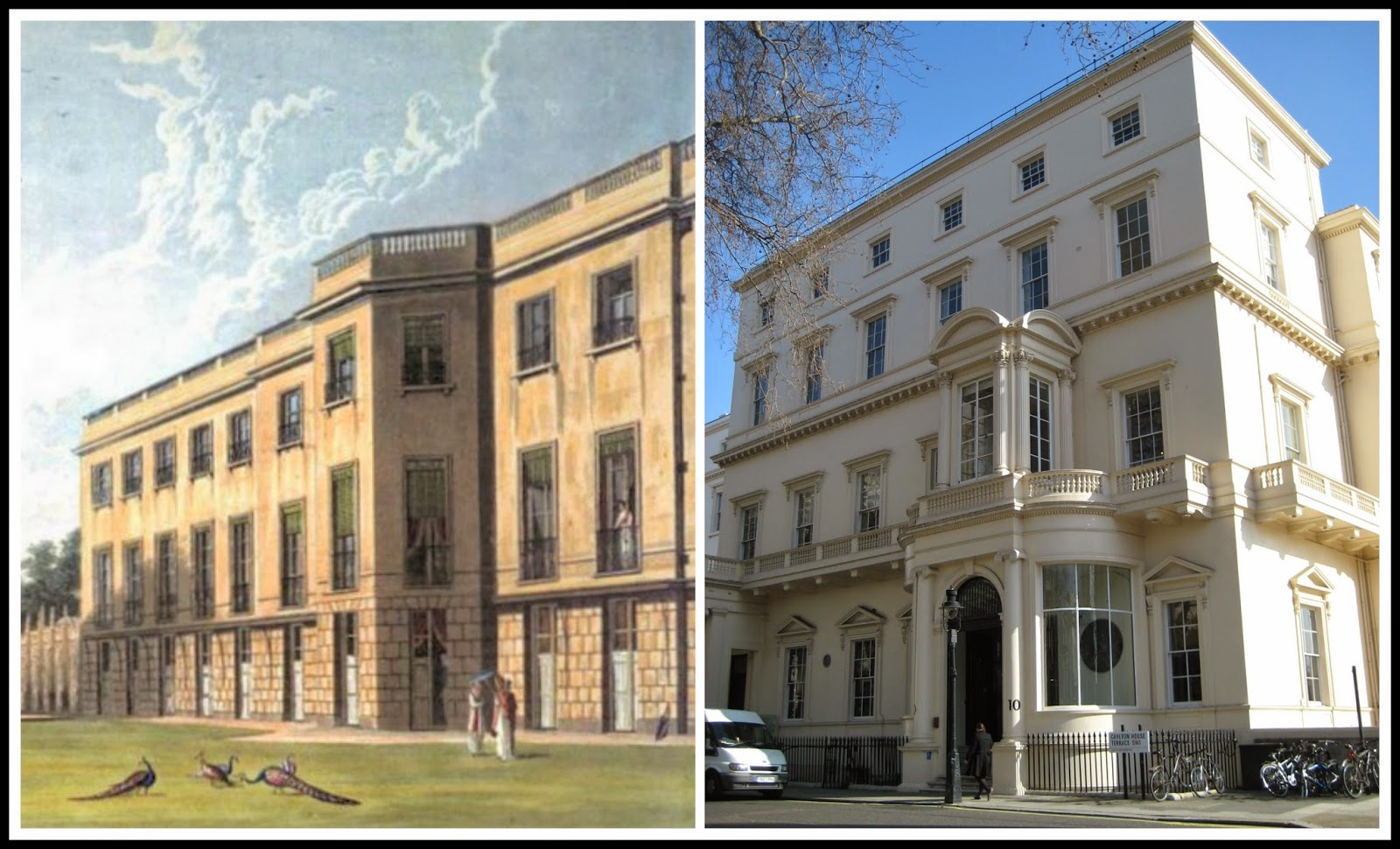
Left: Carlton House, south front,  from    The History of the Royal Residences by WH Pyne (1819)  Right: Carlton House Terrace © Andrew Knowles
Left: Carlton House, south front,  from  
The History of the Royal Residences by WH Pyne (1819)
Right: Carlton House Terrace (2015) © Andrew Knowles
Clarence House

Clarence House was built in 1825-7 as the London residence of William IV when he was Duke of Clarence. He continued to live there after he became king in 1830. Following his death, it became the residence of Princess Augusta and the Princess Victoria, Duchess of Kent, Queen Victoria’s mother. It is now the official residence of the Prince of Wales.

Top: Clarence House from The Graphic (Nov 1874)  Bottom: Clarence House today © Andrew Knowles
Top: Clarence House from The Graphic (Nov 1874)
Bottom: Clarence House (2015) © Andrew Knowles
Gloucester Lodge

George III visited Weymouth nearly every year from 1789 to 1805 and stayed at Gloucester Lodge, the house built for his brother William, Duke of Gloucester, on the seafront. It was sold by George IV when he became king and is now a hotel.

Top: Weymouth seafront from The Lady's Magazine (1789)  Bottom: Gloucester Lodge today © Andrew Knowles
Top: Weymouth seafront from The Lady's Magazine (1789)
Bottom: Gloucester Lodge (2012) © Andrew Knowles
Read more about:
George III in Weymouth
Sea bathing in Regency Weymouth
Fashionable entertainment in Regency Weymouth
Watch my video: George’s seaside adventure - George III in Weymouth

Hampton Court

Hampton Court first became a royal residence after it was acquired by Henry VIII in 1528 and rebuilt to his design. It was used by the early Georgian monarchs, but under George III, the palace was divided up into grace-and-favour apartments – rent-free accommodation for those favoured by the King. It is now in the care of Historic Royal Palaces and is open to the public.
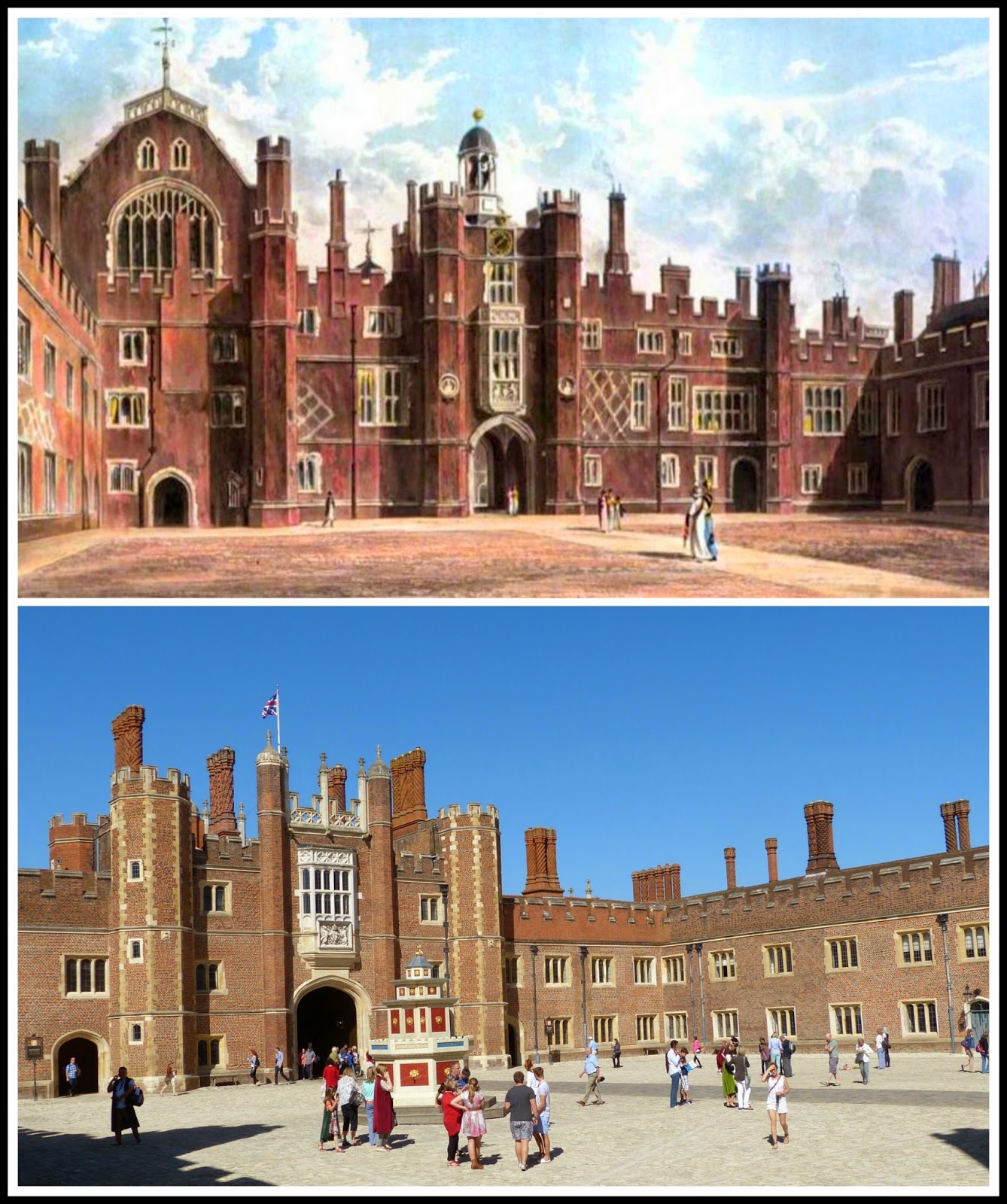
Top: Quadrangle, Hampton Court, from    The History of the Royal Residences by WH Pyne (1819)  Bottom: Hampton Court today © Andrew Knowle
Top: Quadrangle, Hampton Court, from  
The History of the Royal Residences by WH Pyne (1819)
Bottom: Hampton Court (2014) © Andrew Knowles
Kensington Palace

William III and Mary bought Nottingham House in 1689 and transformed it into Kensington Palace, an out-of-town royal residence in which to live in preference to St James’s Palace. It was renovated under George I and used extensively by George II. Members of the royal family continued to live there, but it was never used as the residence of the sovereign again. Kensington Palace is in the care of Historic Royal Palaces and is open to the public.

Top: Kensington Palace from  
The History of the Royal Residences by WH Pyne (1819)
Bottom: Kensington Palace (2012) © Andrew Knowles
Read more about Kensington Palace

Kew Palace

George II first used Kew Palace as a royal residence for part of his family from 1729. George III housed his two eldest sons here whilst using the White House, Kew, as a country retreat. Kew Palace was used during George III’s mentally incapacitating illness and Queen Charlotte died there in 1818. Queen Victoria gave the palace to the public and it is now managed by Historic Royal Palaces.
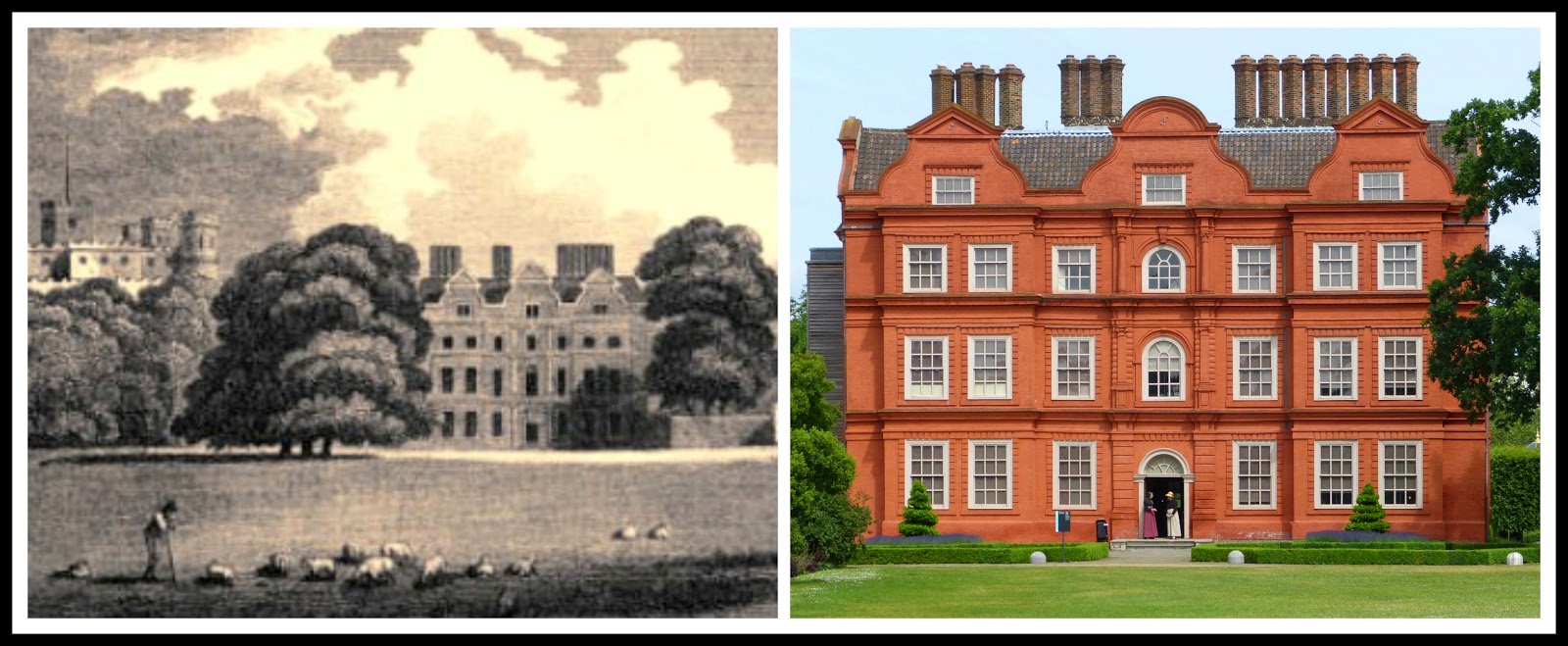
Left: The old palace at Kew from Memoirs of HM Sophia Charlotte   of Mecklenburg Strelitz, Queen of Great Britain by WM Craig (1818)  Right: Kew Palace today © Andrew Knowles
Left: The old palace at Kew from Memoirs of HM Sophia Charlotte
 of Mecklenburg Strelitz, Queen of Great Britain by WM Craig (1818)
Right: Kew Palace (2014) © Andrew Knowles
Read more about:
Kew Palace
Kew Gardens
Queen Charlotte’s Cottage, within Kew Gardens

St James’s Palace

Built for Henry VIII in the 1530s, St James’s Palace became the principal London palace of the British sovereign after the Palace of Whitehall was destroyed by fire in 1698. Part of the St James’s Palace was destroyed by fire in 1809, but court levĂ©es were still held here until 1939. It remains an official residence although no sovereign has resided here since the time of William IV.


Top: St James' Palace from    The History of the Royal Residences by WH Pyne (1819)  Bottom: St James' Palace today © Andrew Knowles
Top: St James's Palace from  
The History of the Royal Residences by WH Pyne (1819)
Bottom: St James's Palace (2014) © Andrew Knowles
White House, Kew

Frederick, Prince of Wales, George III’s father, lived in the White House at Kew from 1730. George III inherited the White House from his mother and used it as a country retreat. George III was incarcerated here during several bouts of mental illness and he ordered its demolition in 1802. All that remains to mark the site is a sundial opposite to Kew Palace.

Left: The north prospect of HRH The Prince of Wales' House at Kew  - detail from John Rocue's map A New Plan of Richmond Garden (1748)  Right: The sundial opposite Kew Palace that marks the site  of the White House © Andrew Knowles
Left: The north prospect of HRH The Prince of Wales' House at Kew
- detail from John Rocque's map A New Plan of Richmond Garden (1748)
Right: The sundial opposite Kew Palace that marks the site
of the White House (2014) © Andrew Knowles
Read more about the White House at Kew

Windsor Castle

Windsor Castle has been a royal residence since about 1100. It was a favoured out-of-town residence of both George III and George IV who carried out extensive building works at the castle. It remains an official residence of the King today.

Top: The Upper Ward, Windsor Castle from   The History of the Royal Residences by WH Pyne (1819)  Bottom: The Lower Ward, Windsor Castle today © Andrew Knowles
Top: The Upper Ward, Windsor Castle from 
The History of the Royal Residences by WH Pyne (1819)
Bottom: The Lower Ward, Windsor Castle (2015) © Andrew Knowles
Read more about:
Windsor Castle
St George’s Chapel, Windsor Castle
1815 exhibition: Waterloo at Windsor 1815-2015
Updated 30/9/22

Headshot of Rachel Knowles author with sea in background(2021)
Rachel Knowles writes faith-based Regency romance and historical non-fiction. She has been sharing her research on this blog since 2011. Rachel lives in the beautiful Georgian seaside town of Weymouth, Dorset, on the south coast of England, with her husband, Andrew.

Find out more about Rachel's books and sign up for her newsletter here.

If you have enjoyed this blog and want to encourage me and help me to keep making my research freely available, please buy me a virtual cup of coffee by clicking the button below.

 
Sources used include:
Craig, William Marshall, Memoirs of HM Sophia Charlotte of Mecklenburg Strelitz, Queen of Great Britain (1818)
Huish, Robert, History of the life and reign of William the Fourth (1837)
Pyne, WH, The history of the Royal Residences of Windsor Castle, St James's Palace, Carlton House, Kensington Palace, Hampton Court, Buckingham House and Frogmore (1819)
Rocque, John, A New Plan of Richmond Garden (1748)
Sickelmore, Richard, History of Brighton and its environs (1827)
The Graphic (1874)
The Lady's Magazine (1789)

Historic Royal Palaces website
Royal Collection Trust website
The official website of The British Monarchy 
 
© RegencyHistory

Thursday, 27 February 2014

The White House, Kew - a Regency History guide

Sundial marking the site of the White House,
opposite to Kew Palace, Kew
Where was it?

The White House was a royal residence which used to stand opposite to Kew Palace in what is now the Royal Botanic Gardens at Kew in London.

History

The origins of the White House are not known, but it is thought to have been built in Tudor times. Before becoming a royal residence, Kew House, as it was then known, belonged to Lady Elizabeth Capel. Lady Elizabeth’s husband, Samuel Molyneux, was George II’s secretary and a keen astronomer. He built an observatory in the attic of Kew House.

Prince Frederick of Wales, George III’s father, started renting the house in 1730 and it became known as His Royal Highness’ House at Kew and later, the White House.

The south prospect of HRH The Prince of Wales' House at Kew
- detail from John Rocque's map A New Plan of Richmond Garden (1748)
It was not until 1799, that George III acquired the freehold, but by this time the house was in a poor state of repair and in 1802, the process of demolition began.

The only evidence of the White House now is a sundial in the ground opposite Kew Palace that marks the site.

Georgian connections

Prince Frederick and Princess Augusta

Princess Augusta and Prince Frederick of Wales
from The Georgian Era (1832)
Frederick, Prince of Wales, arrived in England in December 1728 having spent his childhood in Hanover. Initially he got on well with his family and spent time at Richmond and Kew. He took a lease on Kew House, which stood opposite to Kew Palace where his sisters Anne, Caroline and Amelia were living. In 1730, he commissioned the architect William Kent to extend and remodel Kew House. The finished building was rendered and whitewashed and became known as the White House.

The north prospect of HRH The Prince of Wales' House at Kew
- detail from John Rocque's map A New Plan of Richmond Garden (1748)
After his estrangement from his father, Frederick lived the life of a country gentleman at Kew with his wife, Augusta, and a growing number of children: Augusta, George, Edward, Elizabeth, William, Henry, Louisa, Frederick and Caroline Matilda, who was born posthumously. They played cricket, rowed on the river, performed plays and celebrated birthdays with fun and fireworks. Frederick gave his family astronomy lessons in the attic observatory and promoted the development of the gardens aided by Lord Bute.

After Frederick’s sudden death from pneumonia in 1751, Augusta continued to live at Kew and under her auspices, the Royal Botanic Gardens were founded in 1759.

George III and Queen Charlotte

George III inherited the White House from his mother, Augusta, on her death in 1772. George III and Queen Charlotte used the White House as their country retreat, whilst their eldest sons, George and Frederick, moved into Kew Palace opposite.

At Kew, the King and Queen were able to live a much more informal life than in London. The princes learned about farming and played games of cricket and football, occasionally joined by their sisters, especially Princess Augusta. They visited the royal menagerie of exotic animals and took picnics in the gardens at Queen Charlotte’s Cottage. The King was frequently visited by the botanist Joseph Banks who fascinated him with tales of his travels, brought new seeds and plants for the gardens and in 1774, introduced him to the Tahitian warrior Omai.

Omai - mezzotint by J Jacobé after J Reynolds (1777)
published by J Boydell (1780) © British Museum
After 1776, George III developed a preference for Windsor and spent less time at Kew, until 1788, when a long visit was forced upon him.

George III’s illness

In 1788, George III became mentally incapacitated and it was necessary to move him to a quieter location than Windsor. Kew was the obvious answer. The King was restricted to apartments in the White House from November 1788 to March 1789 whilst he underwent treatment for his condition by Dr Willis.

When his illness returned in 1801, George III once again found himself a prisoner in the White House. Although it had largely fallen into disrepair and most of its furniture moved to Kew Palace, apartments had been prepared there for Prince Adolphus, and it was decided to use these to house the King.

Once more, the King recovered, and, perhaps anxious to ensure that he was never incarcerated there again, the following year, George III ordered the demolition of the White House.

What can you see today?

Not much!

• A sundial marking the site of the White House.

The sundial marking the site of the White House (indicated by the arrow)
from the first floor of Kew Palace
Last visited Kew Palace: June 2013.

To discover more about Kew, read my guides to Kew Palace and Queen Charlotte's Cottage.

Sources used include:
Groom, Susanne and Prosser, Lee, Kew Palace, the official illustrated history (2006)

Photographs © RegencyHistory.net

Thursday, 20 February 2014

Queen Charlotte’s Cottage – a Regency History guide

Queen Charlotte's Cottage, Kew Gardens, London
Queen Charlotte's Cottage, Kew (2013)
Where is it?

Queen Charlotte’s Cottage is part of the Kew Palace estate and is situated within the botanical gardens at Kew in London.

History

Queen Charlotte's Cottage, Kew
Queen Charlotte's Cottage, Kew (2013)
It is difficult to determine exactly when the building now known as Queen Charlotte’s Cottage was built.

One source records that a one-storey building was erected on the site between 1754 and 1771 in the grounds of Richmond Lodge during the development of the New Menagerie, possibly as a dwelling for the menagerie keeper. This area now forms the western part of Kew Gardens. The cottage was then given to Queen Charlotte on her marriage to George III in 1761, and she extended the building and added an extra floor to house the tea or picnic room. (1)

Another source states that the earliest mention of the cottage is not until 1771, and that it was built for Queen Charlotte as a cottage ornĂ© – a picturesque building made to look like a rustic cottage with aged window frames, poor quality bricks and a thatched roof. It may have been designed to remind Queen Charlotte of the farmhouses from her home in Mecklenburg. (2)

Boot scraper outside Queen  Charlotte's Cottage, Kew
Boot scraper outside Queen
Charlotte's Cottage, Kew (2013)
Queen Charlotte’s Cottage and grounds were given to the public by Queen Victoria in 1898. The cottage is now in the care of Historic Royal Palaces.

Georgian connection

After their marriage in 1761, George III and Queen Charlotte used first Richmond Lodge and then the White House on the Kew estate as their country retreat. The grounds of both properties are now part of Kew Gardens.

The print room, Queen Charlotte's Cottage, Kew
The print room, Queen Charlotte's Cottage, Kew (2013)
Queen Charlotte’s Cottage was used as a summer house where the royal family could have informal meals and visit the Queen’s menagerie nearby. Although externally the cottage is simple, inside it boasts elegant staircases and a geometric stone floor. However, the rooms are small as the cottage was never intended for the royal family to live in.

The tea room, Queen Charlotte's Cottage, Kew
The tea room, Queen Charlotte's Cottage, Kew (2013)
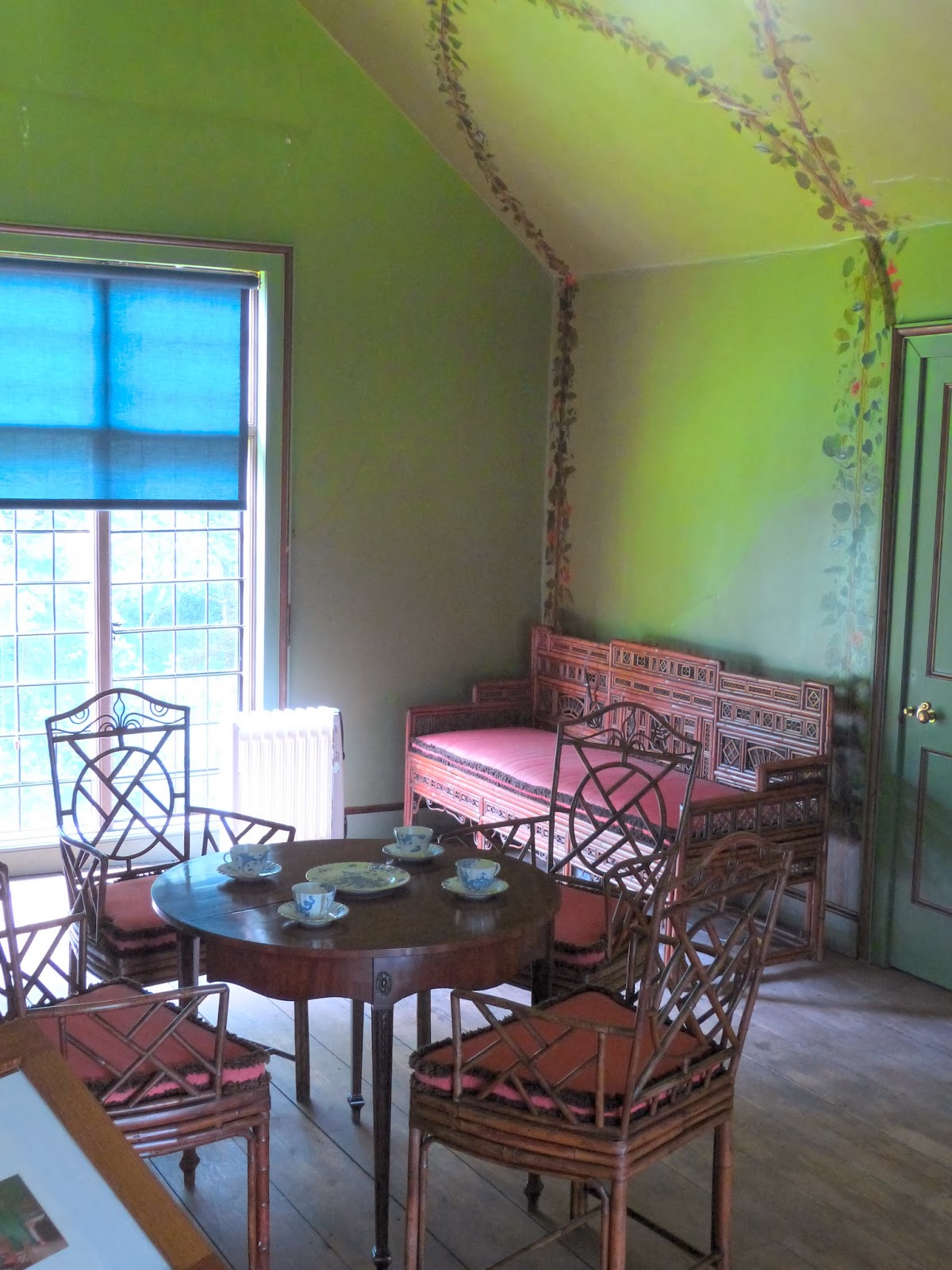
Downstairs, the Queen displayed her collection of Hogarth prints on the walls of the print room, whilst upstairs was the tea or picnic room, with its beautifully floral and bamboo decorations which were painted by the Queen’s third daughter, Princess Elizabeth.

What can you see today?

• The picturesque exterior of Queen Charlotte’s Cottage

Queen Charlotte's Cottage, Kew Gardens, London
Queen Charlotte's Cottage, Kew (2013)
• The print room

The print room, Queen Charlotte's Cottage, Kew
The print room, Queen Charlotte's Cottage, Kew (2013)
• The tea room

The tea room, Queen Charlotte's Cottage, Kew
The tea room, Queen Charlotte's Cottage, Kew (2013)
Princess Elizabeth's artwork on the walls and ceiling of the tea room

Detail from the artwork on the wall of  the tea room in Queen Charlotte's Cottage, Kew
Detail from the artwork on the wall of
the tea room in Queen Charlotte's Cottage, Kew (2013)
Last visited: June 2013.

Queen Charlotte's cottage is in the care of Historic Royal Palaces and has limited opening times. Find out more here.
 
If you enjoyed this article, you might like my guides to Kew Palace and the White House.

Headshot of Rachel Knowles author with sea in background(2021)
Rachel Knowles writes clean/Christian Regency era romance and historical non-fiction. She has been sharing her research on this blog since 2011. Rachel lives in the beautiful Georgian seaside town of Weymouth, Dorset, on the south coast of England, with her husband, Andrew.

Find out more about Rachel's books and sign up for her newsletter here.

If you have enjoyed this blog and want to encourage me and help me to keep making my research freely available, please buy me a virtual cup of coffee by clicking the button below.

 
Notes
(1) From the Kew Gardens website (accessed 19/2/14). The dates for the building are very vague and if the building was erected after 1761, presumably it could not have been a wedding present. One possible explanation is that the original building was put up in 1754, but alterations were made to it in the period to 1771, after it was given to Queen Charlotte and transformed into her rustic summerhouse.
(2) From Kew Palace, the official illustrated history by Groom and Prosser (2006). They state that the cottage was on the site by 1771. However, if the cottage was altered rather than completely rebuilt, this would explain how the two different histories might fit together.

Sources used include:
Groom, Susanne and Prosser, Lee, Kew Palace, the official illustrated history (2006)
Kew Gardens website (accessed 19/2/14) 
Kew Palace website (accessed 19/2/14) 
The pages I used to write this article no longer exist, but there is a new page about Queen Charlotte's Cottage on the Historic Royal Palaces website here.

Photographs © RegencyHistory.net
Updated 28/1/22

Wednesday, 22 January 2014

Regency History's guide to Kew Palace

Kew Palace - front view
Kew Palace - front entrance (2013)
Where is it?

Kew Palace is situated within the botanical gardens at Kew in London.

History

Kew Palace was built for a rich merchant in the 1630s with its distinctive curved gables on each façade and characteristic red colour. It is sometimes referred to as the Red House or the Dutch House. It was first used as a royal residence in 1729 by George II and Queen Caroline as a home for their eldest daughters.

Kew Palace - rear view
Kew Palace - rear view (2013)
The palace was given to the public by Queen Victoria and is now under the care of Historic Royal Palaces.

Georgian connection

Early Georgian

From 1728, George II’s eldest daughters, Anne, Caroline and Amelia, lived in Kew Palace whilst Frederick, Prince of Wales, lived in the White House, a larger building which used to stand opposite.

After his estrangement from his father, Frederick lived at Kew with his wife, Princess Augusta, and his growing family. Princess Augusta was a keen botanist and promoted the development of Kew Gardens. She also kept a menagerie of animals.

George III had lessons with his brother Edward in Kew Palace. When his father died in 1751, Princess Augusta managed to persuade the King to allow her shy 13 year old son to stay with her at Kew.

Desk, Kew Palace
Desk, Kew Palace (2013)
Late Georgian

The nursery

In 1764, George III’s eldest sons, George (later George IV) and Frederick (later Duke of York), were quarantined with whooping cough in Kew Palace.

After this, George III and Queen Charlotte began to use Kew as additional accommodation for their ever increasing family and after the death of George III’s mother, Princess Augusta, in 1772, they began to use the White House as their country retreat rather than Richmond Lodge. George and Frederick had their own establishment in Kew Palace.

At Kew, George III and Queen Charlotte led a more normal family life. They played cricket, celebrated birthdays and had picnics at Queen Charlotte’s Cottage in the gardens, with the Queen’s menagerie nearby.

Queen Charlotte's Cottage
Queen Charlotte's Cottage (2013)
From 1776, George III spent more time at Windsor and visited Kew less frequently, although the royal nursery remained at Kew.

George III’s illness

When George III became mentally unstable in 1788, he was confined in apartments in the White House at Kew and again in 1801 while the Queen and Princesses stayed in Kew Palace. On a further recurrence of his illness in 1804, he was confined in Kew Palace itself.

Around 1800, George III planned to build a Gothic castellated palace at Kew, but it was never completed. He visited Kew for the last time in 1806 and work on the new palace was abandoned.

Queen Charlotte's bedroom, Kew Palace
Queen Charlotte's bedroom, Kew Palace (2013)
In June 1818 Queen Charlotte became ill on her way to Windsor and was forced to stay at Kew. She became too ill to move and so the double wedding of Edward, Duke of Kent, and Princess Victoria of Saxe-Coburg-Leiningen, and William, Duke of Clarence, and Princess Adelaide of Saxe-Meiningen, was conducted in the Queen’s drawing room at Kew Palace on 11 July 1818.

Queen Charlotte died in Kew Palace on 17 November 1818.

What can you see today?

• A wax head of George III made by Madame Tussaud from life

Wax head of George III  made by Madame Tussaud
Wax head of George III
made by Madame Tussaud (2013)
• The chair that Queen Charlotte is supposed to have died in

The chair that Queen Charlotte died in
The chair that Queen Charlotte reportedly died in (2013)
 • George III’s harpsichord

George III's harpsichord  in the Queen's Drawing Room at Kew Palace
George III's harpsichord
in the Queen's drawing room at Kew Palace (2013)
• George III’s bath (in the kitchens)

George III’s bath
George III’s bath (2013)
 • The hatchment displayed at the palace after Queen Charlotte’s death

The hatchment displayed at Kew Palace  after Queen Charlotte’s death
The hatchment displayed at the palace
after Queen Charlotte’s death (2013)
• Costumed guides

Costumed guides at the front entrance to Kew Palace
Costumed guides Alice Painting and Mary Ruane
at the front entrance to Kew Palace (June 2013)
Last visited: June 2013.

If you enjoyed this article, you might also enjoy my guide to Kensington Palace.

To discover more about Kew, read my guides to Queen Charlotte's Cottage and the White House.

Headshot of Rachel Knowles author with sea in background(2021)
Rachel Knowles writes clean/Christian Regency era romance and historical non-fiction. She has been sharing her research on this blog since 2011. Rachel lives in the beautiful Georgian seaside town of Weymouth, Dorset, on the south coast of England, with her husband, Andrew.

Find out more about Rachel's books and sign up for her newsletter here.

If you have enjoyed this blog and want to encourage me and help me to keep making my research freely available, please buy me a virtual cup of coffee by clicking the button below.

 
Sources used include:
Groom, Susanne and Prosser, Lee, Kew Palace, the official illustrated history (2006)

Photographs © RegencyHistory.net