Search this blog

Showing posts with label Duke of Cumberland. Show all posts

Thursday, 1 May 2014

The Georgian Dukes of Cumberland

The Dukes of Cumberland from The Georgian Era by Clarke 1832

The trouble with names

One of the confusing things about the Georgian royals is that they were not very original when it came to names. As a result, we have four kings with the same name: George I, II, III and IV. At least they have numbers after their names to distinguish them!

The three Dukes

When I visited the First Georgians exhibition at the Queen's Gallery, Buckingham Palace, London, one of the displays talked about the Duke of Cumberland’s collection of maps. But which Duke of Cumberland? During the Georgian period, there were three different Dukes of Cumberland. They had different Christian names – William, Henry and Ernest – but were usually referred to by their title alone. So which Duke of Cumberland was it talking about? I suspected it was the first Duke of Cumberland, but I was not sure.
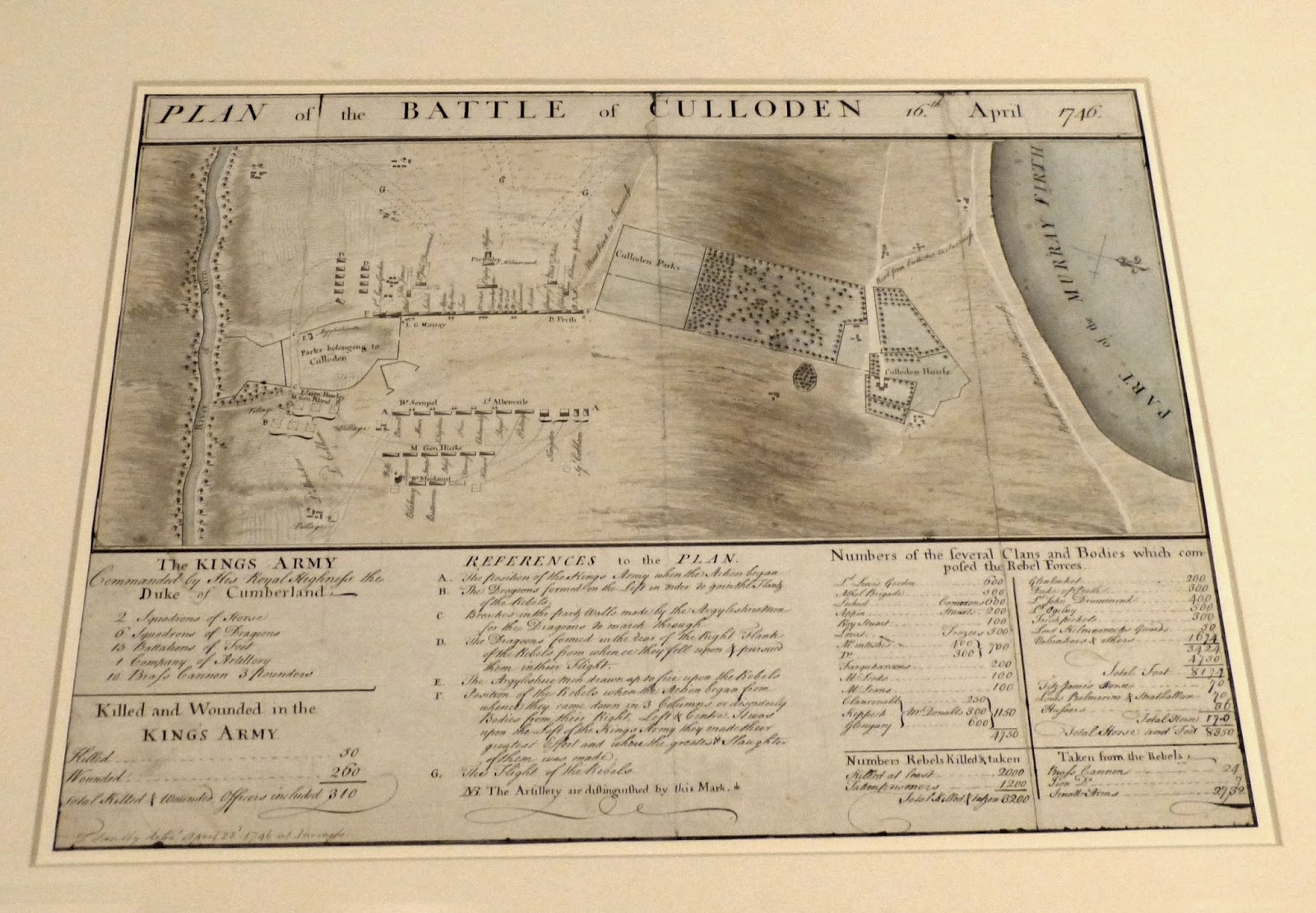
Plan of the Battle of Culloden  from the First Georgians exhibition at the Queen's Gallery, London
Plan of the Battle of Culloden
on display at the First Georgians exhibition
I decided to research the three Dukes. I already knew about the third Duke, Ernest. But what were the other two like and how did they fit into the royal family? I needed to know when each Duke lived and died in order to know who the Duke of Cumberland was in a specific year.

I discovered that the title did not pass from father to son as might be expected, but was created afresh in each generation as neither of the first two Dukes had legitimate heirs to inherit the title. But despite this, the three Dukes had a lot in common. They were all forceful characters who exerted a strong influence over their current or future sovereigns and possessed scandalous reputations.

Prince William Augustus, Duke of Cumberland (1721-1765)

William Duke of Cumberland from The Georgian Era (1832)

Prince William (26 April 1721(1) – 31 October 1765) was the third son of George II and Queen Caroline and uncle to George III. He was created Duke of Cumberland in 1726.

‘Butcher Cumberland’

William, Duke of Cumberland is most remembered for his role in the Battle of Culloden in 1746. His Whig supporters nicknamed him ‘Sweet William’ for successfully quashing the Jacobite rebels, but his Tory enemies dubbed him ‘Butcher Cumberland’ for showing no mercy to his enemies, even after they had surrendered.

Advisor to George III

George III by Jean-Étienne Liotard (1754) - on display at the First Georgians exhibition
A young George III by Jean-Étienne Liotard (1754)
- on display at the First Georgians exhibition
The Duke was one of George III’s key advisors in the early years of his reign and he resented the fact that George's mother Augusta was appointed Regent should George II die before George III had reached his majority rather than himself. He died unmarried in 1765. And yes, it was this Duke who was fond of collecting maps, some of which were on display in the First Georgians exhibition.

Prince Henry, Duke of Cumberland and Strathearn (1745-1790)

Henry Duke of Cumberland from The Georgian Era (1832)
Prince Henry (7 November 1745(2) – 18 September 1790) was the fourth son of Frederick, Prince of Wales, and Princess Augusta, and a younger brother of George III. He was made Duke of Cumberland and Strathearn and Earl of Dublin in 1766. He died in 1790 without any legitimate issue.

Scandalous relationships

Henry, Duke of Cumberland, was known for his disreputable liaisons. In 1769, he was found in a compromising situation with Lady Grosvenor and her husband successfully sued him for ‘criminal conversation’, that is, adultery. Lord Grosvenor was awarded damages of £10,000 and the case generated lots of adverse publicity for the royal family.

Front cover of Copies of the Depositions of the Witnesses in cause of divorce of Lord and Lady Grosvenor 1771

But his crowning folly was his marriage in 1771 to the widow Anne Horton, a commoner with a dubious reputation. This union alienated his brother George III and triggered the Royal Marriages Act of 1772, which required the King’s permission for the marriage of any descendant of George II.

A bad influence

George, Prince of Wales,  from The Lady's Magazine (Feb 1792)
George, Prince of Wales,
from The Lady's Magazine (Feb 1792)
The Duke was reconciled to George III after offering his services during the Gordon Riots of 1780, but this new understanding did not last. Henry became increasingly friendly with George, Prince of Wales, and George III resented the unhealthy influence that the Duke had over his son.

Prince Ernest, Duke of Cumberland and Teviotdale and King of Hanover (1771-1851)

Ernest Duke of Cumberland from The Georgian Era (1832)

Prince Ernest (5 June 1771 – 18 November 1851) was the fifth son of George III and Queen Charlotte. He was made Duke of Cumberland in 1799 and became King of Hanover on William IV’s death in 1837. His son, George, succeeded him.

Salacious gossip

Like the previous holders of the title, Ernest, Duke of Cumberland, seemed to attract controversy. When his valet committed suicide in 1810, Ernest was accused of his murder. When it was rumoured that his sister Sophia had given birth to an illegitimate child, it was alleged that he was the father. When his cousin Princess Frederica’s husband died suddenly in 1814, conveniently releasing her from her marriage so that she could marry Ernest, his now twice widowed wife was suspected of murder.

Frederica Duchess of Cumberland from The Georgian Era (1832)

Radical politics

Ernest was a radical Tory and strongly Protestant in his politics. He was a strong influence on his brother George IV and urged him to stand against the Catholic Relief Act, temporarily bringing down Wellington’s government as a result. He was vehemently opposed to the Reform Act of 1832.

Read more about Ernest, Duke of Cumberland, here.

Notes
1. As William was born before the adoption of the Gregorian calendar in 1752, his date of birth is sometimes given as 15 April 1721. This is the date based on the Julian calendar which was 11 days adrift from the Gregorian calendar.
2. Henry’s birth date is sometimes given as 26 October 1745 (Oxford DNB) - see note 1. above. I have also seen it recorded as 27 October 1745 (Wikisource) and 7 November 1744 (The Georgian Era), but think that on the new calendar, 7 November 1745 is right.

Headshot of Rachel Knowles author with sea in background(2021)
Rachel Knowles writes faith-based Regency romance and historical non-fiction. She has been sharing her research on this blog since 2011. Rachel lives in the beautiful Georgian seaside town of Weymouth, Dorset, on the south coast of England, with her husband, Andrew.

Find out more about Rachel's books and sign up for her newsletter here.

If you have enjoyed this blog and want to encourage me and help me to keep making my research freely available, please buy me a virtual cup of coffee by clicking the button below.


Sources used include:
Clarke, The Georgian Era, Memoirs of the most eminent persons, who have flourished in Great Britain (1832)
Kilburn, Matthew, Henry Frederick, Prince, Duke of Cumberland and Strathearn (1745-1790) Oxford Dictionary of National Biography (Oxford University Press, 2004; online edn Jan 2008, accessed 1 May 2014)
Plumb, JH, The First Four Georges (1956)

My post on Ernest, Duke of Cumberland.

The pictures of the Dukes and Duchess of Cumberland are all from The Georgian Era by Clarke (1832).

All photographs © RegencyHistory.net

Friday, 31 May 2013

The scandalous death of the Duke of Cumberland's valet

HRH Ernest, Duke of Cumberland  from A Biographical Memoir of Frederick,   Duke of York and Albany  by John Watkins (1827)
HRH Ernest, Duke of Cumberland
from A Biographical Memoir of Frederick,
 Duke of York and Albany
by John Watkins (1827)
A royal scandal

On 31 May 1810, the Duke of Cumberland was attacked while asleep in his bed in his apartments in St James’s Palace. One of the Duke’s valets, Joseph Sellis, was later found dead in his room. His throat had been cut.

The scandalous story caused a lot of gossip. In A Reason for Romance, the heroine Georgiana reads the account of the attack in The Times, excerpts from which are included below, and is desperate to talk about it. Popular opinion at the time was so against the Duke that it was generally believed that he had murdered his valet. But was Sellis responsible for the attack on the Duke? And did he commit suicide or was he murdered?

Night attack

In the early hours of 31 May 1810, Ernest, Duke of Cumberland, asleep in bed, was woken by being hit over the head. Initially he thought a bat had got into his bedroom.

The Times, 1 June 1810, reported:
On Wednesday, the Duke of Cumberland dined at Greenwich. His Royal Highness returned to town, about eight o’clock, in an open carriage and four. The Duke then went to the Concert for the benefit of the Royal Society of Musicians. His Royal Highness returned to his apartments in St James’s Palace about half-past twelve o’clock, and went to bed about one. About two o’clock, he was awoke by the assassin, when he was sound asleep.1
According to the Duke of Cumberland’s own testimony:
Who, being upon his oath, saith, that, before three o’clock this morning, being in bed and asleep, he received two blows upon his head, which awoke him, and, upon starting up, he received two other blows upon his head, which, being accompanied with a hissing noise, it occurred to him that some bat had flown against him, being between sleeping and waking, and immediately received two other blows; there was a lamp burning in the room, but he did not see any body; that there was a night table standing near the bed side, where a letter lay which was covered with blood. 

His Royal Highness says, he then got up and made for the door, which opens at the head of the bed; he then received a wound upon his right thigh with a sabre; he then called out to Neale, his page, and, upon returning to the bedroom with Neale, he perceived that the door leading to the yellow room, was wide open, which is always locked the last thing when he gets into bed; a naked sword had been dropped, which he supposes must have given the wound in this thigh.2
Attempted murder

The Times report continued:
On his Royal Highness extricating himself from the attack of the villain, and getting out of his bedroom, he exclaimed aloud to his valet in waiting, repeatedly, ‘Neale, Neale, I am murdered! I am murdered!’ Neale, who was sleeping in an adjoining room, got up instantly; and the Duke informed him of the particulars, and said, the murderers were in his bedroom. Neale armed himself with a poker, and he and his Royal Highness proceeded along the passage; when Neale stepped upon the sword with which the Duke had been attacked, which was one of the Duke’s, and had been sharpened within these few days.3
Cornelius Neale said that:
Joseph Sellis had taken out his Royal Highness’s uniform and the sword, and brought them into his bedroom for a regiment inspection which did not take place, and Sellis afterwards returned the regimentals to the wardrobe, but left the sword in the bedroom, where informant believes he saw the sword some time yesterday.4
By this time, the Duke’s assailant had fled, but the door to the yellow room which had been locked before he went to bed, stood open. The Duke gave orders to secure the premises to prevent his attacker escaping. In the closet at the foot of his bed was a pair of slippers belonging to Sellis, a darkened lantern and the key of the closet door.

St James's Palace from The Beauties of England and Wales Vol X   by EW Brayley, J Nightingale and J Brewer (1814)
St James's Palace from The Beauties of England and Wales Vol X
  by EW Brayley, J Nightingale and J Brewer (1814)
Death of a valet

When the servants went to arouse Joseph Sellis, they found that the door to his apartment was locked. They hurried round to his room by the other available route through the state apartments, the doors to which were, surprisingly, unlocked. By the time they entered the room, Sellis was dead; his throat had been cut with a razor.

The Times reported:
Upon the alarm being given in the Palace, Lieut Buller, with a Serjeant and several men, who were on duty in the Palace, entered his Royal Highness’s apartments, and found the villain on his bed with his head nearly severed from his body; the blood that issued from him had nearly covered the bed-clothes and furniture.5
But why would Sellis attack the Duke?

The Times stated:
No reason has been assigned sufficient to account in the smallest degree for this accumulation of crime and ingratitude.6
In his statement, the Duke of Cumberland said:
His Royal Highness further saith, that the said Joseph Sellis had not incurred his displeasure, and that he had not any reason to think ill of him.7
Several possible motives have been put forward. One is that the Duke may have made advances towards Sellis’s wife. The Duke and Princess Augusta stood as godparents to Sellis’s youngest child and the Queen had sent a gift of Indian muslin. Some people have suggested that this indicated a closer relationship between the Duke and Sellis’s wife.

Another possible motive is that the vehemently anti-Catholic Duke, who had a malicious streak, was inclined to poke jibes at Sellis who was a Sardinian and supposedly Roman Catholic and that Sellis could not take any more of it. However, Sellis had his children baptised according to the rites of the Church of England, so this argument loses much of its force.

Another theory is that he was seized by a fit of insanity.

Probably the best suggestion of a motive is jealousy and theft. Sellis was jealous of the other valet Neale who appeared to be given preferential treatment over him. His plan may have been to attack the Duke and rob him and leave Neale to take the blame. As Neale was the valet on duty that night, suspicion would most naturally have fallen on him.

Once a thief…

Sellis had once been valet to a Mr Church in America and had been accused of thievery before New York magistrates but there was insufficient evidence to convict him. Sellis left America for England and after first working for Lord Mount Edgecumbe, he moved into service for the Duke.

What went wrong?

Sellis used the Duke’s sword as his weapon, but he miscalculated his attack and hit the Duke with the flat of the blade rather than the edge, which only succeeded in rousing the Duke rather than killing him.

When help was called, Sellis escaped to his room, but he was unable to eradicate the evidence of his crime before the servants came knocking on his door. Rather than face the consequences of his actions, he committed suicide.

The jury’s verdict: Sellis committed suicide

The murderous Duke?

Did the Duke murder his valet? Probably not. I do not think that the Duke can have killed Sellis because of his own injuries and it seems unlikely that the dozen or so witnesses could have corroborated each other’s testimonies if they were not speaking the truth.

Also, Sellis’s door was locked. It is impossible to believe that the Duke, who had been viciously injured in the attack, could have killed Sellis and then set it up to look like suicide.

Another interpretation?

But what if there is another interpretation of what happened? What if the attack was set up by someone who wanted to get rid of Sellis? The obvious culprit would be Sellis’s rival valet, Neale.

The reason that I still feel uncertain as to whether this was truly what happened is that the attempted murder was such a botched affair. How difficult is it to kill someone with a sword? And why use the sword anyway when Sellis proved how effective a razor was at killing someone when he committed suicide, if, indeed, he killed himself.

Or what if Sellis used the sword against the Duke in anger or self-defence, in the heat of the moment, during an argument over his wife or money or his recent dispute with Neale, and then committed suicide when he realised what he had done?

A libel action

In 1832, the matter raised its ugly head again when the Duke brought a libel action against Josiah Phillips, author of a book called The Authentic Records of the Court of England for the last Seventy Years in which the writer accused the Duke of murdering Sellis to prevent him from exposing the Duke’s alleged homosexual acts with his other valet, Neale.

At the trial, it was proved that the book’s information was not sound, and Phillips was found guilty of libel.

Updated 15 May 2020

Headshot of Rachel Knowles author with sea in background(2021)
Rachel Knowles writes clean/Christian Regency era romance and historical non-fiction. She has been sharing her research on this blog since 2011. Rachel lives in the beautiful Georgian seaside town of Weymouth, Dorset, on the south coast of England, with her husband, Andrew.

Find out more about Rachel's books and sign up for her newsletter here.

If you have enjoyed this blog and want to encourage me and help me to keep making my research freely available, please buy me a virtual cup of coffee by clicking the button below.

Notes
1. The Times digital archive, 1 June 1810.
2. Stockdale, JJ, A minute detail of the attempt to assassinate HRH the Duke of Cumberland (1810)
3. The Times op cit.
4. Stockdale op cit.
5. The Times op cit.
6. Ibid
7. Stockdale op cit.

Sources used include:
Fulford, Roger, Royal Dukes (1933, revised 1973)
Hatchard, J and son, The Trial of Josiah Phillips, for a libel on the Duke of Cumberland, and the proceedings previous thereto arising out of the suicide of Sellis, in 1810 (1833)
Leigh, Samuel, Leigh's New Picture of London (London, 1827)
Palmer, Alan, Ernest Augustus (1771-1851), Oxford Dictionary of National Biography, (Oxford University Press, 2004, online edn, May 2009, accessed 23 Mar 2013)
Stockdale, JJ, A minute detail of the attempt to assassinate HRH the Duke of Cumberland, in a letter to WI esq (JJ Stockdale, 1810)
Watkins, John, A Biographical Memoir of Frederick, Duke of York and Albany (1827, London)

The Times digital archive

Monday, 25 March 2013

Prince Ernest, Duke of Cumberland and King of Hanover (1771-1851)

HRH Ernest, Duke of Cumberland from A Biographical Memoir of Frederick,  Duke of York and Albany by J Watkins (1827)
HRH Ernest, Duke of Cumberland
from A Biographical Memoir of Frederick,
 Duke of York and Albany by J Watkins (1827)
Profile

Prince Ernest, Duke of Cumberland and King of Hanover (5 June 1771 – 18 November 1851) was the the fifth son of George III and Queen Charlotte and a younger brother of George IV.

Early years

Prince Ernest Augustus was born at Buckingham House on 5 June 1771. Ernest grew up at Kew, housed with his younger brothers, Augustus and Adolphus. The three Princes were made Knights of the Garter on 2 June 1786 and shortly after, were sent to the University of Göttingen to study.

Prince Ernest from The Lady's Magazine (1793)
Military action

Ernest was destined for a military career and entered the Hanoverian army in 1790 as a Lieutenant in the 9th Hanoverian Hussars. He saw fierce action against the French in Flanders and the Netherlands and on one occasion, was reported to have single-handedly carried a French officer from the battlefield as a prisoner of war. He was injured at the Battle of Tournai on 22 May 1794 and returned to England in 1796 with a permanently scarred face and the loss of sight in one eye.

Although commended for fighting bravely, he had a reputation for treating his men harshly and, despite regular promotion and being gazetted Field Marshal in 1813, he never saw active service abroad again.

Duke of Cumberland

On 23 April 1799, Ernest was made Duke of Cumberland and Teviotdale and Earl of Armagh and awarded a grant of £12000 a year by parliament.

Extreme politics

Ernest was a radical Tory, unwaveringly Protestant in outlook and an opponent of political reform. He was vehemently opposed to Catholic emancipation and when the Duke of Wellington found it expedient to support it, Ernest used his influence over George IV to persuade him against it. 
 
As a result of his interference, Wellington’s government resigned. But it was a short-lived victory. Ernest did not have enough backing to form a government of radical Tories. Wellington was recalled and the act was passed in 1829.
George IV from Memoirs of her late royal highness Charlotte Augusta by Robert Huish (1818)
George IV
from Memoirs of her late royal
highness Charlotte Augusta
by Robert Huish (1818)
Character and appearance

Ernest was tall and elegant in person; whilst his brothers had a tendency to corpulence, he remained thin. He had handsome features, though one eye was disfigured in war and in later years he grew broad, drooping whiskers to mask his battle scars.

In character, he was radical and outspoken. He was able to wield a great deal of influence over weaker minds, notably over his brother George IV, whom he pushed towards his own radical Tory policies.

He was also inclined to be malicious. His brother William IV said of him:
Ernest is not a bad fellow, but if anyone has a corn, he will be sure to tread on it.1
An unpopular marriage

On 29 May 1815, Ernest married Princess Frederica of Solms-Braunfels in Neustrelitz, whom he had met and fallen in love with a few years previously. Princess Frederica was a niece of Queen Charlotte’s who had been married twice before – to Prince Louis of Prussia and to Prince Frederick of Solms-Braunfels – and twice widowed. The marriage was solemnised again at Carlton House on 29 August 1815 but the Queen refused to receive the new Duchess.

Frederica, Duchess of Cumberland from La Belle Assemblée (1830)
Frederica, Duchess of Cumberland
from La Belle Assemblée (1830)

The Queen disapproved of Princess Frederica who had been unofficially engaged to marry the Duke of Cambridge in 1797 but had become pregnant by the Prince of Solms-Braunfels and married him instead. Ernest’s marriage was very unpopular and parliament refused to increase his allowance, forcing the couple to live abroad, largely in Berlin, where their son George was born on 27 May 1819.

King of Hanover

When William IV died on 20 June 1837, his niece Victoria became Queen of England. But she could not accede to the throne in Hanover which could only pass to the male line, and so Ernest became King of Hanover. He entered his capital on 28 June and proceeded to attack the liberal constitution. He ruled autocratically, but listened to reasonable complaints and avoided any hint of revolution. Ernest was a good king and well-respected in Hanover and he successfully ruled during a very unsettled period in Europe.

A life of scandal

The Duke of Cumberland’s life was beset with scandal. On 31 May 1810, his valet was found dead and rumours circulated that he had murdered him, though the jury passed a verdict of suicide.

You can read more about the scandalous death of his valet here.

In 1813, he was involved in a political controversy over a parliamentary election in Weymouth. He was accused of influencing the outcome in favour of the Tories, which was considered improper behaviour for a member of the House of Lords.

Years later, he wrangled with Queen Victoria over some jewels that he declared were his by right under Queen Charlotte’s will and which his niece refused to give up. The bitter dialogue between the parties caused considerable embarrassment to the government and when Ernest visited England for three months in 1843, Queen Victoria showed her continued disapproval by only inviting him once to dinner.

Yet more scandal

In 1829, Ernest created a scandal over Lady Lyndhurst who claimed that he had tried to assault her and, when she resisted, had threatened to ruin her and her husband. The following year, he faced another over Lady Graves. Rumours of a relationship between Ernest and Lady Graves reached the ears of her estranged husband. Lord Graves wrote a note declaring that he did not believe them, but nevertheless committed suicide.

But the most serious scandal which confronted Ernest was in relation to his sister, Princess Sophia. His affection for her was judged by some to be unhealthily intense, and it gave rise to the rumour that he had fathered the illegitimate son she was said to have given birth to in 1800. Although this was almost definitely untrue, there are comments in her letters which hint at the possibility that he had tried to assault her.

Princess Sophia from A Biographical Memoir of Frederick,  Duke of York and Albany by John Watkins (1827)
Princess Sophia
from A Biographical Memoir of Frederick,
 Duke of York and Albany
by John Watkins (1827)
Death

Ernest outlived all his brothers but eventually died at Altes Palace in Hanover on 18 November 1851. He was succeeded in Hanover by his only son George, who had been blinded in an accident as a child. Ernest was buried on 26 November in the mausoleum at Herrenhausen, Hanover. Although despised in England, he was popular in Hanover and an equestrian statue was erected there in his memory, paid for by voluntary donations.

Headshot of Rachel Knowles author with sea in background(2021)
Rachel Knowles writes clean/Christian Regency era romance and historical non-fiction. She has been sharing her research on this blog since 2011. Rachel lives in the beautiful Georgian seaside town of Weymouth, Dorset, on the south coast of England, with her husband, Andrew.

Find out more about Rachel's books and sign up for her newsletter here.

If you have enjoyed this blog and want to encourage me and help me to keep making my research freely available, please buy me a virtual cup of coffee by clicking the button below.


Note
1. From The Letters of Queen Victoria (1908)

Sources used include:
Fulford, Roger, Royal Dukes (1933, revised 1973)
Hibbert, Christopher, George III (1998, Viking, Great Britain)
Hibbert, Christopher, George IV (1972, Longmans, 1973, Allen Lane, London)
Hibbert, Christopher, Queen Victoria (HarperCollins, 2000, London)
Huish, Robert, Memoirs of her late royal highness Charlotte Augusta (1818)
Palmer, Alan, Ernest Augustus (1771-1851), Oxford Dictionary of National Biography, (Oxford University Press, 2004, online edn, May 2009, accessed 23 Mar 2013)
Victoria, Queen, The Letters of Queen Victoria, A Selection from Her Majesty's Correspondence between the years 1837 and 1861, edited Benson, AC and Esher, Viscount, Vol I 1837-1843 (1908)
Watkins, John, A Biographical Memoir of Frederick, Duke of York and Albany (1827, London)

Monday, 21 May 2012

The Six Princesses: Princess Sophia (1777-1848)

Princess Sophia  from A Biographical Memoir of Frederick,   Duke of York and Albany by John Watkins (1827)
Princess Sophia
from A Biographical Memoir of Frederick,
 Duke of York and Albany by John Watkins (1827)
Profile

Princess Sophia (3 November 1777 - 27 May 1848) was the fifth daughter of George III and Queen Charlotte. She never married, but was rumoured to have had an illegitimate son in Weymouth in 1800.

Birth of a fifth daughter

Princess Sophia was born at Windsor Castle on 3 November 1777, the twelfth child of George III and Queen Charlotte. She was christened on 1 December in the grand council room at St James’ by the Archbishop of Canterbury. Sophia was given into the care of a wet nurse, the wife of a Lieutenant Williams, who applied for the position after dreaming that she had been given it! She was appointed when none of the three preferred applicants was able to take up the role.

Princess Sophia from La Belle Assemblée (1807)
A royal upbringing

Sophia was educated with her sisters by various governesses and tutors under the supervision of Lady Charlotte Finch. Her lessons included English, French, German, geography, history, music, art and needlework.

The Princesses were brought up under the austere eye of their watchful mother, constantly chaperoned and allowed very little freedom to develop relationships outside of their family group. In Court, they were expected to stand in the presence of the King and Queen, often for hours at a time.

Character

Sophia was a pretty girl with a fiercely passionate nature, which made her somewhat unruly and inclined to be moody. She was the favourite sister of the Duke of Clarence and the Duke of Kent, who called her his “dear little angel”. The Duke of Cumberland watched over her with an intensity that was not considered entirely healthy.

Duke of Kent  from A Biographical Memoir of Frederick,   Duke of York and Albany by John Watkins (1827)
Duke of Kent
from A Biographical Memoir of Frederick,
 Duke of York and Albany by John Watkins (1827)
The Nunnery 

George III was very fond of his daughters, but was in no hurry to see them grow up. He had strong views on what was a suitable match for his beloved daughters; he was vehemently opposed them marrying beneath them or marrying Catholics. This severely limited the options for suitable husbands.

In addition, Queen Charlotte liked to have her daughters in attendance on her, and became particularly reliant on their company as the King’s illness progressed. The Princess Royal finally got married in 1797, but matches for her sisters were not forthcoming. Perhaps if the King had remained well he would have secured them the husbands that they so desperately wanted, but in the event, the younger five Princesses continued unwed.

Sophia was not happy and in 1812, she wrote to her brother, the Prince of Wales, in her tiny writing, mourning the lot of her unmarried sisters and herself, and thanking him for his kindness to the “four old cats” in the “Nunnery” at Windsor.

Sophia received an offer of marriage from a German prince in 1801, but this was not accepted by her parents and she never married.

Windsor Castle from the Thames  from Memoirs of Her Late Majesty Charlotte by WC Oulton (1819)
Windsor Castle from the Thames
from Memoirs of Her Late Majesty Charlotte by WC Oulton (1819)
Forbidden love

Deprived of marriage, the passionate Sophia seems to have fallen in love with one of the few gentlemen she was allowed to meet. General Thomas Garth was one of the King’s equerries, a small man over thirty years her senior, whose face was disfigured by a large purple birthmark over his forehead and around one eye.

Although an unlikely choice for the young Princess, her sister Mary’s teasing gives some credence to the relationship; she referred to Garth’s birthmark as “the purple light of love”. It has been suggested that they may have gone through some kind of secret marriage ceremony, but they never lived together openly, and this remains conjecture.

An illegitimate son

There is evidence, however, to suggest that in August 1800, Sophia gave birth to an illegitimate child whilst staying in Weymouth. It would appear that Garth had the opportunity to be alone with Sophia one evening when the King and Queen were in London. Sophia had been ill for some time and was living in the Queen’s Lodge at Windsor, where her bedroom was beneath Garth’s.

Weymouth beach
Weymouth beach
Nine months later, Sophia was “brought to bed”, so Lady Bath told Greville. Lady Bath claimed to have the news on the authority of Lady Caroline Thynne who was Mistress of the Robes to the Queen at the time, an honest woman who would have been in a position to know the truth.

It was feared that this distressing news might have a detrimental effect on the King and so he was told that Sophia had dropsy and was then miraculously cured by eating roast beef. The King was almost blind by this time and it is possible that he was unaware of the real state of affairs. Regardless, he seemed to accept what he was told and repeated the story of the miracle cure, saying that it was a “very extraordinary thing”.

Rumours

The boy believed to be Princess Sophia’s son was christened Thomas and left in Weymouth at the home of Major Herbert Taylor, the Private Secretary to the Duke of York and afterwards to the King. Garth accepted paternity of the boy, and remained in favour at Court, receiving promotion and being appointed to a responsible position in the household of Princess Charlotte. According to Lord Glenbervie, Sophia occasionally visited Thomas.

There was an alternative, far more alarming, story that arose after the original scandal broke in 1829, which suggested that the child was in fact fathered by Sophia’s brother, Ernest, Duke of Cumberland, who had always seemed to have an unnatural interest in his sister. The rumour may have been started by the Princess of Wales, and it appears that some, including the Duke of Kent, believed it. Others have disputed whether Thomas was Sophia’s son at all.
Ernest, Duke of Cumberland  from The Lady's Magazine (1793)
Ernest, Duke of Cumberland
from The Lady's Magazine (1793)
A permanent invalid

Throughout her life, Sophia was subject to indifferent health, suffering from spasms and fits of depression that were indicative of her father’s illness. As she grew older, she was inclined to indulge in her invalidism, enjoying the attentions of her brothers who pampered her. The Duke of Kent referred to her as “poor little Barnacles” and the Prince of Wales sent her gifts and visited her.

The influence of Sir John Conroy

On the Queen’s death in 1818, Sophia inherited the Lower Lodge at Windsor, but she chose to live at Kensington, close to the Duchess of Kent and the young Princess Victoria. Both Sophia and the Duchess fell under the influence of the handsome, imposing and ambitious John Conroy. Sophia was charmed by Conroy’s easy confidence, and his efficiency in protecting her from the impositions of her supposed son, Thomas Garth. Conroy took control of her finances which he proceeded to expend on his own advancement.

Duchess of Kent  from La Belle Assemblée (1825)
Duchess of Kent
from La Belle Assemblée (1825)
Such was Conroy’s influence over her that Sophia was persuaded to speak to her brother on his behalf, gaining him the title of Knight Commander of the Hanoverian Order. Unfortunately, her susceptibility to Conroy’s influence alienated her from the young Victoria who hated Conroy’s position in her mother’s household.

Death of a Princess

Notwithstanding her indifferent health, Sophia lived until she was seventy. She died at her house in Vicarage Place, Kensington, on 27 May 1848, and was buried at Kensal Green Cemetery in London.

Sources used include:
Bell, John, La Belle Assemblée, various (1806-1831, London)
Chedzoy, Alan, Seaside Sovereign - King George III at Weymouth, (Dovecote Press, 2003, Dorset)
Hall, Mrs Matthew, The Royal Princesses of England (1871, London)
Hibbert, Christopher, George IV (Longmans,1972, Allen Lane, 1973, London)
Hibbert, Christopher, Queen Victoria (HarperCollins, 2000, London)
Hodge, Jane Aiken, Passion and Principle (John Murray,1996, London)
Oulton, Walley Chamberlain, Authentic and Impartial Memoirs of Her Late Majesty Charlotte, Queen of Great Britain and Ireland (1819, London)
Papendiek, Mrs, Court and private life in the time of Queen Charlotte: being the journals of Mrs Papendiek assistant keeper of the wardrobe and reader to her Majesty, edited by her granddaughter, Mrs Vernon Delves Broughton (1887, London)
Purdue, AW, George III, daughters of (act.1766-1857), Oxford Dictionary of National Biography, (Oxford University Press, 2004, online edn, May 2009, accessed 10 Feb 2012)
Watkins, John, A Biographical Memoir of Frederick, Duke of York and Albany (1827, London)

All photographs © Andrew Knowles - www.flickr.com/photos/dragontomato