Search this blog

Showing posts with label scandal. Show all posts

Wednesday, 6 August 2014

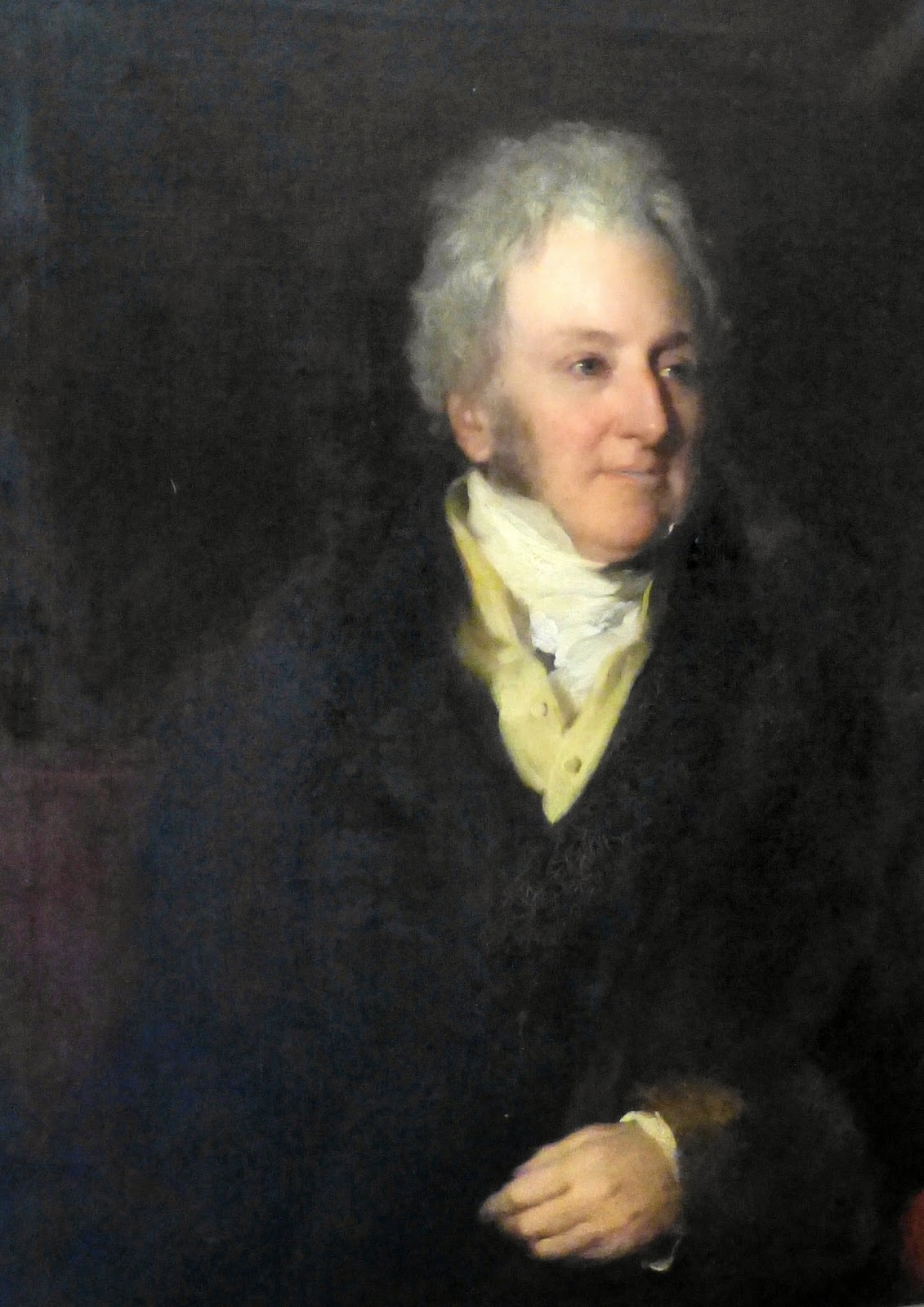
John Parker of Saltram, 1st Earl of Morley (1772-1840)

John Parker, 1st Earl of Morley  by Frederick Richard Say (1830)
John Parker, 1st Earl of Morley
by Frederick Richard Say (1830)
Profile

John Parker, 1st Earl of Morley, (3 May 1772 – 14 March 1840) was the owner of the Saltram estate in Devon and an active member of the House of Lords in favour of parliamentary reform. His first wife, Augusta Fane, notoriously eloped with Sir Arthur Paget. 

Family background

Theresa Parker and Little Jack by Sir Joshua Reynolds (c1775)
John Parker, known as Jack, was born on 3 May 17721, the only son of John Parker, 1st Baron Boringdon, of Saltram in Devon, and his wife Theresa Robinson, a younger daughter of the 1st Lord Grantham. His parents were advocates of inoculation and when he was two years old, he was inoculated against the smallpox at a cost of £42. 
 
His mother died in 1775, shortly after the birth of his sister, Theresa, and his aunt, Anne “Nanny” Robinson, came to Saltram to look after them.

Anne "Nanny" Robinson  by John Downman (1780)
Anne "Nanny" Robinson
by John Downman (1780)
Education

Jack was educated at Plympton School and then at Dr Whyte’s boarding school in Hammersmith where the schoolmaster inspired him with a passion for hot air ballooning and he developed an enduring friendship with Granville Leveson-Gower.2 The year before going up to university, he lived in Yorkshire with Frederick “Fritz” Robinson, his mother’s younger brother, accompanied by Dr Andrews, later Dean of Canterbury, as tutor.

Jack went up to Christ Church, Oxford, on 7 April 1789 where he was reunited with his schoolfriend, Granville Leveson-Gower.3 He joined the Literati and became friends with George Canning and Lord Henry Spencer.

Lord Granville Leveson-Gower     from Lord Granville's Private Correspondence (1916)
Lord Granville Leveson-Gower
    from Lord Granville's Private
Correspondence
(1916)
A royal visit

In August 1789, George III and Queen Charlotte visited Plymouth and stayed at Saltram for 12 days.

George III   from Memoirs of Queen Charlotte  by WC Oulton (1819)
George III
 from Memoirs of Queen Charlotte
by WC Oulton (1819)
The Grand Tour

In 1793, Jack embarked on a Grand Tour with a party which included Lord Amherst, Granville Leveson Gower and George Canning. They visited Paris, Geneva, Genoa, Florence, Rome and Venice as well as parts of Germany and the Low Countries and St Petersburg in Russia.

Lady Elizabeth Monck

In Naples, Jack became involved with the enchanting Lady Elizabeth Monck whilst Granville Leveson-Gower pursued Harriet, Lady Bessborough. Lady Elizabeth was the second daughter of Arthur Saunders, 2nd Earl of Arran, and was married with two daughters, but her husband was complaisant and neglected her for drinking and gambling. 
 
Jack started a long-lasting affair with Lady Elizabeth which resulted in the birth of three illegitimate sons who took the name Stapleton: John (1797), George (1799) and Augustus (1800).

A noble title

Jack inherited his father’s estate and title in 1788, becoming 2nd Baron Boringdon when he was only 16 years old. He was gazetted lieutenant-colonel of the North Devon militia in 1794 and colonel in 1799. He was elected a fellow of the Royal Society in 1795.

On 29 November 1815, Jack was made Viscount Boringdon of North Molton, Devon, and Earl of Morley.

The family arms above the entrance to Saltram
A scandalous elopement

Lady Elizabeth Monck divided her time between Jack and her husband, but her relationship with Jack broke down when she refused to get a divorce so she could marry him.

On 20 June 1804, Jack married Augusta Fane, second daughter of the 10th Earl of Westmorland and sister to Sarah Sophia, later Countess of Jersey. They had one son, Henry Villiers (1806), but the marriage was not a success. Jack was pompous and egotistical and Augusta despised her unfaithful husband and resented his ongoing relationship with Lady Elizabeth Monck.

To Jack’s annoyance, one of his university friends, Sir Arthur Paget, a politician and diplomat and son of Henry, 1st Earl of Uxbridge, began to show an interest in Augusta. The feelings were reciprocated and on 18 May 1808, Augusta caused a scandal by eloping with Sir Arthur Paget. They were married immediately after Jack divorced her by Act of Parliament on 14 February 1809.

A second marriage

On 21 August 1809, Jack married Frances Talbot.4 Frances had no fortune or title to recommend her, but she was a very charming lady who readily embraced not only her stepson, but also Jack’s illegitimate children. Jack and Frances had two children of their own, Edmund and Caroline. Sadly, Jack’s son by his first marriage died suddenly in 1817 and Caroline died a year later.

Frances Parker (née Talbot)  by Frederick Richard Say (1830)
Frances Parker (née Talbot)
by Frederick Richard Say (1830)
Political reformer

Jack took his seat in the House of Lords at an early age and was active in the debates. He supported the Tory government of William Pitt the Younger until his death and then backed George Canning, with whom he regularly corresponded. On two occasions, he tried to introduce a bill to promote vaccination as a means of controlling smallpox, but was forced to withdraw it, the second time because the Lord Chancellor said that spreading infection was punishable under common law! After Canning’s death in 1827, Jack allied himself with the Whigs and became a firm supporter of parliamentary reform.

Expensive developments

Jack commissioned the architect John Foulston to create a new entrance to Saltram House in the Greek Revival style and expand the library.
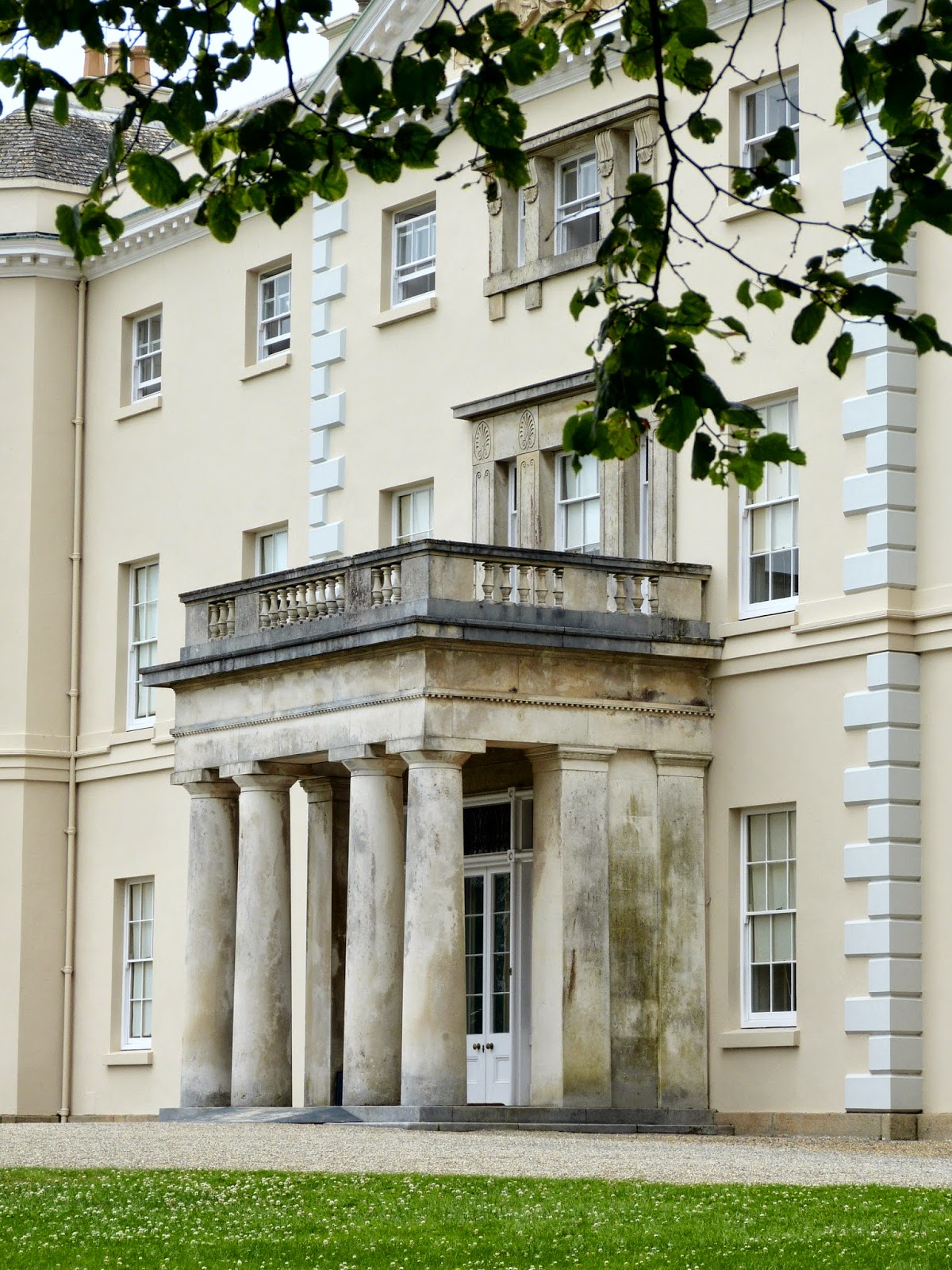
The entrance to Saltram House

On his estates, Jack reclaimed areas of marshland at a cost of £15,000 in order to build a racecourse. He built a cast-iron toll bridge across the Laira and a shipbuilding yard at Cattedown for naval and commercial ships.

Jack owned the Cann slate quarries and built a canal and tramway which linked to the Plymouth and Dartmoor Tramway. These engineering projects were not always financially successful, and on his death, he left behind debts of £258,000.

Death

John died at Saltram on 14 March 1840. He was succeeded by his only surviving legitimate child, Edmund. Frances outlived her husband by 17 years and died at Saltram in 1857 after a short illness.

Headshot of Rachel Knowles author with sea in background(2021)
Rachel Knowles writes faith-based Regency romance and historical non-fiction. She has been sharing her research on this blog since 2011. Rachel lives in the beautiful Georgian seaside town of Weymouth, Dorset, on the south coast of England, with her husband, Andrew.

Find out more about Rachel's books and sign up for her newsletter here.

If you have enjoyed this blog and want to encourage us and help us to keep making our research freely available, please buy us a virtual cup of coffee by clicking the button below.


Notes
(1) Debrett’s gives date as 5 May 1772.
(2) From The early life of John Parker III - 1st Earl of Morley by AS Rayfield (2014). Rayfield refers to the schoolmaster by the name of Kyte rather than Whyte.
(3) Rayfield gives date as 1791.
(4) Rayfield says 22nd.

Sources used include:
Courthope, William, editor, Debrett's Complete Peerage of the United Kingdom of Great Britain and Ireland (1838)
Evans, Sian, Saltram (National Trust 2012)
Fletcher, Ronald, The Parkers at Saltram 1769-1789 (BBC 1970)
Norgate, G Le G, rev Matthew, HCG, Parker, John, first earl of Morley (1772-1840) Oxford Dictionary of National Biography (Oxford University Press, 2004; online edn May 2009, accessed 21 July 2014)
Rayfield, AS, The early life of John Parker III - 1st Earl of Morley (Blog, 2014)
Viveash, Chris, Lady Morley and the ‘Baron so Bold’, from the Journal of the Jane Austen Society of North America – Persuasions #14 (1992)

All photographs © Andrew Knowles - RegencyHistory.net

Thursday, 12 December 2013

William John Bankes (1786-1855) - Egyptologist and friend of Lord Byron

William John Bankes  - portrait in the Spanish Room, Kingston Lacy
William John Bankes
- portrait in the Spanish Room, Kingston Lacy (2013)
Profile 

William Bankes (11 December 1786 - 15 April 1855) was an antiquarian and Egyptologist and the owner of the Kingston Lacy and Corfe Castle estates in Dorset.

Family

William John Bankes was born on 11 December 1786, the son of Henry Bankes, a wealthy Dorset landowner and politician, and Frances Woodley, a celebrated beauty, who was the daughter of the governor of the Leeward Islands. The Bankes estates included the family seat of Kingston Lacy, Corfe Castle, Studland and the Purbeck hills.

Education

William was educated at Westminster School and went up to Trinity College, Cambridge, in June 1803, where he became close friends with Lord Byron and gained a reputation for extravagance and wild living. Byron described William as his “collegiate pastor, and master, and patron” and “good-naturedly tolerant of my ferocities”. He declared that William “ruled the roast – or rather the roasting – and was father of all mischiefs.”1

Trinity College, Cambridge  from Memorials of Cambridge by CHCooper (1861)
Trinity College, Cambridge
from Memorials of Cambridge by CHCooper (1861)
Member of Parliament

Through the patronage of Lord Falmouth, who married his sister Ann, William became MP for Truro in 1810. He generally supported the government, but failed to shine in political circles and the speeches he made in parliament were unimpressive. He gave up his seat at the dissolution of 1812.

He later became Tory MP for the University of Cambridge (1822-6), Marlborough (1829-32), and then Dorset (1832-4).

Byron’s fashionable friend

Although only the second son, William became heir to his father in 1806 on the death of his elder brother, Henry, and was given an income of £8,000 a year. In 1815, he inherited Soughton Hall in Flintshire from his great grandfather.

During the season of 1812, William and Byron were central figures in society. Byron referred to William as one of his
...early friends. He is very clever, very original and has a fund of information: he is also very good-natured; but he is not much of a flatterer.2
Lord Byron from A Journal of the Conversations of Lord Byron with the Countess of Blessington (1893)
Lord Byron from A Journal of the Conversations
of Lord Byron with the Countess of Blessington
(1893)
William proposed to the bluestocking heiress Annabella Milbanke, but was refused. She later married Byron.
Lady Byron, from The Ladies' Monthly Museum (1816)
The Grand Tour

After his rejection, William followed in Byron’s footsteps and set out on his own Grand Tour. He followed Wellington’s army through Spain and Portugal, purchasing paintings during the disruption of the Peninsula War.

Over the next eight years, William travelled extensively in Italy, Syria and Egypt. He stayed on Mount Lebanon, crossed the desert to Palmyra, travelled up the Nile, explored to the east of the Dead Sea and became one of the first Europeans to reach Petra. Byron nicknamed him the Nubian Explorer or Discoverer.

He employed an Italian, Giovanni Finati, as his interpreter and guide. Later on, he was accompanied by another Italian, the archaeologist, Giovanni Belzoni.

William the archaeologist

The importance of William’s archaeological work has tended to be undervalued because he published very little apart from Finati’s memoirs. He and his team made detailed plans of various sites including the temple at Luxor which are a very important source for Egyptologists as they are not merely artistic impressions, but accurate records accompanied by careful transcriptions.

A stone slab of hieroglyphics in William Bankes' Egyptian collections at Kingston Lacy
From William Bankes' Egyptian collections at Kingston Lacy (2013)
William visited the temple of Rameses II and copied all the wall paintings by candlelight and recorded many objects which have since been lost or destroyed. He carried out excavations at El-Sebua in Nubia and at Abydos, where he found the table of the kings, which is now in the British Museum.

The Philae obelisk

William amassed a collection of Egyptian artefacts many of which are on display in the billiards room at Kingston Lacy. But his most impressive artefact is the Philae obelisk which has sat in the garden at Kingston Lacy since 1839. William employed Belzoni to bring the obelisk to England and it took him twenty years to do it! On the first attempt to move it, it ended up on the river bed. William produced lithographs of the bilingual inscriptions on the obelisk which were a valuable aid to understanding hieroglyphics.


An Egyptian sarcophagus and the Philae obelisk  in the gardens of Kingston Lacy
An Egyptian sarcophagus and the Philae obelisk
in the gardens of Kingston Lacy (2013)
Architectural projects

When he returned to England in 1820, William rebuilt Soughton Hall according to his own design, aided by the architect Charles Barry, whom he had met on his travels. Barry later designed the new building for the Travellers Club to which William belonged and the Houses of Parliament.

As soon as he inherited Kingston Hall in 1834, William started to remodel it with Barry’s help. He moved the entrance back to the north front and dug down to create a new basement entrance where visitors could alight from their carriages out of the rain. He created a Loggia and put in a marble staircase.3 He created a new, bigger dining room and the Spanish Room in which to display his Spanish paintings.
 
Artefacts from the Egyptian collections at Kingston Lacy
From the Egyptian collections at Kingston Lacy (2013)
Scandal

William’s personal life was beset with scandal. In 1820, he was forced to pay damages to James Silk Buckingham for libel after accusing him of stealing and publishing his research.

Then, in 1823, he was subject to a suit for criminal conversation, that is, adultery, with Anne Hobart, Lady Buckinghamshire.

But by far the most serious scandal revolved around repeated accusations of homosexuality, which was at that time a capital offence. In 1833, he was found not guilty after character references from, among others, the Duke of Wellington, but when further allegations were made in 1841, William fled the country.

Exile and death

William lived in Venice for the rest of his life, leaving his estates in the hands of his brother George. But he continued to transform Kingston Lacy from a distance under the supervision of his widowed sister, Lady Falmouth.

He commissioned Carlo Marochetti to create bronze sculptures of Chief Justice Bankes, Dame Mary and Charles I for the Loggia.

The sculptures of Dame Mary Bankes and Charles I  in the Loggia at Kingston Lacy
The sculptures of Dame Mary Bankes and Charles I
in the Loggia at Kingston Lacy (2013)
William died in Venice on 15 April 1855 and was buried in the family vault at Wimborne Minster, Dorset.

Headshot of Rachel Knowles author with sea in background(2021)
Rachel Knowles writes clean/Christian Regency era romance and historical non-fiction. She has been sharing her research on this blog since 2011. Rachel lives in the beautiful Georgian seaside town of Weymouth, Dorset, on the south coast of England, with her husband, Andrew.

Find out more about Rachel's books and sign up for her newsletter here.

If you have enjoyed this blog and want to encourage me and help me to keep making my research freely available, please buy me a virtual cup of coffee by clicking the button below.

 
Notes
(1) From a letter written by Lord Byron to John Murray, 19 October 1820 from Byron’s Letters and Journals, ed Leslie A Marchand (1976)
(2) From A Journal of the Conversations of Lord Byron with the Countess of Blessington (1893)
(3) A loggia is a roofed gallery, often on a upper storey overlooking a courtyard, which is open to the air on at least one side.

Sources used include:
Baigent, Elizabeth, Bankes, William John (1786-1855) Oxford Dictionary of National Biography (Oxford University Press, 2004; online edn Jan 2008, accessed 3 Oct 2013)
Blessington, Countess, A Journal of the Conversations of Lord Byron with the Countess of Blessington (1893)
Byron, George Gordon, Baron and Marchand, LA (ed) Byron's Letter and Journals (1976)
The National Trust, Kingston Lacy (guidebook) (1994)

Photographs © RegencyHistory.net

Friday, 31 May 2013

The scandalous death of the Duke of Cumberland's valet

HRH Ernest, Duke of Cumberland  from A Biographical Memoir of Frederick,   Duke of York and Albany  by John Watkins (1827)
HRH Ernest, Duke of Cumberland
from A Biographical Memoir of Frederick,
 Duke of York and Albany
by John Watkins (1827)
A royal scandal

On 31 May 1810, the Duke of Cumberland was attacked while asleep in his bed in his apartments in St James’s Palace. One of the Duke’s valets, Joseph Sellis, was later found dead in his room. His throat had been cut.

The scandalous story caused a lot of gossip. In A Reason for Romance, the heroine Georgiana reads the account of the attack in The Times, excerpts from which are included below, and is desperate to talk about it. Popular opinion at the time was so against the Duke that it was generally believed that he had murdered his valet. But was Sellis responsible for the attack on the Duke? And did he commit suicide or was he murdered?

Night attack

In the early hours of 31 May 1810, Ernest, Duke of Cumberland, asleep in bed, was woken by being hit over the head. Initially he thought a bat had got into his bedroom.

The Times, 1 June 1810, reported:
On Wednesday, the Duke of Cumberland dined at Greenwich. His Royal Highness returned to town, about eight o’clock, in an open carriage and four. The Duke then went to the Concert for the benefit of the Royal Society of Musicians. His Royal Highness returned to his apartments in St James’s Palace about half-past twelve o’clock, and went to bed about one. About two o’clock, he was awoke by the assassin, when he was sound asleep.1
According to the Duke of Cumberland’s own testimony:
Who, being upon his oath, saith, that, before three o’clock this morning, being in bed and asleep, he received two blows upon his head, which awoke him, and, upon starting up, he received two other blows upon his head, which, being accompanied with a hissing noise, it occurred to him that some bat had flown against him, being between sleeping and waking, and immediately received two other blows; there was a lamp burning in the room, but he did not see any body; that there was a night table standing near the bed side, where a letter lay which was covered with blood. 

His Royal Highness says, he then got up and made for the door, which opens at the head of the bed; he then received a wound upon his right thigh with a sabre; he then called out to Neale, his page, and, upon returning to the bedroom with Neale, he perceived that the door leading to the yellow room, was wide open, which is always locked the last thing when he gets into bed; a naked sword had been dropped, which he supposes must have given the wound in this thigh.2
Attempted murder

The Times report continued:
On his Royal Highness extricating himself from the attack of the villain, and getting out of his bedroom, he exclaimed aloud to his valet in waiting, repeatedly, ‘Neale, Neale, I am murdered! I am murdered!’ Neale, who was sleeping in an adjoining room, got up instantly; and the Duke informed him of the particulars, and said, the murderers were in his bedroom. Neale armed himself with a poker, and he and his Royal Highness proceeded along the passage; when Neale stepped upon the sword with which the Duke had been attacked, which was one of the Duke’s, and had been sharpened within these few days.3
Cornelius Neale said that:
Joseph Sellis had taken out his Royal Highness’s uniform and the sword, and brought them into his bedroom for a regiment inspection which did not take place, and Sellis afterwards returned the regimentals to the wardrobe, but left the sword in the bedroom, where informant believes he saw the sword some time yesterday.4
By this time, the Duke’s assailant had fled, but the door to the yellow room which had been locked before he went to bed, stood open. The Duke gave orders to secure the premises to prevent his attacker escaping. In the closet at the foot of his bed was a pair of slippers belonging to Sellis, a darkened lantern and the key of the closet door.

St James's Palace from The Beauties of England and Wales Vol X   by EW Brayley, J Nightingale and J Brewer (1814)
St James's Palace from The Beauties of England and Wales Vol X
  by EW Brayley, J Nightingale and J Brewer (1814)
Death of a valet

When the servants went to arouse Joseph Sellis, they found that the door to his apartment was locked. They hurried round to his room by the other available route through the state apartments, the doors to which were, surprisingly, unlocked. By the time they entered the room, Sellis was dead; his throat had been cut with a razor.

The Times reported:
Upon the alarm being given in the Palace, Lieut Buller, with a Serjeant and several men, who were on duty in the Palace, entered his Royal Highness’s apartments, and found the villain on his bed with his head nearly severed from his body; the blood that issued from him had nearly covered the bed-clothes and furniture.5
But why would Sellis attack the Duke?

The Times stated:
No reason has been assigned sufficient to account in the smallest degree for this accumulation of crime and ingratitude.6
In his statement, the Duke of Cumberland said:
His Royal Highness further saith, that the said Joseph Sellis had not incurred his displeasure, and that he had not any reason to think ill of him.7
Several possible motives have been put forward. One is that the Duke may have made advances towards Sellis’s wife. The Duke and Princess Augusta stood as godparents to Sellis’s youngest child and the Queen had sent a gift of Indian muslin. Some people have suggested that this indicated a closer relationship between the Duke and Sellis’s wife.

Another possible motive is that the vehemently anti-Catholic Duke, who had a malicious streak, was inclined to poke jibes at Sellis who was a Sardinian and supposedly Roman Catholic and that Sellis could not take any more of it. However, Sellis had his children baptised according to the rites of the Church of England, so this argument loses much of its force.

Another theory is that he was seized by a fit of insanity.

Probably the best suggestion of a motive is jealousy and theft. Sellis was jealous of the other valet Neale who appeared to be given preferential treatment over him. His plan may have been to attack the Duke and rob him and leave Neale to take the blame. As Neale was the valet on duty that night, suspicion would most naturally have fallen on him.

Once a thief…

Sellis had once been valet to a Mr Church in America and had been accused of thievery before New York magistrates but there was insufficient evidence to convict him. Sellis left America for England and after first working for Lord Mount Edgecumbe, he moved into service for the Duke.

What went wrong?

Sellis used the Duke’s sword as his weapon, but he miscalculated his attack and hit the Duke with the flat of the blade rather than the edge, which only succeeded in rousing the Duke rather than killing him.

When help was called, Sellis escaped to his room, but he was unable to eradicate the evidence of his crime before the servants came knocking on his door. Rather than face the consequences of his actions, he committed suicide.

The jury’s verdict: Sellis committed suicide

The murderous Duke?

Did the Duke murder his valet? Probably not. I do not think that the Duke can have killed Sellis because of his own injuries and it seems unlikely that the dozen or so witnesses could have corroborated each other’s testimonies if they were not speaking the truth.

Also, Sellis’s door was locked. It is impossible to believe that the Duke, who had been viciously injured in the attack, could have killed Sellis and then set it up to look like suicide.

Another interpretation?

But what if there is another interpretation of what happened? What if the attack was set up by someone who wanted to get rid of Sellis? The obvious culprit would be Sellis’s rival valet, Neale.

The reason that I still feel uncertain as to whether this was truly what happened is that the attempted murder was such a botched affair. How difficult is it to kill someone with a sword? And why use the sword anyway when Sellis proved how effective a razor was at killing someone when he committed suicide, if, indeed, he killed himself.

Or what if Sellis used the sword against the Duke in anger or self-defence, in the heat of the moment, during an argument over his wife or money or his recent dispute with Neale, and then committed suicide when he realised what he had done?

A libel action

In 1832, the matter raised its ugly head again when the Duke brought a libel action against Josiah Phillips, author of a book called The Authentic Records of the Court of England for the last Seventy Years in which the writer accused the Duke of murdering Sellis to prevent him from exposing the Duke’s alleged homosexual acts with his other valet, Neale.

At the trial, it was proved that the book’s information was not sound, and Phillips was found guilty of libel.

Updated 15 May 2020

Headshot of Rachel Knowles author with sea in background(2021)
Rachel Knowles writes clean/Christian Regency era romance and historical non-fiction. She has been sharing her research on this blog since 2011. Rachel lives in the beautiful Georgian seaside town of Weymouth, Dorset, on the south coast of England, with her husband, Andrew.

Find out more about Rachel's books and sign up for her newsletter here.

If you have enjoyed this blog and want to encourage me and help me to keep making my research freely available, please buy me a virtual cup of coffee by clicking the button below.

Notes
1. The Times digital archive, 1 June 1810.
2. Stockdale, JJ, A minute detail of the attempt to assassinate HRH the Duke of Cumberland (1810)
3. The Times op cit.
4. Stockdale op cit.
5. The Times op cit.
6. Ibid
7. Stockdale op cit.

Sources used include:
Fulford, Roger, Royal Dukes (1933, revised 1973)
Hatchard, J and son, The Trial of Josiah Phillips, for a libel on the Duke of Cumberland, and the proceedings previous thereto arising out of the suicide of Sellis, in 1810 (1833)
Leigh, Samuel, Leigh's New Picture of London (London, 1827)
Palmer, Alan, Ernest Augustus (1771-1851), Oxford Dictionary of National Biography, (Oxford University Press, 2004, online edn, May 2009, accessed 23 Mar 2013)
Stockdale, JJ, A minute detail of the attempt to assassinate HRH the Duke of Cumberland, in a letter to WI esq (JJ Stockdale, 1810)
Watkins, John, A Biographical Memoir of Frederick, Duke of York and Albany (1827, London)

The Times digital archive

Monday, 25 March 2013

Prince Ernest, Duke of Cumberland and King of Hanover (1771-1851)

HRH Ernest, Duke of Cumberland from A Biographical Memoir of Frederick,  Duke of York and Albany by J Watkins (1827)
HRH Ernest, Duke of Cumberland
from A Biographical Memoir of Frederick,
 Duke of York and Albany by J Watkins (1827)
Profile

Prince Ernest, Duke of Cumberland and King of Hanover (5 June 1771 – 18 November 1851) was the the fifth son of George III and Queen Charlotte and a younger brother of George IV.

Early years

Prince Ernest Augustus was born at Buckingham House on 5 June 1771. Ernest grew up at Kew, housed with his younger brothers, Augustus and Adolphus. The three Princes were made Knights of the Garter on 2 June 1786 and shortly after, were sent to the University of Göttingen to study.

Prince Ernest from The Lady's Magazine (1793)
Military action

Ernest was destined for a military career and entered the Hanoverian army in 1790 as a Lieutenant in the 9th Hanoverian Hussars. He saw fierce action against the French in Flanders and the Netherlands and on one occasion, was reported to have single-handedly carried a French officer from the battlefield as a prisoner of war. He was injured at the Battle of Tournai on 22 May 1794 and returned to England in 1796 with a permanently scarred face and the loss of sight in one eye.

Although commended for fighting bravely, he had a reputation for treating his men harshly and, despite regular promotion and being gazetted Field Marshal in 1813, he never saw active service abroad again.

Duke of Cumberland

On 23 April 1799, Ernest was made Duke of Cumberland and Teviotdale and Earl of Armagh and awarded a grant of £12000 a year by parliament.

Extreme politics

Ernest was a radical Tory, unwaveringly Protestant in outlook and an opponent of political reform. He was vehemently opposed to Catholic emancipation and when the Duke of Wellington found it expedient to support it, Ernest used his influence over George IV to persuade him against it. 
 
As a result of his interference, Wellington’s government resigned. But it was a short-lived victory. Ernest did not have enough backing to form a government of radical Tories. Wellington was recalled and the act was passed in 1829.
George IV from Memoirs of her late royal highness Charlotte Augusta by Robert Huish (1818)
George IV
from Memoirs of her late royal
highness Charlotte Augusta
by Robert Huish (1818)
Character and appearance

Ernest was tall and elegant in person; whilst his brothers had a tendency to corpulence, he remained thin. He had handsome features, though one eye was disfigured in war and in later years he grew broad, drooping whiskers to mask his battle scars.

In character, he was radical and outspoken. He was able to wield a great deal of influence over weaker minds, notably over his brother George IV, whom he pushed towards his own radical Tory policies.

He was also inclined to be malicious. His brother William IV said of him:
Ernest is not a bad fellow, but if anyone has a corn, he will be sure to tread on it.1
An unpopular marriage

On 29 May 1815, Ernest married Princess Frederica of Solms-Braunfels in Neustrelitz, whom he had met and fallen in love with a few years previously. Princess Frederica was a niece of Queen Charlotte’s who had been married twice before – to Prince Louis of Prussia and to Prince Frederick of Solms-Braunfels – and twice widowed. The marriage was solemnised again at Carlton House on 29 August 1815 but the Queen refused to receive the new Duchess.

Frederica, Duchess of Cumberland from La Belle Assemblée (1830)
Frederica, Duchess of Cumberland
from La Belle Assemblée (1830)

The Queen disapproved of Princess Frederica who had been unofficially engaged to marry the Duke of Cambridge in 1797 but had become pregnant by the Prince of Solms-Braunfels and married him instead. Ernest’s marriage was very unpopular and parliament refused to increase his allowance, forcing the couple to live abroad, largely in Berlin, where their son George was born on 27 May 1819.

King of Hanover

When William IV died on 20 June 1837, his niece Victoria became Queen of England. But she could not accede to the throne in Hanover which could only pass to the male line, and so Ernest became King of Hanover. He entered his capital on 28 June and proceeded to attack the liberal constitution. He ruled autocratically, but listened to reasonable complaints and avoided any hint of revolution. Ernest was a good king and well-respected in Hanover and he successfully ruled during a very unsettled period in Europe.

A life of scandal

The Duke of Cumberland’s life was beset with scandal. On 31 May 1810, his valet was found dead and rumours circulated that he had murdered him, though the jury passed a verdict of suicide.

You can read more about the scandalous death of his valet here.

In 1813, he was involved in a political controversy over a parliamentary election in Weymouth. He was accused of influencing the outcome in favour of the Tories, which was considered improper behaviour for a member of the House of Lords.

Years later, he wrangled with Queen Victoria over some jewels that he declared were his by right under Queen Charlotte’s will and which his niece refused to give up. The bitter dialogue between the parties caused considerable embarrassment to the government and when Ernest visited England for three months in 1843, Queen Victoria showed her continued disapproval by only inviting him once to dinner.

Yet more scandal

In 1829, Ernest created a scandal over Lady Lyndhurst who claimed that he had tried to assault her and, when she resisted, had threatened to ruin her and her husband. The following year, he faced another over Lady Graves. Rumours of a relationship between Ernest and Lady Graves reached the ears of her estranged husband. Lord Graves wrote a note declaring that he did not believe them, but nevertheless committed suicide.

But the most serious scandal which confronted Ernest was in relation to his sister, Princess Sophia. His affection for her was judged by some to be unhealthily intense, and it gave rise to the rumour that he had fathered the illegitimate son she was said to have given birth to in 1800. Although this was almost definitely untrue, there are comments in her letters which hint at the possibility that he had tried to assault her.

Princess Sophia from A Biographical Memoir of Frederick,  Duke of York and Albany by John Watkins (1827)
Princess Sophia
from A Biographical Memoir of Frederick,
 Duke of York and Albany
by John Watkins (1827)
Death

Ernest outlived all his brothers but eventually died at Altes Palace in Hanover on 18 November 1851. He was succeeded in Hanover by his only son George, who had been blinded in an accident as a child. Ernest was buried on 26 November in the mausoleum at Herrenhausen, Hanover. Although despised in England, he was popular in Hanover and an equestrian statue was erected there in his memory, paid for by voluntary donations.

Headshot of Rachel Knowles author with sea in background(2021)
Rachel Knowles writes clean/Christian Regency era romance and historical non-fiction. She has been sharing her research on this blog since 2011. Rachel lives in the beautiful Georgian seaside town of Weymouth, Dorset, on the south coast of England, with her husband, Andrew.

Find out more about Rachel's books and sign up for her newsletter here.

If you have enjoyed this blog and want to encourage me and help me to keep making my research freely available, please buy me a virtual cup of coffee by clicking the button below.


Note
1. From The Letters of Queen Victoria (1908)

Sources used include:
Fulford, Roger, Royal Dukes (1933, revised 1973)
Hibbert, Christopher, George III (1998, Viking, Great Britain)
Hibbert, Christopher, George IV (1972, Longmans, 1973, Allen Lane, London)
Hibbert, Christopher, Queen Victoria (HarperCollins, 2000, London)
Huish, Robert, Memoirs of her late royal highness Charlotte Augusta (1818)
Palmer, Alan, Ernest Augustus (1771-1851), Oxford Dictionary of National Biography, (Oxford University Press, 2004, online edn, May 2009, accessed 23 Mar 2013)
Victoria, Queen, The Letters of Queen Victoria, A Selection from Her Majesty's Correspondence between the years 1837 and 1861, edited Benson, AC and Esher, Viscount, Vol I 1837-1843 (1908)
Watkins, John, A Biographical Memoir of Frederick, Duke of York and Albany (1827, London)