Search this blog

Showing posts with label Duke of York. Show all posts

Friday, 31 January 2020

Frederica, Duchess of York (1767-1820)

Frederica, Duchess of York from A Biographical Memoir of Frederick, Duke of York and Albany  by John Watkins (1827)
Frederica, Duchess of York from A Biographical
Memoir of Frederick, Duke of York and Albany

by John Watkins (1827)
Who was Frederica, Duchess of York?

Frederica, Duchess of York (7 May 1767 – 6 August 1820), was a Prussian princess who married Frederick, Duke of York, George IV’s brother. She was known for her love of animals and for the large number of dogs she kept at Oatlands, the Duke of York’s residence in Weybridge, Surrey.

Family background

Frederica Charlotte Ulrica Catherina, Princess Frederica of Prussia, was born on 7 May 1767, the eldest daughter of Frederick William II, King of Prussia, by his first wife, Elizabeth of Brunswick. According to La Belle Assemblée, Frederica was
… educated under the eye of her mother, in those strict principles of the Protestant faith which govern the Ecclesiastical Constitution of Prussia.1
Marriage to the Duke of York

On 29 September 1791, Princess Frederica married Frederick, Duke of York, the second son of George III, in Berlin. In order to fulfil the requirements of the Royal Marriage Act (1772), the ceremony had to be repeated in England so that the King’s consent could ‘be set out in the licence and register of marriage.’2

This second ceremony took place on 23 November 1791 at the Queen’s House, later Buckingham Palace. I confess, I do not know which is the official date of marriage, though I guess it is probably the second one, as in the eyes of English law, it was this ceremony that made the union legal.

According to La Belle Assemblée, Princess Frederica
… had been seen by the Duke of York in an excursion which he made abroad some four years previous to their union. His Royal Highness, in his German tour, had paid a visit to the Court of Berlin, and had there imbibed those elements of military knowledge which prevail in the school of the Great Frederick. He had, at that period, formed an attachment for the Princess Royal of Prussia, who then shone in the full splendour of her beauty, and whose numerous accomplishments, and many mild and amiable virtues, were the common theme of admiration.3
Despite this rosy account of the Duke’s affection, it was an arranged marriage, and not particularly successful. There were no children from the union and the royal couple lived separate lives, though from all that I have read, their relationship was amicable.

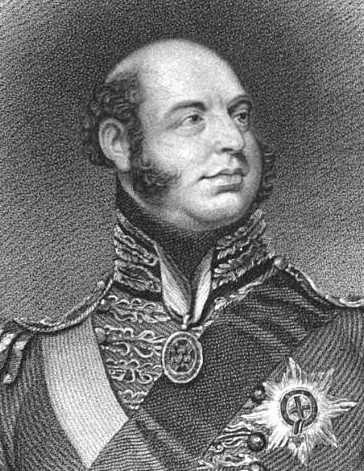
Prince Frederick, Duke of York and Albany from La Belle Assemblée (1827)
Prince Frederick, Duke of York and Albany
from La Belle Assemblée (1827)
 The diarist Charles Greville wrote:
The Duke and the Duchess live upon the best terms; their manner to one another is cordial, and while full of mutual respect and attention, they follow separately their own occupations and amusements without interfering with one another. Their friends are common to both, and those who are most attached to the Duke are equally so to the Duchess.4
What did the Duchess look like?

La Belle Assemblée (1806) described the Duchess of York:
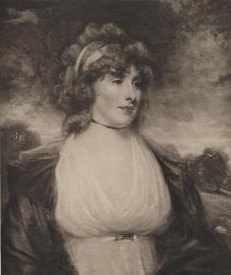
Her Royal Highness’s stature is somewhat below the common height, and her figure elegantly formed in proportionate delicacy and slightness. Her countenance has so far the best beauty, that it is made to win tenderness, esteem and affection. Her complexion is exquisitely fair, and the bloom with which it is enlivened is rather a tint appearing through her skin, than that sort of colour which seems to exist in it. Her hair is light, and her eye-lashes are long and nearly white, resembling those of our Royal Family, to whom, indeed, she is not much unlike in features. Her eyes are blue, and of uncommon brilliancy.5
The Duchess of York by John Hoppner  from John Hoppner RA  by WD McKay and W Roberts (1909)
The Duchess of York by John Hoppner
from John Hoppner RA
by WD McKay and W Roberts (1909)
Amiable and intelligent

In Greville’s opinion, the Duchess was rather more intelligent than her royal husband and liked to entertain clever men. He wrote:
The Duchess likes the society of men of wit and letters; more, I think, from the variety of having them around her than from any pleasure she takes in their conversation. Lord Alvanley is the man in whom she takes the greatest delight.6
Greville also suggested that the Duchess was quite at home with conversation that might have been deemed by others as unfit for female ears:
Her mind is not perhaps the most delicate; she shows no dislike to coarseness of sentiment or language, and I have seen her very much amused with jokes, stories, and allusions which would shock a very nice person. But her own conversation is never polluted with anything the least indelicate or unbecoming. She is very sensible to little attentions, and is annoyed if anybody appears to keep aloof from her or to shun conversing with her.7
Charitable nature

The Duchess was known for her generosity towards the poor and, perhaps because childless herself, many of the charitable works she carried out were for the benefit of children. La Belle Assemblée wrote that she
… established many charity schools at Oatlands and in the neighbourhood, and her humanity and tenderness to the poor are the theme of all who approach her.8
The Duke of York’s biographer, John Watkins, enlarged upon this:
The children of the whole neighbourhood, at least all who stood in need of assistance, were considered by the Duchess as belonging to her household. They were accordingly clothed and educated under her own immediate inspection, and entirely at her expense. Every Saturday whole troops of these infants were to be seen crossing the park in their simple clean attire, to the mansion of their royal benefactress, from whose hand they frequently received cake and wine.
As they grew up, the patronage of her royal highness was still continued; the girls being either put out to service, or provided for with suitable employment, while the boys were apprenticed at the charge of the Duchess, who also gave marriage portions to the deserving, and extended her benevolence to their rising families.9
Besides this, she had a long list of infirm pensioners, of both sexes, in London, who received regular allowances.

Love of animals

The Duchess was passionately fond of animals, particularly dogs. She kept a huge number of them at Oatlands and created a cemetery in the park in which to bury them after they had died. She also kept monkeys and parrots.

Greville wrote:
Her dogs are her greatest interest and amusement, and she has at least forty of various kinds. She is delighted when anybody gives her a dog, or a monkey, or a parrot, of all of which she has a vast number; it is impossible to offend her or annoy her more than by ill-using any of her dogs, and if she were to see anybody beat or kick any one of them she would never forgive it.10
Watkins wrote:
To the canine species the Duchess was remarkably attached; and it was no uncommon thing to see her in the park surrounded by thirty or forty of these animals of various sorts, as English lapdogs, Dutch pugs, and French barbettes. Their respective litters were taken great care of, and the young ones not unfrequently boarded out, under the superintendence of the cottagers. Nor was this tenderness confined to them while living, for a cemetery was actually formed in the park to receive their remains.11
Writing in 1828, after Oatlands had passed out of royal hands, Prosser described where the cemetery was: 
Before the grotto, which is entwined with ivy and other creeping plants, was a gold and silver fish pond and a small cascade, now in a neglected and ruinous state. Near are numerous small stone tablets, bearing the names of nearly seventy of her late Royal Highness's favorite dogs that lie buried here.12
The Duchess’s other interests
Among the other amusements of the Duchess, gardening constituted one of the most favourite; and she also took great delight in collecting shells, with which she formed one of the finest grottoes ever seen in this kingdom, expending thereon, it is said, near twelve thousand pounds.13
Watkins’ estimate of the cost of the grotto, though expensive, was quite conservative. La Belle Assemblée stated that it had cost at least £50,000!
The Grotto, which has grown to its present elegance chiefly under her Royal Highness’s hands, is reckoned one of the principal curiosities of this kingdom, and perhaps in any part of the world.
Her Royal Highness has very condescendingly opened it for public inspection, every Sunday evening during the summer season. It is shown, free of all expense, to the visitants.14
Friends and family

The Duchess was very close to Princess Charlotte and friendly towards her mother Caroline, Princess of Wales. According to Greville, the Duchess
… always lived on good terms with the Royal Family, but is intimate with none of them, and goes as little as possible to Court. The Regent dislikes her, and she him. With the Princess Charlotte she was latterly very intimate, spent a great deal of time at Claremont, and felt her death very severely.15
Ian Kelly, in his biography of Beau Brummell, wrote that the Duchess and the Prince Regent were on friendly terms - rather better than Watkins suggested.

Kelly also wrote of the Duchess’s close friendship with Beau Brummell. She helped him financially after he fled to France to escape his debts in 1816 and it was for her sake that he agreed not to publish his memoirs whilst the Regent or any of his brothers were alive.

George Brummell from The History of White's  by Hon Algernon Bourke (1892)
George Brummell from The History of White's
 by Hon Algernon Bourke (1892)
A private person

The Duchess of York did not like being in the public eye and preferred to live at Oatlands when she could. Greville wrote:
The Duchess has no taste for splendour or magnificence, and likes to live the life of a private individual as much as possible.16
In Watkins’ opinion:
The life of the Duchess was marked by scarcely any circumstances calculated to bring her prominently under public observation. She mixed very little in the gaieties of fashionable life.17
Oatlands from Select illustrations of the County of Surrey by GF Prosser (1828)
Oatlands
from Select illustrations of the County of Surrey by GF Prosser (1828)
The worst hostess?

Whilst the Duchess loved entertaining, and regularly gave parties at Oatlands, she was not a very attentive hostess. Greville recorded his observations on the Duchess’s eccentricity and the haphazard style of living that existed there:
Oatlands is the worst managed establishment in England; there are a great many servants, and nobody waits on you; a vast number of horses, and none to ride or drive.18
On another occasion he wrote:
The Duchess seldom goes to bed, or, if she does, only for an hour or two; she sleeps dressed upon a couch, sometimes in one room, sometimes in another. She frequently walks out very late at night, or rather early in the morning, and she always sleeps with open windows. She dresses and breakfasts at three o’clock, afterwards walks out with all her dogs, and seldom appears before dinner-time. At night, when she cannot sleep, she has women to read to her. 19
A brush with death

On 6 June 1794, there was a dreadful fire at Oatlands. Fortunately, the Duchess was not harmed.
Watkins wrote:
The Duchess beheld the dreadful conflagration from her sleeping room, which was in the centre of the mansion, and from which the flames were kept by pulling down a gateway, over which the wing joined the house. His Majesty, on hearing of the misfortune, went to Oatlands early the next morning, and gave the necessary orders for clearing the ruins, and rebuilding the wing which had been destroyed, at his own expense.20
Illness and death

Princess Frederica died of consumption on Sunday 6 August 1820. Greville described the cause as water on her chest. She was buried, at her own request, in Weybridge Church, on 14 August.

Watkins wrote that:
The Duke, when consulted upon the subject of the funeral, at once determined that the wish of his lamented consort should be complied with; and directions were accordingly given that the obsequies should be performed as she had requested, and that with as little ostentation as possible.21
Greville wrote:
She is deeply regretted by her husband, her friends, and her servants. Probably no person in such a situation was ever more really liked. She has left 12,000ℓ. to her servants and some children whom she had caused to be educated. She had arranged all her affairs with the greatest exactitude, and left nothing undone.22

Headshot of Rachel Knowles author with sea in background(2021)
Rachel Knowles writes clean/Christian historical romance set in the time of Jane Austen. She has been sharing her research on this blog since 2011. Rachel lives in the beautiful Georgian seaside town of Weymouth, Dorset, on the south coast of England, with her husband, Andrew.

Find out more about Rachel's books and sign up for her newsletter here.

If you have enjoyed this blog and want to encourage me and help me to keep making my research freely available, please buy me a virtual cup of coffee by clicking the button below.

Notes
1. Bell, John, La Belle Assemblée (1806).
2. Ibid.
3. Ibid.
4. Entry for 15 August 1818, Greville, Charles, A journal of the reigns of King George IV and King William IV, edited by Henry Reeve (Longmans, 1874) Volume 1.
5. Bell op cit.
6. Entry for 24 December 1819, Greville op cit.
7. Entry for 15 August 1818, Greville op cit.
8. Bell op cit.
9. Watkins, John, A Biographical Memoir of Frederick, Duke of York and Albany (1827)
10. Entry for 15 August 1818, Greville op cit.
11. Watkins op cit.
12. Prosser, George Frederick, Select Illustrations of the County of Surrey (1828).
13. Watkins op cit.
14. Bell op cit.
15. Entry for 15 August 1818, Greville op cit.
16. Ibid.
17. Watkins op cit.
18. Entry for 4 August 1818, Greville op cit.
19. Entry for 15 August 1818, Greville op cit.
20. Watkins op cit.
21. Watkins op cit.
22. Entry August 1820, Greville op cit.

Sources used include:
Bell, John, La Belle Assemblée (John Bell, 1806, London)
Greville, Charles, A journal of the reigns of King George IV and King William IV, edited by Henry Reeve (Longmans, 1874) Volume 1
Kelly, Ian, Beau Brummell, The Ultimate Dandy (Hodder & Stoughton, 2005)
Prosser, George Frederick, Select Illustrations of the County of Surrey (1828)
Stephens, HM, revised by Van der Kiste, John, Frederick, Prince, Duke of York and Albany (1763-1827), Oxford Dictionary of National Biography (Oxford University Press 2004, updated 2007)
Watkins, John, A Biographical Memoir of Frederick, Duke of York and Albany (1827, London)

Friday, 20 November 2015

Rowlandson’s comic art at the Queen’s Gallery, London - 2016 exhibition

Doctor Convex and Lady Concave
by Thomas Rowlandson (1802)
Thomas Rowlandson (1756-1827) was one of the greatest caricaturists of his time. The exhibition at the Queen’s Gallery – High Spirits – was all about his comic art and included nearly 100 of his prints and drawings. The exhibition ended on 14 February 2016, but you can still enjoy it on this blog.

High Spirits exhibition at the Queen's Gallery,
Buckingham Palace, London
Here is the promotional video for the exhibition narrated by Brian Blessed. It is a lovely introduction to the subject of Thomas Rowlandson's art and caricatures in general.


There is a comprehensive book that accompanies the exhibition which includes all the prints and pictures on display (and a few more besides) together with the background and provenance for each.
 
The fashion for caricatures

Before I start telling you about the exhibition, I have a confession to make. I am not a huge fan of caricatures—they are very Georgian, but not always to my taste. Rowlandson’s cartoons are often quite ugly and frequently bawdy. However, I appreciate their cleverness even when I’m not keen on the pictures and I did find some prints in the exhibition that I liked.

A wall of Rowlandson prints at the exhibition
Caricatures were a great source of amusement to rich and poor alike. It was fashionable to collect prints and display them on a wall or screen or keep them in an album. Showing off your print collection was a popular after dinner entertainment. If you couldn’t afford to build up your own portfolio, then you could hire one from a print shop for the evening to share with your guests. If that was beyond your means, you could still enjoy spotting the royals and politicians lampooned in cartoon form by gazing at the latest prints on display in the print shop window.

I'm looking at a screen at the exhibition covered
 with cut-outs of Thomas Rowlandson prints
 which dates from c1806
A close-up of the print screen shown above
Everyday life

Many of Rowlandson’s prints were social satires – taking a humorous view of daily life and topics that were in the news. Rowlandson was fond of depicting opposites - such as Doctor Convex and Lady Concave at the top of the page and the very streamlined outline of Buck's Beauty contrasting with the curves of Rowlandson's Connoisseur below.

Buck's Beauty and Rowlandson's Connoisseur
by Thomas Rowlandson (c1799)
Three Principal Requisites to form a Modern Man of Fashion
by Thomas Rowlandson (1814)
Overset by Thomas Rowlandson (c1790)
Rowlandson delighted in caricaturing current events, such as the news that Richard Brinsley Sheridan was going to pull down the Theatre Royal in Drury Lane in order to build a bigger one. Rowlandson depicted this as the theatre tumbling down during a performance.

Chaos is Come Again! by Thomas Rowlandson (1791)
Ridiculing the royals

George III and his family were frequently the subject of Rowlandson’s cartoons. His caricatures included prints about George III's illness of 1788-9; George, Prince of Wales' bad behaviour; and the Mrs Clarke scandal of 1809 involving the Duke of York. During the Mrs Clarke scandal, Rowlandson produced an incredible 27 caricatures in little over 6 weeks!

Money Lenders [featuring the young George IV]
by Thomas Rowlandson (1784)
Suitable Restrictions [for a regency] by Thomas Rowlandson (1789)
Yorkshire Hieroglyphics by Thomas Rowlandson (1809)
[depicting a love letter from the Duke of York to Mrs Clarke in pictures]
A York address to the Whale. Caught lately off Gravesend.
[The Duke of York pleads with the whale to distract the public
from the Mrs Clarke scandal] by Thomas Rowlandson (1809)
Political satire

Rowlandson began producing political caricatures around 1780. The battle between the Whigs led by Fox and the Tories led by Pitt gave ample scope for his wicked wit. His series of prints on the Westminster Election of 1784, published by William Humphrey, was particularly successful, firmly establishing him as one of the leading satirists of his day.

The Devonshire or Most Approved Method of Securing Votes
by Thomas Rowlandson (1784)
 Georgiana, Duchess of Devonshire, is shown kissing a butcher
 in order to secure his vote for Fox.
Views of England and other works of art

In addition to all the caricatures, a number of Rowlandson's other works were on display. These included book illustrations from Ackermann’s Microcosm of London and An excursion to Brighthelmstone made in the year 1789. This volume included what was probably my favourite picture in the whole exhibition – that of the bathing machines at Brighton pictured below.

Bathing Machines by Thomas Rowlandson in An excursion
to Brighthelmstone made in the year 1789 by H Wigstead (1790)
Christie's Auction Room from The Microcosm of London
published by R Ackermann (1808)and illustrated by Augustus
Pugin [the architecture] and Thomas Rowlandson [the people].
The paintings in the exhibition included this one, featuring George III returning from a hunting trip.

King George III returning from hunting through Eton
by Thomas Rowlandson (c1800)
A Georgian connection with the Dutch paintings

Having examined the Rowlandson exhibition thoroughly, we decided to take a quick look round the exhibition of Dutch paintings which ran alongside it. Although these were pre-Georgian, mostly dating from the 17th century, there was a Georgian connection. Many of the paintings were acquired by George IV and prints of various rooms in Carlton House and Windsor Castle from Pyne’s The History of the Royal Residences showed the paintings had been displayed. One or two of the paintings in the exhibition were even identifiable in the prints.

An Old Woman called The Artist's Mother
by Rembrandt van Rijn (1627)
The King's Drawing Room, Windsor Castle
from The History of the Royal Residences by WH Pyne (1819).
The Old Woman is on display to the right of the doorway.
There was also a small selection of Sèvres porcelain on display.

Chocolatière from the Sèvres
porcelain factory (1777)
Acquired by George IV in 1815.
Pot-pourri à vaisseau or pot-pourri en navire
from the Sèvres porcelain factory (1758-9).
It is extremely likely that this item was originally
owned by Madame de Pompadour,
mistress of King Louis XV of France.
In summary, High Spirits was a great little exhibition and the exhibition book details all the works of art on display.

All photos © Regencyhistory.net except Money Lenders and The Devonshire © The Royal Collection.
All prints and objects © HM Queen Elizabeth II.
 
 Headshot of Rachel Knowles author with sea in background(2021)
Rachel Knowles writes faith-based Regency romance and historical non-fiction. She has been sharing her research on this blog since 2011. Rachel lives in the beautiful Georgian seaside town of Weymouth, Dorset, on the south coast of England, with her husband, Andrew.

Find out more about Rachel's books and sign up for her newsletter here.

If you have enjoyed this blog and want to encourage me and help me to keep making my research freely available, please buy me a virtual cup of coffee by clicking the button below.

Tuesday, 15 January 2013

Elizabeth Lamb, Viscountess Melbourne (1751-1818)

From The Three Witches from Macbeth by Daniel Gardner (1775) Elizabeth Lamb, Viscountess Melbourne
Elizabeth Lamb, Viscountess Melbourne from
The Three Witches from Macbeth by Daniel Gardner (1775)
© National Portrait Gallery
Profile

Lady Melbourne (baptised 15 October 1751 - 6 April 1818) was a leading Whig hostess, the intimate friend of Georgiana, Duchess of Devonshire and Lord Byron, a mistress of George IV and the mother of the Prime Minister, William Lamb, Viscount Melbourne, and his sister Emily, Lady Cowper, one of the patronesses of Almack's Assembly Rooms.

Family life

Elizabeth Milbanke was baptised on 15 October 1751, the only daughter of Sir Ralph Milbanke, a Yorkshire landowner and politician, and his wife, Elizabeth Hedworth. She married Sir Peniston Lamb, 2nd Baronet, a wealthy Whig politician, on 13 April 1769, at the age of seventeen.

Sir Peniston was made an Irish peer, Lord Melbourne, Baron of Kilmore, on 8 June 1770, and then Viscount Melbourne on 11 January 1781. Later, in 1815, he was made a peer of the United Kingdom, Baron Melbourne of Melbourne.

Elizabeth Lamb, Viscountess Melbourne  by Braun, Clement & Co, after John Hoppner  © National Portrait Gallery, London
Elizabeth Lamb, Viscountess Melbourne
by Braun, Clement & Co, after John Hoppner
© National Portrait Gallery, London
Whig hostess

Elizabeth was beautiful and vibrant and ambitious for the advancement of her family. She helped increase her husband’s political visibility, becoming the leading Whig hostess of the time. From 1770, she entertained in the white and gold magnificence of Melbourne House in Piccadilly, designed by William Chambers. Her regular visitors included some of the keenest minds of the day: Charles James Fox; Richard Brinsley Sheridan; Granville Leveson-Gower, 1st Earl Granville; Georgiana Cavendish, Duchess of Devonshire; Harriet Ponsonby, Countess of Bessborough; and the sculptor, Anne Seymour Damer.

Lady Melbourne by Anne Seymour Damer (1784) © Andrew Knowles
Lady Melbourne by Anne Seymour Damer (1784)
in an exhibition at Strawberry Hill
The Duchess of Devonshire

In 1774, the Duke of Devonshire married Georgiana Spencer and Lady Melbourne saw at once that she was in danger of losing her place as leading Whig hostess. But rather than compete with the Duchess, Lady Melbourne chose to embrace her potential rival and became her indispensable friend. They were opposites in character and temperament, but Lady Melbourne’s disposition made her the ideal confidante for the troubled Duchess.

Georgiana, Duchess of Devonshire,  from a miniature by Antonio Fattori  from Lord Granville Leveson Gower,   private correspondence 1781 to 1821 (1916)
Georgiana, Duchess of Devonshire,
from a miniature by Antonio Fattori
from Lord Granville Leveson Gower,
 private correspondence 1781 to 1821 (1916)
Lady Melbourne’s character

Lady Melbourne was a brilliant conversationalist who was a master of the art of being a delightful companion to gentlemen. She was easy going and good humoured, a willing confidante and advisor who rarely talked about herself. Melbourne House was a comfortable place for gentlemen to go, where they could speak freely without fear of shocking their hostess.

On the other hand, she was cynical, hard-hearted and somewhat coarse, and she seemed to delight in making cutting remarks. Her moral standards were low and she did not seem to care what people did, provided they were discreet. She believed that:
When anyone braves the opinion of the world, sooner or later they will feel the consequences of it.1
Ambition was paramount and she was always prepared to make sacrifices to achieve it. When Frederick, Duke of York expressed a fancy for her Piccadilly home, she agreed to part-exchange it for his home in Whitehall. 2

Melbourne House, Piccadilly,  by Thomas H. Shepherd c1830
Melbourne House, Piccadilly,
by Thomas H. Shepherd c1830
Family

Lady Melbourne had six children: Peniston (1770), William (1779), Frederick (1782), George (1784), Emily (1787) and Harriet (1789), who did not survive childhood. Of these, only Peniston was definitely Lord Melbourne’s child; William was almost certainly Lord Egremont’s and George, the son of the Prince of Wales.

She was devoted to all her children who spent most of their time at the family’s country home in Hertfordshire, Brocket Hall. Here they rode and played together and took part in theatricals as well as learning. When the boys went to Eton, she often visited them, encouraging the development of their tastes and characters.

William Lamb, 2nd Viscount Melbourne  from The History of White's   by Hon Algernon Bourke (1892)
William Lamb, 2nd Viscount Melbourne
from The History of White's
 by Hon Algernon Bourke (1892)
Romantic liaisons

Within a year of their marriage, Elizabeth’s husband began an affair with the actress Sophia Baddeley. Elizabeth appeared to be unbothered. She did not expect men to be monogamous, though she strongly believed in family responsibility. Having produced an heir, she had her own romantic liaisons, though she made sure she never put her husband in an awkward position.

Lady Melbourne’s name was linked variously with Lord Coleraine3; Francis Russell, 5th Duke of Bedford; George, Prince of Wales, the future George IV; and George Wyndham, 3rd Earl of Egremont.

The Earl of Egremont

From 1779, Lady Melbourne’s most favoured intimate friend and advisor was George Wyndham, 3rd Earl of Egremont. It was the most serious and long-lasting of her attachments, though not monogamous on either side; Egremont kept a number of mistresses and their children at Petworth House. Egremont was almost certainly William’s father and possibly Frederick and Emily’s as well.

Lady Melbourne learned much from Egremont who was an agriculturalist and canal enthusiast. She encouraged her husband to invest in the Cromford Canal and introduced agricultural innovations in Hertfordshire.

George Wyndham, 3rd Earl of Egremont  by Samuel William Reynolds, after Thomas Phillips (1826)   © National Portrait Gallery, London
George Wyndham, 3rd Earl of Egremont
by Samuel William Reynolds, after Thomas Phillips (1826)
 © National Portrait Gallery, London
The Prince of Wales

Lady Melbourne’s friendship with the Prince of Wales began in 1782 and their names were linked together until around 1786. He is generally believed to be the father of her fourth son, George, and stood as his godfather.

Through her relationship with the Prince, Lady Melbourne secured the position of Gentleman of the Bedchamber for her husband in 1783.

George, Prince of Wales  from Huish's Memoirs of her late  royal highness Charlotte Augusta (1818)
George, Prince of Wales
from Huish's Memoirs of her late
royal highness Charlotte Augusta (1818)
William and Caroline

Lady Melbourne soon realised that William’s abilities were superior to those of his siblings and he became the focus for all her ambitions. After the death of her eldest son, Peniston, in 1805, William embarked on a career in politics. He also married Lady Bessborough’s daughter, Lady Caroline Ponsonby. Lady Melbourne was not keen on the match or the influence that Caro and her mother had on William. On her side, Lady Bessborough disliked Lady Melbourne and referred to her as “The Thorn”.

Lady Caroline Lamb  from Wives of the Prime Ministers    (1844-1906)
Lady Caroline Lamb
from Wives of the Prime Ministers
  (1844-1906)
It was with some frustration that Lady Melbourne saw William failing to reach the heights which she sought for him. He was hedonistic and lazy, loyal to people rather than policies, and did not advance as she had hoped, and his deteriorating relationship with Caroline was not helping.

Lady Melbourne had no sympathy with Lady Caroline’s highly strung nature and was disgusted when, in 1812, she had a very public affair with Lord Byron. Lady Melbourne was keen to bring it to a close and became Lord Byron’s confidante, suggesting her own niece, Annabella Milbanke, as a wife for him.

Illness and death

Lady Melbourne became ill with rheumatism and died at Melbourne House, Whitehall, on 6 April 1818, after a painful illness of four months. She was buried on 14 April in Hatfield, Hertfordshire. Even on her death bed, she encouraged her children’s ambitions, telling Emily to be faithful, not to her husband, Lord Cowper, but to her lover, Lord Palmerston.

Lady Melbourne's legacy

Lady Melbourne did not live to see that her ambitions for her children were indeed fulfilled: William became Prime Minister to William IV and then Queen Victoria, and Emily married Lord Palmerston, who later became another of Queen Victoria’s Prime Ministers.

Headshot of Rachel Knowles author with sea in background(2021)
Rachel Knowles writes clean/Christian Regency era romance and historical non-fiction. She has been sharing her research on this blog since 2011. Rachel lives in the beautiful Georgian seaside town of Weymouth, Dorset, on the south coast of England, with her husband, Andrew.

Find out more about Rachel's books and sign up for her newsletter here.

If you have enjoyed this blog and want to encourage me and help me to keep making my research freely available, please buy me a virtual cup of coffee by clicking the button below.

 
Notes
(1) From a letter to Lady Caroline Lamb 13 April 1810.
(2) The agreement to the exchange was concluded on 25 December 1791 although the comment made by the Duke of York to which Lady Melbourne assented may have been made some time before. The Duke took residence of Melbourne House the following year, renaming it Albany House.
(3) The relationship with Lord Coleraine is referred to in Cecil's book Melbourne. Based on the dates quoted, I am assuming that it is John Hanger, 2nd Baron Coleraine, with whom Lady Melbourne had an affair.

Sources used include:
Cecil, Lord David, Melbourne (1939, 1954)
Gross, Jonathan David, Lamb, Elizabeth, Viscountess Melbourne (1751-1818) Oxford Dictionary of National Biography (Oxford University Press, 2004; online edn May 2008, accessed 12 Nov 2012)
Huish, Robert, Memoirs of her late royal highness Charlotte Augusta (1818)
Lee, Elizabeth, Wives of the Prime Ministers 1844-1906 (1918)
Leveson-Gower, Lord Granville, Lord Granville Leveson-Gower, Private correspondence 1781-1821, ed by Castalia, Countess Granville (John Murray, 1916, London)
Shepherd, FHW, Survey of London (1963, British History online, accessed 7 February 2013)

Photographs © RegencyHistory.net

Monday, 1 October 2012

Prince Edward, Duke of Kent (1767-1820)

HRH Edward, Duke of Kent  from A Biographical Memoir of Frederick,   Duke of York and Albany by John Watkins (1827)
HRH Edward, Duke of Kent
from A Biographical Memoir of Frederick,
 Duke of York and Albany by John Watkins (1827)

Profile

Prince Edward, Duke of Kent and Strathearn, (2 November 1767 - 23 January 1820) was the the fourth son of George III and Queen Charlotte and a younger brother of George IV.

Early years

Prince Edward Augustus was born at Buckingham House on 2 November 1767, the fifth child of King George III and Queen Charlotte. He was named after George III’s brother Edward, Duke of York, who died shortly before the new Prince’s birth. He was tutored by John Fisher who later became Bishop of Salisbury.

Army career

In 1785, Edward was sent to Luneburg to begin his career in the army as a cadet in the Hanoverian foot guards. He completed his military training under Lieutenant Colonel Baron Von Wangenheim, a strict military tutor whom Edward described as “a mercenary tyrant”.

He served in Hanover, Geneva, Gibraltar, the West Indies and Canada. He was gazetted brevet Colonel in the British army and elected a Knight of the Garter in 1786, subsequently rising to Major General (1793), General (1794) and Field Marshal (1805).

Harsh disciplinarian or respected leader?

Edward gained the reputation of a stern disciplinarian, making him unpopular with his men. This was brought to a head in 1802, when he was made Governor of Gibraltar and asked to bring the garrison back into order. His harsh actions resulted in a mutiny, but having successfully quelled it, he was recalled to England.

The Duke of York condemned Edward’s behaviour as “from first to last as marked by cruelty and oppression”. His brother allowed him no opportunity to defend himself and they quarrelled violently.
Prince Frederick, Duke of York  from La Belle Assemblée (1827)
Prince Frederick, Duke of York
from La Belle Assemblée (1827)
However, it would appear that Edward’s leadership was respected by the officers at Gibraltar who gave a fete in his honour in May 1791 before he was transferred to Quebec. He was also commended for helping to repress St Lucia and Martinique whilst serving under Sir Charles Grey in the West Indies in 1794.

The least worthy of sons

George III seemed to have little interest in Edward and yet was very quick to criticise him. Edward received very few letters from home and was spied on by his valet, Rhymers.
George III   from Memoirs of Queen Charlotte  by WC Oulton(1819)
George III
 from Memoirs of Queen Charlotte
by WC Oulton(1819)
Wangenheim gave Edward a very meagre sum out of the £6,000 a year he was paid for his maintenance, forcing him to borrow in order to equip himself in the manner befitting a Prince. When his father learned that he was in debt, he was sent to Geneva in disgrace, but he was still not given an adequate allowance and his debts continued to amass.

Desperate for contact with home, in 1790 Edward escaped from his mentor and travelled to England. His father was furious. The King afforded Edward only a very short interview before effectively banishing him to Gibraltar. He was not allowed home on leave until he suffered a fall from his horse in October 1798.

Edward was created Duke of Kent and Strathearn on 24 April 1799 and parliament finally voted him an income of £12,000 a year. However, his monetary problems continued to haunt him throughout the rest of his life.

Character

Despite his reputation for harsh military discipline, Edward was popular with his servants and Princess Charlotte’s favourite uncle, actively promoting the match between the Princess and Prince Leopold. He helped negotiate Mrs Fitzherbert’s return to the Prince of Wales in 1799 but also remained on friendly terms with Princess Caroline.

Princess Charlotte  from Huish's Memoirs of her late  royal highness Charlotte Augusta (1818)
Princess Charlotte
from Huish's Memoirs of her late
royal highness Charlotte Augusta (1818)
His habits were remarkably similar to those of his father – he rose early, ate and drank sparingly and liked to spend time outside. He was very polite and attentive to women and placed a high value on his time. His conversation was intelligent and informed and he had a gift for public speaking. He was also a prolific correspondent.

He supported charitable works, such as the Literary Fund, and introduced regimental schools for the children of his men. He was interested in Robert Owen’s social experiments, supported anti-slavery and was in favour of Catholic emancipation, which may explain some of his father’s enmity towards him.

Madame de Saint-Laurent

Whilst serving in Gibraltar, Therese-Bernadine Mongenet became Edward’s mistress. She was known as Madame de Saint-Laurent and stayed with the Prince for almost 28 years, until the death of Princess Charlotte in 1817 prompted the royal Dukes to marry in order to secure the succession.

Marriage

On 29 May 1818, Edward married Princess Victoria Mary Louisa of Saxe-Coburg-Saalfeld in Coburg. She was the widow of Emich Carl, 2nd Prince of Leiningen and Prince Leopold’s sister. The ceremony was repeated in the Queen's drawing room in Kew Palace on 11 July 1818, at the same time as his brother William, Duke of Clarence, married Princess Adelaide of Saxe-Meiningen.

Victoria, Duchess of Kent  from La Belle Assemblée (1825)
Victoria, Duchess of Kent
from La Belle Assemblée (1825)
Parliament refused to grant an additional sum for the maintenance of his enlarged household, and so the couple lived mainly at Amorbach Castle, Leiningen, Victoria’s dower house, in order to economise.

The birth of Princess Victoria

The couple lived abroad until shortly before the birth of Queen Victoria. Despite the Regent’s refusal to fund the trip, they travelled to England in April 1819 so that their baby could be born in Kensington Palace.

Alexandrina Victoria was born on 24 May 1819 and christened a month later, on 24 June. “Look at her well,” her proud father said, “for she will be Queen of England.”
 

Queen Victoria   by Dalton after F Winterhalter from The Girlhood of Queen Victoria (1912)
Queen Victoria
  by Dalton after F Winterhalter
from The Girlhood of Queen Victoria (1912)
Death

After the Princess’s birth, it was necessary for the Duke and Duchess once again to retrench. Bishop Fisher advised a sojourn in Devon for the sake of economy and health and they leased Woobrook Cottage in Sidmouth.

Woolbrook Cottage, Sidmouth from The Life of Field-Marshal His Royal  Highness, Edward, Duke of Kent by Erskine Neale (1850)
Woolbrook Cottage, Sidmouth
from The Life of Field-Marshal His Royal 
Highness, Edward, Duke of Kent
by Erskine Neale (1850)
Edward caught a cold, and subsequently became ill with pneumonia. He died in Sidmouth on 23 January 1820 and was buried on 12 February in St George’s Chapel, Windsor, in a huge coffin almost 7½ feet long and 3 foot wide.

Headshot of Rachel Knowles author with sea in background(2021)
Rachel Knowles writes clean/Christian Regency era romance and historical non-fiction. She has been sharing her research on this blog since 2011. Rachel lives in the beautiful Georgian seaside town of Weymouth, Dorset, on the south coast of England, with her husband, Andrew.

Find out more about Rachel's books and sign up for her newsletter here.

If you have enjoyed this blog and want to encourage me and help me to keep making my research freely available, please buy me a virtual cup of coffee by clicking the button below.

 
Sources used include:
Hibbert, Christopher, George III (1998, Viking, Great Britain)
Hibbert, Christopher, George IV (1972, Longmans, 1973, Allen Lane, London)
Hibbert, Christopher, Queen Victoria (HarperCollins, 2000, London)
Huish, Robert, Memoirs of her late royal highness Charlotte Augusta (1818)
Longford, Elizabeth, Edward, Prince, Duke of Kent and Strathearn (1767-1820), Oxford Dictionary of National Biography (Oxford University Press, 2004, online edn, May 2009, accessed 10 Feb 2012)
Neale, Erskine, The Life of Field-Marshal His Royal Highness, Edward, Duke of Kent (Richard Bentley, 1850, London)
Oulton, Walley Chamberlain, Authentic and Impartial Memoirs of Her Late Majesty Charlotte, Queen of Great Britain and Ireland (1819, London)
Watkins, John, A Biographical Memoir of Frederick, Duke of York and Albany (1827, London)