Search this blog

Showing posts with label Pitt. Show all posts

Tuesday, 12 January 2016

Hair powder and pomatum

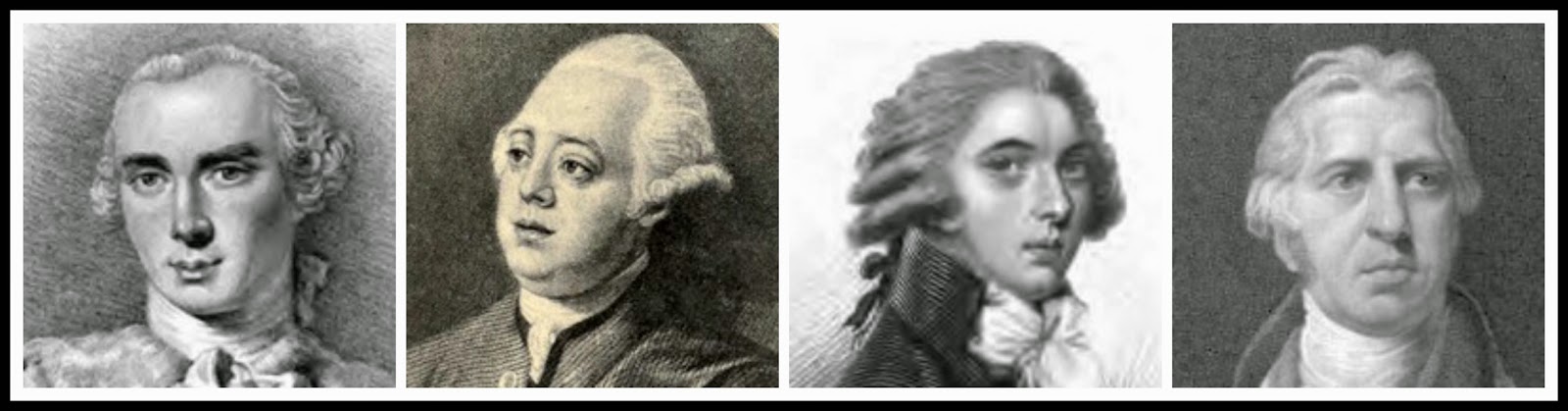
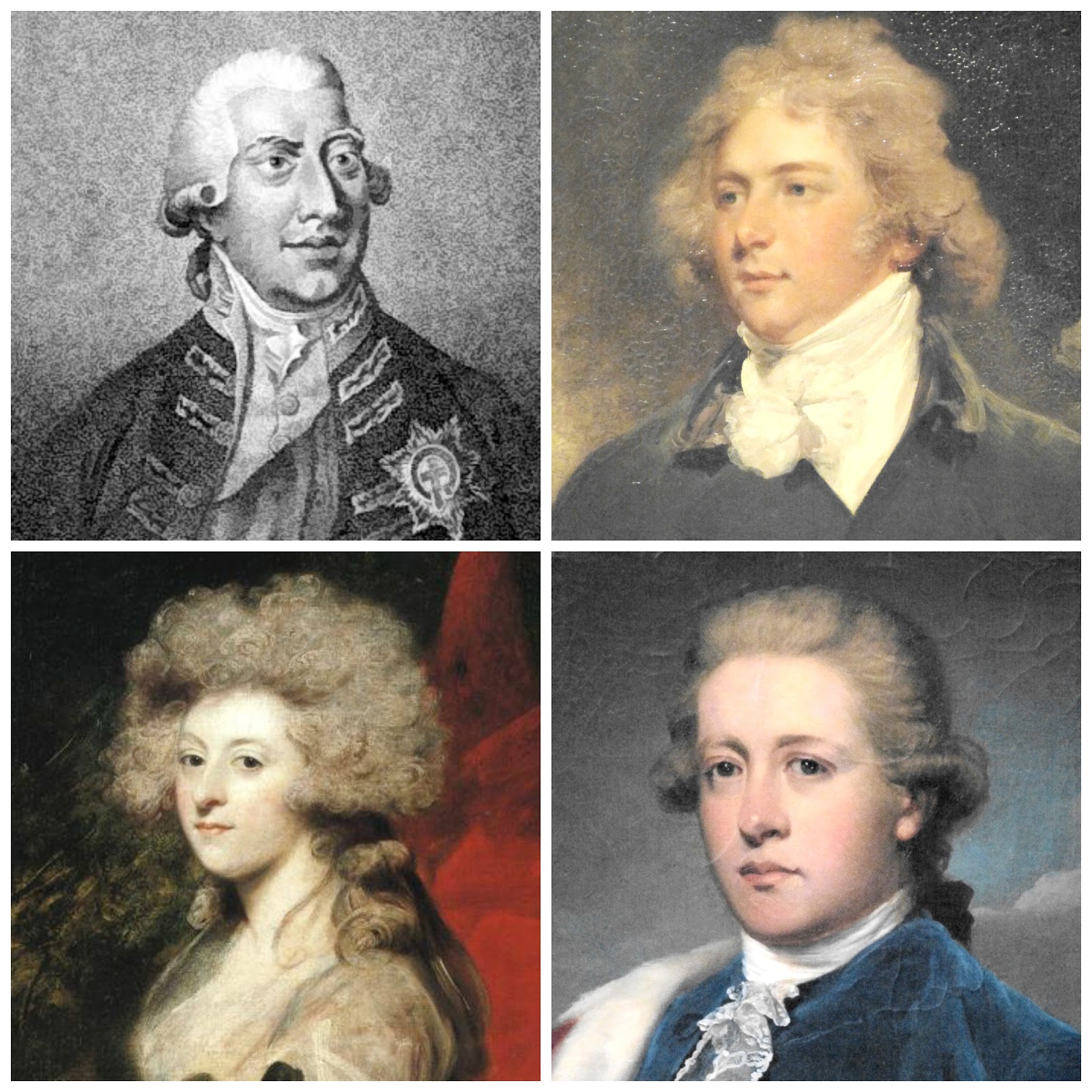
George III in a white wig; George IV, Maria Fitzherbert and William Cavendish, Duke of Devonshire, showing the effect of powder in the hair
George III in a white wig; George IV, Maria Fitzherbert
and William Cavendish, Duke of Devonshire,
showing the effect of powder in the hair
The fashion for hair powder

The fashion for putting powder in your hair allegedly started with Henry IV of France (1553-1610) who started using brown powder in his hair to hide the grey hairs. Those around him hurried to adopt the custom. It did have an additional benefit. Powder helped to reduce the greasiness of the hair which was useful at a time when hair washing was certainly not a daily pursuit!

Wigs and white powder

Henry IV’s son Louis XIII (1601-1643) also had a hair problem—he started to go bald at a young age. To hide his baldness, he started to wear a long haired wig and, unsurprisingly, his courtiers soon followed suit. The fashion spread to England and was adopted by Charles II (1630-85) and his court. 

The rarest and most expensive wigs were white. As a result, people put white powder on their wigs in order to make them look as white as possible. People also used white powder on their hair. It intensified the blondeness of very fair hair but made darker hair look grey, the shade depending on the natural hair colour.
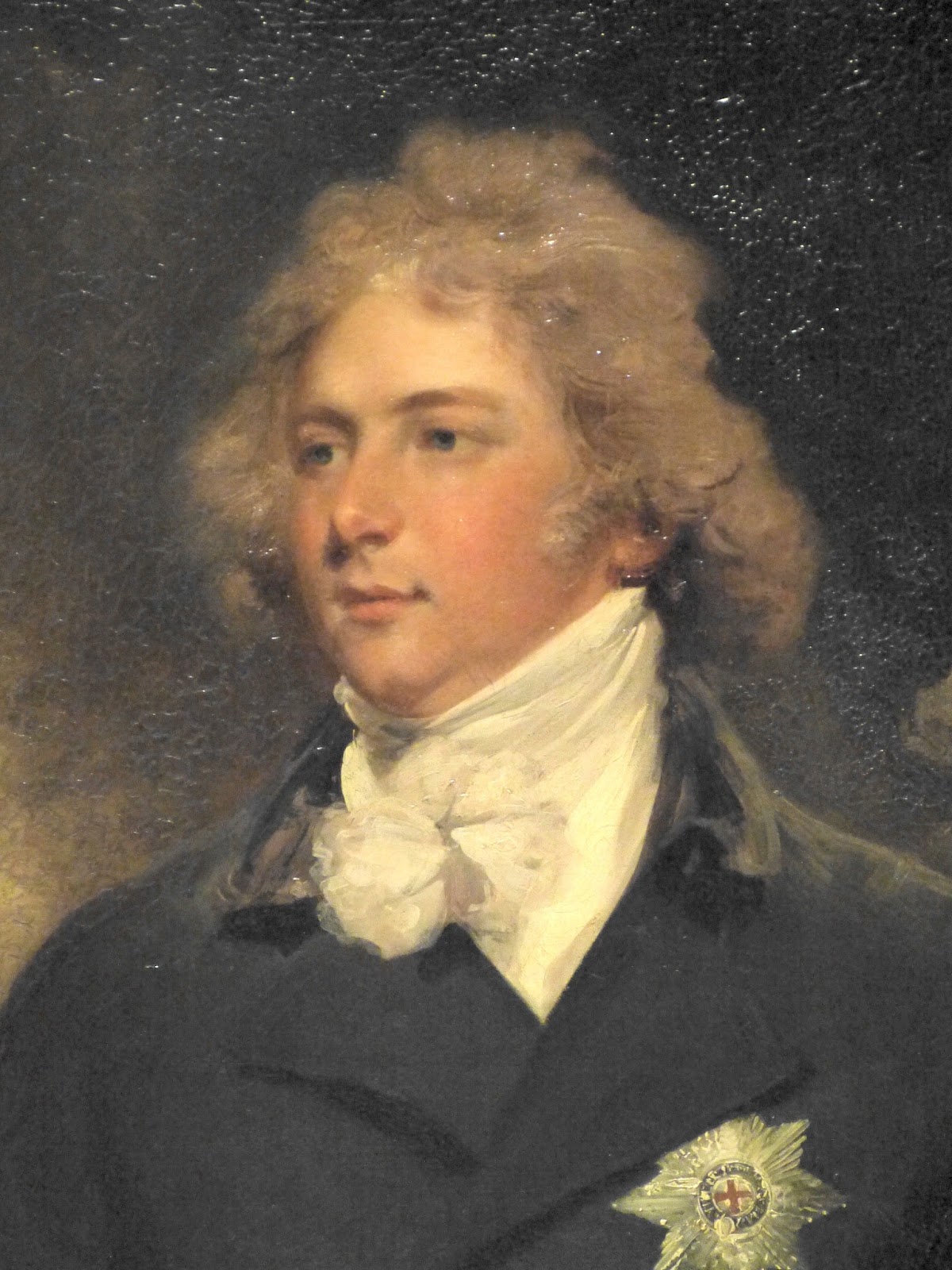
George IV as Prince of Wales by John Hoppner (1792) © The Wallace Collection
George IV as Prince of Wales
by John Hoppner (1792) © The Wallace Collection
In the first of The Merry RomancesA Perfect Match, Mr Merry reluctantly allows his manservant to powder his hair for a ball:
John handed Mr Merry his hat and cane and grinned. For once, he had managed to persuade his young master to stand still for long enough to powder his hair thoroughly, heightening the blondeness of its colour. John secretly thought that there were few gentlemen who could wear powder to such good effect.1
A universal fashion

Powder was not just a fashion adopted by the few; its use was widespread throughout most of the 18th century and not to use it was seen as a breach of social etiquette.

In her novel, The Sylph, published in 1778, Georgiana Cavendish, Duchess of Devonshire, wrote:
Monsieur bowed and shrugged, just like an overgrown monkey. In a moment I was overwhelmed with a cloud of powder. ‘What are you doing? I do not mean to be powdered,’ I said.
‘Not powdered!’ repeated Sir William; ‘why you would not be so barbarous as to appear without—it positively is not decent2
In her journal, Mary Frampton wrote of 1780:
At that time everybody wore powder and pomatum.3
In 1789, she went on to write:
I was dressed as a grown-up person for the first time, and wore powder, then the mark of distinction of womanhood.4
What was hair powder made from?

Hair powder was made from flour or starch and varied considerably in quality, with the best powders being made from highly refined starch. 

Although white was the most popular colour, other shades were also used, including brown, grey, orange, pink, red, blue and violet.

Horn and ivory powder bottles on display at the Science Museum, London
Horn and ivory powder bottles
on display at the Science Museum, London
Powdering room

Putting on hair powder was a messy and time consuming business. First the hair was covered with hair lotion known as pomade or pomatum which helped the powder to stick. Then the person being powdered was covered with a powdering gown or protective apron whilst the powder was applied using a set of bellows. A cone shaped device could be used to cover their face to prevent the powder going into their eyes.

In 1791, Mary Frampton’s journal stated:
The ladies wore the hair flowing down their backs and high in front, with much pomatum and powder put on with different kinds of puffs. The finishing powder had a brown hue and a strong perfumed smell, and was called ‘Maréchale’ powder. This powder was applied at a distance, that every hair might be frosted with it. One pound, and even two pounds, of powder were sometimes put into the hair or wasted in the room in one dressing.5
Ideally, this operation would take place in a special room – a powdering room or closet – in order to contain the mess. In Dr Johnson’s House Museum in Gough Square, London, there is a set of double doors off the parlour which lead to his powdering closet. This was where he stored his wigs and sat to have powder applied without spreading it all over the house.

The Parlour, Dr Johnson's House Museum, Gough Square, London The double doors to the right of the fireplace lead to  Dr Johnson's powdering closet.
The Parlour, Dr Johnson's House Museum, Gough Square, London
The double doors to the right of the fireplace lead to
 Dr Johnson's powdering closet.
Sweet Cypress Hair Powder

In A Perfect Match, set in 1788-9, the heroine’s mother, Mrs Westlake, wears her hair “fashionably powdered”. She could have bought her hair powder from Sharp’s along with the Olympian Dew she used to prevent wrinkles.  
 

According to an advertisement in The Times, Sharp’s could offer:
Sweet Cypress Hair Powder (made by Sharp). It is the lightest, sweetest and the best for the Hair of any 1s 2d per Pound, Stamp included; or 11s per Dozen – All Sorts of Hair Powders made (as may be seen every Day) from the purest French Starch, and sold Cheaper than at any other House.6
What does “stamp included” mean?

William Pitt the Younger introduced a sales tax on hair powder in 1786. Taxing fashion was a clever move as people who wanted to be fashionable were forced to pay the tax. It is this tax that the phrase “stamp included” refers to. Clearly the seller was paying the sales tax on behalf of the consumer. The tax was charged at a rate of 1d for items costing less than 8d; increased to 1½d for items costing between 8d and 1s; and rose to a maximum of 1s for items costing more than 5s. 

This stamp duty was not just on hair powder but was payable on 
...every packet, box, bottle, phial, or other inclosure, that shall contain any sweet scents, odours, or perfumes, or any dentifrice, or other preparation for the teeth, or any pomatum, hair powder, or other preparation for the hair.7
However, it was only the hair powder that was advertised as “stamp included”.

Pomades and pomatums

In the advertisement in The Times, Sharps also recommended:
Rose, Orange, Jessamine, Violet, and white Marechalle Pomatums, that will keep good in any Climate twelve months; 1s per Roll and Pot.
The Pomade de Grasse, Sharp has sold with great Reputation and Success for many Years; and now, as heretofore, does most solemnly assure the Public, that it will certainly and effectually thicken and strengthen the Hair; keep it from falling off or turning Grey. Sold with Directions for Use.
The very best Foreign Powders and Pomatum, wholesale and Retail.8
The decline of hair powder

In 1795, Pitt introduced a new tax on hair powder. Those wishing to use hair powder had to obtain an annual certificate for the privilege at a cost of one guinea. There was an outcry against the expense of this licence and the tax did not have quite the effect that Pitt had hoped for. 

There was already a move toward more natural hairstyles and many people chose to abandon their hair powder altogether rather than spend a guinea on a licence. The tax never brought in the anticipated revenues; it simply hastened the demise of the fashion for hair powder.

'Leaving off powder, -or- a frugal family saving the guinea'
by James Gillray (1795) © British Museum

Headshot of Rachel Knowles author with sea in background(2021)
Rachel Knowles writes clean/Christian historical romance set in the time of Jane Austen. She has been sharing her research on this blog since 2011. Rachel lives in the beautiful Georgian seaside town of Weymouth, Dorset, on the south coast of England, with her husband, Andrew.

Find out more about Rachel's books and sign up for her newsletter here.

If you have enjoyed this blog and want to encourage me and help me to keep making my research freely available, please buy me a virtual cup of coffee by clicking the button below.

Notes
1. A Perfect Match, chapter 10, by Rachel Knowles (2015).
2. The Sylph by Georgiana Cavendish, Duchess of Devonshire (1778).
3. The Journal of Mary Frampton (1779-1846) by Mary Frampton, edited by Harriot Georgiana Mundy (1885).
4. Ibid.
5. Ibid.
6. "To The Ladies. Sharp,." Times [London, England] 12 Apr. 1788: 2. The Times Digital Archive. Web. 24 Jan. 2015. The monetary system was in pounds, shillings and pence represented by the letters l, s and d respectively.
7. Debrett (ed), The Parliamentary Register or History of the Proceedings and Debates of the House of Commons during the third session of the Sixteenth Parliament of Great Britain (1787).
8. Times op cit.
 
The collage consists of the following pictures:
George III from Bissett, Robert, The History of the Reign of George III (Edward Parker, 1822, Philadelphia)
George IV as Prince of Wales by John Hoppner (1792) Photo by Andrew Knowles Portrait © The Wallace Collection
Maria Fitzherbert by Sir Joshua Reynolds (c1788) © NPG London
William Cavendish, 5th Duke of Devonshire by Anton von Maron Photo by Andrew Knowles Portrait © Chatsworth

Sources used include:
Cavendish, Georgiana, Duchess of Devonshire, The Sylph (1778)
Debrett (ed), The Parliamentary Register or History of the Proceedings and Debates of the House of Commons during the third session of the Sixteenth Parliament of Great Britain (1787)
Frampton, Mary, The Journal of Mary Frampton (1779-1846) edited by Harriot Georgiana Mundy (1885)
Knowles, Rachel, A Perfect Match (2015)
Demodecouture.com on hairstyles-cosmetics-18th-century
Times Digital Archive

All photographs © regencyhistory.net

Friday, 20 November 2015

Rowlandson’s comic art at the Queen’s Gallery, London - 2016 exhibition

Doctor Convex and Lady Concave
by Thomas Rowlandson (1802)
Thomas Rowlandson (1756-1827) was one of the greatest caricaturists of his time. The exhibition at the Queen’s Gallery – High Spirits – was all about his comic art and included nearly 100 of his prints and drawings. The exhibition ended on 14 February 2016, but you can still enjoy it on this blog.

High Spirits exhibition at the Queen's Gallery,
Buckingham Palace, London
Here is the promotional video for the exhibition narrated by Brian Blessed. It is a lovely introduction to the subject of Thomas Rowlandson's art and caricatures in general.


There is a comprehensive book that accompanies the exhibition which includes all the prints and pictures on display (and a few more besides) together with the background and provenance for each.
 
The fashion for caricatures

Before I start telling you about the exhibition, I have a confession to make. I am not a huge fan of caricatures—they are very Georgian, but not always to my taste. Rowlandson’s cartoons are often quite ugly and frequently bawdy. However, I appreciate their cleverness even when I’m not keen on the pictures and I did find some prints in the exhibition that I liked.

A wall of Rowlandson prints at the exhibition
Caricatures were a great source of amusement to rich and poor alike. It was fashionable to collect prints and display them on a wall or screen or keep them in an album. Showing off your print collection was a popular after dinner entertainment. If you couldn’t afford to build up your own portfolio, then you could hire one from a print shop for the evening to share with your guests. If that was beyond your means, you could still enjoy spotting the royals and politicians lampooned in cartoon form by gazing at the latest prints on display in the print shop window.

I'm looking at a screen at the exhibition covered
 with cut-outs of Thomas Rowlandson prints
 which dates from c1806
A close-up of the print screen shown above
Everyday life

Many of Rowlandson’s prints were social satires – taking a humorous view of daily life and topics that were in the news. Rowlandson was fond of depicting opposites - such as Doctor Convex and Lady Concave at the top of the page and the very streamlined outline of Buck's Beauty contrasting with the curves of Rowlandson's Connoisseur below.

Buck's Beauty and Rowlandson's Connoisseur
by Thomas Rowlandson (c1799)
Three Principal Requisites to form a Modern Man of Fashion
by Thomas Rowlandson (1814)
Overset by Thomas Rowlandson (c1790)
Rowlandson delighted in caricaturing current events, such as the news that Richard Brinsley Sheridan was going to pull down the Theatre Royal in Drury Lane in order to build a bigger one. Rowlandson depicted this as the theatre tumbling down during a performance.

Chaos is Come Again! by Thomas Rowlandson (1791)
Ridiculing the royals

George III and his family were frequently the subject of Rowlandson’s cartoons. His caricatures included prints about George III's illness of 1788-9; George, Prince of Wales' bad behaviour; and the Mrs Clarke scandal of 1809 involving the Duke of York. During the Mrs Clarke scandal, Rowlandson produced an incredible 27 caricatures in little over 6 weeks!

Money Lenders [featuring the young George IV]
by Thomas Rowlandson (1784)
Suitable Restrictions [for a regency] by Thomas Rowlandson (1789)
Yorkshire Hieroglyphics by Thomas Rowlandson (1809)
[depicting a love letter from the Duke of York to Mrs Clarke in pictures]
A York address to the Whale. Caught lately off Gravesend.
[The Duke of York pleads with the whale to distract the public
from the Mrs Clarke scandal] by Thomas Rowlandson (1809)
Political satire

Rowlandson began producing political caricatures around 1780. The battle between the Whigs led by Fox and the Tories led by Pitt gave ample scope for his wicked wit. His series of prints on the Westminster Election of 1784, published by William Humphrey, was particularly successful, firmly establishing him as one of the leading satirists of his day.

The Devonshire or Most Approved Method of Securing Votes
by Thomas Rowlandson (1784)
 Georgiana, Duchess of Devonshire, is shown kissing a butcher
 in order to secure his vote for Fox.
Views of England and other works of art

In addition to all the caricatures, a number of Rowlandson's other works were on display. These included book illustrations from Ackermann’s Microcosm of London and An excursion to Brighthelmstone made in the year 1789. This volume included what was probably my favourite picture in the whole exhibition – that of the bathing machines at Brighton pictured below.

Bathing Machines by Thomas Rowlandson in An excursion
to Brighthelmstone made in the year 1789 by H Wigstead (1790)
Christie's Auction Room from The Microcosm of London
published by R Ackermann (1808)and illustrated by Augustus
Pugin [the architecture] and Thomas Rowlandson [the people].
The paintings in the exhibition included this one, featuring George III returning from a hunting trip.

King George III returning from hunting through Eton
by Thomas Rowlandson (c1800)
A Georgian connection with the Dutch paintings

Having examined the Rowlandson exhibition thoroughly, we decided to take a quick look round the exhibition of Dutch paintings which ran alongside it. Although these were pre-Georgian, mostly dating from the 17th century, there was a Georgian connection. Many of the paintings were acquired by George IV and prints of various rooms in Carlton House and Windsor Castle from Pyne’s The History of the Royal Residences showed the paintings had been displayed. One or two of the paintings in the exhibition were even identifiable in the prints.

An Old Woman called The Artist's Mother
by Rembrandt van Rijn (1627)
The King's Drawing Room, Windsor Castle
from The History of the Royal Residences by WH Pyne (1819).
The Old Woman is on display to the right of the doorway.
There was also a small selection of Sèvres porcelain on display.

Chocolatière from the Sèvres
porcelain factory (1777)
Acquired by George IV in 1815.
Pot-pourri à vaisseau or pot-pourri en navire
from the Sèvres porcelain factory (1758-9).
It is extremely likely that this item was originally
owned by Madame de Pompadour,
mistress of King Louis XV of France.
In summary, High Spirits was a great little exhibition and the exhibition book details all the works of art on display.

All photos © Regencyhistory.net except Money Lenders and The Devonshire © The Royal Collection.
All prints and objects © HM Queen Elizabeth II.
 
 Headshot of Rachel Knowles author with sea in background(2021)
Rachel Knowles writes faith-based Regency romance and historical non-fiction. She has been sharing her research on this blog since 2011. Rachel lives in the beautiful Georgian seaside town of Weymouth, Dorset, on the south coast of England, with her husband, Andrew.

Find out more about Rachel's books and sign up for her newsletter here.

If you have enjoyed this blog and want to encourage me and help me to keep making my research freely available, please buy me a virtual cup of coffee by clicking the button below.

Thursday, 7 May 2015

The general election of 1784

The Devonshire, or most approved method of securing votes  by Thomas Rowlandson, published by William Humphrey (1784)  © British Museum
The Devonshire, or most approved method of securing votes
by Thomas Rowlandson, published by William Humphrey (1784)
© British Museum
The background to the election

After the resignation of the loyal Lord North in 1782, George III appointed the Whig Lord Rockingham in his place, but he died within a few months of taking office. Perhaps the most obvious successor for leading the cabinet was Charles James Fox, but George III hated Fox and so appointed his rival, Lord Shelburne, as his Prime Minister. Fox formed a coalition with his previous enemy, Lord North, to force Shelburne’s government to fall.
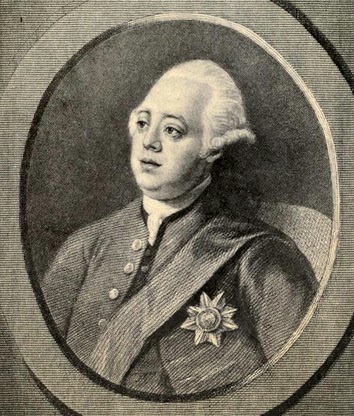
For a while, the Fox-North coalition was in control, nominally under the leadership of the Duke of Portland. But George III was determined to be rid of Fox. The King announced that he would count as his enemies any who voted in favour of Fox’s East India bill in the House of Lords. By this means, the government was defeated and George III appointed the youthful Tory William Pitt the Younger as his new Prime Minister in December 1783.

In March 1784, as support swung in favour of Pitt’s government and away from Fox, a general election was called.

Read more about the two parties, the Whigs and the Tories, here.

Left: Charles James Fox from The Historical and Posthumous Memoirs   of Sir Nathaniel Wraxall (1884)  Right: William Pitt the Younger from Memoirs of George IV by R Huish (1830)
Left: Charles James Fox from The Historical and Posthumous Memoirs 
of Sir Nathaniel Wraxall (1884)
Right: William Pitt the Younger from Memoirs of George IV by R Huish (1830)
The 1784 election

The electoral system in 1784 was very different from what it is today. The country was not split into areas each returning a single Member of Parliament. Rather, it was a motley system of counties and parliamentary boroughs—towns which had been granted a royal charter which allowed them to elect two Members of Parliament. Changes in population over time had led to some boroughs being in the control of a very small electorate. These became known as rotten boroughs—controlled by a very small electorate—and there were also pocket boroughs, which were effectively controlled by a single landowner. The Universities of Oxford and Cambridge even had their own Members of Parliament!

On top of this, very few adults had the right to vote. You had to be male, Protestant and eligible according to the varying criteria of your particular borough.
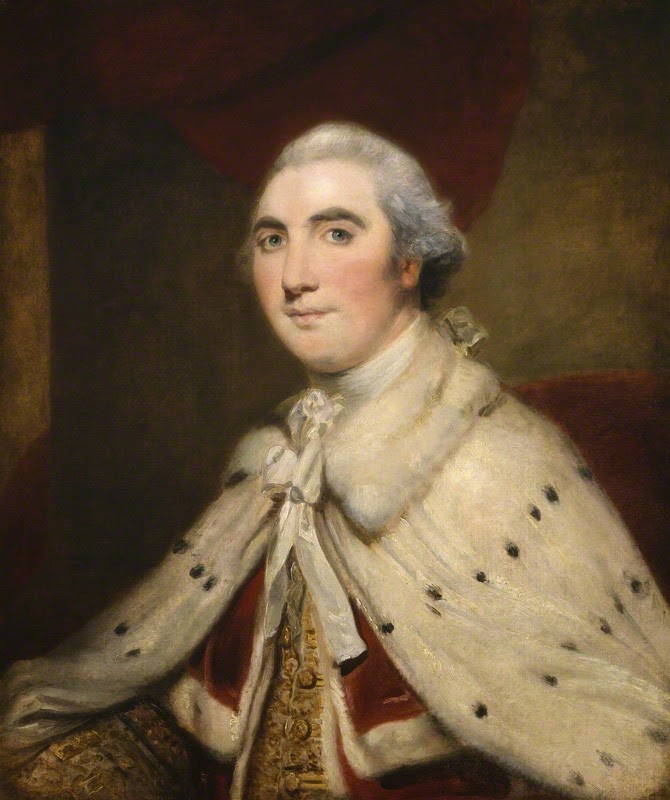
It was expected that both parties would use their patronage and wealth to influence the electorate to vote for them. Canvassing in 1784 was not merely about going from door to door encouraging people to vote in your favour; it was about patronage and bribery on a big scale. Even the great abolitionist William Wilberforce started off his political career in 1780 by ‘buying’ the votes of the electorate of Hull at the expected rate of two guineas each.

The Westminster Election

The Westminster hustings in front of St Paul's Church, Covent Garden  from Covent Garden its romance and history by R Jacobs (1913)
The Westminster hustings in front of St Paul's Church, Covent Garden
from Covent Garden its romance and history by R Jacobs (1913)
The most controversial constituency in the 1784 election was the borough of Westminster. This was a borough with a large electorate—an electorate where the votes of the people really counted. Three candidates were standing for the two places in Parliament: Admiral Lord Hood, a popular hero from the American war who supported Pitt; Sir Cecil Wray, who had deserted the Whigs to support the Tory government; and Charles James Fox, leader of the Whig Opposition.

The polling opened on 30 March and closed on 17 May (1). The hustings were set up in Covent Garden, adjacent to the polling booths. Fox and a few associates remained on the platform whilst the rest split up and went out into the area to canvas the voters. It seems that they counted the votes that were placed each day and so there was a running tally as to which candidate was in the lead.

A picture of Covent Garden

An excerpt from a letter written by Hannah More to her sister in 1784 gives a glimpse of the prevailing atmosphere in Westminster:
“A propos of elections – I had like to have got into a fine scrape the other night. I was going to pass the evening at Mrs Cole’s in Lincoln’s Inn Fields. I went in a chair; they carried me through Covent Garden: a number of people, as I went along, desired the men not to go through the Garden, as there were a hundred armed men who, suspecting every chairman belonged to Brookes’s, would fall upon us. In spite of my entreaties, the men would have persisted; but a stranger, out of humanity, made them set me down, and the shrieks of the wounded, for there was a terrible battle, intimidated the chairmen, who at last were prevailed upon to carry me another way. A vast number of people followed me, crying out, “It is Mrs Fox: none but Mr Fox’s wife would dare to come into Covent Garden in a chair; she is going to canvass in the dark.” Though not a little frightened, I laughed heartily at this, but shall stir no more in a chair for some time.” (2)
The ladies of the election

From left to right: Georgiana Cavendish, Duchess of Devonshire;
Henrietta Ponsonby, Lady Duncannon, later Countess of Bessborough;
Anne Seymour Damer (7)
Many of Fox’s friends were canvassing in their own constituencies and so much of the weight of his campaign fell on the shoulders of his female supporters. His canvassing team included a number of notable ladies: Georgiana Cavendish, Duchess of Devonshire; her sister, Harriet, Lady Duncannon; Anne Seymour Damer; the Duchess of Portland; Lady Jersey; Lady Carlisle; Mrs Bouverie; the three ladies Waldegrave; Mary Robinson. The canvassers dressed in the party colours of blue and buff with foxtails in their hats.
“Several ladies of rank and fashion stood forth as Fox’s friends—at their head, Georgiana, the eldest daughter of Earl Spencer, and the wife, since 1774, of the fifth duke of Devonshire. Of great beauty and unconquerable spirit, she tried all her powers of persuasion on the shopkeepers of Westminster. Other ladies who could not rival her beauty might at least follow her example. Scarce a street or alley which they did not canvass in behalf of him whom they persisted in calling 'the Man of the People', at the very moment when the popular voice was everywhere declaring against him.”  (3)
The Duchess of Devonshire

Female influence; or the Devons-e canvas  published by William Wells (1784) © British Museum
Female influence; or the Devons-e canvas
published by William Wells (1784) © British Museum
During the canvassing, the Duchess of Devonshire was famously accused of exchanging kisses for votes:
“It was at this election that the beautiful Georgiana, Duchess of Devonshire, successfully wooed the electors for the great Whig leader by her smiles and her kisses. ‘Your eyes are so bright, my lady, that I could light my pipe by them,’ said an Irish labourer to her at Covent Garden. She is said to have valued that compliment more highly than any she received during a long and brilliant career  in social and political life. ‘The Duchess having purchased the vote of an impracticable butcher by a kiss is said to be unquestionable,’ says Earl Stanhope.” (4) 
Dr Cornwallis wrote:
“The Duchess of Devonshire is indefatigable in her canvass for Fox; she was in the most blackguard houses in Long Acre by eight o’clock this morning.” (5)
'Woman of the People'

There is no doubt that the Duchess threw herself into the election with considerable fervour. The Tory press tried to turn public opinion away from the Whigs by ridiculing Fox’s reliance on ladies to run his campaign and in particular, they targeted the Duchess, making derogatory comments about her unladylike involvement. It was one thing for Fox to be the ‘Man of the People’, but a ‘Woman of the People’ was a prostitute and unsavoury prints rushed to make the lewd connection.

Ride for ride or secret influence rewarded published by Edward Shirlock (1784) © British Museum
Ride for ride or secret influence rewarded
published by Edward Shirlock (1784) © British Museum
Pitt wrote to Wilberforce on 8 April:
“Westminster goes on well in spite of the Duchess of Devonshire and the other 'Women of the People'; but when the poll will close is uncertain.” (3)
Disillusioned by the polls which suggested that Fox was going to lose and worn down by both the physical exertion and the mental torment of the hateful press, the Duchess left Westminster on 12 April and went to stay with her mother. But the tide was beginning to turn in Fox’s favour and the Whigs begged her to return, believing that her charismatic presence was winning people over. Refreshed, the Duchess returned to Westminster and continued to canvas for Fox.

Fox is victorious

The final result was: Lord Hood 6,694 – Fox 6,234 – Sir Cecil Wray 5,998 (6). Fox had held onto his seat – a significant victory for the Whigs. Led by horsemen in blue and buff with foxtails in their hats, Fox and his supporters marched in triumph from St Paul’s to Carlton House and onto Devonshire House where the Duchess of Devonshire and the Prince of Wales greeted them. There followed a succession of dinners and balls at Carlton House, celebrating Fox’s victory.

Procession to the hustings after a successful canvass  by Thomas Rowlandson, published by William Humphrey (1784)  © British Museum
Procession to the hustings after a successful canvass
by Thomas Rowlandson, published by William Humphrey (1784)
© British Museum
The Whigs are defeated

Fox might have won his seat in Westminster, but around the country, the results for the Whigs were disastrous. 89 Whigs lost their seats and became known as Fox’s Martyrs. Pitt was returned as MP for the University of Cambridge—the seat that he had failed to win at the previous election. The Tory government was secure and the Opposition became a shadow of what it had been before the election.

To make matters worse, a scrutiny of the Westminster election was instigated, suggesting that there was some irregularity in the voting. Until the scrutiny was completed, Fox was barred from taking his seat. This was seen as a stalling tactic by Pitt’s government to keep Fox out of the House. Fortunately Fox had a back-up plan. He had been elected for Tain Burghs in April and sat for them until the election scrutiny was finally resolved in his favour—in March 1785!

Notes
(1) The Book of Parliament gave the dates for the election as 1 April to 17 May. Some sources stated that the poll closed on 10 May, but The Gentleman's Magazine stated 17 May.
(2) In a letter from Hannah More to her sister in Memoirs of the life and correspondence of Mrs Hannah More by William Roberts (1834).
(3) From Life of the Right Honourable William Pitt by Earl Stanhope (1861) p208-9.
(4) From The Book of Parliament by Michael Macdonagh (1897).
(5) In a letter from Dr Cornwallis, 9 April 1784, in Covent Garden, its romance and history by R Jacobs (1913).
(6) Georgiana, Duchess of Devonshire by Amanda Foreman (1998) recorded the vote for Fox at 6,234 but some other sources say 6,233. The Gentleman's Magazine for May 1784 stated the two different figures in the same article!
(7) The sources of the pictures in the collage:
Georgiana, Duchess of Devonshire by Thomas Gainsborough (c1785-7) at Chatsworth
Countess of Bessborough - from La Belle Assemblée (1810)
Anne Seymour Damer - from La Belle Assemblée (1810)

Sources used include:
Foreman, Amanda, Georgiana, Duchess of Devonshire (1998)
Jacobs, Reginald, Covent Garden, its romance and history (1913)
Macdonagh, Michael, The Book of Parliament (1897)
Roberts, William, Memoirs of the life and correspondence of Mrs Hannah More (1834)
Stanhope, Philip Henry, Earl, Life of the Right Honourable William Pitt (1861)
The Gentleman's Magazine and Historical Chronicle (1784)
Walpole, Horace, The Letters of Horace Walpole, Earl of Orford, in six volumes (1840) Vol 6

The History of Parliament online

Tuesday, 28 April 2015

The Prime Ministers of George III (1760-1820)

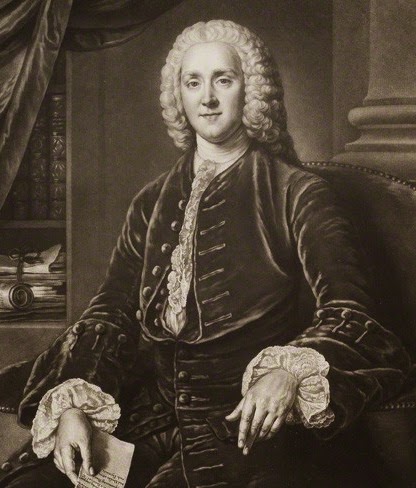
4 Prime Ministers of George III  From left to right: Lord Bute, Lord North,William Pitt the Younger, Lord Liverpoo
Four of the Prime Ministers of George III
Left to right: Lord Bute, Lord North,William Pitt the Younger, Lord Liverpool (2)
George III is still the longest reigning British King, ruling from 1760 to 1820. He had 14 different Prime Ministers over those 60 years—six Tories and eight Whigs. They included two pairs of fathers and sons: William Pitt the Elder and his son William Pitt the Younger, and George Grenville and his son William Wyndham Grenville. They also included the only British Prime Minister ever to be assassinated—Spencer Perceval.

Find my guides to the Prime Ministers of George IV here and William IV here.

George III's Prime Ministers

Thomas Pelham-Holles, 1st Duke of Newcastle
Whig – 1757-1762

Thomas Pelham-Holles,  1st Duke of Newcastle-under-Lyne  by William Hoare (c1752) © NPG 757 (1)
Thomas Pelham-Holles,
1st Duke of Newcastle-under-Lyne
Pastel by William Hoare (c1752)
© NPG 757 (1)
John Stuart, 3rd Earl of Bute
Tory – 1762-1763

Lord Bute from The Historical and Posthumous Memoirs of Sir Nathaniel Wraxall (1884)
Lord Bute from The Historical and Posthumous
Memoirs of Sir Nathaniel Wraxall (1884)
George Grenville
Whig – 1763-1765

George Grenville  by and published by Richard Houston  after William Hoare mezzotint (c1750-75)  © NPG D20047 (cropped) (1)
George Grenville
by and published by Richard Houston
after William Hoare mezzotint (c1750-75)
© NPG D20047 (cropped) (1)
Charles Watson-Wentworth, 2nd Marquess of Rockingham
Whig – 1765-1766

Charles Watson-Wentworth,2nd Marquess  of Rockingham after Sir Joshua Reynolds,  oil on canvas, feigned oval (c1768)  © NPG 406 (1)
Charles Watson-Wentworth, 2nd Marquess
of Rockingham, after Sir Joshua Reynolds,
oil on canvas, feigned oval (c1768)
© NPG 406 (1)
William Pitt the Elder, 1st Earl of Chatham
Whig – 1766-1768

William Pitt, 1st Earl of Chatham,  studio of William Hoare, oil on canvas (c1754)  © NPG 1050 (1)
William Pitt, 1st Earl of Chatham,
studio of William Hoare, oil on canvas (c1754)
© NPG 1050 (1)
Augustus Henry Fitzroy, 3rd Duke of Grafton
Whig – 1768-1770

Augustus Henry Fitzroy, 3rd Duke of Grafton,  by Pompeo Batoni, oil on canvas,   feigned oval (1762) © NPG 4899
Augustus Henry Fitzroy, 3rd Duke of Grafton,
by Pompeo Batoni, oil on canvas,
feigned oval (1762) © NPG 4899 (1)
Lord Frederick North, 2nd Earl of Guildford
Tory – 1770-1782

Frederick, Lord North,  from The Last Journals of Horace Walpole (1910)
Frederick, Lord North,
from The Last Journals of Horace Walpole (1910)
Charles Watson-Wentworth, 2nd Marquess of Rockingham
Whig – 1782 (2nd term of office)

Charles Watson-Wentworth, 2nd Marquess  of Rockingham, after Sir Joshua Reynolds,  oil on canvas, feigned oval (c1768)  © NPG 406 (1)
Charles Watson-Wentworth,
2nd Marquess of Rockingham
(Details as above)
William Petty, 1st Marquess of Lansdowne (Lord Shelburne)
Whig – 1782-1783

William Petty, 1st Marquess of Lansdowne,  (Lord Shelburne) after Sir Joshua Reynolds  oil on canvas 1766 © NPG43 (1)
William Petty, 1st Marquess of Lansdowne,
(Lord Shelburne) after Sir Joshua Reynolds
oil on canvas (1766) © NPG 43 (1)
William Henry Cavendish Bentinck, 3rd Duke of Portland
Whig – 1783

William Henry Cavendish Bentinck,   3rd Duke of Portland, by William Evans   after Sir Joshua Reynolds, stipple engraving  pub 1811 ©NPG D31637 (Cropped & lightened) (1)
William Henry Cavendish Bentinck,
3rd Duke of Portland, by William Evans
after Sir Joshua Reynolds, stipple engraving
pub 1811 ©NPG D31637 (Cropped & lightened) (1)
William Pitt the Younger 
Tory – 1783-1801

William Pitt the Younger from Posthumous Memoirs of his own time by N Wraxall (1836)
William Pitt the Younger
from Posthumous Memoirs of his own time
by N Wraxall (1836)
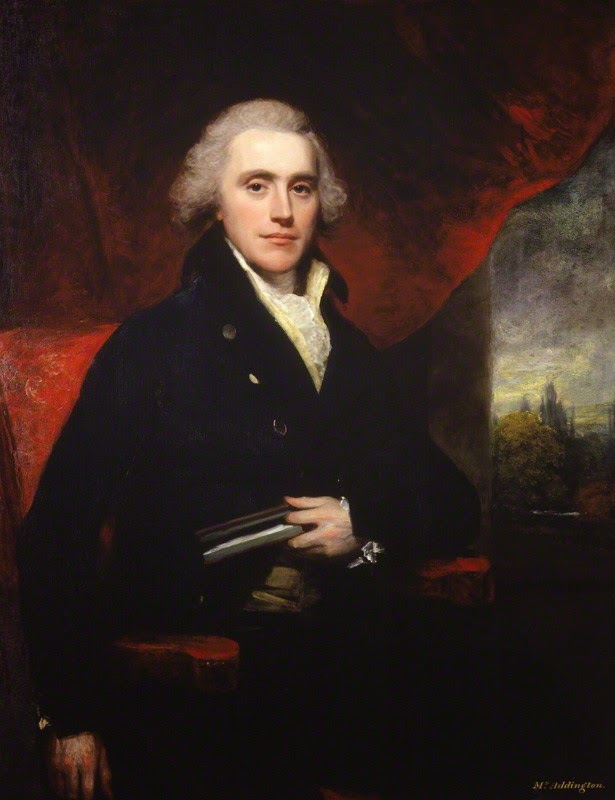
Henry Addington, 1st Viscount Sidmouth 
Tory – 1801-1804

Henry Addington, 1st Viscount Sidmouth  by Sir William Beechey, oil on canvas  engraved 1803 © NPG 5774 (1)
Henry Addington, 1st Viscount Sidmouth
by Sir William Beechey, oil on canvas
engraved 1803 © NPG 5774 (1)
William Pitt the Younger 
Tory – 1804-1806 (2nd term of office)

William Pitt the Younger from Posthumous Memoirs of his own time by N Wraxall (1836)
William Pitt the Younger
(details as above)
William Wyndham Grenville, 1st Baron Grenville
Whig – 1806-1807

William Wyndham Grenville,  1st Baron Grenville by John Hoppner  oil on canvas (c1800)  © NPG318 (lightened) (1)
William Wyndham Grenville,
1st Baron Grenville by John Hoppner
oil on canvas (c1800)
© NPG 318 (1)
William Henry Cavendish Bentinck, 3rd Duke of Portland
Whig – 1807-1809 (2nd term of office)

William Henry Cavendish Bentinck,  3rd Duke of Portland, by William Evans  after Sir Joshua Reynolds, stipple engraving  pub 1811 ©NPG D31637 (Cropped & lightened) (1)
William Bentinck, 3rd Duke
of Portland (details as above)
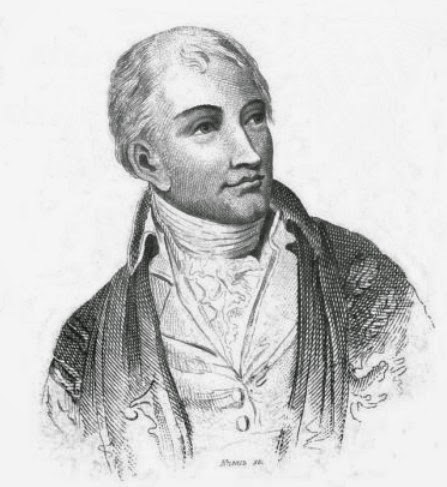
Spencer Perceval
Tory – 1809-1812

Spencer Perceval,  from The Life and Administration of the Right Hon Spencer Perceval  by Charles Williams (1813)
Spencer Perceval,
from The Life and Administration
of the Right Hon Spencer Perceval

by Charles Williams (1813)
Read about Spencer Perceval's assassination here. 

Robert Banks Jenkinson, 2nd Earl of Liverpool 
Tory – 1812-1827

Lord Liverpool, from the   European Magazine and London Review (1818)
Lord Liverpool, from the 
European Magazine and London Review (1818)
Notes
(1) These pictures are © National Portrait Gallery and are displayed under a Creative Commons licence.
(2) For source details of pictures in collage, see under the relevant Prime Minister above.

Sources used include:
Government website - past Prime Ministers
National Portrait Gallery website