Search this blog

Showing posts with label Lord Granville Leveson-Gower. Show all posts

Wednesday, 6 August 2014

John Parker of Saltram, 1st Earl of Morley (1772-1840)

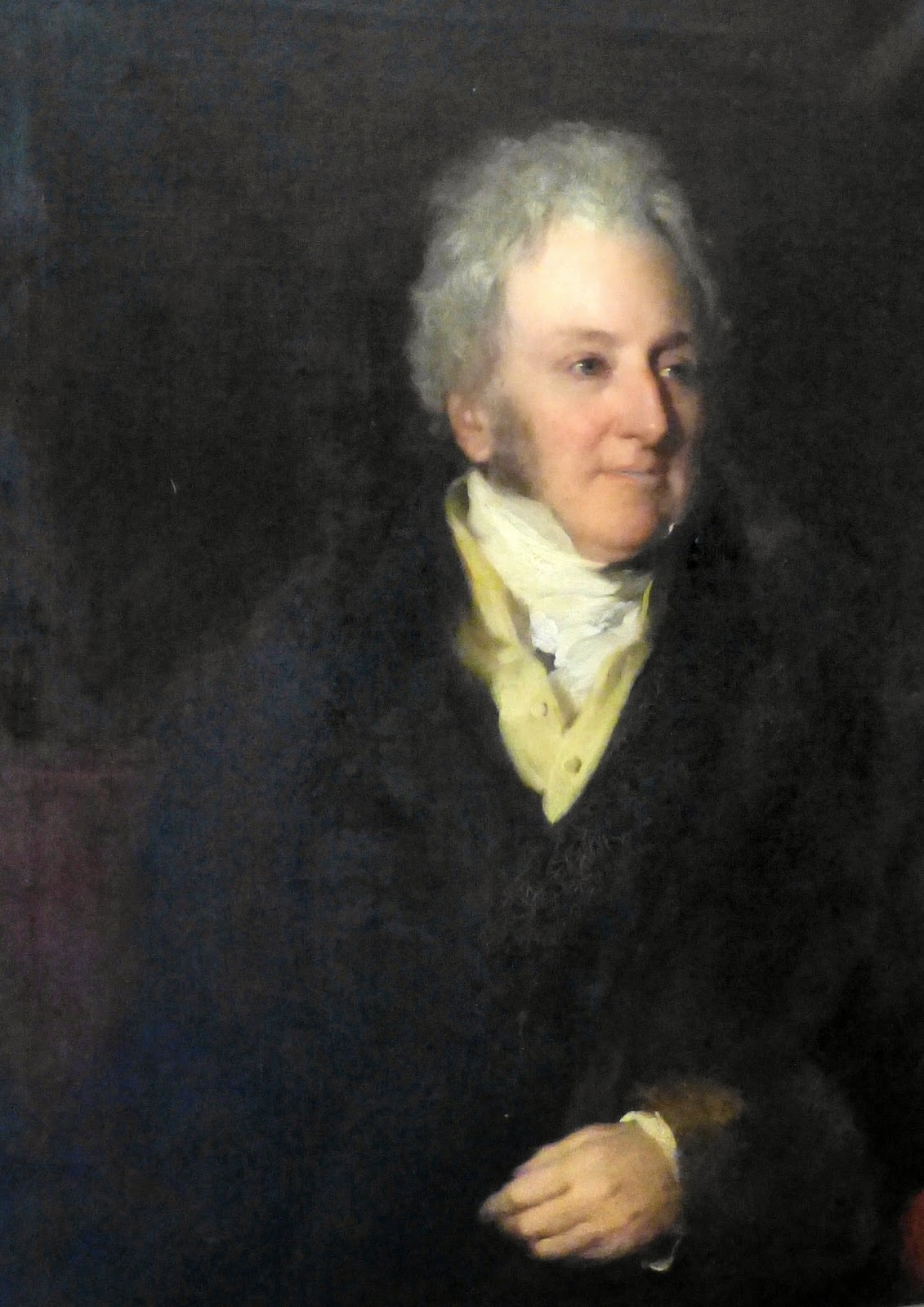
John Parker, 1st Earl of Morley  by Frederick Richard Say (1830)
John Parker, 1st Earl of Morley
by Frederick Richard Say (1830)
Profile

John Parker, 1st Earl of Morley, (3 May 1772 – 14 March 1840) was the owner of the Saltram estate in Devon and an active member of the House of Lords in favour of parliamentary reform. His first wife, Augusta Fane, notoriously eloped with Sir Arthur Paget. 

Family background

Theresa Parker and Little Jack by Sir Joshua Reynolds (c1775)
John Parker, known as Jack, was born on 3 May 17721, the only son of John Parker, 1st Baron Boringdon, of Saltram in Devon, and his wife Theresa Robinson, a younger daughter of the 1st Lord Grantham. His parents were advocates of inoculation and when he was two years old, he was inoculated against the smallpox at a cost of £42. 
 
His mother died in 1775, shortly after the birth of his sister, Theresa, and his aunt, Anne “Nanny” Robinson, came to Saltram to look after them.

Anne "Nanny" Robinson  by John Downman (1780)
Anne "Nanny" Robinson
by John Downman (1780)
Education

Jack was educated at Plympton School and then at Dr Whyte’s boarding school in Hammersmith where the schoolmaster inspired him with a passion for hot air ballooning and he developed an enduring friendship with Granville Leveson-Gower.2 The year before going up to university, he lived in Yorkshire with Frederick “Fritz” Robinson, his mother’s younger brother, accompanied by Dr Andrews, later Dean of Canterbury, as tutor.

Jack went up to Christ Church, Oxford, on 7 April 1789 where he was reunited with his schoolfriend, Granville Leveson-Gower.3 He joined the Literati and became friends with George Canning and Lord Henry Spencer.

Lord Granville Leveson-Gower     from Lord Granville's Private Correspondence (1916)
Lord Granville Leveson-Gower
    from Lord Granville's Private
Correspondence
(1916)
A royal visit

In August 1789, George III and Queen Charlotte visited Plymouth and stayed at Saltram for 12 days.

George III   from Memoirs of Queen Charlotte  by WC Oulton (1819)
George III
 from Memoirs of Queen Charlotte
by WC Oulton (1819)
The Grand Tour

In 1793, Jack embarked on a Grand Tour with a party which included Lord Amherst, Granville Leveson Gower and George Canning. They visited Paris, Geneva, Genoa, Florence, Rome and Venice as well as parts of Germany and the Low Countries and St Petersburg in Russia.

Lady Elizabeth Monck

In Naples, Jack became involved with the enchanting Lady Elizabeth Monck whilst Granville Leveson-Gower pursued Harriet, Lady Bessborough. Lady Elizabeth was the second daughter of Arthur Saunders, 2nd Earl of Arran, and was married with two daughters, but her husband was complaisant and neglected her for drinking and gambling. 
 
Jack started a long-lasting affair with Lady Elizabeth which resulted in the birth of three illegitimate sons who took the name Stapleton: John (1797), George (1799) and Augustus (1800).

A noble title

Jack inherited his father’s estate and title in 1788, becoming 2nd Baron Boringdon when he was only 16 years old. He was gazetted lieutenant-colonel of the North Devon militia in 1794 and colonel in 1799. He was elected a fellow of the Royal Society in 1795.

On 29 November 1815, Jack was made Viscount Boringdon of North Molton, Devon, and Earl of Morley.

The family arms above the entrance to Saltram
A scandalous elopement

Lady Elizabeth Monck divided her time between Jack and her husband, but her relationship with Jack broke down when she refused to get a divorce so she could marry him.

On 20 June 1804, Jack married Augusta Fane, second daughter of the 10th Earl of Westmorland and sister to Sarah Sophia, later Countess of Jersey. They had one son, Henry Villiers (1806), but the marriage was not a success. Jack was pompous and egotistical and Augusta despised her unfaithful husband and resented his ongoing relationship with Lady Elizabeth Monck.

To Jack’s annoyance, one of his university friends, Sir Arthur Paget, a politician and diplomat and son of Henry, 1st Earl of Uxbridge, began to show an interest in Augusta. The feelings were reciprocated and on 18 May 1808, Augusta caused a scandal by eloping with Sir Arthur Paget. They were married immediately after Jack divorced her by Act of Parliament on 14 February 1809.

A second marriage

On 21 August 1809, Jack married Frances Talbot.4 Frances had no fortune or title to recommend her, but she was a very charming lady who readily embraced not only her stepson, but also Jack’s illegitimate children. Jack and Frances had two children of their own, Edmund and Caroline. Sadly, Jack’s son by his first marriage died suddenly in 1817 and Caroline died a year later.

Frances Parker (née Talbot)  by Frederick Richard Say (1830)
Frances Parker (née Talbot)
by Frederick Richard Say (1830)
Political reformer

Jack took his seat in the House of Lords at an early age and was active in the debates. He supported the Tory government of William Pitt the Younger until his death and then backed George Canning, with whom he regularly corresponded. On two occasions, he tried to introduce a bill to promote vaccination as a means of controlling smallpox, but was forced to withdraw it, the second time because the Lord Chancellor said that spreading infection was punishable under common law! After Canning’s death in 1827, Jack allied himself with the Whigs and became a firm supporter of parliamentary reform.

Expensive developments

Jack commissioned the architect John Foulston to create a new entrance to Saltram House in the Greek Revival style and expand the library.
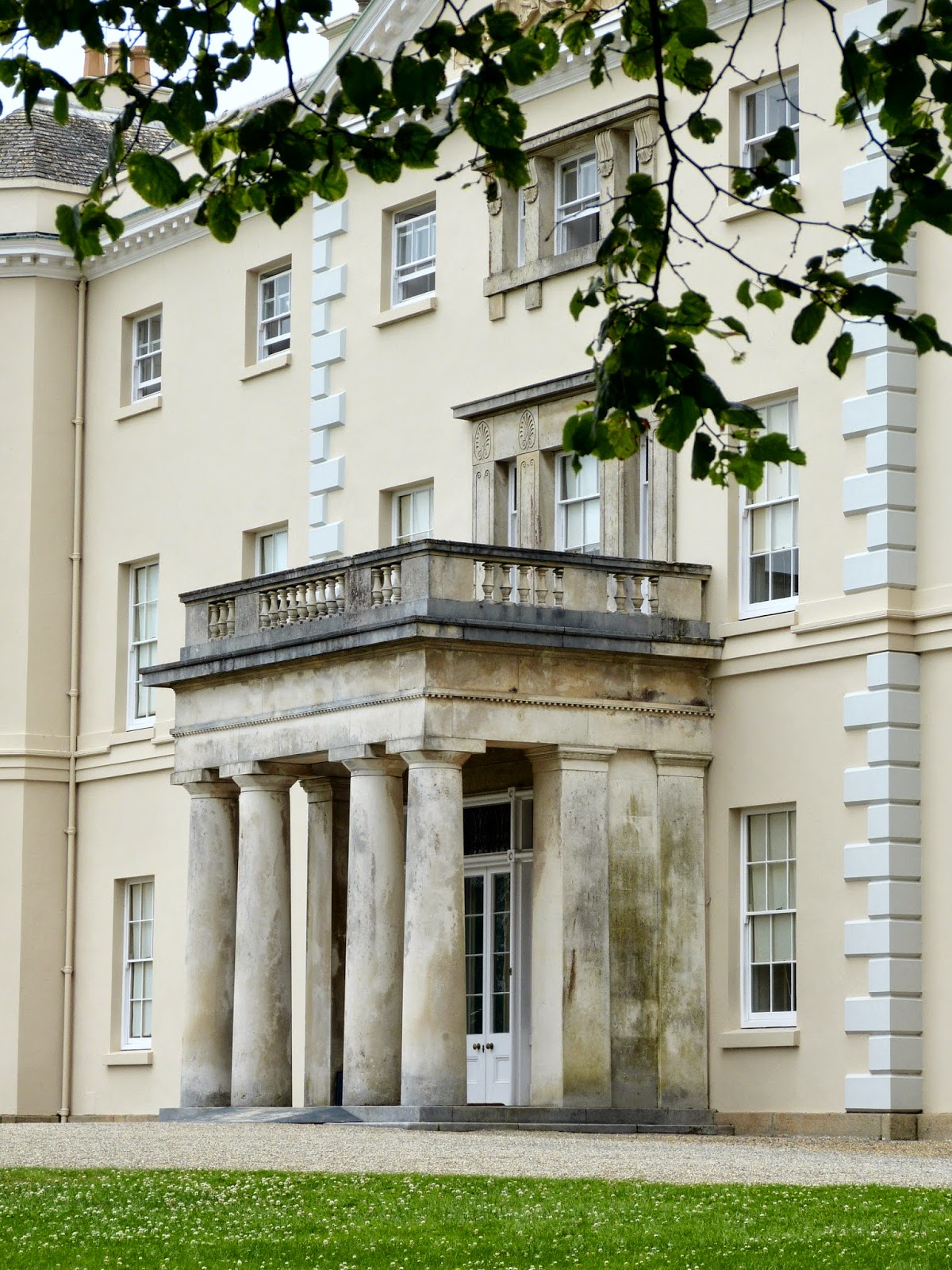
The entrance to Saltram House

On his estates, Jack reclaimed areas of marshland at a cost of £15,000 in order to build a racecourse. He built a cast-iron toll bridge across the Laira and a shipbuilding yard at Cattedown for naval and commercial ships.

Jack owned the Cann slate quarries and built a canal and tramway which linked to the Plymouth and Dartmoor Tramway. These engineering projects were not always financially successful, and on his death, he left behind debts of £258,000.

Death

John died at Saltram on 14 March 1840. He was succeeded by his only surviving legitimate child, Edmund. Frances outlived her husband by 17 years and died at Saltram in 1857 after a short illness.

Headshot of Rachel Knowles author with sea in background(2021)
Rachel Knowles writes faith-based Regency romance and historical non-fiction. She has been sharing her research on this blog since 2011. Rachel lives in the beautiful Georgian seaside town of Weymouth, Dorset, on the south coast of England, with her husband, Andrew.

Find out more about Rachel's books and sign up for her newsletter here.

If you have enjoyed this blog and want to encourage us and help us to keep making our research freely available, please buy us a virtual cup of coffee by clicking the button below.


Notes
(1) Debrett’s gives date as 5 May 1772.
(2) From The early life of John Parker III - 1st Earl of Morley by AS Rayfield (2014). Rayfield refers to the schoolmaster by the name of Kyte rather than Whyte.
(3) Rayfield gives date as 1791.
(4) Rayfield says 22nd.

Sources used include:
Courthope, William, editor, Debrett's Complete Peerage of the United Kingdom of Great Britain and Ireland (1838)
Evans, Sian, Saltram (National Trust 2012)
Fletcher, Ronald, The Parkers at Saltram 1769-1789 (BBC 1970)
Norgate, G Le G, rev Matthew, HCG, Parker, John, first earl of Morley (1772-1840) Oxford Dictionary of National Biography (Oxford University Press, 2004; online edn May 2009, accessed 21 July 2014)
Rayfield, AS, The early life of John Parker III - 1st Earl of Morley (Blog, 2014)
Viveash, Chris, Lady Morley and the ‘Baron so Bold’, from the Journal of the Jane Austen Society of North America – Persuasions #14 (1992)

All photographs © Andrew Knowles - RegencyHistory.net

Friday, 26 October 2012

Henrietta Ponsonby, Countess of Bessborough (1761-1821)

Harriet, Lady Bessborough
from La Belle Assemblée (1810)
Profile

Harriet, Lady Bessborough (16 June 1761 - 11 November 1821), was the younger sister of Georgiana, Duchess of Devonshire. She was a leading figure in society and notorious for her affairs with Richard Brinsley Sheridan and Lord Granville Leveson-Gower.
 
Early life

Henrietta Frances Spencer was born in Wimbledon, Surrey, on 16 June 1761, the second daughter of John Spencer, 1st Earl Spencer and Lady Margaret Poyntz. Henrietta, known as Harriet, was tall and attractive, but lived in the shadow of her elder sister, Georgiana, who became the Duchess of Devonshire at the age of seventeen.

An unwise marriage 

Harriet was passionately attached to Georgiana and this encouraged her to choose Frederick Ponsonby, Viscount Duncannon, the Duke’s cousin, as her husband, even though she was unsure of his character. They were married on 27 November 1780 and quickly became part of the Devonshire House set, with its dissolute habits.

Harriet became addicted to gambling and amassed thousands of pounds of debt that she could not afford to pay. Duncannon proved to be an abusive husband, desperate to get his hands on Harriet’s financial settlement, and frequently Harriet had to turn to her family for help. They had four children, John William (1781), Frederick Cavendish (1783), Caroline (1785) and William (1787).

Whig canvassing

In 1784, she canvassed for votes for the Whig leader, Charles James Fox, alongside her sister Georgiana, in the Westminster Election. Although their actions were similar, it was Georgiana who was ridiculed in the press, no doubt because of her greater position of popularity and importance in the ton. In the 1788 by-election, Harriet canvassed for the Whigs again; Georgiana stayed at home.

Affairs of the heart

Harriet was unhappy in her marriage and jealous of Lady Elizabeth Foster’s influence over Georgiana. She embarked upon an affair with Charles Wyndham, one of the Devonshire House set, but was prevented from eloping with him by her brother and mother. They successfully persuaded her to drop the connection before her husband found out.

But this did not stop her indulging in other affairs. In 1788, Richard Brinsley Sheridan, the playwright and MP, became Harriet’s lover. The affair almost ended in divorce, but the Duke of Devonshire, with all the weight of the Cavendish family behind him, induced Harriet's husband to drop proceedings. He then insisted that the Duncannons visit him and Georgiana in Brussels, in order to avoid any possibility of further problems with Sheridan.

Years later, in 1805, Sheridan became obsessed with Harriet, causing her great distress by pressing his attentions on her in public.

Richard Brinsley Sheridan
from The Creevey Papers (1904)
Speculation and collapse

In 1791, Harriet and her sister were involved in a financial scandal. They had speculated in a risky share syndicate which failed. Both lost large sums of money.

At the same time, Harriet’s health collapsed. She had some kind of stroke which left her paralysed down one side and subject to fits. There has been much speculation as to the cause of this illness. It may have been as a result of a miscarriage or possibly an attempted abortion. Alternatively, it may have been caused by attempted suicide or ill treatment at her husband’s hands, which may in turn have been a response to her financial losses.

Bath

Whist still suffering from partial paralysis, Harriet caught bronchial pneumonia, and it looked as if she would not survive. Although the Duke was on bad terms with his wife over her enormous debts, he showed compassion on her and her ailing sister by renting a house in Bath for them and all their children to live in, so that Harriet could benefit from taking the waters.

Entrance to the Royal Baths, Bath
The exile party

But in the autumn of 1791, the situation changed drastically. Georgiana was sent abroad by the Duke in disgrace: she was pregnant with her lover’s child. This coincided with recommendations that Harriet visit a warmer climate to aid her recovery, providing a useful cover story for the party, which included Georgiana, Lady Spencer, Lady Elizabeth Foster and the Duncannons.

They travelled to Montpellier, where Georgiana had her baby, and then through southern France and Switzerland to Italy, where it was hoped that the warm, dry air would help Harriet’s lungs.

Countess of Bessborough

On 11 March 1793, Duncannon’s father died and he became 3rd Earl of Bessborough. He left Harriet, who was still far from well, in Naples, and returned to London.

Lord Granville

The Duke finally allowed Georgiana to return home in September 1793, but Harriet was too ill to travel and stayed with her mother in Naples. However, Lady Spencer’s presence did not prevent her from falling in love again.

When Harriet returned to England a year later, fully recovered save a weakness in her legs which necessitated the use of walking sticks, she was embroiled in the most serious love affair of her life. This time the object of her affections was Lord Granville Leveson-Gower, a handsome young man, twelve years her junior, who was both politically ambitious and very prone to falling in love.

Lord Granville Leveson-Gower
    from Lord Granville's
Private Correspondence
(1916)

Secret births

Harriet had two children by Lord Granville, Harriette Arundel Stewart (1800) and George Arundel Stewart (1802), to whom she gave birth in secret and then placed with foster parents. It was a source of great sorrow to her that she could never openly acknowledge these children as her own.

A volatile daughter

Harriet was an affectionate parent and worried about her emotionally volatile daughter, Caroline. She failed to dissuade her from marrying William Lamb in 1805. Lady Caroline Lamb’s public love affair with Byron, and extreme behaviour after it ended, was one of the greatest scandals of the day.

A dreadful bereavement

By 1805, Harriet’s health had started deteriorating. She wrote to Lord Granville that he would find her “quite a cripple” because she had “grown very lame again”.1
 
In 1806, Georgiana became seriously ill and died. Harriet was devastated. She wrote to Lord Granville: “Anything so horrible, so killing, as her three days’ agony no human being ever witness’d.”2

Georgiana Cavendish in the "picture hat"
after Thomas Gainsborough c1785-7
  from The Two Duchesses,
 Family Correspondence (1898)
Lord Granville's marriage

On Christmas Eve 1809, Lord Granville married Harriet’s niece, Georgiana’s daughter Harryo. The letters exchanged between Lord Granville and Harriet at the time suggest that, though it must surely have been painful, Harriet had encouraged the match. However, she later doubted whether Granville had ever really loved her and their previous intimacy must have caused considerable awkwardness in the family.

Ironically, the Prince of Wales chose to champion Harriet at this time, abusing Lord Granville to her face for his inconstancy and throwing himself at Harriet’s feet until she could talk him back to reason!

The final years

Harriet remained a popular figure in society, but found the greatest enjoyment in her family. She often stayed with her sons and their families, and it was while she was visiting William in Florence, Italy, that she died, on 11 November 1821. Harriet was buried in the Cavendish family vault in All Saints Church, Derby.

Notes
1. From a letter from Harriet to Lord Granville 10 August 1805.
2. From an undated letter from Harriet to Lord Granville after her sister's death.

Sources used include:
Bell, John, La Belle Assemblée (John Bell, 1810, London)
Bourke, Hon. Algernon, The History of White's (1892)
Cavendish, Georgiana, Duchess of Devonshire and others, The Two Duchesses, Family Correspondence, ed by Vere Foster (Blackie & Son, 1898, London)
Creevey, Thomas, The Creevey Papers, A selection from the correspondence & diaries of the late Thomas Creevey, MP, ed by Sir Herbert Maxwell (John Murray, 1904, London)
Foreman, Amanda, Georgiana, Duchess of Devonshire (HarperCollins, 1998, London)
Foreman, Amanda, Ponsonby, Henrietta Frances, Countess of Bessborough (1761-1821) Oxford Dictionary of National Biography, Oxford University Press, 2004; online edn Jan 2008, accessed 14 Oct 2012)
Leveson-Gower, Lord Granville, Private correspondence 1781-1821, ed by Castalia, Countess Granville (John Murray, 1916, London)

 All photographs © regencyhistory.net