Search this blog

Showing posts with label Spencer Perceval. Show all posts

Wednesday, 29 April 2015

The Prime Ministers of George IV's Regency (1811-20) and reign (1820-30)

Prime Ministers of George IV
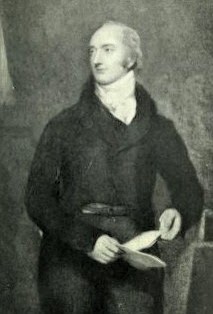
Left to right: Lord Liverpool, George Canning,
Viscount Goderich, Duke of Wellington (2)
As Prince of Wales, George IV was a strong supporter of the Whig party and had many friends amongst their ranks including Charles James Fox and Richard Brinsley Sheridan. Fox’s support of the French Revolution forced the Prince to distance himself from the Whigs and after Fox’s death in 1806, George’s loyalty to the Whig cause disappeared completely.

By the time he was made Regent in 1811, George was happy to keep his father’s Tory Prime Minister, Spencer Perceval. When he became King, the situation did not change. George IV had four Prime Ministers during his ten-year reign—all Tories.


Find my guide to the Prime Ministers of George III here and William IV here.

Prime Ministers during the Regency (1811-1820)

Spencer Perceval 
Tory – 1809-1812
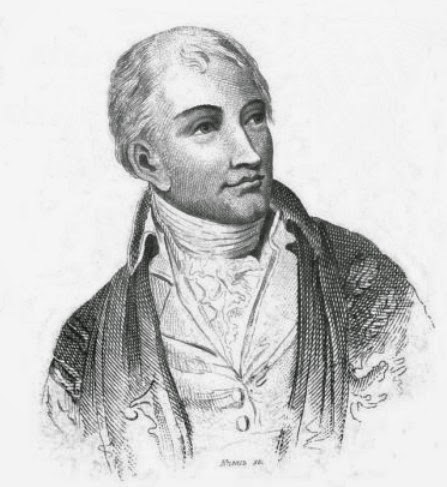
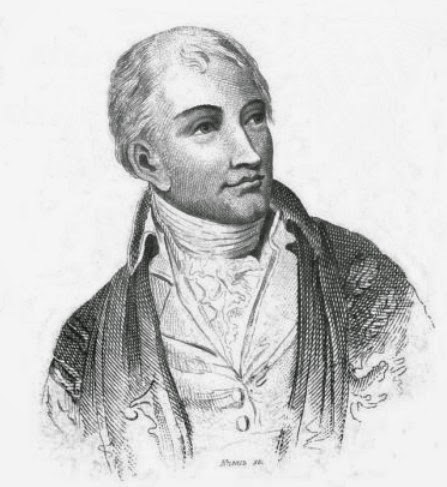
Spencer Perceval,  from The Life and Administration of the Right Hon Spencer Perceval  by Charles Williams (1813)
Spencer Perceval,
from The Life and Administration
of the Right Hon Spencer Perceval

by Charles Williams (1813)
Read about Spencer Perceval's assassination here.

Robert Banks Jenkinson, Earl of Liverpool
Tory – 1812-1827

Lord Liverpool, from the   European Magazine and London Review (1818)
Lord Liverpool, from the 
European Magazine and London Review (1818)
George IV’s Prime Ministers (1820-1830)

Robert Banks Jenkinson, Earl of Liverpool
Tory – 1812-1827

Lord Liverpool, from the   European Magazine and London Review (1818)
Lord Liverpool
(details as above)
George Canning 
Tory – 1827

George Canning from The Creevey  Papers by Thomas Creevey (1912)
George Canning from The Creevey
Papers by Thomas Creevey (1912)
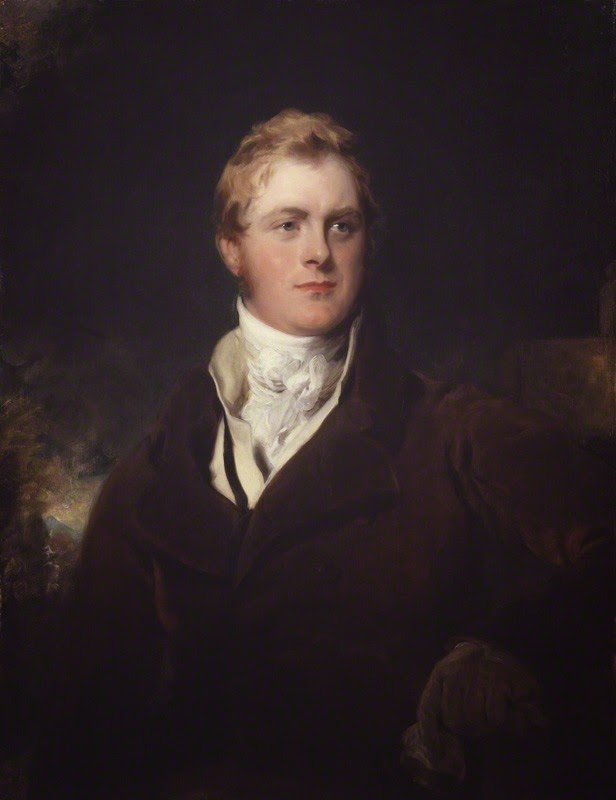
Frederick John Robinson, 1st Earl of Ripon (Viscount Goderich)
Tory – 1827-8

Frederick John Robinson,  1st Earl of Ripon, by Sir Thomas Lawrence  oil on canvas (c1824) © NPG 4875
Frederick John Robinson,
1st Earl of Ripon, by Sir Thomas Lawrence
oil on canvas (c1824) © NPG 4875 (1)
Arthur Wellesley, 1st Duke of Wellington
Tory – 1828-30

Arthur Wellesley, 1st Duke of Wellington  by Robert Home oil on canvas (1804)  © NPG 1471 (1)
Arthur Wellesley, 1st Duke of Wellington
by Robert Home oil on canvas (1804)
© NPG 1471 (1)
Notes
(1) These pictures are © National Portrait Gallery and are displayed under a Creative Commons licence.
(2) Source details of pictures in collage: Lord Liverpool, from the European Magazine and London Review (1818); George Canning and Viscount Goderich from The Georgian Era by Clarke (1832); Duke of Wellington from Life of the Field Marshal, his Grace the Duke of Wellington by James Edward Alexander (1840).

Sources used include:
Government website - past Prime Ministers
National Portrait Gallery website

Tuesday, 28 April 2015

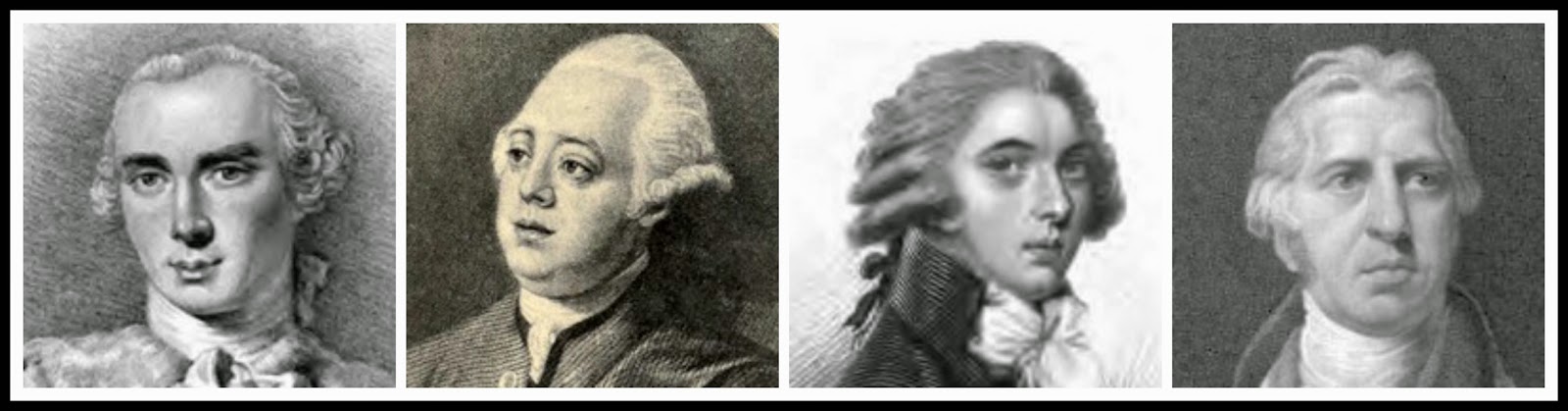
The Prime Ministers of George III (1760-1820)

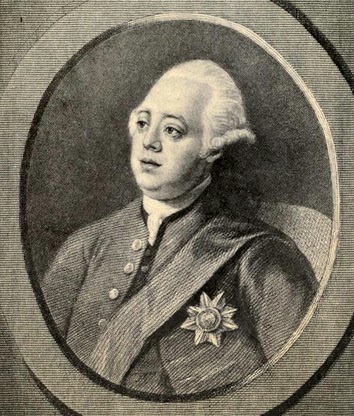
4 Prime Ministers of George III  From left to right: Lord Bute, Lord North,William Pitt the Younger, Lord Liverpoo
Four of the Prime Ministers of George III
Left to right: Lord Bute, Lord North,William Pitt the Younger, Lord Liverpool (2)
George III is still the longest reigning British King, ruling from 1760 to 1820. He had 14 different Prime Ministers over those 60 years—six Tories and eight Whigs. They included two pairs of fathers and sons: William Pitt the Elder and his son William Pitt the Younger, and George Grenville and his son William Wyndham Grenville. They also included the only British Prime Minister ever to be assassinated—Spencer Perceval.

Find my guides to the Prime Ministers of George IV here and William IV here.

George III's Prime Ministers

Thomas Pelham-Holles, 1st Duke of Newcastle
Whig – 1757-1762

Thomas Pelham-Holles,  1st Duke of Newcastle-under-Lyne  by William Hoare (c1752) © NPG 757 (1)
Thomas Pelham-Holles,
1st Duke of Newcastle-under-Lyne
Pastel by William Hoare (c1752)
© NPG 757 (1)
John Stuart, 3rd Earl of Bute
Tory – 1762-1763

Lord Bute from The Historical and Posthumous Memoirs of Sir Nathaniel Wraxall (1884)
Lord Bute from The Historical and Posthumous
Memoirs of Sir Nathaniel Wraxall (1884)
George Grenville
Whig – 1763-1765

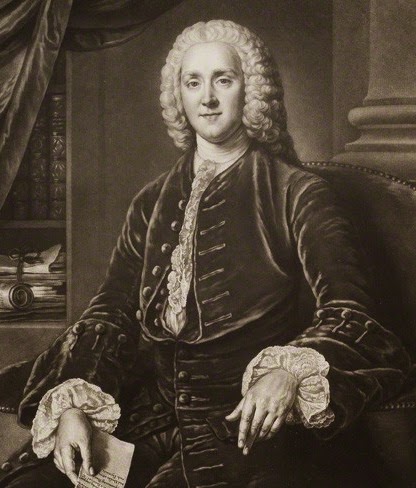
George Grenville  by and published by Richard Houston  after William Hoare mezzotint (c1750-75)  © NPG D20047 (cropped) (1)
George Grenville
by and published by Richard Houston
after William Hoare mezzotint (c1750-75)
© NPG D20047 (cropped) (1)
Charles Watson-Wentworth, 2nd Marquess of Rockingham
Whig – 1765-1766

Charles Watson-Wentworth,2nd Marquess  of Rockingham after Sir Joshua Reynolds,  oil on canvas, feigned oval (c1768)  © NPG 406 (1)
Charles Watson-Wentworth, 2nd Marquess
of Rockingham, after Sir Joshua Reynolds,
oil on canvas, feigned oval (c1768)
© NPG 406 (1)
William Pitt the Elder, 1st Earl of Chatham
Whig – 1766-1768

William Pitt, 1st Earl of Chatham,  studio of William Hoare, oil on canvas (c1754)  © NPG 1050 (1)
William Pitt, 1st Earl of Chatham,
studio of William Hoare, oil on canvas (c1754)
© NPG 1050 (1)
Augustus Henry Fitzroy, 3rd Duke of Grafton
Whig – 1768-1770

Augustus Henry Fitzroy, 3rd Duke of Grafton,  by Pompeo Batoni, oil on canvas,   feigned oval (1762) © NPG 4899
Augustus Henry Fitzroy, 3rd Duke of Grafton,
by Pompeo Batoni, oil on canvas,
feigned oval (1762) © NPG 4899 (1)
Lord Frederick North, 2nd Earl of Guildford
Tory – 1770-1782

Frederick, Lord North,  from The Last Journals of Horace Walpole (1910)
Frederick, Lord North,
from The Last Journals of Horace Walpole (1910)
Charles Watson-Wentworth, 2nd Marquess of Rockingham
Whig – 1782 (2nd term of office)

Charles Watson-Wentworth, 2nd Marquess  of Rockingham, after Sir Joshua Reynolds,  oil on canvas, feigned oval (c1768)  © NPG 406 (1)
Charles Watson-Wentworth,
2nd Marquess of Rockingham
(Details as above)
William Petty, 1st Marquess of Lansdowne (Lord Shelburne)
Whig – 1782-1783

William Petty, 1st Marquess of Lansdowne,  (Lord Shelburne) after Sir Joshua Reynolds  oil on canvas 1766 © NPG43 (1)
William Petty, 1st Marquess of Lansdowne,
(Lord Shelburne) after Sir Joshua Reynolds
oil on canvas (1766) © NPG 43 (1)
William Henry Cavendish Bentinck, 3rd Duke of Portland
Whig – 1783

William Henry Cavendish Bentinck,   3rd Duke of Portland, by William Evans   after Sir Joshua Reynolds, stipple engraving  pub 1811 ©NPG D31637 (Cropped & lightened) (1)
William Henry Cavendish Bentinck,
3rd Duke of Portland, by William Evans
after Sir Joshua Reynolds, stipple engraving
pub 1811 ©NPG D31637 (Cropped & lightened) (1)
William Pitt the Younger 
Tory – 1783-1801

William Pitt the Younger from Posthumous Memoirs of his own time by N Wraxall (1836)
William Pitt the Younger
from Posthumous Memoirs of his own time
by N Wraxall (1836)
Henry Addington, 1st Viscount Sidmouth 
Tory – 1801-1804

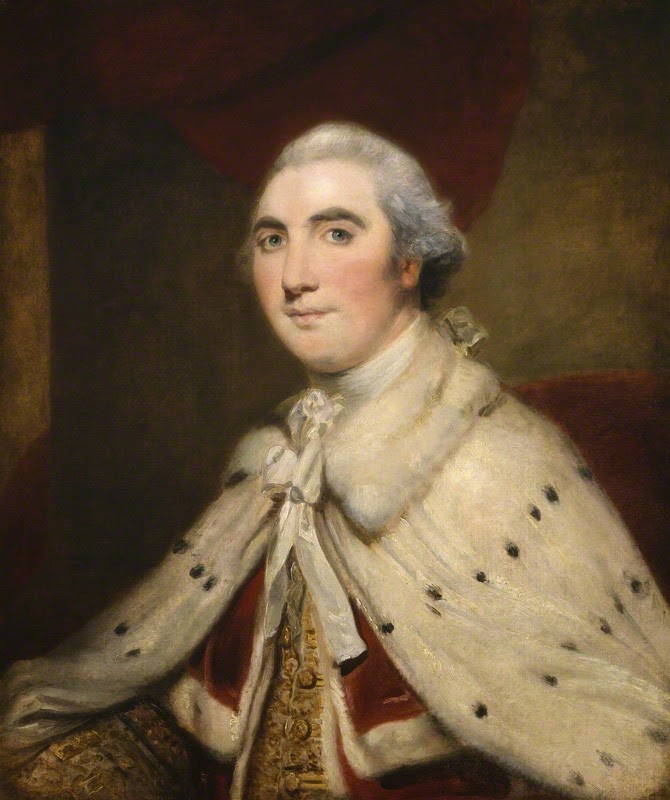
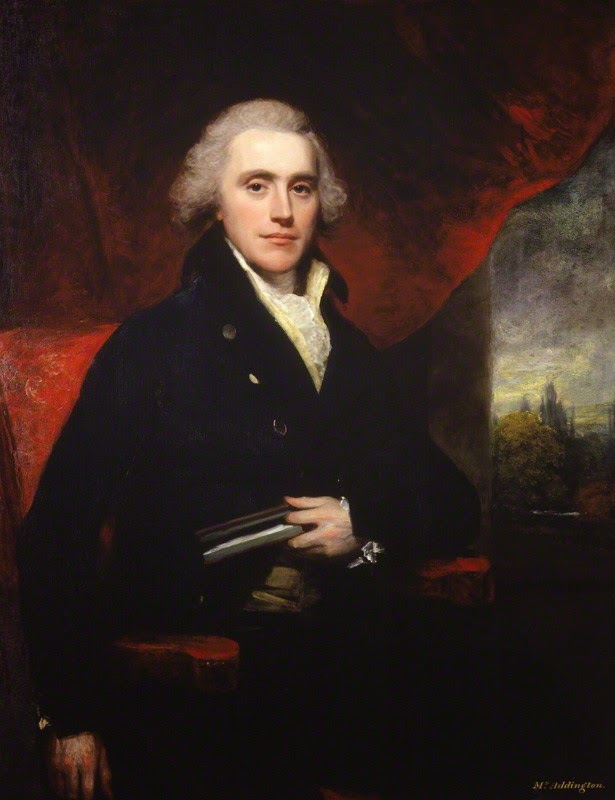
Henry Addington, 1st Viscount Sidmouth  by Sir William Beechey, oil on canvas  engraved 1803 © NPG 5774 (1)
Henry Addington, 1st Viscount Sidmouth
by Sir William Beechey, oil on canvas
engraved 1803 © NPG 5774 (1)
William Pitt the Younger 
Tory – 1804-1806 (2nd term of office)

William Pitt the Younger from Posthumous Memoirs of his own time by N Wraxall (1836)
William Pitt the Younger
(details as above)
William Wyndham Grenville, 1st Baron Grenville
Whig – 1806-1807

William Wyndham Grenville,  1st Baron Grenville by John Hoppner  oil on canvas (c1800)  © NPG318 (lightened) (1)
William Wyndham Grenville,
1st Baron Grenville by John Hoppner
oil on canvas (c1800)
© NPG 318 (1)
William Henry Cavendish Bentinck, 3rd Duke of Portland
Whig – 1807-1809 (2nd term of office)

William Henry Cavendish Bentinck,  3rd Duke of Portland, by William Evans  after Sir Joshua Reynolds, stipple engraving  pub 1811 ©NPG D31637 (Cropped & lightened) (1)
William Bentinck, 3rd Duke
of Portland (details as above)
Spencer Perceval
Tory – 1809-1812

Spencer Perceval,  from The Life and Administration of the Right Hon Spencer Perceval  by Charles Williams (1813)
Spencer Perceval,
from The Life and Administration
of the Right Hon Spencer Perceval

by Charles Williams (1813)
Read about Spencer Perceval's assassination here. 

Robert Banks Jenkinson, 2nd Earl of Liverpool 
Tory – 1812-1827

Lord Liverpool, from the   European Magazine and London Review (1818)
Lord Liverpool, from the 
European Magazine and London Review (1818)
Notes
(1) These pictures are © National Portrait Gallery and are displayed under a Creative Commons licence.
(2) For source details of pictures in collage, see under the relevant Prime Minister above.

Sources used include:
Government website - past Prime Ministers
National Portrait Gallery website

Friday, 11 May 2012

The Assassination of Spencer Perceval 11 May 1812

Spencer Perceval,  from The Life and Administration of the  Right Hon. Spencer Perceval  by Charles Williams (1813)
Spencer Perceval from The Life and Administration of the
Right Hon. Spencer Perceval by Charles Williams (1813)
On 11 May 1812, Spencer Perceval was assassinated. He remains the only British Prime Minister to have been assassinated.

A difficult political situation

Spencer Perceval became First Lord of the Treasury in 1809 when the Duke of Portland’s health made it impossible for him to continue leading the government. He was not the King’s first choice, but such was the division in the government at the time that many of the politicians refused to serve with one another. Perceval was eventually chosen to form a cabinet, effectively making him Prime Minister. He also kept the role of Chancellor of the Exchequer as no one else would accept it.

The assassination

The June 1812 issue of La Belle Assemblée included a long account of the assassination of Perceval and subsequent trial of his murderer. It gave the following account of the assassination:
On the 11th May, about a quarter past five, as the Right Honourable Spencer Perceval, Chancellor of the Exchequer and First Lord of the Treasury &c. &c. was entering the lobby of the House of Commons, he was shot by a person of the name of Bellingham, who had place himself for that purpose at the side door leading from the stone staircase. Mr Perceval was in company with Lord F Osborne, and immediately on receiving the Ball, which entered the left breast, he staggered and fell at the feet of Mr W Smith, MP for Norwich, who was standing near the second pillar. The only words he uttered were – “Oh! I am murdered,” and the latter was inarticulate, the sound dying between his lips. He was instantly taken up by Mr Smith, who did not recognise him until he had looked in his face. The report of the pistol immediately drew great numbers to the spot, who assisted Mr Smith in conveying the body of Mr Perceval into the Speaker’s apartments, but before he reached them, all signs of life had departed.1
The assassin

John Bellingham, a disgruntled bankrupt, shot Perceval as the figurehead of the government which he held responsible for his financial misfortune. Had he been of a mind to escape, he probably could have done so, as little attention was paid him in the furore surrounding the fallen Perceval. However, such was not his intention. Bellingham was arrested, tried at the Old Bailey, pronounced guilty and sentenced to death.

Tribute to Perceval 

Before the death sentence was given, the Recorder spoke these words:
You have been guilty of the murder of a person whose suavity of manners disarmed hostility and rancour. By his death charity has been deprived of its warmest friend, and religion of its best support, and the country of its greatest ornament. A man whose public character and talents were capable of saving his country. The murder you have perpetrated in the midst of unarmed men, confiding in their innocence and the sacred functions vested in them by their country, and in the very sanctuary of the law.2
Spencer Perceval,  from The Georgian Era (1832)
Spencer Perceval
from The Georgian Era (1832)
This post was written on 11 May 2012 to celebrate the 200th anniversary of Spencer Perceval's assassination. 

Notes
1. Bell, John, La Belle Assemblée (May 1812)
2. Ibid.
Sources used include:
Bell, John, La Belle Assemblée (1812, London)
Clarke, The Georgian Era (Vizetelly, Branston and Co, 1832, London)
Williams, Charles, The Life and Administration of the Right Hon. Spencer Perceval (1813)