Search this blog

Showing posts with label David Garrick. Show all posts

Wednesday, 3 December 2014

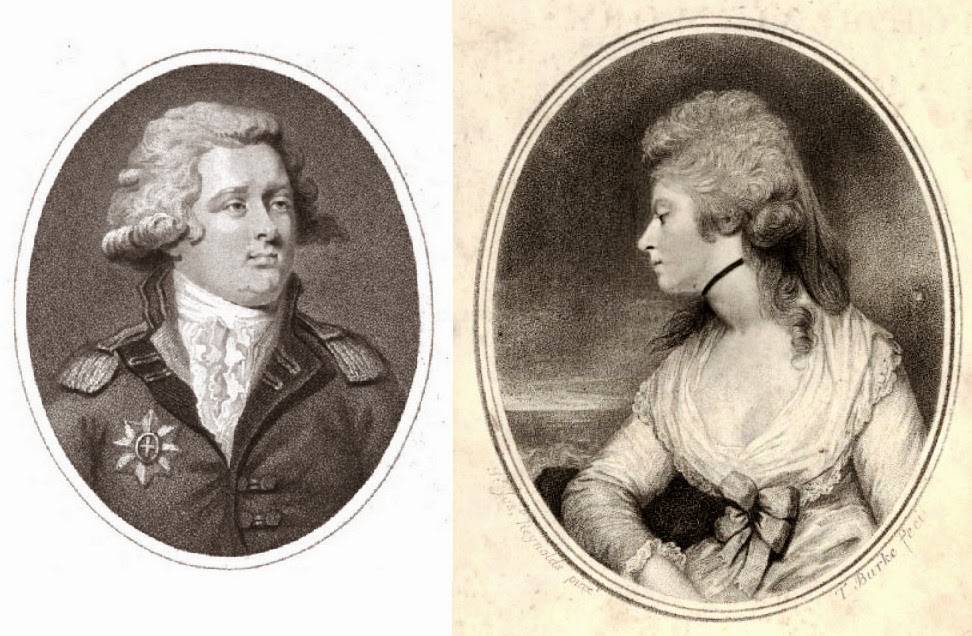
Perdita and Florizel - Mary Robinson's affair with the Prince

Left: Florizel - George, Prince of Wales from The Lady's Magazine (1792)  Right: Perdita - Mary Robinson from The Poetical Works of   the late Mrs Mary Robinson (1806)
Left: Florizel - George, Prince of Wales from The Lady's Magazine (1792)
Right: Perdita - Mary Robinson from The Poetical Works of 
the late Mrs Mary Robinson (1806)
Who was Perdita?

On Saturday 20 November 1779, Mary Robinson first played the part of Perdita at the Theatre Royal, Drury Lane. Perdita was the female lead in Perdita and Florizel, David Garrick’s adaptation of the last two acts of Shakespeare’s A Winter’s Tale.

Rather than the flowing pretty dress usually worn by Perdita, Mary sported a closely fitted jacket with the red ribbons of a common milkmaid. Although this costume was criticised in some of the papers, it undoubtedly contributed to Mary’s success.

Mary Robinson

Mary had been about to launch her theatrical career in 1773 but had been persuaded to get married instead. Her husband was Thomas Robinson, an indigent solicitor’s clerk, who had lied about his future prospects. The couple lived beyond their means and, desperate for money, Robinson agreed to Mary becoming an actress.

Richard Brinsley Sheridan engaged Mary to perform at his theatre in Drury Lane. David Garrick, who had coached her for her 1773 debut that had never taken place, loyally came out of retirement to prepare her for the part of Juliet. Mary gave her first performance on 10 December 1776 to widespread acclaim.

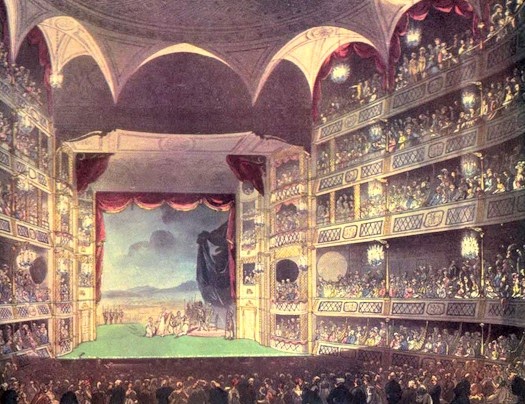
Theatre Royal, Drury Lane, from The Microcosm of London (1808-10)
The royal command performance

Perdita and Florizel was well-received and the King commanded a royal performance which took place on 3 December 1779. The King’s eldest son, George, Prince of Wales, accompanied his parents to the theatre. The royal box was very close to the stage and gave the 17-year-old Prince a close view of the actors on the stage and in the wings.

George IV from Huish's Memoirs of her late royal highness Charlotte Augusta (1818)
George IV
from Huish's Memoirs of her late
royal highness Charlotte Augusta (1818)
George made flattering comments that were loud enough for Mary to hear whilst Mary performed her lines as if for the Prince alone. George was dazzled. The next morning, he declared to his confidante Mary Hamilton, one of the ladies in waiting at court, that he had fallen madly in love with Mary Robinson.

Florizel in love

Adopting the name Florizel, the Prince started a passionate correspondence with ‘Perdita’. His friend, George Capel, Viscount Malden, acted as messenger, urging Mary to meet the Prince. Mary wrote back, encouraging the Prince to be patient and offering sisterly advice.

Writing table at Hampton Court Palace
Although for many months, George’s affair with Mary was no more than a passionate correspondence, the press was quick to comment on their relationship.

In order to quash this unfavourable publicity and comply with the Prince’s wishes, Mary agreed to leave the theatre. On 31 May 1780, she gave her farewell performance, playing the cross-dressed part of Eliza/Sir Harry Revel in The Miniature Picture and Widow Brady in The Irish Widow.

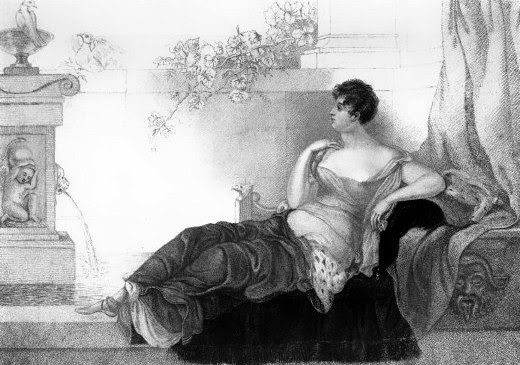
Mrs Robinson - the celebrated Perdita  from The Memoirs of George IV by R Huish (1830)
Mrs Robinson - the celebrated Perdita
from The Memoirs of George IV by R Huish (1830)
Reputation at risk

The Prince continued to push for a meeting. Mary knew that she was risking her entire reputation if she agreed. It was not until George enclosed a bond for £20,000 to be paid on his reaching his majority in one of his letters that Mary eventually agreed to an assignation.

George and Mary probably did not meet until as late as June 1780. The chosen venue was Kew, near to the house where the Prince lived with the Duke of York. Over the next few months, they met many times at Kew, either in the gardens or at one of the servants’ houses or at the inn on nearby Eel Pie Island in the River Thames.

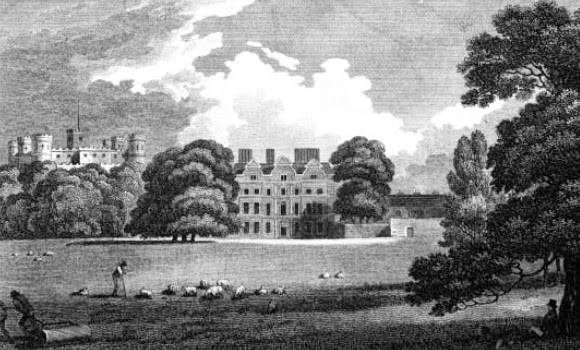
The Old Palace at Kew  from Memoirs of HM Sophia Charlotte of Mecklenburg Strelitz, Queen of Great Britain, by WM Craig (1818)
The Old Palace at Kew
from Memoirs of HM Sophia Charlotte of Mecklenburg Strelitz,
Queen of Great Britain
, by WM Craig (1818)
Celebrity status

Mary’s relationship with the Prince pushed her into the limelight even more than her acting career had done. People were interested in what she wore and where she went. She had become a Georgian celebrity!

The Prince established Mary in a house in Cork Street where she lavishly entertained him and his male friends. She wore a miniature of George around her neck and paraded around town in a variety of carriages. One carriage in particular was emblazoned with her initials encircled by a wreath of rosebuds which at a distance gave the appearance of a royal coronet.

Vauxhall by T Rowlandson  - Mary is on the right in a white dress with the Prince of Wales  at her side © British Museum
Vauxhall by T Rowlandson
- Mary is on the right in a white dress with the Prince of Wales
at her side © British Museum
The end of the affair

Mary continued to receive bad press. Cartoons were printed lampooning the Prince and his lover. There was outrage when Mary had dared to take a side box at the Opera House as if she was one of the nobility and not merely a courtesan. There was an unfortunate incident at Covent Garden where Mary flew into a rage on finding her husband with another woman. The King did not like all the bad publicity and wanted the affair finished, promising George his own establishment.

Opera House from The Microcosm of London (1808-10)
The Prince’s interest began to wane. The bad press was uncomfortable and George doubted Mary’s faithfulness to him. And with good cause; Mary was intimately involved with his friend, Lord Malden. By the end of 1780, Mary’s charms had been superseded by those of the courtesan, Elizabeth Armistead. All at once, it was over. Mary did not see it coming.

The price of a reputation

Mary was determined not to go quietly. She had been living expensively and had massive debts. The Prince’s desertion was disastrous. She had a large number of the Prince’s love letters which she threatened to publish, using them as leverage in negotiations to compensate her for the loss of her reputation and her career. Eventually Mary agreed to give up the letters in return for £5,000 and the promise of an annuity.

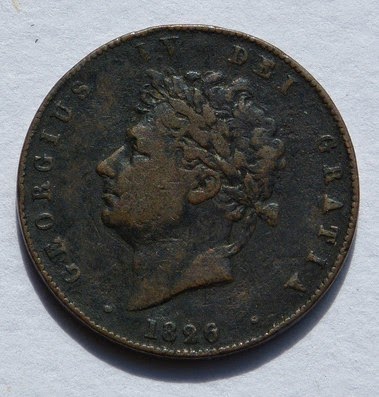
George IV coin
George IV coin (2012)
The papers continued to link their names together for years, perhaps encouraged by Mary’s persistence in wearing the Prince’s miniature, now encrusted with diamonds, around her neck.

It is a sad reflection that Mary Robinson, an acclaimed actress and later a feminist writer and poet, is remembered today for her brief affair with the Prince of Wales and not for her other achievements.

Headshot of Rachel Knowles author with sea in background(2021)
Rachel Knowles writes clean/Christian Regency era romance and historical non-fiction. She has been sharing her research on this blog since 2011. Rachel lives in the beautiful Georgian seaside town of Weymouth, Dorset, on the south coast of England, with her husband, Andrew.

Find out more about Rachel's books and sign up for her newsletter here.

If you have enjoyed this blog and want to encourage me and help me to keep making my research freely available, please buy me a virtual cup of coffee by clicking the button below.


Sources used include:
Ackermann, Rudolph, and Pyne, William Henry, The Microcosm of London or London in miniature (1808-1810, reprinted 1904)
Byrne, Paula, Perdita, the life of Mary Robinson (2004)
Huish, Robert, Memoirs of George IV (1830)
Levy, Martin J, Robinson, Mary (Perdita) (1756/8-1800) Oxford Dictionary of National Biography (Oxford University Press, 2004; online edn Jan 2008, accessed 2 July 2013)
Robinson, Mrs Mary, The Poetical Works of the late Mrs Mary Robinson: including many pieces never before published (1806)

All photographs © RegencyHistory.net

Thursday, 17 April 2014

Mary 'Perdita' Robinson (1757-1800)

Mrs Mary Robinson by Sir Joshua Reynolds (1783-4) © The Wallace Collection; Photo © Andrew Knowles
Mrs Mary Robinson by Sir Joshua Reynolds (1783-4)
© The Wallace Collection
Profile

Mary Robinson (27 November 1757 – 26 December 1800) was an actress and author, famous for being the first mistress of the young George IV.

Family background

Mary Darby was born in Bristol on 27 November 1757, the daughter of Nicholas Darby, a merchant sailor, and his wife Hester, who was thought to have married beneath her.1 Mary had two brothers, John and George, who survived into adulthood.

Mary was educated in Bristol, at a school run by Hannah More and her sisters. In 1765, Darby left to try to establish fisheries on the Labrador coast. The enterprise failed and they were forced to sell the family home. Mary’s parents separated and Mary went to live in London with her mother.

Marriage or the stage

Mary was introduced to David Garrick who coached her for the stage. But before Mary’s theatrical career could get started, she was persuaded to marry Thomas Robinson, an articled clerk with good prospects. Robinson and Mary were married on 12 April 1773, but it soon transpired that Robinson had lied and his future prospects had been grossly exaggerated. He proved to be an unreliable and unfaithful husband.

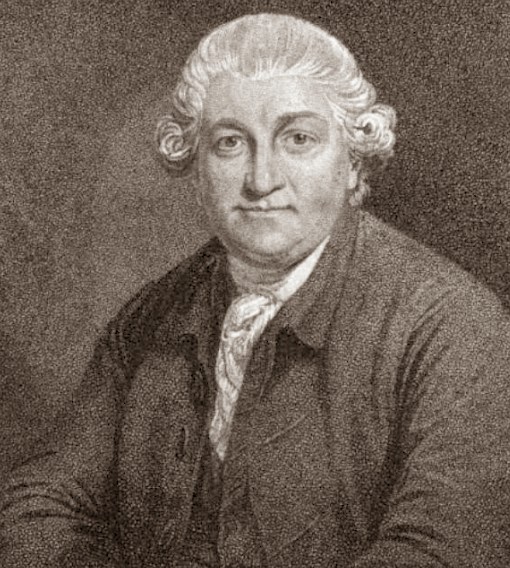
David Garrick  from Memoirs of the Life of David Garrick by T Davies (1808)
David Garrick
from Memoirs of the Life of David Garrick
 by T Davies (1808)
Motherhood

On 18 October 1774, Mary gave birth to a daughter, Maria Elizabeth, who was Mary’s constant companion for the rest of her life – her “adored and affectionate secondself”. A second daughter, Sophia, was born in May 1777, but died from convulsions as a baby.

Money problems

The Robinsons lived beyond their means and in May 1775, Robinson was arrested for debt. Mary and baby Maria spent 15 months in the Fleet Prison with him.

The Fleet Prison, from The Microcosm of London (1808-10)
Desperate for money, Robinson agreed that Mary should go on stage. She was engaged by Richard Brinsley Sheridan at the Drury Lane Theatre and Garrick loyally came out of retirement to coach her for the part of Juliet. On 10 December 1776, she gave her first performance and was an instant success.

Perdita and Florizel

Mary was very attractive with curly, dark auburn hair and soft blue eyes. George, Prince of Wales, became obsessed with her after seeing her in the role of Perdita in Florizel and Perdita, on 3 December 1779. The Prince embarked on a passionate correspondence, styling himself as Florizel to Mary’s Perdita.

George, Prince of Wales, by Hoppner © The Wallace Collection
George, Prince of Wales, later George IV
by Hoppner © The Wallace Collection
George and Mary became lovers after he gave her a bond for £20,000 to be paid on his majority. At the Prince’s urging and to help reduce the bad press they were getting, Mary gave up her career, performing for the last time on 31 May 1780. But by the end of the year, the affair was over. The fickle Prince had transferred his affections to the courtesan, Elizabeth Armistead.
Mary was deeply in debt and accepted £5,000 and the promise of an annuity in exchange for the Prince’s love letters.

Fashion leader

Mary’s relationship with the Prince pushed her to the forefront of the fashionable world. She introduced new styles from Paris and English designs were named for her, such as the Perdita – “a chip hat with a bow and pink ribbons puff’d round the crown” in spring 1781.2 Mary was also famous for her smart carriages.

Whig supporter

Mary was an ardent Whig and supporter of Charles James Fox, both on the streets like the Duchess of Devonshire, campaigning for the Whigs in the 1784 general election, and through her poetry.

 
Charles James Fox from The Historical and Posthumous Memoirs of Sir Nathaniel Wraxall (1884)
Charles James Fox
from The Historical and Posthumous Memoirs
of Sir Nathaniel Wraxall (1884)
Mary’s lovers

Mary was continually propositioned by gentlemen including Lord Lyttelton and George Fitzgerald, who Mary claimed tried to abduct her from Vauxhall. As well as the Prince, Mary’s name was linked with several other prominent figures including Viscount Malden, the Duke of Lauzun, Charles James Fox and Colonel Banastre Tarleton.

Colonel Banastre Tarleton

Lieutenant Colonel Banastre Tarleton  Print by M Rosenthal after C Blackberd (1885)  © British Museum
Lieutenant Colonel Banastre Tarleton
Print by M Rosenthal after C Blackberd (1885)
© British Museum
Mary’s most enduring relationship was with Colonel Banastre Tarleton, the love of her life, which lasted, on and off, from 1782 until 1797. Their affair was passionate but stormy. Tarleton was expensive and a gambler and they were always short of money.

In 1783, Mary became pregnant with Tarleton’s child. Fearing that he was deserting her and fleeing the country to escape his debts, Mary pursued him through the night. As a result, she lost her baby and became extremely ill with a rheumatic fever which left her lame for the rest of her life.3

This time, she and Tarleton were reunited, but in 1797, he left her permanently and afterwards married Susan Bertie, an heiress of £20,000.

Mary the writer

Mary Robinson  from an engraving by Smith after Romney  in Memoirs of Mary Robinson (1895)
Mary Robinson
from an engraving by Smith after Romney
in Memoirs of Mary Robinson (1895)
Mary’s illness forced her to adopt a new way of life. Back in 1775, she had published a book of her poems and gained the patronage of the Duchess of Devonshire. Now she dedicated herself to writing.

Mary wrote profusely. She published more volumes of her poetry and wrote for different publications, such as The World, The Oracle and The Morning Post, using pseudonyms, such as Laura, Tabitha Bramble and The Sylphid, as well as her own name. She published several novels with feminist undertones and a feminist essay. She also wrote two plays and an opera, but these were not successful.

Mary also composed her Memoirs.4 Although they were predisposed in her own favour, they nevertheless represent an early instance of an English writer’s autobiography.

Friends

Mary inspired devoted friendships. Amongst her close friends and supporters were Sir Joshua Reynolds, David Garrick, William Godwin, Mary Wollstonecraft and Samuel Taylor Coleridge.

Samuel Taylor Coleridge  from The Works of Samuel Taylor Coleridge (1840)
Samuel Taylor Coleridge
from The Works of Samuel Taylor Coleridge (1840)
Money problems

Despite her diligence, Mary’s income was low and her expenses high. Her lameness necessitated keeping a carriage and payment of the annuities from the Prince and Lord Malden were erratic. In 1800 she was arrested for debt but released soon after.

Illness and death

Mary struggled with poor health for the rest of her life and visited Bath, Brighton and continental health resorts in search of some amelioration for her sufferings. She lived at Englefield Cottage, in Old Windsor, with her daughter, where she still entertained a small group of intimate friends.

Mary died on 26 December 1800 and was buried in Old Windsor churchyard. Only two people attended the funeral: the satirist, John Wolcot, (who used the pseudonym ‘Peter Pindar’) and William Godwin.

Headshot of Rachel Knowles author with sea in background(2021)
Rachel Knowles writes clean/Christian Regency era romance and historical non-fiction. She has been sharing her research on this blog since 2011. Rachel lives in the beautiful Georgian seaside town of Weymouth, Dorset, on the south coast of England, with her husband, Andrew.

Find out more about Rachel's books and sign up for her newsletter here.

If you have enjoyed this blog and want to encourage me and help me to keep making my research freely available, please buy me a virtual cup of coffee by clicking the button below.

 
Notes
(1) There is some confusion over Mary’s birth year. Her gravestone and the printed version of her Memoirs state her birth date as 27 November 1758. However, there is a baptismal record in the church of St Augustine the Less in Bristol of a Polly Derby on 19 July 1758. If this was indeed Mary’s baptism, then she must have been born the year before, in 1757. In her Memoirs, Mary stated that she was married at the age of 15. This supports a birth year of 1757.
(2) From The Lady’s Magazine (1781).
(3) Martin Levy in his article for the Oxford Dictionary of National Biography wrote that Mary had a paralytic stroke at this time and suffered from rheumatism later in life.
(4) Memoirs of the Late Mrs Robinson written by herself were published posthumously by her daughter in 1801.

Sources used include:
Byrne, Paula, Perdita, the life of Mary Robinson (2004)
Davies, Thomas, Memoirs of the Life of David Garrick (1808)
Levy, Martin J, Robinson, Mary (Perdita) (1756/8-1800) Oxford Dictionary of National Biography (Oxford University Press, 2004; online edn Jan 2008, accessed 2 July 2013)
Robinson, Mary, Memoirs of Mary Robinson "Perdita" from the edition edited by her daughter with intro & notes by J Fitzgerald Molloy (1895)
Robinson, Mrs Mary, The Poetical Works of the late Mrs Mary Robinson: including many pieces never before published (1806)
 
All photographs © RegencyHistory.net

Thursday, 10 April 2014

The First Georgians exhibition at the Queen’s Gallery

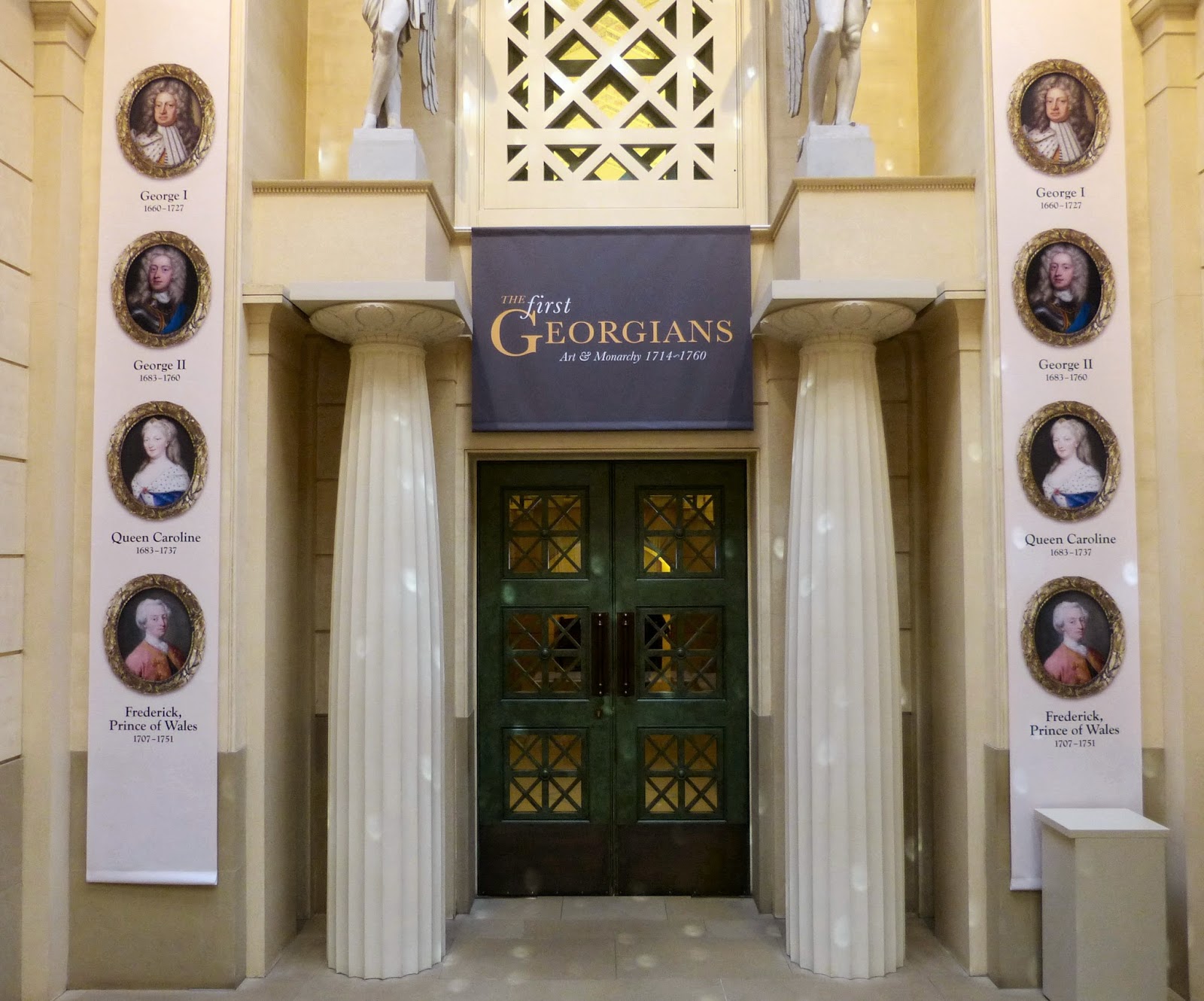
Entrance to The First Georgians exhibition inside the Queen's Gallery, Buckingham Palace

The First Georgians – Art & Monarchy 1714-1760 was an exhibition at the Queen’s Gallery, Buckingham Palace, which ran from Friday 11 April to Sunday 12 October 2014.

Why I am blogging about The First Georgians

I was privileged to attend the exhibition preview. But I claim to blog about late Georgian and Regency history, so why am I writing about the First Georgians exhibition which stops in the year that George III became King?

There are two reasons why this exhibition is still relevant. Firstly, the reigns of George I and George II were immediately before that of George III and so set the scene for the late Georgians. What took place in those years shaped the nation that George III became ruler of.
 
Secondly, George III was born in 1738, and so his formative years took place during the last 22 years of his grandfather George II’s reign.

For those of you that are unfamiliar with the early Georges, here is a very brief introduction:

George I (1714-1727)

George I by Sir Godfrey Kneller c1715
George I by Sir Godfrey Kneller (c1715)
(On display in the portrait room)
The Act of Settlement of 1701 decreed that Great Britain had to be ruled by a Protestant monarch. Accordingly, George I, Elector of Hanover, was proclaimed King on the death of Queen Anne who had no surviving offspring.

George I had two children, George and Sophia, but was no longer married to their mother, Sophia Dorothea. George had divorced and incarcerated his wife for abandoning him when she had eloped with her lover, whose death it was generally believed that he had arranged.

He did not marry again, but had two main mistresses, Ehrengard Melusina von Schulenburg, Duchess of Kendal, and Charlotte Sophia Kielmannsegge, Countess of Darlington.

In 1717, he fell out with his son George so badly that he banished him from the Court. He often visited Hanover and died there unexpectedly in 1727.

George II (1727-1760)
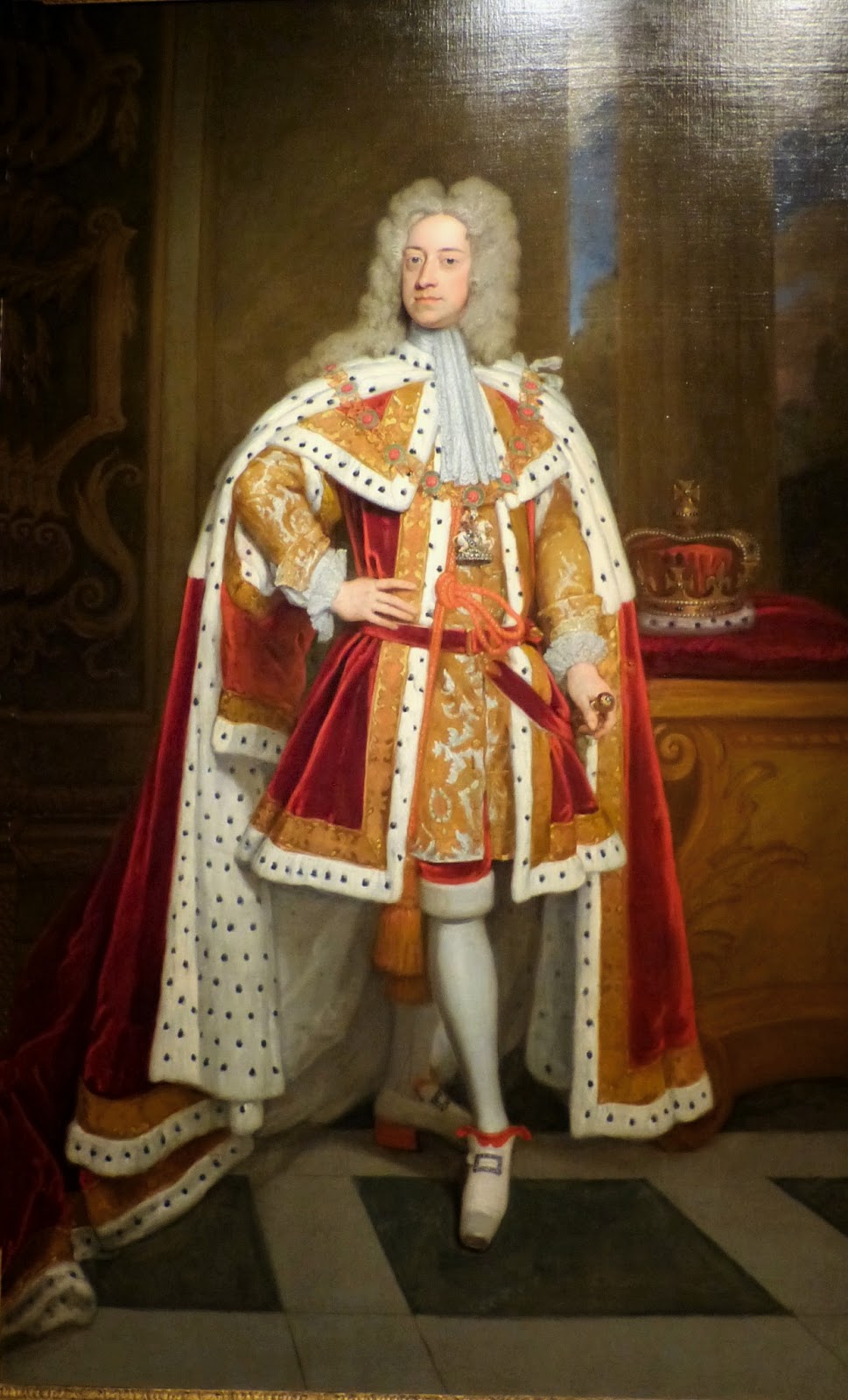
George II by Sir Godfrey Kneller 1716
George II by Sir Godfrey Kneller (1716) - note his wonderful red heels!
(On display in Georgian royals, giltware and the Garricks)

George II was the last British monarch not to be born on British soil. His wife was Caroline of Ansbach, a beautiful and intelligent woman, who was very popular at Court. She embraced the philosophy of the enlightenment, respecting reason above tradition, and was a keen collector of art.

Queen Caroline by J Highmore (c1735)
(On display in the Portraits room)

They had four children in Hanover: Frederick, Anne, Amelia and Caroline, and another four in England: George who died in infancy, William, Mary and Louisa.

George II was the last British monarch to lead his troops into battle, which he did at the Battle of Dettingen in 1743.

Like his father, George II quarrelled with his eldest son. He banished Frederick, Prince of Wales, and his wife Augusta from Court in 1737 after a row over the birth of their first child. Frederick had whisked Augusta away from Hampton Court whilst she was in labour to make sure his parents would not be there at the birth. The breach between Frederick and his mother was never healed.

Frederick died in 1751 leaving his eldest son, George, to become King George III in 1760.

The exhibition

The exhibition composes entirely of items from the Royal Collection. It presents us with a snapshot into the lives of the first Georgian Kings: their families and where they lived; the battles they fought and the works of art with which they surrounded themselves.

Portraits

The first room introduces us to the early Georgians with some lovely portraits, including that of Caroline of Ansbach (above) and a pastel of George III by Jean-Étienne Liotard.
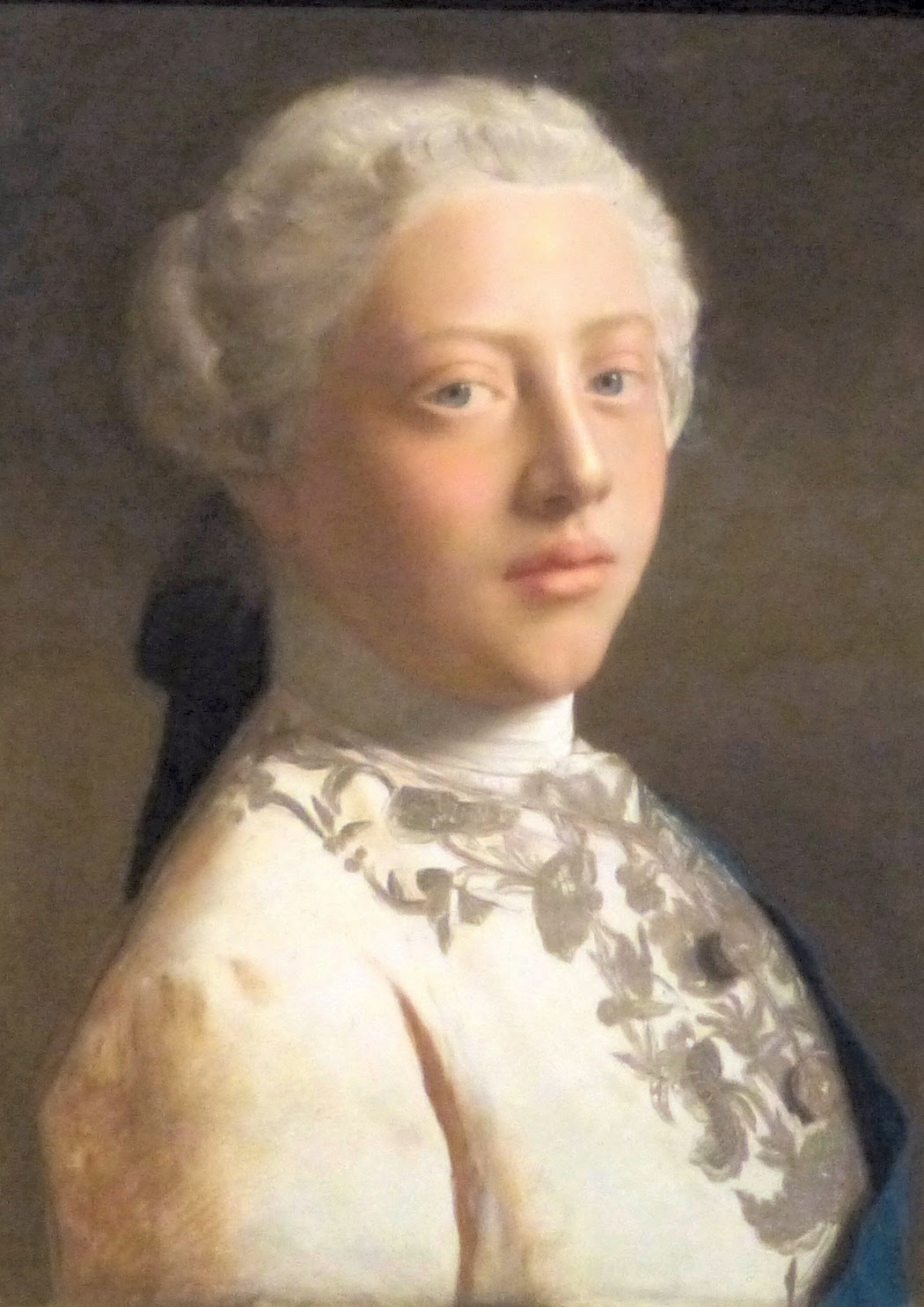
George III by Jean-Étienne Liotard (1754)
The next three rooms are themed: royal residences, maps and the prints of Hogarth:

Royal residences

This display includes prints of some of the internal rooms of the royal residences, such as the King’s Gallery at Kensington and the Queen’s State Bedchamber at Hampton Court.

The King's Gallery, Kensington Palace by Charles Wild (c1816)
Maps 

The maps were largely collected by William Augustus, Duke of Cumberland, a younger son of George II. He was nicknamed ‘Butcher Cumberland’ because of his ruthless policy against the Jacobite rebels after the Battle of Culloden in 1746.

Medley drawing by JFC Schilling (1767)
It may have been a gift to George III.
The Hogarth room

This room includes a selection of prints by Hogarth including The Harlot’s Progress which acted as a comment on the society of the time. This series of prints tells the story of the fall of the harlot, Moll Hackabout, and they were hugely popular in the 1730s.

The South Sea Scheme by William Hogarth (c1721)
Old Masters

From the monochrome prints of Hogarth, you pass into the first of the large display rooms, where you are dazzled by colour. The walls are covered with paintings, including several huge pieces by Rubens, collected by the early Georgians and exhibited symmetrically as they would have displayed them.

Room displaying Old Masters
There are two tables, beautifully gilded and supported on either side by gilt pedestals which would have held candelabra. The candlelight would have been reflected in the mirrors which would originally have been behind each table to dazzling effect.

One item that particularly caught my interest is a clock. It was bought by Frederick, Prince of Wales, but you have to search to find the clock which is very small compared to the overall size of the piece. In the bottom, there is an organ which plays tunes by Handel.

Miniatures and botanical drawings

Two small chambers off the Old Masters room show displays of royal miniatures and beautifully illustrated books of botany. A further anteroom has a collection of pistols, snuff boxes and other decorative items.

Botanical drawings by GD Ehret described by CJ Trew (1750-73)
Georgian royals, giltware and the Garricks

The second of the two large display rooms is my favourite and contains portraits of all the early Georgians. There is an enormous painting of six of Frederick Prince of Wales’ children, including the eight year old, George III, wielding a bow.

Detail from painting of Prince Frederick of Wales' children
 showing the future George III and his brother Edward
 by Barthélemy du Pan (1746)
This room also boasts two paintings by Canaletto depicting the River Thames and a table laden with gilt tableware.

Detail from London: The Thames from Somerset House terrace
by Canaletto (c1750)
One of my favourite works of art on display is the picture of David and Eva Garrick which has been used as the definitive image of the exhibition. I was surprised to discover that this very colourful and cheerful picture was in fact painted by William Hogarth, whom I have always associated with the rather sobering black and white prints displayed in the earlier room.

David Garrick and his wife, Eva-Maria Veigel  by William Hogarth (1757-64)
David Garrick and his wife, Eva-Maria Veigel
by William Hogarth (1757-64)
The Georgian coffee shop

The Millar Learning Room set up as a Georgian coffee shop
The final room to explore is to the left of the portrait room at the start of the exhibition. This is the Millar Learning Room which has been set up as a Georgian coffee shop. This is an interactive space, particularly good for those with children. There are background noises and ‘windows’ displaying Georgian street scenes. There are bags full of family activities available, short videos playing on a screen set within a picture frame and period hats with headphones, so that you can take in the atmosphere. I really enjoyed visiting the exhibition.

Rachel Knowles in the Georgian coffee shop
Me in the Georgian coffee shop

There are three videos which you can watch online:
Warrior Kings
A King’s Ransom
The Enlightened Queen
and lots more information about the different items on display on the Royal Collection website.

Headshot of Rachel Knowles author with sea in background(2021)
Rachel Knowles writes faith-based Regency romance and historical non-fiction. She has been sharing her research on this blog since 2011. Rachel lives in the beautiful Georgian seaside town of Weymouth, Dorset, on the south coast of England, with her husband, Andrew.

Find out more about Rachel's books and sign up for her newsletter here.

If you have enjoyed this blog and want to encourage me and help me to keep making my research freely available, please buy me a virtual cup of coffee by clicking the button below.


Sources used include:
Plumb, JH, The First Four Georges (1956)
Royal Collection website

All photographs © Andrew Knowles Regencyhistory.net

Tuesday, 29 January 2013

Sir Thomas Lawrence (1769-1830)

Sir Thomas Lawrence  from The Life and Correspondence of Sir Thomas Lawrence  by DE Williams (1831)
Sir Thomas Lawrence
from The Life and Correspondence of Sir Thomas Lawrence
by DE Williams (1831)
Profile

Sir Thomas Lawrence (13 April 1769 - 7 January 1830) was an English portrait painter and President of the Royal Academy from 1820-1830.

A child genius

Thomas Lawrence was born in Bristol on 13 April 1769, the youngest surviving child of Thomas and Lucy Lawrence. In 1773, the family moved to Devizes where his father was landlord of the Black Bear, a busy coaching inn.

Sir Thomas Lawrence as a boy  from The Life and Correspondence of Sir   Thomas Lawrence by DE Williams (1831)
Sir Thomas Lawrence as a boy
from The Life and Correspondence of Sir 
Thomas Lawrence by DE Williams (1831)
Lawrence was both good looking and talented. By the age of ten, he was producing pencil portraits of visitors to the inn and entertaining guests by beautifully reciting verse, especially Milton and Shakespeare. He sketched Lord and Lady Kenyon who stayed at the inn in 1779.1 The actor David Garrick was a frequent visitor and could not decide whether the boy’s future lay in acting or drawing.

In April 1780, Fanny Burney met Lawrence and records meeting “a most lovely boy of ten years of age, who seems to be not merely the wonder of their family, but of the times, for his astonishing skill in drawing.” She goes on to record in her diary that “Sir Joshua Reynolds had pronounced him, the mother said, the most promising genius he had ever met with.”2

The Bath years

Lawrence visited both Weymouth and Oxford, where “he took the likenesses of the most eminent persons then at Oxford”3 before moving to Bath where he became the chief earner in the family, his father having been declared bankrupt. He received encouragement from William Hoare, a fashionable portrait painter, and sold small pastel portraits, usually displaying a half-length, for three guineas a time. Lawrence also fell in love with the theatre at Bath, where he first saw Mrs Siddons.

In 1784, Lawrence was awarded the silver palette and five guineas by the Royal Society of Arts in London for his copy of Raphael’s Transfiguration.

The Royal Academy

Somerset House from the Thames  from Leigh's New Picture of London (1827)
Somerset House from the Thames
from Leigh's New Picture of London (1827)
In 1787, Lawrence moved to London and was admitted as a student to the Royal Academy. He started exhibiting at the Academy exhibition at Somerset House the same year.

In 1789, Lawrence was summoned to Windsor to paint Princess Amelia and Queen Charlotte, and on the death of Sir Joshua Reynolds in 1792, he was appointed painter-in-ordinary to George III and exhibited a picture of the King. He became a full member of the Royal Academy in 1794, at the earliest possible age of 25.

Lawrence supported the acquisition of the Elgin Marbles by the British Museum in 1816 and was appointed President of the Royal Academy in 1820 on the death of Benjamin West. He was elected a member of the Dilettanti Society in 1792 and succeeded Sir Joshua Reynolds as their appointed painter.

Some of the marbles bought by the British Museum  from Lord Elgin in 1816
Some of the marbles bought by the British Museum
from Lord Elgin in 1816
The Princess of Wales

In 1802, Lawrence exhibited a full length picture of Caroline, Princess of Wales, and her daughter, Charlotte. During the course of the sittings at Montague House, Blackheath, he had necessarily become “very intimate” with the Princess of Wales and her daughter and “fame was busy in attributing his visits to improper motives”.4 His relationship with the Princess of Wales was questioned during the Delicate Investigation of 1806 but he was cleared of any impropriety.
Caroline, Princess of Wales  from Memoirs of her late  royal highness Charlotte  Augusta by Robert Huish (1818)
Caroline, Princess of Wales
from Memoirs of her late  royal highness Charlotte
Augusta by Robert Huish (1818)
Lawrence was chosen by Princess Charlotte to paint her portrait as a gift to her husband, but she sadly died after childbirth in 1817, before the picture was finished. Lawrence records in a letter that he was “stunned by her death” and describes how the bereaved Prince Leopold was “greatly affected” when presented with the finished painting.5

The Prince Regent

In about 1810, Major General Charles Stewart had his portrait painted by Lawrence and the two men became friends. In 1814, Stewart encouraged the Prince Regent to have his portrait painted by Lawrence in field marshal’s uniform.

George IV from a drawing  by Sir Thomas Lawrence c1829   drawn on stone by R Lane  and printed by C Hullmandel   © The Trustees of the British Museum
George IV from a drawing  by Sir Thomas Lawrence c1829
 drawn on stone by R Lane  and printed by C Hullmandel
 © The Trustees of the British Museum
The Regent was delighted with the result and proceeded to commission portraits of the allied sovereigns and their generals. Lawrence was knighted in April 1815 and in his travels over the subsequent years, he visited Paris, Vienna and Rome in fulfilment of his commission. The completed portraits now hang in the Waterloo Chamber at Windsor Castle.

What was Lawrence like?

As a young man, Lawrence was handsome and lively, as well as accomplished, despite his lack of formal education. He had polished manners and was an elegant dancer, fencer and billiard player as well as an excellent violinist and singer. Although noted for his kindness to his servants, some of his contemporaries found him rather too reserved.

Sir Thomas Lawrence  from The Life and Correspondence of Sir Thomas  Lawrence by DE Williams (1831)
Sir Thomas Lawrence
from The Life and Correspondence of Sir Thomas
Lawrence by DE Williams (1831)
Lawrence did not underestimate his own talents. In a letter to his mother in 1786, he said that “excepting Sir Joshua, for the painting of a head, I would risk my reputation with any painter in London.”6

Although very hard-working, Lawrence was notorious for the speed with which he fulfilled his commissions. On his death, over a hundred unfinished paintings were found in his studio.

Throughout his lifetime, Lawrence struggled with his finances. It seems to have been a result of carelessness and overspending rather than profligacy. He was generous to both his family and other artists and spent large sums of money adding pictures to his collection. By 1807, he was more than £20,000 in debt and he died insolvent.

The loves of Lawrence’s life

Sarah Martha "Sally" Siddons  by FC Lewis after Sir Thomas Lawrence  Stipple engraving published 1841  © National Portrait Gallery, London
Sarah Martha "Sally" Siddons
by FC Lewis after Sir Thomas Lawrence
Stipple engraving published 1841
© National Portrait Gallery, London
In the 1790s, Lawrence was romantically involved with both Maria and Sally Siddons, Mrs Siddons’ two eldest daughters. He first fell in love with Sally and then Maria, only to break with Maria and return to Sally. Lawrence was forbidden to communicate any further with them and both sisters died young - Maria in 1798 and Sally in 1803. Lawrence never married.

According to Williams’ Life, Lawrence cherished an unrequited love for a Miss Upton, sister of Lord Templetown, for two years.7

Lawrence was very much attached to Mrs Isabella Wolff, the wife of a Danish consul, who separated from her husband in 1810, but Williams’ life describes this as a “more intellectual attachment”.8 He began a portrait of Mrs Wolff as early as 1803, but only finished it in time for the Academy exhibition of 1815. Another close friend, Miss Elizabeth Croft, wrote a detailed journal of the last week before Lawrence died.

Isabella Ann Wolff  by Samuel Cousins  after Sir Thomas Lawrence  mezzotint published 1831 by  P & D Colnaghi & Co  © National Portrait Gallery, London
Isabella Ann Wolff
by Samuel Cousins  after Sir Thomas Lawrence
mezzotint published 1831 by  P & D Colnaghi & Co
© National Portrait Gallery, London
Death

Lawrence died suddenly on 7 January 1830. He was given a public funeral on 21 January, with Sir Robert Peel and Lord Aberdeen among the pall bearers, and was buried in St Paul’s Cathedral.

Read about other Regency era painters - John Constable and Sir Joshua Reynolds.
Read about the Royal Society of Arts.

Notes
(1) Michael Levy notes the date of the Kenyons’ visit as 1779 rather than 1775 as stated in Williams’ Life Vol I p40. This suggests that the portraits were done when Lawrence was aged about 10 and not 6.
(2) From the Diaries of Madame d’Arblay, April 1780.
(3) From Williams’ Life Vol I p67
(4) From Williams’ Life Vol I p254
(5) From Williams’ Life Vol II p82-3
(6) From Williams’ Life Vol I p83
(7) From Williams’ Life Vol II p101
(8) From Williams’ Life Vol II p102

Sources uses include:
Bell, John, La Belle Assemblée (John Bell, 1830, London)
Burney, Fanny, Diary and letters of Madame D'Arblay, edited by her niece, Charlotte Barrett (Henry Colburn, 1846, London)
Huish, Robert, Memoirs of her late royal highness Charlotte Augusta (1818)
Lawrence, Thomas and Williams, DE, The Life and Correspondence of Sir Thomas Lawrence, Kt (London,1831)
Leigh, Samuel, Leigh's New Picture of London (London, 1827)
Levey, Michael, Lawrence, Sir Thomas (1769-1830), Oxford Dictionary of National Biography (Oxford University Press, 2004; online edn, May 2011, accessed 5 Oct 2012)